225 books match the query 'Modernism' and 13 start with s

cover of Secret Treachery Of Words: Feminism And Modernism In America

Secret Treachery Of Words

Feminism And Modernism In America

Elizabeth Francis

University of Minnesota Press, 2002
Untangles the intertwined relationship between feminism and modernism through a look at four major figures of the era. In the early decades of the twentieth century, women's pursuit of freedom and independence earned both the adulation and the scorn of American modernists. Elizabeth Francis traces this unexpected, complex strain in cultural history through the stories of four legendary American figures--Isadora Duncan, Margaret Anderson, Floyd Dell, and Josephine Herbst. The Secret Treachery of Words begins in the early 1910s, when feminism was an essential part of "the shock of the new" that modernist art and thought introduced to American culture. Francis follows an arc of treacherous repression into the 1920s and 1930s, as feminists broke out of the mold of Victorian culture only to find themselves bound by the historical representation so central to modernism. Francis's four portraits vividly reveal the dynamic tensions in feminist modernism: in Duncan's performances of the female body, Anderson's manifestos of self-expression and cultural outlawry, Dell's advocacy of the revolutionary potential of sex, and Herbst's insights into cultural and political marginality. Part of a new appreciation of the diversity of American modernism, The Secret Treachery of Words discloses both the centrality and the critical impasses of feminist and modernist engagements with modern culture. Elizabeth Francis teaches American history at the University of Rhode Island.
[more]
cover of Shadow Modernism: Photography, Writing, and Space in Shanghai, 1925-1937

Shadow Modernism

Photography, Writing, and Space in Shanghai, 1925-1937

William Schaefer

Duke University Press, 2017
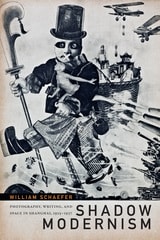
During the early twentieth century, Shanghai was the center of China's new media culture. Described by the modernist writer Mu Shiying as "transplanted from Europe" and “paved with shadows,” for many of its residents Shanghai was a city without a past paradoxically haunted by the absent past’s traces. In Shadow Modernism William Schaefer traces how photographic practices in Shanghai provided a forum within which to debate culture, ethnicity, history, and the very nature of images. The central modernist form in China, photography was neither understood nor practiced as primarily a medium for realist representation; rather, photo layouts, shadow photography, and photomontage rearranged and recomposed time and space, cutting apart and stitching places, people, and periods together in novel and surreal ways. Analyzing unknown and overlooked photographs, photomontages, cartoons, paintings, and experimental fiction and poetry, Schaefer shows how artists and writers used such fragmentation and juxtaposition to make visible the shadows of modernity in Shanghai: the violence, the past, the ethnic and cultural multiplicity excluded and repressed by the prevailing cultural politics of the era and yet hidden in plain sight.
[more]
cover of Slaves Waiting for Sale: Abolitionist Art and the American Slave Trade

Slaves Waiting for Sale

Abolitionist Art and the American Slave Trade

Maurie D. McInnis

University of Chicago Press, 2011

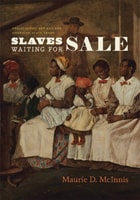
In 1853, Eyre Crowe, a young British artist, visited a slave auction in Richmond, Virginia. Harrowed by what he witnessed, he captured the scene in sketches that he would later develop into a series of illustrations and paintings, including the culminating painting, Slaves Waiting for Sale, Richmond, Virginia.

This innovative book uses Crowe’s paintings to explore the texture of the slave trade in Richmond, Charleston, and New Orleans, the evolving iconography of abolitionist art, and the role of visual culture in the transatlantic world of abolitionism. Tracing Crowe’s trajectory from Richmond across the American South and back to London—where his paintings were exhibited just a few weeks after the start of the Civil War—Maurie D. McInnis illuminates not only how his abolitionist art was inspired and made, but also how it influenced the international public’s grasp of slavery in America. With almost 140 illustrations, Slaves Waiting for Sale brings a fresh perspective to the American slave trade and abolitionism as we enter the sesquicentennial of the Civil War.
[more]
cover of Sophie Taeuber-Arp and the Avant-Garde: A Biography

Sophie Taeuber-Arp and the Avant-Garde

A Biography

Roswitha Mair

University of Chicago Press, 2018

Sophie Taeuber-Arp was a quiet innovator whose fame has too often been yoked to that of her husband, Jean Arp. Over time, however, she has slowly come to be seen as one of the foremost abstract artists and designers of the twentieth century. The Swiss-born Taeuber-Arp had a front row seat to the first wave of Dadaism and was, along with Mondrian and Malevich, a pioneer of Constructivism. Her singular artwork incorporated painting, sculpture, dance, fiber arts, and architecture, as hers was one of the first oeuvres to successfully bridge the divide between fine and functional art.
 
Now Roswitha Mair has brought us the first biography of this unique polymath, illuminating not just Tauber-Arp’s own life and work, but also the various milieux and movements in which she traveled.  No fan of the Dadaists and their legacy will want to miss this first English-language translation.
 
[more]
cover of Space, Site, Intervention: Situating Installation Art

Space, Site, Intervention

Situating Installation Art

Erika Suderburg

University of Minnesota Press, 2000

In Space, Site, Intervention, some of today's most prominent art critics, curators, and artists view installation art as a diverse, multifaceted, and international art form that challenges institutional assumptions and narrow conceptual frameworks. Together, the essays in Space, Site, Intervention investigate how installation resonates within modern culture and society, as well as its ongoing influence on contemporary visual culture. 

Contributors: C. Ondine Chavoya, John Coleman, Sean Cubitt, Colin Gardner, Chrissie Iles, Miwon Kwon, Ernest Larsen, Tiffany Ana López, Catherine Lord, Kevin McMahon, James Meyer, Alessandra Moctezuma, Leda Ramos, Laurence A. Rickels, Barbara Maria Stafford, Susan Stewart, Marita Sturken, and John C. Welchman. 
[more]
cover of Spectral Characters: Genre and Materiality on the Modern Stage

Spectral Characters

Genre and Materiality on the Modern Stage

Sarah Balkin

University of Michigan Press, 2019

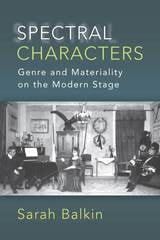
Theater’s materiality and reliance on human actors has traditionally put it at odds with modernist principles of aesthetic autonomy and depersonalization. Spectral Characters argues that modern dramatists in fact emphasized the extent to which humans are fictional, made and changed by costumes, settings, props, and spoken dialogue. Examining work by Ibsen, Wilde, Strindberg, Genet, Kopit, and Beckett, the book takes up the apparent deadness of characters whose selves are made of other people, whose thoughts become exteriorized communication technologies, and whose bodies merge with walls and furniture. The ghostly, vampiric, and telepathic qualities of these characters, Sarah Balkin argues, mark a new relationship between the material and the imaginary in modern theater. By considering characters whose bodies respond to language, whose attempts to realize their individuality collapse into inanimacy, and who sometimes don’t appear at all, the book posits a new genealogy of modernist drama that emphasizes its continuities with nineteenth-century melodrama and realism.
[more]
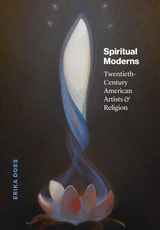
cover of Spiritual Moderns: Twentieth-Century American Artists and Religion

Spiritual Moderns

Twentieth-Century American Artists and Religion

Erika Doss

University of Chicago Press, 2022

Examines how and why religion matters in the history of modern American art.
 
Andy Warhol is one of the best-known American artists of the twentieth century. He was also an observant Catholic who carried a rosary, went to mass regularly, kept a Bible by his bedside, and depicted religious subjects throughout his career. Warhol was a spiritual modern: a modern artist who appropriated religious images, beliefs, and practices to create a distinctive style of American art.
 
Spiritual Moderns centers on four American artists who were both modern and religious. Joseph Cornell, who showed with the Surrealists, was a member of the Church of Christ, Scientist. Mark Tobey created pioneering works of Abstract Expressionism and was a follower of the Bahá’í Faith. Agnes Pelton was a Symbolist painter who embraced metaphysical movements including New Thought, Theosophy, and Agni Yoga. And Warhol, a leading figure in Pop art, was a lifelong Catholic. Working with biographical materials, social history, affect theory, and the tools of art history, Doss traces the linked subjects of art and religion and proposes a revised interpretation of American modernism.
 
[more]
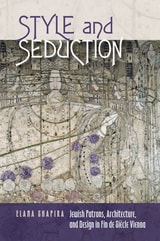
cover of Style and Seduction: Jewish Patrons, Architecture, and Design in Fin de Siècle Vienna

Style and Seduction

Jewish Patrons, Architecture, and Design in Fin de Siècle Vienna

Elana Shapira

Brandeis University Press, 2016
A recent surge of interest in Jewish patronage during the golden years of Vienna has led to the question, Would modernism in Vienna have developed in the same fashion had Jewish patrons not been involved? This book uniquely treats Jewish identification within Viennese modernism as a matter of Jews active fashioning of a new language to convey their aims of emancipation along with their claims of cultural authority. In this provocative reexamination of the roots of Viennese modernism, Elana Shapira analyzes the central role of Jewish businessmen, professionals, and writers in the evolution of the city’s architecture and design from the 1860s to the 1910s. According to Shapira, these patrons negotiated their relationship with their non-Jewish surroundings and clarified their position within Viennese society by inscribing Jewish elements into the buildings, interiors, furniture, and design objects that they financed, produced, and co-designed. In the first book to investigate the cultural contributions of the banker Eduard Todesco, the steel tycoon Karl Wittgenstein, the textile industrialist Fritz Waerndorfer, the author Peter Altenberg, the tailor Leopold Goldman, and many others, Shapira reconsiders theories identifying the crisis of Jewish assimilation as a primary creative stimulus for the Jewish contribution to Viennese modernism. Instead, she argues that creative tensions between Jews and non-Jews—patrons and designers who cooperated and arranged well-choreographed social encounters with one another—offer more convincing explanations for the formation of a new semantics of modern Viennese architecture and design than do theories based on assimilation. This thoroughly researched and richly illustrated book will interest scholars and students of Jewish studies, Vienna and Viennese culture, and modernism.
[more]
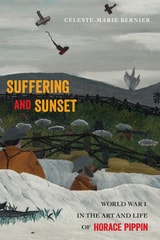
cover of Suffering and Sunset: World War I in the Art and Life of Horace Pippin

Suffering and Sunset

World War I in the Art and Life of Horace Pippin

Celeste-Marie Bernier

Temple University Press, 2017

For self-made artist and soldier Horace Pippin—who served in the 369th all-black infantry in World War I until he was wounded—war provided a formative experience that defined much of his life and work. His ability to transform combat service into canvases of emotive power, psychological depth, and realism showed not only how he viewed the world but also his mastery as a painter. In Suffering and Sunset, Celeste-Marie Bernier painstakingly traces Pippin’s life story of art as a life story of war. 

Illustrated with more than sixty photographs, including works in various mediums—many in full color—this is the first intellectual history and cultural biography of Pippin. Working from newly discovered archives and unpublished materials, Bernier provides an in-depth investigation into the artist’s development of an alternative visual and textual lexicon and sheds light on his work in its aesthetic, social, and political contexts.

Suffering and Sunset illustrates Pippin’s status as a groundbreaking artist as it shows how this African American painter suffered from but also staged many artful resistances to racism in a white-dominated art world.
[more]
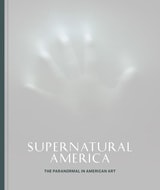
cover of Supernatural America: The Paranormal in American Art

Supernatural America

The Paranormal in American Art

Edited by Robert Cozzolino

University of Chicago Press, 2021

America is haunted. Ghosts from its violent history—the genocide of Indigenous peoples, slavery, the threat of nuclear annihilation, and traumatic wars—are an inescapable and unsettled part of the nation’s heritage. Not merely in the realm of metaphor but present and tangible, urgently calling for contact, these otherworldly visitors have been central to our national identity. Through times of mourning and trauma, artists have been integral to visualizing ghosts, whether national or personal, and in doing so have embraced the uncanny and the inexplicable. This stunning catalog, accompanying the first major exhibition to assess the spectral in American art, explores the numerous ways American artists have made sense of their own experiences of the paranormal and the supernatural, developing a rich visual culture of the intangible.

​Featuring artists from James McNeill Whistler and Kerry James Marshall to artist/mediums who made images with spirits during séances, this catalog covers more than two hundred years of the supernatural in American art. Here we find works that explore haunting, UFO sightings, and a broad range of experiential responses to other worldly contact.
[more]
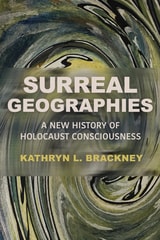
cover of Surreal Geographies: A New History of Holocaust Consciousness

Surreal Geographies

A New History of Holocaust Consciousness

Kathryn L. Brackney

University of Wisconsin Press, 2024

Surreal Geographies recovers a forgotten archive of Holocaust representation. Examining art, literature, and film produced from the immediate postwar period up to the present moment, Kathryn L. Brackney investigates changing portrayals of Jewish victims and survivors. In so doing, she demonstrates that the Holocaust has been understood not only through the documentary realism and postmodern fragmentation familiar to scholars but also through a surreal mode of meaning making. From an otherworldly “Planet Auschwitz” to the spare, intimate spaces of documentary interviews, Brackney shows that the humanity of victims has been produced, undermined, and guaranteed through evolving scripts for acknowledging and mourning mass violence.

Brackney offers a new look at familiar works by authors and artists such as Claude Lanzmann, W. G. Sebald, and Paul Celan, while making surprising connections to contemporary scholars like Timothy Snyder and Donna Haraway, and events such as the Space Race. In the process, she maps out a decades-long process through which transnational conventions of mourning have emerged in Western Europe, North America, and Israel, functioning to constitute Jewish victimization as “grievable life.” Ultimately, she shows how the Holocaust has developed into a figure for the destabilization and reformulation of the category of humanity and the problem of mourning across difference.
[more]
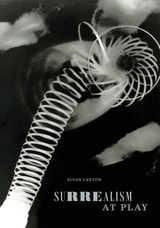
cover of Surrealism at Play

Surrealism at Play

Susan Laxton

Duke University Press, 2019

In Surrealism at Play Susan Laxton writes a new history of surrealism in which she traces the centrality of play to the movement and its ongoing legacy. For surrealist artists, play took a consistent role in their aesthetic as they worked in, with, and against a post-World War I world increasingly dominated by technology and functionalism. Whether through exquisite-corpse drawings, Man Ray’s rayographs, or Joan Miró’s visual puns, surrealists became adept at developing techniques and processes designed to guarantee aleatory outcomes. In embracing chance as the means to produce unforeseeable ends, they shifted emphasis from final product to process, challenging the disciplinary structures of industrial modernism. As Laxton demonstrates, play became a primary method through which surrealism refashioned artistic practice, everyday experience, and the nature of subjectivity.
[more]
cover of Sweet Air: Modernism, Regionalism, and American Popular Song

Sweet Air

Modernism, Regionalism, and American Popular Song

Edward Comentale

University of Illinois Press, 2013

Sweet Air rewrites the history of early twentieth-century pop music in modernist terms. Tracking the evolution of popular regional genres such as blues, country, folk, and rockabilly in relation to the growth of industry and consumer culture, Edward P. Comentale shows how this music became a vital means of exploring the new and often overwhelming feelings brought on by modern life. Comentale examines these rural genres as they translated the traumas of local experience--the racial violence of the Delta, the mass exodus from the South, the Dust Bowl of the Texas panhandle--into sonic form. Considering the accessibility of these popular music forms, he asserts the value of music as a source of progressive cultural investment, linking poor, rural performers and audiences to an increasingly vast network of commerce, transportation, and technology.

[more]