Results by title
149 books match the query 'Modernity' and 7 start with s

Social Mobility in Kerala
Modernity and Identity in ConflictFilippo Osella and Caroline Osella
Pluto Press, 2000

Socialism and Modernity
Peter Beilharz
University of Minnesota Press, 2009
This first collection of Peter Beilharz's highly influential thought traces the themes and problems, manifestations, and trajectories of socialism and modernity as they connect and shift over a twenty-year period. Woven throughout Beilharz's analysis is the urgent question of modern utopia: how do we imagine freedom and equality in modernity?
The essays in this volume explore the relationship between socialism and modernity across the United States, Europe, and Australia from the mid-1980s to the turn of the twenty-first century, a time that witnessed the global triumph of capitalism and the dramatic turn away from Marxism and socialism to modernity as the dominant perspective. According to Beilharz, we have seen the expansion of a kind of Weberian Marxism, with the concept of revolution giving way to the idea of pluralized forms of power and the idea of rupture giving way to the postmodern sense of difference. These changes come together with the discourse of modernism, both aesthetic and technological.
Socialism and modernity, Beilharz argues, are fundamentally interrelated. In correcting the conflation of Marxism, Bolshevism, and socialism that occludes contemporary political thinking, he reopens a space for discussion of what socialist politics might look like now-in the postcommunist-postcolonial-postmodern moment.
Sound Figures of Modernity
German Music and PhilosophyEdited by Jost Hermand and Gerhard Richter
University of Wisconsin Press, 2006
The rich conceptual and experiential relays between music and philosophy—echoes of what Theodor W. Adorno once called Klangfiguren, or "sound figures"—resonate with heightened intensity during the period of modernity that extends from early German Idealism to the Critical Theory of the Frankfurt School. This volume traces the political, historical, and philosophical trajectories of a specifically German tradition in which thinkers take recourse to music, both as an aesthetic practice and as the object of their speculative work.
The contributors examine the texts of such highly influential writers and thinkers as Schelling, Schopenhauer, Nietzsche, Bloch, Mann, Adorno, and Lukács in relation to individual composers including Beethoven, Wagner, Schönberg, and Eisler. Their explorations of the complexities that arise in conceptualizing music as a mode of representation and philosophy as a mode of aesthetic practice thematize the ways in which the fields of music and philosophy are altered when either attempts to express itself in terms defined by the other.
Contributors: Albrecht Betz, Lydia Goehr, Beatrice Hanssen, Jost Hermand, David Farrell Krell, Ludger Lütkehaus, Margaret Moore, Rebekah Pryor Paré, Gerhard Richter, Hans Rudolf Vaget, Samuel Weber

Split-Gut Song
Jean Toomer and the Poetics of ModernityKaren Jackson Ford
University of Alabama Press, 2005
Reclaiming Jean Toomer as a radical innovator of African American modernist poetics.
In Split-Gut Song, Karen Jackson Ford looks at what it means to be African American, free, and creative by analyzing Jean Toomer's main body of work, specifically, his groundbreaking creation Cane. When first published in 1923, this pivotal work of modernism was widely hailed as inaugurating a truly artistic African American literary tradition. Yet Toomer's experiments in literary form are consistently read in terms of political radicalism—protest and uplift—rather than literary radicalism.
Ford contextualizes Toomer's poetry, letters, and essays in the literary culture of his period and, through close readings of the poems, shows how they negotiate formal experimentation (imagism, fragmentation, dialect) and traditional African American forms (slave songs, field hollers, call-and-response sermons, lyric poetry). At the heart of Toomer's work is the paradox that poetry is both the saving grace of African American culture and that poetry cannot survive modernity. This contradiction, Ford argues, structures Cane, wherein traditional lyric poetry first flourishes, then falters, then falls silent.
The Toomer that Ford discovers in Split-Gut Song is a complicated, contradictory poet who brings his vexed experience and ideas of racial identity to both conventional lyric and experimental forms. Although Toomer has been labelled a political radical, Ford argues that politics is peripheral in his experimental, stream-of-consciousness work. Rather Toomer exhibits a literary radicalism as he struggles to articulate his perplexed understanding of race and art in 20th-century America.
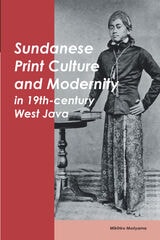
Sundanese Print Culture and Modernity in 19th Century West Java
Mikihiro Moriyama
National University of Singapore Press, 2005
Starting with the 'discovery' of Sundanese by Europeans in the early 19th century, Mikihiro Moriyama follows the developments in the ensuing century when a small group of Dutch scholars and colonial officials reshaped the language and its literature over the next one hundred years. Schools taught Sundanese, and printed materials based on western concepts began to influence indigenous writing and oral tradition. The imposition of European standards of literary aesthetics shaped a modernity that rejected traditional knowledge in favour of rational and empirical paradigms. Interest in traditional poetry and its mythologies declined, and new forms of prose, including novels, captured the attention of the reading public. These materials promoted useful knowledge and morality, and encouraged deference and loyalty towards colonial authority.
Early in the 20th century, the establishment of the Commissie voor de Inlandsche School- en Volkslectuur (Committee for Indigenous Schoolbooks and Popular Reading Books), a government-subsidised institution, provided the growing number of literate people in the Indies with 'good' and 'appropriate' reading materials. Its development marked the end of an era when Sundanese writing competed with Western-style schools and publications, and signalled the triumph of the new colonial modernity.

Sweet Reason
Rhetoric and the Discourses of ModernitySusan Wells
University of Chicago Press, 1996
Susan Wells is associate professor of English at Temple University.
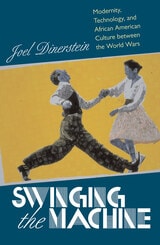
Swinging the Machine
Modernity, Technology, and African American Culture between the World WarsJoel Dinerstein
University of Massachusetts Press, 2003
In any age and any given society, cultural practices reflect the material circumstances of people's everyday lives. According to Joel Dinerstein, it was no different in America between the two World Wars—an era sometimes known as the “machine age”—when innovative forms of music and dance helped a newly urbanized population cope with the increased mechanization of modern life. Grand spectacles such as the Ziegfeld Follies and the movies of Busby Berkeley captured the American ethos of mass production, with chorus girls as the cogs of these fast, flowing pleasure vehicles.
Yet it was African American culture, Dinerstein argues, that ultimately provided the means of aesthetic adaptation to the accelerated tempo of modernity. Drawing on a legacy of engagement with and resistance to technological change, with deep roots in West African dance and music, black artists developed new cultural forms that sought to humanize machines. In “The Ballad of John Henry,” the epic toast “Shine,” and countless blues songs, African Americans first addressed the challenge of industrialization. Jazz musicians drew on the symbol of the train within this tradition to create a set of train-derived aural motifs and rhythms, harnessing mechanical power to cultural forms. Tap dance and the lindy hop brought machine aesthetics to the human body, while the new rhythm section of big band swing mimicked the industrial soundscape of northern cities. In Dinerstein's view, the capacity of these artistic innovations to replicate the inherent qualities of the machine-speed, power, repetition, flow, precision-helps explain both their enormous popularity and social function in American life.