Results by title
226 books match the query 'New Jersey' and 14 start with s
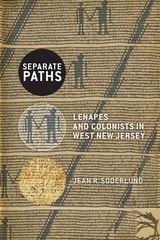
Separate Paths
Lenapes and Colonists in West New JerseyJean R. Soderlund
Rutgers University Press, 2022
Separate Paths: Lenapes and Colonists in West New Jersey is the first cross-cultural study of European colonization in the region south of the Falls of the Delaware River (now Trenton). Lenape men and women welcomed their allies, the Swedes and Finns, to escape more rigid English regimes on the west bank of the Delaware, offering land to establish farms, share resources, and trade. In the 1670s, Quaker men and women challenged this model with strategies to acquire all Lenape territory for their own use and to sell as real estate to new immigrants. Though the Lenapes remained sovereign and “old settlers” retained their Swedish Lutheran religion and ethnic autonomy, the West Jersey proprietors had considerable success in excluding Lenapes from their land. The Friends believed God favored their endeavor with epidemics of smallpox and other European diseases that destroyed Lenape families and communities. Affluent Quakers also introduced enslavement of imported Africans and Natives—and the violence that sustained it—to a colony they had promoted with the liberal West New Jersey Concessions of 1676-77. Thus, they defied their prior experience of religious persecution and their principles of peaceful resolution of conflict, equality of everyone before God, and the golden rule to treat others as you wish to be treated. Despite mutual commitment to peace by Lenapes, old settlers, and Friends, Quaker colonization had similar results to military conquests of Natives by English in Virginia and New England, and Dutch in the Hudson Valley and northern New Jersey. Still, in alliance with old settlers, Lenape communities survived in areas outside the focus of English colonization, in the Pine Barrens, upper reaches of streams, and Atlantic shore.
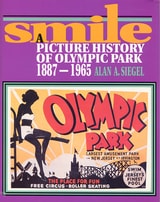
Smile
A Picture History of Olympic Park, 1887-1965Siegel, Alan A
Rutgers University Press, 1995
Snowshoeing Through Sewers
Adventures in New York City, New Jersey, and PhiladelphiaMichael Aaron Rockland
Rutgers University Press, 2008
In these ten alternately poetic and comic tales of adventure in the New York/Philadelphia corridor, the most densely populated chunk of America, Rockland walks and bikes areas meant only for cars and paddles through waters capable of dissolving canoes. He hikes the length of New York's Broadway, camps in New York City, treks across Philadelphia, pedals among the tractor trailers of Route 1 in New Jersey, and paddles around Manhattan and through the dark tunnels under Trenton.
Whereas Henry David Thoreau built his cabin on Walden Pond to get out of town, for Rockland, the challenge is to head into town. As he writes, "in the late twentieth century, a weed and trash-filled city lot . . . may be a better place than the wilderness to contemplate one's relationship to nature."
Social History of Economic Decline
Business, Politics, and Work in TrentonCumbler, John T.
Rutgers University Press, 1989
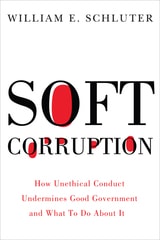
Soft Corruption
How Unethical Conduct Undermines Good Government and What To Do About ItSchluter, William E
Rutgers University Press, 2017
In this searing personal narrative, the former state senator recounts his fight to expose and reform these acts of government misconduct. Not afraid to cite specific cases of soft corruption in New Jersey politics, he paints a vivid portrait of public servants who care more about political power and personal gain than the public good. By recounting events that he witnessed firsthand in the Garden State, he provides dramatic illustrations of ills that afflict American politics nationwide.
As he identifies five main forms of soft corruption, Schluter diagnoses the state government’s ethical malaise, and offers concrete policy suggestions for how it might be cured. Not simply a dive through the muck of New Jersey politics, Soft Corruption is an important first step to reforming our nation’s political system, a book that will inspire readers to demand that our elected officials can and must do better.
Visit: www.softcorruption.com (http://www.softcorruption.com)
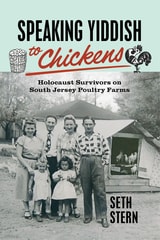
Speaking Yiddish to Chickens
Holocaust Survivors on South Jersey Poultry FarmsSeth Stern
Rutgers University Press, 2023
Most of the roughly 140,000 Holocaust survivors who came to the United States in the first decade after World War II settled in big cities such as New York. But a few thousand chose an alternative way of life on American farms. More of these accidental farmers wound up raising chickens in southern New Jersey than anywhere else. Speaking Yiddish to Chickens is the first book to chronicle this little-known chapter in American Jewish history when these mostly Eastern European refugees – including the author’s grandparents - found an unlikely refuge and gateway to new lives in the US on poultry farms. They gravitated to a section of south Jersey anchored by Vineland, a small rural city where previous waves of Jewish immigrants had built a rich network of cultural and religious institutions.
This book relies on interviews with dozens of these refugee farmers and their children, as well as oral histories and archival records to tell how they learned to farm while coping with unimaginable grief. They built small synagogues within walking distance of their farms and hosted Yiddish cultural events more frequently found on the Lower East Side than perhaps anywhere else in rural America at the time. Like refugees today, they embraced their new American identities and enriched the community where they settled, working hard in unfamiliar jobs for often meager returns. Within a decade, falling egg prices and the rise of industrial-scale agriculture in the South would drive almost all of these novice poultry farmers out of business, many into bankruptcy. Some hated every minute here; others would remember their time on south Jersey farms as their best years in America. They enjoyed a quieter way of life and more space for themselves and their children than in the crowded New York City apartments where so many displaced persons settled. This is their remarkable story of loss, renewal, and perseverance in the most unexpected of settings.
Author Facebook page (https://www.facebook.com/YiddishtoChickens)
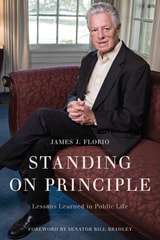
Standing on Principle
Lessons Learned in Public LifeFlorio, James J
Rutgers University Press, 2018
This political memoir tells the remarkable story of how Florio, a high school dropout who left to join the Navy as a teenager, went on to become an attorney, a state assemblyman, a congressman, and a governor. A passionate defender of the environment, Florio played a crucial role in the enactment of 1980s-era Superfund laws, which helped to clean up toxic waste sites in New Jersey and around the country. As governor, he fought for the groundbreaking Clean Water Enforcement Act. But his reforms quite literally came at a cost, as he raised New Jersey sales taxes and income taxes to balance the state budget. Florio reflects upon the challenges of meeting the state’s budgetary needs while keeping his tax-averse constituents happy.
Standing on Principle reveals a politician who has never been afraid to take a progressive stand—including a firm stance against semiautomatic weapons that led gun lobbyists to bankroll his opponent. His story is sure to inspire readers from New Jersey and across the nation.
Published in cooperation with the Center on the American Governor, Eagleton Institute of Politics, Rutgers University

States at War, Volume 4
A Reference Guide for Delaware, Maryland, and New Jersey in the Civil WarEdited by Richard F. Miller
University Press of New England, 2015
Stories of New Jersey
Stockton, Frank
Rutgers University Press, 1961
Street Therapists
Race, Affect, and Neoliberal Personhood in Latino NewarkAna Y. Ramos-Zayas
University of Chicago Press, 2012
Drawing from almost a decade of ethnographic research in largely Brazilian and Puerto Rican neighborhoods in Newark, New Jersey, Ana Y. Ramos-Zayas, in Street Therapists,examines how affect, emotion, and sentiment serve as waypoints for the navigation of interracial relationships among US-born Latinos, Latin American migrants, blacks, and white ethnics. Tackling a rarely studied dynamic approach to affect, Ramos-Zayas offers a thorough—and sometimes paradoxical—new articulation of race, space, and neoliberalism in US urban communities.
After looking at the historical, political, and economic contexts in which an intensified connection between affect and race has emerged in Newark, New Jersey, Street Therapists engages in detailed examinations of various community sites—including high schools, workplaces, beauty salons, and funeral homes, among others—and secondary sites in Belo Horizonte, Brazil and San Juan to uncover the ways US-born Latinos and Latin American migrants interpret and analyze everyday racial encounters through a language of psychology and emotions. As Ramos-Zayas notes, this emotive approach to race resurrects Latin American and Caribbean ideologies of “racial democracy” in an urban US context—and often leads to new psychological stereotypes and forms of social exclusion. Extensively researched and thoughtfully argued, Street Therapists theorizes the conflictive connection between race, affect, and urban neoliberalism.
Suburban Sahibs
Kalita, S. Mitra
Rutgers University Press, 2003
In this updated edition, journalist S. Mitra Kalita shows that although the reception from long-time residents has not been entirely welcoming, Indians have come to achieve economic success and their desire for political and social parity continues to grow stronger. She traces the evolution of the suburb from a destination for new arrivals to a launching pad for them.
In the late nineteenth century, tourists descended upon Edison to gawk at its Christmas lights displays. Today, thousands of Indians from all over the United States arrive in the same bedroom community to celebrate their own festivals of lights and colors. Suburban Sahibs attempts to answer the question of how and why they arrived, and offers a window into what America has become: a nation of suburbs as well as a nation of immigrants.
Superstorm Sandy
The Inevitable Destruction and Reconstruction of the Jersey ShoreBates, Diane C
Rutgers University Press, 2015
Diane C. Bates offers a wide-ranging look at the Jersey Shore both before and after Sandy, examining the many factors—such as cultural attachment, tourism revenues, and governmental regulation—that combined to create a highly vulnerable coastal region. She explains why the Shore is so important to New Jerseyans, acting as a key cultural touchstone in a state that lacks a central city or even a sports team to build a shared identity among the state’s residents. She analyzes post-Sandy narratives about the Jersey Shore that trumpeted the dominance of human ingenuity over nature (such as the state’s “Stronger than the Storm” advertising campaign) or proclaimed a therapeutic community (“Jersey Strong”)—narratives rooted in emotion and iconography, waylaying any thought of the near-certainty of future storms. The book also examines local business owners, politicians, real estate developers, and residents who have vested interests in the region, explaining why the Shore was developed intensively prior to Sandy, and why restoration became an imperative in the post-storm period.
Engagingly written and insightful, Superstorm Sandy highlights the elements that compounded the disaster on the Shore, providing a framework for understanding such catastrophes and preventing them in the future.
Surviving HIV/AIDS in the Inner City
How Resourceful Latinas Beat the OddsChase, Sabrina
Rutgers University Press, 2011
Based on her work with minority women living in Newark, New Jersey, Sabrina Marie Chase illuminates the hidden traps and land mines burdening our current health care system as a whole. For the women she studied, alliances with doctors, nurses, and social workers could literally mean the difference between life and death. By applying the theories of sociologist Pierre Bourdieu to the day-to-day experiences of HIV-positive Latinas, Chase explains why some struggled and even died while others flourished and thrived under difficult conditions. These gripping, true-life stories advocate for those living with chronic illness who depend on the health care "safety net." Through her exploration of life and death among Newark's resourceful women, Chase provides the groundwork for inciting positive change in the U.S. health care system.
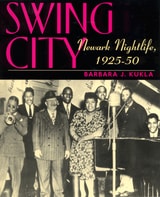
Swing City
Newark Lightlife, 1925-50Kukla, Barbara J.
Rutgers University Press, 2002
When people think of the hottest cities of the Jazz Age and Swing Era, New York, Nashville, New Orleans, Memphis, Kansas City, and Chicago immediately spring to mind. But Newark, New Jersey was just as happening as each of these towns. On any given evening, you could listen to a legendary singer like Sarah Vaughan or laugh at the celebrated comedy of Red Foxx. Newark was a veritable maze of thriving theaters, clubs, and after-hours joints where the sporting folks rambled through the night. There were plenty of jobs for musicians and entertainers, so the city was teaming with musical talent.
Swing City reveals Newark’s role as an undocumented entertainment mecca between 1922 and 1950. The book is based on interviews with musicians, singers, dancers, comedians, bartenders, waitresses, nightclub owners, and their families and is heavily illustrated with rare photographs from the author’s personal collection. Barbara J. Kukla presents a musical tour of the city, covering the vaudeville acts, the musicians who started at Newark’s Orpheum Theater and went on to join famous bands, and the teenage dancers who started as chorus girls and eventually toured with famous tap dancers. She also describes the house rent parties of the 1930s, the “colored only” clubs, the entertainment at Newark’s 1,000 saloons during Prohibition, and the Coleman Hotel where Billie Holiday often stayed. Throughout the book, which concentrates on performers’ lives and personalities, Kukla discusses music and other forms of entertainment as social and economic survival tools in Newark’s Third Ward during a time of ruthless segregation.
Swing City includes several appendixes that provide a virtual “Who’s Who” of 25 years of nightlife activities in Newark. Music and nostalgia buffs, students of African American history, and anyone who’s ever been to Newark will find in this bookfabulous entertainment.