Results by title
55 books match the query 'New Perspectives' and 4 start with s
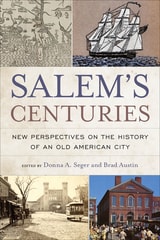
Salem's Centuries
New Perspectives on the History of an Old American CityEdited by Donna A. Seger and Brad Austin
Temple University Press, 2026
In advance of the city’s quadricentennial, the editors and contributors highlight the depth and diversity of Salem’s history, including stories of indigenous peoples, early settlers, African Americans, and immigrants, spanning from the American and industrial revolutions to World War II and the present. Chronologically arranged by century, chapters examine how Salem’s history has been lost or distorted in its public presentations over time.
Salem’s Centuries is a fresh look at an old American city. And yes, it includes the accused witches.
Contributors: Kimberly S. Alexander, Emerson W. Baker, Aviva Chomsky, Andrew Darien, Elizabeth Duclos-Orsello, Theresa Giard, Marilyn Hayward, Bethany Jay, Michele Louro, Elizabeth McKeigue, Robert W. McMicken, Dane A. Morrison, Maria Pride, J.D. Scrimgeour, Margo Shea, Hans Schwartz, Brian Valimont, Maryann Zujewski, and the editors
In the series History and the Public

Some Other Blues
New Perspectives on Amiri BarakaEdited by Jean-Philippe Marcoux
The Ohio State University Press, 2021
(Include contributors if space allows) Contributors: Tony Bolden, Jeremy Glick, William J. Harris, Benjamin Lee, Aidan Levy, John Lowney, Jean-Philippe Marcoux, Kim McMillon, Fred Moten, Michael New, Aldon Lynn Nielsen, Amy Abugo Ongiri, Gregory Pierrot, Howard Rambsy II, Emily Ruth Rutter, Anthony Reed, Lauri Scheyer, Kathy Lou Schultz, Michael Simanga, James Smethurst, Laura Vrana, Tyrone Williams, Kalamu ya Salaam.
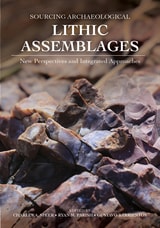
Sourcing Archeological Lithic Assemblages
New Perspectives and Integrated ApproachesEdited by Charles Speer, Ryan M. Parish, and Gustavo Barrientos
University of Utah Press, 2022
For most of our existence, humans have manipulated stone into tools that are essential for survival. Generally resistant to degradation, stone tools comprise a large portion of the material culture found at archaeological sites worldwide. Recovery of stone tools during archaeological excavation indicates the location where they were discarded, often tied to where they were used. “Sourcing” refers to attempts to determine the origin of the raw materials used to produce these tools. Knowing the beginning and end points of a tool’s use-life, as well as the likely paths it took between those two locations, can offer insight into trade and procurement patterns. The scholars gathered in this volume employ a variety of unique approaches to real-life contexts in multiple geographic regions. These studies illustrate the numerous, robust options available to archaeologists and researchers today, as well as the problems that must be faced and resolved.
Part 1 of the book explores technological approaches to sourcing in conjunction with innovative survey strategies. The chapters describe a particular method while often offering suggestions for improving the chemical analysis. Part 2 focuses on region-specific and methodological sourcing applications. In a concluding review, Michael D. Glascock critiques each of the chapters and presents his views, developed across 40 years of work in the field, on sourcing raw materials. Broadly, these contributions demonstrate how knowledge of lithic sources, geologic processes, the nature of variation, and regional availability can provide a more thorough understanding of past peoples.
State and Reservation
New Perspectives on Federal Indian PolicyEdited by George Pierre Castile and Robert L. Bee
University of Arizona Press, 1992
CONTENTS
Introduction, George Pierre Castile & Robert L. Bee
Part I—Historical Foundations of the Reservation System
An Elusive Institution: The Meanings of Indian Reservations in Gold Rush California, John M. Findlay
Crow Leadership Amidst Reservation Oppression, Frederick E. Hoxie
Part II—The Nonreservation Experience
Utah Indians and the Homestead Laws, Martha C. Knack
The Enduring Reservations of Oklahoma, John H. Moore
Without Reservation: Federal Indian Policy and the Landless Tribes of Washington, Frank W. Porter, III
Part III—Power and Symbols
Riding the Paper Tiger, Robert L. Bee
Indian Sign: Hegemony and Symbolism in Federal Indian Policy, George P. Castile
Part IV—The Resource Base
Primitive Accumulation, Reservations, and the Alaska Native Claims Settlement Act, Lawrence Weiss & David C.Maas
Shortcomings of the Indian Self-Determination Policy, George S. Esber, Jr.
Getting to Yes in the New West: The Negotiation of Policy, Thomas R. McGuire