Results by title
74 books match the query 'Oral history' and 7 start with s
Settlin’
Stories of Madison’s Early African American FamiliesMuriel Simms
Wisconsin Historical Society Press, 2018
Sistuhs in the Struggle
An Oral History of Black Arts Movement Theater and PerformanceLa Donna L. Forsgren
Northwestern University Press, 2021
Outstanding Academic Title, CHOICE
The first oral history to fully explore the contributions of black women intellectuals to the Black Arts Movement, Sistuhs in the Struggle reclaims a vital yet under-researched chapter in African American, women’s, and theater history. This groundbreaking study documents how black women theater artists and activists—many of whom worked behind the scenes as directors, designers, producers, stage managers, and artistic directors—disseminated the black aesthetic and emboldened their communities.
Drawing on nearly thirty original interviews with well-known artists such as Ntozake Shange and Sonia Sanchez as well as less-studied figures including distinguished lighting designer Shirley Prendergast, dancer and choreographer Halifu Osumare, and three-time Tony-nominated writer and composer Micki Grant, La Donna L. Forsgren centers black women’s cultural work as a crucial component of civil rights and black power activism. Sistuhs in the Struggle is an essential collection for theater scholars, historians, and students interested in learning how black women’s art and activism both advanced and critiqued the ethos of the Black Arts and Black Power movements.

Small Town America in World War II
War Stories from Wrightsville, PennsylvaniaRonald E. Marcello
University of North Texas Press, 2014
Small Well Lane
A Contemporary Chinese Play and Oral HistoryLi Longyun
University of Michigan Press, 2002
This authoritative translation by Hong Jiang and Timothy Cheek is accompanied by notes and annotations to help readers not familiar with China's modern history. A special appendix and ten photographs bring to life the culture of Beijing's famous back alleys.
This edition of Small Well Lane provides readers, and especially students of modern Chinese history, politics, and literature, with a compelling story of the human experience of Mao's revolution in China. It will be of interest to students of modern China and specialists in Chinese history and literature as well as to the general reader.
Li Longyun is a professional playwright working at the Beijing People's Art Theater. Hong Jiang is Assistant Professor of Chinese Language and Literature, Colorado College. Timothy Cheek is Associate Professor of History, Colorado College.
So They Understand
William Schneider
Utah State University Press, 2002
Illustrated with numerous stories collected from Alaska, the Yukon, and South Africa and further enlivened by the author's accessible style and experiences as a longtime oral historian and archivist, So They Understand is a comprehensive study of the special challenges and concerns involved in documenting, representing, preserving, and interpreting oral narratives. The title of the book comes from a quotation by Chief Peter John, the traditional chief of the Tanana Chiefs region in central Alaska: "In between the lines is something special going on in their minds, and that has got to be brought to light, so they understand just exactly what is said."
William Schneider discusses how stories work in relation to their cultures and performance settings, sorts out different types of stories-from broad genres such as personal narratives and life histories to such more specific and less-often considered types as presentations at hearings and other public gatherings-and examines a variety of critical issues, including the roles and relationships of storytellers and interviewers, accurate representation and preservation of stories and their performances, understanding and interpreting their cultural backgrounds and meanings, and intellectual property rights. Throughout, he blends a diverse selection of stories, including his own, into a text rich with pertinent examples.
William Schneider is curator of oral history and associate in anthropology at the Rasmuson Library, University of Alaska Fairbanks, where he introduced oral history "jukeboxes," innovative interactive, multimedia computer files that present and cross-reference audio oral history and related photos and maps. Among other works, his publications include, as editor, Kusiq: An Eskimo Life History from the Arctic Coast of Alaska and, with Phyllis Morrow, When Our Words Return: Writing, Hearing, and Remembering Oral Traditions of Alaska and the Yukon.
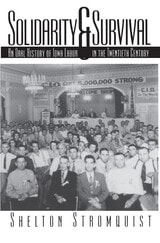
Solidarity and Survival
An Oral History of Iowa Labor in the Twentieth CenturyShelton Stromquist
University of Iowa Press, 1993
In Solidarity and Survival, three generations of Iowa workers tell of their unrelenting efforts to create a labor movement in the coal mines and on the rails, in packinghouses and farm equipment plants, on construction sites and in hospital wards. Drawing on nearly one thousand interviews collected over more than a decade by oral historians working for the Iowa Federation of Labor, AFL-CIO, Shelton Stromquist presents the resonant voices of the men and women who defined a new, prominent place for themselves in the lives of their communities and in the politics of their state.
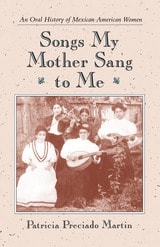
Songs My Mother Sang to Me
An Oral History of Mexican American WomenPatricia Preciado Martin
University of Arizona Press, 1992
Martin's quest took her to ranches, mining towns, and cities throughout southern Arizona, for she sought to document as varied an experience of the contributions of Mexican American women as possible. The interviews covered family history and genealogy, childhood memories, secular and religious traditions, education, work and leisure, environment and living conditions, rites of passage, and personal values. Each of the ten oral histories reflects not only the spontaneity of the interview and personality of each individual, but also the friendship that grew between Martin and her subjects.
Songs My Mother Sang to Me collects voices not often heard and brings to print accounts of social change never previously recorded. These women document more than the details of their own lives; in relating the histories of their ancestors and communities, they add to our knowledge of the culture and contributions of Mexican American people in the Southwest.