Results by title
179 books match the query 'Past' and 15 start with s
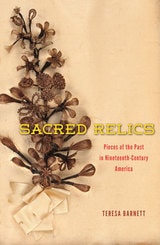
Sacred Relics
Pieces of the Past in Nineteenth-Century AmericaTeresa Barnett
University of Chicago Press, 2013
In Sacred Relics, Teresa Barnett explores the history of private collections of items like these, illuminating how Americans view the past. She traces the relic-collecting tradition back to eighteenth-century England, then on to articles belonging to the founding fathers and through the mass collecting of artifacts that followed the Civil War. Ultimately, Barnett shows how we can trace our own historical collecting from the nineteenth century’s assemblages of the material possessions of great men and women.
Salvaging the Past
Georges Hoentschel and French Decorative Arts from The Metropolitan Museum of Art, 1907-2013Daniëlle O. Kisluk-Grosheide
Bard Graduate Center, 2013
Science in the Forest, Science in the Past
Edited by Geoffrey E. R. Lloyd and Aparecida Vilaça
HAU, 2020
Science in the Forest, Science in the Past is a pioneering interdisciplinary exploration that will challenge the way readers interested in sciences, mathematics, humanities, social research, computer sciences, and education think about deeply held notions of what constitutes reality, how it is apprehended, and how to investigate it.
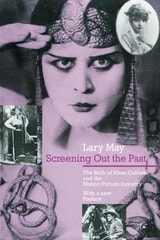
Screening Out the Past
The Birth of Mass Culture and the Motion Picture IndustryLary May
University of Chicago Press, 1983
"It is impossible to follow a narrow trail through the movies. The vistas keep opening, and May, linking movies to mass society, finds and makes new perceptions on emerging women, the rise of the studios, the special growth and appeal of Los Angeles, the nature of studio leadership and the early and persistent imputed corrupting power of film."—Charles Champlin, Los Angeles Times
"Lary May . . . has provided a set of new and rich insights into the changing patterns of American culture, 1890-1929. . . . His concentration on social and cultural history indirectly provides answers to questions which have baffled political historians for several decades."—David W. Noble, Minneapolis Tribune
"[Screening Out the Past is] a scrupulously argued, clearly written account of Hollywood's role in bringing America skipping and giggling from the Victorian world into the twentieth century. May is splendid on the psychology of the immigrant movie moguls, on Douglas Fairbanks and Mary Pickford as post Great War role models, and many other things."—Philip French, London Sunday Observor
"Altogether, the book represents the most successful blending of movie and cultural history to date."—Benjamin McArthur, Journal of Social History
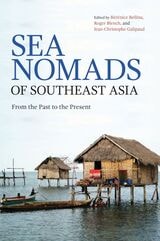
Sea Nomads of Southeast Asia
From the Past to the PresentEdited by Bérénice Bellina, Roger Blench, and Jean-Christophe Galipaud
National University of Singapore Press, 2020
For many years, the sea nomads were assumed to be without history, and even without archaeology. This has proven far from the case, and recent archaeological findings allow us to more closely describe sea nomadism from the Pleistocene through the early Holocene up to the present. Integrating these findings with the latest in historical research, linguistics, ethnography and historical genetics allows us to better understand sea-nomad ways of life over a scale of millennia and to appreciate the diversity and flexibility of this sea-nomad world. This in turn enriches our understanding of nomadism and mobility as ways of life more generally, and of the sea not only as a landscape of resources, but as a home and spiritual landscape.
Seeing the Past with Computers
Experiments with Augmented Reality and Computer Vision for HistoryKevin Kee and Timothy Compeau, Editors
University of Michigan Press, 2019
Seeing the Past with Computers is a collection of twelve thought-pieces on the current and potential uses of augmented reality and computer vision in historical research, teaching, and presentation. The experts gathered here reflect upon their experiences working with new technologies, share their ideas for best practices, and assess the implications of—and imagine future possibilities for—new methods of historical study. Among the experimental topics they explore are the use of augmented reality that empowers students to challenge the presentation of historical material in their textbooks; the application of seeing computers to unlock unusual cultural knowledge, such as the secrets of vaudevillian stage magic; hacking facial recognition technology to reveal victims of racism in a century-old Australian archive; and rebuilding the soundscape of an Iron Age village with aural augmented reality.
This volume is a valuable resource for scholars and students of history and the digital humanities more broadly. It will inspire them to apply innovative methods to open new paths for conducting and sharing their own research.
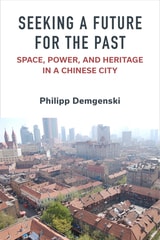
Seeking a Future for the Past
Space, Power, and Heritage in a Chinese CityPhilipp Demgenski
University of Michigan Press, 2024

Sense of History
The Place of the Past in American LifeDavid Glassberg
University of Massachusetts Press, 2001
As Americans enter the new century, their interest in the past has never been greater. In record numbers they visit museums and historic sites, attend commemorative ceremonies and festivals, watch historically based films, and reconstruct family genealogies. The question is, Why? What are Americans looking for when they engage with the past? And how is it different from what scholars call “history?”
In this book, David Glassberg surveys the shifting boundaries between the personal, public, and professional uses of the past and explores their place in the broader cultural landscape. Each chapter investigates a specific encounter between Americans and their history: the building of a pacifist war memorial in a rural Massachusetts town; the politics behind the creation of a new historical festival in San Francisco; the letters Ken Burns received in response to his film series on the Civil War; the differing perceptions among black and white residents as to what makes an urban neighborhood historic; and the efforts to identify certain places in California as worthy of commemoration. Along the way, Glassberg reflects not only on how Americans understand and use the past, but on the role of professional historians in that enterprise. Combining the latest research on American memory with insights gained from Glassberg's more than twenty years of personal experience in a variety of public history projects, Sense of History offers stimulating reading for all who care about the future of history in America.
Shadows on the Past
Studies in the Historical Fiction FilmLeger Grindon
Temple University Press, 1994
Studying popular Hollywood films from Gone With the Wind to Reds and such distinguished European films as La Marseillaise and The Rise to Power of Louis XIV, Leger Grindon examines how historical fiction films interpret the present through a representation of the past.
The historical fiction film is characterized by a set of motives and, Grindon argues, deserves to be considered a genre unto itself. Appropriation of historical events can insinuate a film's authority of its subject, veil an intention, provide an escape into nostalgia, or direct a search for knowledge and origins. Utilizing the past as a way of responding to social conflicts in the present, Grindon shows how the genre promotes a political agenda, superseding the influence of scholarship on the public's perception and interpretation of history.
In the series Culture and the Moving Image, edited by Robert Sklar.
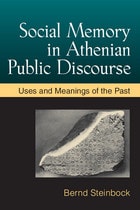
Social Memory in Athenian Public Discourse
Uses and Meanings of the PastBernd Steinbock
University of Michigan Press, 2013
Integrating literary, epigraphic, and archaeological evidence with recent scholarship on memory, identity, rhetoric, and international relations, Social Memory in Athenian Public Discourse: Uses and Meanings of the Past enhances our understanding of both the function of memory in Athenian public discourse and the history of Athenian-Theban relations. It should be of interest not only to students of Greek history and oratory but to everybody interested in memory studies, Athenian democracy, and political decision making.

Socialism
Past and FutureMichael Harrington
Pluto Press, 1993
Southern Nilotic History
Linguistic Approaches to the Study of the PastChristopher Ehret
Northwestern University Press, 1971
“As a history, the book is a remarkable tour de force. Using mainly linguistic evidence, the author locates populations, moves them around, determines their relative influence vis-à-vis their neighbors, and reconstructs aspects of their culture, from basic economy to the practice of extracting incisors.” —American Anthropologist
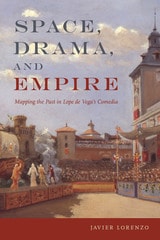
Space, Drama, and Empire
Mapping the Past in Lope de Vega's ComediaJavier Lorenzo
Bucknell University Press, 2023
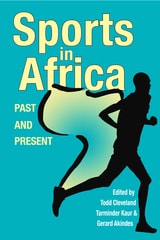
Sports in Africa, Past and Present
Todd Cleveland
Ohio University Press, 2020
These groundbreaking essays demonstrate how Africans past and present have utilized sports to forge complex identities and shape Africa’s dynamic place in the world.
Since the late nineteenth century, modern sports in Africa have both reflected and shaped cultural, social, political, economic, generational, and gender relations on the continent. Although colonial powers originally introduced European sports as a means of “civilizing” indigenous populations and upholding then current notions of racial hierarchies and “muscular Christianity,” Africans quickly appropriated these sporting practices to fulfill their own varied interests. This collection encompasses a wide range of topics, including women footballers in Nigeria, Kenya’s world-class long-distance runners, pitches and stadiums in communities large and small, fandom and pay-to-watch kiosks, the sporting diaspora, sports pedagogy, sports as resistance and as a means to forge identity, sports heritage, the impact of politics on sports, and sporting biography.
Study Guide to China
Adapting the Past, Confronting the FutureThomas Buoye
University of Michigan Press, 2003
Each section, in addition to essay and excerpts, also includes a bibliography of additional topical works as well as suggestions for complementary video and internet teaching resources.