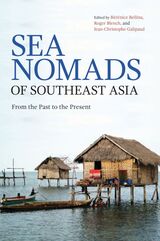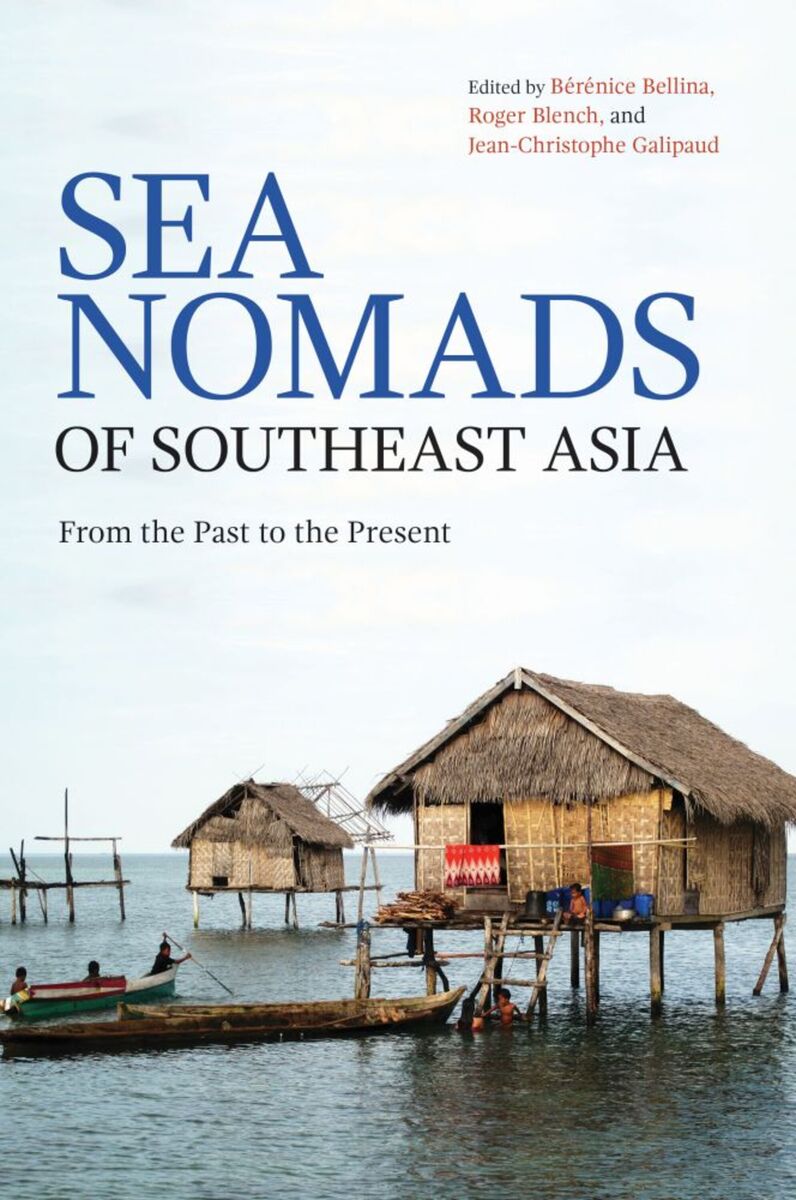
Sea Nomads of Southeast Asia: From the Past to the Present
National University of Singapore Press, 2020
Paper: 978-981-325-125-0
Library of Congress Classification GN635.S58S43 2021
Dewey Decimal Classification 305.9069180959
Paper: 978-981-325-125-0
Library of Congress Classification GN635.S58S43 2021
Dewey Decimal Classification 305.9069180959
ABOUT THIS BOOK | AUTHOR BIOGRAPHY | REVIEWS | TOC
ABOUT THIS BOOK
Sea nomads have been part of the economic and political landscape of Southeast Asia for millennia. They have played many roles over the longue-durée: in certain periods proving central to the ability of land-based polities to generate wealth, by sourcing valuable maritime commodities, facilitating trade, forming a naval force to secure and protect vital sea lanes and providing crucial connectivity. They have existed in complex, codified relations with different sedentary populations, as pirates, guardians of the sea-lanes, merchants and explorers. Paradoxically, as modern states emerged, the sea-nomads became progressively marginalized and impoverished.
For many years, the sea nomads were assumed to be without history, and even without archaeology. This has proven far from the case, and recent archaeological findings allow us to more closely describe sea nomadism from the Pleistocene through the early Holocene up to the present. Integrating these findings with the latest in historical research, linguistics, ethnography and historical genetics allows us to better understand sea-nomad ways of life over a scale of millennia and to appreciate the diversity and flexibility of this sea-nomad world. This in turn enriches our understanding of nomadism and mobility as ways of life more generally, and of the sea not only as a landscape of resources, but as a home and spiritual landscape.
For many years, the sea nomads were assumed to be without history, and even without archaeology. This has proven far from the case, and recent archaeological findings allow us to more closely describe sea nomadism from the Pleistocene through the early Holocene up to the present. Integrating these findings with the latest in historical research, linguistics, ethnography and historical genetics allows us to better understand sea-nomad ways of life over a scale of millennia and to appreciate the diversity and flexibility of this sea-nomad world. This in turn enriches our understanding of nomadism and mobility as ways of life more generally, and of the sea not only as a landscape of resources, but as a home and spiritual landscape.
See other books on: Commerce | Maritime History & Piracy | Past | Present | Seafaring life
See other titles from National University of Singapore Press