Results by title
57 books match the query 'Peasants' and 4 start with s
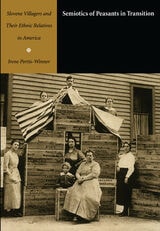
Semiotics of Peasants in Transition
Slovene Villagers and Their Ethnic Relatives in AmericaIrene Portis-Winner
Duke University Press, 2002
Describing a process of continuous and enduring interaction between these geographically separate communities, Portis-Winner explains how, for instance, financial assistance from the emigrants enabled their Slovenian hometown to survive the economic depressions of the 1890s and 1930s. She also analyzes the extent to which memories, rituals, myths, and traditional activities from Slovenia have sustained their Cleveland relatives. The result is a unique anthropological investigation into the signifying practices of a strongly cohesive—yet geographically split—ethnic group, as well as an illuminating application of semiotic analyses to communities and the complex problems they face.
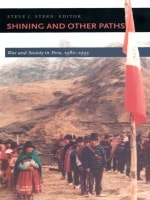
Shining and Other Paths
War and Society in Peru, 1980-1995Steve J. Stern, ed.
Duke University Press, 1998
The contributors—a team of Peruvian and U.S. historians, social scientists, and human rights activists—explore the origins, social dynamics, and long-term consequences of the effort by Shining Path to effect an armed communist revolution. The book begins by interpreting Shining Path’s emergence and decision for war as one logical culmination, among several competing culminations, of trends in oppositional politics and social movements. It then traces the experiences of peasants and refugees to demonstrate how human struggle and resilience came together in grassroots determination to defeat Shining Path, and explores the unsuccessful efforts of urban shantytown dwellers, as well as rural and urban activists, to build a “third path” to social justice. Integral to this discussion is an examination of women’s activism and consciousness during the years of the crisis. Finally, this book analyzes the often paradoxical and unintended legacies of this tumultuous period for social and human rights movements, and for presidential and military leadership in Peru.
Extensive field research, broad historical vision, and strong editorial coordination enable the authors to write a coherent and deeply humanistic account, one that draws out the inner tragedies, ambiguities, and conflicts of the war.
Providing historically grounded explication of the conflicts that reshaped contemporary Peru, Shining and Other Paths will be widely read by Latin Americanists, historians, anthropologists, gender theorists, sociologists, political scientists, and human rights activists.
Contributors. Jo-Marie Burt, Marisol de la Cadena, Isabel Coral Cordero, Carlos Iván Degregori, Iván Hinojosa, Carlos Basombrío Iglesias, Florencia E. Mallon, Nelson Manrique, Hortensia Muñoz, Enrique Obando, Patricia Oliart, Ponciano del Pino H., José Luis Rénique, Orin Starn, Steve J. Stern

Slaves, Peasants, and Rebels
Reconsidering Brazilian SlaveryStuart B. Schwartz
University of Illinois Press, 1992
Once preoccupied with Brazilian slavery as an economic system, historians shifted their attention to examine the nature of life and community among enslaved people. Stuart B. Schwartz looks at this change while explaining why historians must continue to place their ethnographic approach in the context of enslavement as an oppressive social and economic system. Schwartz demonstrates the complexity of the system by reconsidering work, resistance, kinship, and relations between enslaved persons and peasants. As he shows, enslaved people played a role in shaping not only their lives but Brazil’s institutionalized system of slavery by using their own actions and attitudes to place limits on slaveholders.
A bold analysis of changing ideas in the field, Slaves, Peasants, and Rebels provides insights on how the shifting power relationship between enslaved people and slaveholders reshaped the contours of Brazilian society.
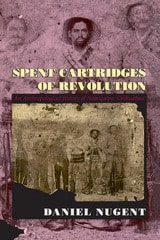
Spent Cartridges of Revolution
An Anthropological History of Namiquipa, ChihuahuaDaniel Nugent
University of Chicago Press, 1993
Daniel Nugent's approach combines an emphasis on peasants' own perceptions of Mexican society after the revolution with an analysis of the organization and formation of state power. He shows that popular discontent in Chihuahua is motivated not only by immediate economic crises but by two centuries of struggle between the people of Northern Mexico and the government.