Results by title
187 books match the query 'Place' and 18 start with s
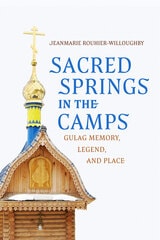
Sacred Springs in the Camps
Gulag Memory, Legend, and PlaceJeanmarie Rouhier-Willoughby
University of Wisconsin Press, 2026
Grounded by detailed ethnography, Sacred Springs in the Camps explores how legend creates, negotiates, and challenges collective memory; how lived religious practices intersect with the current revival of the Russian Orthodox Church; how politics intertwine with belief; and how the social construction of sacred places affects folk narratives, faith, and local identity. These unlikely holy waters thus reflect important facets of contemporary Russian religion, politics, and society, refracting and reframing memories of the socialist past even as they offer important lessons for the present moment.
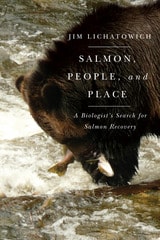
Salmon, People, and Place
A Biologist's Search for Salmon RecoveryJim Lichatowich
Oregon State University Press, 2013
In Salmon, People, and Place, acclaimed fisheries biologist Jim Lichatowich eloquently exposes the misconceptions underlying salmon management and recovery programs that have fueled the catastrophic decline in Northwest salmon populations for more than a century. These programs will continue to fail, he suggests, so long as they regard salmon as products and ignore their essential relationship with their habitat.
But Lichatowich offers hope. In Salmon, People, and Place he presents a concrete plan for salmon recovery, one based on the myriad lessons learned from past mistakes. What is needed to successfully restore salmon, Lichatowich states, is an acute commitment to healing the relationships among salmon, people, and place.
A significant contribution to the literature on Pacific salmon, Salmon, People, and Place: A Biologist’s Search for Salmon Recovery is an essential read for anyone concerned about the fate of this Pacific Northwest icon.

Salted Earth
Poetics of Place and Migration through Four Journeys in Search of SaltKaty Beinart
Intellect Books, 2026
While histories of salt have long emphasized its central role in trade, power, and capitalism, is that the only way to understand this everyday substance? In Salted Earth, artist and researcher Katy Beinart offers a fresh perspective, exploring the poetics of salt. Through a series of journeys to South Africa, Lithuania and Russia, Portugal, and Haiti, Beinart and her collaborators investigate the everyday rituals and cultural meanings of salt in diverse contexts. In her work, salt becomes a medium through which large-scale histories of migration, trade, empire, slavery, and colonialism—as well as deeply personal relationships, emotional geographies, memory, and intercultural connections—are symbolized and reimagined.
Drawing on fiction, poetry, and visual art, alongside family history, travel writing, trade archives, and artistic process, Beinart builds a rich, interdisciplinary portrait of salt as both a material and a cultural symbol. These journeys and embodied artistic practices open a sensorial and situated way of understanding material entanglements, where knowledge emerges through movement, encounter, and acts of making. Salted Earth offers valuable insights for students and researchers in art, creative writing, cultural history and geography, memory studies, and across the wider fields of aesthetics and the humanities.
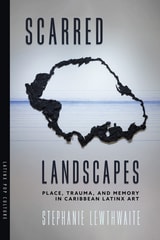
Scarred Landscapes
Place, Trauma, and Memory in Caribbean Latinx ArtStephanie Lewthwaite
University of Arizona Press, 2025
The book combines formal analysis with artist testimony, exhibition histories, and theoretical frameworks from trauma, memory, and archipelagic studies, to offer a multifaceted examination of Caribbean Latinx art. Lewthwaite explores how these artists practice “archipelagic memory,” a generative, decolonial, and coalitional form of memory work that envisions alternative modes of belonging in difference and solidarity with others. By connecting different people, pasts, and places, Caribbean Latinx artists expose the reverberations of trauma while imagining other worlds beyond it.
This work puts Caribbean Latinx artists at the center of debates about the exclusions of dominant memory narratives and contemporary art worlds, highlighting their contributions to a wider decolonial project of remembrance. By revealing the interconnectedness of traumatic histories and the potential for art to foster empathy and justice, Lewthwaite’s work underscores the importance of relational and decolonial thought for imagining a better society.
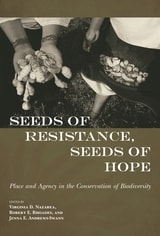
Seeds of Resistance, Seeds of Hope
Place and Agency in the Conservation of BiodiversityEdited by Virginia D. Nazarea, Robert E. Rhoades, and Jenna E. Andrews-Swann
University of Arizona Press, 2013
This broad collection brings to the table a bag full of tools from anthropology, sociology, genetics, plant breeding, education, advocacy, and social activism. By design, multiple voices are included. They cross or straddle disciplinary, generational, national, and political borders. Contributors demonstrate the importance of cultural memory in the persistence of traditional or heirloom crops, as well as the agency exhibited by displaced and persecuted peoples in place-making and reconstructing nostalgic landscapes (including gardens from their homelands). Contributions explore local initiatives to save native and older seeds, the use of modern technologies to conserve heirloom plants, the bioconservation efforts of indigenous people, and how genetically modified organisms (GMOs) have been successfully combated. Together they explore the conservation of biodiversity at different scales, from different perspectives, and with different theoretical and methodological approaches. Collectively, they demonstrate that there is reason for hope.
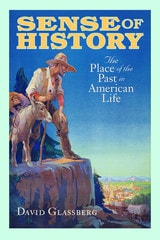
Sense of History
The Place of the Past in American LifeDavid Glassberg
University of Massachusetts Press, 2001
As Americans enter the new century, their interest in the past has never been greater. In record numbers they visit museums and historic sites, attend commemorative ceremonies and festivals, watch historically based films, and reconstruct family genealogies. The question is, Why? What are Americans looking for when they engage with the past? And how is it different from what scholars call “history?”
In this book, David Glassberg surveys the shifting boundaries between the personal, public, and professional uses of the past and explores their place in the broader cultural landscape. Each chapter investigates a specific encounter between Americans and their history: the building of a pacifist war memorial in a rural Massachusetts town; the politics behind the creation of a new historical festival in San Francisco; the letters Ken Burns received in response to his film series on the Civil War; the differing perceptions among black and white residents as to what makes an urban neighborhood historic; and the efforts to identify certain places in California as worthy of commemoration. Along the way, Glassberg reflects not only on how Americans understand and use the past, but on the role of professional historians in that enterprise. Combining the latest research on American memory with insights gained from Glassberg's more than twenty years of personal experience in a variety of public history projects, Sense of History offers stimulating reading for all who care about the future of history in America.
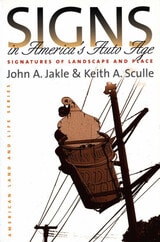
Signs in America's Auto Age
Signatures of Landscape and PlaceJohn A. & Keith A. Jakle & Sculle
University of Iowa Press, 2004
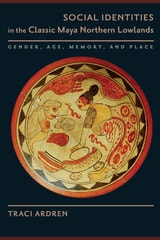
Social Identities in the Classic Maya Northern Lowlands
Gender, Age, Memory, and PlaceBy Traci Ardren
University of Texas Press, 2015
Using new archaeological data from four major cities of the Classic Maya world, this book explores how gender, age, familial and community memories, and the experience of living in an urban setting interacted to form social identities.
Social Identities in the Classic Maya Northern Lowlands plumbs the archaeological record for what it can reveal about the creation of personal and communal identities in the Maya world. Using new primary data from her excavations at the sites of Yaxuna, Chunchucmil, and Xuenkal, and new analysis of data from Dzibilchaltun in Yucatan, Mexico, Traci Ardren presents a series of case studies in how social identities were created, shared, and manipulated among the lowland Maya.
Ardren argues that the interacting factors of gender, age, familial and community memories, and the experience of living in an urban setting were some of the key aspects of Maya identities. She demonstrates that domestic and civic spaces were shaped by gender-specific behaviors to communicate and reinforce gendered ideals. Ardren discusses how child burials disclose a sustained pattern of reverence for the potential of childhood and the power of certain children to mediate ancestral power. She shows how small shrines built a century after Yaxuna was largely abandoned indicate that its remaining residents used memory to reenvision their city during a time of cultural reinvention. And Ardren explains how Chunchucmil’s physical layout of houses, plazas, and surrounding environment denotes that its occupants shared an urban identity centered in the movement of trade goods and economic exchange. Viewing this evidence through the lens of the social imaginary and other recent social theory, Ardren demonstrates that material culture and its circulations are an integral part of the discourse about social identity and group membership.
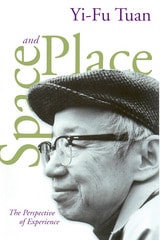
Space And Place
The Perspective of ExperienceYi-Fu Tuan
University of Minnesota Press, 2001
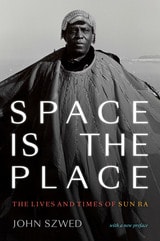
Space Is the Place
The Lives and Times of Sun RaJohn Szwed
Duke University Press, 2020
Space and Place in Jewish Studies
Mann, Barbara E
Rutgers University Press, 2012
Scholars in the humanities have become increasingly interested in questions of how space is produced and perceived—and they have found that this consideration of human geography greatly enriches our understanding of cultural history. This “spatial turn” equally has the potential to revolutionize Jewish Studies, complicating familiar notions of Jews as “people of the Book,” displaced persons with only a common religious tradition and history to unite them.
Space and Place in Jewish Studies embraces these exciting critical developments by investigating what “space” has meant within Jewish culture and tradition—and how notions of “Jewish space,” diaspora, and home continue to resonate within contemporary discourse, bringing space to the foreground as a practical and analytical category. Barbara Mann takes us on a journey from medieval Levantine trade routes to the Eastern European shtetl to the streets of contemporary New York, introducing readers to the variety of ways in which Jews have historically formed communities and created a sense of place for themselves. Combining cutting-edge theory with rabbinics, anthropology, and literary analysis, Mann offers a fresh take on the Jewish experience.
Space, Place, and Gender
Doreen Massey
University of Minnesota Press, 1994
Spirit of the Place
From Mauthausen to MomaPéter György
Central European University Press, 2008
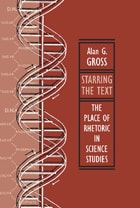
Starring the Text
The Place of Rhetoric in Science StudiesAlan G. Gross
Southern Illinois University Press, 2006
Starring the Text: The Place of Rhetoric in Science Studies firmly establishes the rhetorical analysis of science as a respected field of study. Alan G. Gross, one of rhetoric’s foremost authorities, summarizes the state of the field and demonstrates the role of rhetorical analysis in the sciences. He documents the limits of such analyses with examples from biology and physics, explores their range of application, and sheds light on the tangled relationships between science and society. In this deep revision of his important Rhetoric of Science, Gross examines how rhetorical analyses have a wide range of application, effectively exploring the generation, spread, certification, and closure that characterize scientific knowledge. Gross anchors his position in philosophical rather than in rhetorical arguments and maintains there is rhetorical criticism from which the sciences cannot be excluded.
Gross employs a variety of case studies and examples to assess the limits of the rhetorical analysis of science. For example, in examining avian taxonomy, he demonstrates that both taxonomical and evolutionary species are the product of rhetorical interactions. A review of Newton’s two formulations of optical research illustrates that their only significant difference is rhetorical, a difference in patterns of style, arrangement, and argument. Gross also explores the range of rhetorical analysis in his consideration of the “evolution of evolution” of Darwin’s notebooks. In his analysis of science and society, he explains the limits of citizen action in executive, judicial, and legislative democratic realms in the struggle to prevent, ameliorate, and provide adequate compensation for occupational disease. By using philosophical, historical, and psychological perspectives, Gross concludes, rhetorical analysis can also supplement other viewpoints in resolving intellectual problems.
Starring the Text, which includes fourteen illustrations, is an updated, readable study geared to rhetoricians, historians, philosophers, and sociologists interested in science. The volume effectively demonstrates that the rhetoric of science is a natural extension of rhetorical theory and criticism.
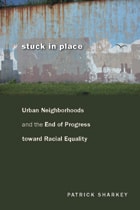
Stuck in Place
Urban Neighborhoods and the End of Progress toward Racial EqualityPatrick Sharkey
University of Chicago Press, 2013
In the 1960s, many believed that the civil rights movement’s successes would foster a new era of racial equality in America. Four decades later, the degree of racial inequality has barely changed. To understand what went wrong, Patrick Sharkey argues that we have to understand what has happened to African American communities over the last several decades. In Stuck in Place, Sharkey describes how political decisions and social policies have led to severe disinvestment from black neighborhoods, persistent segregation, declining economic opportunities, and a growing link between African American communities and the criminal justice system.
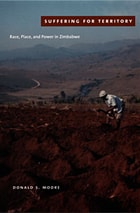
Suffering for Territory
Race, Place, and Power in ZimbabweDonald S. Moore
Duke University Press, 2005
Moore makes a significant contribution to postcolonial theory with his conceptualization of “entangled landscapes” by articulating racialized rule, situated sovereignties, and environmental resources. Fusing Gramscian cultural politics and Foucault’s analytic of governmentality, he enlists ethnography to foreground the spatiality of power. Suffering for Territory demonstrates how emplaced micro-practices matter, how the outcomes of cultural struggles are contingent on the diverse ways land comes to be inhabited, labored upon, and suffered for.
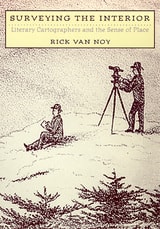
Surveying The Interior
Literary Cartographers And The Sense Of PlaceRick Van Noy
University of Nevada Press, 2003
From a cartographer who wrote to a writer who mapped, the literary significance of surveying is revealed in this study of human relationships to the landscape. From the very beginning, American literature was closely intertwined with surveying. In Surveying the Interior, Rick Van Noy explores the ways that four American literary cartographers—Henry David Thoreau, Clarence King, John Wesley Powell, and Wallace Stegner—concerned themselves with what it means to map or survey a place and what it means to write about it. In the process, he helps define the ways by which space enters the human psyche as definable place, as well as the ways by which physical landscape is transmuted into a sense of place as an intimate, personal manifestation of both physical and existential realities.
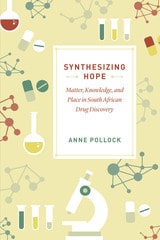
Synthesizing Hope
Matter, Knowledge, and Place in South African Drug DiscoveryAnne Pollock
University of Chicago Press, 2019
Consideration of this case exposes the limitations of global health frameworks that implicitly posit rich countries as the only sites of knowledge production. Analysis of iThemba identifies the problems inherent in global north/south divides at the same time as it highlights what is at stake in who makes knowledge and where. It also provides a concrete example for consideration of the contexts and practices of postcolonial science, its constraints, and its promise.
Synthesizing Hope explores the many legacies that create conditions of possibility for South African drug discovery, especially the specific form of settler colonialism characterized by apartheid and resource extraction. Paying attention to the infrastructures and laboratory processes of drug discovery underscores the materiality of pharmaceuticals from the perspective of their makers, and tracing the intellectual and material infrastructures of South African drug discovery contributes new insights about larger social, political, and economic orders.