Results by title
183 books match the query 'Places' and 13 start with s
SENTIENCE
Meredith Stricker
Omnidawn, 2026
Poetry that invites us to transform our sense of kinship, mutuality, and reciprocity.
With this collection, poet and artist Meredith Stricker considers questions about personhood, belonging, property, and ownership within interdependent living cultural systems. Looking beyond humans alone, she considers whether animals dream, who our relations are, what interior lives are held within words, and whether the world is truly alive to us today or if it is simply something we experience through screens. The poems track bee swarms and hazardous waste, separation walls, and diatoms. They are intently visual, aural, and spatial, tracing the dendritic forms of trees and fractal coastlines and the symmetries of biomorphic animal patterns. They highlight non-artificial, non-extractive intelligences in sharp contrast to the rise of AI. Informed by biosemiotics, SENTIENCE arises from Stricker's continuing multidisciplinary work and architectural habitat restoration in Big Sur and her performance collaborations with musicians, composers, artists, and beekeepers.
Sacred Objects and Sacred Places
Preserving Tribal TraditionsAndrew Gulliford
University Press of Colorado, 2000
The author traveled thousands of miles over a ten-year period to meet and interview tribal elders, visit sacred places, and discuss the power of sacred objects in order to present the essential debates surrounding tribal historic preservation. Without revealing the exact locations of sacred places (unless tribes have gone public with their cultural concerns), Gulliford discusses the cultural significance of tribal sacred sites and the ways in which they are being preserved. Some of the case studies included are the Wyoming Medicine Wheel, Devil's Tower National Monument, Mount Shasta in California, Mount Graham in Arizona, and the Sweet Grass Hills in Montana. Federal laws are reviewed in the context of tribal preservation programs, and tribal elders discuss specific cases of repatriation.
Though the book describes numerous tribal tragedies and offers examples of cultural theft, Sacred Objects and Sacred Places affirms living traditions. It reveals how the resolution of these controversies in favor of native people will ensure their cultural continuity in a changing and increasingly complex world. The issues of returning human remains, curating sacred objects, and preserving tribal traditions are addressed to provide the reader with a full picture of Native Americans' struggles to keep their heritage alive.

Selected Poems
Jean Garrigue. Introduction by J. D. McClatchy
University of Illinois Press, 1992
Selected Poems is compiled from the best works in Jean Garrigue's eight published collections. Garrigue (1914-72) is recognized as a leading American poet of the fifties and sixties. Among her awards and honors were a Guggenheim fellowship and a National Institute of Arts and Letters grant.
Send Down Einstein
Paul Hecht
Swan Isle Press, 2026
A comic and melancholy novel about translation and living between cultures, set during one historic day in Spain: February 21, 1981, the attempted coup against the newborn Spanish democracy.
Early one morning in 1981, Peter Carp, an American poet and translator living in Granada, wakes to the sounds of shouting and the revving of a motorcycle. These interruptions to Peter’s sleep provoke a series of interrelated thoughts, delivered with wry humor, about personal relations in Spain, gossip, the role of women in a patriarchal society, and the after-effects of expelling the Jewish population from Spain in 1492. We are introduced to Peter’s associative view of the world as he draws on a lifetime of reading poetry, of making sense of his own Jewish sensibility, and how it relates to the cultural history of the Spain he has come to love for its music, people, food, and language.
Peter lives in the home of Alberto, a professor of translation, who was once jailed under Franco’s regime. He has fallen in love with Ana, a young woman who is exploring the new freedoms of post-Franco Spain. Years ago, he had befriended flamenco singers of the Roma community, and his current task is to translate the flamenco lyrics he has collected, a process that challenges his understanding of Spanish and the capacity of language to convey meaning. His day brings him into contact with a wide range of Spaniards, including a gardener at the Alhambra, a group of children playing in the street, a professional beggar, a diverse range of personalities at a neighborhood bar before the midday dinner, and in the evening, a small band of fascist sympathizers encouraged by the attempted coup now taking place in the Spanish parliament.
With prose that mixes social observation, linguistic conjecture, and vivid description, Paul Hecht examines how living is itself a form of translation when moving from one language or culture to another, and how history can erupt into our own world. In Send Down Einstein, Hecht creates a tension between what we dream will happen and what actually does happen. In this bouillabaisse of emotion, the reader will taste how, for Peter Carp—with the right food and the best company—dreams, hope, and words can matter.
Separate Destinations
Migration, Immigration, and the Politics of PlacesJames G. Gimpel
University of Michigan Press, 1999
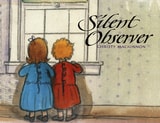
Silent Observer
Christy MacKinnon
Gallaudet University Press, 1993
Silent Observer is an affectionate, poignant memoir of childhood as seen through the eyes of a vivacious young girl. Teachers, parents, and children will share in their enjoyment of this beautiful, sensitive story of a harder but wonderful time that has passed.
Sky Below
Selected WorksRaul Zurita; Translated from the Spanish and with an introduction by Anna Deeny Morales
Northwestern University Press, 2016
Something Small of How to See a River
Teresa Dzieglewicz
Tupelo Press, 2025
Something Small of How to See a River interrogates the idea of narrative. Who gets to tell a story and what does it mean when the official story, the story told by the governor, the police, or the local media, is a fundamentally dishonest one? The poems collected here meditate on failure: how systems fail us and our environment, how whiteness fails to hold itself accountable, how future generations and the land are being failed—and how, in the face of all this, the Standing Rock movement was not a failure. At the heart of this collection is the strength, care, and radical joy of the movement, which shines through and against the violence.
Song of the Cicadas
Anne Mong-Lan Pham
University of Massachusetts Press, 2001
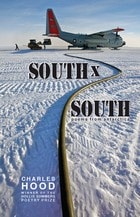
South × South
Poems from AntarcticaCharles Hood
Ohio University Press, 2013
A vivid and insightful look at the culture and terrain of Antarctica, as well as the people who choose to live and work there, South × South celebrates and explores life at the extreme edge of our planet. Blending travel narrative, historical research, and the surprises of magical realism, Hood presents life in Antarctica and the history of polar aviation as both a miracle of achievement yet also as a way to understand humanity’s longing to be creatures of the heavens as well as the earth. South × South is poetry at its most inventive and surprising, insisting that the world is stranger and more glorious than we ever might have guessed.
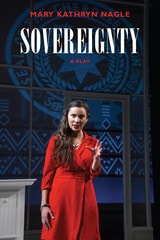
Sovereignty
A PlayMary Kathryn Nagle
Northwestern University Press, 2020
A powerful meditation of the echoes of history and the never-ending struggle for sovereignty
Sovereignty unfolds over two parallel timelines. In present-day Oklahoma, a young Cherokee lawyer, Sarah Ridge Polson, and her colleague Jim Ross defend the inherent jurisdiction of Cherokee Nation in the U.S. Supreme Court when a non-Indian defendant challenges the Nation’s authority to prosecute non-Indian perpetrators of domestic violence. Their collaboration is juxtaposed with scenes from 1835, when Cherokee Nation was eight hundred miles to the east in the southern Appalachians. That year, Sarah’s and Jim’s ancestors, historic Cherokee rivals, were bitterly divided over a proposed treaty with the administration of Andrew Jackson, the Treaty of New Echota, which led to the nation’s removal to Oklahoma on the infamous Trail of Tears.
A direct descendant of nineteenth-century Cherokee leaders John Ridge and Major Ridge, Mary Kathryn Nagle has penned a play that twists and turns from violent outbursts to healing monologues, illuminating a provocative double meaning for the sovereignty of both tribal territory and women’s bodies. Taking as its point of departure the story of one lawyer’s passionate defense of the rights of her people to prosecute non-natives who commit crimes on reservations, Sovereignty opens up into an expansive exploration of the circular continuity of history, human memory, and the power of human relationships.
Spoon River Anthology
An Annotated EditionEdgar Lee Masters. Edited and with an Introduction and Annotations by John E. Hallwas
University of Illinois Press, 1992
What lies beneath the surface of Masters' timeless classic
One of the most striking and original achievements in American poetry is now available in a remarkable edition that comprehends the poet and his book in an entirely new way.
This edition of Spoon River Anthology probes the social background of the small-town world that Edgar Lee Masters loved and hated--and finally transmuted into powerful literary art. Extensive annotations identify the people whose lives inspired the 243 poetic accounts of frustration, violence, struggle, and triumph that shocked American readers.
The most extraordinary feature of this edition is the extensive introduction that provides the key to this misunderstood American classic. The book's relationship to Whitman is clearly established, and the important influences of Browning, Goethe, Spinoza, and others are revealed for the first time. John Hallwas' approach combines cultural, biographical, philosophical, psychoanalytic, mythic, and symbolic insights--and concludes with a stunning reassessment of "Our New Poet."
The annotated Spoon River Anthology supersedes seventy-five years of largely misdirected critical commentary. It will send a new generation of readers back to this surprisingly complex book that probes so deeply into the American consciousness.
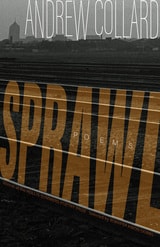
Sprawl
PoemsAndrew Collard
Ohio University Press, 2023
Within the larger geographical space of the metropolis are the in-between places of personal significance: the gas stations, burger joints, malls, and parking lots where many of the defining moments of ordinary lives occur. These poems take deep inspiration from such places, insisting on the value of the people found there, along with their experiences. What might be considered high and low culture are as inextricably linked in the formal cues of the poems as they are in the Michigan landscape, influenced by pop music, midcentury modern aesthetics, comic books, and cars.
While the sprawl of the title refers to the seemingly endless succession of businesses and neighborhoods extending north from Detroit (“a sprawl this extensive breeds / empty pockets”), it also invokes the sprawl of history through poems that move between the past and present. One sequence of poems built on old newspaper clippings draws attention to a Chrysler plant that once constructed Redstone missiles. Elsewhere, two poems refer to the Detroit newspaper strike of the 1990s, a local controversy with lasting implications for the community. Sprawl ultimately illuminates the relationship of one place to other places, contextualizing its characters and locales within a wider societal frame.