Results by title
557 books match the query 'Poems' and 44 start with s
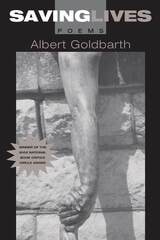
SAVING LIVES
POEMSAlbert Goldbarth
The Ohio State University Press, 2001

SIGN BROKEN, MESSAGE INSIDE
PoemsSusanna Schantz
University of Massachusetts Press, 2027
A debut collection of poems that question authority with wit and clarity
“Words lead on to words” is both provocation and method in SIGN BROKEN, MESSAGE INSIDE, Susanna Schantz’s debut collection rooted in examining the roadside church signs near her South Carolina home. These poems are at turns humorous and polemical, a deft call-and-response, taking the lure and scold of these marquees as prompts for close reading and reinvention. From the local, she sketches a portrait of the national, offering an “orison / from the republic of readers,” and asking with one illuminated placard, “what will our words be like today?”
Treating church signs as a public language—communal, persuasive, sometimes backhanded—these poems expose the friction between proclamation and reception, between belonging and exclusion. They press on questions of gender and agency in faith and civic life: what role women are meant to play in the church, and what might happen if a woman were to “sail beyond this place on her / own wings and a prayer.” Formally alive, Schantz’s lines stretch, scatter, and rearrange across the page, their shapes mirroring a refusal to be contained by the cramped wit of the marquee. Her diction is tactile and bodily, reconnecting language to sensation: “fall[ing] to one’s knees / not in surrender, but / simply to luxuriate / in the cool mud.” Elsewhere, a more bristling music rises: “alphabets of tick bytes / and sacramental snaps / Climbing into our avatars / we thread our way in.” The poems’ bold sounds and rhythms echo the urgency of the signs themselves even as they reclaim their message.
“She has seen signs, and wonders,” the epigraph promises; this book delivers both. In Schantz’s hands, the roadside semaphore becomes a threshold and a mirror, inviting readers to decide: When is it enough to observe, and when must we answer back?
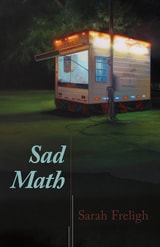
Sad Math
PoemsSarah Freligh
Moon City Press, 2015
In Sad Math, Sarah Freligh takes us for a ride through an American girlhood, a retrospective landscape of parking in cars and illicit kisses in a Donut Delite. Here, time is measured not only in days and years but in physical distance, a past that is understandable only when viewed through a rearview mirror. Along the way, there are not only losses, but also the accumulation of experience and the insistence of possibility.
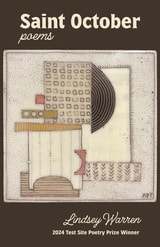
Saint October
PoemsLindsey Warren
University of Nevada Press, 2026
Saint October is a collection of title-less poems that create a network throughout the season of autumn. With challenging language and surprising imagery, these poems lift the rock of superficial autumnal beauty and examine the finer details of death and transformation, often daring the reader to leave their comfort zone. Saint October begins by taking an objective look at the last gleams of summer and quickly re-grounds itself by participating in the dynamic processes of a new season. Loss and rebirth weave these poems together as the speaker listens to the earth’s last words before she passes into death and stalks the secrets she took to her grave.
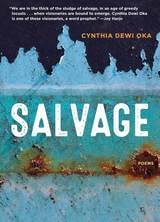
Salvage
PoemsCynthia Dewi Oka
Northwestern University Press, 2018
Throughout it insistently interrogates what it means to reach for our humanity through the guises of nation, race, and gender. Oka’s language transports us through the many bodies of fluid poetics that inhabit our migrating senses and permeate across generations into a personal diaspora. Salvage invites us to be without borders.
Sand Theory
PoemsWilliam Olsen
Northwestern University Press, 2011
The energy of Olsen’s poems is generated by his ability to meld the intellectual and the emotional, the abstract and the concrete, into a seamless whole while maintaining a sense of wit and playfulness. Sand Theory cements Olsen’s standing as one of the most vital poets writing today, an audacious chronicler of “the supremely open moment.”
Sappho to Valéry
Poems in TranslationJohn Frederick Nims
University of Arkansas Press, 1990
Revised and enlarged, the second edition of Sappho to Valéry includes both the originals and translations of ninety-eight poems from nine different languages. Nims offers new and lively interpretations of a number of poems that have been translated and others available in no other English translation.
A former editor of Poetry, John Frederick Nims has published several volumes of his own poetry, poetry in translation, and essays on the form.
Scream / Queen
PoemsCD Eskilson
Acre Books, 2025
Scream / Queen, CD Eskilson’s debut poetry collection, examines queerness, mental illness, and transgender identity through the lens of thrillers and B movies. The Creature from the Black Lagoon, Michael Myers, and the Headless Horseman are just a few of the fright-film villains and monsters that populate this book.
Eskilson’s formally innovative poems document how a body—a nonbinary transgender body, a chronically ill body, a body carrying trauma—can be understood, accepted, and healed even in a violent sociopolitical climate. Drawing on the language and images of horror cinema, the poems’ speakers find strength and the means to survive both family legacy and the pain inflicted on them: “I want to behemoth, be the biggest / violence in the galaxy,” says one who thinks about Godzilla and dreams of “learning how to roar.”
Though an atmosphere of trans panic and state legislation against trans bodies pervades the book, Scream / Queen ultimately conjures a world of hope and tenderness through connection and care. It celebrates all the body’s possibilities: the glorious and the monstrous. As a werewolf in the book says, “I kiss the moon; it took so long / to get here.”
Secret History
PoemsDavid Barber
Northwestern University Press, 2020
In David Barber’s third collection of poetry, the past makes its presence felt from first to last. Drawing on a wealth of eclectic sources and crafted in an array of nonce forms, these poems range across vast stretches of cultural and natural history in pursuit of the forsaken, long-gone, and unsung.
Here is the stuff of lost time unearthed from all over: ballyhoo and murder ballad, the lacrimarium and the xylotheque, the Game of Robbers and the Indian Rope Trick, the obsolete o’o, the old-school word hoard, sunshowers and beaters and breaker boys. Here, to mark the twilight of print and type, are gleanings and borrowings from a mixed bag of throwback bound volumes: The Magic Moving Picture Book, Mandeville’s Travels, The Golden Bough, Franklin Arithmetic, The Millennial Laws of the Shakers, A Conjuror’s Confessions.
Here too are guiding spirits whose like will not pass this way again: Cab Calloway at the Cotton Club; Henry Walter Bates in darkest Amazon; George Catlin among the Choctaw; Little Nemo in Slumberland; Yogi Berra in all his oracular glory. Reveling in vernacular lingo of every vintage even while brooding on dark ages without end, Secret History chronicles a world of long shadows and distant echoes that bears more than a passing resemblance to our own.
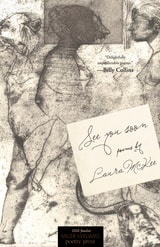
See You Soon
PoemsLaura McKee
University of Arkansas Press, 2016
Finalist, 2016 Miller Williams Poetry Prize
The poems in See You Soon explore the limits of metaphor and language as their voices speak from the beauty and strangeness of daily experience, testing how we make sense of ourselves to ourselves and to one another. There is love in these poems, there is failure and absurdity. The characters, in their various situations and guises, find themselves outside of time, space, and identity—at sunset, in an airport, outside a hookah lounge, as a birthday party clown, after a flood. Its message is the invitation of the title. See You Soon is a statement of the complexity of our mutual direction in time, of camaraderie along the way.
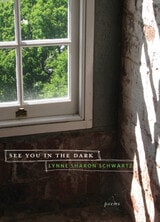
See You in the Dark
PoemsLynne Sharon Schwartz
Northwestern University Press, 2012
Despite her indifference to genre, Schwartz takes a profound delight in poetic forms, appropriating the sonnet, the prose poem, and the envoi. She brings an easygoing musicality to her work, which ranges from parodic translations of Verlaine to instructions for making the perfect soup to a meditation on an Ecstasy trip. No artificial line between high and low culture divides Schwartz's world: she is equally intrigued by the metaphor of gardening, the work of artist Jenny Holzer, the bandits Frank and Jesse James (maybe distant relatives of Henry and William?), and the unintentional poetry of Craigslist's "missed connection" section.
Filled with wisdom, humor, and deep insight, See You in the Dark is poetry for readers not bounded by genre.
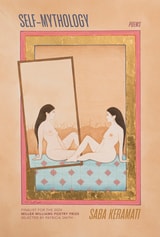
Self-Mythology
PoemsSaba Keramati
University of Arkansas Press, 2024
Winner, 2025 Nossrat Yassini Poetry Prize
In the search for a true home, what does it mean to be confronted instead by an insurmountable sense of otherness? This question dwells at the center of Saba Keramati’s Self-Mythology, which explores multiraciality and the legacy of exile alongside the poet’s uniquely American origin as the only child of political refugees from China and Iran. Keramati navigates her ancestral past while asking what language and poetry can offer to those who exist on the margins of contemporary society. Constantly scanning her world for some likeness that would help her feel less of an outsider, the poet writes, “You could cut me in half. Send the left side with my mother, / right with my father. Shape what’s missing out of clay // from their lands and still I would not belong.” Blending the personal and the political, Self-Mythology considers the futurity of diaspora in America while revealing its possibilities.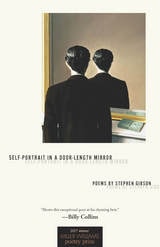
Self-Portrait in a Door-Length Mirror
PoemsStephen Gibson
University of Arkansas Press, 2017
Winner of the 2017 Miller Williams Poetry Prize, edited by Billy Collins
“Shows this exceptional poet at his rhyming best.”
—Billy Collins
Self-Portrait in a Door-Length Mirror presents the mirror that reflects not always what is, but what is desired, or not desired. In the opening poem, the speaker, Diane Arbus, looks at her very early pregnant self and asks, “Why would I bring you into this world?” This book answers that question, or tries to: the world is what it is as we try to live as our best selves in that world. But that knowledge of the world is hard and has consequences, and not in the abstract, as Gibson’s poetry dynamically shows.
Employing new formalism, Self-Portrait in a Door-Length Mirror examines historical, familial, and personal pasts as those pasts continue into the present, reminding us, as Faulkner wrote, “The past is never dead. It’s not even past.”
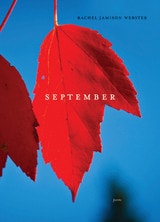
September
PoemsRachel Jamison Webster
Northwestern University Press, 2013
The poems in Rachel Webster’s debut collection September often address a fleeting moment. Like the month, the moment can be a single leaf falling or a season of life. Webster’s pastoral poems address personal physical change in the seasons of life, including childhood, love, motherhood, and death. Together they lead the reader through a lyrical landscape of conversation, meditation, and healing. The work of a poet sensitive to worlds external and internal, September speaks to the core of life and the simplicity of human events and the natural world around us.
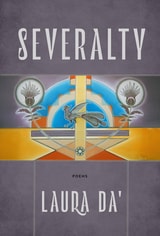
Severalty
PoemsLaura Da'
University of Arizona Press, 2025
With clear roots in her first two books of poetry, Tributaries and Instruments of the True Measure, this volume joins the author’s poetic trilogy with a deeply personal accounting of history, community, and selfhood.
Weaving the past and present into a stunning tapestry, this collection is a powerful testament to Indigenous endurance and creativity, offering readers a deeply insightful and necessary work.
Sex Depression Animals
PoemsMag Gabbert
The Ohio State University Press, 2023
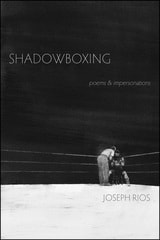
Shadowboxing
poems & impersonationsJoseph Rios
Omnidawn, 2017

Shining Sheep
PoemsUlrike Almut Sandig
Seagull Books, 2024
In the beginning, was the light, or was it the Lumières? In Ulrike Almut Sandig’s latest volume of poetry, it is only a leap from the creation of the world to the symphony of the Berlin metropolis. And there is a question holding out off the coast of Lampedusa: Can shining sheep be used as night storage for the dark hours, when we are overwhelmed with fears of God, of a gym teacher with a whistle, of mothers with eyes as black as coal? In devastating sequences, Sandig charts the reality of an abused child, victims of contemporary war, or a fourteenth-century Madonna. Full of humor, musicality, lightness, and rage, Shining Sheep is not just visual poetry—it has loops in your ear and filmic explosions of imagery for all your senses.
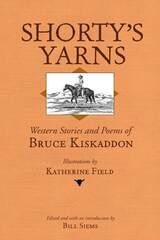
Shorty's Yarns
Western Stories and Poems of Bruce Kiskaddonedited by Bill Siems, illustrations by Katherine Field
Utah State University Press, 2004
In the world of cowboy poetry, no poet is better known or more widely appreciated than Bruce Kiskaddon. Though he died in 1950 his poems have been at the forefront of the cowboy poetry revival that began in the 1980s and have been reprinted frequently in published collections and anthologies. What is less known is that Kiskaddon during his lifetime also published stories. These humorous, realistic prose sketches of cowboy life were almost lost, but they are in their own right gems of literary Americana on a par with the poems. Originally published in the Western Livestock Journal between 1932 and 1939, the short stories drew on Kiskaddon's own experience of ranching in the Southwest and Australia to portray real life on the range. Bill Siems has recovered these stories and compiled and introduced them in this new collection, to which he has added a selection of Kiskaddon's poems and the original drawings that accompanied them, by Katherine Field, a fine, underappreciated western artist.
Set in Colorado, New Mexico, and Arizona, the stories are a loosely tied string of old timer's yarns with a continuing cast of engaging characters, whom Kiskaddon avoids reducing to cowboy stereotypes. They include, as Siems describes them, "Kiskaddon himself as the character Shorty. As a common waddy with a small man's feistiness and a young man's mischief, Shorty encounters the wicked world with a succession of companions: Bill, high-headed and a bit of an outlaw; Rildy Briggs, untamable and unstoppable young cowgirl; and Ike, an old-fashioned dandy and 'a very fortunate person.' More or less in the background is the Boss-actually a series of Bosses-generally affectionately respected as long as he remains democratic in his dealings with the waddies. Buffoonery is provided by a succession of pompous characters, from townspeople who look down their noses on wild, unwashed waddies to professors from the East who have read books on how ranches should be run."
Show Me Your Environment
Essays on Poetry, Poets, and PoemsDavid Baker
University of Michigan Press, 2014
In Show Me Your Environment, a penetrating yet personable collection of critical essays, David Baker explores how a poem works, how a poet thinks, and how the art of poetry has evolved—and is still evolving as a highly diverse, spacious, and inclusive art form. The opening essays offer contemplations on the “environment” of poetry from thoughts on physical places and regions as well as the inner aesthetic environment. Next, Baker looks at the highly distinctive achievements and styles of poets ranging from George Herbert and Emily Dickinson through poets writing today. Finally, he takes joy in reading individual poems—from the canonical to the contemporary; simply and closely.
Slow Burn
PoemsEvan Wang, Ching-In Chen
Northwestern University Press, 2026
Winner of the 2024 Drinking Gourd Chapbook Poetry Prize
Persistent yet flickering, Slow Burn unveils a passionate world where love is both impossible and inevitable. Divided into three sections, Evan Wang’s debut chapbook traces the confrontation of the self through a cyclical journey of discovery and contradiction, ultimately leading to the choice of allowance: that which is made by the reader. These poems slowly burn first through our own inner silence, then through the thick dark of night, and finally to abstract closure—or lack thereof. They urge and hold us back, begging us to understand how, amid cultural, societal, and political suppression of the self, we kiss the muscled mouths of the world by carrying our bodies through it. Slow Burn is a romantic’s answer to the search for love, and the strangely comforting realization that the effects of the world mark us all.
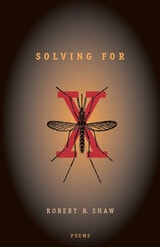
Solving For X
PoemsRobert B. Shaw
Ohio University Press, 2002
In Solving for X, his award-winning collection of new poems, Robert B. Shaw probes the familiar and encounters the unexpected; in the apparently random he discerns a hidden order. Throughout, Shaw ponders the human frailties and strengths that continue to characterize us, with glances at the stresses of these millennial times that now test our mettle and jar our complacency. Often touched with humor, his perceptions are grounded in devoted observation of the changing world.
As in his previous collections, Shaw in these poems unites conversational vigor with finely crafted metrical lines. Final judge Rachel Hadas says it best: “Solving for X is droll and puzzled, elegiac and satirical in equal measure. Shaw’s attention alights on a variety of more and less tangible things—a seed catalog, a shirt, a bad book, a request for a letter of recommendation, an irritating colleagues’s death—which his masterfully packed lines then proceed to light up with deliberate and unforgettable authority.”
Some Girls Survive on Their Sorcery Alone
PoemsThiahera Nurse
Northwestern University Press, 2019
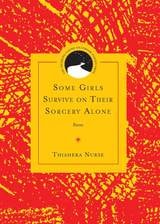
Some Girls Survive on Their Sorcery Alone sees Renisha McBride, Sandra Bland, Korrynn Gaines, and others not as ornamental nor does the book attempt to canonize the dead women as saints. The poems see them as they are: play-cousins, home-girls, the mirror. Line to line, there is an obsession with keeping all of the women in the poems safe and perhaps resurrectable. The black girl who is alive here lives to switch her waistline to a reggae beat. She is in the middle of the dance floor with a suicide note in her purse as a means of warding off bad juju. Always, she is chasing joy head-on, at warp speed.
Some Girls Survive on Their Sorcery Alone is a celebration that the black girl will always dance, in the church basement, a grandmother’s funeral repast—she dances until she hits the floor, in her joy . . . and her grief.
Song of the Bamboo Spear
Poems, A Bilingual EditionNam-ju Kim (1945–1994)
Rutgers University Press, 2027
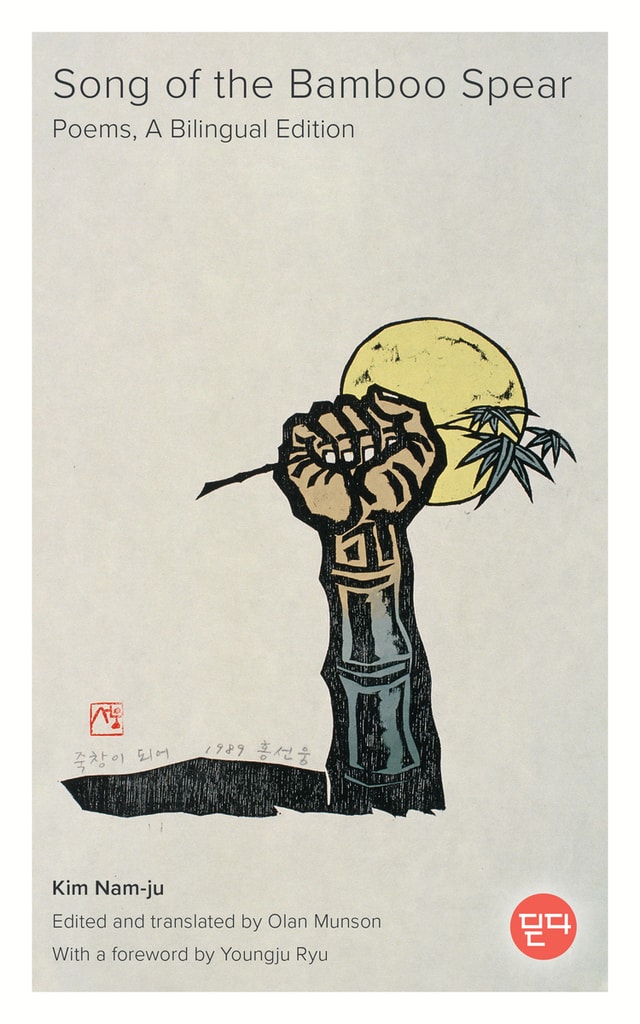
This book debuts selected poetry by Kim Nam-ju (1946–1994) in English translation, along with the original Korean. Referred to as the “Che Guevara of South Korea,” and self-described a “warrior poet,” Kim Nam-ju remains, to this day, an enduring voice of the 1970s and 80s cultures of anti-authoritarian resistance in South Korea. Kim was arrested in 1979 for his involvement with the “South Josǒn” National Liberation Front, a leftist underground group organizing against the Yushin regime. Kim wrote prolifically while in prison (1979-1988), at times by etching his poems into scraps of foil, milk carton, or cigarette packages. The work he produced in prison alone totals around 360 poems. This bilingual volume selects 65 poems from Kim's oeuvre, sampling across many different chapters of the poet’s career. Readers will find autobiographical reflections on his childhood, love poems, missives from the prison cell, commemorations of the Kwangju Uprising, the poet’s calls to arms, and more.
이 책은 김남주 시인(1946~1994)의 시 65편을 한국어 원문과 함께 영문 번역으로 처음 선보인다. ‘한국의 체 게바라’로 불리며 스스로를 ‘전사 시인’이라 칭했던 김남주는 오늘날까지도 한국의 1970·80년대 반독재 저항운동을 대표하는 사라지지 않는 목소리로 남아 있다. 김남주는 유신정권에 맞서 결성된 좌파 지하조직 ‘남조선민족해방전선준비위원회’에 가담한 혐의로 1979년에 체포되었다. 1979년부터 1988년에 이르는 수감 기간에도 꾸준히 창작 활동을 이어갔으며, 때로는 은박지 조각이나 우유곽, 담뱃갑 등에 시를 새겨 집필하기도 하였다. 이 시기에 쓴 작품만 해도 360여 편에 이른다. 이 영역시집은 시인의 전체 작품 중에서 65편의 시를 엄선하여 시인의 생애와 창작 활동의 다양한 시기를 아우르는 시적 여정을 한눈에 보여준다. 독자들은 시인의 어린 시절에 대한 자전적인 회고, 사랑의 시, 옥중 서한, 5·18 광주항쟁을 추모하는 시, 민중의 투쟁을 촉구하는 시 등 다양한 작품을 만나볼 수 있을 것이다.
English-Korean Bilingual Edition
영-한 이중언어판
This book is published with the support of the Literature Translation Institute of Korea (LTI Korea)
Sound Fury
PoemsMark Levine
University of Iowa Press, 2022
Soundless Roar
Stories, Poems, and DrawingsAva Kadishson Schieber
Northwestern University Press, 2002
Schieber's drawings, paintings, poetry, and prose are all intimate reflections of one another. Her experience forged the unusual sense of time that shapes Schieber's stories. In her preface, Phyllis Lassner writes: "The timetable of Ava's stories often consists of circles within circles, of patterns of an intertwined past, the past present of hiding, and the present looking back at those distinctly separate but inseparable pasts."

South × South
Poems from AntarcticaCharles Hood
Ohio University Press, 2013
A vivid and insightful look at the culture and terrain of Antarctica, as well as the people who choose to live and work there, South × South celebrates and explores life at the extreme edge of our planet. Blending travel narrative, historical research, and the surprises of magical realism, Hood presents life in Antarctica and the history of polar aviation as both a miracle of achievement yet also as a way to understand humanity’s longing to be creatures of the heavens as well as the earth. South × South is poetry at its most inventive and surprising, insisting that the world is stranger and more glorious than we ever might have guessed.
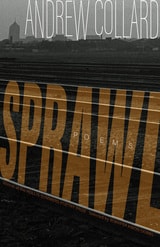
Sprawl
PoemsAndrew Collard
Ohio University Press, 2023
Within the larger geographical space of the metropolis are the in-between places of personal significance: the gas stations, burger joints, malls, and parking lots where many of the defining moments of ordinary lives occur. These poems take deep inspiration from such places, insisting on the value of the people found there, along with their experiences. What might be considered high and low culture are as inextricably linked in the formal cues of the poems as they are in the Michigan landscape, influenced by pop music, midcentury modern aesthetics, comic books, and cars.
While the sprawl of the title refers to the seemingly endless succession of businesses and neighborhoods extending north from Detroit (“a sprawl this extensive breeds / empty pockets”), it also invokes the sprawl of history through poems that move between the past and present. One sequence of poems built on old newspaper clippings draws attention to a Chrysler plant that once constructed Redstone missiles. Elsewhere, two poems refer to the Detroit newspaper strike of the 1990s, a local controversy with lasting implications for the community. Sprawl ultimately illuminates the relationship of one place to other places, contextualizing its characters and locales within a wider societal frame.
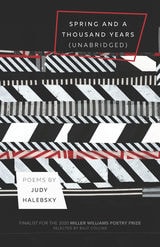
Spring and a Thousand Years (Unabridged)
PoemsJudy Halebsky
University of Arkansas Press, 2020
A translator’s notebook, an almanac, an ecological history, Judy Halebsky’s Spring and a Thousand Years (Unabridged) moves between multiple intersections and sign systems connected in a long glossary poem that serves as the book’s guide to what is lost, erased, or disrupted in transition both from experience to written word and from one language, location, and time period to another.
Writers Li Bai, Matsuo Bashō, Sei Shōnagon, and Du Fu make frequent appearances in centuries ranging from the eighth to the twenty-first, and appear in conversation with Grace Paley, Donald Hall, and Halebsky herself, as the poet explores subjects ranging from work and marriage to environmental destruction. Asking what would happen if these poets—not just their work—appeared in California, the poems slip between different geographies, syntaxes, times, and cultural frameworks.
The role of the literary translator is to bring text from one language into another, working to at once shift and retain the context of the original—from one alphabet to another, one point in time to another. These are poems in homage to translation; they rely on concepts that can bridge time and space, and as a result are as likely to find meaning in donuts or Zumba as they are to find it in the ocean. Spring and a Thousand Years (Unabridged) finds reasons for hope not in how the world should be, but in how it has always been.
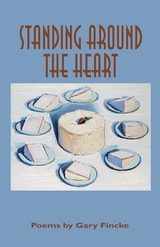
Standing around the Heart
PoemsGary Fincke
University of Arkansas Press, 2005

Stars at Noon
Poems from the Life of Jacqueline CochranEnid Shomer
University of Arkansas Press, 2001
These poems give voice to the life of the first woman to fly faster than the speed of sound. While Jacqueline Cochran was alive, no man or woman in the world could match her records for speed, distance, and altitude flying. Founder and director of the Women’s Airforce Service Pilots (WASP) during World War II, Cochran continued to fly competitively until she was sixty, owned and operated her own line of designer cosmetics for three decades, ran for Congress, and generally placed herself on the path of history. Having begun life as a foundling in the crushing poverty of a lumber company town of the Florida panhandle, she described her life as “a passage from sawdust to stardust.” Yet after her death she has barely been remembered.
Poet Enid Shomer brings back this mercurial, dazzling, powerful woman. These poems speak in her voice and in the voices of her mother, teachers, husband, confidants, and political opponents, shaped by Shomer’s consummate formal control and stunning lyricism.
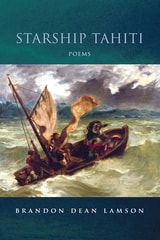
Starship Tahiti
PoemsBrandon Dean Lamson
University of Massachusetts Press, 2013
The poems in Brandon Dean Lamson's first volume, Starship Tahiti, explore imprisoned bodies and the tension between captivity and imagination. Beginning on Rikers Island, the book traces a creation myth in reverse, moving from prison to the spacious arches of Grand Central Station to the shores of the Chesapeake Bay.
Lamson examines themes of violence, gender, and identity in various real and imagined settings where inmates read Antigone, Howlin' Wolf sings in a black barbershop, and Metallica records burn on a Viking altar. Throughout these shifts, the poems construct fractured narratives that subvert linear storytelling. The layering of voice and imagery in this collection transgresses boundaries between the secular and the sacred, and between the communal and the personal. As the speaker of “Portland Bardo” says, “The fragile, in between state of larvae hatching / is no less desirable than full bloom in a city of roses, if such a city can ever be found.”
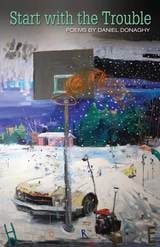
Start with the Trouble
PoemsDaniel Donaghy
University of Arkansas Press, 2009
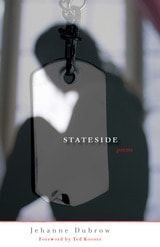
Stateside
PoemsJehanne Dubrow
Northwestern University Press, 2010
Winner, 2012 Alice Fay Di Castagnola Award from the Poetry Society of America
Winner, Individual Artist's Award from the Maryland State Arts Council
First Prize, Anna Davidson Rosenberg Poetry Award for Poems on the Jewish Experience (for three poems from her manuscript-in-progress, "The Arranged Marriage")
Although the poems in Stateside are concerned with a husband's deployment to the war in Iraq, Jehanne Dubrow's riveting collection is driven more by intellectual curiosity and emotional exploration than by any overt political agenda. The speaker in these poems attempts to understand her situation within the long history of military wives left to wait and wonder – Penelope is a model, but also a source of mystery. These poems are dazzling in their use of form, their sensual imagery, and their learnedness, and possess a level of subtlety and control rarely found in the work of a young poet. Dubrow is fearless in her contemplation of the far-reaching effects of war, but even more so in her excavation of a marriage under duress.
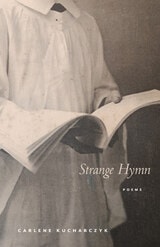
Strange Hymn
PoemsCarlene Kucharczyk
University of Massachusetts Press, 2025
Winner of the 2025 Vermont Book Award for Poetry!
“I’ll tell you everything I know. Though there might not be much to tell,” confesses the speaker in Strange Hymn by Carlene Kucharczyk, in a meticulously crafted lyrical journey exploring morality and humanity. The poems here grapple with understanding physical loss: “I wanted / to know at once and definitively our animal bodies / were not all we were. It is shameful to be this fragile.” They also engage with the more abstract slipping away of memory and time: “Since I was born, I have been forgetting. Forgetting what I have wanted to remember.” Kucharczyk’s insightful poems blur the lines between history and myth, love and grief, song and silence.
Caught between lamenting the passage of time and rejoicing in small beauties, she writes, “I tell you, I wish we could stay here longer / in this hotel of lost grandeur, this palace of interesting disarray, / and stay here with these pieces of the impersonal past / that have somehow not yet outlasted their small lights.” Each moment reflects on our ephemeral lives from musings on art and nature to reflections on the self, asking “Is a mirror a sort of glass house? / And, is there a way to see ourselves besides through the glass?”
As readers traverse this collection, they learn how the body sings, the many iterations of Mary, what sirens truly think of Odysseus, how a Morning Glory unfurls, and lessons in orthodontics, but most importantly, how to live with absence. Kucharczyk is a master of manipulating time and space through her dynamic use of form, creating a narrative that begs, “After I’m gone, don’t bury my body— / Burn it, and turn it into song.”
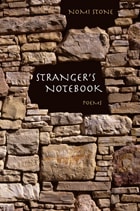
Stranger's Notebook
PoemsNomi Stone
Northwestern University Press, 2008
Stone's moving debut collection of verse is inspired by her encounter with perhaps the last cohesive, traditional Jewish community in the Middle East and North Africa. According to their story of origin, a handful of exiles arrived on the island of Djerba, Tunisia, in 586 B.C., carrying a single stone from the destroyed Temple in Jerusalem. Drawing from this cosmology, the poems follow a stranger who arrives into an ancient community that is both at home and deeply estranged on the island. Its people occupy the uneasy space of all insular communities, deciding when to let the world in and when to shut it out. The poems are about the daily lives and deeper cosmos of the Jews of Djerba as well as the Muslims next door. In her exploration, Stone sees vivid recurring images of keys, stones, homes, the laughter of girls, the eyes of men, the color blue, and the force of blood or bombs. With this journey of faith, doubt, longing, and home, Stone has brought readers a rare look into a story that resonates powerfully with questions of cultural preservation and coexistence.
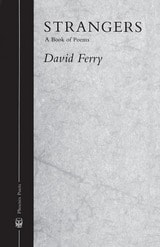
Strangers
A Book of PoemsDavid Ferry
University of Chicago Press, 1983
"Strangers is a remarkably good book for a reader sufficiently attentive to hear its quiet power, to let it work in its distinctive way."—Boston Globe
"The poems of David Ferry's Strangers are in fact one book, and it is a splendid one. There is the same austere and poignant voice throughout, asking the unanswerable things, speaking of all that is withheld from us, confronting the unknownness that dwells even in the familiar and dear. Painful and touching, the book offers a distinctive vision which is at the same time inescapably true."—Richard Wilbur
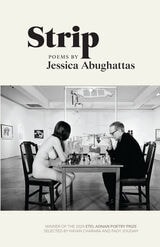
Strip
PoemsJessica Abughattas
University of Arkansas Press, 2020
“The mystery that Abughattas composes is always moving toward an impossible freeing of the self from its numerous frames. Yet frame by frame . . . she suspends our disbelief, catalogs those potentialities in an America always ready to shoot, direct, and produce the film of itself. Strip is ‘in love with possibility,’ ‘in praise of here I am, here I’ve been,’ USA style. Strip celebrates the body—its rise and fall, ebb and flow, in a carnival of parties—restlessly, shamelessly, searching for a way out…. Even as Abughattas claims that ‘I can’t believe sometimes I have a body,’ her poems teem with an awareness of the body’s unavoidable centrality in our lives—in how we view our lives, and how others view them; in how they progress, and how they end; in how they become meaningful, and how they are stripped of meaning. And no stripping escapes memory. Whether in terms of dispossession or sexuality, admiration or pity, Abughattas renders her treatment of the body with candor and poignancy. . . . The most startling moments in Abughattas’s poems, however, depend not on shocking or intimate details—but on the ‘I’ pulling away from the self, abandoning the ego, and gazing outward. She tries to see something else, to escape the body’s restraints.”
—Fady Joudah and Hayan Charara, from the Preface
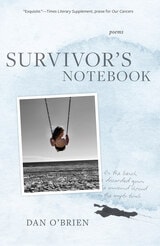
Survivor's Notebook
PoemsDan O'Brien
Acre Books, 2023
Dan O’Brien’s powerful companion to Our Cancers catalogs the recovery of a cancer survivor, whose wife has recently survived her own cancer, as he returns to his daily life while raising a young daughter. This prose-poem sequence is a true survivor’s notebook, using photos and the tools of memoir to evoke how disaster can constellate our past, present, and future.
In his poems, plays, and nonfiction, Dan O’Brien has explored, as he says in a 2023 interview, “how trauma shatters identity, and in its aftermath we reconfigure and rewrite, as it were, the story of who we were and are and maybe will be.” In highly personal poems reminiscent of dramatic monologues, as well as shorter lyric fragments, the protagonist reconsiders the people and places he knew before his illness, including his estranged family and others with cancer. While looking back he moves forward again, resuming his career as a writer and teacher, revisiting Ireland, and making a kind of pilgrimage to the Holy Land. There is a confiding and at times comical tone in these poems as O’Brien awakens to the delights, absurdities, and wonders of existence, and as he and his wife work through the aftershocks of their trauma toward a deeper love.
With text and image, Survivor’s Notebook shows how we go on, with resilience, gratitude, and joy, when “the emergency’s elsewhere” now.
Survivor's Notebook
PoemsDan O’Brien
Acre Books, 2023
In his poems, plays, and nonfiction, Dan O’Brien has explored, as he says in a 2023 interview, “how trauma shatters identity, and in its aftermath we reconfigure and rewrite, as it were, the story of who we were and are and maybe will be.” In highly personal poems reminiscent of dramatic monologues, as well as shorter lyric fragments, the protagonist reconsiders the people and places he knew before his illness, including his estranged family and others with cancer. While looking back he moves forward again, revisiting Ireland, resuming his career as a writer and teacher, and making a kind of pilgrimage to the Holy Land. There is a confiding and at times comical tone in these poems, as he awakens to the delights, absurdities, and wonders of existence, and as he and his wife work through the aftershocks of their trauma toward a deeper love.
Survivor’s Notebook shows how we go on, with resilience, gratitude, and joy, when “the emergency’s elsewhere” now.
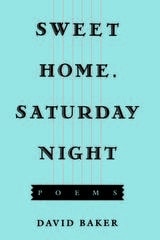
Sweet Home, Saturday Night
PoemsDavid Baker
University of Arkansas Press, 1991
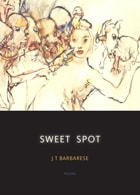
Sweet Spot
PoemsJ.T. Barbarese
Northwestern University Press, 2012
Classical deities and down-and-out junkies, high school sweethearts and the inner life of JFK—these are the coordinates of J.T. Barbarese’s terrain. The poems in Sweet Spot set up shop where average lived experience meets American history. Masterfully evokes both the specific land- and cityscapes of his poems as well the psychological types of the varied characters that populate them, Sweet Spot confirms Barbarese’s preeminence as a chronicler of the heroic everyday, the telling detail, the subtle reminders of the human predicament hidden in habit and memory.
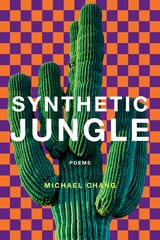
Synthetic Jungle
PoemsMichael Chang
Northwestern University Press, 2023
A vital breath of life arrives in American poetry with Synthetic Jungle, the latest collection from acclaimed poet Michael Chang. With poems in a register both hilarious and scathing, Synthetic Jungle effortlessly bashes convention while simultaneously rebuilding the language we use to communicate our fears and joys.
Synthetic Jungle is a collection written by a brilliant jester who winks at you as you catch their every reference before sharing a laugh at your own self-satisfaction. Themes of identity, sexuality, and literacy play out in a dizzying rhythm of microtheaters. Readers will find themselves giggling, snorting, and guffawing their way through this work: whether at a repudiation of the literary landscape or a critique of a failing justice system, to laugh along with Chang is to recognize your mistakes and, ultimately, grow from them.
Fractal and kinetic in the quick-witted spirit of John Ashbery and Emily Dickinson, Chang’s tender poems dance around, between, and through the personal and philosophical. Synthetic Jungle is as sweet as it is grand, and beneath its sarcastic grin reverberates an immense, open heart.
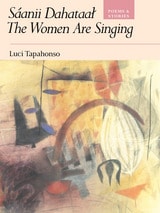
Sáanii Dahataal/The Women Are Singing
Poems and StoriesLuci Tapahonso
University of Arizona Press, 1993
Luci Tapahonso shows how the details of everyday life—whether the tragedy of losing a loved one or the joy of raising children, or simply drinking coffee with her uncle—bear evidence of cultural endurance and continuity. Through her work, readers may come to better appreciate the different perceptions that come from women's lives.