Results by title
3785 books match the query 'Poetry' and 342 start with s
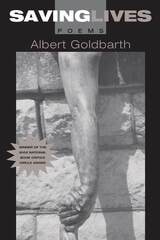
SAVING LIVES
POEMSAlbert Goldbarth
The Ohio State University Press, 2001
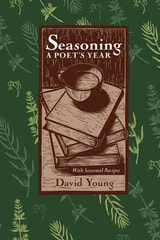
SEASONING
A Poet’s Year, with Seasonal RecipesDavid Young
The Ohio State University Press, 1999
Set in northeastern Ohio, where the author has lived and worked for close to forty years, Seasoning demonstrates that an “unremarkable” place—no grand scenery, no special claims to beauty—can be the perfect setting in which to learn about animals, plants, food, geology, history, weather, and time. Coming to terms with place and time, and connecting them, the author suggests, may be our true task in life.
Among the many distinctive features of this lovely book are the recipes, arranged seasonally and revealing Young’s preference for natural foods prepared with care.
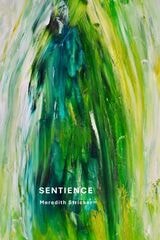
SENTIENCE
Meredith Stricker
Omnidawn, 2026
Poetry that invites us to transform our sense of kinship, mutuality, and reciprocity.
With this collection, poet and artist Meredith Stricker considers questions about personhood, belonging, property, and ownership within interdependent living cultural systems. Looking beyond humans alone, she considers whether animals dream, who our relations are, what interior lives are held within words, and whether the world is truly alive to us today or if it is simply something we experience through screens. The poems track bee swarms and hazardous waste, separation walls, and diatoms. They are intently visual, aural, and spatial, tracing the dendritic forms of trees and fractal coastlines and the symmetries of biomorphic animal patterns. They highlight non-artificial, non-extractive intelligences in sharp contrast to the rise of AI. Informed by biosemiotics, SENTIENCE arises from Stricker's continuing multidisciplinary work and architectural habitat restoration in Big Sur and her performance collaborations with musicians, composers, artists, and beekeepers.

SIGN BROKEN, MESSAGE INSIDE
PoemsSusanna Schantz
University of Massachusetts Press, 2027
A debut collection of poems that question authority with wit and clarity
“Words lead on to words” is both provocation and method in SIGN BROKEN, MESSAGE INSIDE, Susanna Schantz’s debut collection rooted in examining the roadside church signs near her South Carolina home. These poems are at turns humorous and polemical, a deft call-and-response, taking the lure and scold of these marquees as prompts for close reading and reinvention. From the local, she sketches a portrait of the national, offering an “orison / from the republic of readers,” and asking with one illuminated placard, “what will our words be like today?”
Treating church signs as a public language—communal, persuasive, sometimes backhanded—these poems expose the friction between proclamation and reception, between belonging and exclusion. They press on questions of gender and agency in faith and civic life: what role women are meant to play in the church, and what might happen if a woman were to “sail beyond this place on her / own wings and a prayer.” Formally alive, Schantz’s lines stretch, scatter, and rearrange across the page, their shapes mirroring a refusal to be contained by the cramped wit of the marquee. Her diction is tactile and bodily, reconnecting language to sensation: “fall[ing] to one’s knees / not in surrender, but / simply to luxuriate / in the cool mud.” Elsewhere, a more bristling music rises: “alphabets of tick bytes / and sacramental snaps / Climbing into our avatars / we thread our way in.” The poems’ bold sounds and rhythms echo the urgency of the signs themselves even as they reclaim their message.
“She has seen signs, and wonders,” the epigraph promises; this book delivers both. In Schantz’s hands, the roadside semaphore becomes a threshold and a mirror, inviting readers to decide: When is it enough to observe, and when must we answer back?
SPOT IN THE DARK
BETH GYLYS
The Ohio State University Press, 2004
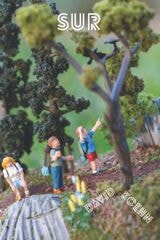
SUR
David Koehn
Omnidawn, 2024
Drawing on a range of stylistic influences, the poetry of Sur takes on the essence of connection and the ways in which we continually develop meaning about others and to the natural world. With this collection, David Koehn paints a landscape where wilderness intertwines with human emotions and grows between ill-fitting interpersonal connections. Sur invites readers to step back and look critically at their world while remaining intimately intertwined with it. Throughout, imagery of nature—like a snake drinking from a stream, or a mountain god—blends with the emotional landscape of tumultuous relationships, exploring themes of wildness and an inevitable unraveling of secrets.
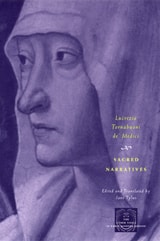
Sacred Narratives
Lucrezia Tornabuoni de' Medici
University of Chicago Press, 2001
This is the first major collection in any language of her extensive body of religious poems. Ranging from gentle lyrics on the Nativity to moving dialogues between a crucified Christ and the weeping sinner who kneels before him, the nine laudi (poems of praise) included here are among the few such poems known to have been written by a woman. Tornabuoni's five storie sacre, narrative poems based on the lives of biblical figures-three of whom, Judith, Susanna, and Esther, are Old Testament heroines-are virtually unique in their range and expressiveness. Together with Jane Tylus's substantial introduction, these poems offer us both a fascinating portrait of a highly educated and creative woman and a lively sense of cultural and social life in Renaissance Florence.
Sacrifice Your Love
Psychoanalysis, Historicism, ChaucerL.O. Aranye Fradenburg
University of Minnesota Press, 2002
A long-awaited reevaluation of Chaucer through the lens of sacrifice by a major figure in medieval studies
Historicism and its discontents have long been central to the work of Louise Fradenburg, one of the world’s most original and provocative literary medievalists. Sacrifice Your Love brings this interest to bear on Chaucer’s writing and his world, rethought in light of a theory of sacrifice and its part in cultural production. Fradenburg writes the "history of the signifier"—a way of reading change in the symbolic order—and its role in making sacrifice enjoyable.
Sacrifice Your Love develops the idea that sacrifice is a mode of enjoyment—that our willingness to sacrifice our desire is actually a way of pursuing it. Fradenburg considers the implications of this idea for various problems important in medieval studies today—how to understand the religiosity of cultural forms, particularly chivalry, in the later Middle Ages and how to understand the ethics of Chaucer’s famously nondidactic poetry—as well as in other fields of inquiry. A major rethinking of Chaucer, Sacrifice Your Love works in depth as well as across a broad range of topics from medievalism to psychoanalysis, advancing both the theory and practice of a new kind of historicist approach.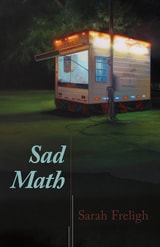
Sad Math
PoemsSarah Freligh
Moon City Press, 2015
In Sad Math, Sarah Freligh takes us for a ride through an American girlhood, a retrospective landscape of parking in cars and illicit kisses in a Donut Delite. Here, time is measured not only in days and years but in physical distance, a past that is understandable only when viewed through a rearview mirror. Along the way, there are not only losses, but also the accumulation of experience and the insistence of possibility.

Saga / Circus
Lyn Hejinian
Omnidawn, 2008
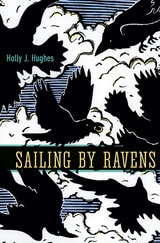
Sailing by Ravens
Holly J. Hughes
University of Alaska Press, 2014
“These poems of the sea begin with a school girl’s fascination for ‘the blue sea holding captive all the land’ and end as the seasoned sailor learns that ‘even the old charts/ can’t navigate the wild shoals of your heart.’ Along the way we are shipmates through days of fishing, sailing, loving, and losing as Hughes navigates the lure, lore, and loneliness of a sea that is both natural force and metaphor. I love Sailing by Ravens with its salt of the sea, salt of our deepest lives.”
—Gary Thompson, author of One Thing After Another

Saint October
PoemsLindsey Warren
University of Nevada Press, 2026
Saint October is a collection of title-less poems that create a network throughout the season of autumn. With challenging language and surprising imagery, these poems lift the rock of superficial autumnal beauty and examine the finer details of death and transformation, often daring the reader to leave their comfort zone. Saint October begins by taking an objective look at the last gleams of summer and quickly re-grounds itself by participating in the dynamic processes of a new season. Loss and rebirth weave these poems together as the speaker listens to the earth’s last words before she passes into death and stalks the secrets she took to her grave.

Saint Petersburg Notebook
Ann Lauterbach
Omnidawn, 2014
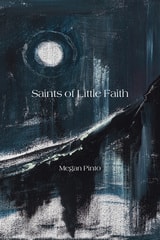
Saints of Little Faith
Megan Pinto
Four Way Books, 2024
The energies animating Saints of Little Faith, Megan Pinto’s electrifying debut in poetry, are a forceful quiet, a loud stillness, the caesura between a lightning strike and the sound of thunder. Everywhere, the speaker sees the numinous power of language, the incipience of things to come, even a kind of catastrophic grace in desolation and destruction — as if within the terrain of her own obsession, she recognizes the familiar, ever-changing seasons. Fierce and intimate, this poet’s meditative transformations engage with South Asian experiences of addiction, domestic violence, and mental illness, refusing to ignore narratives treated as unspeakable and overlooked by the English canon. Mapping the collision of abuse, psychosis, and rage, Pinto sees beyond them, buoyed by an inscrutable but abiding faith in the holiness of life itself, in a cold God nevertheless capable of gentleness. Once, “desire was an arrow, but now desire / is the field.” Pinto presides over this expanse, deciding, “I have three choices: to drift through life / anesthetized, to soften. . .” In that unspoken “or,” the merciful lacuna of that ellipsis, reside the lyrical mystery and medicine that feed this astonishing collection and strengthen resolve, both ours and the speaker’s: “The lake looks frozen, but it is not.”
Saints of Little Faith
Megan Pinto
Four Way Books, 2024
The energies animating Saints of Little Faith, Megan Pinto’s electrifying debut in poetry, are a forceful quiet, a loud stillness, the caesura between a lightning strike and the sound of thunder. Everywhere, the speaker sees the numinous power of language, the incipience of things to come, even a kind of catastrophic grace in desolation and destruction — as if within the terrain of her own obsession, she recognizes the familiar, ever-changing seasons. Fierce and intimate, this poet’s meditative transformations engage with South Asian experiences of addiction, domestic violence, and mental illness, refusing to ignore narratives treated as unspeakable and overlooked by the English canon. Mapping the collision of abuse, psychosis, and rage, Pinto sees beyond them, buoyed by an inscrutable but abiding faith in the holiness of life itself, in a cold God nevertheless capable of gentleness. Once, “desire was an arrow, but now desire / is the field.” Pinto presides over this expanse, deciding, “I have three choices: to drift through life / anesthetized, to soften. . .” In that unspoken “or,” the merciful lacuna of that ellipsis, reside the lyrical mystery and medicine that feed this astonishing collection and strengthen resolve, both ours and the speaker’s: “The lake looks frozen, but it is not.”

Salat
Dujie Tahat
Tupelo Press, 2020
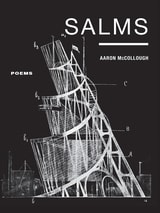
Salms
Aaron McCollough
University of Iowa Press, 2024
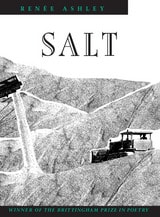
Salt
Renee Ashley
University of Wisconsin Press, 1991
Renée Ashley describes Salt as an attempt, in part, to mythologize a period of the 1950s and early 1960s in the California Bay Area suburb where she grew up, “a racially rich, economically varied section of town east of El Camino Real—the major road and the ‘tracks’, so to speak, that one grew up on the right or wrong side of.” Many of the poems in the collection explore Ashley’s adjustment to the East Coast after a virtual lifetime in “that one place.” They deal with landscape, with marriage, with the insight distance seems to lend to hindsight, with amusement, with regret.
“Renée Ashley can tune our ears to the thoughts of a wounded sparrow, to the sibilance of snow on stone, even to the song rocks make as they thaw in spring. . . . She wakes us to an intricate, enthralling world behind, beneath, beyond the one we thought we knew, alive with particulars, laced with compassion, luminous with humor.”—Donald Finkel
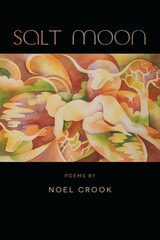
Salt Moon
Noel Crook
Southern Illinois University Press, 2015
Crab Orchard Review First Book Prize
Co-Winner, Julie Suk Prize
Finalist, INDIEFAB Book fo the Year
Throughout Salt Moon, Noel Crook forges the kind of tragic vision Howard Nemerov described as the mark of our finest poets: drawing on myth and memory, Crook’s fierce lyrics reveal a world that is at once “hopeless and beautiful . . . giving equal emphasis to both words.” Sacrifice and betrayal, parental love and patricide, unleashed desire and cornered despair—these antitheses fuel Crook’s Ovidian imagination, which ranges freely from Comanche raids in Texas to a slave plantation in North Carolina, from a carpet maker in Istanbul to beggars in Delhi, from her daughter’s hospital room to the war in Iraq. Rendered in unforgettable images, Salt Moon is that rare book which grows richer with each reading.
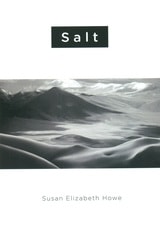
Salt
PoetrySusan Elizabeth Howe
Signature Books, 2013
Howe’s poems are Western but unmistakably modern, drawn from the astute observation of humanity of both rural and urban settings. Her weekly commute from the heart of Sanpete County to Utah Valley causes her to reflect on her culture and to contemplate recent events as she winds through the long, broad canyons. She sees an occasional deer chased from the road, pinyon jays, and magpies. She thinks about death, marriage, blood, and yes, even the dreamy (and occasionally steamy), country girl’s attraction to men.
In her verse, she journeys into the psyche of several women: Charles Dickens’s wife Catherine; Charlotte Brontë; an Argentine woman who unknowingly carried a fetus for several years; a woman whose pet snake tried to squeeze her to death. She recalls the rhododendrons of Kew Gardens, the house of Shakespeare’s grandmother, the sheep of Ireland, and the dogs of the Sierra Madres, but mostly she writes about the Mountain West and her home there.
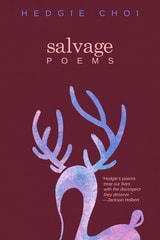
Salvage
Hedgie Choi
University of Wisconsin Press, 2025
“Delightfully spiteful. . . . Choi’s voice has the defiant confidence of youth, which we all need exposure to. The poems are a little bit insulting . . . in the most appealing way, like an argument that actually changes your mind.”— New York Times, Best Poetry of 2025
Part blasphemous prayer, part stand-up comedy, wholly unique, this breathtaking collection is by turns devastating, funny, and startling. Whether the site of exploration is Star Trek, Leonard Cohen, roadkill, or etymology, sublime bewilderment rubs shoulders with half-buried humiliations and accidental salvations. The voice in these poems tenderly and tenaciously inquires into how to survive—not how to survive violence but how to survive surviving. Choi is the rare poet who can elicit laughter, sober reflection, and wry bemusement all within the space of a few lines—or sometimes only one. This is a collection that you can read through in a single sitting, then return to again and again.
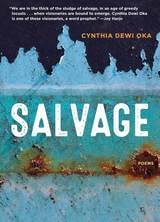
Salvage
PoemsCynthia Dewi Oka
Northwestern University Press, 2018
Throughout it insistently interrogates what it means to reach for our humanity through the guises of nation, race, and gender. Oka’s language transports us through the many bodies of fluid poetics that inhabit our migrating senses and permeate across generations into a personal diaspora. Salvage invites us to be without borders.
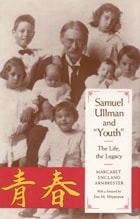
Samuel Ullman and "Youth"
The Life, the LegacyMargaret E. Armbrester
University of Alabama Press, 2009
Thousands of wonderful and sometimes strange fads have captured the public fancy in the almost five decades since the end of World War II. Most have been short-lived and soon faded away. There is, however, a poem that has not only withstood the vicissitudes of time, but has spread around the world like the waves lapping at a beach. This is the poem "Youth," by Samuel Ullman.
In December 1945, the Reader’s Digest published the poem and reported that General Douglas MacArthur, Commander of the Allied Forces, Far East, kept a copy of the poem near his desk.
Around that time, Yoshio Okada, a Japanese businessman, bought a copy of that December 1945 edition of the Reader's Digest, read the poem and was deeply affected by it. He translated it into Japanese and displayed it in his office as a guiding inspiration. Many of Okada's friends read the poem and were fascinated by its beauty. It began to receive national publicity through newspapers and magazines and became popular throughout Japan, especially among the intellectual community. Part of the reason for this widespread popularity is the excellence of the translation. Yoshio Okada, a man of noble character, gifted with a profound philosophy of life and literary talent, translated the poem into a beautiful, soulstirring Japanese version.
Samuel Ullman's “Youth” reflects the truth of life, and his outcry of spirituality touches the intrinsic nature of man.
Sand Theory
PoemsWilliam Olsen
Northwestern University Press, 2011
The energy of Olsen’s poems is generated by his ability to meld the intellectual and the emotional, the abstract and the concrete, into a seamless whole while maintaining a sense of wit and playfulness. Sand Theory cements Olsen’s standing as one of the most vital poets writing today, an audacious chronicler of “the supremely open moment.”
Sanderlings
Geri Doran
Tupelo Press, 2011
Sapphics and Uncertainties
Poems 1970-1986Timothy Steele
University of Arkansas Press, 1995
Sapphics and Uncertainties: Poems 1970–1986 draws together these two books into a single volume. This collection offers the most substantial gathering yet from a body of work widely praised for its tonal and thematic range and for its wit and warmth of feeling.
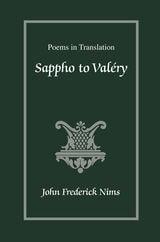
Sappho to Valéry
Poems in TranslationJohn Frederick Nims
University of Arkansas Press, 1990
Revised and enlarged, the second edition of Sappho to Valéry includes both the originals and translations of ninety-eight poems from nine different languages. Nims offers new and lively interpretations of a number of poems that have been translated and others available in no other English translation.
A former editor of Poetry, John Frederick Nims has published several volumes of his own poetry, poetry in translation, and essays on the form.

Sarah's Choice
Eleanor Wilner
University of Chicago Press, 1989
"There is so much that is impressive in Wilner's mature poems. In an era which has been labelled 'The End of History,' she examines history's less obvious lessons. If the past is to teach us, she seems to say, then we must re-invent and re-shape it."—Poetry
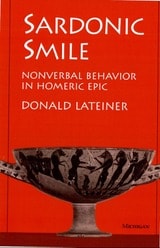
Sardonic Smile
Nonverbal Behavior in Homeric EpicDonald Lateiner
University of Michigan Press, 1998
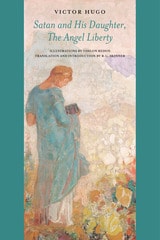
Satan and His Daughter, the Angel Liberty
Selected VersesVictor Hugo
Swan Isle Press, 2018
Satan and his Daughter, the Angel Liberty, drawn from this larger poem, tells the story of Satan and his daughter, the angel created by God from a feather left behind following his banishment. Hugo details Satan’s fall, and through a despairing soliloquy, reveals him intent on revenge, yet desiring God’s forgiveness. The angel Liberty, meanwhile, is presented by Hugo as the embodiment of good, working to convince her father to return to Heaven.
This new translation by Richard Skinner presents Hugo’s verse in a unique prose approach to the poet’s poignant work, and is accompanied by the Symbolist artist Odilon Redon’s haunting illustrations. No adventurous reader will want to miss this beautiful mingling of the epic and familial, religious and political.
Saving The Young Men Of Vienna
David Kirby
University of Wisconsin Press, 1987
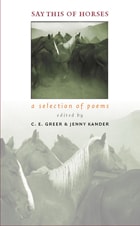
Say This of Horses
A Selection of PoemsC.E. Greer
University of Iowa Press, 2007
Divided into six sections, Say This of Horses considers horses in a multitude of times and places. “Antiquity” explores the forging of the earliest mythical ties between horses and humans. “Here, Now” places horses in the present, where their physical presence is most acutely felt. “Esssence” explores the metaphysical qualities of horses. “Harnessed” contains a selection of poems about horses in war, at work, and in sport and recreation. “Mirrors” shows them as imaginative symbols. Finally, “Lenses” moves into the realm of abstraction and fantasy.
The selections within this far-reaching collection are joyous, moving, erudite, and at times profoundly sad. Poems by Henry Wadsworth Longfellow, W. S. Merwin, Tess Gallagher, Yusef Komunyakaa, Pablo Neruda, Anne Sexton, Wallace Stevens, May Sarton, Jane Kenyon, and James Dickey, among many others, are sure to delight and surprise readers familiar with or just exploring the rich literature on horses.
Contributors include:
Guillaume Apollinaire, Gwendolyn Brooks, Lawrence Ferlinghetti, C.E. Greer, Donald Hall, Joy Harjo, Imru’ al-Qays, Ted Kooser, Philip Larkin, Ann McCarthy de Zavala, Rainer Maria Rilke, Patiann Rogers, William Carlos Williams
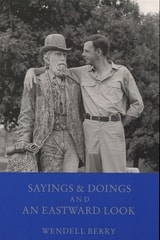
Sayings and Doings and An Eastward Look
Wendell Berry
Ohio University Press, 1990
Published in 1990 by Gnomon Press
This volume combines two small books of poetry by Wendell Berry, both with expanded texts. In Sayings and Doings the inner lives of the country people Berry knows so well surface in sayings, stories, reminiscences, and a number of jocular dialogues. Many are expressions we hear and often mean to remember but, when we start to retell them, find that we have forgotten the exact wording, without which they lose their effectiveness. Here the poet remembers well. One can hear as one reads, and the rural speech has been whittled so that not a syllable is wasted.
The condensed nature of Sayings and Doings is mirrored in the Asian influence of An Eastward Look, which includes haiku, the journal-like sequence "A Long Journey and a Small Notebook," and the masterful "Chinese Painting Poems."
For those familiar with many other collections of Berry's poems, this volume will acquaint them with other facets of his work, until now too little known.
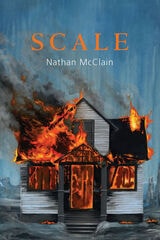
Scale
Nathan McClain
Four Way Books, 2017
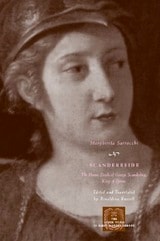
Scanderbeide
The Heroic Deeds of George Scanderbeg, King of EpirusMargherita Sarrocchi
University of Chicago Press, 2006
First published posthumously in 1623, Scanderbeide reemerges here in an adroit English prose translation that maintains the suspense of the original text and gives ample context to its rich cultural implications.
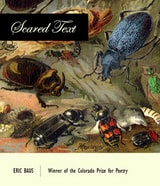
Scared Text
Eric Baus
University Press of Colorado, 2011
Published by the Center for Literary Publishing at Colorado State University
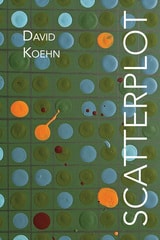
Scatterplot
David Koehn
Omnidawn, 2019
Koehn diagrams connections from media, art, film, music, nature, history, and his own family into a web of coordinates that form constellations of beauty and tragedy. He moves from the music of the Bad Brains, to the grotesque lifecycle of the Tongue-Eating Louse, to the deconstruction of Mutant Mania toys, and on through the poems of David Antin and the suicide of Anthony Bourdain, building a fantastical world from the wild realities of the real one. In a universe so full of imperfection one can’t help but both laugh and cry, the poet embraces the present while taking responsibility for his own insufficiencies. Amounting to a mix of experiments—erasures, surreal narratives, collage, walking poems, and more—the delta between right now and forever feels both inescapably present and delightfully confused. Immense vulnerability, infinitely odd observations, and uninhibited daring populate the psychological terrain in the poems of Scatterplot as Koehn invites us to join his spiraling poetic exploration.
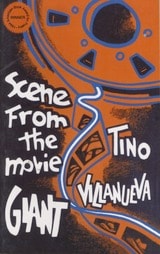
Scene from the Movie GIANT
Tino Villanueva
Northwestern University Press, 1995
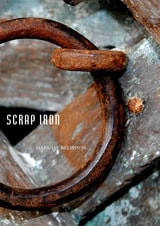
Scrap Iron
Mark Jay Brewin
University of Utah Press, 2013
South Jersey farmland, flooded and made an island. Through landscapes and captivating visuals we begin Mark Jay Brewin’s debut collection of poems. Scrap Iron quickly and fluidly moves from this isolated plot of land—the poet’s childhood home—to the memories associated with that place, its people, and his youth. Throughout the volume, Brewin’s attention to sound and cadence offers the reader a burning exploration of beautiful imagery, while also providing a sharp contrast to the sometimes harsh and dark subject matter. He asks how one grows while remaining rooted. Confronting the age-old question of whether one can ever really go home again, Brewin’s soft, prayerful, and thoughtful approach provides the reader with an answer: Whether it is possible or not, the wish to return will always remain.
The intricacies and complexities of human relationships—especially between family members—are at the forefront of Scrap Iron. Brewin acknowledges the tender violence that often exists within familial relationships and highlights the fragility of not only these connections, but of the land, of memory, and of the future. While some poems may focus on tenuous ties, the tone of Brewin’s work as a whole is one of hopefulness. His poetry reminds us that to move is not to abandon, to question is not to criticize, and to love is to at once remember and forget.
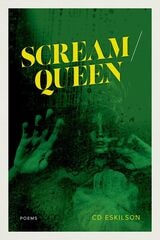
Scream / Queen
PoemsCD Eskilson
Acre Books, 2025
Scream / Queen, CD Eskilson’s debut poetry collection, examines queerness, mental illness, and transgender identity through the lens of thrillers and B movies. The Creature from the Black Lagoon, Michael Myers, and the Headless Horseman are just a few of the fright-film villains and monsters that populate this book.
Eskilson’s formally innovative poems document how a body—a nonbinary transgender body, a chronically ill body, a body carrying trauma—can be understood, accepted, and healed even in a violent sociopolitical climate. Drawing on the language and images of horror cinema, the poems’ speakers find strength and the means to survive both family legacy and the pain inflicted on them: “I want to behemoth, be the biggest / violence in the galaxy,” says one who thinks about Godzilla and dreams of “learning how to roar.”
Though an atmosphere of trans panic and state legislation against trans bodies pervades the book, Scream / Queen ultimately conjures a world of hope and tenderness through connection and care. It celebrates all the body’s possibilities: the glorious and the monstrous. As a werewolf in the book says, “I kiss the moon; it took so long / to get here.”
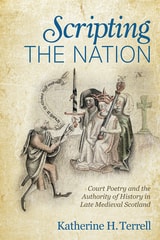
Scripting the Nation
Court Poetry and the Authority of History in Late Medieval ScotlandKatherine H. Terrell
The Ohio State University Press, 2021
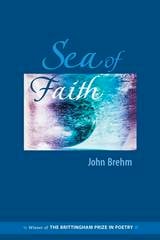
Sea of Faith
John Brehm
University of Wisconsin Press, 2004
In a masterful blending of lyric and narrative, Sea of Faith ranges widely across interior states and external worlds. From the Sierra Nevadas to New York City subways, from an imagined friendship with Lao Tzu to a rueful meditation on Coney Island, from a comic and poignant classroom discussion of "Dover Beach" to a sexual fantasy spawned by a tedious poetry reading, John Brehm’s poems explore the human predicament with tenderness, compassion, and unforgettable humor.
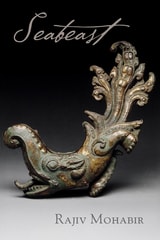
Seabeast
Rajiv Mohabir
Four Way Books, 2025
Mohabir's language ingeniously plumbs the depths, illustrating how the objectification fundamental to the construction and preservation of animal taxonomy mirrors the internecine violence of humankind on both a broad and intimate scale. "We were misnamed / again and again: first Hindu, / then Hindoo, then Indian, then / Coolie, all subhuman / much like this precursory cetacean / of the Eocene, named / in Latin great lizard— / anguilliform, what to make / of twist and tear, teeth / gnashing sharks and durodons / into pulp, judged by fossilized / gouges in enamel and finger / holes on skulls?"
Through the invention of race, the conquest and consumption of land, and the cultural amnesia enforced on the subaltern, imperialism threatens human survival on this planet just as we have misunderstood, taken captive, and hunted whales nearly to extinction. Meditating on the results of genetic testing, Mohabir details how, like his white ex-spouse's "ancestors / from northern Germany / played bone flutes / for their dead at gravesites," a lab "one day exhumed" them all "in perfect pentatonic scales." Meanwhile, he wonders what of his Indo-Caribbean heritage, complicated by the obfuscating forces of indenture, ethnic oppression, and frequent relocation, "can be revived" from this "wastebasket taxon, / us unnamed hoard of no future?" Of the Irrawaddy Dolphin once "known for / herding shoals of fish / for fisherfolk / in whose nets / they now drown," Mohabir observes that "learning human / language opens you // to betrayal." "Trust me," he urges, "though I am no // hairless dolphin— / I once had a husband." Standing at the confluence of these prehistoric, mythological, and contemporary tributaries feeding our attitude toward whales, Mohabir asks, who is the seabeast, really? The namer or the named? The answer prompts us to see that, if we recognize the legacy of human barbarism in the whale's long history with us, we can also locate a new reserve of resilience and survival. It is their example Mohabir uses, not the "bright honey" of their blubber that once would "fuel lanterns," to power his own spiritual refortification. "Maybe I will, from filling my lungs, blood / rushing to my core, / into a finned thing, / transform."
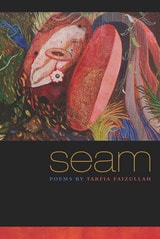
Seam
Tarfia Faizullah
Southern Illinois University Press, 2014
Winner, Great Lakes Colleges Association New Writers Award, 2014
Winner, Binghamton University Milt Kessler Poetry Book Award, 2015
Winner, Drake University Emerging Writers Award, 2015
The poems in this captivating collection weave beauty with violence, the personal with the historic as they recount the harrowing experiences of the two hundred thousand female victims of rape and torture at the hands of the Pakistani army during the 1971 Liberation War. As the child of Bangladeshi immigrants, the poet in turn explores her own losses, as well as the complexities of bearing witness to the atrocities these war heroines endured.
Throughout the volume, the narrator endeavors to bridge generational and cultural gaps even as the victims recount the horror of grief and personal loss. As we read, we discover the profound yet fragile seam that unites the fields, rivers, and prisons of the 1971 war with the poet’s modern-day hotel, or the tragic death of a loved one with the holocaust of a nation.
Moving from West Texas to Dubai, from Virginia to remote villages in Bangladesh and back again, the narrator calls on the legacies of Willa Cather, César Vallejo, Tomas Tranströmer, and Paul Celan to give voice to the voiceless. Fierce yet loving, devastating and magical at once, Seam is a testament to the lingering potency of memory and the bravery of a nation’s victims.
Seamus Heaney and the Emblems of Hope
Karen Marguerite Moloney
University of Missouri Press, 2007
A rich body of mythology and literature has grown around the Celtic ritual known as the Feis of Tara or “marriage of sovereignty”—ancient ceremonies in which the future king pledges to care for the land and serve the goddess of sovereignty. Seamus Heaney, whose writing has attracted the overwhelming share of critical attention directed toward contemporary Irish poetry, has engaged this symbolic tradition in some of his most significant—and controversial—work.
Seamus Heaney and the Emblems of Hope explores Heaney’s use of the family of sovereignty motifs and redresses the imbalance of criticism that has overemphasized the theme of sacrifice to the detriment of more optimistic symbols. Moreover, Moloney reviews the development of the marriage motif in Irish poetry from the ninth to the twenty-first centuries with a focus on Heaney’s adaptations from The Frenzy of Sweeney and The Midnight Court and on the work of such poets as Kinsella, Montague, Boland, and Ní Dhomhnaill. Karen Marguerite Moloney examines the central role that Heaney assigns the Feis of Tara in his response to the crisis of Ulster and to the general spiritual bankruptcy of our times, showing in his verse how the relationship of the male lover to the goddess—particularly in her more repugnant guises—serves as prototype for the humility and deference needed to repair the effects of English colonization of Ireland and, by extension, centuries of worldwide patriarchal abuse.
Through close, sustained readings of poems previously overlooked or misinterpreted, such as “Ocean’s Love to Ireland,” “Come to the Bower,” and “Bone Dreams”—poems that Irish feminist critics have deemed flawed and distressingly sexist—Moloney refutes views that have long stood unchallenged. She also considers the direction of Heaney’s more recent poems, which continue to resonate to the twin demands of conscience and artistic integrity.
An impeccably researched and immensely readable work, Seamus Heaney and the Emblems of Hope reveals that Heaney’s poetry offers a reverence for archetypal femininity and Dionysian energy that can counter the sterility and violence of postcolonial Irish life. Moloney shows us that, in the tradition of poets who preceded him, Heaney turns to the marriage of sovereignty to encode a message for our times—and to offer up emblems of hope on behalf of us all.
Seamus Heaney and the End of Catholic Ireland
Kieran Quinlan
Catholic University of America Press, 2020
Search for a Common Language
Environmental Writing and Educationedited by Melody Graulich & Paul Crumbley
Utah State University Press, 2005
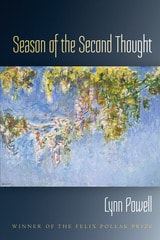
Season of the Second Thought
Lynn Powell
University of Wisconsin Press, 2017
Season of the Second Thought begins in a deep blue mood, longing to find words for what feels beyond saying. Lynn Powell's poems journey through the seasons, quarreling with the muse, reckoning with loss, questioning the heart and its "pedigree of Pentecost," and seeking out paintings in order to see inside the self. With their crisp observations and iridescent language, these poems accumulate the bounty of an examined life. These lines emerge from darkness into a shimmering equilibrium—witty, lush, and hard-won.
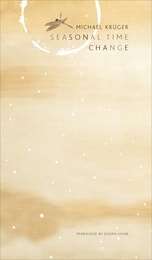
Seasonal Time Change
Selected PoemsMichael Krüger
Seagull Books, 2015
Bearing witness to Krüger’s interactions with renowned poets and artists through his time as director of Hanser publishing house, proximity and relationships are ongoing themes in this volume. Together, the poems remind us of our own mortality and of the finiteness of nature, but also our need for celebration even—perhaps especially—in times of darkness.
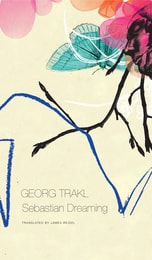
Sebastian Dreaming
Georg Trakl
Seagull Books, 2016
A century later, the book appears for the first time in English. While a number of its poems have been included in other collections, translator James Reidel argues that this particular book deserves to stand on its own and be read as one piece, as Trakl intended. Only by doing this can we begin to see Trakl in his proper time and place, as an early modern poet whose words nonetheless continue to exert a powerful hold on us while we make our way through a new, uncharted century.