Results by title
336 books match the query 'Political Economy' and 18 start with s

Seeking the Best Master
State Ownership in the Varieties of CapitalismMiklós Szanyi
Central European University Press, 2020
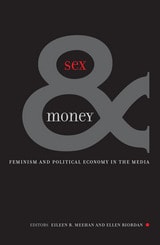
Sex And Money
Feminism and Political Economy in the MediaEileen R. Meehan
University of Minnesota Press, 2001
A revelatory look at the ways that gender, power, and the media are intertwined.
It all comes down to sex and money: how the media are organized, how they work, what they say, who gets to say it and to whom. That is the message this book delivers—and then parses for its meaning to society and culture. Forcefully and persuasively, this groundbreaking volume uses the media to show how questions of gender and economics are inextricably linked to issues of power in Western capitalist societies. Integrating political economy and feminism, it offers a new understanding of communication at the personal, experiential, institutional, and structural levels-and exposes all the subtle and complex ways in which sex and money are sutured into individuals’ daily lives.
Contributors: Robin Andersen, Fordham U; Ellen Balka, Simon Fraser U; Amy Beer; Carolyn M. Byerly, Ithaca College; Ramona Curry, U of Illinois; Fred Fejes, Florida Atlantic U; Nancy Hauserman, U of Iowa; Michèle Martin, Carleton U, Canada; Stana Martin, Central Missouri State U; Lisa McLaughlin, Miami U, Ohio; Roopali Mukherjee, Indiana U; Angela R. Record; Karen Ross, Coventry U; H. Leslie Steeves, U of Oregon; Angharad N. Valdivia, U of Illinois; Janet Wasko, U of Oregon; and Justin Wyatt.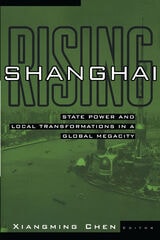
Shanghai Rising
State Power and Local Transformations in a Global MegacityXiangming Chen
University of Minnesota Press, 2009
Analyzing a Chinese city’s dazzling rise to global megacity status
Until around 1990, Shanghai was China’s premier but sluggish industrial center. Now at the beginning of the twenty-first century, the joint impact of global forces and state power has turned Shanghai into a dynamic megacity. Shanghai’s remarkable growth in economy, infrastructure, and global presence has prompted questions about the Shanghai “miracle.” This collection places the city’s unprecedented rise in a rare comparative examination of U.S. cities, as well as with Asian megacities Singapore and Hong Kong, providing a nuanced account of how Shanghai’s politics, economy, society, and space have been transformed by macro- and micro-level forces.
Contributors: Stephen W. K. Chiu, Chinese U of Hong Kong; K. C. Ho, National U of Singapore; John D. Kasarda, U of North Carolina; Hanlong Lu, Shanghai Academy of Social Sciences; Tai-lok Lui, Chinese U of Hong Kong; Ann R. Markusen, U of Minnesota; Anthony M. Orum, U of Illinois, Chicago; Yuan Ren, Fudan U Shanghai; Saskia Sassen, Columbia U; Jiaming Sun, Texas A&M U, Commerce; Fulong Wu, Cardiff U; Pingkang Yu, George Washington U; Tingwei Zhang, U of Illinois, Chicago; Zhenhua Zhou, Development Research Center, Shanghai Municipal Government.
Shifting Obsessions
Three Essays on the Politics of AnticorruptionAryeh Neier
Central European University Press, 2004
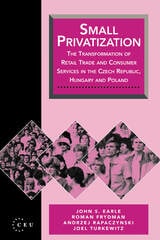
Small Privatization
The Transformation of Retail Trade and Consumer Services in the Czech Republic, Hungary and PolandRoman Frydman
Central European University Press, 1994
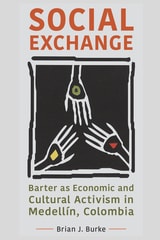
Social Exchange
Barter as Economic and Cultural Activism in Medellín, ColombiaBrian J. Burke
Rutgers University Press, 2022
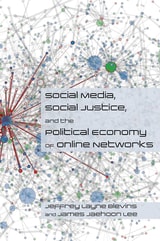
Social Media, Social Justice and the Political Economy of Online Networks
Jeffrey Layne Blevins and James Jaehoon Lee
University of Minnesota Press, 2021
Next Generation e-book nonfiction 2023 Indie Book Award Prize.
While social network analyses often demonstrate the usefulness of social media networks to affective publics and otherwise marginalized social justice groups, this book explores the domination and manipulation of social networks by more powerful political groups. Jeffrey Layne Blevins and James Lee look at the ways in which social media conversations about race turn politically charged, and in many cases, ugly. Studies show that social media is an important venue for news and political information, while focusing national attention on racially involved issues. Perhaps less understood, however, is the effective quality of this discourse, and its connection to popular politics, especially when Twitter trolls and social media mobs go on the attack.
Taking on prominent case studies from the past few years, including the Ferguson protests and the Black Lives Matter movement, the 2016 presidential election, and the rise of fake news, this volume presents data visualization sets alongside careful scholarly analysis. The resulting volume provides new insight into social media, legacy news, and social justice.
Social Security Pension Reform in Europe
Edited by Martin Feldstein and Horst Siebert
University of Chicago Press, 2002
The essays here highlight the problems that the European pension reform process faces and how it differs from that of the United States. This timely volume will significantly enrich the debate on pension reform worldwide.
Socialism, Capitalism, Transformation
Leszek Balcerowicz
Central European University Press, 1995

South Vietnam Trial and Experience
A Challenge for DevelopmentAng Tuan Nguyen
Ohio University Press, 1987
Dr. Nguyen Anh Tuan, former Minister of Finance of the Republic of South Vietnam, addresses a common perception of Vietnam: that South Vietnam was a fragmented society which did not deserve to succeed because of its internal weaknesses. According to Tuan, however, South Vietnam in the last decade of its life developed considerable governmental cohesion and internal social strength. Before the final failure of will, the South and its defenders were well on the way to becoming a viable society that had managed with American assistance to lift itself by its bootstraps to the point to economic take-off. Tuan argues that South Vietnam’s fall was not inevitable. This controversial book will be of great interest to all those concerned with the Vietnamese experience during the period 1954-1975.
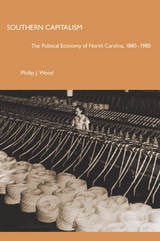
Southern Capitalism
The Political Economy of North Carolina, 1880–1980Philip J. Wood
Duke University Press, 1986
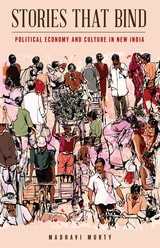
Stories That Bind
Political Economy and Culture in New IndiaMadhavi Murty
Rutgers University Press, 2022
Moving between mediascapes to create an archive of popular culture, Murty advances our understanding of political economy through material that is often seen as inconsequential, namely the popular cultural story. These stories stoke our desires (e.g. for wealth), scaffold our instincts (e.g. for a strong leadership) and shape our values.
Street Addicts in the Political Economy
Alisse Waterston
Temple University Press, 1997
Strengthening International Courts
The Hidden Costs of LegalizationLeslie Johns
University of Michigan Press, 2015
Examining detailed case studies of the International Court of Justice and the transition from the General Agreement on Tariffs and Trade to the World Trade Organization, Leslie Johns finds that a court’s design has nuanced and mixed effects on international cooperation. A strong court is ideal when laws are precise and the court is nested within a political structure like the European Union. Strong courts encourage litigation but make states more likely to comply with agreements when compliance is easy and withdraw from agreements when it is difficult. A weak court is optimal when law is imprecise and states can easily exit agreements with minimal political or economic repercussions. Johns concludes the book with recommendations for promoting cooperation by creating more precise international laws and increasing both delegation and obligation to international courts.
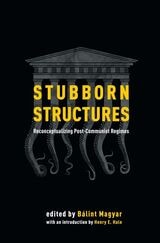
Stubborn Structures
Reconceptualizing Post-Communist RegimesHenry E. Hale
Central European University Press, 2019
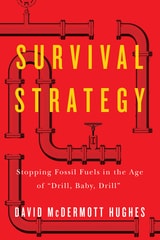
Survival Strategy
Stopping Fossil Fuels in the Age of "Drill, Baby, Drill"David McDermott Hughes
Rutgers University Press, 2027
In the United States, the climate movement has, so far, failed in the all-important task of shutting down fossil fuels. David McDermott Hughes offers a plan for a more daring form of climate politics, recommending that the climate movement adopt a strategy of mass blockades and sabotage against functioning fossil fuel infrastructure. Ideally, the saboteurs would not get caught—but if they did, in their trials they could appeal to the little-known power of jury nullification to avoid prison and to make pipelines unprotectable.
Climate change is no longer a technical problem that can simply be fixed. It is now a political predicament that must be faced. Elected politicians—even those who support renewable energy—remain committed to the extraction of petroleum and methane. No one with political power is even attempting to do the one thing that must be done: shut down fossil fuels. With trepidation, Hughes offers the last resort against the approaching climate catastrophe.
Syria after the Uprisings
The Political Economy of State ResilienceEdited by Camille Barbagallo, Nicholas Beuret, and David Harvie
Pluto Press, 2019
Through a sharp reconstruction of the key historical developments, Daher focuses on the reasons behind the transition of a peaceful uprising into a destructive war with multiple regional and international actors. He argues that other approaches have so far neglected a global analysis of the conflict’s economic, social and political characteristics. He also shows that it is impossible to understand the Syrian uprising without a historical perspective dating back to the seizure of power by Hafez al-Assad in 1970.
A result of years of research and discussions with activists, students, members of political parties and Syrian academics, this book will be the go-to analysis of Syria for years to come.
Systems, Institutions, and Values in East and West
Engaging with János Kornai's ScholarshipMiklós Rosta
Central European University Press, 2020
Leading social scientists, empirical analysts, and policy practitioners demonstrate the various ways in which the insights of János Kornai, a renowned early analyst and critic of the command economies of Eastern European communist states, are stirring academic and policy discussions about current challenges. While dissecting the economic theories and practices in the Soviet Bloc, Kornai devised and applied concepts such as soft-budget constraints, rush versus harmonic growth, surplus versus shortage economy, non-Walrasian equilibrium, bureaucratic coordination, and the invisible power of the communist party. These concepts are commonly applied to a variety of issues in the contexts of fundamental transformation. The cases discussed in this volume include the transitional paths of post-communist economies, the pitfalls of East European market-building, economic repercussions of the dissolution of Yugoslavia, and the process of integration in the Eurozone.
In conclusion János Kornai’s thoughts on a variety of research topics as well as the value of democracy are included as he delivered at the conference celebrating his 90th birthday in 2018.