Results by title
1427 books match the query 'Politics' and 89 start with s

Sacred Players
The Politics of Response in the Middle English Religious DramaHeather Hill-Vásquez
Catholic University of America Press, 2007

Saddam's War of Words
Politics, Religion, and the Iraqi Invasion of KuwaitBy Jerry M. Long
University of Texas Press, 2004
From a Western perspective, the Persian Gulf War of 1990-1991 largely fulfilled the first President Bush's objective: "In, out, do it, do it right, get gone. That's the message." But in the Arab world, the causes and consequences of Saddam Hussein's invasion of Kuwait and his subsequent defeat by a U.S.-led coalition were never so clear-cut. The potent blend of Islam and Arab nationalism that Saddam forged to justify the unjustifiable—his invasion of a Muslim state—gained remarkable support among both Muslims and Arabs and continued to resonate in the Middle East long after the fighting ended. Indeed, as this study argues in passing, it became a significant strand in the tangled web of ideologies and actions that led to the attacks of 9/11.
This landmark book offers the first in-depth investigation of how Saddam Hussein used Islam and Arab nationalism to legitimate his invasion of Kuwait in the eyes of fellow Muslims and Arabs, while delegitimating the actions of the U.S.-led coalition and its Arab members. Jerry M. Long addresses three fundamental issues: how extensively and in what specific ways Iraq appealed to Islam during the Kuwait crisis; how elites, Islamists, and the elusive Arab "street," both in and out of the coalition, responded to that appeal and why they responded as they did; and the longer-term effects that resulted from Saddam's strategy.

Safe Space
Gay Neighborhood History and the Politics of ViolenceChristina B. Hanhardt
Duke University Press, 2013
Since the 1970s, a key goal of lesbian and gay activists has been protection against street violence, especially in gay neighborhoods. During the same time, policymakers and private developers declared the containment of urban violence to be a top priority. In this important book, Christina B. Hanhardt examines how LGBT calls for "safe space" have been shaped by broader public safety initiatives that have sought solutions in policing and privatization and have had devastating effects along race and class lines.
Drawing on extensive archival and ethnographic research in New York City and San Francisco, Hanhardt traces the entwined histories of LGBT activism, urban development, and U.S. policy in relation to poverty and crime over the past fifty years. She highlights the formation of a mainstream LGBT movement, as well as the very different trajectories followed by radical LGBT and queer grassroots organizations. Placing LGBT activism in the context of shifting liberal and neoliberal policies, Safe Space is a groundbreaking exploration of the contradictory legacies of the LGBT struggle for safety in the city.

Salonnières, Furies, and Fairies, revised edition
The Politics of Gender and Cultural Change in Absolutist FranceAnne E. Duggan
University of Delaware Press, 2021

Salsa Consciente
Politics, Poetics, and Latinidad in the Meta-BarrioAndrés Espinoza Agurto
Michigan State University Press, 2021

Same River Twice
The Politics of Dam Removal and River RestorationPeter Brewitt
Oregon State University Press, 2019
How did this happen? Same River Twice answers this question by telling the stories of three major Northwestern dam removals – the politics, people, hopes, and fears that shaped three rivers and their communities. Brewitt begins each story with the dam’s construction, shows how its critics gained power, details the conflicts and controversies of removal, and explores the aftermath as the river re-established itself.
Each dam removal offers a unique case study. On the Elwha and Rogue Rivers, dam removal was a multi-decade political brawl; on the Sandy River it was swift and amicable. A key controversy in every case was the loss of the recreational lake created by the dam. Local communities loved their lakes and felt that they were natural, public spaces rather than industrial creations. They fought dam removal with passion and ingenuity. To be successful, dam removal advocates had to learn to weld together mega-coalitions that embraced most interest groups and moved forward together.
While the dams profiled here are all in the Pacific Northwest, dam removal is a national and international phenomenon, and Brewitt’s findings apply everywhere. Written for both a scholarly and a general audience, Same River Twice presents invaluable case studies for scholars of environmental politics, wildlife and public land professionals, environmental activists, and anyone interested in the intersection of politics, public policy, and dam removal.

Savage Anomaly
The Power of Spinoza’s Metaphysics and PoliticsAntonio Negri
University of Minnesota Press, 1999
A fresh take on this critical philosopher.
In this essential rereading of Spinoza’s (1632-1677) philosophical and political writings, Negri positions this thinker within the historical context of the development of the modern state and its attendant political economy. Through a close examination of Spinoza, Negri reveals him as unique among his contemporaries for his nondialectical approach to social organization in a bourgeois age.

Saving the Gray Whale
People, Politics, and Conservation in Baja CaliforniaSerge Dedina
University of Arizona Press, 2000
More than a study of conservation politics, Dedina's book puts a human face on wildlife conservation. The author lived for two years with residents of Baja communities to understand their attitudes about wildlife conservation and Mexican politics, and he accompanied many in daily activities to show the extent to which the local economy depends on whalewatching. "It is ironic," observes Dedina, "that residents of some of the most isolated fishing villages in North America are helping to redefine our relationship with wild animals. Americans and Europeans brought the gray whale population to the brink of extinction. The inhabitants of San Ignacio Lagoon and Magdalena Bay are helping us to celebrate the whales' survival." By showing us how these animals have helped shape the lifeways of the people with whom they share the lagoons, Saving the Gray Whale demonstrates that gray whales represent both a destructive past and a future with hope.

Science by the People
Participation, Power, and the Politics of Environmental KnowledgeAya H. Kimura
Rutgers University Press, 2019
Citizen science—research involving nonprofessionals in the research process—has attracted both strong enthusiasts and detractors. Many environmental professionals, activists, and scholars consider citizen science part of their toolkit for addressing environmental challenges. Critics, however, contend that it represents a corporate takeover of scientific priorities. In this timely book, two sociologists move beyond this binary debate by analyzing the tensions and dilemmas that citizen science projects commonly face. Key lessons are drawn from case studies where citizen scientists have investigated the impact of shale oil and gas, nuclear power, and genetically engineered crops. These studies show that diverse citizen science projects face shared dilemmas relating to austerity pressures, presumed boundaries between science and activism, and difficulties moving between scales of environmental problems. By unpacking the politics of citizen science, this book aims to help people negotiate a complex political landscape and choose paths moving toward social change and environmental sustainability.

Science, Money, and Politics
Political Triumph and Ethical ErosionDaniel S. Greenberg
University of Chicago Press, 2001

Scientific Characters
Rhetoric, Politics, and Trust in Breast Cancer ResearchLisa Keränen
University of Alabama Press, 2010

Scientific History
Experiments in History and Politics from the Bolshevik Revolution to the End of the Cold WarElena Aronova
University of Chicago Press, 2021
The book explores the intertwined trajectories of six intellectuals and the larger programs they set in motion: Henri Berr (1863–1954), Nikolai Bukharin (1888–1938), Lucien Febvre (1878–1956), Nikolai Vavilov (1887–1943), Julian Huxley (1887–1975), and John Desmond Bernal (1901–1971). Though they held different political views, spoke different languages, and pursued different goals, these thinkers are representative of a larger motley crew who joined the techniques, approaches, and values of science with the writing of history, and who created powerful institutions and networks to support their projects.
In tracing these submerged stories, Aronova reveals encounters that profoundly shaped our knowledge of the past, reminding us that it is often the forgotten parts of history that are the most revealing.

Screening Auschwitz
Wanda Jakubowska's The Last Stage and the Politics of CommemorationMarek Haltof
Northwestern University Press, 2018
Screening Auschwitz examines the classic Polish Holocaust film The Last Stage (Ostatni etap), directed by the Auschwitz survivor Wanda Jakubowska (1907–1998). Released in 1948, The Last Stage was a pioneering work and the first narrative film to portray the Nazi concentration and extermination camp complex of Auschwitz-Birkenau. Marek Haltof’s fascinating book offers English-speaking readers a wealth of new materials, mostly from original Polish sources obtained through extensive archival research.
With its powerful dramatization of the camp experience, The Last Stage established several quasi-documentary themes easily discernible in later film narratives of the Shoah: dark, realistic images of the camp, a passionate moral appeal, and clear divisions between victims and perpetrators. Jakubowska’s film introduced images that are now archetypal—for example, morning and evening roll calls on the Appelplatz, the arrival of transport trains at Birkenau, the separation of families upon arrival, and tracking shots over the belongings left behind by those who were gassed. These and other images are taken up by a number of subsequent American films, including George Stevens’s The Diary of Anne Frank (1959), Alan Pakula’s Sophie’s Choice (1982), and Steven Spielberg’s Schindler’s List (1993).
Haltof discusses the unusual circumstances that surrounded the film's production on location at Auschwitz-Birkenau and summarizes critical debates surrounding the film’s release. The book offers much of interest to film historians and readers interested in the Holocaust.

Secondhand China
Spain, the East, and the Politics of TranslationCarles Prado-Fonts
Northwestern University Press, 2022
Uncovering an eclectic and surprising archive, Prado-Fonts draws on diverse cultural artifacts from popular literature, journalism, and early cinema to offer a rich account of how China was seen across the West between 1880 and 1930. Enrique Gaspar, Luis de Oteyza, Vicente Blasco Ibáñez, and lesser-known authors writing in Spanish and Catalan put themselves in dialogue with Leo Tolstoy, John Dewey, W. Somerset Maugham, Bertrand Russell, Pearl Buck, and André Malraux, as well as stereotypical figures from popular culture like Fu Manchu and Charlie Chan. Throughout, Prado-Fonts exposes translation as a technology of cultural hegemony and China as an appealing object for representation. A timely contribution to our understanding of how we create and consume knowledge about the world, Secondhand China is essential reading for scholars and students of Orientalism, postcolonial studies, translation studies, comparative literature, and cultural studies.

Secrets Need Words
Indonesian Poetry, 1966–1998Harry Aveling
Ohio University Press, 2001
Short listed for the 2007 New South Wales Premier's Translation Prize
The period from 1966 to 1999 represents a distinct era in Indonesian history. Throughout the “New Order” regime of President Suharto, the policies of economic development and political stability were dominant. However, the public opinion of personal expression was consistently under suspicion, and indeed dissent was severely punished.
Secrets Need Words traces the development of Indonesian poetry throughout this entire period. Texts are presented both in the original Indonesian and in careful, stylistically sensitive English translations.
In this anthology of contemporary work by Indonesian poets, the renowned translator and editor Harry Aveling presents a series of ongoing analyses detailing the political and social shifts that have influenced the work of particular poets.
Professor Aveling's analyses, along with the poems themselves, demonstrate how the poets responded to the power of the state in a variety of ways ranging from direct confrontation to withdrawal into personal and private realms characterized by fantasy and the use of heavily rhythmic language.
Secrets Need Words will be of interest to scholars of Indonesia and comparative literature, and will be for many years to come a basic text for scholarship and teaching. But it also offers all readers of poetry an opportunity to explore a new, complex, and exciting body of literature from one of the world's largest nations.

See It Now Confronts McCarthyism
Television Documentary and the Politics of RepresentationThomas Rosteck
University of Alabama Press, 1994
See It Now, Edward R. Murrow and Fred W. Friendly’s early documentary television program, has come to be recognized as the exemplar of nonfiction television. One important element in its reputation is a series of four telecasts directly dealing with abuses of McCarthyism and the Red Scare. This book is about those programs, but it is also about the early 1950s in America, the troubled era in which these programs were broadcast. This book is, then, both cultural history and media analysis.
As media analysis, this book seeks to understand the symbolic form, the aesthetic construction, and the subsequent experience that these four programs offered viewers. This sort of critical analysis is a development of recent vintage in American media studies. Whereas a decade ago television and the media were studied largely through an empiricist social scientific paradigm, now humanistic approaches to media discourses engage the interest of scholars in history, rhetoric and communication, political science, anthropology, and American studies. As case study, then, this book bridges classical humanist and contemporary mass media approaches, and as we go, I shall essay the utility of humanistic methods for the understanding and explication of mass media that is primarily visual in nature.
As cultural history, this book seeks to illuminate a unique era in the recent American past. My aim is to understand the programs as articulations of public “common sense” and as artifacts that help convey this common sense. Thus, a second theme of this book will be to locate-through the analysis of public discourse cast in the television documentary form—an American ideology: a set of “templates” that both ground the programs and reveal the cultural assumptions of the historical period.
In addition, from a slightly different historical perspective, our increased understanding of these See It Now broadcasts gives us an appreciation of the development of the television industry and the genre of television documentary. Coming at a time when few Americans had television sets, these See It Now programs coincided with an exponential increase in television ownership and popularity. As an elaborate defense of free speech for the medium, these documentaries may have helped to establish autonomy and a direction for a nascent broadcasting industry. More specifically, as the paradigm for the television documentary and as the first regularly scheduled documentary series, these See It Now programs shaped expectations and set the benchmark to which all nonfiction television, from Twentieth Century to White Paper to Sixty Minutes, has been compared. Thus, a third theme will be the implications of these seminal programs for media institutions and for the genre of television news documentary.
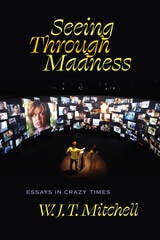
Seeing Through Madness
Essays in Crazy TimesW. J. T. Mitchell
University of Chicago Press, 2027
An insightful reconsideration of our historical moment seen through the lens of madness.
In Seeing Through Madness, W. J. T. Mitchell pursues the idea of “putting madness to work” by transforming it from an individual affliction—an illness to be treated—into a critical framework for understanding the human condition. The human species is now a danger to itself and others—the very definition of mental disorder in most societies. Therefore, it is time, Mitchell argues, for a fundamental reconsideration of madness, not only as a subject in media and the arts but more fundamentally as a “critical optic” on our historical moment. It is time to see through madness in all its variations, to see by means of it as a template for understanding, and to see it through to some form of wisdom.
While drawing a sense of urgency from Mitchell’s conviction that the whole world is experiencing a widespread political madness, the book specifically focuses on American psychoses and collective disorders, not least the country’s delusional exceptionalism.
Incisive, eclectic, and occasionally enraged, Mitchell’s essays are the guide we need to see us through crazy times.
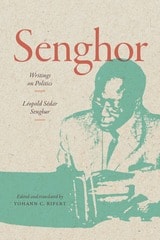
Senghor
Writings on PoliticsLéopold Sédar Senghor. Edited and translated by Yohann C. Ripert
Duke University Press, 2025

Separate Destinations
Migration, Immigration, and the Politics of PlacesJames G. Gimpel
University of Michigan Press, 1999

Seriality and Social Change
Peter Hitchcock
Seagull Books, 2025
From Karl Marx’s decision to publish Capital in serial form to contemporary adaptations in manga and graphic novels, Seriality and Social Change examines how serialization both democratizes knowledge and shapes the very process of social transformation. Peter Hitchcock delves into the paradox of the serial: while it can expand access to radical thought, it can also impose structural limits, slowing or containing the revolutionary potential it seeks to unleash.
Through a sweeping analysis that links literature and political economy, Hitchcock explores how serialized narratives frame, sustain, or even hinder movements for change. Does seriality mirror the mechanics of capitalism, or can it be a tool for subverting them? Engaging with this question across genres and forms, Seriality and Social Change invites readers to rethink how revolution is told and imagined over time.
Serpents in the Sand
Essays in the Nonlinear Nature of Politics and Human DestinyCourtney Brown
University of Michigan Press, 1995

Sex Museums
The Politics and Performance of DisplayJennifer Tyburczy
University of Chicago Press, 2015
All museums are sex museums. In Sex Museums, Jennifer Tyburczy takes a hard look at the formation of Western sexuality—particularly how categories of sexual normalcy and perversity are formed—and asks what role museums have played in using display as a technique for disciplining sexuality. Most museum exhibits, she argues, assume that white, patriarchal heterosexuality and traditional structures of intimacy, gender, and race represent national sexual culture for their visitors. Sex Museums illuminates the history of such heteronormativity at most museums and proposes alternative approaches for the future of public display projects, while also offering the reader curatorial tactics—what she calls queer curatorship—for exhibiting diverse sexualities in the twenty-first century.
Tyburczy shows museums to be sites of culture-war theatrics, where dramatic civic struggles over how sex relates to public space, genealogies of taste and beauty, and performances of sexual identity are staged. Delving into the history of erotic artifacts, she analyzes how museums have historically approached the collection and display of the material culture of sex, which poses complex moral, political, and logistical dilemmas for the Western museum. Sex Museums unpacks the history of the museum and its intersections with the history of sexuality to argue that the Western museum context—from its inception to the present—marks a pivotal site in the construction of modern sexual subjectivity.
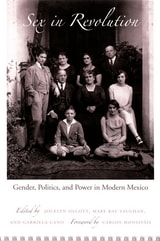
Sex in Revolution
Gender, Politics, and Power in Modern MexicoJocelyn Olcott, Mary Kay Vaughan, and Gabriela Cano, eds.
Duke University Press, 2006
Concentrating on episodes and phenomena that occurred between 1915 and 1950, the contributors deftly render experiences ranging from those of a transgendered Zapatista soldier to upright damas católicas and Mexico City’s chicas modernas pilloried by the press and male students. Women refashioned their lives by seeking relief from bad marriages through divorce courts and preparing for new employment opportunities through vocational education. Activists ranging from Catholics to Communists mobilized for political and social rights. Although forced to compromise in the face of fierce opposition, these women made an indelible imprint on postrevolutionary society.
These essays illuminate emerging practices of femininity and masculinity, stressing the formation of subjectivity through civil-society mobilizations, spectatorship and entertainment, and locales such as workplaces, schools, churches, and homes. The volume’s epilogue examines how second-wave feminism catalyzed this revolutionary legacy, sparking widespread, more radically egalitarian rural women’s organizing in the wake of late-twentieth-century democratization campaigns. The conclusion considers the Mexican experience alongside those of other postrevolutionary societies, offering a critical comparative perspective.
Contributors. Ann S. Blum, Kristina A. Boylan, Gabriela Cano, María Teresa Fernández Aceves, Heather Fowler-Salamini, Susan Gauss, Temma Kaplan, Carlos Monsiváis, Jocelyn Olcott, Anne Rubenstein, Patience Schell, Stephanie Smith, Lynn Stephen, Julia Tuñón, Mary Kay Vaughan
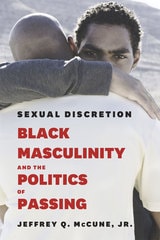
Sexual Discretion
Black Masculinity and the Politics of PassingJeffrey Q. McCune, Jr.
University of Chicago Press, 2014
In Sexual Discretion, Jeffrey Q. McCune Jr. provides the first in-depth examination of how the social expectations of black masculinity intersect and complicate expressions of same-sex affection and desire. Within these underground DL communities, men aren’t as highly policed—and thus are able to maintain their public roles as “properly masculine.” McCune draws from sources that range from R&B singer R. Kelly’s epic hip-hopera series Trapped in the Closet to Oprah's high-profile exposé on DL subculture; and from E. Lynn Harris’s contemporary sexual passing novels to McCune’s own interviews and ethnography in nightclubs and online chat rooms. Sexual Discretion details the causes, pressures, and negotiations driving men who rarely disclose their intimate secrets.

Sexuality and the Politics of Ethos in the Writing Classroom
Zan Meyer Goncalves
Southern Illinois University Press, 2005
Applying the complexities of literacy development and personal ethos to the teaching of composition, Zan Meyer Goncalves challenges writing teachers to consider ethos as a series of identity performances shaped by the often-inequitable social contexts of their classrooms and communities. Using the rhetorical experiences of students who identify as lesbian, gay, bisexual, and/or transgender, she proposes a new way of thinking about ethos that addresses the challenges of social justice, identity, and transfer issues in the classroom.
Goncalves offers an innovative approach to teaching identity performance theory bound by social contexts. She applies this new approach to theories of specificity and intersectionality, illustrating how teachers can help students redefine the relationship between their social identities and their writing. She also addresses bringing social activism and identity politics into the classroom, helping writers make transfers across rhetorical contexts and linking students' interests to public conversations.
Theoretical and practical, Sexuality and the Politics of Ethos in the Writing Classroom provides teachers of first-year and advanced composition studies with useful, detailed assignments based in specific identity performance. Goncalves offers techniques to subvert oppressive language practices, while encouraging students to recognize themselves as writers, citizens, and active participants in their own educations and communities.

Sexualizing Cancer
HPV and the Politics of Cancer PreventionLaura Mamo
University of Chicago Press, 2023
Starting in 2005, people in the US and Europe were inundated with media coverage announcing the link between cervical cancer and the sexually transmitted virus HPV. Within a year, product ads promoted a vaccine targeting cancer’s viral cause, and girls and women became early consumers of this new cancer vaccine. An understanding of HPV’s broadening association with other cancers led to the identification of new at-risk populations—namely boys and men—and ignited a plethora of gender and sexual issues related to cancer prevention.
Sexualizing Cancer is the first book dedicated to the emergence and proliferation of the HPV vaccine along with the medical capacity to screen for HPV—crucial landmarks in the cancer prevention arsenal based on a novel connection between sex and chronic disease. Interweaving accounts from the realms of biomedical science, public health, and social justice, Laura Mamo chronicles cervical cancer’s journey out of exam rooms and into public discourse. She shows how the late twentieth-century scientific breakthrough that identified the human papilloma virus as having a causative role in the onset of human cancer galvanized sexual politics, struggles for inclusion, new at-risk populations, and, ultimately, a new regime of cancer prevention. Mamo reveals how gender and other equity arguments from within scientific, medical, and advocate communities shaped vaccine guidelines, clinical trial funding, research practices, and clinical programs, with consequences that reverberate today. This is a must-read history of medical expansion—from a “woman’s disease” to a set of cancers that affect all genders—and of lingering sexualization, with specific gendered, racialized, and other contours along the way.
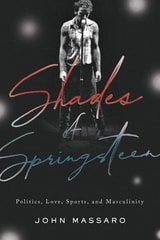
Shades of Springsteen
Politics, Love, Sports, and MasculinityJohn Massaro
Rutgers University Press, 2021
In this unique blend of memoir and musical analysis, John Massaro reflects on his experiences as a lifelong fan of The Boss and one of the first professors to design a college course on Springsteen’s work. Focusing on five of the Jersey rocker’s main themes—love, masculinity, sports, politics, and the power of music—he shows how they are represented in Springsteen’s lyrics and shares stories from his own life that powerfully resonate with those lyrics. Meanwhile, paying tribute to Springsteen’s inclusive vision, he draws connections among figures as seemingly disparate as James Joyce, Ta-Nehisi Coates, Thomas Aquinas, Bobby Darin, and Lin-Manuel Miranda. Shades of Springsteen offers a deeply personal take on the musical and cultural legacies of an American icon.

Shadow Bodies
Black Women, Ideology, Representation, and PoliticsJordan-Zachery, Julia S.
Rutgers University Press, 2018
Grounded in Black feminist thought, Julia S. Jordan-Zachery looks at the functioning of scripts ascribed to Black women’s bodies in the framing of HIV/AIDS, domestic abuse, and mental illness and how such functioning renders some bodies invisible in Black politics in general and Black women’s politics specifically.

Shattering
Food, Politics, and the Loss of Genetic DiversityCary Fowler and Pat Mooney
University of Arizona Press, 1990
Large-scale agriculture has come to favor uniformity in food crops. More than 7,000 U.S. apple varieties once grew in American orchards; 6,000 of them are no longer available. Every broccoli variety offered through seed catalogs in 1900 has now disappeared. As the international genetics supply industry absorbs seed companies—with nearly one thousand takeovers since 1970—this trend toward uniformity seems likely to continue; and as third world agriculture is brought in line with international business interests, the gene pools of humanity's most basic foods are threatened.
The consequences are more than culinary. Without the genetic diversity from which farmers traditionally breed for resistance to diseases, crops are more susceptible to the spread of pestilence. Tragedies like the Irish Potato Famine may be thought of today as ancient history; yet the U.S. corn blight of 1970 shows that technologically based agribusiness is a breeding ground for disaster.
Shattering reviews the development of genetic diversity over 10,000 years of human agriculture, then exposes its loss in our lifetime at the hands of political and economic forces. The possibility of crisis is real; this book shows that it may not be too late to avert it.
Shifting Obsessions
Three Essays on the Politics of AnticorruptionAryeh Neier
Central European University Press, 2004

Shock and Awe
American Exceptionalism and the Imperatives of the Spectacle in Mark Twain’s A Connecticut Yankee in King Arthur’s CourtWilliam V. Spanos
Dartmouth College Press, 2013

Shows of Force
Power, Politics, and Ideology in Art ExhibitionsTimothy W. Luke
Duke University Press, 1992
The first section, “Envisioning a Past, Imagining the West,” looks at art exhibitions devoted to artworks about or from the American West. Luke shows how these exhibitions—displaying nineteenth- and early-twentieth century works by artists such as George Caleb Bingham, Frederic Remington, Frederic Edwin Church, and Georgia O’Keefe—express contemporary political agendas in the way the portray “the past” and shape new visions of “the West.”
In “Developing the Present, Defining a World,” Luke considers artists from the post-1945 era, including Ilya Kabokov, Hans Haacke, Sue Coe, Roger Brown, and Robert Longo. Recent art exhibits, his analysis reveals, attempt to develop politically charged conceptions of the present, which in turn struggle to define the changing contemporary world and art’s various roles within it.
Luke brings to light the contradictions encoded in the exhibition of art and, in doing so, illuminates the political realities and cultural ideologies of the present. Shows of Force offers a timely and surely controversial contribution to current discussions of the politics of exhibiting art.
Silver and Politics in Nevada
Al Glass
University of Nevada Press, 1969
Monetary policy and politics have been inextricably intertwined in the United States since the earliest days of the Republic. Indeed, some of the most outstanding events in United States political history have involved maneuvering, dealing, and ultimately legislating on financial questions. By the 1890s, with the government over a hundred years old, the issues far from being settled became perhaps as important as they had ever been in the century-old debates. As the nineteenth century entered its last decade, however, the problems turned not solely on broad economic subjects, but on the metal coinage of the nation and its effect on the financial order. The so-called Populist Revolt of the 1880s and 1890s added fervor and color to the disputes that erupted, and turned the eyes of the country to the western region, where metals and mining had be-come, in some areas, the basis of the economy.
Nevada contained an outstanding example of the fermentthat erupted over the coinage question. There, the decline of the great Comstock lode, in combination with the most difficult features of recurring national and local economic depressions, caused a political outbreak of unusual pro-portions. After failing to bring about a desired inflation of the national currency through remonetization of silver, Nevadans turned to an extravagant-and ultimately unsuc-cessful-action: the politicians put together a new organization and called it the Silver Party of Nevada. This book represents an attempt to reconstruct the political history of the Silver party's decade in power.

Simone Weil and the Politics of Self-Denial
Athanasios Moulakis & Translated by Ruth Hein
University of Missouri Press, 1998
Simone Weil and the Politics of Self-Denial delivers what no other book on Weil has—a comprehensive study of her political thought. In this examination of the development of her thought, Athanasios Moulakis offers a philosophical understanding of politics that reaches beyond current affairs and ideological advocacy.
Simone Weil—philosopher, activist, mystic—unites a profound reflection on the human condition with a consistent and courageous existential and intellectual honesty manifest in the moving testimony of her life and her death. Moulakis examines Weil's political thought as an integral part of a lived philosophy, in which analysis and doctrine are inseparable from the articulation of an intensely personal, ultimately religious experience.
Because it is impossible to distinguish Weil's life from her thought, her writings cannot be understood properly without linking them to her life and character. By situating Weil's political thought within the context of the intellectual climate of her time, Moulakis connects it also to her epistemology, her cosmology, and her personal experience.
Simone Weil and the Politics of Self-Denial presents the unfolding of Weil's philosophical life against the backdrop of the political and social conditions of the last days of the Third French Republic, the Spanish Civil War, and the rise and clash of totalitarian ideologies. The ideological climate of the age—of which Weil herself was not quite free—was indeed the major "obstacle" in the struggle against which she fashioned her critical, intellectual, and moral tools.
Weil has been categorized a number of ways: as a saint and a near convert to Roman Catholicism, as a social critic, or as an analytic philosopher. Moulakis examines all aspects of Weil's thought in the indissoluble unity in which she lived them. This thorough investigation pursues the particular intellectual affiliations and the social and political experiential stimuli of Weil's work while simultaneously teasing out the timeless themes that her own timely analysis was intended to reveal.
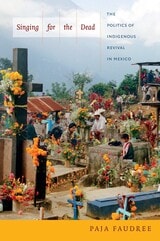
Singing for the Dead
The Politics of Indigenous Revival in MexicoPaja Faudree
Duke University Press, 2013
Singularity
Politics and PoeticsSamuel Weber
University of Minnesota Press, 2021
An influential thinker on the concept of singularity and its implications on politics, theology, economics, psychoanalysis, and literature
For readers versed in critical theory, German and comparative literature, or media studies, a new book by Samuel Weber is essential reading. Singularity is no exception. Bringing together two decades of his essays, it hones in on the surprising implications of the singular and its historical relation to the individual in politics, theology, economics, psychoanalysis, and literature. Although singularity has long been a keyword in literary studies and philosophy, never has it been explored as in this book, which distinguishes singularity as an “aporetic” notion from individuality, with which it remains historically closely tied.
To speak or write of the singular is problematic, Weber argues, since once it is spoken of it is no longer strictly singular. Walter Benjamin observed that singularity and repetition imply each other. This approach informs the essays in Singularity. Weber notes that what distinguishes the singular from the individual is that it cannot be perceived directly, but rather experienced through feelings that depend on but also exceed cognition. This interdependence of cognition and affect plays itself out in politics, economics, and theology as well as in poetics. Political practice as well as its theory have been dominated by the attempt to domesticate singularity by subordinating it to the notion of individuality. Weber suggests that this political tendency draws support from what he calls “the monotheological identity paradigm” deriving from the idea of a unique and exclusive Creator-God.
Despite the “secular” tendencies usually associated with Western modernity, this paradigm continues today to inform and influence political and economic practices, often displaying self-destructive tendencies. By contrast, Weber reads the literary writings of Hölderlin, Nietzsche, and Kafka as exemplary practices that put singularity into play, not as fiction but as friction, exposing the self-evidence of established conventions to be responses to challenges and problems that they often prefer to obscure or ignore.

Sinn Fein and the Politics of Left Republicanism
Eoin O'Broin
Pluto Press, 2009
Sinn Féin is a growing force in Irish politics. Now the country's third largest party, Sinn Féin have been one of the central architects of the peace process and are increasingly setting the terms of political debate in Ireland north and south. Despite this, the party remains much misunderstood and often misrepresented.
In Sinn Féin & The Politics of Left Republicanism, Sinn Féin activist Eoin Ó Broin explores the ideological and organisational origins of the party, charts their history and recent political development and assesses their possible futures.
He argues that Sinn Féin is part of a distinct left-republican tradition in Irish society whose future lies in the globally resurgent radical democratic left.
Situating Composition
Composition Studies and the Politics of LocationLisa Ede
Southern Illinois University Press, 2004
Responding to a growing pedagogical paralysis in debates over the nature and status of composition studies as an academic discipline, Lisa Ede offers a provocative inquiry into the politics of composition’s place in the academy. The result is a timely and engaging reflection on the rhetoric, ideology, and ethics of scholarship and instruction in composition studies today.
Situating Composition: Composition Studies and the Politics of Location delves into some of the most vexing issues presently facing the field: its status in relation to English studies, the nature and consequences of the writing process movement, the uneven professionalization of composition teachers, and the widening chasm between theory and practice. Ede interrogates key moments and texts in composition’s evolution, from the writing process movement to Susan Miller’s Textual Carnivals, through the interpretive lenses of historical analysis, theoretical critique, feminist and cultural theory, and Ede’s own two decades of experiences as a teacher and writing program administrator.
Questioning the narratives of progress and paradigm shifts that inform the field’s highly regarded recent theoretical studies, Ede urges scholars to carefully reconsider these claims, to honor the roles of teachers and students as more than dupes of ideology, and to more fully acknowledge—and utilize—the differences between the practice of theory and the practice of teaching. As academic hierarchies of knowledge increasingly privilege scholarship over instruction, Ede warns researchers to be cognizant of the politics and power inherent in their own location in the academy, particularly when professing to speak for teachers and students. To that end, the volume’s conclusion advocates pragmatic avenues for change and proffers topics for future discussion and debate.

Skin Color, Power, and Politics in America
Mara Cecilia Ostfeld
Russell Sage Foundation, 2022
Ostfeld and Yadon surveyed over 1,300 people about their political views, including party affiliation, their opinions on welfare, and the importance of speaking English in the U.S. The authors created a matrix grounded in their “Roots of Race” framework, which predicts the relationship between skin color and political attitudes for each ethnoracial group based on the blurriness of the group’s boundaries and historical levels of privilege. They draw upon three distinct measures of skin color to conceptualize the relationship between skin color and political views: “Machine-Rated Skin Color,” measured with a light-reflectance meter; “Self-Assessed Skin Color,” using the Yadon-Ostfeld Skin Color Scale; and “Skin Color Discrepancy,” the difference between one’s Machine-Rated and Self-Assessed Skin Color.
Ostfeld and Yadon examine patterns that emerge among these measures, and their relationships with life experiences and political stances. Among Latinos, a group with relatively blurry group boundaries and low levels of historical privilege, the authors find a robust relationship between political views and Self-Assessed Skin Color. Latinos who overestimate the lightness of their skin color are more likely to hold conservative views on current racialized political issues, such as policing. Latinos who overestimate the darkness of their skin color, on the other hand, are more likely to hold liberal political views. As America’s major political parties remain divided on issues of race, this suggests that for Latinos, self-reported skin color is used as a means of aligning oneself with valued political coalitions.
African Americans, another group with low levels of historical privilege but with more clearly defined group boundaries, demonstrated no significant relationship between skin color and political attitudes. Thus, the lived experiences associated with being African American appeared to supersede the differences in life experiences due to skin color.
Whites, a group with more historical privilege and increasingly blurry group boundaries, showed a clear relationship between machine-assessed skin color and attitudes on political issues. Those with darker Machine-Rated Skin Color are more likely to hold conservative views, suggesting that they are responding to the threat of losing their privilege in a multicultural society.
At a time when the U.S. is both more diverse and politically divided, Skin Color, Power, and Politics in Americais a timely account of the ways in which skin color and politics are intertwined.

Slavery and Sentiment
The Politics of Feeling in Black Atlantic Antislavery Writing, 1770-1850Christine Levecq
University of New Hampshire Press, 2008
Levecq examines liberalism and republicanism, the main Anglo-American political ideologies of the period, in the antislavery texts of a range of African-American and Afro-British authors. Disclosing the political content hitherto unexamined in this kind of writing, she shows that while the overall story is one of increased liberalization of ideology on both sides of the Atlantic, the republican ideal persisted, particularly among black authors with transatlantic connections.
Demonstrating that such writers as Phillis Wheatley, Ignatius Sancho, Olaudah Equiano, Frederick Douglass, and Mary Prince were men and women of their times, Levecq provides valuable new insight into the ideological world of black Atlantic writers and puts them, for the first time, on modernity’s political map.

Sleaze Artists
Cinema at the Margins of Taste, Style, and PoliticsJeffrey Sconce, ed.
Duke University Press, 2007
Writing about horror, exploitation, and sexploitation films, the contributors delve into topics ranging from the place of the “Aztec horror film” in debates about Mexican national identity to a cycle of 1960s films exploring homosexual desire in the military. One contributor charts the distribution saga of Mario Bava’s 1972 film Lisa and the Devil through the highs and lows of art cinema, fringe television, grindhouse circuits, and connoisseur DVD markets. Another offers a new perspective on the work of Doris Wishman, the New York housewife turned sexploitation director of the 1960s who has become a cult figure in bad-cinema circles over the past decade. Other contributors analyze the relation between image and sound in sexploitation films and Italian horror movies, the advertising strategies adopted by sexploitation producers during the early 1960s, the relationship between art and trash in Todd Haynes’s oeuvre, and the ways that the Friday the 13th series complicates the distinction between “trash” and “legitimate” cinema. The volume closes with an essay on why cinephiles love to hate the movies.
Contributors. Harry M. Benshoff, Kay Dickinson, Chris Fujiwara, Colin Gunckel, Joan Hawkins, Kevin Heffernan, Matt Hills, Chuck Kleinhans, Tania Modleski, Eric Schaefer, Jeffrey Sconce, Greg Taylor

Small-Screen Supers
Adaptation, Sexuality, and Politics in Superhero TelevisionEdited by Anna F. Peppard and Dru Jeffries
University of Texas Press, 0
The first collected volume to define superhero television as a distinct cultural phenomenon, broadening horizons of what superhero stories have been and might become.
Superhero films dominate Hollywood and recent studies of popular culture. Superheroes are also abundant on television, and have been for decades, yet critics have largely neglected this intersection of genre and medium. Small-Screen Supers gathers an international group of scholars who, for the first time, examine superhero television as a distinct cultural and artistic phenomenon.
Informed by a range of critical perspectives, contributors examine animated and live-action shows aimed at children, teens, and adults, combining scholarship on popular contemporary programming with analysis of less-successful shows from the recent and distant past. Collectively, the anthology emphasizes how superhero television has reflected, informed, and transformed American culture and media. In particular, Small-Screen Supers argues that superhero TV—more so than film—foregrounds demographic diversity and social critique. Whether interpreting the 1980s cartoon Spider-Man and His Amazing Friends as a queer sitcom, underscoring the progressive politics of Supergirl, or investigating pandemic-inspired subjectivities in Werewolf by Night, the authors reflect on superhero television as a unique mode of expression with important implications for understanding American popular culture.

Smoking and Pregnancy
The Politics of Fetal ProtectionOaks, Laury
Rutgers University Press, 2001
The 1966 edition of the leading medical textbook states that pregnant women can safely smoke half a pack of cigarettes a day. Yet today, women who smoke during pregnancy are among the most vilified figures in public health campaigns. Laury Oaks argues this shift is not due solely to medical findings indicating that cigarette smoking may harm the fetus. Also responsible are a variety of social factors that converged more than a decade ago to construct the demonized category of the “pregnant smoker.”
This book charts the emergence of smoking during pregnancy as a public health concern and social problem. Oaks looks at the emphasis public health educators place on individual responsibility, the current legal and social assertion of fetal personhood, the changing expectations of pregnant and prepregnant women, and the advent of antismoking campaigns. She explores how public health educators discuss “the problem” with one another, how they communicate with pregnant smokers, and how these women themselves understand the “risk” of fetal harm. Finally, Oaks discusses the various meanings of “objective” statistics on the effects of smoking on the fetus, exploring the significance of cultural context in assessing the relative importance of those numbers. She argues that rather than bombarding pregnant women with statistics, health educators should consider the daily lives of these women and their socioeconomic status to understand why some women choose to smoke during pregnancy. Without downplaying the seriousness of the health risks that smoking poses to women and their babies, the book supports new efforts that challenge the moral policing of pregnant smokers.

So Ole Says to Lena
Folk Humor of the Upper MidwestCompiled and edited by James P. Leary
University of Wisconsin Press, 2002
In the land of beer, cheese, and muskies—where the polka is danced and winter is unending and where Lutherans and Catholics predominate—everybody is ethnic, the politics are clean, and the humor is plentiful. This collection includes jokes, humorous anecdotes, and tall tales from ethnic groups (Woodland Indians, French, Cornish, Germans, Irish, Scandinavians, Finns, and Poles) and working folk (loggers, miners, farmers, townsfolk, hunters, and fishers). Dig into the rich cultural context supplied by the notes and photographs, or just laugh at the hundreds of jokes gathered at small-town cafes, farm tables, job sites, and church suppers. This second edition includes an afterword and indexes of motifs and tale types.
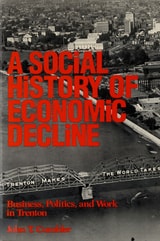
Social History of Economic Decline
Business, Politics, and Work in TrentonCumbler, John T.
Rutgers University Press, 1989
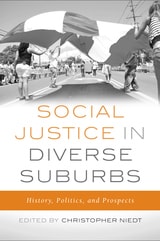
Social Justice in Diverse Suburbs
History, Politics, and ProspectsChristopher Niedt
Temple University Press, 2013
Editor Christopher Niedt and his contributors shed light on organizing and conflict in the suburbs with historical and contemporary case studies. Chapters address topical issues ranging from how suburbanites actively fought school segregation to industrial pollution and displacement along the suburban-rural fringe. Social Justice in Diverse Suburbs also considers struggles for integration and environmental justice as well as efforts to preserve suburban history and organize immigrant communities.
Contributors include: Douglas R. Appler, Aaron Cavin, Nancy A. Denton, Lisa Feldstein, Casey Gallagher, Anne Galletta, Joseph Gibbons, Robert Gioielli, Lucas Owen Kirkpatrick, JoAnna Mitchell-Brown, Manuel Pastor, john a. powell, Jason Reece, Alex Schafran, June Williamson, and the editor.
Social Logic Of Politics
Personal Networs As Contextsedited by Alan S. Zuckerman
Temple University Press, 2005
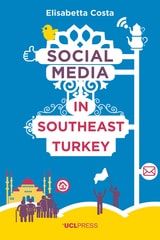
Social Media in Southeast Turkey
Love, Kinship and PoliticsElisabetta Costa
University College London, 2016
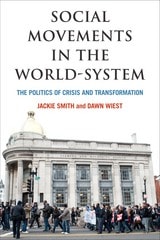
Social Movements in the World-System
The Politics of Crisis and TransformationJackie Smith
Russell Sage Foundation, 2012

Socialist Modern
East German Everyday Culture and PoliticsKatherine Pence & Paul Betts, editors
University of Michigan Press, 2008
The reunification of Germany in 1989 may have put an end to the experiment in East German communism, but its historical assessment is far from over. Where most of the literature over the past two decades has been driven by the desire to uncover the relationship between power and resistance, complicity and consent, more recent scholarship tends to concentrate on the everyday history of East German citizens.
This volume builds on the latest literature by exploring the development and experience of life in East Germany, with a particular view toward addressing the question: What did modernity mean for the East German state and society? As such, the collection moves beyond the conceptual divide between state-level politics and everyday life to sharply focus on the specific contours of the GDR's unique experiment in Cold War socialism. What unites all the essays is the question of how the very tensions around "socialist modernity" shaped the views, memories, and actions of East Germans over four decades.
"An impressive volume drawing together rich, diverse essays by some of the most interesting, well-known, and experienced scholars on the GDR in the field, on both sides of the Atlantic."
---Dr. Jan Palmowski, Senior Lecturer in European Studies at King's College London, and Review Editor for German History
"Delving into many sides of the GDR modern, Pence and Betts present both new empirical evidence and offer insightful theoretical perspectives. The idea of the 'Socialist Modern' provides an excellent conceptual framework; the focus on culture fills a hole in the literature, the introduction is theoretically sophisticated and well-grounded in the historiography, and the span and heterogeneity of the articles are impressive."
---Donna Harsch, Associate Professor of History, Carnegie Mellon University
Katherine Pence is Assistant Professor of History, Baruch College, City University of New York.
Paul Betts is Reader in Modern German History, University of Sussex, Brighton, England.
Contributors
Daphne Berdahl
Paul Betts
Alon Confino
Greg Eghigian
Dagmar Herzog
Young-Sun Hong
Thomas Lindenberger
Alf Lüdtke
Ina Merkel
Katherine Pence
Judd Stitziel
Dorothee Wierling