Results by title
1668 books match the query 'Popular culture' and 125 start with s
SOFT IN THE MIDDLE
CONTEMPORARY SOFTCORE FEATURE IN ITS CONTEXTSDAVID ANDREWS
The Ohio State University Press, 2006
In meticulous detail, Soft in the Middle demonstrates that softcore’s under-the-radar success and pervasive cultural devaluation may be understood in terms of the “postfeminist” strategies employed by successive generations of producers and distributors, each intent on overcoming obstacles to the mainstream distribution of pornographic material. Softcore and its American precursors became more “feminized” and “female friendly” as their distribution widened, a process hastened in the 1980s by the industry’s transition to private, non-theatrical modes of distribution and exhibition (e.g., home-video outlets and premium-cable networks like Cinemax). One of the byproducts of this development is that contemporary softcore has frequently resorted to what are arguably anti-male or “misandristic” attitudes and depictions. Clearly, the genre challenges traditional assumptions about pornography, including those held by feminists on both sides of “the porn debates.”
Drawing on original industrial research, extensive sampling, and wide-ranging scholarship, Soft in the Middle offers a nuanced look at a discreetly indecent genre whose central commodity has always been female nudity. The book examines the genre’s history, describes its deflationary trajectory, and differentiates the reading patterns of its disparate audiences, including “cult” critics and feminist critics. Naturally, the book also considers the genre’s formal and ideological conventions, surveying its most exemplary subgenres, styles, and motifs—and lavishing particular attention on its most influential studios, directors, and texts.

Sacred Places
American Tourist Attractions in the Nineteenth CenturyJohn F. Sears
University of Massachusetts Press, 1999
Drawing on this fascinating body of material, Sacred Places examines the vital role which tourism played in fulfilling the cultural needs of nineteenth-century Americans. America was a new country in search of a national identity. Educated Americans desperately wished to meet European standards of culture and, at the same time, to develop a distinctly American literature and art. Tourism offered a means of defining America as a place and taking pride in the special features of its landscape. The country's magnificent natural wonders were a substitute for the cathedrals and monuments, the sense of history that Europe had built over the centuries. Moreover, Sears argues, tourist attractions like Mammoth Cave, Mount Auburn Cemetery, Yosemite, and Yellowstone functioned as sacred places for a nation with a diversity of religious sects and without ancient religious and national shrines. For nineteenth-century Americans, whose vision was shaped by the aesthetics of the sublime and the picturesque and by the popular nineteenth-century Romantic view of nature as temple, such places fulfilled their urgent need for cultural monuments and for places to visit which transcended ordinary reality.
But these nineteenth-century tourist attractions were also arenas of consumption. Niagara Falls was the most sublime of God's creations, a sacred place, which, like Mount Auburn Cemetery, was supposed to have a profound moral effect on the spectator. But it was also an emporium of culture where the tourist shopped for Niagara's wonders and for little replicas of the Falls in the form of souvenirs. In Sacred Places, Sears describes how this strange, sometimes amusing, juxtaposition of the mythic and the trivial, the sacred and the profane, the spiritual and the commercial remained a significant feature of American tourist attractions even after efforts were made at Yosemite, Yellowstone, and Niagara Falls to curb commercial and industrial intrusions.
Sears also explores how the nineteenth-century idealization of home stimulated the tourists' response to such places as the Willey House in the White Mountains, the rural cemeteries, and even the newly established asylums for the deaf, dumb, blind, and insane. And, in an intriguing account of Mauch Chunk, Pennsylvania, he examines the reasons why an important nineteenth-century anthracite transportation center was also a major tourist attraction.
Most of the attractions discussed in this book are still visited by millions of Americans. By illuminating their cultural meaning, Sacred Places prompts us to reflect on our own motivations and responses as tourists and reveals why tourism was and still is such an important part of American life.
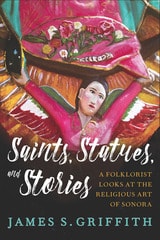
Saints, Statues, and Stories
A Folklorist Looks at the Religious Art of SonoraJames S. Griffith
University of Arizona Press, 2019
So describes well-known and beloved folklorist James S. Griffith as he takes us back through the decades to a town in northern Sonora where a statue is saved—and in so doing, a community is saved as well.
In Saints, Statues, and Stories Griffith shares stories of nearly sixty years of traveling through Sonora. As we have come to expect through these journeys, “Big Jim”—as he is affectionately known by many—offers nothing less than the living traditions of Catholic communities. Themes of saints as agents of protection or community action are common throughout Sonora: a saint coming out of the church to protect the village, a statue having a say in where it resides and paying social calls to other communities, or a beloved image rescued from destruction and then revered on a private altar. A patron saint saves a village from outside attackers in one story—a story that has at least ten parallels in Sonora’s former mission communities. Details may vary, but the general narrative remains the same: when hostile nonbelievers attack the village, the patron saint of the church foils them.
Griffith uncovers the meanings behind the devotional uses of religious art from a variety of perspectives—from artist to audience, preservationist to community member. The religious artworks transcend art objects, Griffith believes, and function as ways of communicating between this world and the next. Setting the stage with a brief geography, Griffith introduces us to roadside shrines, artists, fiestas, saints, and miracles. Full-color images add to the pleasure of this delightful journey through the churches and towns of Sonora.
Salt and State
An Annotated Translation of the <em>Songshi</em> Salt Monopoly TreatiseCecilia Lee-fang Chien
University of Michigan Press, 2004

Sandow the Magnificent
Eugen Sandow and the Beginnings of BodybuildingDavid L. Chapman
University of Illinois Press, 1994
Before Arnold Schwarzenegger, Steve Reeves, or Charles Atlas, there was German-born Eugen Sandow (1867-1925), a muscular vaudeville strongman who used his good looks, intelligence, and business savvy to forge a fitness empire.
David L. Chapman tells the story of the immensely popular showman who emphasized physique display rather than lifting prowess. But he also looks at Sandow's success off-stage, where the entertainer helped found the fitness movement by establishing a worldwide chain of gyms, publishing a popular magazine, selling exercise equipment, and pioneering the use of food supplements. Chapman explains physical culture's popularity in terms of its wider social implications while delving into how Sandow, by making exercise fashionable, ushered in the fitness craze that continues today.
This new edition has been revised and enlarged with an afterword that includes unpublished information, new photographs of Sandow and his contemporaries, and an updated index.
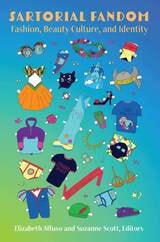
Sartorial Fandom
Fashion, Beauty Culture, and IdentityElizabeth Affuso and Suzanne Scott, Editors
University of Michigan Press, 2023
Sartorial Fandom shines a spotlight on the fashion and beauty cultures that undergird fandoms, considering the retailers, branded products, and fan-made objects that serve as forms of identity expression. This collection is invested in the subcultural and mainstream expression of style and in the spaces where the two intersect. Fan culture is, in many respects, an optimal space to situate a study of style because fandom itself is often situated between the subcultural and the mainstream. Collectively, the chapters in this anthology explore how various axes of lived identity interact with a growing movement to consider fandom as a lifestyle category, ultimately contending that sartorial practices are central to fan expression but also indicative of the primacy of fandom in contemporary taste cultures.
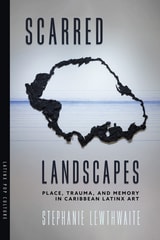
Scarred Landscapes
Place, Trauma, and Memory in Caribbean Latinx ArtStephanie Lewthwaite
University of Arizona Press, 2025
The book combines formal analysis with artist testimony, exhibition histories, and theoretical frameworks from trauma, memory, and archipelagic studies, to offer a multifaceted examination of Caribbean Latinx art. Lewthwaite explores how these artists practice “archipelagic memory,” a generative, decolonial, and coalitional form of memory work that envisions alternative modes of belonging in difference and solidarity with others. By connecting different people, pasts, and places, Caribbean Latinx artists expose the reverberations of trauma while imagining other worlds beyond it.
This work puts Caribbean Latinx artists at the center of debates about the exclusions of dominant memory narratives and contemporary art worlds, highlighting their contributions to a wider decolonial project of remembrance. By revealing the interconnectedness of traumatic histories and the potential for art to foster empathy and justice, Lewthwaite’s work underscores the importance of relational and decolonial thought for imagining a better society.

Scepticism and Hope in Twentieth Century Fantasy Literature
Kath Filmer
University of Wisconsin Press, 1992
Schoolbook Nation
Conflicts over American History Textbooks from the Civil War to the PresentJoseph Moreau
University of Michigan Press, 2004
-Gary B. Nash, Director of the National Center for History in the Schools
Taking Frances FitzGerald's textbook study America Revised as a point of departure, Joseph Moreau in Schoolbook Nation challenges FitzGerald's premise that the 1960s were the beginning of the end of the glory days of American history education.
Moreau recounts how in the late twentieth century, cultural commentators such as historian Arthur Schlesinger Jr. and politician Newt Gingrich preached that a new identity crisis had shaken American history in the sixties, and that the grand unified view of our past had given way to various interest groups, who dismantled the old national narrative while demanding a more "inclusive" curriculum for their children.
Moreau discovered, however, that American history, while grand, has never been unified. Delving into more than 100 history books from the last 150 years, the author reveals that the efforts of pressure groups to influence the history curriculum are nearly as old as the mustiest textbook. "For those who would influence textbooks and teaching-Protestant elites in the 1870s, Irish-Americans in the 1920s, and conservative politicians today-the sky has always been falling," according to Moreau.
Schoolbook Nation offers a history lesson of its own: when the story of the past is written or rewritten, truth is often a victim. With its comprehensive treatment of the subjects of honesty and politics in the teaching of history, this is an essential book on the side of truth in a complex debate.

Science
Steve Fuller
University of Minnesota Press, 1998
Science of Science and Reflexivity
Pierre Bourdieu
University of Chicago Press, 2004
Science of Science and Reflexivity will be welcomed as a companion volume to Bourdieu's now seminal An Invitation to Reflexive Sociology. In this posthumous work, Bourdieu declares that science is in danger of becoming a handmaiden to biotechnology, medicine, genetic engineering, and military research—that it risks falling under the control of industrial corporations that seek to exploit it for monopolies and profit.
Science thus endangered can become detrimental to mankind. The line between pure and applied science, therefore, must be subjected to intense theoretical scrutiny. Bourdieu's goals in Science of Science and Reflexivity are to identify the social conditions in which science develops in order to reclaim its objectivity and to rescue it from relativism and the forces that might exploit it. In the grand tradition of scientific reflections on science, Bourdieu provides a sociological analysis of the discipline as something capable of producing transhistorical truths; he presents an incisive critique of the main currents in the study of science throughout the past half century; and he offers a spirited defense of science against encroaching political and economic forces.
A masterful summation of the principles underlying Bourdieu's oeuvre and a memoir of his own scientific journey, Science of Science and Reflexivity is a capstone to one of the most important and prodigious careers in the field of sociology.

Scientific Knowledge
A Sociological AnalysisBarry Barnes, David Bloor, and John Henry
University of Chicago Press, 1996
The authors, all noted for their contributions to science studies, have organized this book so that each chapter examines a key step in the process of doing science. Using case studies from cognitive science, physics, and biology to illustrate their descriptions and applications of the social study of science, they show how this approach provides a crucial perspective on how science is actually done.
Scientific Knowledge will be of interest not only to those engaged in science studies, but also to anyone interested in the practice of science.
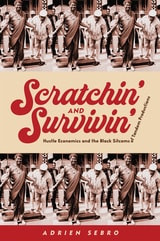
Scratchin' and Survivin'
Hustle Economics and the Black Sitcoms of Tandem ProductionsAdrien Sebro
Rutgers University Press, 2024
The 1970s was a golden age for representations of African American life on TV sitcoms: Sanford & Son, Good Times, The Jeffersons. Surprisingly, nearly all the decade’s notable Black sitcoms were made by a single company, Tandem Productions. Founded by two white men, the successful team behind All in the Family, writer Norman Lear and director Bud Yorkin, Tandem gave unprecedented opportunities to Black actors, writers, and producers to break into the television industry. However, these Black auteurs also struggled to get the economic privileges and creative autonomy regularly granted to their white counterparts.
Scratchin’ and Survivin’ discovers surprising parallels between the behind-the-scenes drama at Tandem and the plotlines that aired on their sitcoms, as both real and fictional African Americans devised various strategies for getting their fair share out of systems prone to exploiting their labor. The media scholar Adrien Sebro describes these tactics as a form of “hustle economics,” and he pays special attention to the ways that Black women—including actresses like LaWanda Page, Isabel Sanford, and Esther Rolle—had to hustle for recognition. Exploring Tandem’s complex legacy, including its hit racially mixed sitcom Diff’rent Strokes, he showcases the Black talent whose creative agency and labor resilience helped to transform the television industry.
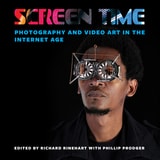
Screen Time
Photography and Video Art in the Internet AgeRichard Rinehart
Bucknell University Press, 2022
Published by Bucknell University Press for the Samek Art Museum.
Distributed worldwide by Rutgers University Press.
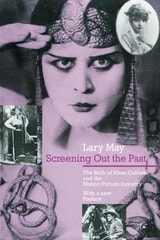
Screening Out the Past
The Birth of Mass Culture and the Motion Picture IndustryLary May
University of Chicago Press, 1983
"It is impossible to follow a narrow trail through the movies. The vistas keep opening, and May, linking movies to mass society, finds and makes new perceptions on emerging women, the rise of the studios, the special growth and appeal of Los Angeles, the nature of studio leadership and the early and persistent imputed corrupting power of film."—Charles Champlin, Los Angeles Times
"Lary May . . . has provided a set of new and rich insights into the changing patterns of American culture, 1890-1929. . . . His concentration on social and cultural history indirectly provides answers to questions which have baffled political historians for several decades."—David W. Noble, Minneapolis Tribune
"[Screening Out the Past is] a scrupulously argued, clearly written account of Hollywood's role in bringing America skipping and giggling from the Victorian world into the twentieth century. May is splendid on the psychology of the immigrant movie moguls, on Douglas Fairbanks and Mary Pickford as post Great War role models, and many other things."—Philip French, London Sunday Observor
"Altogether, the book represents the most successful blending of movie and cultural history to date."—Benjamin McArthur, Journal of Social History

Screening Precarity
Hindi Cinema and Neoliberal Crisis in Twenty-first Century IndiaMegha Anwer and Anupama Arora
University of Michigan Press, 2025
Search and Clear
Critical Responses to Selected Literature and Films of the Vietnam WarWilliam J. Searle
University of Wisconsin Press, 1988
Seasoned Authors for a New Season
The Search for Standards in Popular WritingEdited by Louis Filler
University of Wisconsin Press, 1980

Secret Spaces of Childhood
Elizabeth Goodenough, Editor
University of Michigan Press, 2003
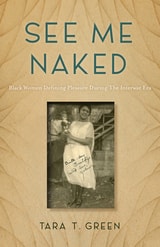
See Me Naked
Black Women Defining Pleasure in the Interwar EraTara T. Green
Rutgers University Press, 2022
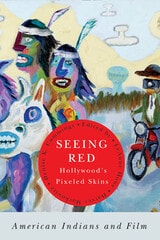
Seeing Red—Hollywood's Pixeled Skins
American Indians and FilmLeAnne Howe
Michigan State University Press, 2013

Self-Help Books
Why Americans Keep Reading ThemSandra K. Dolby
University of Illinois Press, 2004
Understanding instead of lamenting the popularity of self-help books
Based on a reading of more than three hundred self-help books, Sandra K. Dolby examines this remarkably popular genre to define "self-help" in a way that's compelling to academics and lay readers alike. Self-Help Books also offers an interpretation of why these books are so popular, arguing that they continue the well-established American penchant for self-education, they articulate problems of daily life and their supposed solutions, and that they present their content in a form and style that is accessible rather than arcane.
Using tools associated with folklore studies, Dolby then examines how the genre makes use of stories, aphorisms, and a worldview that is at once traditional and contemporary. The overarching premise of the study is that self-help books, much like fairy tales, take traditional materials, especially stories and ideas, and recast them into extended essays that people happily read, think about, try to apply, and then set aside when a new embodiment of the genre comes along.
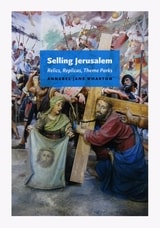
Selling Jerusalem
Relics, Replicas, Theme ParksAnnabel Jane Wharton
University of Chicago Press, 2006
From relics of the True Cross and Templar replicas of the Holy Sepulchre to Franciscan recreations of the Passion to nineteenth-century mass-produced prints and contemporary theme parks, Wharton describes the evolving forms by which the city has been possessed in the West. She also maps those changing embodiments of the Holy City against shifts in the western market. From the gift-and-barter economy of the early Middle Ages to contemporary globalization, both money and the representations of Jerusalem have become progressively incorporeal, abstract, illusionistic, and virtual.
Selling Jerusalem offers a penetrating introduction to the explosive combination of piety and capital at work in religious objects and global politics. It is sure to interest students and scholars of art history, economic history, popular culture, religion, and architecture, as well as those who want to better understand Jerusalem’s problematic place in history.
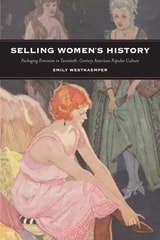
Selling Women's History
Packaging Feminism in Twentieth-Century American Popular CultureWestkaemper, Emily
Rutgers University Press, 2017
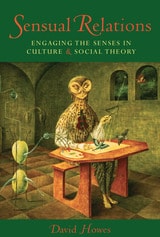
Sensual Relations
Engaging the Senses in Culture and Social TheoryDavid Howes
University of Michigan Press, 2003
David Howes is Professor of Anthropology, Concordia University, Montreal, Quebec.

Serial Selves
Identity and Representation in Autobiographical ComicsFrederik Byrn Køhlert
Rutgers University Press, 2019
As the first comparative study of how comics artists from a wide range of backgrounds use the form to write and draw themselves into cultural visibility, Serial Selves will be of interest to anyone interested in the current boom in autobiographical comics, as well as issues of representation in comics and visual culture more broadly.

Serious Larks
The Philosophy of Ted CohenTed Cohen
University of Chicago Press, 2018
This collection, edited and introduced by philosopher Daniel Herwitz, brings together some of Cohen’s best work to capture the unique style that made Cohen one of the most beloved philosophers of his generation. Among the perceptive, engaging, and laugh-out-loud funny reflections on movies, sports, art, language, and life included here are Cohen’s classic papers on metaphor and his Pushcart Prize–winning essay on baseball, as well as memoir, fiction, and even poetry. Full of free-spirited inventiveness, these Serious Larks would be equally at home outside Thoreau’s cabin on the waters of Walden Pond as they are here, proving that intelligence, sensitivity, and good humor can be found in philosophical writing after all.
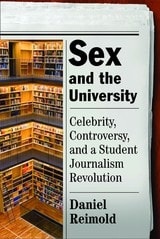
Sex and the University
Celebrity, Controversy, and a Student Journalism RevolutionReimold, Daniel
Rutgers University Press, 2010
Daniel Reimold gives readers of all generations an inside look at this phenomenon. Student sex columnists and sex magazine editors are both celebrities on their home campuses. One columnist, echoing the sentiments of many, said he became an overnight rock star golden child of journalism. But, with celebrity comes controversy. These columns and magazines have sparked contentious and far-reaching legal, religious, and intergenerational debates about sex, the student press, and the place of both within higher education. They are also the most prominent modern student press combatants in the fight for free speech. And they have blurred journalistic boundaries between what is considered public and private, art and pornography, and gossip and news.
Sex and the University explores the celebrity status that student sex columnists and magazine editors have received, the controversies they have caused, and the sexual generation and student journalism revolution they represent. Complete with a sexicon of slang, this book also dives into the columns and magazines themselves, sharing for the first time what modern students are saying about their sex and love lives, in their own words.
Sexology Uncensored
The Documents of Sexual ScienceEdited by Lucy Bland and Laura Doan
University of Chicago Press, 1998
Offering readers access to the primary materials on which contemporary sexology is founded, Sexology Uncensored is an invaluable record for all those interested in how we have come to think about sex and sexuality over the last hundred years.
Sexology in Culture and its companion Sexology Uncensored will interest all those concerned with understanding modern sexual discourse in its historical context.
Sexology in Culture
Labelling Bodies and DesiresEdited by Lucy Bland and Laura Doan
University of Chicago Press, 1998
Lucy Bland and Laura Doan have brought together leading historians of sex, cultural and literary critics, and scholars in gay, lesbian, and queer studies, to reassess current debates on sexology in light of its history. They address issues such as the relation of "sexual science" to the law, government policy, journalism, eugenics programs, marriage and sex manuals, and literary representation. They also map out new readings of transsexuality and bisexuality, and the centrality of race within sexology.
Sexology in Culture and its companion Sexology Uncensored will interest all those concerned with understanding modern sexual discourse in its historical context.
Sexual Politics and Popular Culture
Diane Raymond
University of Wisconsin Press, 1990
Shades of Springsteen
Politics, Love, Sports, and MasculinityJohn Massaro
Rutgers University Press, 2021
In this unique blend of memoir and musical analysis, John Massaro reflects on his experiences as a lifelong fan of The Boss and one of the first professors to design a college course on Springsteen’s work. Focusing on five of the Jersey rocker’s main themes—love, masculinity, sports, politics, and the power of music—he shows how they are represented in Springsteen’s lyrics and shares stories from his own life that powerfully resonate with those lyrics. Meanwhile, paying tribute to Springsteen’s inclusive vision, he draws connections among figures as seemingly disparate as James Joyce, Ta-Nehisi Coates, Thomas Aquinas, Bobby Darin, and Lin-Manuel Miranda. Shades of Springsteen offers a deeply personal take on the musical and cultural legacies of an American icon.

Shakespeare in Theory
The Postmodern Academy and the Early Modern TheaterStephen Bretzius
University of Michigan Press, 1997
Shared Fantasy
Role Playing Games as Social WorldsGary Alan Fine
University of Chicago Press, 1983
Sherlock's World
Fan Fiction and the Reimagining of BBC's SherlockAnn K. McClellan
University of Iowa Press, 2018
Sherlock Holmes remains more popular than ever some 130 years after the detective first appeared in print. These days, the iconic character’s staying power is due in large part to the success of the recent BBC series Sherlock, which brings the famous sleuth into the twenty-first century.
One of the most-watched television series in BBC history, Sherlock is set in contemporary London, where thirtysomething Sherlock and John (no longer fussy old Holmes and Watson), alongside New Scotland Yard, solve crimes with the help of smartphones, texting, online forums, and the internet. In their modernization of Sir Arthur Conan Doyle’s nineteenth-century world, Sherlock creators Stephen Moffatt and Mark Gatiss make London as much a character of their show as the actors themselves. The highly stylized series has inspired an impassioned fan community in Britain, the U.S., and beyond. Fans create and share their writings, which reimagine the characters in even more dramatic ways than the series can.
Interweaving fan fiction studies, world-building, and genre studies, Ann McClellan examines the hit series and the fan fiction it inspires. Using Sherlock to trace the changing face of fan fiction studies, McClellan’s book explores how far fans are willing to go to change the Sherlockian canon while still reinforcing its power and status as the source text. What makes Sherlock fanfic Sherlockian? How does it stay within the canon even while engaging in the wildest reimaginings? Sherlock’s World explores the boundaries between canon, genre, character, and reality through the lenses of fan fiction and world-building. This book promises to be a valuable resource for fan studies scholars, those who write fan fiction, and Sherlock fans alike.

Shifting Memories
The Nazi Past in the New GermanyKlaus Neumann
University of Michigan Press, 2000
The case studies address, for example, the legacy of the so-called Celler Hasenjagd (the hunting down of concentration camp prisoners who survived an Allied air raid in April 1945 in a town in Lower Saxony); efforts by the City of Hildesheim to memorialize the Kristallnacht pogrom; attempts by Italian, Jewish, and Sinti survivors to commemorate their suffering in two West German towns; the posthumous reputation of a German communist imprisoned in Buchenwald and credited with having saved the lives of 159 Jewish children; and the public memories of the Ravensbrück and Buchenwald concentration camps in East Germany.
Directed at an audience curious about contemporary Germany, this book will appeal to those interested in issues of public and social memory, and in the legacy of Auschwitz.
Klaus Neumann is a historian who has taught in universities in Germany and Australia and written about social memories in the Pacific Islands, Australia, and Germany. Previous books include Not the Way It Really Was and Rabaul Yu Swit Moa Yet. He lives in Richmond, Australia.
Shooting Cowboys and Indians
Silent Western Films, American Culture, and the Birth of HollywoodAndrew Brodie Smith
University Press of Colorado, 2003
Tracing the western from its hazy silent-picture origins in the 1890s to the advent of talking pictures in the 1920s, Smith examines the ways in which silent westerns contributed to the overall development of the film industry.
Focusing on such early important production companies as Selig Polyscope, New York Motion Picture, and Essanay, Smith revises current thinking about the birth of Hollywood and the establishment of Los Angeles as the nexus of filmmaking in the United States. Smith also reveals the role silent westerns played in the creation of the white male screen hero that dominated American popular culture in the twentieth century.
Illustrated with dozens of historic photos and movie stills, this engaging and substantive story will appeal to scholars interested in Western history, film history, and film studies as well as general readers hoping to learn more about this little-known chapter in popular filmmaking.
Shopping
Material Culture PerspectivesDeborah C. Andrews
University of Delaware Press, 2015
Published by University of Delaware Press. Distributed worldwide by Rutgers University Press.

Showing Out
Fashion in HarlemPeter "Souleo" Wright
Rutgers University Press, 2027
Showing Out: Fashion in Harlem explores the unprecedented and enduring impact of the Harlem Institute of Fashion (HIF) on American culture and style. Founded in 1966 by Lois K. Alexander-Lane, HIF produced legendary fashion shows for the annual HARLEM WEEK festival. With their eye-catching costumes, dramatic runway presentations, and embrace of the local community, the shows became one of HIF’s most popular and successful initiatives, spotlighting the underrepresented talents of Black fashion designers, models, and administrators. Tracing HIF’s legacy within the larger narrative of fashion history, Showing Out uses fashion shows as a portal, showcasing previously unpublished archival photos; first-hand accounts from HIF alumni, and contemporary collectives that continue to celebrate the Black contribution to fashion. In the wake of Black Lives Matter, anti-DEI policies, and ongoing political and racial turmoil, Showing Out is the much-needed voice of inspiration to reshape the narrative around fashion.
Sideshow U.S.A.
Freaks and the American Cultural ImaginationRachel Adams
University of Chicago Press, 2001
Sideshow U.S.A. begins by revisiting the terror and fascination the original freak shows provided for their audiences, as well as exploring the motivations of those who sought fame and profit in the business of human exhibition. With this history in mind, Adams turns from live entertainment to more mediated forms of cultural expression: the films of Tod Browning, the photography of Diane Arbus, the criticism of Leslie Fiedler, and the fiction Carson McCullers, Toni Morrison, and Katherine Dunn. Taken up in these works of art and literature, the freak serves as a metaphor for fundamental questions about self and other, identity and difference, and provides a window onto a once vital form of popular culture.
Adams's study concludes with a revealing look at the revival of the freak show as live performance in the late 1980s and the 1990s. Celebrated by some, the freak show's recent return is less welcome to those who have traditionally been its victims. At the beginning of a new century, Adams sees it as a form of living history, a testament to the vibrancy and inventiveness of American popular culture, as well as its capacity for cruelty and injustice.
"Because of its subject matter, this interesting and complex study is provocative, as well as thought-provoking."—Virginia Quarterly Review
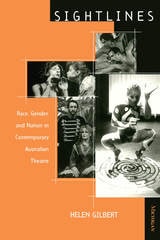
Sightlines
Race, Gender, and Nation in Contemporary Australian TheatreHelen Gilbert
University of Michigan Press, 1998
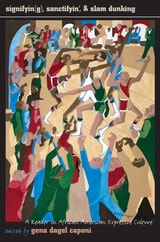
Signifyin(g), Sanctifyin', and Slam Dunking
A Reader in African American Expressive CultureGena Tabery
University of Massachusetts Press, 1999
Observers of American society have long noted the distinctive contribution of African Americans to the nation's cultural life. We find references to African American music and dance, black forms of oral expression, even a black style of playing basketball. But what do such terms really mean? Is it legitimate to talk about a distinct African American aesthetic, or is this simply a vestige of an outmoded racial essentialism? What makes a particular form of cultural expression “black” other than the fact that some African Americans may practice it? These are some of the questions addressed in the readings gathered in this volume by Gena Dagel Caponi. The essays, some previously published and others new, spring from a variety of disciplines and cover a broad range of topics, from the communal ritual of the ring shout to the evolution of rap to the improvisational genius of Michael Jordan. While each piece focuses on a different aspect of African American expressive culture, together they reveal a set of creative principles, techniques, and practices—a cultural aesthetic—that is remarkably consistent and resilient.
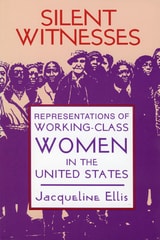
Silent Witnesses
Representations of Working-Class Women in the United StatesJacqueline Ellis
University of Wisconsin Press, 1998
Through detailed analyses of documentary photography and radical literature, Silent Witnesses explores how working-class identity has been repressed and manipulated to fit the expectations of liberal politicians, radical authors, Marxist historians, feminist academics, and contemporary cultural theorists.

Simulacra and Simulation
Jean Baudrillard
University of Michigan Press, 1994

Since When Is Fran Drescher Jewish?
Dubbing Stereotypes in The Nanny, The Simpsons, and The SopranosBy Chiara Francesca Ferrari
University of Texas Press, 2010
"Since when is Fran Drescher Jewish?" This was Chiara Francesca Ferrari's reaction when she learned that Drescher's character on the television sitcom The Nanny was meant to be a portrayal of a stereotypical Jewish-American princess. Ferrari had only seen the Italian version of the show, in which the protagonist was dubbed into an exotic, eccentric Italian-American nanny. Since When Is Fran Drescher Jewish? explores this "ventriloquism" as not only a textual and cultural transfer between languages but also as an industrial practice that helps the media industry foster identification among varying audiences around the globe.
At the heart of this study is an in-depth exploration of three shows that moved from global to local, mapping stereotypes from both sides of the Atlantic in the process. Presented in Italy, for example, Groundskeeper Willie from The Simpsons is no longer a belligerent, alcoholic Scotsman but instead easily becomes a primitive figure from Sardinia. Ironically, The Sopranos—a show built around Italian-Americans—was carefully re-positioned by Italian TV executives, who erased the word "mafia" and all regional references to Sicily. The result of Ferrari's three case studies is evidence that "otherness" transcends translation, as the stereotypes produced by the American entertainment industry are simply replaced by other stereotypes in foreign markets. As American television studios continue to attempt to increase earnings by licensing their shows abroad, Since When Is Fran Drescher Jewish? illuminates the significant issues of identity raised by this ever-growing marketplace, along with the intriguing messages that lie in the larger realm of audiovisual cultural exchange.
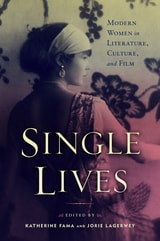
Single Lives
Modern Women in Literature, Culture, and FilmKatherine Fama
Rutgers University Press, 2022
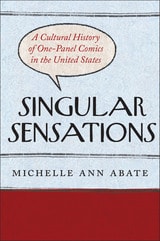
Singular Sensations
A Cultural History of One-Panel Comics in the United StatesMichelle Ann Abate
Rutgers University Press, 2024
Shortlisted for the 2024 Eisner Award for Best Academic/Scholarly Book
What do The Family Circus, Ziggy, and The Far Side have in common? They are all single-panel comics, a seemingly simple form that cartoonists have used in vastly different ways.
Singular Sensations is the first book-length critical study to examine this important but long-neglected mode of cartoon art. Michelle Ann Abate provides an overview of how the American single-panel comic evolved, starting with Thomas Nast’s political cartoons and R.F. Outcault’s groundbreaking Yellow Kid series in the nineteenth century. In subsequent chapters, she explores everything from wry New Yorker cartoons to zany twenty-first-century comics like Bizarro. Offering an important corrective to the canonical definition of comics as “sequential art,” Abate reveals the complexity, artistry, and influence of the single-panel art form.
Engaging with a wide range of historical time periods, sociopolitical subjects, and aesthetic styles, Singular Sensations demonstrates how comics as we know and love them would not be the same without single-panel titles. Abate’s book brings the single-panel comic out of the margins and into the foreground.
Sinoglossia
Edited by Andrea Bachner, Howard Chiang, and Yu-Lin Lee
Hong Kong University Press, 2023
Sinoglossia places embodiment, mediality, and translation at the center of this analytical inquiry into Chinese and Sinophone cultures. This book introduces a theory defined by cultural formations not overdetermined by Sinitic linguistic ties. The concept of sinoglossia combines a heteroglossic and heterotopian approach to the critical study of mediated discourses of China and “Chineseness.” From the history of physical examinations and queer subalternity to the cinematic inscription of “Chineseness-as-landscape,” and from Sinopop to the translational writings of Eileen Chang and Syaman Rapongan, this book argues for a flexible conceptualization of cultural objects, conditions, and contexts that draws attention to an array of polyphonic, multi-discursive, and multilingual articulations. In this new horizon of understanding, place or theme create a source of friction and innovation.
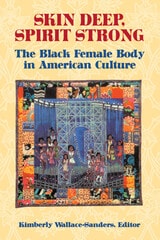
Skin Deep, Spirit Strong
The Black Female Body in American CultureKimberly Wallace-Sanders, Editor
University of Michigan Press, 2002
The collection blends original and classic essays to reveal the interconnections among art, literature, public policy, the history of medicine, and theories about sexuality with regard to bodies that are both black and female. Contributors include Rachel Adams, Elizabeth Alexander, Lisa Collins, Bridgette Davis, Lisa E.Farrington, Anne Fausto-Sterling, Beverly Guy-Sheftall, Evelynn Hammonds, Terri Kapsalis, Jennifer L. Morgan, Siobhan B. Somerville, Kimberly Wallace-Sanders, Carla Williams, and Doris Witt.
Skin Deep, Spirit Strong: The Black Female Body in American Culture will appeal to both the academic reader attempting to integrate race into discussion about the female body and to the general reader curious about the history of black female representation.
Kimberly Wallace-Sanders is Assistant Professor, Graduate Institute of Liberal Arts and Institute of Women's Studies, Emory University.
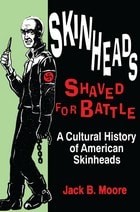
Skinheads Shaved For Battle
A Cultural History of American SkinheadsJack Moore
University of Wisconsin Press, 1993
This book describes who American skinheads are, how they have developed within larger youth group scenes, their ideas and activities, the role of music in their formation and development, how they have been perceived by the media in America, and what damage they have done in American society. Jack B. Moore focuses on the cultural history of this group in America during the 1980s and suggests that while they were originally a minor distraction on the punk scene, they have grown into a dangerous and far more politically engaged source of hate thought and crime.