Results by title
194 books match the query 'Practice' and 6 start with s
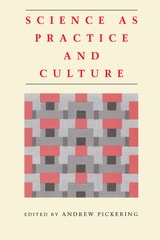
Science as Practice and Culture
Edited by Andrew Pickering
University of Chicago Press, 1992
Andrew Pickering has invited leading historians, philosophers, sociologists, and anthropologists of science to prepare original essays for this volume. The essays range over the physical and biological sciences and mathematics, and are divided into two parts. In part I, the contributors map out a coherent set of perspectives on scientific practice and culture, and relate their analyses to central topics in the philosophy of science such as realism, relativism, and incommensurability. The essays in part II seek to delineate the study of science as practice in arguments across its borders with the sociology of scientific knowledge, social epistemology, and reflexive ethnography.

Sevick's Transmission Line Transformers
Theory and practiceRaymond A. Mack
The Institution of Engineering and Technology, 2014

Sex, Sickness, and Slavery
Illness in the Antebellum SouthMarli F. Weiner with Mazie Hough
University of Illinois Press, 2014

Skeptical Feminism
Activist Theory, Activist PracticeCarolyn Dever
University of Minnesota Press, 2003
A clarion call for a new approach to feminist thought
In this major work, Carolyn Dever considers the ambivalence or outright hostility many feminists feel toward theory, arguing that a fundamental skepticism toward abstraction has been vital to the development of the movement.
Dever analyzes the politics of feminist theory by looking at its popular, activist, and academic modes, from the liberation movements of the 1970s to gender and queer studies now. Using key moments in the history of modern feminism-consciousness-raising, best-selling books like Sexual Politics by Kate Millett and The Women’s Room by Marilyn French, and media representations of women’s struggle for equality—Dever outlines heated debates over psychoanalysis, sexuality, and activism. The abstract and the grounded converge in discussions about the relationship between the feminist mind and the feminist body and in the preoccupation, both uneasy and utopian, with lesbian sexuality. Powerful, illuminating, and galvanizing, Skeptical Feminism traces the strategies the women’s movement has used to make theory matter—and points toward a new, politically engaged approach to feminist thought.
Sleep with Spectators
Feminist Performance and PracticeDanielle Drees
University of Minnesota Press, 2026
A rejuvenating look at sleep’s integral role in feminist practice, critique, and imagination
Inequality is notoriously exhausting to confront, but through theater, performance art, and theory, feminist artists and thinkers have explored a radical counter to this exhaustion: sleep. Centering creative work on this restorative practice, Sleep with Spectators is a refreshing and visionary counterhistory of feminism that offers sleep as a tool for imagining new ways of living—ones that prioritize not only rest but also care and interdependence.
Taking performance as a unique means of perceiving private and unconscious aspects of daily life, Danielle Drees draws from opera, plays, and avant-garde theater to find instances of sleep and sleeplessness as novel embodiments of core feminist concerns. Among her subjects are Sarah Kane’s free verse text 4.48 Psychosis; María Irene Fornés’s queer drama of racial–sexual transformation, Enter THE NIGHT; and Regina José Galindo’s America’s Family Prison, in which Galindo, her partner, and their baby spent twenty-four hours in a “family-sized” cell rented from a private prison outfitter. Adeptly engaging this fascinating collection of international archival material through the lenses of Marxist feminism, trans and queer studies, and disability studies, Sleep with Spectators illuminates how sleep performances reveal and critique inequalities rooted in gender, sexuality, race, class, and disability.
Idiosyncratic and interdisciplinary, Sleep with Spectators charts an original path through the feminist performance archive, presenting new ways of indexing injustice and interrogating the political conditions of rest.
Retail e-book files for this title are screen-reader friendly.
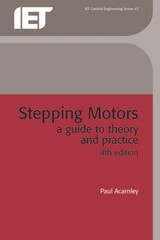
Stepping Motors
A guide to theory and practicePaul Acarnley
The Institution of Engineering and Technology, 2002