Results by title
176 books match the query 'Prevention' and 25 start with s
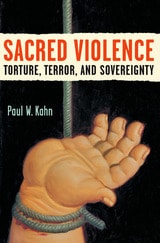
Sacred Violence
Torture, Terror, and SovereigntyPaul W. Kahn
University of Michigan Press, 2008
In Sacred Violence, the distinguished political and legal theorist Paul W. Kahn investigates the reasons for the resort to violence characteristic of premodern states. In a startling argument, he contends that law will never offer an adequate account of political violence. Instead, we must turn to political theology, which reveals that torture and terror are, essentially, forms of sacrifice. Kahn forces us to acknowledge what we don't want to see: that we remain deeply committed to a violent politics beyond law.
Paul W. Kahn is Robert W. Winner Professor of Law and the Humanities at Yale Law School and Director of the Orville H. Schell, Jr. Center for International Human Rights.
Cover Illustration: "Abu Ghraib 67, 2005" by Fernando Botero. Courtesy of the artist and the American University Museum.

Saving Sickly Children
The Tuberculosis Preventorium in American Life, 1909-1970Connolly, Cynthia A
Rutgers University Press, 2008
In this book, Cynthia A. Connolly provides a provocative analysis of public health and family welfare through the lens of the tuberculosis preventorium. This unique facility was intended to prevent TB in indigent children from families labeled irresponsible or at risk for developing the disease. Yet, it also held deeply rooted assumptions about class, race, and ethnicity. Connolly goes further to explain how the child-saving themes embedded in the preventorium movement continue to shape children's health care delivery and family policy in the United States.
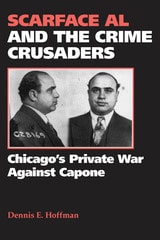
Scarface Al and the Crime Crusaders
Chicago's Private War Against CaponeDennis E. Hoffman
Southern Illinois University Press, 1993
According to the Eliot Ness myth, which has been widely disseminated through books, television shows, and movies, Ness and the Untouchables defeated Al Capone by marshaling superior firepower. In Scarface Al and the Crime Crusaders, Dennis Hoffman presents a fresh new perspective on the downfall of Al Capone. To debunk the Eliot Ness myth, he shows how a handful of private citizens brought Capone to justice by outsmarting him rather than by outgunning him.
Drawing on previously untapped sources, Hoffman dissects what he terms a “private war” against Capone. He traces the behind-the-scenes work of a few prominent Chicago businessmen from their successful lobbying of presidents Coolidge and Hoover on behalf of federal intervention to the trial, sentencing, and punishment of Al Capone. Hoffman also reconstructs in detail a number of privately sponsored citizen initiatives directed at stopping Capone. These private ventures included prosecuting the gangsters responsible for election crimes; establishing a crime lab to assist in gangbusting; underwriting the costs of the investigation of the Jake Lingle murder; stigmatizing Capone; and protecting the star witnesses for the prosecution in Al Capone’s income tax evasion case.
Hoffman suggests that as American society continues to be threatened by illegal drugs, gangs, and widespread violence, it is important to remember that the organized crime and political corruption of Prohibition-era Chicago were checked through the efforts of private citizens.
Dennis E. Hoffman is an associate professor of criminal justice at the University of Nebraska at Omaha.
Schools Under Surveillance
Cultures of Control in Public EducationMonahan, Torin
Rutgers University Press, 2009
Seeking Asylum
Human Smuggling and Bureaucracy at the BorderAlison Mountz
University of Minnesota Press, 2010
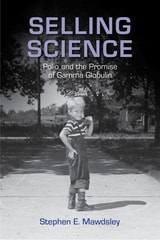
Selling Science
Polio and the Promise of Gamma GlobulinMawdsley, Stephen E
Rutgers University Press, 2016
Drawing on oral history interviews, medical journals, newspapers, meeting minutes, and private institutional records, Selling Science sheds light on the ethics of scientific conduct, and on the power of marketing to shape public opinion about medical experimentation.
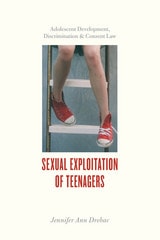
Sexual Exploitation of Teenagers
Adolescent Development, Discrimination, and Consent LawJennifer Ann Drobac
University of Chicago Press, 2016
When it comes to sexual relationships, adolescents pose a particular problem. Few teenagers possess all of the emotional and intellectual tools needed to navigate these threats, including the all too real advances made by supervisors, teachers, and mentors. In Sexual Exploitation of Teenagers, Jennifer Drobac explores the shockingly common problem of maturing adolescents who are harassed and exploited by adults in their lives. Reviewing the neuroscience and psychosocial evidence of adolescent development, she explains why teens are so vulnerable to adult harassers. Even today, in an age of increasing public awareness, criminal and civil law regarding the sexual abuse of minors remains tragically inept and irregular from state to state. Drobac uses six recent cases of teens suffering sexual harassment to illuminate the flaws and contradictions of this system, skillfully showing how our current laws fail to protect youths, and offering an array of imaginative legal reforms that could achieve increased justice for adolescent victims of sexual coercion.
Sexual Harassment and Cultural Change in Writing Studies
Patricia Freitag Ericsson
University Press of Colorado, 2020
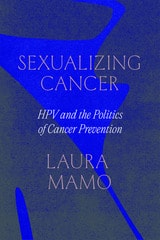
Sexualizing Cancer
HPV and the Politics of Cancer PreventionLaura Mamo
University of Chicago Press, 2023
Starting in 2005, people in the US and Europe were inundated with media coverage announcing the link between cervical cancer and the sexually transmitted virus HPV. Within a year, product ads promoted a vaccine targeting cancer’s viral cause, and girls and women became early consumers of this new cancer vaccine. An understanding of HPV’s broadening association with other cancers led to the identification of new at-risk populations—namely boys and men—and ignited a plethora of gender and sexual issues related to cancer prevention.
Sexualizing Cancer is the first book dedicated to the emergence and proliferation of the HPV vaccine along with the medical capacity to screen for HPV—crucial landmarks in the cancer prevention arsenal based on a novel connection between sex and chronic disease. Interweaving accounts from the realms of biomedical science, public health, and social justice, Laura Mamo chronicles cervical cancer’s journey out of exam rooms and into public discourse. She shows how the late twentieth-century scientific breakthrough that identified the human papilloma virus as having a causative role in the onset of human cancer galvanized sexual politics, struggles for inclusion, new at-risk populations, and, ultimately, a new regime of cancer prevention. Mamo reveals how gender and other equity arguments from within scientific, medical, and advocate communities shaped vaccine guidelines, clinical trial funding, research practices, and clinical programs, with consequences that reverberate today. This is a must-read history of medical expansion—from a “woman’s disease” to a set of cancers that affect all genders—and of lingering sexualization, with specific gendered, racialized, and other contours along the way.
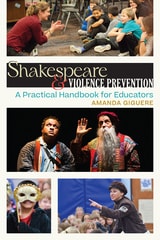
Shakespeare & Violence Prevention
A Practical Handbook for EducatorsAmanda Giguere
University of Wyoming Press, 2025
Framed by examples from Giguere’s work with the Shakespeare & Violence Prevention program, an interdisciplinary outreach project for K–12 schools developed at the University of Colorado Boulder, the text offers helpful entry points, digestible research, and practical exercises to align a violence-prevention curriculum with Shakespeare’s plays. It provides a condensed overview of key findings from violence prevention, clear synopses of the plays, and practicable strategies to implement the program. Guided by firsthand experience with a tried-and-true school program that reaches thousands of K–12 students annually, Giguere shares the Colorado Shakespeare Festival method, which focuses on “upstander” roleplays to practice violence-prevention strategies. Using a clear distillation of Shakespeare studies and violence-prevention research, she shows how the two fields naturally reinforce the concepts of teamwork, empathy, change, and hope.
Shakespeare and Violence Prevention is a new spin on these classic texts that empowers teachers and community leaders to use these tools to create research-guided university engagement programs, theatre company outreach programs, and K–12 student engagement with Shakespeare, even for those without expertise in violence prevention or Shakespeare.

Shattering
Food, Politics, and the Loss of Genetic DiversityCary Fowler and Pat Mooney
University of Arizona Press, 1990
Large-scale agriculture has come to favor uniformity in food crops. More than 7,000 U.S. apple varieties once grew in American orchards; 6,000 of them are no longer available. Every broccoli variety offered through seed catalogs in 1900 has now disappeared. As the international genetics supply industry absorbs seed companies—with nearly one thousand takeovers since 1970—this trend toward uniformity seems likely to continue; and as third world agriculture is brought in line with international business interests, the gene pools of humanity's most basic foods are threatened.
The consequences are more than culinary. Without the genetic diversity from which farmers traditionally breed for resistance to diseases, crops are more susceptible to the spread of pestilence. Tragedies like the Irish Potato Famine may be thought of today as ancient history; yet the U.S. corn blight of 1970 shows that technologically based agribusiness is a breeding ground for disaster.
Shattering reviews the development of genetic diversity over 10,000 years of human agriculture, then exposes its loss in our lifetime at the hands of political and economic forces. The possibility of crisis is real; this book shows that it may not be too late to avert it.
Shifting Obsessions
Three Essays on the Politics of AnticorruptionAryeh Neier
Central European University Press, 2004

Society for the Prevention of Cruelty to Animals
A Humorous – Insofar as That Is Possible – Novella from the GhettoJ. R. Pick
Karolinum Press, 2018
Tony suffers from tuberculosis, and, lying in his hospital bed one day, he decides to set up an animal welfare organization. Even though no animals are permitted in the camp, he is determined to find just one creature he can care for and protect—and his determination is contagious. A group of older boys, including Tony’s best friend, Ernie, aid him in his quest. Soon they’re joined by Tony’s mother—and her coterie of boyfriends. Eventually, they find Tony his pet: a mouse, which he names and carefully guards in a box hidden beneath his bed. But in the fall of 1944, the transports to Auschwitz begin.
As moving as it is irreverent, Pick’s novella draws on the two years he spent imprisoned in Terezín in his late teens. With cutting black humor, he shines a light on both the absurdities and injustices of the Nazi-run Jewish ghetto, using his literary artistry to portray in stunning shorthand an experience of the Holocaust that pure histories could never convey.
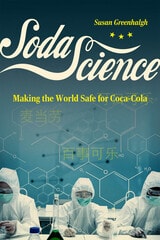
Soda Science
Making the World Safe for Coca-ColaSusan Greenhalgh
University of Chicago Press, 2024
The 1990s were tough times for the soda industry. In the United States, obesity rates were exploding. Public health critics pointed to sugary soda as a main culprit and advocated for soda taxes that might decrease the consumption of sweetened beverages—and threaten the revenues of the giant soda companies.
Soda Science tells the story of how industry leader Coca-Cola mobilized allies in academia to create a soda-defense science that would protect profits by advocating exercise, not dietary restraint, as the priority solution to obesity, a view few experts accept. Anthropologist and science studies specialist Susan Greenhalgh discovers a hidden world of science-making—with distinctive organizations, social networks, knowledge-making practices, and ethical claims—dedicated to creating industry-friendly science and keeping it under wraps. By tracing the birth, maturation, death, and afterlife of the science they made, Greenhalgh shows how corporate science has managed to gain such a hold over our lives.
Spanning twenty years, her investigation takes her from the US, where the science was made, to China, a key market for sugary soda. In the US, soda science was a critical force in the making of today’s society of step-counting, fitness-tracking, weight-obsessed citizens. In China, this distorted science has left its mark not just on national obesity policies but on the apparatus for managing chronic disease generally. By following the scientists and their ambitious schemes to make the world safe for Coke, Greenhalgh offers an account that is more global—and yet more human—than the story that dominates public understanding today.
Coke’s research isn’t fake science, Greenhalgh argues; it was real science, conducted by real and eminent scientists, but distorted by its aim. Her gripping book raises crucial questions about conflicts of interest in scientific research, the funding behind familiar messages about health, and the cunning ways giant corporations come to shape our diets, lifestyles, and health to their own needs.
Speculative Security
The Politics of Pursuing Terrorist MoniesMarieke de Goede
University of Minnesota Press, 2012
Since the terrorist acts of September 11, 2001, finance and security have become joined in new ways to produce particular targets of state surveillance. In Speculative Security, Marieke de Goede describes how previously unscrutinized practices such as donations and remittances, especially across national borders, have been affected by security measures that include datamining, asset freezing, and transnational regulation. These “precrime” measures focus on transactions that are perfectly legal but are thought to hold a specific potential to support terrorism. The pursuit of suspect monies is not simply an issue of financial regulation, she shows, but a broad political, social, and even cultural phenomenon with profound effects on everyday life.
Speculative Security offers a range of examples that illustrate the types of security interventions employed today, including the extralegal targeting and breaking up of the al-Barakaat financial network that was accompanied by raids in the United States, asset freezes in Sweden, and the incarceration of a money remitter at Guantánamo Bay. De Goede develops the paradigm of “speculative security” as a way to understand the new fusing of finance and security, denoting the speculative nature of both the means and the ends of the war on terrorist financing.
Ultimately, de Goede reveals how the idea of creating “security” appeals to multiple imaginable—and unimaginable—futures in order to enable action in the present.
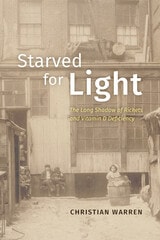
Starved for Light
The Long Shadow of Rickets and Vitamin D DeficiencyChristian Warren
University of Chicago Press, 2024
Rickets, a childhood disorder that causes soft and misshapen bones, transformed from an ancient but infrequent threat to a common scourge during the Industrial Revolution. Factories, mills, and urban growth transformed the landscape. Malnutrition and insufficient exposure to sunlight led to severe cases of rickets across Europe and the United States, affecting children in a variety of settings: dim British cities and American slave labor camps, moneyed households and impoverished ones. By the late 1800s, it was one of the most common pediatric diseases, seemingly an intractable consequence of modern life.
Starved for Light offers the first comprehensive history of this disorder. Tracing the efforts to understand, prevent, and treat rickets—first with the traditional remedy of cod liver oil, then with the application of a breakthrough corrective, industrially produced vitamin D supplements—Christian Warren places the disease at the center of a riveting medical history, one alert to the ways society shapes our views on illness. Warren shows how physicians and public health advocates in the United States turned their attention to rickets among urban immigrants, both African Americans and southern Europeans; some concluded that the disease was linked to race, while others blamed poverty, sunless buildings and cities, or cultural preferences in diet and clothing. Spotlighting rickets’ role in a series of medical developments, Warren leads readers through the encroachment on midwifery by male obstetricians, the development of pediatric orthopedic devices and surgeries, early twentieth-century research into vitamin D, appalling clinical experiments on young children testing its potential, and the eventual commercialization of all manner of vitamin D supplements. As vitamin D consumption rose in the mid-twentieth century, rickets—previously a major concern for doctors, parents, and public health institutions—faded in its severity and frequency, and as a topic of discussion. But despite the availability of drugstore supplements and fortified milk, small numbers of cases still appear today, and concerns and controversies about vitamin D deficiency in general continue to grow.
Sweeping and engaging, Starved for Light illuminates the social conditions underpinning our cures and our choices, helping us to see history’s echoes in contemporary prescriptions.

Strategies for Primary Health Care
Technologies Appropriate for the Control of Disease in the Developing WorldEdited by Julia A. Walsh and Kenneth S. Warren
University of Chicago Press, 1986
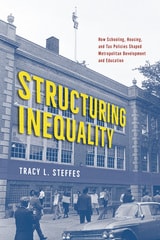
Structuring Inequality
How Schooling, Housing, and Tax Policies Shaped Metropolitan Development and EducationTracy L. Steffes
University of Chicago Press, 2024
As in many American metropolitan areas, inequality in Chicagoland is visible in its neighborhoods. These inequalities are not inevitable, however. They have been constructed and deepened by public policies around housing, schooling, taxation, and local governance, including hidden state government policies.
In Structuring Inequality, historian Tracy L. Steffes shows how metropolitan inequality in Chicagoland was structured, contested, and naturalized over time even as reformers tried to change it through school desegregation, affordable housing, and property tax reform. While these efforts had modest successes in the city and the suburbs, reformers faced significant resistance and counter-mobilization from affluent suburbanites, real estate developers, and other defenders of the status quo who defended inequality and reshaped the policy conversation about it. Grounded in comprehensive archival research and policy analysis, Structuring Inequality examines the history of Chicagoland’s established systems of inequality and provides perspective on the inequality we live with today.
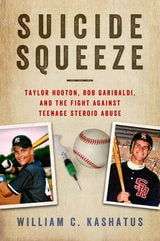
Suicide Squeeze
Taylor Hooton, Rob Garibaldi, and the Fight against Teenage Steroid AbuseWilliam C. Kashatus
Temple University Press, 2016
Appearance- and performance-enhancing drugs—specifically, anabolic steroids (APEDs)—provide a tempting competitive advantage for amateur baseball players. But this shortcut can exact a fatal cost on talented athletes. In his urgent book Suicide Squeeze, William Kashatus chronicles the experiences of Taylor Hooton and Rob Garibaldi, two promising high school baseball players who abused APEDs in the hopes of attracting professional scouts and Division I recruiters. However, as a result of their steroid abuse, they ended up taking their own lives.
In Suicide Squeeze—named for the high-risk play in baseball to steal home—Kashatus identifies the symptoms and dangers of steroid use among teens. Using archival research and interviews with the Hooton and Garibaldi families, he explores the lives and deaths of these two troubled young men, the impact of their suicides on MLB, and the ongoing fight against adolescent APED use by their parents.
A passionate appeal to prevent additional senseless deaths by athletes, Suicide Squeeze is an important contribution to debates on youth and sports and on public policy.

Surviving Climate Change
The Struggle to Avert Global CatastropheEdited by David Cromwell and Mark Levene
Pluto Press, 2007
Governments and business keep reassuring the public they are going to fix the problem. This book brings together some leading activists who disagree. They expose the inertia, denial, deception -- even threats to our civil liberties -- which comprise mainstream responses from civil and military policy makers, and from opinion formers in the media, corporations and academia.
An epochal change is called for in the way we all engage with the climate crisis. Key to that change is Aubrey Meyer's proposed Contraction and Convergence framework for limiting global carbon emissions. This book, which also includes contributions by Mayer Hillman and George Marshall, is a powerful and vital guide to how mass mobilisation can avert the looming catastrophe.
Surviving Mexico
Resistance and Resilience among Journalists in the Twenty-first CenturyBy Celeste González de Bustamante and Jeannine E. Relly
University of Texas Press, 2021
Mott KTA Journalism and Mass Communication Research Award, Kappa Tau Alpha
Tankard Book Award, Association for Education in Journalism and Mass Communication (AEJMC)
Knudson Latin America Prize, Association for Education in Journalism and Mass Communication (AEJMC)
Since 2000, more than 150 journalists have been killed in Mexico. Today the country is one of the most dangerous in the world in which to be a reporter. In Surviving Mexico, Celeste González de Bustamante and Jeannine E. Relly examine the networks of political power, business interests, and organized crime that threaten and attack Mexican journalists, who forge ahead despite the risks.
Amid the crackdown on drug cartels, overall violence in Mexico has increased, and journalists covering the conflict have grown more vulnerable. But it is not just criminal groups that want reporters out of the way. Government forces also attack journalists in order to shield corrupt authorities and the very criminals they are supposed to be fighting. Meanwhile some news organizations, enriched by their ties to corrupt government officials and criminal groups, fail to support their employees. In some cases, journalists must wait for a “green light” to publish not from their editors but from organized crime groups. Despite seemingly insurmountable constraints, journalists have turned to one another and to their communities to resist pressures and create their own networks of resilience. Drawing on a decade of rigorous research in Mexico, González de Bustamante and Relly explain how journalists have become their own activists and how they hold those in power accountable.
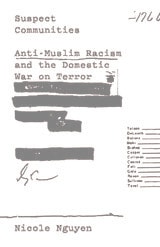
Suspect Communities
Anti-Muslim Racism and the Domestic War on TerrorNicole Nguyen
University of Minnesota Press, 2019
The first major qualitative study of “countering violent extremism” in key U.S. cities
Suspect Communities is a powerful reassessment of the U.S. government’s “countering violent extremism” (CVE) program that has arisen in major cities across the United States since 2011. Drawing on an interpretive qualitative study, it examines how the concept behind CVEaimed at combating homegrown terrorism by engaging Muslim community members, teachers, and religious leaders in monitoring and reporting on young peoplehas been operationalized through the everyday work of CVE actors, from high-level national security workers to local community members, with significant penalties for the communities themselves.
Nicole Nguyen argues that studying CVE provides insight into how the drive to bring liberal reforms to contemporary security regimes through “community-driven” and “ideologically ecumenical” programming has in fact further institutionalized anti-Muslim racism in the United States. She forcefully contends that the U.S. security state has designed CVE to legitimize and shore up support for the very institutions that historically have criminalized, demonized, and dehumanized communities of color, while appearing to learn from and attenuate past practices of coercive policing, racial profiling, and political exclusion.
By undertaking this analysis, Suspect Communities offers a vital window into the inner workings of the U.S. security state and the devastating impact of CVE on local communities.
Suspect Community
People's Experiences of the Prevention of Terrorism ActPaddy Hillyard
Pluto Press, 1993
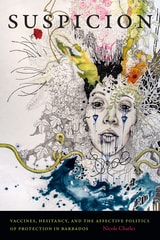
Suspicion
Vaccines, Hesitancy, and the Affective Politics of Protection in BarbadosNicole Charles
Duke University Press, 2021
Duke University Press Scholars of Color First Book Award recipient

Sweated Work, Weak Bodies
Anti-Sweatshop Campaigns and Languages of LaborBender, Daniel E.
Rutgers University Press, 2004
In the early 1900s, thousands of immigrants labored in New Yorks Lower East Side sweatshops, enduring work environments that came to be seen as among the worst examples of Progressive-Era American industrialization. Although reformers agreed that these unsafe workplaces must be abolished, their reasons have seldom been fully examined.
Sweated Work, Weak Bodies is the first book on the origins of sweatshops, exploring how they came to represent the dangers of industrialization and the perils of immigration. It is an innovative study of the language used to define the sweatshop, how these definitions shaped the first anti-sweatshop campaign, and how they continue to influence our current understanding of the sweatshop.