Results by title
61 books match the query 'Propaganda' and 2 start with s
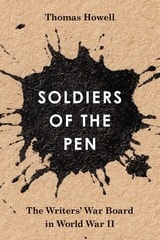
Soldiers of the Pen
The Writers' War Board in World War IIThomas Howell
University of Massachusetts Press, 2019
From 1942 to 1945, a small, influential group of media figures willingly volunteered their services to form the Writers' War Board (WWB), accepting requests from government agencies to create propaganda. Members included mystery writer Rex Stout, Pulitzer and Nobel Prize winner Pearl S. Buck, novelist and sports writer Paul Gallico, Book-of-the-Month Club editor and popular radio host Clifton Fadiman, and Broadway lyricist Oscar Hammerstein II. The WWB mobilized thousands of other writers across the country to spread its campaigns through articles, public appearances, radio broadcasts, and more.
The WWB received federal money while retaining its status as a private organization that could mount campaigns without government oversight. Historian Thomas Howell argues that this unique position has caused its history to fall between the cracks, since it was not recognized as an official part of the government's war effort. Yet the WWB's work had a huge impact on the nation's wartime culture, and this fascinating history will inform contemporary thinking on propaganda, the media, and American society.
The WWB received federal money while retaining its status as a private organization that could mount campaigns without government oversight. Historian Thomas Howell argues that this unique position has caused its history to fall between the cracks, since it was not recognized as an official part of the government's war effort. Yet the WWB's work had a huge impact on the nation's wartime culture, and this fascinating history will inform contemporary thinking on propaganda, the media, and American society.
[more]
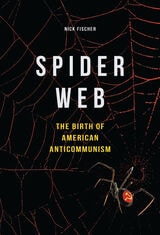
Spider Web
The Birth of American AnticommunismNick Fischer
University of Illinois Press, 2016
The McCarthy-era witch hunts marked the culmination of an anticommunist crusade launched after the First World War. With Bolshevism triumphant in Russia and public discontent shaking the United States, conservatives at every level of government and business created a network dedicated to sweeping away the "spider web" of radicalism they saw threatening the nation. In this groundbreaking study, Nick Fischer shines a light on right-wing activities during the interwar period. Conservatives, eager to dispel communism's appeal to the working class, railed against a supposed Soviet-directed conspiracy composed of socialists, trade unions, peace and civil liberties groups, feminists, liberals, aliens, and Jews. Their rhetoric and power made for devastating weapons in their systematic war for control of the country against progressive causes. But, as Fischer shows, the term spider web far more accurately described the anticommunist movement than it did the makeup and operations of international communism. Fischer details how anticommunist myths and propaganda influenced mainstream politics in America, and how its ongoing efforts paved the way for the McCarthyite Fifties--and augured the conservative backlash that would one day transform American politics.
[more]