Results by title
176 books match the query 'Nevada' and 13 start with a
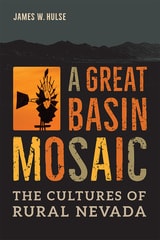
A Great Basin Mosaic
The Cultures of Rural NevadaJames W. Hulse
University of Nevada Press, 2017
The Nevada of lesser-known cities, towns, and outposts deserve their separate chronicles, and here Hulse fills a wide gap. He contributes in a text rich with memories tramping through rural Nevada as a child, then as a journalist seeking news and gossip, then later as an academic historian and a parent trying to share the wonders of the high desert with his family. Nobody is more qualified to write about the cultural nuances of rural Nevada than Hulse, who retired after 35 years as a professor of history at University of Nevada, Reno.
Robert Laxalt wrote an article in National Geographic in 1974 entitled “The Other Nevada” in which he referred to “the Nevada that has been eclipsed by the tinsel trimmings of Las Vegas, the round-the-clock casinos, the ski slopes of the Sierra. It is a Nevada that few tourists see.” With this book Hulse reflects on Laxalt’s insights and shows changes—often slow-moving and incremental—that have occurred since then. Much of the terrain of rural Nevada has not changed at all, while others have adapted to technological revolutions of recent times. Hulse states that there is no single “other” Nevada, but several subcultures with distinct features. He offers a tour of sorts to what John Muir called the “bewildering abundance” of the Nevada landscape.
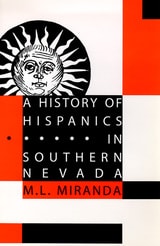
A History Of Hispanics In Southern Nevada
M. L. Miranda
University of Nevada Press, 1997
Hispanics were among the first people of European descent to venture into the territory that became Nevada, and they have participated in every stage of the state’s history and development since then--its mines, railroads, and ranches, the growth of its cities, and its modern industries. Until recently, however, their role in the development of the state and their lively cultural contributions have escaped the scrutiny of scholars. Now, in this important pioneering study, M. L. Miranda offers a thoughtful account of Nevada’s largest ethnic minority. Miranda analyzes their growing role in the state—especially in the booming urban South—and offers some projections for their future.
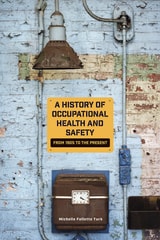
A History of Occupational Health and Safety
From 1905 to the PresentMichelle Follette Turk
University of Nevada Press, 2018
A History of Occupational Health and Safety examines the work, hazards, and health and safety programs from the early building of the railroad through the construction of the Hoover Dam, chemical manufacturing during World War II, nuclear testing, and dense megaresort construction on the Las Vegas Strip. In doing so, this comprehensive chronicle reveals the long and unfortunate history of exposing workers, residents, tourists, and the environment to dangerous work—all while exposing the present and future to crises in the region. Complex interactions and beliefs among the actors involved are emphasized, as well as how the medical community interpreted and responded to the risks posed.
Few places in the United States contain this mixture of industrial and postindustrial sites, the Las Vegas area offers unique opportunities to evaluate American occupational health during the twentieth century, and reminds us all about the relevancy of protecting our workers.
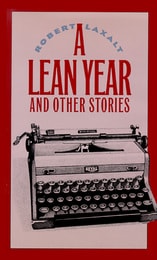
A Lean Year and Other Stories
Robert Laxalt
University of Nevada Press, 1994
In the lead story, Cowboy Clint Hamilton laments that the town is “getting more like a big city every day” as the traditional gambling joints of earlier times give way to the gaudy casinos that will soon become modern glitz.
Sobering experiences from his days as a reporter give Laxalt an insight into murderers and prison life and lethal gas chambers. In a chilling short story, “The Snake Pen,” we find the seed of Robert Laxalt’s celebrated novel, A Man In the Wheatfield.
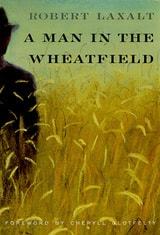
A Man in the Wheatfield
Robert Laxalt
University of Nevada Press, 2002
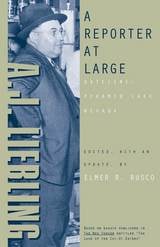
A Reporter At Large
Dateline: Pyramid Lake, NevadaAj Liebling
University of Nevada Press, 1999
Liebling recorded the litigation over the fate of the Pyramid Lake Reservation lands in a series of articles published in The New Yorker in 1955. Reprinted here in their entirety, the essays discuss the affair in detail, following it from the shores of the lake to the halls of Congress, and introducing readers to the colorful world of 1950s Nevada. This is a valuable record of one of Nevada’s most enduring and significant debates over the uses of the land and the precious water that nourishes it. Introduction by Elmer R. Rusco.
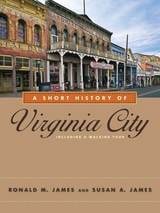
A Short History of Virginia City
Ronald M. James
University of Nevada Press, 2014
The city’s story did not end when the Comstock Lode played out. Beginning in the 1930s, bohemian artists, literati, and tourists were intrigued by this remnant of the Old West. The leader of Manhattan’s café society, Lucius Beebe, moved here and relaunched the Territorial Enterprise in 1950. Television’s most popular western from 1959 to 1973, Bonanza, located its fictional Ponderosa Ranch nearby. In the summer of 1965, a handful of Bay Area musicians, including Big Brother and the Holding Company, performed at the Red Dog Saloon and launched psychedelic rock, part of the inspiration for a defining decade of youth culture. Today it is both a National Historic Landmark District and a living community. Visitors come to enjoy its saloons and restaurants, admire its architecture, and learn from its museums and exhibits. A Short History of Virginia City will enhance their experience and will also be enjoyed by anyone interested in the history of Nevada, mining, and the Old West.
• Includes an illustrated walking tour describing more than thirty buildings and sites
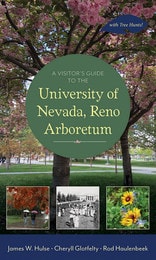
A Visitor's Guide to the University of Nevada, Reno Arboretum
James W. Hulse
University of Nevada Press, 2018
A Nevada State Arboretum, the University of Nevada, Reno campus is home to more than 3,000 trees representing more than 200 species and varieties. This attractive guidebook introduces readers to the university’s beautiful campus and its botanical treasures. Richly illustrated with both contemporary color and archival photos, this book captures the charm of the campus in all four seasons and shows how the grounds of the university have evolved over the years. Featuring 19 distinct tours around campus, a comprehensive map, and family-friendly interactive “tree hunts,” this guide showcases the campus' ecological diversity and interesting tree species and will appeal to first-time visitors as well as longtime residents.

Academic Freedom Imperiled
The Mccarthy Era At The University Of NevadaJ. Dee Kille
University of Nevada Press, 2004
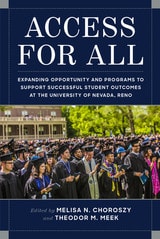
Access for All
Expanding Opportunity and Programs to Support Successful Student Outcomes at University of Nevada, RenoMelisa N. Choroszy
University of Nevada Press, 2019
This collection of essays, written by University of Nevada, Reno (UNR) faculty and students, is an examination of the programs and strategies created to support first-generation and other underrepresented student populations. In addition, it serves as a dedication to the families and students whose hopes and dreams include the attainment of a college degree. Readers will gain insight into the framework needed to provide accessible programs and services to a large and diverse student population before, during, and after college graduation as well as first-hand success stories from the students themselves.
Each generation hopes for a better life for their children. Higher education, in particular, has been a dream for many in this country that has been made possible through public and private financial support. Every new generation of college-bound students faces new and evolving challenges, but the fierce dedication and commitment demonstrated in these pages define the key to developing a thriving and diverse institution that helps all students succeed.

Alzheimer's and Dementia
A Practical and Legal Guide for Nevada Caregivers, Revised and UpdatedKim Boyer
University of Nevada Press, 2025
The book, specific to Nevada, covers state laws including Medicaid planning, asset protection, guardianship, probate, advance directives, and patient rights. It also addresses estate and financial planning, and provides a detailed list of resources available to assist caregivers. Written by an elder law attorney and a gerontologist, Alzheimer’s and Dementiaoffers insights from two professionals who provide practical solutions to common obstacles faced by caregivers, helping them support the needs and overcome the challenges facing those coping with these diseases.
Boyer and Shapiro coauthored The Essential Eldercare Handbook for Nevada also available from the University of Nevada Press.

Alzheimer’s and Dementia
A Practical and Legal Guide for Nevada CaregiversKim Boyer
University of Nevada Press, 2012
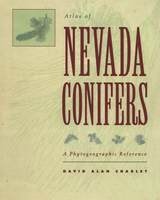
Atlas of Nevada Conifers
A Phytogeographic ReferenceDavid Alan Charlet
University of Nevada Press, 1996
Atlas of Nevada Conifers is a major scientific contribution to our understanding of the ecology of Nevada. It documents in great detail the distribution of all native conifer species in the state—critical information because of the primary ecological importance of conifers for all organisms and because of the lack of documentation of these distributions in the scientific literature before now. Charlet maps and documents the exact location of herbarium records for 1,600 individual trees. The data found in 23 tables and 22 range maps will serve as a primary reference for botanists, land managers, and conservation biologists for years to come.