Results by title
4741 books match the query 'Religion' and 324 start with s
Sabbath Born
Reflections of a Reluctant ProphetBritt Allen Skarda
Parkhurst Brothers, Inc., 2022
Sacralization of History in Times of Crises
Modern Eastern EuropeLiliya Berezhnaya
Central European University Press, 2026
The contributors seek to identify the political, societal and religious actors promoting the sacralization of history. They consider which networks promote sacralized visions of history and who is excluded from the sacralized community of national belonging. They also explore which historical topics seem best suited for the sacralization of history and question what happens to the rituals, objects, or spaces, formerly regarded as sacral: are they profaned, neglected, or re-inscribed by new national histories, and is there a religious language of national history? These are the major questions of this book.
Sacred Assemblies and Civic Engagement
How Religion Matters for America's Newest ImmigrantsNumrich, Paul D
Rutgers University Press, 2007
Immigration to the United States has been a major source of population growth and cultural change throughout much of America’s history. Currently, about 40 percent of the nation’s annual population growth comes from the influx of foreign-born individuals and their children. As these new voices enter America’s public conversations, they bring with them a new understanding of Buddhism, Hinduism, Islam, Judaism, and Christianity to a society that has been marked by religious variety.
Sacred Assemblies and Civic Engagement takes an in-depth look at one particular urban area—the Chicago metropolitan region—and examines how religion affects the civic engagement of the nation’s newest residents. Chapters focus on important religious factors, including sectarianism, moral authority, and moral projects; on several areas of social life, including economics, education, marriage, and language, where religion impacts civic engagement; and on how notions of citizenship and community are influenced by sacred assemblies.
Sacred Attunement
A Jewish TheologyMichael Fishbane
University of Chicago Press, 2008
The first part of the book regrounds theology in this setting and opens up new pathways through nature, art, and the theological dimension as a whole. In the second section, Fishbane introduces his hermeneutical theology—one grounded in the interpretation of scripture as a distinctly Jewish practice. The third section focuses on modes of self-cultivation for awakening and sustaining a covenant theology. The final section takes up questions of scripture, authority, belief, despair, and obligation as theological topics in their own right.
The first full-scale Jewish theology in America since Abraham J. Heschel’s God in Search of Man and the first comprehensive Jewish philosophical theology since Franz Rosenzweig’s Star of Redemption, Sacred Attunement is a work of uncommon personal integrity and originality from one of the most distinguished scholars of Judaica in our time.
Sacred Divorce
Religion, Therapeutic Culture, and Ending Life PartnershipsJenkins, Kathleen E
Rutgers University Press, 2014
For more than five years, Jenkins observed religious support groups and workshops for the divorced and interviewed religious practitioners in the midst of divorces, along with clergy members who advised them. Her findings appear here in the form of eloquent and revealing stories about individuals managing emotions in ways that make divorce a meaningful, even sacred process. Clergy from mainline Protestant denominations to Baptist churches, Jewish congregations, Unitarian fellowships, and Catholic parishes talk about the concealed nature of divorce in their congregations. Sacred Divorce describes their cautious attempts to overcome such barriers, and to assemble meaningful symbols and practices for members by becoming compassionate listeners, delivering careful sermons, refitting existing practices like Catholic annulments and Jewish divorce documents (gets), and constructing new rituals.
With attention to religious, ethnic, and class variations, covering age groups from early thirties to mid-sixties and separations of only a few months to up to twenty years, Sacred Divorce offers remarkable insight into individual and cultural responses to divorce and the social emotions and spiritual strategies that the clergy and the faithful employ to find meaning in the breach. At once a sociological document, an ethnographic analysis, and testament of personal experience, Sacred Divorce provides guidance, strategies and answers to readers looking for answers and those looking to heal.
Sacred Leaves of Candomblé
African Magic, Medicine, and Religion in BrazilBy Robert A. Voeks
University of Texas Press, 1997
Winner, Hubert Herring Book Award, Pacific Coast Council on Latin American Studies
Candomblé, an African religious and healing tradition that spread to Brazil during the slave trade, relies heavily on the use of plants in its spiritual and medicinal practices. When its African adherents were forcibly transplanted to the New World, they faced the challenge not only of maintaining their culture and beliefs in the face of European domination but also of finding plants with similar properties to the ones they had used in Africa.
This book traces the origin, diffusion, medicinal use, and meaning of Candomblé's healing pharmacopoeia—the sacred leaves. Robert Voeks examines such topics as the biogeography of Africa and Brazil, the transference—and transformation—of Candomblé as its adherents encountered both native South American belief systems and European Christianity, and the African system of medicinal plant classification that allowed Candomblé to survive and even thrive in the New World. This research casts new light on topics ranging from the creation of African American cultures to tropical rain forest healing floras.
Sacred Modern
Faith, Activism, and Aesthetics in the Menil CollectionBy Pamela G. Smart
University of Texas Press, 2010
Renowned as one of the most significant museums built by private collectors, the Menil Collection in Houston, Texas, seeks to engage viewers in an acutely aesthetic, rather than pedagogical, experience of works of art. The Menil's emphasis on being moved by art, rather than being taught art history, comes from its founders' conviction that art offers a way to reintegrate the sacred and the secular worlds. Inspired by the French Catholic revivalism of the interwar years that recast Catholic tradition as the avant-garde, Dominique and John de Menil shared with other Catholic intellectuals a desire to reorder a world in crisis by imbuing modern cultural forms with religious faith, binding the sacred with the modern.
Sacred Modern explores how the Menil Collection gives expression to the religious and political convictions of its founders and how "the Menil way" is being both perpetuated and contested as the Museum makes the transition from operating under the personal direction of Dominique de Menil to the stewardship of career professionals. Taking an ethnographic approach, Pamela G. Smart analyzes the character of the Menil aesthetic, the processes by which it is produced, and the sensibilities that it is meant to generate in those who engage with the collection. She also offers insight into the extraordinary impact Dominique and John de Menil had on the emergence of Houston as a major cultural center.
Sacred Pens and Public Voices
Latter-day Saint Women in Dialogue with AmericaLori Motzkus Wilkinson
University of Illinois Press, 2026
Though intellectually connected to figures outside the Church, the LDS women saw them less as
women's rights activists to emulate and more as speakers of truths that, regardless of the origin, should be embraced and harnessed. Wilkinson reveals how Emmeline B. Wells, Susa Young Gates, and other Latter-day Saint women supported and upheld institutional LDS authority and utilized the importance of women’s roles in the home and society as mechanisms for women’s advancement. Even as LDS women continued to engage with prominent national thinkers, their writings and lives demonstrated that they connected with the larger sphere of women’s rights activism before drawing on the LDS concept of women’s divine nature to reshape those ideals to uniquely religious ends.
Original and eye-opening, Sacred Pens and Public Voices revises established narratives about how LDS women interacted with and used ideas taken from national women’s movements.
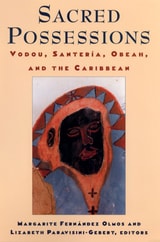
Sacred Possessions
Vodou, Santería, Obeah, and the CaribbeanOlmos, Margarite Fernândez
Rutgers University Press, 1997
Sacred Possessions is an unprecedented collection of thirteen comparative and interdisciplinary essays exploring the cross-cultural dynamics of African-based religious systems in the Caribbean. The contributors analyze the nature and liturgies of Vodou, Santeria, Obeah, Quimbois, and Gaga as they form one central cultural matrix in the region. They ask how these belief systems were affected by differing colonial histories and landscapes, and how they affected other cultural expressions (from the oral tradition to popular art and literature), and how they have been perceived and (mis)represented by the West.
The book is a unique contribution to the study of the Caribbean as a site of multiculturalism, demonstrating the linkages between anthropology, religion, literature, and popular culture. Also included are a stunning photoessay on Cuban Santeria, a glossary of terms, and an insightful introduction by the editors.
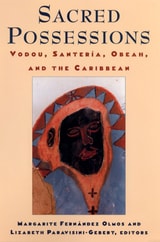
Sacred Possessions
Vodou, Santería, Obeah, and the CaribbeanOlmos, Margarite Fernândez
Rutgers University Press, 1997
Sacred Possessions is an unprecedented collection of thirteen comparative and interdisciplinary essays exploring the cross-cultural dynamics of African-based religious systems in the Caribbean. The contributors analyze the nature and liturgies of Vodou, Santeria, Obeah, Quimbois, and Gaga as they form one central cultural matrix in the region. They ask how these belief systems were affected by differing colonial histories and landscapes, and how they affected other cultural expressions (from the oral tradition to popular art and literature), and how they have been perceived and (mis)represented by the West.
The book is a unique contribution to the study of the Caribbean as a site of multiculturalism, demonstrating the linkages between anthropology, religion, literature, and popular culture. Also included are a stunning photoessay on Cuban Santeria, a glossary of terms, and an insightful introduction by the editors.
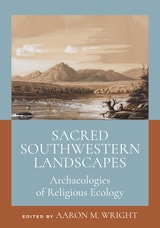
Sacred Southwestern Landscapes
Archaeologies of Religious EcologyEdited by Aaron M. Wright
University of Utah Press, 2024
Hailing from various academic and cultural backgrounds, contributors invoke a range of theoretical currents and methodological practices to examine how these relationships developed and evolved. Nearly all the places, people, and paradigms at play in contemporary southwestern scholarship find room among these pages, from the Sonoran and Chihuahuan Deserts to the Colorado Plateau; from diverse cultures, including Ancestral Pueblo, Mogollon, Hohokam, Pataya, Trincheras, Navajo (Diné), and Nuevomexicano; and from theoretical frameworks drawing upon phenomenology, materiality, bundling, and semiotics. This collective engagement showcases how religious ecologies can be studied from multiple perspectives and through sundry lines of evidence, leaving readers with appreciation and reverence for the rich and robust sacredness in southwestern landscapes.
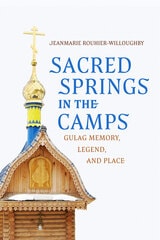
Sacred Springs in the Camps
Gulag Memory, Legend, and PlaceJeanmarie Rouhier-Willoughby
University of Wisconsin Press, 2026
Grounded by detailed ethnography, Sacred Springs in the Camps explores how legend creates, negotiates, and challenges collective memory; how lived religious practices intersect with the current revival of the Russian Orthodox Church; how politics intertwine with belief; and how the social construction of sacred places affects folk narratives, faith, and local identity. These unlikely holy waters thus reflect important facets of contemporary Russian religion, politics, and society, refracting and reframing memories of the socialist past even as they offer important lessons for the present moment.
Sacred Uncertainty
Religious Difference and the Shape of Melville's CareerBrian Yothers
Northwestern University Press, 2015
Sacrifice
René Girard
Michigan State University Press, 2011
In Sacrifice, René Girard interrogates the Brahmanas of Vedic India, exploring coincidences with mimetic theory that are too numerous and striking to be accidental. Even that which appears to be dissimilar fails to contradict mimetic theory, but instead corresponds to the minimum of illusion without which sacrifice becomes impossible.
The Bible reveals collective violence, similar to that which generates sacrifice everywhere, but instead of making victims guilty, the Bible and the Gospels reveal the persecutors of a single victim. Instead of elaborating myths, they tell the truth absolutely contrary to the archaic sense. Once exposed, the single victim mechanism can no longer function as the model for would-be sacrificers.
Recognizing that the Vedic tradition also converges on a revelation that discredits sacrifice, mimetic theory locates within sacrifice itself a paradoxical power of quiet reflection that leads, in the long run, to the eclipse of this institution which is violent but nevertheless fundamental to the development of human culture. Far from unduly privileging the Western tradition and awarding it a monopoly on the knowledge and repudiation of blood sacrifice, mimetic analysis recognizes comparable, but never truly identical, traits in the Vedic tradition.
Sacrifice As Gift
Michon M. Matthiesen
Catholic University of America Press, 2012
Sacrifice, Cult, and Atonement in Early Judaism and Christianity
Constituents and CritiqueHenrietta L. Wiley
SBL Press, 2016
Critical and creative studies that offer fresh perspectives on ancient ideas and practices
The contributions to this volume deal in various ways with the cult at the Jerusalem Temple that epitomized the religious, cultural, and socio-political identity of Judaism for many centuries. Some essays examine ancient constitutive practices and concepts, such as purification rituals, sacrifices, atonement, or sacred authorities at the temple, with the goal of interpreting their meanings for modern readers. Other essays explore alternatives to ancient cultic meaning and practice. Essays critique established traditions, attempt to renegotiate them, or use metaphor and spiritualization to expand the potential of these phenomena to serve as terminological and ideological resources. Thus they examine and affirm the continuing relevance of ancient Jewish cultic notions long after the destruction of the Second Temple in 70 CE.
- An international group of scholars representing different fields and diverse religious backgrounds
- A thorough examination of traditions as through the lens of contemporaneous interpretive traditions such as Jewish prophecy, the Dead Sea Scrolls, and Early Christian literature
- Examination of topics such as purification, sacrifice, and atonement, and the depiction and development of sacred authority throughout the Bible
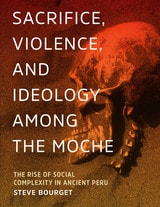
Sacrifice, Violence, and Ideology Among the Moche
The Rise of Social Complexity in Ancient PeruBy Steve Bourget
University of Texas Press, 2016
In a special precinct dedicated to ritual sacrifice at Huaca de la Luna on the north coast of Peru, about seventy-five men were killed and dismembered, their remains and body parts then carefully rearranged and left on the ground with numerous offerings. The discovery of this large sacrificial site—one of the most important sites of this type in the Americas—raises fundamental questions. Why was human sacrifice so central to Moche ideology and religion? And why is sacrifice so intimately related to the notions of warfare and capture?
In this pioneering book, Steve Bourget marshals all the currently available information from the archaeology and visual culture of Huaca de la Luna as he seeks to understand the centrality of human sacrifice in Moche ideology and, more broadly, the role(s) of violence in the development of social complexity. He begins by providing a fully documented account of the archaeological contexts, demonstrating how closely interrelated these contexts are to the rest of Moche material culture, including its iconography, the regalia of its elite, and its monumental architecture. Bourget then probes the possible meanings of ritual violence and human sacrifice and their intimate connections with concepts of divinity, ancestry, and foreignness. He builds a convincing case that the iconography of ritual violence and the practice of human sacrifice at all the principal Moche ceremonial centers were the main devices used in the establishment and development of the Moche state.
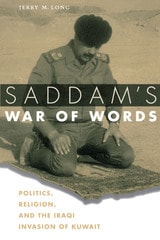
Saddam's War of Words
Politics, Religion, and the Iraqi Invasion of KuwaitBy Jerry M. Long
University of Texas Press, 2004
From a Western perspective, the Persian Gulf War of 1990-1991 largely fulfilled the first President Bush's objective: "In, out, do it, do it right, get gone. That's the message." But in the Arab world, the causes and consequences of Saddam Hussein's invasion of Kuwait and his subsequent defeat by a U.S.-led coalition were never so clear-cut. The potent blend of Islam and Arab nationalism that Saddam forged to justify the unjustifiable—his invasion of a Muslim state—gained remarkable support among both Muslims and Arabs and continued to resonate in the Middle East long after the fighting ended. Indeed, as this study argues in passing, it became a significant strand in the tangled web of ideologies and actions that led to the attacks of 9/11.
This landmark book offers the first in-depth investigation of how Saddam Hussein used Islam and Arab nationalism to legitimate his invasion of Kuwait in the eyes of fellow Muslims and Arabs, while delegitimating the actions of the U.S.-led coalition and its Arab members. Jerry M. Long addresses three fundamental issues: how extensively and in what specific ways Iraq appealed to Islam during the Kuwait crisis; how elites, Islamists, and the elusive Arab "street," both in and out of the coalition, responded to that appeal and why they responded as they did; and the longer-term effects that resulted from Saddam's strategy.
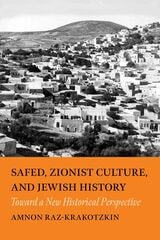
Safed, Zionist Culture, and Jewish History
Toward a New Historical PerspectiveAmnon Raz-Krakotzkin
Brandeis University Press, 2026
Brings the legacy of sixteenth-century Safed into modern scholarship on Zionism to propose a new model of Jewish existence.
Sixteenth-century Safed was one of the most important centers of thought and learning in Jewish history, yet Zionist historical narratives, which emphasize the continuity of Jewish presence in Palestine, have consistently downplayed or ignored it. Amnon Raz-Krakotzkin investigates this strange contradiction. His new book argues that Safed articulates a model of early modern Jewish national revival, one closely connected to the land and its material geography, yet radically different from the Zionist model that emerged in the late nineteenth century. While Zionism set out to restore Biblical Jewish sovereignty, rabbinic Safed’s emphasis on the Mishnah proposed a non-sovereign Jewish connection to the land.
As much a polemic as a historical and theological analysis, Safed, Zionist Culture, and Jewish History offers a provocative new perspective on questions related to nationalism, Judaism, and Israel.
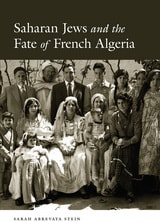
Saharan Jews and the Fate of French Algeria
Sarah Abrevaya Stein
University of Chicago Press, 2014
Drawing on materials from thirty archives across six countries, Stein tells the story of colonial imposition on a desert community that had lived and traveled in the Sahara for centuries. She paints an intriguing historical picture—of an ancient community, trans-Saharan commerce, desert labor camps during World War II, anthropologist spies, battles over oil, and the struggle for Algerian sovereignty. Writing colonialism and decolonization into Jewish history and Jews into the French Saharan one, Saharan Jews and the Fate of French Algeria is a fascinating exploration not of Jewish exceptionalism but of colonial power and its religious and cultural differentiations, which have indelibly shaped the modern world.
Saint Augustine and the Fall of the Soul
Beyond O'Connell & His CriticsRonnie J. Rombs
Catholic University of America Press, 2006
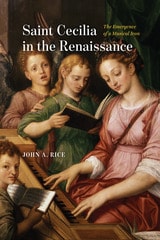
Saint Cecilia in the Renaissance
The Emergence of a Musical IconJohn A. Rice
University of Chicago Press, 2022
Until the fifteenth century, Saint Cecilia was not connected with music. She was perceived as one of many virgin martyrs, with no obvious musical skills or interests. During the next two centuries, however, she inspired many musical works written in her honor and a vast number of paintings that depicted her singing or playing an instrument.
In this book, John A. Rice argues that Cecilia’s association with music came about in several stages, involving Christian liturgy, visual arts, and music. It was fostered by interactions between artists, musicians, and their patrons and the transfer of visual and musical traditions from northern Europe to Italy. Saint Cecilia in the Renaissance explores the cult of the saint in Medieval times and through the sixteenth century when musicians’ guilds in the Low Countries and France first chose Cecilia as their patron. The book then turns to music and the explosion of polyphonic vocal works written in Cecilia’s honor by some of the most celebrated composers in Europe. Finally, the book examines the wealth of visual representations of Cecilia especially during the Italian Renaissance, among which Raphael’s 1515 painting, The Ecstasy of Saint Cecilia, is but the most famous example. Thoroughly researched and beautifully illustrated in color, Saint Cecilia in the Renaissance is the definitive portrait of Saint Cecilia as a figure of musical and artistic inspiration.
Saint Dominic and His Mission
Augustin Laffay
Catholic University of America Press, 2025
Saint Joseph and the Carmelite Reform of Saint Teresa of Avila
Father, Teacher of Prayer, Intercessor in Every NeedJoseph F. Chorpenning, OSFS
Catholic University of America Press, 2024

Saint Katharine
The Life of Katharine DrexelCordelia Frances Biddle
Westholme Publishing, 2015
When Katharine Drexel was born in 1858, her grandfather, financier Francis Martin Drexel, had a fortune so vast he was able to provide a loan of sixty million dollars to the Union’s cause during the Civil War. Her uncle and mentor, Anthony, established Drexel University to provide instruction to the working class regardless of race, religion, or gender. Her stepmother was Emma Bouvier whose brother, John, became the great-grandfather of Jacqueline Bouvier Kennedy Onassis. Katharine Drexel’s family were American royalty. As a Philadelphia socialite, “Kitty,” as she was often called, adored formal balls and teas, rowing regattas, and sailing races. She was beautiful, intelligent, and high-spirited. But when her stepmother died in 1883, and her father two years later, a sense of desolation nearly overwhelmed her. She was twenty-seven and in possession of a staggering inheritance. Approached for aid by the Catholic Indian Missions, she surprised her family by giving generously of money and time. It was during this period of acute self-examination that she journeyed to Rome for a private audience with Pope Leo XIII. With characteristic energy and fervor, she detailed the plight of the Native Americans, and begged for additional missionaries to serve them. His reply astonished her. “Why not, my child, yourself become a missionary?”
In Saint Katharine: The Life of Katharine Drexel, Cordelia Frances Biddle recounts the extraordinary story of a Gilded Age luminary who became a selfless worker for the welfare and rights of America’s poorest persons. After years of supporting efforts on behalf of African Americans and American Indians, Katharine finally decided to follow her inner voice and profess vows. The act made headlines. Like her father and grandfather, she was a shrewd businessperson; she retained her financial autonomy and established her own order, the Sisters of the Blessed Sacrament. Until her death in 1955, she devoted herself and her inheritance to building much-needed schools in the South and Southwest, despite threats from the Ku Klux Klan and others. Pragmatic, sometimes willful, ardent, and a charismatic leader, Katharine Drexel was an indefatigable champion of justice and parity. When illness incapacitated her in later years, divine radiance was said to emanate from her, a radiance that led to her canonization on October 1, 2000.
Saint Thomas Aquinas
The Person and His WorkJean-Pierre Torrell, OP
Catholic University of America Press, 2022

Sainted Women of the Dark Ages
Jo Ann McNamara, John E. Halborg, and Gordon Whatley, eds.
Duke University Press, 1992
Three of these holy women were queens who turned to religion only after a period of intense worldly activity. Others were members of the Carolingian family, deeply implicated in the political ambitions of their male relatives. Some were partners in the great Irish missions to the pagan countryside and others worked for the physical salvation of the poor. From the peril and suffering of their lives they shaped themselves as paragons of power and achievement. Beloved by their sisters and communities for their spiritual gifts, they ultimately brought forth a new model of sanctity.
These biographies are unusually authentic. At least two were written by women who knew their subjects, while others reflect the direct testimony of sisters within the cloister walls. Each biography is accompanied by an introduction and notes that clarify its historical context. This volume will be an excellent source for students and scholars of women's studies and early medieval social, religious, and political history.
Saints Observed
Studies of Mormon Village Life, 1850-2005Howard M. Bahr
University of Utah Press, 2014

Saints Without Halos
The Human Side of Mormon HistoryLeonard J Arrington
Signature Books, 1981
Saints and Society
The Two Worlds of Western Christendom, 1000-1700Donald Weinstein and Rudolph M. Bell
University of Chicago Press, 1986
Saints of the Christianization Age of Central Europe
Tenth to Eleventh CenturiesCristian Gaspar
Central European University Press, 2012
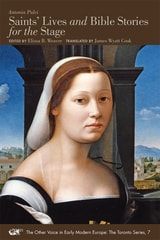
Saints' Lives and Bible Stories for the Stage
A Bilingual EditionAntonia Pulci
Iter Press, 2010
—Sharon Strocchia
Professor of History, Emory University
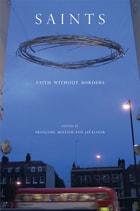
Saints
Faith without BordersEdited by Françoise Meltzer and Jas Elsner
University of Chicago Press, 2011
While the modern world has largely dismissed the figure of the saint as a throwback, we remain fascinated by excess, marginality, transgression, and porous subjectivity—categories that define the saint. In this collection, Françoise Meltzer and Jas Elsner bring together top scholars from across the humanities to reconsider our denial of saintliness and examine how modernity returns to the lure of saintly grace, energy, and charisma.
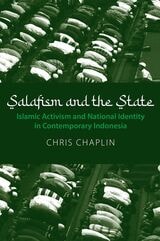
Salafism and the State
Islamic Activism and National Identity in Contemporary IndonesiaChris Chaplin
National University of Singapore Press, 2021
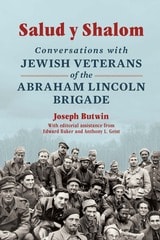
Salud y Shalom
Conversations with Jewish Veterans of the Abraham Lincoln BrigadeJoseph Butwin
University of Illinois Press, 2025
Joseph Butwin’s oral history presents conversations with ten Jewish veterans of the ALB. Recorded from 1992–94 in the wake of European communism’s collapse, the interviews explore the milieus that formed the volunteers. Immigrants established the secular Yiddish-speaking socialism that became a part of many Jewish American communities. Their children, reacting to economic depression and the rise of fascism, enlisted in the ALB. Butwin follows their stories from their youthful motives and choices through their lives as Jews and leftists, and records the reckonings that took place as they reflected on their past.
Insightful and revealing, Salud y Shalom explores the forces of identity and history that led young Jewish leftists to fight fascism.
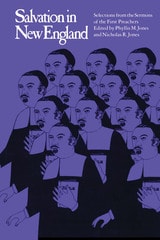
Salvation in New England
Selections from the Sermons of the First PreachersEdited by Phyllis M. Jones and Nicholas R. Jones
University of Texas Press, 1977
The sermon as crafted by the early New England preachers was the most prominent literary form of its day, yet the earliest Puritan texts have as a rule been available only in rare-book collections. This anthology of sermons of the first generation of preachers fills a serious gap in American literature. The preachers collected here, the most widely published of their time, were among the eighty or more who emigrated to Massachusetts Bay during the 1630s. They are John Cotton of Boston, Thomas Shepard of Cambridge, and Thomas Hooker of Hartford, the three foremost "lights of the western churches," and two eminent colleagues, Peter Bulkeley of Concord and John Davenport, first of New Haven and later of Boston.
The selections are chosen to be representative of the lengthy works from which they are drawn, to reflect the major concerns and styles of the preachers' work as a whole, and to demonstrate the genre of the sermon as developed by the early American Puritans. Not only does this anthology represent an important contribution to literary history, but the sermons also illustrate a doctrine uniquely elaborated in this period—a consistent and emphatic narrative, mythlike in its repetition and heroics, of the progress of the soul from a state of nature to a state of salvation. This theme may be seen as a three-stage-development, although individual sermons may vary. These stages—preparation, vocation, and regeneration—determine the order of the selections.
The editors' introductory material supplies a comprehensive and thorough discussion of the early New England sermons, concentrating on their role, history, structure, style, and subject matter. A separate essay on the texts of the sermons describes the relationship between the early printed versions and their form as delivered in the pulpit. The introduction preceding each selection presents original research on the historical circumstances of the preaching and publication of the work from which the sermon is drawn. The editors have also provided brief biographies of the preacfiers represented here, an annotated list of recommended background reading, and the most exhaustive checklist available of authoritative editions of the sermons of these five preachers.
This book will be useful to colonial specialists as well as to students of early American literature, religion, and history. The texts are critically edited for readability, with modernized spelling and annotations of unfamiliar phrases and allusions.
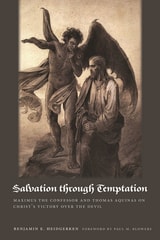
Salvation through Temptation
Maximus the Confessor and Thomas Aquinas on Christ's Victory over the DevilBenjamin E. Heidgerken
Catholic University of America Press, 2021

Same-Sex Dynamics among Nineteenth-Century Americans
A MORMON EXAMPLED. Michael Quinn
University of Illinois Press, 1996
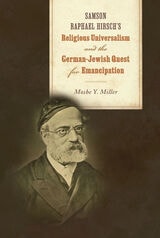
Samson Raphael Hirsch's Religious Universalism and the German-Jewish Quest for Emancipation
Moshe Y. Miller
University of Alabama Press, 0
An account of how Rabbi Samson Raphael Hirsch promulgated an inclusive vision of Judaism in the context of advancing the civic equality of German Jews in the nineteenth century
In Samson Raphael Hirsch’s Religious Universalism and the German-Jewish Quest for Emancipation, Moshe Miller contends that nineteenth-century German Jews of all denominations actively sought acceptance within German society and aspired to achieve full emancipation from the many legal strictures on their status as citizens and residents. While non-Orthodox Jews sought a large measure of cultural assimilation, Orthodox Jews were content with more delimited acculturation, but they were no less enthusiastic about achieving emancipation and acceptance in German society. There was one issue, though, which was seen by non-Jewish critics of emancipation as a barrier to granting civic rights to Jews: namely, the alleged tribalism of Judaism and the supposedly chauvinistic notion of Jews as “the Chosen People.”
These charges could not go unanswered, and in the writings of Rabbi Samson Raphael Hirsch (1808–1888), the leading thinker of the Orthodox camp, they did not. Hirsch stressed the universalism of the Jewish ethic and the humanistic concern for the welfare of all mankind, which he believed was one of the core teachings of Judaism. His colleagues in the German Orthodox rabbinate largely concurred with Hirsch’s assessment. Samson Raphael Hirsch’s Religious Universalism and the German-Jewish Quest for Emancipation places Hirsch’s views in their historical context and provides a detailed account of his attitude toward non-Jews and the Christianity practiced by the vast majority of nineteenth-century Europeans.
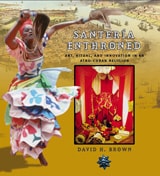
Santeria Enthroned
Art, Ritual, and Innovation in an Afro-Cuban ReligionDavid H. Brown
University of Chicago Press, 2003
Focusing on the royal throne as a potent metaphor in Santería belief and practice, Brown shows how negotiation among ideologically competing interests have shaped the religion's symbols, rituals, and institutions from the nineteenth century to the present. Rich case studies of change in Cuba and the United States, including a New Jersey temple and South Carolina's Oyotunji Village, reveal patterns of innovation similar to those found among rival Yoruba kingdoms in Nigeria. Throughout, Brown argues for a theoretical perspective on culture as a field of potential strategies and "usable pasts" that actors draw upon to craft new forms and identities—a perspective that will be invaluable to all students of the African Diaspora.
American Acemy of Religion Award for Excellence in the Study of Religion (Analytical-Descriptive Category)
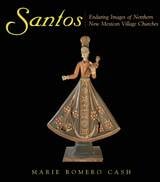
Santos
Enduring Images of Northern New Mexican Village ChurchesMarie Romero Cash
University Press of Colorado, 1999
Along with photographer Jack Parsons, Marie Romero Cash visited every church in the region and documented, identified, and measured each santos. Together they photographed more than 500 pieces, including 19 moradas (places of worship for Penitentes) and the Archdiocese of Santa Fe Collection housed at the Museum of International Folk Art.
Cash's extensive research into these formerly "anonymous" artisans fills a gap in the study of this unique form, making Santos indispensable for art historians and the general reader interested in the culture and art of the American Southwest.
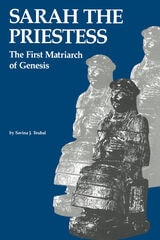
Sarah the Priestess
The First Matriarch of GenesisSavina Teubal
Ohio University Press, 1984
In a patriarchal environment such as the Canaan of Genesis, the situation is discordant and problematic. Dr. Teubal suggests that the difficulty is eliminated, however, if we understand that Sarah and the other matriarchs mentioned in the narratives acted within the established, traditional Mesopotamian role of priestess, of a class of women who retained a highly privileged position vis-a-vis their husbands.
Dr. Teubal shows that the “Sarah tradition” represents a nonpatriarchal system struggling for survival in isolation, in the patriarchal environment of what was for Sarah a foreign society. She further indicates that the insistence of Sarah and Rebekah that their sons and heirs marry wives from the old homeland had to do not so much with preference for endogamy and cousin marriage as with their intention of ensuring the continuation of their old kahina-tradition against the overwhelming odds represented by patriarchal Canaan.

Sarah's Seasons
An Amish Diary and ConversationMartha Moore Davis
University of Iowa Press, 1997
Sarah's brief daily notations, recorded on a calendar throughout 1976 and 1977, reveal an ongoing account of her seasonal routine. In many ways the straightforward simplicity of her writing is a reflection of her life near rural Kalona, Iowa, a life filled with what Martha Davis calls look-easy tasks undertaken without the conveniences of electricity, phones, or automobiles. For Sarah, diaries are a record. “A diary can settle a question, a disagreement,” she tells Martha. “You look back and see what took place. That's history.”
Through their conversations, Martha soon discovered she had more in common with Sarah than diary writing. Though Davis lived in the mainstream culture, an “English” person as the Amish say, like Sarah she grew up on a farm in rural Iowa during the 1950s and 1960s. Like Martha, Sarah had spent several years as a teacher.
In Sarah's Seasons Martha Davis shares their common experiences and common interests—gardening, quilting, and cooking. Alongside Sarah's diary, Martha presents their shared recipes and conversations as well as reflections on her own more modern existence. Because of her friendship with Sarah, the author found a new sense of belonging to and purpose in the mainstream world. In the end, Sarah's diary becomes for Martha a meditation on time and community.
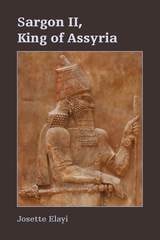
Sargon II, King of Assyria
Josette Elayi
SBL Press, 2017
A critical resource that traces the reign of Sargon in context
Josette Elayi's book is the only existing biography of Sargon II, the famous Assyrian king, who was a megalomaniac and a warlord. Elayi addresses such important questions, including what was his precise role in the disappearance of the kingdom of Israel; how did Sargon II succeed in enlarging the borders of the Assyrian Empire by several successful campaigns; how did he organize his empire (administration, trade, agriculture, libraries), and what was the so-called sin of Sargon?
Features:
- Interpretations of decisive events during the life and reign of the Assyrian king
- An evaluation of Sargon II s reign
- Maps, tables, and illustrations
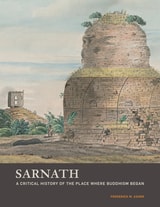
Sarnath
A Critical History of the Place Where Buddhism BeganFrederick M Asher
J. Paul Getty Trust, The, 2020
Sarnath has long been regarded as the place where the Buddha preached his first sermon and established the Buddhist monastic order. Excavations at Sarnath have yielded the foundations of temples and monastic dwellings, two Buddhist reliquary mounds (stupas), and some of the most important sculptures in the history of Indian art. This volume offers the first critical examination of the historic site.
Frederick M. Asher provides a longue durée (long-term) analysis of Sarnath—including the plunder, excavation, and display of antiquities and the Archaeological Survey of India’s presentation—and considers what lies beyond the fenced-in excavated area. His analytical history of Sarnath’s architectural and sculptural remains contains a significant study of the site’s sculptures, their uneven production, and their global distribution. Asher also examines modern Sarnath, which is a living establishment replete with new temples and monasteries that constitute a Buddhist presence on the outskirts of Varanasi, the most sacred Hindu city.
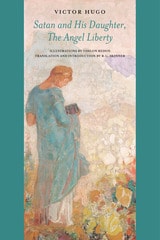
Satan and His Daughter, the Angel Liberty
Selected VersesVictor Hugo
Swan Isle Press, 2018
Satan and his Daughter, the Angel Liberty, drawn from this larger poem, tells the story of Satan and his daughter, the angel created by God from a feather left behind following his banishment. Hugo details Satan’s fall, and through a despairing soliloquy, reveals him intent on revenge, yet desiring God’s forgiveness. The angel Liberty, meanwhile, is presented by Hugo as the embodiment of good, working to convince her father to return to Heaven.
This new translation by Richard Skinner presents Hugo’s verse in a unique prose approach to the poet’s poignant work, and is accompanied by the Symbolist artist Odilon Redon’s haunting illustrations. No adventurous reader will want to miss this beautiful mingling of the epic and familial, religious and political.
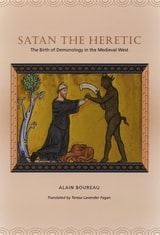
Satan the Heretic
The Birth of Demonology in the Medieval WestAlain Boureau
University of Chicago Press, 2006
Depicting this new demonology, Satan the Heretic considers the period between the mid-thirteenth and mid-fourteenth centuries when demons, in the eyes of Church authorities, suddenly burst forth, more real and more terrifying than ever before in the history of Christianity. Boureau argues that the rise in this obsession with demons occurs at the crossroads of the rise of sovereignties and of the individual, a rise that, tellingly, also coincides with the emergence of the modern legal system in the European West.
Teeming with original insights and lively anecdotes, Satan the Heretic is a significant contribution to the history of Christian demonology from one of the most original minds in the field of medieval studies today.
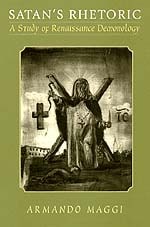
Satan's Rhetoric
A Study of Renaissance DemonologyArmando Maggi
University of Chicago Press, 2001
With this probing new contribution to the study of Christianity, Armando Maggi examines this dialogue, exploring how evil spirits interacted with mankind during the early modern period. Reading innumerable treatises on demonology written during the Renaissance, including Thesaurus exorcismorum, the most important record of early modern exorcisms, Maggi finds repeated attempts to define the language exchanged between the fallen progeny of Adam, and the most notorious fallen angel of them all, Satan. Using points of departure taken from de Certeau and Lacan, Maggi shows that Satan articulates his language first and foremost in the mind. More than speaking, the devil tries to make human beings understand his language and speak it themselves. Through sodomites, infidels, and witches, then, the devil is able to infect humanity as it appropriates his seductive rhetoric.
Saul Lieberman and the Orthodox
Marc B. Shapiro
University of Scranton Press, 2006
Saul, Benjamin, and the Emergence of Monarchy in Israel
Biblical and Archaeological PerspectivesJoachim J. Krause
SBL Press, 2020
Ponder questions of the united monarchy under Saul and David in light of current historical and archaeological evidence
Reconstructing the emergence of the Israelite monarchy involves interpreting historical research, approaching questions of ancient state formation, synthesizing archaeological research from sites in the southern Levant, and reexamining the biblical traditions of the early monarchy embedded in the books of Samuel and Kings. Integrating these approaches allows for a nuanced and differentiated picture of one of the most crucial periods in the history of ancient Israel. Rather than attempting to harmonize archaeological data and biblical texts or to supplement the respective approach by integrating only a portion of data stemming from the other, both perspectives come into their own in this volume presenting the results of an interdisciplinary Tübingen–Tel Aviv Research Colloquium.
Features:
- Essays on Israel's monarchy by experts in biblical archaeology and biblical studies
- Methods for integrating archaeology and biblical traditions in reconstructing ancient Israel's history
- New research on the sociopolitical process of state formation in Israel and Judah