119 books match the query 'Religious life and customs' and 11 start with s
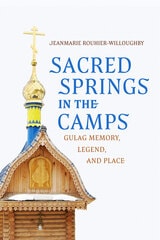
cover of Sacred Springs in the Camps: Gulag Memory, Legend, and Place

Sacred Springs in the Camps

Gulag Memory, Legend, and Place

Jeanmarie Rouhier-Willoughby

University of Wisconsin Press, 2026

Former Gulag sites—operating theaters of terror during the Stalinist period—are scattered across western Siberia, where memories of the purges run deep. The camps represent some of the most horrific events of the Soviet past, and yet their current role is complicated. Focusing on three former prison camps, folklorist Jeanmarie Rouhier-Willoughby untangles a surprising nexus of memory, legend, and vernacular religious practice afforded by the sacred springs located at each of these sites.

Grounded by detailed ethnography, Sacred Springs in the Camps explores how legend creates, negotiates, and challenges collective memory; how lived religious practices intersect with the current revival of the Russian Orthodox Church; how politics intertwine with belief; and how the social construction of sacred places affects folk narratives, faith, and local identity. These unlikely holy waters thus reflect important facets of contemporary Russian religion, politics, and society, refracting and reframing memories of the socialist past even as they offer important lessons for the present moment.
[more]
cover of Serbian Orthodox Fundamentals: The Quest for an Eternal Identity

Serbian Orthodox Fundamentals

The Quest for an Eternal Identity

Christos Mylonas

Central European University Press, 2003
This book is a comprehensive exposition of the interaction of a national (the Serbian people) and a religiou (the Orthodox Christian faith) content, in the formation of a distinctive national identity and a mode of being. Its interdisciplinary approach, drawing on sociology, social anthropology, theology, political theory, Balkan historiography, and Serbian folklore, is deployed to provide a powerful and original analysis of how Serbian Orthodoxy has resulted in the sacralisation of the Serbian nation by framing the parameters of its existence. Addresses the following questions: what 'makes' a Serb? Are meaningful assumptions possible by introducing Serbian Orthodoxy as the primal point of reference? Why does religion appear to have an especially strong appeal?
[more]
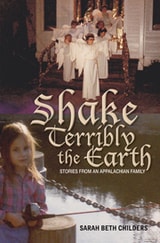
cover of Shake Terribly the Earth: Stories from an Appalachian Family

Shake Terribly the Earth

Stories from an Appalachian Family

Sarah Beth Childers

Ohio University Press, 2013

Sarah Beth Childers grew up listening to stories. She heard them riding to school with her mother, playing Yahtzee in her Granny’s nicotine cloud, walking to the bowling alley with her grandfather, and eating casseroles at the family reunions she attended every year.

In a thoughtful, humorous voice born of Appalachian storytelling, Childers brings to life in these essays events that affected the entire region: large families that squeezed into tiny apartments during the Great Depression, a girl who stepped into a rowboat from a second-story window during Huntington’s 1937 flood, brothers who were whisked away to World War II and Vietnam, and a young man who returned home from the South Pacific and worked his life away as a railroad engineer.

Childers uses these family tales to make sense of her personal journey and find the joy and clarity that often emerge after the earth shakes terribly beneath us.
[more]
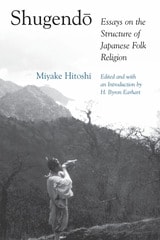
cover of Shugendo: Essays on the Structure of Japanese Folk Religion

Shugendo

Essays on the Structure of Japanese Folk Religion

Miyake Hitoshi; Edited and with an Introduction by H. Byron Earhart

University of Michigan Press, 2001
This volume of essays is the first comprehensive publication in English of the work of Miyake Hitoshi, a distinguished scholar of Shugendō (mountain asceticism) and one of the foremost researchers on Japanese folk religion. Miyake defines folk religion as “religion that merges from the necessities of community life.” In Miyake’s systematic methodological and theoretical approach, Shugendō is a classic example of Japanese folk religion, for it blends many traditions (shamanism, Taoism, Buddhism, and Shinto) into a distinctive Japanese religious worldview and is typical of Japanese religion generally.
The first part of this book is devoted to Shugendō’s history, organization, ritual, austerities, thought, and cosmology. Related subjects include exorcism and the exclusion of women. The second part of the book provides research and reflection on Japanese folk religion, including essays on the idea of nature, worldly benefits, new religions, death and rebirth, and the structure of folk religion.
Shugendō: Essays on the Structure of Japanese Folk Religion clarifies much of the logic behind Japanese religious syncretism. It is essential reading not only for those interested in Japanese history, culture, and religion but also for those studying world religions and folk culture.
[more]
cover of Songs that Make the Road Dance: Courtship and Fertility Music of the Tz'utujil Maya

Songs that Make the Road Dance

Courtship and Fertility Music of the Tz'utujil Maya

By Linda O'Brien-Rothe

University of Texas Press, 2015

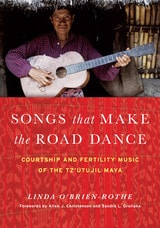
An important and previously unexplored body of esoteric ritual songs of the Tz’utujil Maya of Santiago Atitlán, Guatemala, the “Songs of the Old Ones” are a central vehicle for the transmission of cultural norms of behavior and beliefs within this group of highland Maya. Ethnomusicologist Linda O’Brien-Rothe began collecting these songs in 1966, and she has amassed the largest, and perhaps the only significant, collection that documents this nearly lost element of highland Maya ritual life.

This book presents a representative selection of the more than ninety songs in O’Brien-Rothe’s collection, including musical transcriptions and over two thousand lines presented in Tz’utujil and English translation. (Audio files of the songs can be downloaded from the UT Press website.) Using the words of the “songmen” who perform them, O’Brien-Rothe explores how the songs are intended to move the “Old Ones”—the ancestors or Nawals—to favor the people and cause the earth to labor and bring forth corn. She discusses how the songs give new insights into the complex meaning of dance in Maya cosmology, as well as how they employ poetic devices and designs that place them within the tradition of K’iche’an literature, of which they are an oral form. O’Brien-Rothe identifies continuities between the songs and the K’iche’an origin myth, the Popol Vuh, while also tracing their composition to the late sixteenth and early seventeenth centuries by their similarities with the early chaconas that were played on the Spanish guitarra española, which survives in Santiago Atitlán as a five-string guitar.
[more]
cover of Sounding the Center: History and Aesthetics in Thai Buddhist Performance

Sounding the Center

History and Aesthetics in Thai Buddhist Performance

Deborah Wong

University of Chicago Press, 2001

Sounding the Center is an in-depth look at the power behind classical music and dance in Bangkok, the capital and sacred center of Buddhist Thailand. Focusing on the ritual honoring teachers of music and dance, Deborah Wong reveals a complex network of connections among kings, teachers, knowledge, and performance that underlies the classical court arts.

Drawing on her extensive fieldwork, Wong lays out the ritual in detail: the way it is enacted, the foods and objects involved, and the people who perform it, emphasizing the way the performers themselves discuss and construct aspects of the ceremony.
[more]
cover of Spanish Catholicism: An Historical Overview

Spanish Catholicism

An Historical Overview

Stanley G. Payne

University of Wisconsin Press, 1984

“This is the first complete history of Spanish Catholicism in English.  The history of the Spanish church is rich, complex, and controversial, and this enormous undertaking by Stanley Payne is all the more praiseworthy in view of his determination not to limit his study to the church alone, but to investigate the relationship between the Catholic Church and Spanish culture and nationhood in general.”—Isaac Aviv, Mediterranean Historical Review
[more]
cover of Spirit Possession in Buddhist Southeast Asia: Worlds Ever More Enchanted

Spirit Possession in Buddhist Southeast Asia

Worlds Ever More Enchanted

Edited by Bénédicte Brac de la Perrière and Peter A. Jackson

National University of Singapore Press, 2022
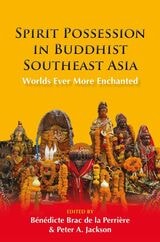
In dramatic contrast to the reported growing influence of doctrinal and fundamentalist forms of religion in some parts of Southeast Asia, the predominantly Buddhist societies of the region are witnessing an upsurge of spirit possession cults and diverse forms of magical ritual. This is found in many social strata, including the urban poor, rising middle classes and elite groups, and across the different political systems of Myanmar, Thailand, Cambodia and Vietnam. This volume reveals both the central historical place of spirit possession rituals in the Buddhist cultures of mainland Southeast Asia and their important contemporary roles to enhance prosperity and protection. It examines the increasing prominence of spirit mediumship and divination across the region by exploring the interplay of neoliberal capitalism, visual media, the network cultures of the Internet, and the politics of cultural heritage and identity.
[more]
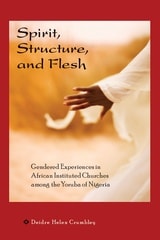
cover of Spirit, Structure, and Flesh: Gender and Power in Yoruba African Instituted Churches

Spirit, Structure, and Flesh

Gender and Power in Yoruba African Instituted Churches

Deidre Helen Crumbley

University of Wisconsin Press, 2008
Although popularized in Africa by Western missionaries, the Christian faith as practiced by Africans has acquired unique traits over time. Some of the most radical reinterpretations of Christianity are offered by those churches known as “AICs” (variously, African Initiated, African Instituted, or African Independent Churches)—new denominations founded by Africans skeptical of dogma offered by mainstream churches with roots in European empires. As these churches spread throughout the African diaspora, they have brought with them distinct practices relating to gender. Such practices range from the expectation that women avoid holy objects and sites during menstruation to the maintenance of church structures in which both men and women may be ordained and assigned the same duties and responsibilities.
            How does having a female body affect one’s experience of indigenized Christianity in Africa? Spirit, Structure, and Flesh addresses this question by exploring the ways ritual, symbol, and dogma circumscribe, constrain, and liberate women in AICs. Through detailed description of worship and doctrine, as well as careful analyses of church history and organizational processes, Deidre Helen Crumbley explores gendered experiences of faith and power in three Nigerian indigenous AICs, demonstrating the roles of women in the day-to-day life of these churches.
[more]
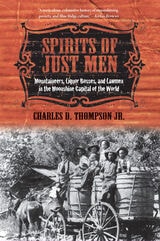
cover of Spirits of Just Men: Mountaineers, Liquor Bosses, and Lawmen in the Moonshine Capital of the World

Spirits of Just Men

Mountaineers, Liquor Bosses, and Lawmen in the Moonshine Capital of the World

Charles D. Thompson, Jr.

University of Illinois Press, 2011
Spirits of Just Men tells the story of moonshine in 1930s America, as seen through the remarkable location of Franklin County, Virginia, a place that many still refer to as the "moonshine capital of the world." Charles D. Thompson Jr. chronicles the Great Moonshine Conspiracy Trial of 1935, which made national news and exposed the far-reaching and pervasive tendrils of Appalachia's local moonshine economy. Thompson, whose ancestors were involved in the area's moonshine trade and trial as well as local law enforcement, uses the event as a stepping-off point to explore Blue Ridge Mountain culture, economy, and political engagement in the 1930s. Drawing from extensive oral histories and local archival material, he illustrates how the moonshine trade was a rational and savvy choice for struggling farmers and community members during the Great Depression.
 
Local characters come alive through this richly colorful narrative, including the stories of Miss Ora Harrison, a key witness for the defense and an Episcopalian missionary to the region, and Elder Goode Hash, an itinerant Primitive Baptist preacher and juror in a related murder trial. Considering the complex interactions of religion, economics, local history, Appalachian culture, and immigration, Thompson's sensitive analysis examines the people and processes involved in turning a basic agricultural commodity into such a sought-after and essentially American spirit.
[more]
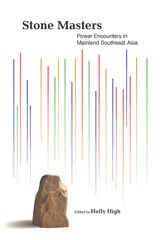
cover of Stone Masters: Power Encounters in Mainland Southeast Asia

Stone Masters

Power Encounters in Mainland Southeast Asia

Edited by Holly High

National University of Singapore Press, 2022

A new analytical perspective on stones and stone masters across Southeast Asia that extends and deepens the recent literature on animism. 

Stones and stone masters are an important focus of animist religious practice in Southeast Asia. Recent studies on animism see animist rituals not as a mere metaphor for community or shared values, but as a way of forming and maintaining relationships with occult presences. This book features city pillars, statues, megaliths, termite mounds, mountains, rocks found in forests, and stones that have been moved to shrines, as well as the territorial cults which can form around them. The contributors extend and deepen the recent literature on animism to form a new analytical perspective on these cults across mainland Southeast Asia. Not just a collection of exemplary ethnographies, Stone Masters is also a deeply comparative volume that develops its ideas through a meshwork of regional entanglements, parallels, and differences, before entering into a dialogue with debates on power, mastery, and the social theory of animism globally.
 
[more]