Results by title
288 books match the query 'Rise' and 22 start with s
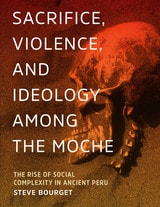
Sacrifice, Violence, and Ideology Among the Moche
The Rise of Social Complexity in Ancient PeruBy Steve Bourget
University of Texas Press, 2016
In a special precinct dedicated to ritual sacrifice at Huaca de la Luna on the north coast of Peru, about seventy-five men were killed and dismembered, their remains and body parts then carefully rearranged and left on the ground with numerous offerings. The discovery of this large sacrificial site—one of the most important sites of this type in the Americas—raises fundamental questions. Why was human sacrifice so central to Moche ideology and religion? And why is sacrifice so intimately related to the notions of warfare and capture?
In this pioneering book, Steve Bourget marshals all the currently available information from the archaeology and visual culture of Huaca de la Luna as he seeks to understand the centrality of human sacrifice in Moche ideology and, more broadly, the role(s) of violence in the development of social complexity. He begins by providing a fully documented account of the archaeological contexts, demonstrating how closely interrelated these contexts are to the rest of Moche material culture, including its iconography, the regalia of its elite, and its monumental architecture. Bourget then probes the possible meanings of ritual violence and human sacrifice and their intimate connections with concepts of divinity, ancestry, and foreignness. He builds a convincing case that the iconography of ritual violence and the practice of human sacrifice at all the principal Moche ceremonial centers were the main devices used in the establishment and development of the Moche state.

Salud!
The Rise Of Santa Barbara's Wine IndustryVictor W. Geraci
University of Nevada Press, 2018
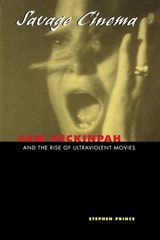
Savage Cinema
Sam Peckinpah and the Rise of Ultraviolent MoviesBy Stephen Prince
University of Texas Press, 1998
More than any other filmmaker, Sam Peckinpah opened the door for graphic violence in movies. In this book, Stephen Prince explains the rise of explicit violence in the American cinema, its social effects, and the relation of contemporary ultraviolence to the radical, humanistic filmmaking that Peckinpah practiced.
Prince demonstrates Peckinpah's complex approach to screen violence and shows him as a serious artist whose work was tied to the social and political upheavals of the 1960s. He explains how the director's commitment to showing the horror and pain of violence compelled him to use a complex style that aimed to control the viewer's response.
Prince offers an unprecedented portrait of Peckinpah the filmmaker. Drawing on primary research materials—Peckinpah's unpublished correspondence, scripts, production memos, and editing notes—he provides a wealth of new information about the making of the films and Peckinpah's critical shaping of their content and violent imagery. This material shows Peckinpah as a filmmaker of intelligence, a keen observer of American society, and a tragic artist disturbed by the images he created.
Prince's account establishes, for the first time, Peckinpah's place as a major filmmaker. This book is essential reading for those interested in Peckinpah, the problem of movie violence, and contemporary American cinema.
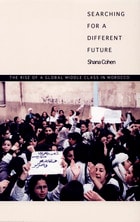
Searching for a Different Future
The Rise of a Global Middle Class in MoroccoShana Cohen
Duke University Press, 2004
Cohen delves into the rupture that has occurred between the middle class, the individual, and the nation in Morocco and elsewhere around the world. Combining institutional economic analysis with cultural theory and ethnographic observation including interviews with seventy young adults in Casablanca and Rabat, she reveals how young, urban, educated Moroccans conceive of their material, social, and political conditions. She finds that, for the most part, they perceive improvement in their economic and social welfare apart from the types of civic participation commonly connected with nationalism and national identity. In answering classic sociological questions about how the evolution of capitalism influences identity, Cohen sheds new light on the measurable social and economic consequences of globalization and on its less tangible effects on individuals’ perception of their place in society and prospects in life.
Selling The Five Rings
The IOC and the Rise of the Olympic CommercialismRobert K Barney
University of Utah Press, 2004
The original scheme for the modern Olympic Games was hatched at an international sports conference at the Sorbonne in June 1894. At the time, few provisions were made for the financial underwriting of the project—providence and the beneficence of host cities would somehow take care of the costs. For much of the first century of modern Olympic history, this was the case, until the advent of television and corporate sponsorship transformed that idealism.
Now, linking with the five-ring logo is good business. Advertising during the Olympic Games guarantees a global audience unmatched in size by any other sports audience in the world. However, if the image begins to tarnish and the corporate sector loses interest, television companies can’t sell advertising to business interests. This was the greatest threat posed by the scandal surrounding Salt Lake City’s bid.
Selling the Five Rings outlines the rise of the Olympic movement from an envisioned instrument of peace and brotherhood, to a transnational commercial giant of imposing power and influence. Using primary source documents such as minutes of the IOC General Sessions, minutes and reports of various IOC sub-committees and commissions concerned with finance, reports of key marketing agencies, and the letters and memoranda written to and by the major figures in Olympic history, the authors track the history of a fascinating global institution.

Sentimental Readers
The Rise, Fall, and Revival of a Disparaged RhetoricFaye Halpern
University of Iowa Press, 2013
Halpern examines these novels with a fresh eye by positioning sentimentality as a rhetorical strategy on the part of these novels’ (mostly) female authors, who used it to answer a question that plagued the male-dominated world of nineteenth-century American rhetoric and oratory: how could listeners be sure an eloquent speaker wasn’t unscrupulously persuading them of an untruth? The authors of sentimental novels managed to solve this problem even as the professional male rhetoricians and orators could not, because sentimental rhetoric, filled with tears and other physical cues of earnestness, ensured that an audience could trust the heroes and heroines of these novels. However, as a wider range of authors began wielding sentimental rhetoric later in the nineteenth century, readers found themselves less and less convinced by this strategy.
In her final discussion, Halpern steps beyond a purely historical analysis to interrogate contemporary rhetoric and reading practices among literature professors and their students, particularly first-year students new to the “close reading” method advocated and taught in most college English classrooms. Doing so allows her to investigate how sentimental novels are understood today by both groups and how these contemporary reading strategies compare to those of Americans more than a century ago. Clearly, sentimental novels still have something to teach us about how and why we read.
Sexual Hegemony
Statecraft, Sodomy, and Capital in the Rise of the World SystemChristopher Chitty
Duke University Press, 2020
Sexuality and the Rise of China
The Post-1990s Gay Generation in Hong Kong, Taiwan, and Mainland ChinaTravis S. K. Kong
Duke University Press, 2023
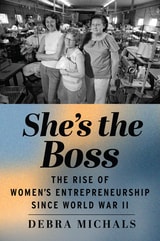
She's the Boss
The Rise of Women’s Entrepreneurship since World War IIDebra Michals
Rutgers University Press, 2025
She’s the Boss chronicles the forces that made entrepreneurship attractive to women. In rich detail, Debra Michals shares the stories of the countless women of all races, ethnicities, genders, and abilities who contributed to this important history. The book also explores the intersection of women’s personal choices within changing social, political, and economic factors, such as the rising divorce rates of the 1960s and 1970s, ongoing workplace and credit discrimination, civil and women’s rights activism and activist entrepreneurs, the 1970s recession and 1980s “Reagan Revolution,” and more recently, the internet, crowd-funding, and social entrepreneurship.

Shellfish for the Celestial Empire
The Rise and Fall of Commercial Abalone Fishing in CaliforniaTodd J. Braje
University of Utah Press, 2016
In the 1800s, when California was captivated by gold fever, a small group of Chinese immigrants recognized the fortune to be made from the untapped resources along the state’s coast, particularly from harvesting the black abalone of southern and Baja California. These immigrants, with skills from humble beginnings in a traditional Chinese fishing province, founded California’s commercial abalone industry, and led its growth and expansion for several decades. By the turn of the twentieth century, however, their successful livelihood was stolen from them through targeted legislation of the U.S. and California governments.
Today, the physical evidence of historical Chinese abalone fishing on the mainland has been erased by development. On California’s Channel Islands, however, remnants of temporary abalone collecting and processing camps lie scattered along the coastlines. These sites hold a treasure trove of information, stories, lifeways, and history. Braje has excavated many of these sites and uses them to explore the history of Chinese abalone fishing, presenting a microcosm of the broader history of Chinese immigrants in America—their struggles, their successes, the institutionalized racism they faced, and the unique ways in which they helped to shape the identity of the United States.
Shot In America
Television, the State, and the Rise of Chicano CinemaChon A. Noriega
University of Minnesota Press, 2000
Redefines media history through Chicano film and television.
One of the most influential figures in ethnic media studies takes direct aim at how Chicano filmmaking has been represented in the history of media in the United States. Shot in America tackles seemingly intractable dilemmas involving the political and market functions of film and TV to provide a definitive response to the debates over cultural and racial identity that have embroiled media and cultural studies over the past two decades.
Noriega offers a compelling and detailed description of an enormous body of work by Chicano media makers against the backdrop of Chicano social movements, politics, and activism over a forty-year period—an extraordinary exposition of the civil rights movement, media reform activities, and public affairs programming that constitutes the prehistory of independent and minority cinemas.Noriega reveals the ways in which Chicano and other minority protests both emerged within and were regulated by the very institutions that excluded them. Shot in America is a study with broad implications for our understanding of cultural politics and the entertainment industries.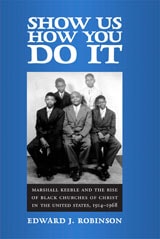
Show Us How You Do It
Marshall Keeble and the Rise of Black Churches of Christ in the United States, 1914-1968Edward J. Robinson
University of Alabama Press, 2008

Sloss Furnaces and the Rise of the Birmingham District
An Industrial EpicW. David Lewis
University of Alabama Press, 1994
"A masterpiece that deserves to be ranked with such seminal and influential works as Cash’s Mind of the South." —Edwin T. Layton Jr., author of The Revolt of the Engineers: Social Responsibility and the American Profession
This pathbreaking book tells the dramatic story of a unique manufacturing complex and the city that it helped to create. The events recounted and interpreted by W. David Lewis are of more than local or regional significance. The rise of Sloss furnaces and Birmingham epitomized the emergence of the United States as the world's foremost economic power. Similarly, the closing of a once-profitable ironmaking installation amid social and technological changes that convulsed Birmingham nine decades after the city's founding typified challenges that were facing America at the dawn of the postindustrial age.
Above all, Sloss Furnaces resonates with the class of competition and the frenetic energy with which southerners joined other Americans in a rush to transform a continent after a fratricidal drive for independence had failed. The sweeping narrative that Lewis has produced amply justifies its subtitle, An Industrial Epic.
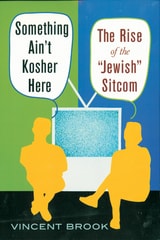
Something Ain't Kosher Here
The Rise of the 'Jewish' SitcomBrook, Vincent
Rutgers University Press, 2003
From 1989 through 2002 there was an unprecedented surge in American sitcoms featuring explicitly Jewish lead characters, thirty-two compared to seven in the previous forty years. Several of these—Mad About You, The Nanny, and Friends—were among the most popular and influential of all shows over this period; one program—Seinfeld—has been singled out as the “defining” series of the nineties. In addition, scriptwriters have increasingly created “Jewish” characters, although they may not be perceived to be by the show’s audience, Rachel Green on Friends being only one example.
In Something Ain’t Kosher Here, Vincent Brook asks two key questions: Why has this trend appeared at this particular historical moment and what is the significance of this phenomenon for Jews and non-Jews alike? He takes readers through three key phases of the Jewish sitcom trend: The early years of television before and after the first Jewish sitcom, The Goldbergs’, appeared; the second phase in which America found itself “Under the Sign of Seinfeld”; and the current era of what Brook calls “Post- Jewishness.”
Interviews with key writers, producers, and “showrunners” such as David Kohan, (Will and Grace), Marta Kauffman (Friends and Dream On), Bill Prady (Dharma and Greg), Peter Mehlman and Carol Leifer (Seinfeld), and close readings of individual episodes and series provoke the inescapable conclusion that we have entered uncharted “post-Jewish” territory. Brook reveals that the acceptance of Jews in mainstream white America at the very time when identity politics have put a premium on celebrating difference reinforces and threatens the historically unique insider/outsider status of Jews in American society. This paradox upsets a delicate balance that has been a defining component of American Jewish identity.
The rise of the Jewish sitcom represents a broader struggle in which American Jews and the TV industry, if not American society as a whole, are increasingly operating at cross-purposes— torn between the desire to celebrate unique ethnic identities, yet to assimilate: to assert independence, yet also to build a consensus to appeal to the widest possible audience. No reader of this book will ever be able to watch these television programs in quite the same way again.
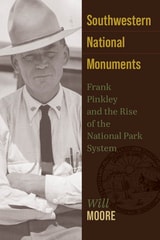
Southwestern National Monuments
Frank Pinkley and the Rise of the National Park SystemWill Moore
University of Utah Press, 2025
This volume uncovers the little-known legacy of Frank Pinkley, the first superintendent of the Southwestern National Monuments (SWNM)—a unique National Park Service unit established in 1923. Pinkley’s leadership and innovative approach helped protect and develop thirty diverse monuments, ranging from Montezuma Castle to White Sands, linked by miles of rough roads and united by their historical, archaeological, and natural significance.
Drawing on archived SWNM Monthly Reports, Will Moore reconstructs the stories behind these monuments and their contributions to the nascent national park system. From the pioneering all-Navajo Mobile Unit of the Civilian Conservation Corps to visionary work in visitor education, Pinkley and his team helped to set a course for the protection of American landscapes. Southwestern National Monuments is essential reading for anyone passionate about America's natural heritage and national parks.

Spain
The Rise of the First World PowerJohn Fraser Ramsey with a Foreword by James D. Mixson
University of Alabama Press, 2026
Before Britain. Before America. There was Spain.
In Spain: The Rise of the First World Power, John Fraser Ramsey traces the evolution of Spain from a battleground of Romans, Visigoths, Moors, and Christians to the most formidable empire of its age. Not merely a chronicle of kings, battles, and dynasties, the book reveals how institutions, beliefs, ambitions, and accidents combined to propel a stubborn and quarrelsome people onto history’s center stage.
In his memorable, avuncular style, Ramsey shows how nations are a mix of virtues and flaws, complicated human communities held together by ingenuity, conviction, and occasional luck. His Spain is not populated solely by monarchs in brocade and generals on horseback. Merchants, clerics, adventurers, bureaucrats, and visionaries all take their places in the procession, forming the untidy pageant from which great powers invariably emerge. The effect is less a lecture than a guided expedition through the machinery of history.
This reissue of Ramsey's longest work arrives at an opportune hour. Amid fissiparous debates about identity, borders, religion, and power, Ramsey supplies the rarer commodity of perspective. Readers interested in Spanish history, European civilization, empire, exploration, military affairs, political institutions, religious history, and cultural exchange will find a rich larder of insight. It is especially suited to those who suspect that the past is more instructive than the slogans with which moderns so industriously replace it.

Spoiling the Stories
The Rise of Israeli Women's FictionTamar Merin
Northwestern University Press, 2016

Squid Empire
The Rise and Fall of the CephalopodsDanna Staaf
University Press of New England, 2017

Stagg's University
The Rise, Decline, and Fall of Big-Time Football at ChicagoRobin Lester
University of Illinois Press, 1995
The legendary University of Chicago football program had an unusual beginning, a dazzling middle, and an inglorious conclusion. Its architect: Amos Alonzo Stagg, the most creative and entrepreneurial college coach of his time. A former all-American gridiron star at Yale, Stagg joined an elite academic institution that boasted intellectual notables like John Dewey, Thorstein Veblen, and Albert Michelson. Within fifteen years, the fame of Stagg's football program had eclipsed even Michelson's renown as the first American citizen to win a Nobel Prize.
Robin Lester follows the commercial trail blazed by Stagg and University President William Rainey Harper and the subsequent transformation of college football into a mass entertainment industry that changed campuses and captured the national imagination. Fascinating and detailed, Stagg's Universityreveals how the University of Chicago's football industry prefigured today's billion-dollar sport juggernaut and details the life and leadership of one of its foundational personages.
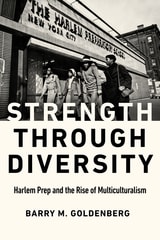
Strength through Diversity
Harlem Prep and the Rise of MulticulturalismBarry M. Goldenberg
Rutgers University Press, 2025
strengththroughdiversity.com
Strong Religion
The Rise of Fundamentalisms around the WorldGabriel A. Almond, R. Scott Appleby, and Emmanuel Sivan
University of Chicago Press, 2003
To answer questions like these, Strong Religion draws on the results of the Fundamentalism Project, a decade-long interdisciplinary study of antimodernist, antisecular militant religious movements on five continents and within seven world religious traditions. The authors of this study analyze the various social structures, cultural contexts, and political environments in which fundamentalist movements have emerged around the world, from the Islamic Hamas and Hizbullah to the Catholic and Protestant paramilitaries of Northern Ireland, and from the Moral Majority and Christian Coalition of the United States to the Sikh radicals and Hindu nationalists of India. Offering a vividly detailed portrait of the cultures that nourish such movements, Strong Religion opens a much-needed window onto different modes of fundamentalism and identifies the kind of historical events that can trigger them.

Structures in the Stream
Water, Science, and the Rise of the U.S. Army Corps of EngineersBy Todd Shallat
University of Texas Press, 1994
As the Mississippi and other midwestern rivers inundated town after town during the summer of 1993, concerned and angry citizens questioned whether the very technologies and structures intended to "tame" the rivers did not, in fact, increase the severity of the floods. Much of the controversy swirled around the apparent culpability of the U.S. Army Corps of Engineers, the builder of many of the flood control systems that failed.
In this book, Todd Shallat examines the turbulent first century of the dam and canal building Corps and follows the agency's rise from European antecedents through the boom years of river development after the American Civil War. Combining extensive research with a lively style, Shallat tells the story of monumental construction and engineering fiascoes, public service and public corruption, and the rise of science and the army expert as agents of the state.
More than an institutional history, Structures in the Stream offers significant insights into American society, which has alternately supported the public works projects that are a legacy of our French heritage and opposed them based on the democratic, individualist tradition inherited from Britain. It will be important reading for a wide audience in environmental, military, and scientific history, policy studies, and American cultural history.