262 books match the query 'Sex role' and 14 start with s
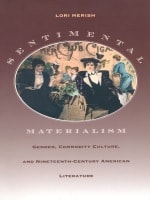
cover of Sentimental Materialism: Gender, Commodity Culture, and Nineteenth-Century American Literature

Sentimental Materialism

Gender, Commodity Culture, and Nineteenth-Century American Literature

Lori Merish

Duke University Press, 2000

In Sentimental Materialism Lori Merish considers the intricate relationship between consumption and womanhood in the late eighteenth and nineteenth centuries. Taking as her starting point a diversity of cultural artifacts—from domestic fiction and philosophical treatises to advice literature and cigars—Merish explores the symbolic functions they served and finds that consumption evolved into a form of personal expressiveness that indicated not only a woman’s wealth and taste but also her race, class, morality, and civic values. The discursive production of this new subjectivity—the feminine consumer—was remarkably influential, helping to shape American capitalism, culture, and nation building.

The phenomenon of female consumption was capitalism’s complement to male production: It created what Merish calls the “Other Protestant Ethic,”a feminine and sentimental counterpart to Max Weber’s ethic of hard work, economic rationality, and self-control. In addition, driven by the culture’s effort to civilize the “cannibalistic” practices of ethnic, class, and national otherness, appropriate female consumerism, marked by taste and refinement, identified certain women and their families as proper citizens of the United States. The public nature of consumption, however, had curiously conflicting effects: While the achievement of cultured material circumstances facilitated women’s civic agency, it also reinforced stereotypes of domestic womanhood.

Sentimental Materialism’s inquiry into middle-class consumption and accompanying ideals of womanhood will appeal to readers in a variety of disciplines, including American studies, cultural studies, feminist theory, and cultural history.
[more]
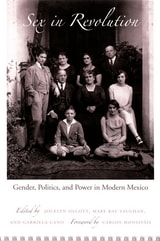
cover of Sex in Revolution: Gender, Politics, and Power in Modern Mexico

Sex in Revolution

Gender, Politics, and Power in Modern Mexico

Jocelyn Olcott, Mary Kay Vaughan, and Gabriela Cano, eds.

Duke University Press, 2006

Sex in Revolution challenges the prevailing narratives of the Mexican Revolution and postrevolutionary state formation by placing women at center stage. Bringing to bear decades of feminist scholarship and cultural approaches to Mexican history, the essays in this book demonstrate how women seized opportunities created by modernization efforts and revolutionary upheaval to challenge conventions of sexuality, work, family life, religious practices, and civil rights.

Concentrating on episodes and phenomena that occurred between 1915 and 1950, the contributors deftly render experiences ranging from those of a transgendered Zapatista soldier to upright damas católicas and Mexico City’s chicas modernas pilloried by the press and male students. Women refashioned their lives by seeking relief from bad marriages through divorce courts and preparing for new employment opportunities through vocational education. Activists ranging from Catholics to Communists mobilized for political and social rights. Although forced to compromise in the face of fierce opposition, these women made an indelible imprint on postrevolutionary society.

These essays illuminate emerging practices of femininity and masculinity, stressing the formation of subjectivity through civil-society mobilizations, spectatorship and entertainment, and locales such as workplaces, schools, churches, and homes. The volume’s epilogue examines how second-wave feminism catalyzed this revolutionary legacy, sparking widespread, more radically egalitarian rural women’s organizing in the wake of late-twentieth-century democratization campaigns. The conclusion considers the Mexican experience alongside those of other postrevolutionary societies, offering a critical comparative perspective.

Contributors. Ann S. Blum, Kristina A. Boylan, Gabriela Cano, María Teresa Fernández Aceves, Heather Fowler-Salamini, Susan Gauss, Temma Kaplan, Carlos Monsiváis, Jocelyn Olcott, Anne Rubenstein, Patience Schell, Stephanie Smith, Lynn Stephen, Julia Tuñón, Mary Kay Vaughan

[more]
cover of Sex, Sexuality, and the Anthropologist

Sex, Sexuality, and the Anthropologist

Edited by Fran Markowitz and Michael Ashkenazi

University of Illinois Press, 1999

Sex in the field—the dilemma of whether to cover up or display sexual identities and desires during the course of anthropological fieldwork—is one of the best-kept secrets in the discipline. Contending that the conventional pose of a genderless, asexual, ethnographic researcher is impossible to sustain, this volume brings sex and sexuality into the open as essential components of ethnographic study that must be overtly recognized and proactively addressed.
Sex, Sexuality, and the Anthropologist recounts the real-life experiences of anthropologists who are forced to acknowledge that their hosts in the field view them as gendered beings in a social context, not as asexual, objective observers. Far from controlling the research environment and defining the terms of interviewer-informant relationships, these researchers find they must engage in a process of negotiating their position—including their sexual position—within the communities they study.
Ranging from public baths in Austria to lesbian bars in Taiwan and from Mexico to Nigeria to Finland to Japan, Sex, Sexuality, and the Anthropologist raises critical questions about ethnographers' reflexivity, subjectivity, and detachment, confronting the challenge of a holistic approach to the anthropological enterprise.

 
[more]
cover of Sexuation: SIC 3

Sexuation

SIC 3

Renata Salecl, ed.

Duke University Press, 2000

Contemporary discourse seems to provide a choice in the way sexual identities and sexual difference are described and analyzed. On the one hand, much current thinking suggests that sexual identity is fluid—socially constructed and/or performatively enacted. This discourse is often invoked in the act of overcoming an earlier patriarchal era of fixed and naturalized identities. On the other hand, some modern discourses of sexual identity seem to offer a New Age Jungian re-sexualization of the universe—"Men are from Mars, and women are from Venus"—according to which there is an underlying, deeply anchored archetypal identity that provides a kind of safe haven in the contemporary confusion of roles and identities.

In this volume, contributors discuss a third way of thinking about sexual identity and sexual difference—a direction opened by Jacques Lacan. For Lacan, what we all recognize as sexual difference is first and foremost representative of a certain fundamental deadlock inherent in the symbolic order, that is, in language and in the entire realm of culture conceived as a symbol system structured on the model of language. For him, the logical matrix of this deadlock is provided by his own formulas of sexuation. The essays collected here elaborate on different aspects of this deadlock of sexual difference. While some examine the role of semblances in the relation between the sexes or consider sexual identity not as anatomy but still involving an impasse of the real, others discuss the difference between sexuation and identification, the role of symbolic prohibition in the process of the subject’s sexual formation, or the changed role of the father in contemporary society and the impact of this change on sexual difference. Other essays address such topics as the role of beating in sexual fantasies and jouissance in feminine jealousy.

Contributors. Alain Badiou, Elizabeth Bronfen, Darian Leader, Jacques Alain Miller, Genevieve Morel, Renata Salecl, Eric L. Santner, Colette Soler, Paul Verhaeghe, Slavoj Žižek, Alenka Zupancic
[more]
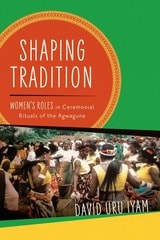
cover of Shaping Tradition: Women's Roles in Ceremonial Rituals of the Agwagune

Shaping Tradition

Women's Roles in Ceremonial Rituals of the Agwagune

David Uru Iyam

University of Wisconsin Press, 2021

Agwagune women in southeastern Nigeria contribute to the cultural construction of their societies in deep and systematic ways. This reality is often concealed, misrepresented, or unexamined in studies that do not consciously set out to address female agency and authority. Most recently women have reshaped traditional male-centered village practices behind the scenes, such as when they updated the premarital ritual of fattening prospective brides, and when they ended female circumcision. Women use their status to direct and influence male leadership on matters of war, finance, education, and political stability.

Using this community as a case study, David Uru Iyam asserts that these women are not stereotypically submissive, oppressed, or passive. Agwagune women participate in male ceremonies by pretending to be unaware of them, concealing their authority under a veneer of secrecy. Instead of focusing on obvious male political power, Iyam highlights the overlooked domestic and public contributions of women that uphold—and change—entire social systems.

[more]
cover of Sissy Insurgencies: A Racial Anatomy of Unfit Manliness

Sissy Insurgencies

A Racial Anatomy of Unfit Manliness

Marlon B. Ross

Duke University Press, 2022
In Sissy Insurgencies Marlon B. Ross focuses on the figure of the sissy in order to rethink how Americans have imagined, articulated, and negotiated manhood and boyhood from the 1880s to the present. Rather than collapsing sissiness into homosexuality, Ross shows how sissiness constitutes a historically fluid range of gender practices that are expressed as a physical manifestation, discursive epithet, social identity, and political phenomenon. He reconsiders several black leaders, intellectuals, musicians, and athletes within the context of sissiness, from Booker T. Washington, George Washington Carver, and James Baldwin to Little Richard, Amiri Baraka, and Wilt Chamberlain. Whether examining Washington’s practice of cleaning as an iteration of sissiness, Baldwin’s self-fashioned sissy deportment, or sissiphobia in professional sports and black nationalism, Ross demonstrates that sissiness can be embraced and exploited to conform to American gender norms or disrupt racialized patriarchy. In this way, sissiness constitutes a central element in modern understandings of race and gender.
[more]
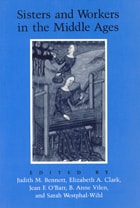
cover of Sisters and Workers in the Middle Ages

Sisters and Workers in the Middle Ages

Edited by Judith M. Bennett, Elizabeth A. Clark, Jean F. O'Barr, B. Anne Vilen,

University of Chicago Press, 1989

Focusing on medieval women with a wide range of occupations and life-styles, the interdisciplinary essays in this collection examine women's activities within the patriarchal structures of the time. Individual essays explore women's challenges to a sexual ideology that confined them strictly to the roles of wives, mothers, and servants. Also included are sections on women and work, cultural production and literacy, and religious life.

These essays provide a greater understanding of the ways in which gender has played a part in determining relations of power in Western cultures. This volume makes a vital contribution to the current scholarship about women in the Middle Ages.

[more]
cover of Sites of Desire/Economies of Pleasure: Sexualities in Asia and the Pacific

Sites of Desire/Economies of Pleasure

Sexualities in Asia and the Pacific

Edited by Lenore Manderson and Margaret Jolly

University of Chicago Press, 1997

Discussions of sexuality in Asia and the Pacific have long been tinged with conceptions of the exotic Orient. Examining a world of erotic encounter between European, Asian, and Pacific people, these essays explore how sexual practices and sexual meanings have been constructed across cultural borders in Thailand, the Philippines, Burma/Myanmar, Japan, Fiji, Papua New Guinea, and the Polynesian islands. Considering sexuality as embedded in a complex social and political world structured and saturated by gender, race, and class relations, these scholars challenge the categories with which sex and gender have been named and studied. They examine these sites of desire through specific historic and cultural circumstances, from the first explorations of Europeans, through colonial power, to the contemporary issues of sexual tourism, prostitution, and the HIV/AIDS pandemic.

A unique and important contribution to the study of sexuality, this book also suggests that the history of sexuality in the West was shaped by myths of the legendary Orient and the exotic "Other."

[more]
cover of Soft Patriarchs, New Men: How Christianity Shapes Fathers and Husbands

Soft Patriarchs, New Men

How Christianity Shapes Fathers and Husbands

W. Bradford Wilcox

University of Chicago Press, 2004

In the wake of dramatic, recent changes in American family life, evangelical and mainline Protestant churches took markedly different positions on family change. This work explains why these two traditions responded so differently to family change and then goes on to explore how the stances of evangelical and mainline Protestant churches toward marriage and parenting influenced the husbands and fathers that fill their pews.

According to W. Bradford Wilcox, the divergent family ideologies of evangelical and mainline churches do not translate into large differences in family behavior between evangelical and mainline Protestant men who are married with children. Mainline Protestant men, he contends, are "new men" who take a more egalitarian approach to the division of household labor than their conservative peers and a more involved approach to parenting than men with no religious affiliation. Evangelical Protestant men, meanwhile, are "soft patriarchs"—not as authoritarian as some would expect, and given to being more emotional and dedicated to their wives and children than both their mainline and secular counterparts. Thus, Wilcox argues that religion domesticates men in ways that make them more responsive to the aspirations and needs of their immediate families.

[more]
cover of Space, Place, and Gender

Space, Place, and Gender

Doreen Massey

University of Minnesota Press, 1994
A leading feminist geographer puts forth new ways of thinking about space and place. In these days of global acceleration on the one hand and intensifying local nationalisms on the other, how should we be thinking about space and place? This new book brings together Doreen Massey's key writings on this debate. In it she argues that we have seen some problematical readings of both terms in recent years, and she proposes an alternative approach more adequate to the issues facing the social sciences today. Massey has organized these debates around the three themes of space, place, and gender. She traces the development of ideas about the social structure of space and place, and the relation of both to issues of gender and certain debates within feminism. Beginning with the economy and social structures of production, Massey develops a wider notion of spatiality as the product of intersecting social relations. On this basis she proposes an approach to "places" that is essentially open and hybrid while always provisional and contested. The themes intersect with much current thinking about identity within feminism and cultural studies. The chapters range from studies of the concepts of place employed in debates on uneven regional development and inner-city problems to arguments about the relationship between the conceptualization of space/place and the social construction of gender relations. "This book presents a collection of Massey's writings that have appeared over the last two decades. The volume is, however, more than a sum of its parts, in that Massey uses commentaries throughout the book to delineate an intellectual trajectory in Anglo geography that connects the concerns of economic geography with critiques and extensions by feminist and postcolonial writers. Massey builds a multifaceted argument of the richness of geographical analysis and its centrality for contemporary social theory debates." Professional Geographer "In a compilation of essays spanning over fifteen years, Space, Place and Gender, Doreen Massey explores the intricate and profound connection of space and place with gender and the construction of gender relations. Spaces and places are gendered, she argues, at once reflecting and affecting how gender is understood." Harvard Design Magazine Doreen Massey is professor of geography at the Open University in the United Kingdom. She is the author of five books, including Spatial Divisions of Labour (1984) and, with David Weild and Paul Quintas, High-Tech Fantasies (1991).
[more]
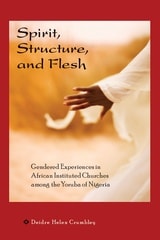
cover of Spirit, Structure, and Flesh: Gender and Power in Yoruba African Instituted Churches

Spirit, Structure, and Flesh

Gender and Power in Yoruba African Instituted Churches

Deidre Helen Crumbley

University of Wisconsin Press, 2008

Although popularized in Africa by Western missionaries, the Christian faith as practiced by Africans has acquired unique traits over time. Some of the most radical reinterpretations of Christianity are offered by those churches known as “AICs” (variously, African Initiated, African Instituted, or African Independent Churches)—new denominations founded by Africans skeptical of dogma offered by mainstream churches with roots in European empires. As these churches spread throughout the African diaspora, they have brought with them distinct practices relating to gender. Such practices range from the expectation that women avoid holy objects and sites during menstruation to the maintenance of church structures in which both men and women may be ordained and assigned the same duties and responsibilities.
            How does having a female body affect one’s experience of indigenized Christianity in Africa? Spirit, Structure, and Flesh addresses this question by exploring the ways ritual, symbol, and dogma circumscribe, constrain, and liberate women in AICs. Through detailed description of worship and doctrine, as well as careful analyses of church history and organizational processes, Deidre Helen Crumbley explores gendered experiences of faith and power in three Nigerian indigenous AICs, demonstrating the roles of women in the day-to-day life of these churches.
[more]
cover of Squee from the Margins: Fandom and Race

Squee from the Margins

Fandom and Race

Rukmini Pande

University of Iowa Press, 2018

Rukmini Pande’s examination of race in fan studies is sure to make an immediate contribution to the growing field. Until now, virtually no sustained examination of race and racism in transnational fan cultures has taken place, a lack that is especially concerning given that current fan spaces have never been more vocal about debating issues of privilege and discrimination. 

Pande’s study challenges dominant ideas of who fans are and how these complex transnational and cultural spaces function, expanding the scope of the field significantly. Along with interviewing thirty-nine fans from nine different countries about their fan practices, she also positions media fandom as a postcolonial cyberspace, enabling scholars to take a more inclusive view of fan identity. With analysis that spans from historical to contemporary, Pande builds a case for the ways in which non-white fans have always been present in such spaces, though consistently ignored. 

[more]
cover of Stained Glass Ceilings: How Evangelicals Do Gender and Practice Power

Stained Glass Ceilings

How Evangelicals Do Gender and Practice Power

Lisa Weaver Swartz

Rutgers University Press, 2023
Stained Glass Ceilings speaks to the intersection of gender and power within American evangelicalism by examining the formation of evangelical leaders in two seminary communities.Southern Baptist Theological Seminary inspires a vision of human flourishing through gender differentiation and male headship. Men practice “Godly Manhood," and are taught to act as the "head" of a family, while their wives are socialized into codes of “Godly Womanhood" that prioritize prescribed gender roles. This power structure privileges men yet offers agency to their wives in women-centered spaces and through marital relationships. Meanwhile, Asbury Theological Seminary promises freedom from gendered hierarchies. Appealing to a story of gender-blind equality, Asbury welcomes women into classrooms, administrative offices, and pulpits. But the institution’s construction of egalitarianism obscures the fact that women are rewarded for adapting to an existing male-centered status quo rather than for developing their own voices as women. Featuring high-profile evangelicals such as Al Mohler and Owen Strachan, along with young seminarians poised to lead the movement in the coming decades, Stained Glass Ceilings illustrates the liabilities of white evangelical toolkits and argues that evangelical culture upholds male-centered structures of power even as it facilitates meaning and identity.
[more]
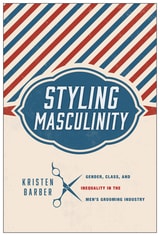
cover of Styling Masculinity: Gender, Class, and Inequality in the Men's Grooming Industry

Styling Masculinity

Gender, Class, and Inequality in the Men's Grooming Industry

Barber, Kristen

Rutgers University Press, 2016

The twenty-first century has seen the emergence of a new style of man: the metrosexual. Overwhelmingly straight, white, and wealthy, these impeccably coiffed urban professionals spend big money on everything from facials to pedicures, all part of a multi-billion-dollar male grooming industry. Yet as this innovative study reveals, even as the industry encourages men to invest more in their appearance, it still relies on women to do much of the work.
 
Styling Masculinity investigates how men’s beauty salons have persuaded their clientele to regard them as masculine spaces. To answer this question, sociologist Kristen Barber goes inside Adonis and The Executive, two upscale men’s salons in Southern California. Conducting detailed observations and extensive interviews with both customers and employees, she shows how female salon workers not only perform the physical labor of snipping, tweezing, waxing, and exfoliating, but also perform the emotional labor of pampering their clients and pumping up their masculine egos. 
 
Letting salon employees tell their own stories, Barber not only documents occasions when these workers are objectified and demeaned, but also explores how their jobs allow for creativity and confer a degree of professional dignity. In the process, she traces the vast network of economic and social relations that undergird the burgeoning male beauty industry. 
 
[more]