238 books match the query 'Social Classes & Economic Disparity' and 19 start with s
cover of Searching for a Different Future: The Rise of a Global Middle Class in Morocco

Searching for a Different Future

The Rise of a Global Middle Class in Morocco

Shana Cohen

Duke University Press, 2004

By examining how neoliberal economic reform policies have affected educated young adults in contemporary Morocco, Searching for a Different Future posits a new socioeconomic formation: the global middle class. During Morocco’s postcolonial period, from the 1950s through the 1970s, development policy and nationalist ideology supported the formation of a middle class based on the pursuit of education, employment, and material security. Neoliberal reforms adopted by Morocco since the early 1980s have significantly eroded the capacity of the state to nurture the middle class, and unemployment and temporary employment among educated adults has grown. There is no longer an obvious correlation between the best interests of the state and those of the middle-class worker. As Shana Cohen demonstrates, educated young adults in Morocco do not look toward the state for economic security and fulfillment but toward the diffuse, amorphous global market.

Cohen delves into the rupture that has occurred between the middle class, the individual, and the nation in Morocco and elsewhere around the world. Combining institutional economic analysis with cultural theory and ethnographic observation including interviews with seventy young adults in Casablanca and Rabat, she reveals how young, urban, educated Moroccans conceive of their material, social, and political conditions. She finds that, for the most part, they perceive improvement in their economic and social welfare apart from the types of civic participation commonly connected with nationalism and national identity. In answering classic sociological questions about how the evolution of capitalism influences identity, Cohen sheds new light on the measurable social and economic consequences of globalization and on its less tangible effects on individuals’ perception of their place in society and prospects in life.
[more]
cover of Shadows Over Sunnyside: An Arkansas Plantation in Transition, 1830-1945

Shadows Over Sunnyside

An Arkansas Plantation in Transition, 1830-1945

Jeannie M. Whayne

University of Arkansas Press, 1993
This remarkable collection of essays addresses social, historical, cultural, and labor issues as they affect a Southern plantation. The heart of the book is an examination of a "great experiment" to import Italian laborers to Sunnyside Plantation. From the crucible of tensions that this experiment produced, the reader obtains a concrete understanding of the implications of U.S. immigration policy, of changing labor relations following Reconstruction, and of a minority culture's introduction into the Delta.
[more]
cover of Shattering Culture: American Medicine Responds to Cultural Diversity

Shattering Culture

American Medicine Responds to Cultural Diversity

Mary-Jo DelVecchio Good

Russell Sage Foundation, 2012
"Culture counts" has long been a rallying cry among health advocates and policymakers concerned with racial disparities in health care. A generation ago, the women's health movement led to a host of changes that also benefited racial minorities, including more culturally aware medical staff, enhanced health education, and the mandated inclusion of women and minorities in federally funded research. Many health professionals would now agree that cultural competence is important in clinical settings, but in what ways? Shattering Culture provides an insightful view of medicine and psychiatry as they are practiced in today's culturally diverse clinical settings. The book offers a compelling account of the many ways culture shapes how doctors conduct their practices and how patients feel about the care they receive. Based on interviews with clinicians, health care staff, and patients, Shattering Culture shows the human face of health care in America. Building on over a decade of research led by Mary-Jo Good, the book delves into the cultural backgrounds of patients and their health care providers, as well as the institutional cultures of clinical settings, to illuminate how these many cultures interact and shape the quality of patient care. Sarah Willen explores the controversial practice of matching doctors and patients based on a shared race, ethnicity, or language and finds a spectrum of arguments challenging its usefulness, including patients who may fear being judged negatively by providers from the same culture. Seth Hannah introduces the concept of cultural environments of hyperdiversity describing complex cultural identities. Antonio Bullon and Mary-Jo Good demonstrate how regulations meant to standardize the caregiving process—such as the use of templates and check boxes instead of narrative notes—have steadily limited clinician flexibility, autonomy, and the time they can dedicate to caring for patients. Elizabeth Carpenter-Song looks at positive doctor-patient relationships in mental health care settings and finds that the most successful of these are based on mutual "recognition"—patients who can express their concerns and clinicians who validate them. In the book's final essay, Hannah, Good, and Park show how navigating the maze of insurance regulations, financial arrangements, and paperwork compromises the effectiveness of mental health professionals seeking to provide quality care to minority and poor patients. Rapidly increasing diversity on one hand and bureaucratic regulations on the other are two realities that have made providing culturally sensitive care even more challenging for doctors. Few opportunities exist to go inside the world of medical and mental health clinics and see how these realities are influencing patient care. Shattering Culture provides a rare look at the day-to-day experiences of psychiatrists and other clinicians and offers multiple perspectives on what culture means to doctors, staff, and patients and how it shapes the practice of medicine and psychiatry.
[more]
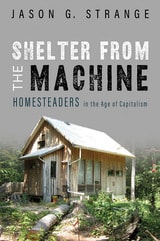
cover of Shelter from the Machine: Homesteaders in the Age of Capitalism

Shelter from the Machine

Homesteaders in the Age of Capitalism

Jason G. Strange

University of Illinois Press, 2020

”You’re either buried with your crystals or your shotgun.” That laconic comment captures the hippies-versus-hicks conflict that divides, and in some ways defines, modern-day homesteaders. It also reveals that back to-the-landers, though they may seek lives off the grid, remain connected to the most pressing questions confronting the United States today.

Jason Strange shows where homesteaders fit, and don't fit, within contemporary America. Blending history with personal stories, Strange visits pig roasts and bohemian work parties to find people engaged in a lifestyle that offers challenge and fulfillment for those in search of virtues like self-employment, frugality, contact with nature, and escape from the mainstream. He also lays bare the vast differences in education and opportunity that leave some homesteaders dispossessed while charting the tensions that arise when people seek refuge from the ills of modern society—only to find themselves indelibly marked by the system they dreamed of escaping.
[more]
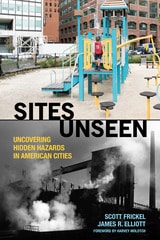
cover of Sites Unseen: Uncovering Hidden Hazards in American Cities

Sites Unseen

Uncovering Hidden Hazards in American Cities

Scott Frickel

Russell Sage Foundation, 2018

Winner of the 2020 Robert E. Park Award for Best Book from the Community and Urban Sociology Section of the American Sociological Association

From a dive bar in New Orleans to a leafy residential street in Minneapolis, many establishments and homes in cities across the nation share a troubling and largely invisible past: they were once sites of industrial manufacturers, such as plastics factories or machine shops, that likely left behind carcinogens and other hazardous industrial byproducts. In Sites Unseen, sociologists Scott Frickel and James Elliott uncover the hidden histories of these sites to show how they are regularly produced and reincorporated into urban landscapes with limited or no regulatory oversight. By revealing this legacy of our industrial past, Sites Unseen spotlights how city-making has become an ongoing process of social and environmental transformation and risk containment.
 
To demonstrate these dynamics, Frickel and Elliott investigate four very different cities—New Orleans, Minneapolis, Philadelphia, and Portland, Oregon. Using original data assembled and mapped for thousands of former manufacturers’ locations dating back to the 1950s, they find that more than 90 percent of such sites have now been converted to urban amenities such as parks, homes, and storefronts with almost no environmental review. And because manufacturers tend to open plants on new, non-industrial lots rather than on lots previously occupied by other manufacturers, associated hazards continue to spread relatively unabated. As they do, residential turnover driven by gentrification and the rising costs of urban living further obscure these sites from residents and regulatory agencies alike.
 
Frickel and Elliott show that these hidden processes have serious consequences for city-dwellers. While minority and working class neighborhoods are still more likely to attract hazardous manufacturers, rapid turnover in cities means that whites and middle-income groups also face increased risk.  Since government agencies prioritize managing polluted sites that are highly visible or politically expedient, many former manufacturing sites that now have other uses remain invisible. To address these oversights, the authors advocate creating new municipal databases that identify previously undocumented manufacturing sites as potential environmental hazards. They also suggest that legislation limiting urban sprawl might reduce the flow of hazardous materials beyond certain boundaries.
 
A wide-ranging synthesis of urban and environmental scholarship, Sites Unseen shows that creating sustainable cities requires deep engagement with industrial history as well as with the social and regulatory processes that continue to remake urban areas through time.
 
A Volume in the American Sociological Association's Rose Series in Sociology.
[more]
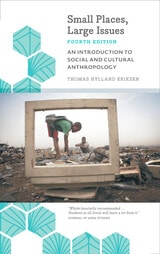
cover of Small Places, Large Issues: An Introduction to Social and Cultural Anthropology

Small Places, Large Issues

An Introduction to Social and Cultural Anthropology

Thomas Hylland Eriksen

Pluto Press, 2015
This concise introduction to social and cultural anthropology has become a modern classic, introducing countless students to the field and the tools it offers for exploring some of the most complicated questions of human life and interaction. This fourth edition is fully updated, incorporating recent debates and controversies in the field, ranging from globalization and migration research to problems of cultural translation and the challenges of interdisciplinarity. Effortlessly bridging the gap between classic and contemporary anthropology, Small Places, Large Issues remains an essential text for undergraduates embarking on the study of this field.
[more]
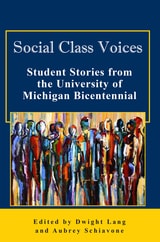
cover of Social Class Voices: Student Stories from the University of Michigan Bicentennial

Social Class Voices

Student Stories from the University of Michigan Bicentennial

Edited by Dwight Lang and Aubrey Schiavone

Michigan Publishing Services, 2017

In Social Class Voices, forty-five University of Michigan undergraduate students and recent alumni explore the significance of social class in early 21st century America. They openly and honestly show how social class has shaped their lives, their changing identities, and conditions in their home communities. These writers – born to the working poor, working, middle, upper-middle, and upper classes – examine the effects of social class on their families, their kindergarten through high school experiences, as well as their undergraduate years at the University of Michigan in Ann Arbor. Using “sociological creative non-fiction” essays, they invite readers to engage, interpret, and imagine the power of social class in a society where economic differences are often overlooked. In exploring their pasts and personal experiences, they write powerful accounts of American college student life. We hear about the insecurities and challenges of growing up in poverty, increasing tensions of being born to the working and middle classes, and comforting certainties of upper-middle and upper class lives. In their stories we see connections between the personal and the social – a key sociological insight.

These writers explore social class heritages at a time when more and more Americans are recognizing economic inequality as a core structural problem facing millions, independent of individual effort and talent. They shed light on what is too often denied both on and off college campuses: social class. By their very nature these types of explorations are political.

In America, where economic differences frequently go unnoticed when discussing inequality, openly writing about one’s personal class experiences can be controversial. These University of Michigan students and alumni have the courage to make public how social class structures American life.
 
 
[more]
cover of Social Class: How Does It Work?

Social Class

How Does It Work?

Annette Lareau

Russell Sage Foundation, 2008
Class differences permeate the neighborhoods, classrooms, and workplaces where we lead our daily lives. But little is known about how class really works, and its importance is often downplayed or denied. In this important new volume, leading sociologists systematically examine how social class operates in the United States today. Social Class argues against the view that we are becoming a classless society. The authors show instead the decisive ways social class matters—from how long people live, to how they raise their children, to how they vote. The distinguished contributors to Social Class examine how class works in a variety of domains including politics, health, education, gender, and the family. Michael Hout shows that class membership remains an integral part of identity in the U.S.—in two large national surveys, over 97 percent of Americans, when prompted, identify themselves with a particular class. Dalton Conley identifies an intangible but crucial source of class difference that he calls the "opportunity horizon"—children form aspirations based on what they have seen is possible. The best predictor of earning a college degree isn't race, income, or even parental occupation—it is, rather, the level of education that one's parents achieved. Annette Lareau and Elliot Weininger find that parental involvement in the college application process, which significantly contributes to student success, is overwhelmingly a middle-class phenomenon. David Grusky and Kim Weeden introduce a new model for measuring inequality that allows researchers to assess not just the extent of inequality, but also whether it is taking on a more polarized, class-based form. John Goldthorpe and Michelle Jackson examine the academic careers of students in three social classes and find that poorly performing students from high-status families do much better in many instances than talented students from less-advantaged families. Erik Olin Wright critically assesses the emphasis on individual life chances in many studies of class and calls for a more structural conception of class. In an epilogue, journalists Ray Suarez, Janny Scott, and Roger Hodge reflect on the media's failure to report hardening class lines in the United States, even when images on the nightly news—such as those involving health, crime, or immigration—are profoundly shaped by issues of class. Until now, class scholarship has been highly specialized, with researchers working on only one part of a larger puzzle. Social Class gathers the most current research in one volume, and persuasively illustrates that class remains a powerful force in American society.
[more]
cover of Social Justice: Theories, Issues, and Movements (Revised and Expanded Edition)

Social Justice

Theories, Issues, and Movements (Revised and Expanded Edition)

Loretta Capeheart

Rutgers University Press, 2020

An eye for an eye, the balance of the scales – for centuries, these and other traditional concepts exemplified the public’s perception of justice. Today, popular culture, including television shows like Law and Order, informs the public’s vision. But do age-old symbols, portrayals in the media, and existing systems truly represent justice in all of its nuanced forms, or do we need to think beyond these notions? The second edition of Social Justice: Theories, Issues, and Movements responds to the need for a comprehensive introduction to these issues.
 
Theories of social justice are presented in an accessible fashion to encourage engagement of students, activists, and scholars with these important lines of inquiry. Issues are analyzed utilizing various theories for furthering engagement in possibilities. Struggles for justice -- from legal cases to on the ground movements -- are presented for historical context and to inform the way forward.
 
[more]
cover of Social Norms and Economic Institutions

Social Norms and Economic Institutions

Kenneth J. Koford and Jeffrey B. Miller, Editors

University of Michigan Press, 1991
Economists, philosophers, and legal scholars come together in Social Norms and Economic Institutions to examine how economists' rational decision-making models are influenced by ethical values and social norms.   Economists find it difficult to include considerations of ethical values and social norms in their behavioral models, for these factors are neither goods nor constraints in the usual sense. And, while custom and social norms influence individual behavior, economists have not determined how they affect aggregate economic outcomes. Editors Kenneth J. Koford and Jeffrey B. Miller argue persuasively that these powerful societal and cultural forces influence decision making in important ways that cannot be captured by models that take into account only self-interested behavior.   The contributors address such questions as how norms change, how a common sense of fairness can survive in a world of heterogeneous values, how such principles can help to determine appropriate penalties for corporate misconduct, and how fairness can be an important element in determining a "fair" bargaining equilibrium in contract negotiations.   Sociologists, philosophers, business ethicists, legal scholars, and economists alike will appreciate the value of this volume in enriching their understanding of how ethical values and social norms can be incorporated in standard behavioral models.
[more]
cover of Social Reproduction Theory and the Socialist Horizon: Work, Power and Political Strategy

Social Reproduction Theory and the Socialist Horizon

Work, Power and Political Strategy

Aaron Jaffe

Pluto Press, 2020

How do we integrate the theoretical underpinnings of social reproduction theory (SRT) into our understanding of the social harms inflicted upon us? How can we use it to inform our struggles and affect societal change under capitalism? Integrating our understanding of productive and reproductive spheres and exploring the connection between identity-based oppression and class exploitation, SRT has emerged as a powerful Marxist frame for social analysis and political practice. In this book, Aaron Jaffe extracts SRT's radical potential, relying on recent struggles, including the International Women's Strike and the teachers' strikes, showing how we can use SRT to motivate socialist politics and strategy. Using social reproduction theory to appreciate distinct forms of social domination, this unique and necessary book will have vital strategic implications for anti-capitalists, anti-racists, LGBT activists, disability activists and feminists.
[more]
cover of Solidarity and Fragmentation: Working People and Class Consciousness in Detroit, 1875-1900

Solidarity and Fragmentation

Working People and Class Consciousness in Detroit, 1875-1900

Richard Jules Oestreicher

University of Illinois Press, 1985

How did the interplay between class and ethnicity play out within the working class during the Gilded Age? Richard Jules Oestreicher illuminates the immigrant communities, radical politics, worker-employer relationships, and the multiple meanings of workers' affiliations in Detroit at the end of the nineteenth century.
[more]
cover of Special Admission: How College Sports Recruitment Favors White Suburban Athletes

Special Admission

How College Sports Recruitment Favors White Suburban Athletes

Kirsten Hextrum

Rutgers University Press, 2021

Honorable Mention - 2022 Society of Professors of Education Outstanding Book Award​

Special Admission contradicts the national belief that college sports provide upward mobility opportunities. Kirsten Hextrum documents how white middle-class youth become overrepresented on college teams. Her institutional ethnography of one elite athletic and academic institution includes over 100 hours of interviews with college rowers and track & field athletes. She charts the historic and contemporary relationships between colleges, athletics, and white middle-class communities that ensure white suburban youth are advantaged in special athletic admissions. Suburban youth start ahead in college admissions because athletic merit—the competencies desired by university recruiters—requires access to vast familial, communal, and economic resources, all of which are concentrated in their neighborhoods. Their advantages increase as youth, parents, and coaches strategically invest in and engineer novel opportunities to maintain their race and class status. Thus, college sports allow white, middle-class athletes to accelerate their racial and economic advantages through admission to elite universities.
[more]
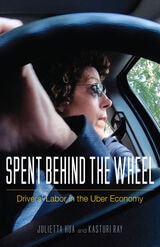
cover of Spent behind the Wheel: Drivers' Labor in the Uber Economy

Spent behind the Wheel

Drivers' Labor in the Uber Economy

Julietta Hua

University of Minnesota Press, 2021

Exploring professional passenger driving and the gig economy through feminist theories of labor

Are taxi drivers in today’s era of the ride-hail app performing care work akin to domestic and household labor? So argue the authors of Spent behind the Wheel. Bringing together sociological and legal perspectives with feminist theoretical insights, Julietta Hua and Kasturi Ray examine the case study of contemporary professional passenger driving in the United States. On the one hand, they show, the rise of the gig economy has brought new attention to the industry of professional passenger driving. On the other hand, the vulnerabilities that professional drivers experience remain hidden. 

Drawing on interviews with drivers, labor organizers, and members of licensing commissions, as well as case law and other published resources, Hua and Ray argue that working for ride-hail companies like Uber and Lyft shares similarities with driving for taxi companies in the impact on driver lives. Lyft and Uber sell the idea of industry disruption, but in fact they entrench long-standing modes of extracting the reproductive labor of their drivers for the benefit of consumer lives. Reproductive labor—conventionally understood as feminized labor—is extracted, but masked, behind the masculinized, racialized bodies of drivers. Professional driving is thus best understood alongside domestic and other gendered service work as reproductive labors devalued and often demonetized to benefit the national economy. 

Spent behind the Wheel is a must for readers interested in critical studies of technological change and the gig economy, showing how drivers’ capacities are drained for the benefit of riders, corporations, and the maintenance of the racial state. 
[more]
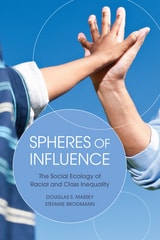
cover of Spheres of Influence: The Social Ecology of Racial and Class Inequality

Spheres of Influence

The Social Ecology of Racial and Class Inequality

Douglas S. Massey

Russell Sage Foundation, 2014
The black-white divide has long haunted the United States as a driving force behind social inequality. Yet, the civil rights movement, the increase in immigration, and the restructuring of the economy in favor of the rich over the last several decades have begun to alter the contours of inequality. Spheres of Influence, co-authored by noted social scientists Douglas S. Massey and Stefanie Brodmann, presents a rigorous new study of the intersections of racial and class disparities today. Massey and Brodmann argue that despite the persistence of potent racial inequality, class effects are drastically transforming social stratification in America. This data-intensive volume examines the differences in access to material, symbolic, and emotional resources across major racial groups. The authors find that the effects of racial inequality are exacerbated by the class differences within racial groups. For example, when measuring family incomes solely according to race, Massey and Brodmann found that black families' average income measured $28,400, compared to Hispanic families' $35,200. But this gap was amplified significantly when class differences within each group were taken into account. With class factored in, inequality across blacks' and Hispanics' family incomes increased by a factor of almost four, with lower class black families earning an average income of only $9,300 compared to $97,000 for upper class Hispanics. Massey and Brodmann found similar interactions between class and racial effects on the distribution of symbolic resources, such as occupational status, and emotional resources, such as the presence of a biological father—across racial groups. Although there are racial differences in each group's access to these resources, like income, these disparities are even more pronounced once class is factored in. The complex interactions between race and class are apparent in other social spheres, such as health and education. In looking at health disparities across groups, Massey and Brodmann observed no single class effect on the propensity to smoke cigarettes. Among whites, cigarette smoking declined with rising class standing, whereas among Hispanics it increased as class rose. Among Asians and blacks, there was no class difference at all. Similarly, the authors found no single effect of race alone on health: Health differences between whites, Asians, Hispanics, and blacks were small and non-significant in the upper class, but among those in the lower class, intergroup differences were pronounced. As Massey and Brodmann show, in the United States, a growing kaleidoscope of race-class interactions has replaced pure racial and class disadvantages. By advancing an ecological model of human development that considers the dynamics of race and class across multiple social spheres, Spheres of Influence sheds important light on the factors that are currently driving inequality today.
[more]
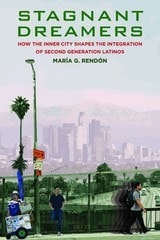
cover of Stagnant Dreamers: How the Inner City Shapes the Integration of the Second Generation

Stagnant Dreamers

How the Inner City Shapes the Integration of the Second Generation

Maria G. Rendon

Russell Sage Foundation, 2019

Winner of the 2020 Robert E. Park Award for Best Book from the Community and Urban Sociology Section of the American Sociological Association

Winner of the 2020 Distinguished Contribution to Research Award from the Latino/a Section of the American Sociological Association

Honorable Mention for the 2020 Thomas and Znaniecki Award from the International Migration Section of the American Sociological Association​​​​​​​


A quarter of young adults in the U.S. today are the children of immigrants, and Latinos are the largest minority group.  In Stagnant Dreamers, sociologist and social policy expert María Rendón follows 42 young men from two high-poverty Los Angeles neighborhoods as they transition into adulthood. Based on in-depth interviews and ethnographic observations with them and their immigrant parents, Stagnant Dreamers describes the challenges they face coming of age in the inner city and accessing higher education and good jobs, and demonstrates how family-based social ties and community institutions can serve as buffers against neighborhood violence, chronic poverty, incarceration, and other negative outcomes.

Neighborhoods in East and South Central Los Angeles were sites of acute gang violence that peaked in the 1990s, shattering any romantic notions of American life held by the immigrant parents. Yet, Rendón finds that their children are generally optimistic about their life chances and determined to make good on their parents’ sacrifices. Most are strongly oriented towards work. But despite high rates of employment, most earn modest wages and rely on kinship networks for labor market connections. Those who made social connections outside of their family and neighborhood contexts, more often found higher quality jobs. However, a middle-class lifestyle remains elusive for most, even for college graduates.

Rendón debunks fears of downward assimilation among second-generation Latinos, noting that most of her subjects were employed and many had gone on to college. She questions the ability of institutions of higher education to fully integrate low-income students of color. She shares the story of one Ivy League college graduate who finds himself working in the same low-wage jobs as his parents and peers who did not attend college. Ironically, students who leave their neighborhoods to pursue higher education are often the most exposed to racism, discrimination, and classism.

Rendón demonstrates the importance of social supports in helping second-generation immigrant youth succeed. To further the integration of second-generation Latinos, she suggests investing in community organizations, combating criminalization of Latino youth, and fully integrating them into higher education institutions. Stagnant Dreamers presents a realistic yet hopeful account of how the Latino second generation is attempting to realize its vision of the American dream.

[more]
cover of Status: Why Is It Everywhere? Why Does It Matter?

Status

Why Is It Everywhere? Why Does It Matter?

Cecilia L. Ridgeway

Russell Sage Foundation, 2019

Status is ubiquitous in modern life, yet our understanding of its role as a driver of inequality is limited.  In Status, sociologist and social psychologist Cecilia Ridgeway examines how this ancient and universal form of inequality influences today’s ostensibly meritocratic institutions and why it matters. Ridgeway illuminates the complex ways in which status affects human interactions as we work together towards common goals, such as in classroom discussions, family decisions, or workplace deliberations.

Ridgeway’s research on status has important implications for our understanding of social inequality. Distinct from power or wealth, status is prized because it provides affirmation from others and affords access to valuable resources. Ridgeway demonstrates how the conferral of status inevitably contributes to differing life outcomes for individuals, with impacts on pay, wealth creation, and health and wellbeing. Status beliefs are widely held views about who is better in society than others in terms of esteem, wealth, or competence. These beliefs confer advantages which can exacerbate social inequality. Ridgeway notes that status advantages based on race, gender, and class—such as the belief that white men are more competent than others—are the most likely to increase inequality by facilitating greater social and economic opportunities.

Ridgeway argues that status beliefs greatly enhance higher status groups’ ability to maintain their advantages in resources and access to positions of power and make lower status groups less likely to challenge the status quo. Many lower status people will accept their lower status when given a baseline level of dignity and respect—being seen, for example, as poor but hardworking. She also shows that people remain willfully blind to status beliefs and their effects because recognizing them can lead to emotional discomfort. Acknowledging the insidious role of status in our lives would require many higher-status individuals to accept that they may not have succeeded based on their own merit; many lower-status individuals would have to acknowledge that they may have been discriminated against.

Ridgeway suggests that inequality need not be an inevitable consequence of our status beliefs. She shows how status beliefs can be subverted—as when we reject the idea that all racial and gender traits are fixed at birth, thus refuting the idea that women and people of color are less competent than their male and white counterparts. This important new book demonstrates the pervasive influence of  status on social inequality and suggests ways to ensure that it has a less detrimental impact on our lives.
 
[more]
cover of Structured Luck: Downstream Effects of the U.S. Diversity Visa Program

Structured Luck

Downstream Effects of the U.S. Diversity Visa Program

Onoso Imoagene

Russell Sage Foundation, 2024

The Diversity Immigrant Visa Program is a lottery that awards winners from underrepresented countries the chance to apply for legal permanent residence in the United States. Most lottery winners think of themselves as lucky, viewing the win as an opportunity to pursue better lives for themselves and their families. In Structured Luck, sociologist Onoso Imoagene uses immigrants’ stories to show that while the visa program benefits many recipients, the program’s design can also lead to exploitation in their countries of origin and reduced potential once they are in the United States.

Combining ethnographic observation in Africa and interviews with immigrants, their family members, and friends from Ghana and Nigeria, Imoagene demonstrates that the visa program is a process of “structured luck,” from how people hear about the lottery, who registers for it, and who participates in it to the application requirements for the visa. In Ghana and Nigeria, people often learn about the lottery through friends, colleagues, or relatives who persuade them to enter for the perceived benefits of receiving a visa: opportunities for upward mobility, permanent legal status, and the ability to bring along family members. Though anyone can enter the lottery, not everyone who wins obtains a visa. The visa application process requires proof of a high school diploma or artisan skills, a medical exam, a criminal background check, an interview with U.S. consular officers, and payment of fees.  Such requirements have led to the growth of visa entrepreneurs, who often charge exorbitant fees to steer immigrants through the process. Visa recipients who were on track to obtain university degrees at home often leave in the middle of their studies for the United States but struggle to continue their education due to high U.S. tuition costs. And though their legal status allows them to escape the demoralizing situations that face the undocumented, these immigrants lack the social support that the government sometimes provides for refugees and other migrants. Ultimately, Imoagene notes, the real winner of the visa lottery is not the immigrants themselves but the United States, which benefits from their relatively higher levels of education. Consequently, she argues, the U.S. must do more to minimize the visa program’s negative consequences.

Structured Luck illuminates the trauma, resilience, and determination of immigrants who come to the United States through the Diversity Visa Program and calls for the United States to develop policies that will better integrate them into society.

 
[more]
cover of Sustainability for the Forgotten

Sustainability for the Forgotten

Gary E. Machlis

University of Utah Press, 2024

Opening with the extraordinary story of a young French priest working in 1968 amongst impoverished villages of northeast Brazil, struggling to bring sustenance, sustainability, and hope to these disregarded and willfully ignored communities, this book asks a broad and far-reaching question that challenges the contemporary sustainability movement: What about sustainability for the forgotten?
 
Sustainability for the Forgotten is an incendiary book that confronts the history, policies, and practices of sustainability. It interrogates the usefulness of current sustainability approaches for the poorest of the poor, the chronic underclass, victims of natural disasters, refugees, the oppressed, and asks, how can we do better? With examples that range from the coffeelands of El Salvador to the coal country of American Appalachia, from the streets of Detroit to refugee camps in Greece and the upscale metro centers of the affluent, sustainability is examined with a critical eye and with an emphasis on insuring that the forgotten are heard.
 
At once well-researched and passionate, wide-ranging and sharply focused, Sustainability for the Forgotten is unlike any other book on the sustainability movement. Written with a distinctive voice that is reasoned, unflinching, and often poetic, the book challenges the sustainability movement to follow "a just and necessary path." The result is a provocative statement on the future of sustainability and a call to action that is ultimately hopeful.
[more]