Results by title
322 books match the query 'Social change' and 26 start with s
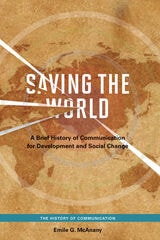
Saving the World
A Brief History of Communication for Devleopment and Social ChangeEmile G. McAnany
University of Illinois Press, 2012
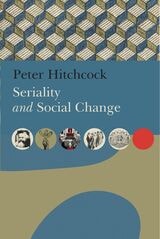
Seriality and Social Change
Peter Hitchcock
Seagull Books, 2025
From Karl Marx’s decision to publish Capital in serial form to contemporary adaptations in manga and graphic novels, Seriality and Social Change examines how serialization both democratizes knowledge and shapes the very process of social transformation. Peter Hitchcock delves into the paradox of the serial: while it can expand access to radical thought, it can also impose structural limits, slowing or containing the revolutionary potential it seeks to unleash.
Through a sweeping analysis that links literature and political economy, Hitchcock explores how serialized narratives frame, sustain, or even hinder movements for change. Does seriality mirror the mechanics of capitalism, or can it be a tool for subverting them? Engaging with this question across genres and forms, Seriality and Social Change invites readers to rethink how revolution is told and imagined over time.
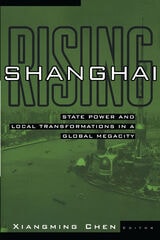
Shanghai Rising
State Power and Local Transformations in a Global MegacityXiangming Chen
University of Minnesota Press, 2009
Analyzing a Chinese city’s dazzling rise to global megacity status
Until around 1990, Shanghai was China’s premier but sluggish industrial center. Now at the beginning of the twenty-first century, the joint impact of global forces and state power has turned Shanghai into a dynamic megacity. Shanghai’s remarkable growth in economy, infrastructure, and global presence has prompted questions about the Shanghai “miracle.” This collection places the city’s unprecedented rise in a rare comparative examination of U.S. cities, as well as with Asian megacities Singapore and Hong Kong, providing a nuanced account of how Shanghai’s politics, economy, society, and space have been transformed by macro- and micro-level forces.
Contributors: Stephen W. K. Chiu, Chinese U of Hong Kong; K. C. Ho, National U of Singapore; John D. Kasarda, U of North Carolina; Hanlong Lu, Shanghai Academy of Social Sciences; Tai-lok Lui, Chinese U of Hong Kong; Ann R. Markusen, U of Minnesota; Anthony M. Orum, U of Illinois, Chicago; Yuan Ren, Fudan U Shanghai; Saskia Sassen, Columbia U; Jiaming Sun, Texas A&M U, Commerce; Fulong Wu, Cardiff U; Pingkang Yu, George Washington U; Tingwei Zhang, U of Illinois, Chicago; Zhenhua Zhou, Development Research Center, Shanghai Municipal Government.
Short-Changed?
South Africa since ApartheidColin Bundy
Ohio University Press, 2015
What have been the most significant developments—political, social, economic—in South Africa since 1994? How much has changed since the demise of apartheid, and how much remains stubbornly the same? Should one celebrate a robust democracy now two decades old, or lament the corrosive effects of factionalism, greed, and corruption on political life? Colin Bundy tries to answer such questions, while avoiding simplistic or one-sided assessments of life under Mandela, Mbeki, and Zuma. He recognizes real advances under ANC rule but also identifies the limits and contradictions of such progress. Bundy demonstrates, too, how the country’s past permeates the present, complicating and constraining the politics of transition, so that genuine transformation has been short-changed.
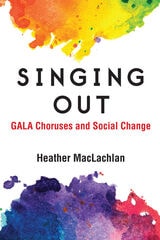
Singing Out
GALA Choruses and Social ChangeHeather MacLachlan
University of Michigan Press, 2020
Pundits often wax eloquent about the power of music, asserting that it can, in some positive way, change the world. Such statements often rest on an unexamined claim that music can and does foster social justice. Singing Out: GALA Choruses and Social Change tackles the premise underlying such claims, analyzing groups of amateur singers who are explicitly committed to an agenda of social justice.

Slavery and Utopia
The Wars and Dreams of an Amazonian World TransformerBy Fernando Santos-Granero,
University of Texas Press, 2018
In the first half of the twentieth century, a charismatic Peruvian Amazonian indigenous chief, José Carlos Amaringo Chico, played a key role in leading his people, the Ashaninka, through the chaos generated by the collapse of the rubber economy in 1910 and the subsequent pressures of colonists, missionaries, and government officials to assimilate them into the national society. Slavery and Utopia reconstructs the life and political trajectory of this leader whom the people called Tasorentsi, the name the Ashaninka give to the world-transforming gods and divine emissaries that come to this earth to aid the Ashaninka in times of crisis.
Fernando Santos-Granero follows Tasorentsi’s transformations as he evolved from being a debt-peon and quasi-slave to being a slave raider; inspirer of an Ashaninka movement against white-mestizo rubber extractors and slave traffickers; paramount chief of a multiethnic, anti-colonial, and anti-slavery uprising; and enthusiastic preacher of an indigenized version of Seventh-Day Adventist doctrine, whose world-transforming message and personal influence extended well beyond Peru’s frontiers. Drawing on an immense body of original materials ranging from archival documents and oral histories to musical recordings and visual works, Santos-Granero presents an in-depth analysis of chief Tasorentsi’s political discourse and actions. He demonstrates that, despite Tasorentsi’s constant self-reinventions, the chief never forsook his millenarian beliefs, anti-slavery discourse, or efforts to liberate his people from white-mestizo oppression. Slavery and Utopia thus convincingly refutes those who claim that the Ashaninka proclivity to messianism is an anthropological invention.
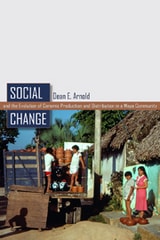
Social Change and the Evolution of Ceramic Production and Distribution in a Maya Community
Dean E. Arnold
University Press of Colorado, 2008
Dean E. Arnold made ten visits to Ticul, Yucatan, Mexico, witnessing the changes in transportation infrastructure, the use of piped water, and the development of tourist resorts. Even in this context of social change and changes in the demand for pottery, most of the potters in 1997 came from the families that had made pottery in 1965. This book traces changes and continuities in that population of potters, in the demand and distribution of pottery, and in the procurement of clay and temper, paste composition, forming, and firing.
In this volume, Arnold bridges the gap between archaeology and ethnography, using his analysis of contemporary ceramic production and distribution to generate new theoretical explanations for archaeologists working with pottery from antiquity. When the descriptions and explanations of Arnold’s findings in Ticul are placed in the context of the literature on craft specialization, a number of insights can be applied to the archaeological record that confirm, contradict, and nuance generalizations concerning the evolution of ceramic specialization. This book will be of special interest to anthropologists, archaeologists, and ethnographers.

Social Change and the Family in Taiwan
Arland Thornton and Hui-Sheng Lin
University of Chicago Press, 1994
This interdisciplinary study explores the patterns and causes of change in education, work, income, leisure time, marriage, living arrangements, and interactions among extended kin. Theoretical chapters enunciate a theory of family and social change centered on the life course and modes of social organization. Other chapters look at the shift from arranged marriages toward love matches, as well as changes in dating practices, premarital sex, fertility, and divorce.
Contributions to the book are made by Jui-Shan Chang, Ming-Cheng Chang, Deborah S. Freedman, Ronald Freedman, Thomas E. Fricke, Albert Hermalin, Mei-Lin Lee, Paul K. C. Liu, Hui-Sheng Lin, Te-Hsiung Sun, Arland Thornton, Maxine Weinstein, and Li-Shou Yang.
Social Change in a Metropolitan Community
Otis Dudley Duncan
Russell Sage Foundation, 1973
Social Science as Civic Discourse
Essays on the Invention, Legitimation, and Uses of Social TheoryRichard Harvey Brown
University of Chicago Press, 1989
Society in Action
The Theory of Social BecomingPiotr Sztompka
University of Chicago Press, 1991
Sztompka connects the interpretations of such collective activity to a wider grasp of the nature of social action. The result is a comprehensive and original theory of social change which focuses on the self-transforming influence on society of its members' striving for freedom, autonomy, and self-fulfillment. He develops his theory by means of a general concept of "social becoming," the roots of which he traces to the early romantic and humanist work of Karl Marx and his followers and to two influential sociological schools of today, the theory of agency and historical sociology.
Sztompka situates his theory midway between the rigid determinism of social totalities and the unbridled voluntarism of free individuals. Social change, he demonstrates, can be understood neither as the outcome of individual actions taken alone nor as structurally determined actions. Instead, he confers upon social organizations and movements a "self-transcending" quality: they express human agency yet, by virtue of their active character, are quite often able to achieve unpredictable outcomes.
Throughout his analysis of social movements and revolutions in history, Sztompka emphasizes the dynamics of spontaneous social change generated from below—a theoretical testimony to the rapid and fundamental social change in Eastern Europe in recent history. Against the fashions of postmodernist malaise, boredom, and disenchantment, his theory of social becoming expresses the possibility of emancipation, of change leading to positive gains. His work registers a belief in progress, not inevitably gained, but its attainment fully dependent upon the creativity and optimism of an active citizenry.
Sociology of the Future
Theory, Cases and Annotated BibliographyWendell Bell
Russell Sage Foundation, 1971

Some of the Dead Are Still Breathing
Living in the FutureBy Charles Bowden
University of Texas Press, 2018
The third book in Charles Bowden’s “accidental trilogy” that began with Blood Orchid and Blues for Cannibals, Some of the Dead Are Still Breathing attempts to resolve the overarching question: “How can a person live a moral life in a culture of death?” As humanity moves further into the twenty-first century, Bowden continues to interrogate our roles in creating the ravaged landscapes and accumulated death that still surround us, as well as his own childhood isolation, his lust for alcohol and women, and his waning hope for a future. We witness post-Katrina New Orleans and terrorist-bombed Bali; we encounter our shared actions with the animal world and the desirous need for consumption; we see the clash and erosion of our physical and figurative borders, the savagery of our own civilization. A man of his time and out of time, Bowden seeks acceptance and a will to endure what may lie ahead.
Spaces of Creative Resistance
Social Change Projects in Twenty-First-Century East AsiaAndrea Gevurtz Arai
Rutgers University Press, 2025
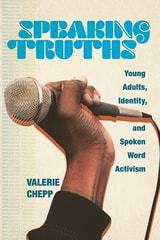
Speaking Truths
Young Adults, Identity, and Spoken Word ActivismValerie Chepp
Rutgers University Press, 2022
Drawing upon detailed observations and in-depth interviews, Chepp tells the story of a diverse group of young adults from Washington, D.C. who use spoken word to create a more just and equitable world. Outlining the contours of this approach, she interrogates spoken word activism’s emphasis on personal storytelling and “truth,” the strategic uses of aesthetics and emotions to politically engage across difference, and the significance of healing in sustainable movements for change. Weaving together their poetry and personally told stories, Chepp shows how poets tap into the beautiful, emotional, personal, and therapeutic features of spoken word to empathically connect with others, advance intersectional and systemic analyses of inequality, and make social justice messages relatable across a diverse public. By creating allies and forging connections based on friendship, professional commitments, lived experiences, emotions, artistic kinship, and political views, this activist approach is highly integrated into the everyday lives of its practitioners, online and face-to-face.
Chepp argues that spoken word activism is a product of, and a call to action against, the neoliberal era in which poets have come of age, characterized by widening structural inequalities and increasing economic and social vulnerability. She illustrates how this deeply personal and intimate activist approach borrows from, builds upon, and diverges from previous social movement paradigms. Spotlighting the complexity and mutual influence of modern-day activism and the world in which it unfolds, Speaking Truths contributes to our understanding of contemporary social change-making and how neoliberalism has shaped this political generation’s experiences with social injustice.
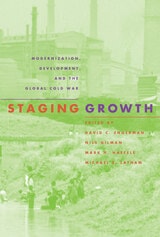
Staging Growth
Modernization, Development, and the Global Cold WarDavid C. Engerman
University of Massachusetts Press, 2003
Beginning in the 1950s, the theory of modernization emerged as the dominant paradigm of economic, social, and political development within the American foreign policy establishment. Purporting to explain the stages through which all nations pass on the road to industrial modernity, it provided a rationale for a broad range of cultural and political projects aimed at fostering Third World growth while simultaneously combating communism.
But modernization theory was more than simply an expression of Cold War ideology. As the essays in this volume show, the ideal of modernization proliferated throughout the postcolonial world and across ideological lines in places as diverse as East Asia, Southern Africa, and South Asia. Indeed, it was embraced by all who shared the American enthusiasm for the increased production and higher standards of living promised by industrialization—enemies and allies alike.
Situating modernization theory historically, Staging Growth avoids conventional chronologies and categories of analysis, particularly the traditional focus on conflicts between major powers. The contributors employ a variety of approaches—from economic and intellectual history to cultural criticism and biography—to shed fresh light on the global forces that shaped the Cold War and its legacies. Most of the pieces are comparative, exploring how different countries and cultures have grappled with the implications of modern development. At the same time, all of the essays address similar fundamental questions. Is modernization the same thing as Westernization? Is the idea of modernization universally valid? Do countries follow similar trajectories as they undertake development? Does modernization bring about globalization?
In addition to the editors and Akira Iriye, contributors include Michael Adas, Laura Belmonte, Gregg Andrew Brazinsky, Christina Klein, J. Victor Koschmann, and Michael R. Mahoney.
State Learning and International Change
Andrew Farkas
University of Michigan Press, 1998

Still a Hollow Hope
State Power and the Second AmendmentAnthony D. Cooling
University of Michigan Press, 2022
The U.S. Supreme Court increasingly matters in American political life when those across the political spectrum look at the Court for relief from policies they oppose and as another venue for advancing their own policy agendas. However, the evidence is mounting, to include this book in a big way, that courts are more of a sideshow to the culture war. While court decisions, especially Supreme Court decisions, do have importance, the decisions emanating from the Court reflect social, cultural, and political change that occurred long prior to their decision ever being made.
This book tests how much political and social change has been made primarily through Gerald Rosenberg’s framework from his seminal work, The Hollow Hope: Can Courts Bring About Social Change, but it also utilizes Daniel Elazar’s Political Culture Theory to explain state level variations in political and social change. The findings indicate that while courts are not powerless institutions, reformers will not have success unless supported by the public and the elected branches, and most specifically, that preexisting state culture is a determining factor in the amount of change courts make. In short, federalism still matters.

Straight Edge
Hardcore Punk, Clean Living Youth, and Social ChangeHaenfler, Ross
Rutgers University Press, 2006
Straight edge is a clean-living youth movement that emerged from the punk rock subculture in the early 1980s. Its basic tenets promote a drug-free, tobacco-free, and sexually responsible lifestyle—tenets that, on the surface, seem counter to those typical of teenage rebellion. For many straight-edge kids, however, being clean and sober was (and still is) the ultimate expression of resistance—resistance to the consumerist and self-indulgent ethos that defines mainstream U.S. culture.
In this first in-depth sociological analysis of the movement, Ross Haenfler follows the lives of dozens of straight-edge youths, showing how for these young men and women, and thousands of others worldwide, the adoption of the straight-edge doctrine as a way to better themselves evolved into a broader mission to improve the world in which they live. Straight edge used to signify a rejection of mind-altering substances and promiscuous sex, yet modern interpretations include a vegetarian (or vegan) diet and an increasing involvement in environmental and political issues.
The narrative moves seamlessly between the author’s personal experiences and theoretical concerns, including how members of subcultures define “resistance,” the role of collective identity in social movements, how young men experience multiple masculinities in their quest to redefine manhood, and how young women establish their roles in subcultures. This book provides fresh perspectives on the meaning of resistance and identity in any subculture.
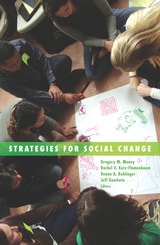
Strategies for Social Change
Gregory M. Maney
University of Minnesota Press, 2012
The theory and practice of social movements come together in strategy—whether, why, and how people can realize their visions of another world by acting together. Strategies for Social Change offers a concise definition of strategy and a framework for differentiating between strategies. Specific chapters address microlevel decision-making processes and creativity, coalition building in Northern Ireland, nonviolent strategies for challenging repressive regimes, identity politics, GLBT rights, the Christian right in Canada and the United States, land struggles in Brazil and India, movement-media publicity, and corporate social movement organizations.
Contributors: Jessica Ayo Alabi, Orange Coast College; Kenneth T. Andrews, U of North Carolina at Chapel Hill; Anna-Liisa Aunio, U of Montreal; Linda Blozie; Tina Fetner, McMaster U; James M. Jasper, CUNY; Karen Jeffreys; David S. Meyer, U of California, Irvine; Sharon Erickson Nepstad, U of New Mexico; Francesca Polletta, U of California, Irvine; Belinda Robnett, U of California, Irvine; Charlotte Ryan, U of Massachusetts–Lowell; Carrie Sanders, Wilfrid Laurier U; Kurt Schock, Rutgers U; Jackie Smith, U of Pittsburgh; Suzanne Staggenborg, U of Pittsburgh; Stellan Vinthagen, U West, Sweden; Nancy Whittier, Smith College.
Struggle over Identity
The Official and the Alternative "Belarusianness"Nelly Bekus
Central European University Press, 2010
Rejecting the cliché about “weak identity and underdeveloped nationalism,” Bekus argues for the co-existence of two parallel concepts of Belarusianness—the official and the alternative one—which mirrors the current state of the Belarusian people more accurately and allows for a different interpretation of the interconnection between the democratization and nationalization of Belarusian society.
The book describes how the ethno-symbolic nation of the Belarusian nationalists, based on the cultural capital of the Golden Age of the Belarusian past (17th century) competes with the “nation” institutionalized and reified by the numerous civic rituals and social practices under the auspices of the actual Belarusian state.
Comparing the two concepts not only provides understanding of the logic that dominates Belarusian society’s self-description models, but also enables us to evaluate the chances of alternative Belarusianness to win this unequal struggle over identity.

Style, Function, Transmission
Evolutionary Archaeological PerspectivesMichael J O'Brien
University of Utah Press, 2003
Darwin's theory of evolutionary descent with modification rests in part on the notion that there is heritable continuity affected by transmission between ancestor and descendant. It is precisely this continuity that allows one to trace hylogenetic histories between fossil taxa of various ages and recent taxa. Darwin was clear that were an analyst to attempt such tracings, then the anatomical characters of choice are those least influenced by natural selection, or what are today referred to as adaptively neutral traits. The transmission of these traits is influenced solely by such mechanisms as drift and not by natural selection.
The application of Darwin's theory to archaeological phenomena requires that the theory be retooled to accommodate artifacts. One aspect that has undergone this retooling concerns cultural transmission, the mechanism that affects heritable continuity between cultural phenomena. Archaeologists have long traced what is readily interpreted as heritable continuity between artifacts, but the theory underpinning their tracings is seldom explicit. Thus what have been referred to as artifacts styles underpin such tracings because styles are adaptively neutral. Other traits are referred to as functional.
In their introduction to Style, Function, Transmission, Michael O’Brien and R. Lee Lyman outline in detail the interrelations of a theory of cultural descent with modification and the concepts of drift, style, and function. The chapters in the volume specifically address the issues of selection and drift and their relation to style and function. In non-polemic presentations, contributors specify empirical implications of aspects of cultural transmission for evolutionary lineages of artifacts and then present archaeological data for those implications.

Sun, Sin & Suburbia
The History of Modern Las Vegas, Revised and ExpandedGeoff Schumacher
University of Nevada Press, 2015
Schumacher’s history also profiles the Las Vegas where more than two million people live. He explores the neighborhoods sprawling beyond the Strip’s neon gleam and uncovers a diverse community offering much more than table games, lounge acts, and organized crime. Schumacher discusses contemporary Las Vegas, charting its course from the nation’s fastest-growing metropolis to one of the Great Recession’s most battered victims.
Sun, Sin & Suburbia will appeal to tourists looking to understand more than the glitz and glitter of Las Vegas and to newcomers who want to learn about their new hometown. It will also be an essential addition to any longtime Nevadan’s library of local history.
First published in 2012 by Stephens Press, this paperback edition is now available from the University of Nevada Press.
Surplus
The Politics of Production and the Strategies of Everyday LifeChristopher T. Morehart
University Press of Colorado, 2015
The concept of surplus captures the politics of production and also conveys the active material means by which people develop the strategies to navigate everyday life. Surplus: The Politics of Production and the Strategies of Everyday Life examines how surpluses affected ancient economies, governments, and households in civilizations across Mesoamerica, the Southwest United States, the Andes, Northern Europe, West Africa, Mesopotamia, and eastern Asia.
A hallmark of archaeological research on sociopolitical complexity, surplus is central to theories of political inequality and institutional finance. This book investigates surplus as a macro-scalar process on which states or other complex political formations depend and considers how past people—differentially positioned based on age, class, gender, ethnicity, role, and goal—produced, modified, and mobilized their social and physical worlds.
Placing the concept of surplus at the forefront of archaeological discussions on production, consumption, power, strategy, and change, this volume reaches beyond conventional ways of thinking about top-down or bottom-up models and offers a comparative framework to examine surplus, generating new questions and methodologies to elucidate the social and political economies of the past.
Contributors include Douglas J. Bolender, James A. Brown, Cathy L. Costin, Kristin De Lucia, Timothy Earle, John E. Kelly, Heather M. L. Miller, Christopher R. Moore, Christopher T. Morehart, Neil L. Norman, Ann B. Stahl, Victor D. Thompson, T. L. Thurston, and E. Christian Wells.
Surviving Spanish Conquest
Indian Fight, Flight, and Cultural Transformation in Hispaniola and Puerto RicoKaren F. Anderson-Córdova
University of Alabama Press, 2017
In Surviving Spanish Conquest: Indian Fight, Flight, and Cultural Transformation in Hispaniola and Puerto Rico, Karen F. Anderson-Córdova draws on archaeological, historical, and ethnohistorical sources to elucidate the impacts of sixteenth-century Spanish conquest and colonization on indigenous peoples in the Greater Antilles. Moving beyond the conventional narratives of the quick demise of the native populations because of forced labor and the spread of Old World diseases, this book shows the complexity of the initial exchange between the Old and New Worlds and examines the myriad ways the indigenous peoples responded to Spanish colonization.
Focusing on Hispaniola and Puerto Rico, the first Caribbean islands to be conquered and colonized by the Spanish, Anderson-Córdova explains Indian sociocultural transformation within the context of two specific processes, out-migration and in-migration, highlighting how population shifts contributed to the diversification of peoples. For example, as the growing presence of “foreign” Indians from other areas of the Caribbean complicated the variety of responses by Indian groups, her investigation reveals that Indians who were subjected to slavery, or the “encomienda system,” accommodated and absorbed many Spanish customs, yet resumed their own rituals when allowed to return to their villages. Other Indians fled in response to the arrival of the Spanish.
The culmination of years of research, Surviving Spanish Conquest deftly incorporates archaeological investigations at contact sites copious use of archival materials, and anthropological assessments of the contact period in the Caribbean. Ultimately, understanding the processes of Indian-Spanish interaction in the Caribbean enhances comprehension of colonization in many other parts of the world. Anderson-Córdova concludes with a discussion regarding the resurgence of interest in the Taíno people and their culture, especially of individuals who self-identify as Taíno. This volume provides a wealth of insight to historians, anthropologists, archaeologists, and those interested in early cultures in contact.
Surviving Sudden Environmental Change
Answers From ArchaeologyJago Cooper
University Press of Colorado, 2012