Results by title
201 books match the query 'Social movements' and 17 start with s
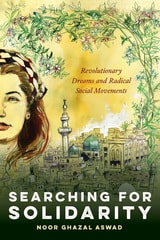
Searching for Solidarity
Revolutionary Dreams and Radical Social MovementsNoor Ghazal Aswad
The Ohio State University Press, 2025

Seeking the One Great Remedy
Francis George Shaw and Nineteenth-Century ReformLorien Foote
Ohio University Press, 2003
A radical abolitionist and early feminist, Francis George Shaw (1809–1882) was a prominent figure in American reform and intellectual circles for five decades. He rejected capitalism in favor of a popular utopian socialist movement; during the Civil War and Reconstruction, he applied his radical principles to the Northern war effort and to freedmen’s organizations.
A partnership with Henry George in the late 1870s provided an international audience for Shaw’s alternative vision of society. Seeking the One Great Remedy is the biography of this remarkable and influential man. In compelling detail, author Lorien Foote depicts the many aspects and exploits of the Shaw family. Their activities provide a perspective on the course of American reform that calls into question previous interpretations of the reform movement of this period.
Francis George Shaw is perhaps best known as the father of Robert Gould Shaw, subject of the movie Glory. Francis and his wife, Sarah Blake Shaw, achieved considerable notoriety for their activities, including their effort to shape public opinion during the Civil War. Turning the tragic death of their son into a public relations and propaganda triumph, they altered Northern opinion about the war and shaped a historical perception of the famous Massachusetts Fifty-fourth that continues today.
Seeking the One Great Remedy argues that social radicalism was pervasive among elite reformers before and after the Civil War and finds in the dramatic story of Francis George Shaw a model of that cause.
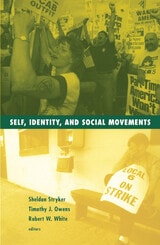
Self, Identity, and Social Movements
Sheldon Stryker
University of Minnesota Press, 2000

Shantytown Protest in Pinochet's Chile
Cathy Lisa Schneider
Temple University Press, 1995
Social Controversy and Public Address in the 1960s and Early 1970s
A Rhetorical History of the United States, Volume IXRichard J. Jensen
Michigan State University Press, 2017
Social Movements and Political Power
Emerging Forms of Radicalism in the WestCarl Boggs
Temple University Press, 1989
Social Movements in the World-System
The Politics of Crisis and TransformationJackie Smith
Russell Sage Foundation, 2012

Society in Action
The Theory of Social BecomingPiotr Sztompka
University of Chicago Press, 1991
Sztompka connects the interpretations of such collective activity to a wider grasp of the nature of social action. The result is a comprehensive and original theory of social change which focuses on the self-transforming influence on society of its members' striving for freedom, autonomy, and self-fulfillment. He develops his theory by means of a general concept of "social becoming," the roots of which he traces to the early romantic and humanist work of Karl Marx and his followers and to two influential sociological schools of today, the theory of agency and historical sociology.
Sztompka situates his theory midway between the rigid determinism of social totalities and the unbridled voluntarism of free individuals. Social change, he demonstrates, can be understood neither as the outcome of individual actions taken alone nor as structurally determined actions. Instead, he confers upon social organizations and movements a "self-transcending" quality: they express human agency yet, by virtue of their active character, are quite often able to achieve unpredictable outcomes.
Throughout his analysis of social movements and revolutions in history, Sztompka emphasizes the dynamics of spontaneous social change generated from below—a theoretical testimony to the rapid and fundamental social change in Eastern Europe in recent history. Against the fashions of postmodernist malaise, boredom, and disenchantment, his theory of social becoming expresses the possibility of emancipation, of change leading to positive gains. His work registers a belief in progress, not inevitably gained, but its attainment fully dependent upon the creativity and optimism of an active citizenry.
Statemaking and Social Movements
Essays in History and TheoryEdited by Charles Bright and Susan Harding
University of Michigan Press, 1984

Statemaking and Social Movements
Essays in History and TheoryCharles Bright and Susan Harding, Editors
University of Michigan Press, 1984

Storefront Revolution
Food Co-ops and the CountercultureCox, Craig
Rutgers University Press, 1994
In the 1960s, the cooperative networks of food stores, restaurants, bakeries, bookstores, and housing alternatives were part counterculture, part social experiment, part economic utopia, and part revolutionary political statement. The co-ops gave activists a place where they could both express themselves and accomplish at least some small-scale changes. By the mid-1970s, dozens of food co-ops and other consumer- and work-owned enterprises were operating throughout the Twin Cities, and an alternative economic network - with a People's Warehouse at its hub - was beginning to transform the economic landscape of the metropolitan Minneapolis-St. Paul area.
However, these co-op activists could not always agree among themselves on their goals. Craig Cox, a journalist who was active in the co-op movement, here provides the first book to look at food co-ops during the 1960s and 1970s. He presents a dramatic story of hope and conflict within the Minneapolis network, one of the largest co-op structures in the country. His "view from the front" of the "Co-op War" that ensued between those who wanted personal liberation through the movement and those who wanted a working-class revolution challenges us to re-thing possiblities for social and political change. Cox provides not a cynical portrait of sixties idealism, but a moving insight into an era when anything seemed possible.

Stories That Make History
Mexico through Elena Poniatowska’s CrónicasLynn Stephen
Duke University Press, 2021

Strategic Alliances
Coalition Building and Social MovementsNella Van Dyke
University of Minnesota Press, 2010
Contributors: Paul Almeida, Texas A&M U; Elizabeth Borland, College of New Jersey; Daniel B. Cornfield, Vanderbilt U; Catherine Corrigall-Brown, U of British Columbia; Mario Diani, U of Trento; Katja M. Guenther, UC Riverside; Larry Isaac, Vanderbilt U; Isobel Lindsay, Biggar, Scotland; David S. Meyer, UC Irvine; Brian Obach, SUNY New Paltz; Dina G. Okamoto, UC Davis; Christine Petit, UC Riverside; Derrick Purdue, U of the West of England; Ellen Reese, UC Riverside; Benita Roth, SUNY Binghamton; Suzanne Staggenborg, U of Pittsburgh; Dawn Wiest, U of Memphis.
Strategies for Social Change
Gregory M. Maney
University of Minnesota Press, 2012
The theory and practice of social movements come together in strategy—whether, why, and how people can realize their visions of another world by acting together. Strategies for Social Change offers a concise definition of strategy and a framework for differentiating between strategies. Specific chapters address microlevel decision-making processes and creativity, coalition building in Northern Ireland, nonviolent strategies for challenging repressive regimes, identity politics, GLBT rights, the Christian right in Canada and the United States, land struggles in Brazil and India, movement-media publicity, and corporate social movement organizations.
Contributors: Jessica Ayo Alabi, Orange Coast College; Kenneth T. Andrews, U of North Carolina at Chapel Hill; Anna-Liisa Aunio, U of Montreal; Linda Blozie; Tina Fetner, McMaster U; James M. Jasper, CUNY; Karen Jeffreys; David S. Meyer, U of California, Irvine; Sharon Erickson Nepstad, U of New Mexico; Francesca Polletta, U of California, Irvine; Belinda Robnett, U of California, Irvine; Charlotte Ryan, U of Massachusetts–Lowell; Carrie Sanders, Wilfrid Laurier U; Kurt Schock, Rutgers U; Jackie Smith, U of Pittsburgh; Suzanne Staggenborg, U of Pittsburgh; Stellan Vinthagen, U West, Sweden; Nancy Whittier, Smith College.
Strength in Unity
Christian Base Communities and the Urban Popular Movement in Guadalajara, 1965–1994Brad H. Wright
University of Alabama Press, 2026
Examines how poor and working-class communities in Guadalajara organized through faith, education, and culture to claim dignity, justice, and the right to the city.
Strength in Unity: Christian Base Communities and the Urban Popular Movement in Guadalajara, 1965–1994 presents the grassroots history of Guadalajara’s urban popular movement, centering the voices and struggles of poor and working-class communities, especially women, who organized for dignity, justice, and the right to the city. Brad H. Wright brings to light the transformative role of Christian base communities and Freirean popular education as incubators of political consciousness and collective action in the face of authoritarian repression and neoliberal coaptation.
Drawing from oral histories, personal archives, and the records of the Sagrado Corazón nuns, Wright reconstructs a powerful counternarrative to dominant portrayals of marginalized populations as “apathetic” and “uneducated.” Strength in Unity reveals a vibrant culture of resistance where women led campaigns for basic services, built schools, and demanded access to transportation, using tools such as community newspapers, street theater, and music to mobilize and sustain solidarity.
This deeply researched and compellingly told history challenges conventional accounts of urban development and social movements in Latin America. Strength in Unity is essential reading for scholars, students, and activists interested in grassroots organizing, liberation theology, and the enduring power of community-led change.

Subaltern Studies 2.0
Being against the CapitaloceneMilinda Banerjee and Jelle J.P. Wouters
Prickly Paradigm Press, 2022
State and Capital reign over the Age of Sorrow. We face inequality, pandemics, ethnocide, climate crisis, and mass extinction. Our desire for security and power governs us as State. Our desire for possessions governs us as Capital. Our desires imprison and rule us beings as Unbeing. Yet, from Nagaland to New Zealand, Bhutan to Bolivia, a second wave of anti-colonial revolutions has begun. Arising from assemblies of humans and other-than-humans, these revolutions replace possessive individualism with non-exploitative interdependence. Naga elders, Bhutanese herders and other indigenous communities, feminists, poets, seers, yaks, cranes, vultures, and fungi haunt this pamphlet. The original Subaltern Studies narrated how Indian peasant communities destroyed the British empire. Subaltern Studies 2.0 prophesies the multi-being demos and liberates Being from Unbeing. Re-kin, Re-nomad, Re-animate, Re-wild! The Animist Revolution has come.

Surplus Citizens
Struggle and Nationalism in the Greek CrisisDimitra Kotouza
Pluto Press, 2018