165 books match the query 'Social sciences' and 22 start with s
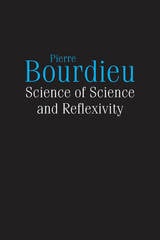
cover of Science of Science and Reflexivity

Science of Science and Reflexivity

Pierre Bourdieu

University of Chicago Press, 2004

Over the last four decades, the French sociologist Pierre Bourdieu produced one of the most imaginative and subtle bodies of social theory of the postwar era. When he died two years ago, he was considered to be a thinker on a par with Foucault, Barthes, and Lacan—a public intellectual as influential to his generation as Sartre was to his.

Science of Science and Reflexivity will be welcomed as a companion volume to Bourdieu's now seminal An Invitation to Reflexive Sociology. In this posthumous work, Bourdieu declares that science is in danger of becoming a handmaiden to biotechnology, medicine, genetic engineering, and military research—that it risks falling under the control of industrial corporations that seek to exploit it for monopolies and profit.

Science thus endangered can become detrimental to mankind. The line between pure and applied science, therefore, must be subjected to intense theoretical scrutiny. Bourdieu's goals in Science of Science and Reflexivity are to identify the social conditions in which science develops in order to reclaim its objectivity and to rescue it from relativism and the forces that might exploit it. In the grand tradition of scientific reflections on science, Bourdieu provides a sociological analysis of the discipline as something capable of producing transhistorical truths; he presents an incisive critique of the main currents in the study of science throughout the past half century; and he offers a spirited defense of science against encroaching political and economic forces.

A masterful summation of the principles underlying Bourdieu's oeuvre and a memoir of his own scientific journey, Science of Science and Reflexivity is a capstone to one of the most important and prodigious careers in the field of sociology.

[more]
cover of Shaky Foundations: The Politics-Patronage-Social Science Nexus in Cold War America

Shaky Foundations

The Politics-Patronage-Social Science Nexus in Cold War America

Solovey, Mark

Rutgers University Press, 2015

Numerous popular and scholarly accounts have exposed the deep impact of patrons on the production of scientific knowledge and its applications. Shaky Foundations provides the first extensive examination of a new patronage system for the social sciences that emerged in the early Cold War years and took more definite shape during the 1950s and early 1960s, a period of enormous expansion in American social science.

By focusing on the military, the Ford Foundation, and the National Science Foundation, Mark Solovey shows how this patronage system presented social scientists and other interested parties, including natural scientists and politicians, with new opportunities to work out the scientific identity, social implications, and public policy uses of academic social research. Solovey also examines significant criticisms of the new patronage system, which contributed to widespread efforts to rethink and reshape the politics-patronage-social science nexus starting in the mid-1960s.

Based on extensive archival research, Shaky Foundations addresses fundamental questions about the intellectual foundations of the social sciences, their relationships with the natural sciences and the humanities, and the political and ideological import of academic social inquiry.
[more]
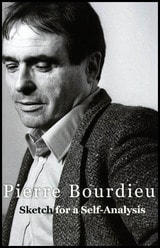
cover of Sketch for a Self-Analysis

Sketch for a Self-Analysis

Pierre Bourdieu

University of Chicago Press, 2008

Over the past four decades, French sociologist Pierre Bourdieu produced one of the most imaginative and subtle bodies of social theory of the postwar era. When he died in 2002, he was considered to be the most influential sociologist in the world and a thinker on a par with Foucault and Lévi-Strauss—a public intellectual as important to his generation as Sartre was to his.

Sketch for a Self-Analysis is the ultimate outcome of Bourdieu’s lifelong preoccupation with reflexivity. Vehemently not an autobiography, this unique book is instead an application of Bourdieu’s theories to his own life and intellectual trajectory; along the way it offers compelling and intimate insights into the most important French intellectuals of the time—including Foucault, Sartre, Aron, Althusser, and de Beauvoir—as well as Bourdieu’s own formative experiences at boarding school and his moral outrage at the colonial war in Algeria.

[more]
cover of Sociability and Its Enemies: German Political Theory After 1945

Sociability and Its Enemies

German Political Theory After 1945

Jakob Norberg

Northwestern University Press, 2014
Sociability and Its Enemies contributes both to contemporary studies of political theory and to discourse on postwar Germany by reconstructing the arguments concerning the nature and value of sociability as a form of interaction and interconnection particular to modern bourgeois society. Jakob Norberg argues that the writings of Hannah Arendt, Jürgen Habermas, Carl Schmitt, and the historian Reinhart Koselleck present conflicting responses to a hitherto neglected question or point of contention: whether bourgeois sociability should serve as a therapeutic practice and politically relevant ideal for postwar Germany. The book sheds light on previously neglected historical and conceptual connections among political theorists, and it enriches established narratives of postwar intellectual history.
[more]
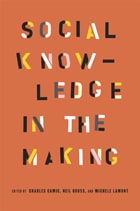
cover of Social Knowledge in the Making

Social Knowledge in the Making

Edited by Charles Camic, Neil Gross, and Michèle Lamont

University of Chicago Press, 2011

Over the past quarter century, researchers have successfully explored the inner workings of the physical and biological sciences using a variety of social and historical lenses. Inspired by these advances, the contributors to Social Knowledge in the Making turn their attention to the social sciences, broadly construed. The result is the first comprehensive effort to study and understand the day-to-day activities involved in the creation of social-scientific and related forms of knowledge about the social world.
 
The essays collected here tackle a range of previously unexplored questions about the practices involved in the production, assessment, and use of diverse forms of social knowledge. A stellar cast of multidisciplinary scholars addresses topics such as the changing practices of historical research, anthropological data collection, library usage, peer review, and institutional review boards. Turning to the world beyond the academy, other essays focus on global banks, survey research organizations, and national security and economic policy makers. Social Knowledge in the Making is a landmark volume for a new field of inquiry, and the bold new research agenda it proposes will be welcomed in the social science, the humanities, and a broad range of nonacademic settings.
[more]
cover of Social Science as Civic Discourse: Essays on the Invention, Legitimation, and Uses of Social Theory

Social Science as Civic Discourse

Essays on the Invention, Legitimation, and Uses of Social Theory

Richard Harvey Brown

University of Chicago Press, 1989
Richard Harvey Brown's pioneering explorations in the philosophy of social science and the theory of rhetoric reach a culmination in Social Science as Civic Discourse. In his earlier works, he argued for a logic of discovery and explanation in social science by showing that science and art both depend on metaphoric thinking, and he has applied that logic to society as a narrative text in which significant action by moral agents is possible. This new work is at once a philosophical critique of social theory and a social-theoretical critique of politics. Brown proposes to redirect the language and the mission of the social sciences toward a new discourse for a humane civic practice.
[more]
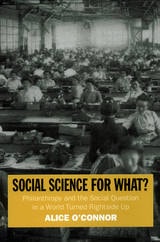
cover of Social Science for What?: Philanthropy and the Social Question in a World Turned Rightside Up

Social Science for What?

Philanthropy and the Social Question in a World Turned Rightside Up

Alice O'Connor

Russell Sage Foundation, 2007

Much like today, the early twentieth century was a period of rising economic inequality and political polarization in America. But it was also an era of progressive reform—a time when the Russell Sage Foundation and other philanthropic organizations were established to promote social science as a way to solve the crises of industrial capitalism. In Social Science for What? Alice O'Connor relates the history of philanthropic social science, exploring its successes and challenges over the years, and asking how these foundations might continue to promote progressive social change in our own politically divided era. The philanthropic foundations established in the early 1900s focused on research which, while intended to be objective, was also politically engaged. In addition to funding social science research, in its early years the Russell Sage Foundation also supported social work and advocated reforms on issues from child welfare to predatory lending. This reformist agenda shaped the foundation's research priorities and methods. The Foundation's landmark Pittsburgh Survey of wage labor, conducted in 1907-1908, involved not only social scientists but leaders of charities, social workers, and progressive activists, and was designed not simply to answer empirical questions, but to reframe the public discourse about industrial labor. After World War II, many philanthropic foundations disengaged from political struggles and shifted their funding toward more value-neutral, academic social inquiry, in the belief that disinterested research would yield more effective public policies. Consequently, these foundations were caught off guard in the 1970s and 1980s by the emergence of a network of right-wing foundations, which was successful in promoting an openly ideological agenda. In order to counter the political in-roads made by conservative organizations, O'Connor argues that progressive philanthropic research foundations should look to the example of their founders. While continuing to support the social science research that has contributed so much to American society over the past 100 years, they should be more direct about the values that motivate their research.  In this way, they will help foster a more democratic dialogue on important social issues by using empirical knowledge to engage fundamentally ethical concerns about rising inequality. O'Connor's message is timely: public-interest social science faces unprecedented challenges in this era of cultural warfare, as both liberalism and science itself have come under assault. Social Science for What? is a thought-provoking critique of the role of social science in improving society and an indispensable guide to how progressives can reassert their voice in the national political debate. A Volume in the Russell Sage Foundation's Centennial Series
[more]
cover of Social Science in America: The First Two Hundred Years

Social Science in America

The First Two Hundred Years

Edited by Charles M. Bonjean, Louis Schneider, and Robert L. Lineberry

University of Texas Press, 1976

This outstanding symposium concerns the development of the social sciences in the United States over its first two hundred years and was brought together by the editors of Social Science Quarterly as the journal's contribution to the nation's Bicentennial celebration.

Six prominent scholars representing history, economics, sociology, political science, anthropology, and geography were invited to write essays about the general topic of the progress of the social sciences, and to pursue original lines of thought as well. Each was asked to address three key questions regarding their own discipline: (1) the distinctive contributions made to each discipline by American scholars; (2) the impact of these contributions upon American society; and (3) the relationship of these contributions to the character or nature of life in the United States. The result is a coherent collection of considerable breadth and exceptional quality.

The essays include "Time's American Adventures: American History and Historical Writing since 1776" by William Goetzmann; "Economics: Its Direct and Indirect Impact in America, 1776-1976" by Joseph J. Spengler; "Sociology in America: The Experience of Two Centuries" by Robin M. Williams; "Understanding Political Life in America: The Contribution of Political Science" by Heinz Eulau; "Anthropology in America" by Walter Goldschmidt; and "Geography As a Social Science: Recent American Experience" by Kevin Cox.

[more]
cover of Social Science in the Crucible: The American Debate over Objectivity and Purpose, 1918–1941

Social Science in the Crucible

The American Debate over Objectivity and Purpose, 1918–1941

Mark C. Smith

Duke University Press, 1994

The 1920s and 30s were key decades for the history of American social science. The success of such quantitative disciplines as economics and psychology during World War I forced social scientists to reexamine their methods and practices and to consider recasting their field as a more objective science separated from its historical foundation in social reform. The debate that ensued, fiercely conducted in books, articles, correspondence, and even presidential addresses, made its way into every aspect of social science thought of the period and is the subject of this book.
Mark C. Smith first provides a historical overview of the controversy over the nature and future of the social sciences in early twentieth-century America and, then through a series of intellectual biographies, offers an intensive study of the work and lives of major figures who participated in this debate. Using an extensive range of materials, from published sources to manuscript collections, Smith examines "objectivists"—economist Wesley Mitchell and political scientist Charles Merriam—and the more "purposive thinkers"—historian Charles Beard, sociologist Robert Lynd, and political scientist and neo-Freudian Harold Lasswell. He shows how the debate over objectivity and social purpose was central to their professional and personal lives as well as to an understanding of American social science between the two world wars. These biographies bring to vivid life a contentious moment in American intellectual history and reveal its significance in the shaping of social science in this country.
[more]
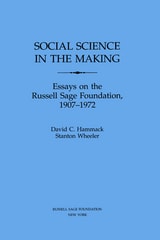
cover of Social Science in the Making: Essays on the Russell Sage Foundation, 1907-1972

Social Science in the Making

Essays on the Russell Sage Foundation, 1907-1972

David C. Hammack

Russell Sage Foundation, 1994
"Together, the historical essays in this volume provide the best account of how the Foundation moved away from its roots as a policy think tank.... This book of essays is the only extended treatment of the Foundation's history that includes both its distinguished early years and its emergence after World War II as the principal private foundation devoted to strengthening basic research in the social sciences." —ERIC WANNER, president of the Russell Sage Foundation, in his foreword to the volume
[more]
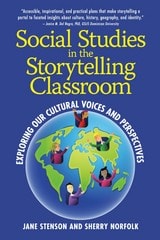
cover of Social Studies in the Storytelling Classroom: Exploring Our Cultural Voices and Perspectives

Social Studies in the Storytelling Classroom

Exploring Our Cultural Voices and Perspectives

Jane Stenson

Parkhurst Brothers, Inc., 2012

“Accessible, inspirational and practical plans that make storytelling a portal to multifaceted insights about culture, history, geography and identity.”

– Janice M. Del Negro, Ph.D., GSLIS Dominican University

[more]
cover of Social Theory In Archaeology

Social Theory In Archaeology

Michael Brian Schiffer

University of Utah Press, 2000

Since the debut of the New Archaeology in the 1960s, approaches to the science of interpreting the material past have proliferated.

Seeking to find common ground in an increasingly fractious and polarized discipline, a group of archaeological theorists representing various schools of thought gathered in a roundtable, during the fall of 1997. As organizer, Michael Schiffer sought to build bridges that might begin to span the conceptual chasms that have formed in archaeology during the past few decades. Many participants in the roundtable accepted the challenge of building bridges, but some rejected the premise that bridge building is desirable or feasible. Even so, every chapter in the resulting volume contributes something provocative or significant to the enterprise of constructing social theory in archaeology and setting the agenda for future social-theoretic research.

With contributions from every major school of thought, whether informed by evolutionary theory, feminism, chaos theory, behavioralism, or post-processualism, this volume serves as both handbook to an array of theoretical approaches and as a useful look at each school’s response to criticism.
[more]
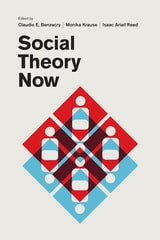
cover of Social Theory Now

Social Theory Now

Edited by Claudio E. Benzecry, Monika Krause, and Isaac Ariail Reed

University of Chicago Press, 2017

The landscape of social theory has changed significantly over the three decades since the publication of Anthony Giddens and Jonathan Turner’s seminal Social Theory Today. Sociologists in the twenty-first century desperately need a new agenda centered around central questions of social theory. In Social Theory Now, Claudio E. Benzecry, Monika Krause, and Isaac Ariail Reed set a new course for sociologists, bringing together contributions from the most distinctive sociological traditions in an ambitious survey of where social theory is today and where it might be going.

The book provides a strategic window onto social theory based on current research, examining trends in classical traditions and the cutting edge of more recent approaches. From distinctive theoretical positions, contributors address questions about how social order is accomplished; the role of materiality, practice, and meaning; as well as the conditions for the knowledge of the social world. The theoretical traditions presented include cultural sociology, microsociologies, world-system theory and post-colonial theory, gender and feminism, actor network and network theory, systems theory, field theory, rational choice, poststructuralism, pragmatism, and the sociology of conventions. Each chapter introduces a tradition and presents an agenda for further theoretical development. Social Theory Now is an essential tool for sociologists. It will be central to the discussion and teaching of contemporary social theory for years to come.

[more]
cover of Social Theory and the Study of Israelite Religion: Essays in Retrospect and Prospect

Social Theory and the Study of Israelite Religion

Essays in Retrospect and Prospect

Saul M. Olyan

SBL Press, 2012

This volume assesses past, theoretically engaged work on Israelite religion and presents new approaches to particular problems and larger interpretive and methodological questions. It gathers previously unpublished research by senior and mid-career scholars well known for their contributions in the area of social theory and the study of Israelite religion and by junior scholars whose writing is just beginning to have a serious impact on the field. The volume begins with a critical introduction by the editor. Topics of interest to the contributors include gender, violence, social change, the festivals, the dynamics of shame and honor, and the relationship of text to ritual. The contributors engage theory from social and cultural anthropology, sociology, postcolonial studies, and ritual studies. Theoretical models are evaluated in light of the primary data, and some authors modify or adapt theory to increase its utility for biblical studies. The contributors are Susan Ackerman, Stephen L. Cook, Ronald Hendel, T. M. Lemos, Nathaniel B. Levtow, Carol Meyers, Saul M. Olyan, Rüdiger Schmitt, Robert R. Wilson, and David P. Wright.
[more]
cover of State, Space, World: Selected Essays

State, Space, World

Selected Essays

Henri Lefebvre

University of Minnesota Press, 2009

One of the most influential Marxist theorists of the twentieth century, Henri Lefebvre pioneered the study of the modern state in an age of accelerating global economic integration and fragmentation. Shortly after the 1974 publication of his landmark book The Production of Space, Henri Lefebvre embarked on one of the most ambitious projects of his career: a consideration of the history and geographies of the modern state through a monumental study that linked several disciplines, including political science, sociology, geography, and history. 

State, Space, World collects a series of Lefebvre’s key writings on the state from this period. Making available in English for the first time the as-yet-unexplored political aspect of Lefebvre’s work, it contains essays on philosophy, political theory, state formation, spatial planning, and globalization, as well as provocative reflections on the possibilities and limits of grassroots democracy under advanced capitalism.

State, Space, World is an essential complement to The Production of Space, The Urban Revolution, and The Critique of Everyday Life. Lefebvre’s original and prescient analyses that emerge in this volume are urgently relevant to contemporary debates on globalization and neoliberal capitalism.
[more]
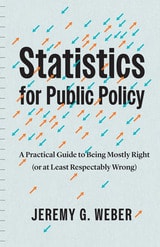
cover of Statistics for Public Policy: A Practical Guide to Being Mostly Right (or at Least Respectably Wrong)

Statistics for Public Policy

A Practical Guide to Being Mostly Right (or at Least Respectably Wrong)

Jeremy G. Weber

University of Chicago Press, 2024

A long-overdue guide on how to use statistics to bring clarity, not confusion, to policy work.

Statistics are an essential tool for making, evaluating, and improving public policy. Statistics for Public Policy is a crash course in wielding these unruly tools to bring maximum clarity to policy work. Former White House economist Jeremy G. Weber offers an accessible voice of experience for the challenges of this work, focusing on seven core practices: 

  • Thinking big-picture about the role of data in decisions
  • Critically engaging with data by focusing on its origins, purpose, and generalizability
  • Understanding the strengths and limits of the simple statistics that dominate most policy discussions
  • Developing reasons for considering a number to be practically small or large  
  • Distinguishing correlation from causation and minor causes from major causes
  • Communicating statistics so that they are seen, understood, and believed
  • Maintaining credibility by being right (or at least respectably wrong) in every setting
Statistics for Public Policy dispenses with the opacity and technical language that have long made this space impenetrable; instead, Weber offers an essential resource for all students and professionals working at the intersections of data and policy interventions. This book is all signal, no noise.
[more]
cover of Studies on the Abuse and Decline of Reason: Text and Documents

Studies on the Abuse and Decline of Reason

Text and Documents

F. A. Hayek

University of Chicago Press, 2010

Studies on the Abuse and Decline of Reason is a series of fascinating essays on the study of social phenomena. How to best and most accurately study social interactions has long been debated intensely, and there are two main approaches: the positivists, who ignore intent and belief and draw on methods based in the sciences; and the nonpositivists, who argue that opinions and ideas drive action and are central to understanding social behavior. F. A. Hayek’s opposition to the positivists and their claims to scientific rigor and certainty in the study of human behavior is a running theme of this important book.

Hayek argues that the vast number of elements whose interactions create social structures and institutions make it unlikely that social science can predict precise outcomes. Instead, he contends, we should strive to simply understand the principles by which phenomena are produced. For Hayek this modesty of aspirations went hand in hand with his concern over widespread enthusiasm for economic planning. As a result, these essays are relevant to ongoing debates within the social sciences and to discussion about the role government can and should play in the economy.
[more]
cover of Survey Research in the Social Sciences

Survey Research in the Social Sciences

Charles Y. Glock

Russell Sage Foundation, 1967
Survey research was for a long time thought of primarily as a sociological tool. It is relatively recently that this research method has been adopted by other social sciences and related professional disciplines. The amount and quality of its use, however, vary considerably from field to field. This volume describes the elementary logic of survey design and analysis and provides, for each discipline, an evaluation of how survey research has been used and conceivably may be used to deal with the central problems of each field.
[more]
cover of Surveying Subjective Phenomena

Surveying Subjective Phenomena

Charles Turner

Russell Sage Foundation, 1984

In January 1980 a panel of distinguished social scientists and statisticians assembled at the National Academy of Sciences to begin a thorough review of the uses, reliability, and validity of surveys purporting to measure such subjective phenomena as attitudes, opinions, beliefs, and preferences. This review was prompted not only by the widespread use of survey results in both academic and non-academic settings, but also by a proliferation of apparent discrepancies in allegedly equivalent measurements and by growing public concern over the value of such measurements. This two-volume report of the panel's findings is certain to become one of the standard works in the field of survey measurement. Volume I summarizes the state of the art of surveying subjective phenomena, evaluates contemporary measurement programs, examines the uses and abuses of such surveys, and candidly assesses the problems affecting them. The panel also offers strategies for improving the quality and usefulness of subjective survey data. In volume II, individual panel members and other experts explore in greater depth particular theoretical and empirical topics relevant to the panel's conclusions. For social scientists and policymakers who conduct, analyze, and rely on surveys of the national state of mind, this comprehensive and current review will be an invaluable resource.
[more]
cover of Surveying Subjective Phenomena

Surveying Subjective Phenomena

Charles Turner

Russell Sage Foundation, 1984

In January 1980 a panel of distinguished social scientists and statisticians assembled at the National Academy of Sciences to begin a thorough review of the uses, reliability, and validity of surveys purporting to measure such subjective phenomena as attitudes, opinions, beliefs, and preferences. This review was prompted not only by the widespread use of survey results in both academic and non-academic settings, but also by a proliferation of apparent discrepancies in allegedly equivalent measurements and by growing public concern over the value of such measurements. This two-volume report of the panel's findings is certain to become one of the standard works in the field of survey measurement. Volume I summarizes the state of the art of surveying subjective phenomena, evaluates contemporary measurement programs, examines the uses and abuses of such surveys, and candidly assesses the problems affecting them. The panel also offers strategies for improving the quality and usefulness of subjective survey data. In volume II, individual panel members and other experts explore in greater depth particular theoretical and empirical topics relevant to the panel's conclusions. For social scientists and policymakers who conduct, analyze, and rely on surveys of the national state of mind, this comprehensive and current review will be an invaluable resource.
[more]
cover of Surveying Subjective Phenomena

Surveying Subjective Phenomena

Charles Turner

Russell Sage Foundation, 1984
In January 1980 a panel of distinguished social scientists and statisticians assembled at the National Academy of Sciences to begin a thorough review of the uses, reliability, and validity of surveys purporting to measure such subjective phenomena as attitudes, opinions, beliefs, and preferences. This review was prompted not only by the widespread use of survey results in both academic and non-academic settings, but also by a proliferation of apparent discrepancies in allegedly equivalent measurements and by growing public concern over the value of such measurements. This two-volume report of the panel's findings is certain to become one of the standard works in the field of survey measurement. Volume I summarizes the state of the art of surveying subjective phenomena, evaluates contemporary measurement programs, examines the uses and abuses of such surveys, and candidly assesses the problems affecting them. The panel also offers strategies for improving the quality and usefulness of subjective survey data. In volume II, individual panel members and other experts explore in greater depth particular theoretical and empirical topics relevant to the panel's conclusions. For social scientists and policymakers who conduct, analyze, and rely on surveys of the national state of mind, this comprehensive and current review will be an invaluable resource.
[more]
cover of Sylvia Wynter: On Being Human as Praxis

Sylvia Wynter

On Being Human as Praxis

Katherine McKittrick, ed.

Duke University Press, 2015

The Jamaican writer and cultural theorist Sylvia Wynter is best known for her diverse writings that pull together insights from theories in history, literature, science, and black studies, to explore race, the legacy of colonialism, and representations of humanness. Sylvia Wynter: On Being Human as Praxis is a critical genealogy of Wynter’s work, highlighting her insights on how race, location, and time together inform what it means to be human. The contributors explore Wynter’s stunning reconceptualization of the human in relation to concepts of blackness, modernity, urban space, the Caribbean, science studies, migratory politics, and the interconnectedness of creative and theoretical resistances. The collection includes an extensive conversation between Sylvia Wynter and Katherine McKittrick that delineates Wynter’s engagement with writers such as Frantz Fanon, W. E. B. DuBois, and Aimé Césaire, among others; the interview also reveals the ever-extending range and power of Wynter’s intellectual project,  and elucidates her attempts to rehistoricize humanness as praxis.
[more]