Results by title
428 books match the query 'Stories' and 74 start with s
Safe Places
StoriesKerry Dolan
University of Massachusetts Press, 2022
Sailing with Noah
Stories from the World of ZoosJeffrey P. Bonner
University of Missouri Press, 2013
Saints, Statues, and Stories
A Folklorist Looks at the Religious Art of SonoraJames S. Griffith
University of Arizona Press, 2019
So describes well-known and beloved folklorist James S. Griffith as he takes us back through the decades to a town in northern Sonora where a statue is saved—and in so doing, a community is saved as well.
In Saints, Statues, and Stories Griffith shares stories of nearly sixty years of traveling through Sonora. As we have come to expect through these journeys, “Big Jim”—as he is affectionately known by many—offers nothing less than the living traditions of Catholic communities. Themes of saints as agents of protection or community action are common throughout Sonora: a saint coming out of the church to protect the village, a statue having a say in where it resides and paying social calls to other communities, or a beloved image rescued from destruction and then revered on a private altar. A patron saint saves a village from outside attackers in one story—a story that has at least ten parallels in Sonora’s former mission communities. Details may vary, but the general narrative remains the same: when hostile nonbelievers attack the village, the patron saint of the church foils them.
Griffith uncovers the meanings behind the devotional uses of religious art from a variety of perspectives—from artist to audience, preservationist to community member. The religious artworks transcend art objects, Griffith believes, and function as ways of communicating between this world and the next. Setting the stage with a brief geography, Griffith introduces us to roadside shrines, artists, fiestas, saints, and miracles. Full-color images add to the pleasure of this delightful journey through the churches and towns of Sonora.
Saving Orchids
Stories of Species Survival in a Changing WorldPhilip Seaton and Lawrence W. Zettler
University of Chicago Press, 2025
A gorgeously illustrated ode to the beauty and significance of orchids—and to those fighting to save these unique plants across the globe.
Until recently, a myriad of lifeforms enriched our lives. In some places, listening to a nighttime chorus of frogs in the neighborhood marsh was an archetypal touchstone of childhood. Children would search for tadpoles, just steps away from native Lady’s Tresses orchids. Year by year, the chorus became quieter. Today, only a few frogs and orchids remain. Is this the world we want our children to inherit? Do we want orchids to slip through our fingers and, eventually, to vanish?
For biologists Philip Seaton and Lawrence W. Zettler, and the intrepid orchid defenders they introduce in this book, the answer is no. Seaton and Zettler have traveled the world over the past three decades, studying orchids—flagship species for plant conservation. Stunningly illustrated, this book is a culmination of stories about the people—young and old alike—dedicated to protecting these remarkable plants from extinction. In the 19th century, collectors removed, shipped, and sold vast numbers of orchids from the wild. Today, scientists strive to reverse this harm—to protect and rebuild remnants of orchids’ original habitats against human disruption, including climate change. Seaton and Zettler reveal these plants’ bizarre pollination partners, risky liaisons with fungi, and adaptation to human domestication to show that learning orchids’ scientific secrets—and finding human helpers—is key to these plants’ survival.
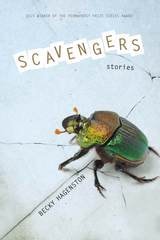
Scavengers
StoriesBecky Hagenston
University of Alaska Press, 2016
These are the people and situations—where the familiar and bizarre intermix—that animate Becky Hagenston’s stories in Scavengers. From Mississippi to Arizona to Russia, characters find themselves faced with a choice: make sense of the past, or run from it. But Hagenston reminds us that even running can never be pure—so which parts of your past do you decide to hold on to? A brilliant collection from a master of short fiction, Scavengers is surprising, strange, and moving by turns—and wholly unforgettable.

Scientific Practice
Theories and Stories of Doing PhysicsEdited by Jed Z. Buchwald
University of Chicago Press, 1995
This book examines small-scale experiment in physics, in particular the relation between theory and practice. The contributors focus on interactions among the people, materials, and ideas involved in experiments—factors that have been relatively neglected in science studies.
The first half of the book is primarily philosophical, with contributions from Andrew Pickering, Peter Galison, Hans Radder, Brian Baigrie, and Yves Gingras. Among the issues they address are the resources deployed by theoreticians and experimenters, the boundaries that constrain theory and practice, the limits of objectivity, the reproducibility of results, and the intentions of researchers. The second half is devoted to historical case studies in the practice of physics from the early nineteenth to the early twentieth century. These chapters address failed as well as successful experimental work ranging from Victorian astronomy through Hertz's investigation of cathode rays to Trouton's attempt to harness the ether. Contributors to this section are Jed Z. Buchwald, Giora Hon, Margaret Morrison, Simon Schaffer, and Andrew Warwick.
With a lucid introduction by Ian Hacking, and original articles by noted scholars in the history and philosophy of science, this book is poised to become a significant source on the nature of small-scale experiment in physics.
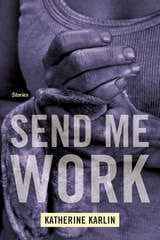
Send Me Work
StoriesKatherine Karlin
Northwestern University Press, 2011
Unlike the heroines of domestic fiction, Katherine Karlin's women face their biggest challenges outside of the house. The characters in this debut collection encompass a broad range of contemporary American experiences: a struggling young woman in post-Katrina New Orleans persuades a welder to teach her his trade; an orchestra oboist hears a confession from a beloved teacher; an idealistic aerobics instructor decamps for revolution- era Nicaragua to pick coffee on a farming collective.
In each of these stories, Karlin offers rare insight into the place of work in the lives of women, her narrators keenly observant and attuned to the humor that arises when life doesn't turn out as planned. But even more remarkable is the fullness with which she renders characters who make us wonder how they've escaped the notice of other writers. In unadorned prose that evokes complete worlds with deceptive ease, Karlin shows us people immersed in the negotiations of survival, just at the edge of being able to make sense of their lives.
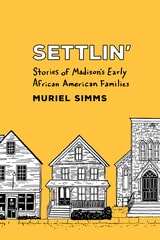
Settlin’
Stories of Madison’s Early African American FamiliesMuriel Simms
Wisconsin Historical Society Press, 2018
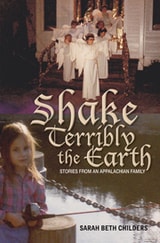
Shake Terribly the Earth
Stories from an Appalachian FamilySarah Beth Childers
Ohio University Press, 2013
In a thoughtful, humorous voice born of Appalachian storytelling, Childers brings to life in these essays events that affected the entire region: large families that squeezed into tiny apartments during the Great Depression, a girl who stepped into a rowboat from a second-story window during Huntington’s 1937 flood, brothers who were whisked away to World War II and Vietnam, and a young man who returned home from the South Pacific and worked his life away as a railroad engineer.
Childers uses these family tales to make sense of her personal journey and find the joy and clarity that often emerge after the earth shakes terribly beneath us.
Shifting Blind Identities in Higher Education
Stories of SelfhoodEdited by Alison Cook-Sather
Lever Press, 2026
Shifting Blind Identities in Higher Education features accounts of how blindness and low vision intersect with other dimensions of identity for both students and faculty in higher education. Contributors from a range of institutional contexts illuminate “common but not comparable” experiences, as well as importantly different ones, and explore different intersections of identity while navigating higher education spaces. Each chapter addresses these questions: What is the relationship between seeing and selfhood? What choices do students and faculty make about how they experience and represent the intersections of their vision condition and other dimensions of their identity? What do authors wish others to understand, consider, let go of, and/or embrace regarding their experiences of navigating higher education with blindness or low vision?
Writing in their own unique voices, each author shares details of their lived experiences; analyses of how those are shaped by institutions, social norms, and individuals; and offers action steps for how everyone can make higher education more welcoming to and supportive of not only those with blindness or low vision but also those with a wide diversity of identities and experiences. Shifting Blind Identities in Higher Education inspires both insight and action into cultivating a more accessible and inclusive space in higher education.
Ships and Shipwrecks
Stories from the Great LakesRichard Gebhart
Michigan State University Press, 2022
Silence on the Mountain
Stories of Terror, Betrayal, and Forgetting in GuatemalaDaniel Wilkinson
Duke University Press, 2004
Decades of terror-inspired fear have led the Guatemalans to adopt a survival strategy of silence so complete that it verges on collective amnesia. The author’s great triumph is that he finds a way for people to tell their stories, and it is through these stories—dramatic, intimate, heartbreaking—that we are shown the anatomy of a thwarted revolution that has relevance not only to Guatemala but also to countless places around the world where terror has been used as a political tool.
Sin Eaters
StoriesCaleb Tankersley
University of Alaska Press, 2022
Magical, heartfelt, and surprisingly funny, Sin Eaters paints a tumultuous picture of religion and repression while hinting at the love and connection that come with healing. The powerful stories in Caleb Tankersley’s debut collection illuminate the shadowy edges of the American Midwest, featuring aspects of religion, sex and desire, monsters and magic, and humor.
Tankersley’s characters—including swamp creatures looking for love, pothead pastors, ghosts obsessed with TV, and a Jesus made of rust—arrive at the crossroads of pleasure and hunger in a world that is equal parts playful, hopeful, and dark. In “Never Been More in Love” a man must come to terms with his wife’s degenerative illness. “Uncle Bob” explores suicide attempts as a family heirloom. And the titular story follows a woman who must accept her monstrous role to find redemption for herself and her small town.
Sin Eaters is a fight for authenticity in a world that is mysterious, muggy, and punctured by violence. This stunning collection full of complex themes will both challenge and delight.

Singing for Our Lives
Stories from the Street ChoirsCampaign Choirs Writing Collective
Intellect Books, 2018
The book intends to inspire the reader to engage with this world: to find out more, to join a choir in their community, to enlist their local street choir to support campaigns for social change and, more generally, to mobilize artistic creativity in progressive social movements.
It is an introduction to street choirs and their history, exploring origins in and connections with other social movements, for example the Workers Education Association, the Clarion movement, Big Flame and the Social Forum movement. The book identifies the political nodes where choir histories intersect, notably Greenham Common, the Miners’ Strike, anti-apartheid and Palestinian struggles. The title of the book is taken from a song by the respected American musician and activist Holly Near, and is popular in the repertoire of many street choirs. Exploring the role of street choirs in political culture, Singing For Our Lives introduces this neglected world to a wider public, including activists and academics.
Signing for Our Lives also elaborates the personal stories and experiences of people who participate in street choirs, and the unique social practices created within them. The book tells the important, if often overlooked, story of how making music can contribute to non-violent, just and sustainable social transitions.
www.singing4ourlives.net/about.html
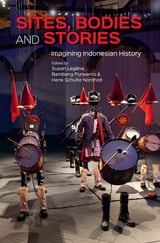
Sites, Bodies and Stories
Imagining Indonesian HistoryEdited by Susan Legêne, Bambang Purwanto, and Henk Schulte Nordholt
National University of Singapore Press, 2015
Contemporary heritage formation in Indonesia is intrinsically linked to a canon of Indonesian art and culture developed during Dutch colonial rule, institutionalized within Indonesia’s heritage infrastructure and in the Netherlands, and echoed in museums and exhibitions throughout the world. The authors in this volume acknowledge colonial legacies but argue against a colonial determinism, considering instead how contemporary heritage initiatives can lead to new interpretations of the past.

Sleep Tight Satellite
StoriesCarol Guess
Tupelo Press, 2023
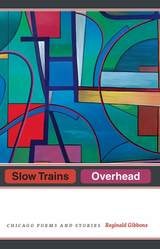
Slow Trains Overhead
Chicago Poems and StoriesReginald Gibbons
University of Chicago Press, 2010
Few people writing today could successfully combine an intimate knowledge of Chicago with a poet’s eye, and capture what it’s really like to live in this remarkable city. Embracing a striking variety of human experience—a chance encounter with a veteran on Belmont Avenue, the grimy majesty of the downtown El tracks, domestic violence in a North Side brownstone, the wide-eyed wonder of new arrivals at O’Hare, and much more—these new and selected poems and stories by Reginald Gibbons celebrate the heady mix of elation and despair that is city life. With Slow Trains Overhead, he has rendered a living portrait of Chicago as luminously detailed and powerful as those of Nelson Algren and Carl Sandburg.
Gibbons takes the reader from museums and neighborhood life to tense proceedings in Juvenile Court, from comically noir-tinged scenes at a store on Clark Street to midnight immigrants at a gas station on Western Avenue, and from a child's piggybank to nature in urban spaces. For Gibbons, the city’s people, places, and historical reverberations are a compelling human array of the everyday and the extraordinary, of poverty and beauty, of the experience of being one among many. Penned by one of its most prominent writers, Slow Trains Overhead evokes and commemorates human life in a great city.
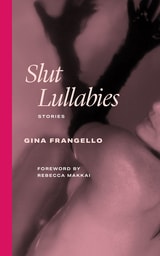
Slut Lullabies
StoriesGina Frangello, Rebecca Makkai
Northwestern University Press, 2026
Through beauty, horror, humor, and chaos, Gina Frangello’s electric stories mine the human experience. A gay Latino man whose pious relatives are boycotting his commitment ceremony becomes caught up in hypocrisy and splendor when his lover’s Waspy mother hires a glitzy wedding coordinator. A desperate teen “seduces” her teacher in order to blackmail him into funding her young stepmother’s escape from their violent home. A wife turns to infidelity and drugs to distract her from chronic pain following an accident. A teenage boy attempts atonement in Amsterdam after having exploited and betrayed his naive girlfriend at home. A socialite must confront her dark past as her husband’s deteriorating illness erodes both her bank account and social standing.
Intimate and raw, this new edition of Frangello’s short fiction includes two previously unpublished stories. A foreword by Rebecca Makkai explains how Frangello’s incendiary work has opened the door for writing about deeply flawed and fascinating women.
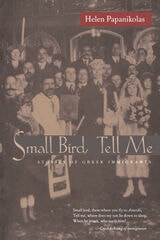
Small Bird Tell Me
Stories Of Greek ImmigrantsHelen Papanikolas
Ohio University Press, 1994
Small Craft Warnings
StoriesKate Braverman
University of Nevada Press, 1998
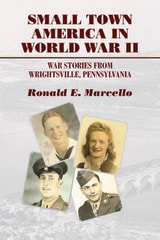
Small Town America in World War II
War Stories from Wrightsville, PennsylvaniaRonald E. Marcello
University of North Texas Press, 2014
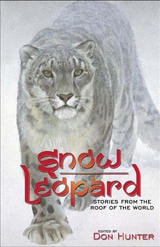
Snow Leopard
Stories from the Roof of the WorldDon Hunter
University Press of Colorado, 2012
-Robert Bateman, from the foreword.
Like no other large cat, the snow leopard evokes a sense of myth and mysticism, strength and spirit shrouded in a snowy veil, seldom seen but always present. Giving a voice to the snow leopard, this collection of powerful first person accounts from an impressive cadre of scientist-adventurers grants readers a rare glimpse of this elusive cat and the remarkable lives of those personally connected to its future. These Stories from the Roof of the World resonate with adventure, danger, discovery, and most importantly hope for this magnificent big cat.
Very little has been written about this mystical creature. Its remote and rugged habitat among the mightiest collection of mountains on Earth, proclaimed "The Roof of the World" by awe-struck explorers, make it one of the most difficult and expensive animals to study. After a millennia thriving in peaceful isolation, human encroachment, poaching and climate change threaten the snow leopards survival. Speaking on behalf of the snow leopard, these heart-felt stories will inform and inspire readers, creating the vital connection needed to move people toward action in saving this magnificent cat. Contributors include: Ali Abutalip Dahashof, Som B. Ale, Avaantseren Bayarjargal, Yash Veer Bhatnagar, Joseph L. Fox, Helen Freeman, Darla Hillard, Don Hunter, Shafqat Hussain, Rodney Jackson, Jan E. Janecka, Mitchell Kelly, Ashiq Ahmad Khan, Nasier A. Kitchloo, Evgeniy P. Kashkarov, Peter Matthiessen, Kyle McCarthy, Tom McCarthy, George B. Schaller, and Rinchen Wangchuk
Softie
StoriesMegan Howell
West Virginia University Press, 2024
2025 PEN America Finalist, Robert W. Bingham Prize for Debut Short Story Collection
2025 National Book Award Honoree, "5 Under 35"
2025 Gold Medal, Independent Publishing Book Awards (IPPY): Short Fiction
In beautifully melancholy stories of magical realism, the women and girls in Softie transform their bodies and test their sanity, trying to find meaning in the loneliest of places.A former child star haunted by a past she can't remember. An Afro-French girl with an obsession for ear lobes. A loner whose only friend is hiding a terrible, otherworldly secret. Each of these stories shares situations that are sometimes fantastical, sometimes commonplace, but always strange. From a Corsican vacation town in its off-season to hospital rooms and a seedy hotel suite in Chicago, experience the every day come fully untethered from reality.
Some Kinds of Love
StoriesSteve Yates
University of Massachusetts Press, 2013

Songs At the River's Edge
Stories From a Bangladeshi VillageKaty Gardner
Pluto Press, 1997
Sound of Holding Your Breath
StoriesNatalie Sypolt
West Virginia University Press, 2018
The residents of The Sound of Holding Your Breath could be neighbors, sharing the same familiar landscapes of twenty-first-century Appalachia—lake and forest, bridge and church, cemetery and garden, diner and hair salon. They could be your neighbors—average, workaday, each struggling with secrets and losses, entrenched in navigating the complex requirements of family in all its forms.
Yet tragedy and violence challenge these unassuming lives: A teenage boy is drawn to his sister’s husband, an EMT searching the lake for a body. A brother, a family, and a community fail to confront the implications of a missing girl. A pregnant widow spends Thanksgiving with her deceased husband’s family. Siblings grapple with the death of their sister-in-law at the hands of their brother. And in the title story, the shame of rape ruptures more than a decade later.
Accidents and deaths, cons and cover-ups, abuse and returning veterans—Natalie Sypolt’s characters wrestle with who they are during the most trying situations of their lives.

Sounding Thunder
The Stories of Francis PegahmagabowBrian D. McInnes
University of Manitoba Press, 2016
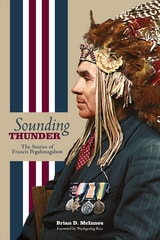
Sounding Thunder
The Stories of Francis PegahmagabowBrian D. McInnes
Michigan State University Press, 2016
Francis Pegahmagabow’s stories describe many parts of his life and are characterized by classic Ojibwe narrative. They reveal aspects of Francis’s Anishinaabe life and worldview. Interceding chapters by Brian McInnes provide valuable cultural, spiritual, linguistic, and historical insights that give a greater context and application for Francis’s words and world. Presented in their original Ojibwe as well as in English translation, the stories also reveal a rich and evocative relationship to the lands and waters of Georgian Bay.
In Sounding Thunder, Brian McInnes provides a new perspective on Pegahmagabow and his experience through a unique synthesis of Ojibwe oral history, historical record, and Pegahmagabow family stories.
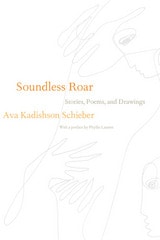
Soundless Roar
Stories, Poems, and DrawingsAva Kadishson Schieber
Northwestern University Press, 2002
Schieber's drawings, paintings, poetry, and prose are all intimate reflections of one another. Her experience forged the unusual sense of time that shapes Schieber's stories. In her preface, Phyllis Lassner writes: "The timetable of Ava's stories often consists of circles within circles, of patterns of an intertwined past, the past present of hiding, and the present looking back at those distinctly separate but inseparable pasts."
Special Election
StoriesBrock Clarke
Acre Books, 2025
In Special Election, ingenious fictions target our all-too-familiar preoccupations and vulnerabilities—belonging, (dis)engagement, the struggle for self-worth, the difficulty of loving and being loved, the banality and absurdity of existence. Brock Clarke’s rapier wit, inexhaustible imagination, and brilliant leaps of illogic transform his characters’ desperation and distress into tragicomic delight. In the title story, Lawrence Welk is ousted from heaven to run for governor in present-day North Dakota. In “One Goes Where One Is Needed,” we follow the former Provisional Coalition Administrator of post-liberation Iraq, now a youth ski instructor at Okemo Mountain in Vermont. In “The Slim Jim,” the protagonist finds himself (literally and figuratively) very slowly choking to death on a frozen microwavable burrito.
“There is something wrong with me,” states the narrator of “The Big Book of Useless Saturdays.” This could be said of all the characters in Special Election, and through loopy misdirection and mordant observation, Clarke devotes himself to showing his characters and his readers exactly what is wrong. Yet the sharpness of his attention and lavish ludicrousness of his storylines belie a sneaking affection for this imperfect, disappointing world filled with imperfect, disappointing humans. Though Clarke has been compared to such greats as Barthelme, Bellow, and Saunders, the nine stories in Special Election vibrate at a frequency all his own, showcasing the strengths of one of our most gifted comic writers.
Spoiling the Stories
The Rise of Israeli Women's FictionTamar Merin
Northwestern University Press, 2016

Staff Development Strategies That Work!
Stories and Strategies from New LibrariansAmerican Library Association, 2009
Stick Houses
StoriesMatthew L.M. Fletcher
Michigan State University Press, 2025
These stories explore themes of home and belonging, and how Native people are not just one thing; they are both Native and non-Native blood. Some are deeply connected to their Anishinaabe heritage, while others have suffered a complete loss of their culture. Many Native people are conflicted about their background and suffer intergenerational trauma. These stories originate in dynamic environments and situations such as airports, college, Indian lawyering, and high school baseball games.
Stone Baby
StoriesMichelle Sacks
Northwestern University Press, 2017
Working on a large canvas that encompasses the extremes of rural Africa and urban London, material poverty and the surfeit of privilege, Sacks writes stories peopled by characters whose lives occasionally crisscross, with a protagonist in one story playing a deceptively small role in another. The stories artfully illuminate the rich interconnections and clashes that occur as her characters strike out boldly, yet find themselves at the mercy of capricious waves of circumstance.
Stone Baby explores movement, loss, and reinvention in the lives of people who are in the wrong place, in the wrong body, perhaps in the wrong life—it encapsulates an engrossing and urgent message in our age of migration and dislocation.
Stories From Under The Sky
John Madson
University of Iowa Press, 2006
Whatever the topic, Madson’s love of nature shines through, be it coon hunting or an explanation of the incredible bird machine. His obvious affection is tempered with the recognition that not everything “natural” is a pretty sight. All of which leaves readers with a better understanding of life under the sky.
Stories No One Hopes Are about Them
A. J. Bermudez
University of Iowa Press, 2022
At once playfully dark and slyly hopeful, Stories No One Hopes Are about Them explores convergences of power, privilege, and place. Characters who are ni de aquí, ni de allá—neither from here nor there—straddle competing worlds, disrupt paradigms, and transition from objects of other people’s stories to active subjects and protagonists of their own. Narratives of humanity and environment entwine with nuanced themes of colonization, queerness, and evolution at the forefront. Big things happen in this collection. But it’s also a collection of small intimacies: misremembered names, chipped teeth, and private rituals; unexpected alliances and barely touched knees beneath uniform skirts; minutiae of the natural world; incidents that quietly, achingly, and delightfully transgress the familiar.
Stories Of An Imaginary Childhood
Melvin Jules Bukiet
University of Wisconsin Press, 2002
In Stories of an Imaginary Childhood Melvin Jules Bukiet inscribes the world that might have been his own if not for the catastrophe that destroyed most of Jewish life in eastern Europe during the 1940s. Set before the Holocaust in the tiny Polish shtetl of Proszowice, each interconnected story follows the young protagonist through the pleasures and humiliations of childhood and the rites of manhood, as he fights against historical, social, and psychological forces that threaten to pull him down.
"Bukiet proves that he is an expert at the [short story] form. His stories lift and soar, encompassing a world of truth in just a few pages. His characters have flesh and life. . . . Bukiet’s topics are varied and universal: first love, growing up, trying to get along with people who are different. Each of these is approached with great humor and a deep respect for life experience."—Daniel Neman, Richmond News Leader
"Jewish-American fiction of a new order, one able to bring the best that has been thought and said about voice and literary texture to the service of a world with richer meaning and a deeper resonance."—Sanford Pinsker, Midstream
"Bukiet is enchanting, original, and thoroughly irresistible in any disguise. Stories of an Imaginary Childhood is an extraordinary achievement, an immensely enjoyable collection of truly remarkable tales."—Susan Miron, Miami Herald

Stories Of Raymond Carver
A Critical StudyKirk Nesset
Ohio University Press, 1994
In this comprehensive study of Carver, Nesset discusses the relationship of minimalism and postmodern trends and the rise of new realism. By locating Carver in the gallery of American letters, Nesset shows him to be at once more simple and more complex than we might have believed, skillfully laying the groundwork for Carver studies to come.

Stories and Histories of Islamic Art in Italy
Supplements to the Memoirs of the American Academy in RomeEdited by Silvia Armando
University of Michigan Press, 2027
In the past decades, scholarship on Islamic art has challenged the parameters of the discipline, but in the process, the Italian context has often been overlooked. Gathering the voices of prominent international specialists, the book fills an important gap by presenting new research on topics ranging from the medieval to modern periods. Contributors investigate how Islamic artifacts were collected, categorized, and studied; examine Orientalism(s) in Italy and beyond; reconstruct the genealogies of scholars who helped found and develop the academic discipline and museum practices; and offer new scholarship on ceramics, textiles, metalwork, rock crystals, numismatics, and archaeology. The volume reveals the interchange between romantic reveries and more “scientific” Islamic art studies. Following the model of counter-Orientalism proposed by Karla Mallette, it raises questions of identity, otherness, and self-representation within a cultural and geographical context where the Islamic “component” was—and is—perceived either as exotic or integral to Italian identity.
With over 100 illustrations, Stories and Histories of Islamic Art in Italy explores how amateurs, artists, and intellectuals perceived of, depicted, and wrote about the Islamic world, offering new ways to examine Italy’s Islamic past.
Stories and Stone
Writing the Ancestral Pueblo HomelandReuben Ellis
University of Arizona Press, 1997
Collected here are more than fifty selections from a striking body of literature about the prehistoric Southwest: essays, stories, travelers' reports, and poems spanning more than four centuries of visitation. They include timeless writings such as John Wesley Powell's The Exploration of the Colorado River and Its Tributaries and Frank Hamilton Cushing's "Life at Zuni," plus contemporary classics ranging from Colin Fletcher's The Man Who Walked Through Time to Wallace Stegner's Beyond the Hundredth Meridian to Edward Abbey's "The Great American Desert." Reuben Ellis's introduction brings contemporary insight and continuity to the collection, and a section on "reading in place" invites readers to experience these great works amidst the landscapes that inspired them. For anyone who loves to roam ancient lands steeped in mystery, Stories and Stone is an incomparable companion that will enhance their enjoyment.
Stories as Equipment for Living
Last Talks and Tales of Barbara MyerhoffBarbara Myerhoff
University of Michigan Press, 2007
Barbara Myerhoff's groundbreaking work in reflexivity and narrative ethnography broke with tradition by focusing not on the raw ethnographic data, but on her interaction with those she studied. Myerhoff's unfinished projects, including her final talks on storytelling, ritual, and the "culture of aging and Yiddishkeit," offer a magisterial summary of her life's work.
"The beauty of Stories as Equipment for Living is the quality of being a compilation of rescued fragments, bits and pieces of a great master's writing and thinking that were coming towards synthesis but had never reached a finished form prior to her death. This collection is an examination of the place of narrative in human life, the synthetic nature of culture and the constant search for visibility particularly by those relegated for one reason or another to the margins. A thought-provoking book worthy of extended reflection."
---Jack Kugelmass, Professor of Anthropology and Director of Jewish Studies, University of Florida
"Stories as Equipment for Living achieves a nice balance between preserving Myerhoff's work in its original form and reconstructed contexts, but presenting it in a manner relevant to readers a generation after her death. The book documents Myerhoff's growing involvement with Jewish culture, the actual process of anthropological work through field notes, and the picture of how she always was bouncing the fine details of this combined professional and personal venture off the 'big questions' of anthropology in its broadest sense."
---Harvey E. Goldberg, Professor of Sociology and Anthropology, Hebrew University, Israel
"These essays capture the rhythm of Barbara Myerhoff's words and her vivid and distinctive train of thought, bringing the reader into the classroom of one of anthropology's finest lecturers. As an anthropologist with a poet's gift for language, she utilizes the tools of ethnography and extraordinary powers of observation---a remarkable 'ethnographic eye'---to explore the outward expressions and inner lives of the Fairfax neighborhood of L.A. These stories are not only glorious introductions to the study of culture, but provide in their revelations a reason for studying it. They are required reading for anyone passionate to know what an anthropologist can teach us about communities and ultimately about ourselves."
---Steve Zeitlin, Director, City Lore: The New York Center for Urban Folk Culture
"Master of the third voice, the voice of collaboration, Myerhoff is at once a consummate listener and inspired storyteller. This book offers a rare and luminous opening into the working process and wisdom of one of the great anthropologists of the twentieth century."
---Barbara Kirshenblatt-Gimblett, Professor of Performance Studies at New York University and coauthor of They Called Me Mayer July: Painted Memories of a Jewish Childhood in Poland Before the Holocaust
"Myerhoff and her collaborators have given her 'Hasidim,' her disciples old and new, a final and precious gift."
---Jonathan Boyarin, The Robert M. Beren Distinguished Professor of Modern Jewish Studies at the University of Kansas and author of Thinking in Jewish
Barbara Myerhoff was a renowned anthropologist who did pioneering work in gerontology, Jewish studies, folklore, and narrative anthropology. She is best known for her ethnography of and personal involvement with a community of elderly immigrant Jews in California. Her writings and lectures have had an enormous impact on all of these areas of study, and her books are widely celebrated, especially Number Our Days, whose companion documentary film won an Academy Award.
Marc Kaminsky is a psychotherapist, a poet, a writer, and the former codirector of the Institute on Humanities, Arts and Aging of the Brookdale Center on Aging.
Mark Weiss is a writer, an editor, a translator, and a poet; his books include the widely praised Across the Line/Al Otro Lado.
Deena Metzger is a novelist, a poet, and the founding codirector (with Marc Kaminsky) of the Myerhoff Center.
Thomas R. Cole is the Beth and Toby Grossman Professor and Director of the McGovern Center for Health, Humanities, and the Human Spirit at the University of Texas Health Science Center in Houston, and a Professor of Humanities in the Department of Religious Studies at Rice University; his expertise lies in the history of aging and humanistic gerontology.
Stories from First-Year Composition
FYC Pedagogies that Foster Student Writing Identity and AgencyJo-Anne Kerr
University Press of Colorado, 2020
Stories from Jonestown
Leigh Fondakowski
University of Minnesota Press, 2010
The saga of Jonestown didn’t end on the day in November 1978 when more than nine hundred Americans died in a mass murder-suicide in the Guyanese jungle. While only a handful of people present at the agricultural project survived that day in Jonestown, more than eighty members of Peoples Temple, led by Jim Jones, were elsewhere in Guyana on that day, and thousands more members of the movement still lived in California. Emmy-nominated writer Leigh Fondakowski, who is best known for her work on the play and HBO film The Laramie Project, spent three years traveling the United States to interview these survivors, many of whom have never talked publicly about the tragedy. Using more than two hundred hours of interview material, Fondakowski creates intimate portraits of these survivors as they tell their unforgettable stories.
Collectively this is a record of ordinary people, stigmatized as cultists, who after the Jonestown massacre were left to deal with their grief, reassemble their lives, and try to make sense of how a movement born in a gospel of racial and social justice could have gone so horrifically wrong—taking with it the lives of their sons and daughters, husbands and wives, fathers and mothers, and brothers and sisters. As these survivors look back, we learn what led them to join the Peoples Temple movement, what life in the church was like, and how the trauma of Jonestown’s end still affects their lives decades later.
What emerges are portrayals both haunting and hopeful—of unimaginable sadness, guilt, and shame but also resilience and redemption. Weaving her own artistic journey of discovery throughout the book in a compelling historical context, Fondakowski delivers, with both empathy and clarity, one of the most gripping, moving, and humanizing accounts of Jonestown ever written.
Stories from the Country of Lost Borders by Mary Austin
Pryse, Marjorie
Rutgers University Press, 1987
In The Land of Little Rain, Austin's attention to natural detail allows her to write prose that is geologically, biologically, and botanically accurate at the same time that it offers metaphorical insight into human emotional and spiritual experience. In Lost Borders, Austin focuses on both white and Indian women's experiences in the desert, looks for the sources of their deprivation, and finds them in the ways life betrays them, usually in the guise of men. She offers several portraits of strong women characters but ultimately identifies herself with the desert, which she personifies as a woman.
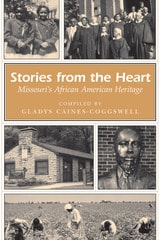
Stories from the Heart
Missouri's African American HeritageCompiled by Gladys Caines-Coggswell
University of Missouri Press, 2009
All along the river, from the front porches of Hannibal to the neighborhoods of St. Louis to the cotton fields of the Bootheel and west to Kansas City, stories are being told.
This collection of family stories and traditional tales brings to print down-home stories about all walks of African American life. Passed down from grandparents and great-grandparents, they have been lovingly gathered by Gladys Caines Coggswell as she visited Missouri communities and participated in storytelling events over the last two decades. These stories bring to life characters with uncommon courage, strength, will, and wit as they offer insight into African American experiences throughout the state’s history.
Often profound, always entertaining, some of these stories hark back to times barely remembered. Many tell of ordinary folks who achieved victories in the face of overwhelming odds. They range from recollections of KKK activities—recalling a Klan leader who owned property on which a black family lived as “the man who was always so nice to us”—to remembered differences between country and city schools and black schoolchildren introduced to Dick and Jane and Little Black Sambo. Stories from the Bootheel shed light on family life, sharecropping, and the mechanization of cotton culture, which in one instance led to a massive migration of rats as the first mechanical cotton pickers came in.
As memorable as the stories are the people who tell them, such as the author’s own “Uncle Pete” reporting on a duck epidemic or Evelyn Pulliam of Kennett telling of her resourceful neighbors in North Lilburn. Loretta Washington remembers sitting on her little wooden stool beside her great-grandmother’s rocking chair on the front porch in Wardell, mesmerized by stories—and the time when rocking chair and little wooden stool were moved inside and the stories stopped. Marlene Rhodes writes of her mother’s hero, Odie, St. Louis “Entrepreneur and English gentleman.”
Whether sharing previously unknown stories from St. Louis or betraying the secret of “Why Dogs Chase Cats,” this book is a rich repository of African American life. And if some of these tales seem unusual, the people remembering them will be the first to tell you: that’s the way it was. Coggswell preserves them for posterity and along with them an important slice of Missouri history.
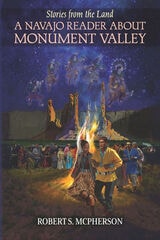
Stories from the Land
A Navajo Reader about Monument ValleyRobert S. McPherson
University Press of Colorado, 2022
Stories from the Round Barn
Jacqueline Dougan Jackson
Northwestern University Press, 2000
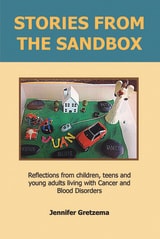
Stories from the Sandbox
Reflections from children, teens and young adults living with Cancer and Blood DisordersJennifer Gretzema
Michigan Publishing Services, 2015
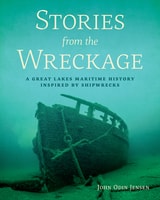
Stories from the Wreckage
A Great Lakes Maritime History Inspired by ShipwrecksJohn Odin Jensen
Wisconsin Historical Society Press, 2019
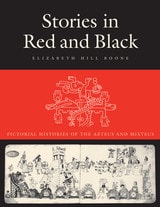
Stories in Red and Black
Pictorial Histories of the Aztecs and MixtecsBy Elizabeth Hill Boone
University of Texas Press, 2000
Winner, Arvey Award, Association for Latin American Art, 2001
Honorable Mention, Honorable Mention, George Wittenborn Memorial Book Award, Art Libraries Society of North America, 2001
The Aztecs and Mixtecs of ancient Mexico recorded their histories pictorially in images painted on hide, paper, and cloth. The tradition of painting history continued even after the Spanish Conquest, as the Spaniards accepted the pictorial histories as valid records of the past. Five Pre-Columbian and some 150 early colonial painted histories survive today.
This copiously illustrated book offers the first comprehensive analysis of the Mexican painted history as an intellectual, documentary, and pictorial genre. Elizabeth Hill Boone explores how the Mexican historians conceptualized and painted their past and introduces the major pictorial records: the Aztec annals and cartographic histories and the Mixtec screenfolds and lienzos.
Boone focuses her analysis on the kinds of stories told in the histories and on how the manuscripts work pictorially to encode, organize, and preserve these narratives. This twofold investigation broadens our understanding of how preconquest Mexicans used pictographic history for political and social ends. It also demonstrates how graphic writing systems created a broadly understood visual "language" that communicated effectively across ethnic and linguistic boundaries.