Results by title
67 books match the query 'Technology Studies' and 4 start with s
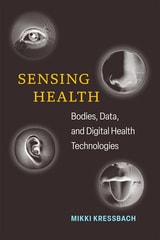
Sensing Health
Bodies, Data, and Digital Health TechnologiesMikki Kressbach
University of Michigan Press, 2024
To capture and analyze digital health experiences, Kressbach develops a method that combines descriptive practices from Film and Media Studies and Phenomenology. After examining the design and feedback structures of digital health platforms and devices, the author uses her own first-person accounts to analyze the impact of the technology on her body, behaviors, and perception of health. Across five chapters focused on different categories of digital health—menstrual trackers, sexual wellness technologies, fitness trackers, meditation and breathing technologies, and posture and running wearables—Sensing Health demonstrates a method of analysis that acknowledges and critiques the biomedical structures of digital health technology while remaining attentive to the lived experiences of users. Through a focus on the intersection of technological design and experience, this method can be used by researchers, scholars, designers, and developers alike.

Signs Of Danger
Waste, Trauma, and Nuclear ThreatPeter C. Van Wyck
University of Minnesota Press, 2004
Questions the literal burying of the nuclear threat and how it relates to expectations for our future
A rising ocean. A falling building. A toxic river. Species extinguished. A nuclear landscape. In a world so configured, the state of contemporary ecological thought and practice is woefully—and perilously—inadequate. Focusing on the government’s nuclear waste burial program in Carlsbad, New Mexico, Signs of Danger begins the urgent work of finding a new way of thinking about ecological threat in our time.
The Waste Isolation Pilot Plant in Carlsbad began receiving shipments in 1999. With a proposed closing date of 2030, this repository for nuclear waste must be secured with a sign, the purpose of which will be to keep people away for three hundred generations. In the official documents uncovered by Peter van Wyck, we encounter a government bureaucracy approaching the issue of nuclear waste as a technical problem only to find itself confronting a host of intractable philosophical issues concerning language, culture, and history. Signs of Danger plumbs these depths as it shows us how the problem raised in the desert of New Mexico is actually the problem of a culture grappling with ecological threats and with questions of the limits of meaning and representation in the deep future. The reflections at the center of this book—on memory, trauma, disaster, representation, and the virtual—are aimed at defining the uniquely modern status of environmental and nuclear threats. They offer invaluable insights into the interface of where culture ends and nature begins, and how such a juncture is closely linked with questions of risk, concepts of history, and the cultural experience of time.Winner of the 2005 Gertrude J. Robinson Book Prize of the Canadian Communication Association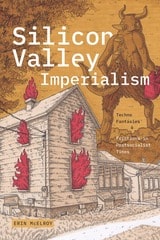
Silicon Valley Imperialism
Techno Fantasies and Frictions in Postsocialist TimesErin McElroy
Duke University Press, 2024
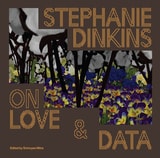
Stephanie Dinkins
On Love & DataSrimoyee Mitra
University of Michigan Press, 2024
Stephanie Dinkins: On Love & Data brings together nationally renowned curators and theorists who draw from methodologies of art criticism, social practice, new media theory, and critical studies to offer an in-depth analysis of key installations in Dinkins’s survey exhibition. The book also includes an important essay by Stephanie Dinkins on her concept of Afro-now-ism in which she expands on her theoretical framework and positionality as a Black new media artist in the 21st century. Dinkins’s artistic research transcends the boundaries of visual art to challenge and expose the bias and inequities of caste, race, and gender, which are encoded within digital systems on which governance, healthcare, and security infrastructures in the United States are based.