Results by title
141 books match the query 'Twentieth Century' and 12 start with s

Sailing into History
Great Lakes Bulk Carriers of the Twentieth Century and the Crews Who Sailed ThemFrank Boles
Michigan State University Press, 2017
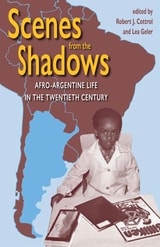
Scenes from the Shadows
Afro-Argentine Life in the Twentieth CenturyRobert J. Cottrol and Lea Geler
Ohio University Press, 2027
Scenes from the Shadows challenges one of the most enduring myths of Argentine history: that Afro-Argentines had disappeared by the twentieth century. Bringing together leading scholars of race, culture, and history, the volume demonstrates that Afro-descendant communities remained a vital part of Argentine society even as official narratives, public institutions, and popular memory rendered them increasingly invisible. Drawing on oral histories, community newspapers, family archives, ethnography, and archival research, the contributors recover the lives, organizations, and cultural worlds that persisted beneath the surface of Argentina’s self-image as a White, European nation.
Focusing on Buenos Aires—home to the country’s largest Afro-descendant population and the epicenter of debates over race and national identity—the book situates Argentina within the broader history of the African diaspora in Latin America and examines how ideologies of Whitening (blanqueamiento), racial classification, urban development, and national identity obscured Afro-descendant presence throughout the twentieth century. The chapters explore Black celebrity and performance culture, tango, Afro-Porteño associational life, community journalism, public employment, migration, gender, and the formation of Afro-descendant social networks, revealing how Afro-Argentines negotiated exclusion while sustaining vibrant traditions of community, creativity, and belonging.
More than a recovery of forgotten histories, Scenes from the Shadows offers a new interpretation of modern Argentina itself. It shows how race continued to shape social life even in a society that denied its importance and how Afro-descendant communities endured despite powerful pressures toward erasure. A major contribution to Afro-Latin American studies, Argentine history, and diaspora scholarship, the volume restores Afro-Argentines to their place in the story of twentieth-century Argentina and provides a powerful framework for understanding the relationship between race, memory, and nationhood.
Contributors
Paulina L. Alberto
Judith M. Anderson
Laura Colabella
Robert J. Cottrol
Alejandra Egido
Alejandro Frigerio
Lea Geler
Lucas Glasman
Miriam Gomes
Chisu Teresa Ko
Eva Lamborghini
Marta Maffia
Carmen Yannone

Seven American Women Writers of the Twentieth Century
An IntroductionMaureen Howard, Editor
University of Minnesota Press, 1977
Seven American Women Writers of the Twentieth Century was first published in 1977. Minnesota Archive Editions uses digital technology to make long-unavailable books once again accessible, and are published unaltered from the original University of Minnesota Press editions.
Shaped by the State
Toward a New Political History of the Twentieth CenturyEdited by Brent Cebul, Lily Geismer, and Mason B. Williams
University of Chicago Press, 2019
Brent Cebul, Lily Geismer, and Mason B. Williams have brought together first-rate scholars from a wide range of subfields who are making structures of state power—not moments of crisis or partisan realignment—integral to their analyses. All of the contributors see political history as defined less by elite subjects than by tensions between state and economy, state and society, and state and subject—tensions that reveal continuities as much as disjunctures. This broader definition incorporates investigations of the crosscurrents of power, race, and identity; the recent turns toward the history of capitalism and transnational history; and an evolving understanding of American political development that cuts across eras of seeming liberal, conservative, or neoliberal ascendance. The result is a rich revelation of what political history is today.
Social Science and Policy-Making
A Search for Relevance in the Twentieth CenturyDavid L. Featherman and Maris A. Vinovskis, Editors
University of Michigan Press, 2001
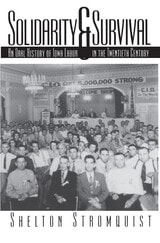
Solidarity and Survival
An Oral History of Iowa Labor in the Twentieth CenturyShelton Stromquist
University of Iowa Press, 1993
In Solidarity and Survival, three generations of Iowa workers tell of their unrelenting efforts to create a labor movement in the coal mines and on the rails, in packinghouses and farm equipment plants, on construction sites and in hospital wards. Drawing on nearly one thousand interviews collected over more than a decade by oral historians working for the Iowa Federation of Labor, AFL-CIO, Shelton Stromquist presents the resonant voices of the men and women who defined a new, prominent place for themselves in the lives of their communities and in the politics of their state.
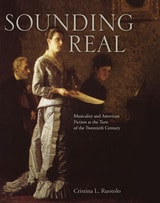
Sounding Real
Musicality and American Fiction at the Turn of the Twentieth CenturyCristina L. Ruotolo
University of Alabama Press, 2013
Southern Religion and Christian Diversity in the Twentieth Century
Wayne Flynt, Foreword by Charles A. Israel and John Giggie
University of Alabama Press, 2016
Essays by the distinguished historian of southern religion Wayne Flynt, that illuminate the often overlooked complexity among southern Protestants.
Throughout its dramatic history, the American South has wrestled with issues such as poverty, social change, labor reform, civil rights, and party politics, and Flynt’s writing reaffirms religion as the lens through which southerners understand and attempt to answer these contentious questions. In Southern Religion and Christian Diversity in the Twentieth Century, however, Flynt gently but persuasively dispels the myth—comforting to some and dismaying to others—of religion in the South as an inert cairn of reactionary conservatism.
Flynt introduces a wealth of stories about individuals and communities of faith whose beliefs and actions map the South’s web of theological fault lines. In the early twentieth century, North Carolinian pastor Alexander McKelway became a relentless crusader against the common practice of child labor. In 1972, Rev. Dr. Ruby Kile, in a time of segregated churches led by men, took the helm of the eight-member Powderly Faith Deliverance Center in Jefferson County, Alabama and built the fledgling group into a robust congregation with more than 700 black and white worshippers. Flynt also examines the role of religion in numerous pivotal court cases, such as the US Supreme Court school prayer case Engel v. Vitale, whose majority opinion was penned by Justice Hugo Black, an Alabamian. These fascinating case studies and many more illuminate a religious landscape of far more varied texture and complexity than is commonly believed.
Southern Religion and Christian Diversity in the Twentieth Century offers much to readers and scholars interested in the South, religion, and theology. Writing with his hallmark wit, warmth, and erudition, Flynt’s Southern Religion and Christian Diversity in the Twentieth Century is a vital record of gospel-inspired southerners whose stories revivify sclerotic assumptions about the narrow conformity of southern Christians.
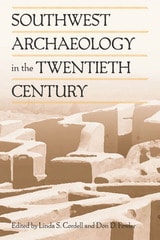
Southwest Archaeology in the Twentieth Century
Linda S Cordell
University of Utah Press, 2011
With contributions from well-known archaeologists, Southwest Archaeology in the Twentieth Century reviews the histories of major archaeological topics of the region during the twentieth century, with particular attention to the vast changes in southwestern archaeology during the later decades of the century. Included are the huge influence of field schools, the rise of cultural resource management (CRM), the uses and abuses of ethnographic analogy, the intellectual contexts of archaeology in Mexico, and current debates on agriculture, sedentism, and political complexity.
By looking back at the previous century of study, this book provides an authoritative retrospective of intellectual trends as well as a synthesis of current themes in the arena of the American Southwest.
Spanish American Poetry at the End of the Twentieth Century
Textual DisruptionsBy Jill Kuhnheim
University of Texas Press, 2005
Has poetry lost its relevance in the postmodern age, unable to keep pace with other forms of cultural production such as film, mass media, and the Internet? Quite the contrary, argues Jill Kuhnheim in this pathfinding book, which explores how recent Spanish American poetry participates in the fundamental cultural debates of its time.
Using a variety of interdisciplinary approaches, Kuhnheim engages in close readings of numerous poetic works to show how contemporary Spanish American poetry struggles with the divisions between politics and aesthetics and between visual and written images; grapples with issues of ethnic, national, sexual, and urban identities; and incorporates rather than rejects technological innovations and elements from the mass media. Her analysis illuminates the ways in which contemporary issues such as indigenismo and Latin America's postcolonial legacy, modernization, immigration, globalization, economic shifts toward neoliberalism and informal economies, urbanization, and the technological revolution have been expressed in—and even changed the very form of—Spanish American poetry since the 1970s.
Staging the World
Chinese Nationalism at the Turn of the Twentieth CenturyRebecca E. Karl
Duke University Press, 2002
The emergence of Chinese nationalism during this period is often portrayed as following from China’s position vis-à-vis Japan and the West. Karl has mined the archives of the late Qing period to discern the foci of Chinese intellectuals from 1895 to 1911 to assert that even though the China/Japan/West triangle was crucial, it alone is an incomplete—and therefore flawed—model of the development of nationalism in China. Although the perceptions and concerns of these thinkers form the basis of Staging the World, Karl begins by examining a 1904 Shanghai production of an opera about a fictional partition of Poland and its modern reincarnation as an ethno-nation. By focusing on the type of dialogue this opera generated in China, Karl elucidates concepts such as race, colonization, globalization, and history. From there, she discusses how Chinese conceptions of nationalism were affected by the “discovery” of Hawai’i as a center of the Pacific, the Philippine revolution against the United States, and the relationship between nationality and ethnicity made apparent by the Boer War in South Africa.
Strained Relations
US Foreign-Exchange Operations and Monetary Policy in the Twentieth CenturyMichael D. Bordo, Owen F. Humpage, and Anna J. Schwartz
University of Chicago Press, 2015