Results by title
18284 books match the query 'United States' and 1181 start with s
SINGING IN A STRANGE LAND
C. L. Franklin, the Black Church, and the Transformation of AmericaNick Salvatore
University of Illinois Press, 2000

SLAPPs
Getting Sued for Speaking OutGeorge Pring
Temple University Press, 1996
In a democracy that for over 200 years has prided itself on public participation and citizen involvement in government, thousands have been and will be the targets of multi-million-dollar lawsuits. They will be sued for such "all-American" activities as circulating a petition, writing a letter to the editor, testifying at a public hearing, reporting violations of the law, filing an official complaint, lobbying for legislation, or otherwise communicating their views. Such cases, named "Strategic Lawsuits Against Public Participation," with their apropos acronym, SLAPPs, are a shocking abuse of one of our most basic political rights—the Right to Petition. So extensive and grievous is the phenomenon that Justice Nicholas Colabella remarked, "Short of a gun to the head, a greater threat to First Amendment expression can scarcely be imagined."
George W. Pring and Penelope Canan explore the full range of SLAPP stories in this first study of SLAPPs— retaliatory lawsuits by real estate developers; teachers; police; politicians; opponents of civil rights; consumers' rights; women's rights; and many others. This comprehensive book examines what happens to the targets of SLAPPs and what is happening to public participation in American politics. Addressing the ultimate dilemma—what can be done to turn the tables and fight back—Pring and Canan offer concrete, well-supported, balanced solutions for preventing, managing, and curing SLAPPs at all levels of government.

SOFT IN THE MIDDLE
CONTEMPORARY SOFTCORE FEATURE IN ITS CONTEXTSDAVID ANDREWS
The Ohio State University Press, 2006
In meticulous detail, Soft in the Middle demonstrates that softcore’s under-the-radar success and pervasive cultural devaluation may be understood in terms of the “postfeminist” strategies employed by successive generations of producers and distributors, each intent on overcoming obstacles to the mainstream distribution of pornographic material. Softcore and its American precursors became more “feminized” and “female friendly” as their distribution widened, a process hastened in the 1980s by the industry’s transition to private, non-theatrical modes of distribution and exhibition (e.g., home-video outlets and premium-cable networks like Cinemax). One of the byproducts of this development is that contemporary softcore has frequently resorted to what are arguably anti-male or “misandristic” attitudes and depictions. Clearly, the genre challenges traditional assumptions about pornography, including those held by feminists on both sides of “the porn debates.”
Drawing on original industrial research, extensive sampling, and wide-ranging scholarship, Soft in the Middle offers a nuanced look at a discreetly indecent genre whose central commodity has always been female nudity. The book examines the genre’s history, describes its deflationary trajectory, and differentiates the reading patterns of its disparate audiences, including “cult” critics and feminist critics. Naturally, the book also considers the genre’s formal and ideological conventions, surveying its most exemplary subgenres, styles, and motifs—and lavishing particular attention on its most influential studios, directors, and texts.

SOS-Calling All Black People
A Black Arts Movement ReaderBracey John H.
University of Massachusetts Press, 0
SOS—Calling All Black People
A Black Arts Movement ReaderJohn H. Bracey
University of Massachusetts Press, 2014
Many of the movement's leading artists, including Ed Bullins, Nikki Giovanni, Woodie King, Haki Madhubuti, Sonia Sanchez, Askia Touré, and Val Gray Ward remain artistically productive today. Its influence can also be seen in the work of later artists, from the writers Toni Morrison, John Edgar Wideman, and August Wilson to actors Avery Brooks, Danny Glover, and Samuel L. Jackson, to hip hop artists Mos Def, Talib Kweli, and Chuck D.
SOS—Calling All Black People includes works of fiction, poetry, and drama in addition to critical writings on issues of politics, aesthetics, and gender. It covers topics ranging from the legacy of Malcolm X and the impact of John Coltrane's jazz to the tenets of the Black Panther Party and the music of Motown. The editors have provided a substantial introduction outlining the nature, history, and legacy of the Black Arts Movement as well as the principles by which the anthology was assembled.

STEELWORKERS IN AMERIA
THE NONUNION ERADavid Brody
University of Illinois Press, 1960
as well as a symposium on the book in which seven prominent historians
discuss its significance and its place in the historiography of labor.
"Steelworkers in America has emerged and remained one of
the few genuinely classic works of U.S. labor history--one of the axiomatic
starting points for any understanding of the new labor history."
-- Roy Rosenzweig
"The vision of Steelworkers has survived these thirty years
and continues to inspire new work in labor history." -- Lizabeth
Cohen

STEP into Storytime
Saroj Nadkarni Ghoting
American Library Association, 2014

STUDIES IN MURDER
Edmund Lester Pearson, with an introduction by Roger Lane
The Ohio State University Press, 1999

SUBURBAN ALCHEMY
1960S NEW TOWNS AND THE TRANSFORMATION ONICHOLAS DAGEN BLOOM
The Ohio State University Press, 2001

SUBURBAN STEEL
The Magnificent Failure of the Lustron Corporation, 1945–1951Douglas Knerr
The Ohio State University Press, 2004
Suburban Steel chronicles the rise and fall of the Lustron Corporation, once the largest and most completely industrialized housing company in U.S. history. Beginning in 1947, Lustron manufactured porcelain-enameled steel houses in a one-million-square-foot plant in Columbus, Ohio. With forty million dollars in federal funds and support from the highest levels of the Truman administration, the company planned to produce one hundred houses per day, each neatly arranged on specially designed tractor-trailers for delivery throughout the country. Lustron’s unprecedented size and scope of operations attracted intense scrutiny. The efficiencies of uninterrupted production, integrated manufacturing, and economies of scale promised to lead the American housing industry away from its decentralized, undercapitalized, and inefficient past toward a level of rationalization and organization found in other sectors of the industrial economy.
The company’s failure marked a watershed in the history of the American housing industry. Although people did not quit talking about industrialized housing, enthusiasm for its role in the transformation of the housing industry at large markedly waned. Suburban Steel considers Lustron’s magnificent failure in the context of historical approaches to the nation’s perpetual shortage of affordable housing, arguing that had Lustron’s path not been interrupted, affordable and desirable housing for America’s masses would be far more prevalent today.

Sabine Pass
The Confederacy's ThermopylaeBy Edward T. Cotham, Jr.
University of Texas Press, 2004
Winner, Dan and Marilyn Laney Prize, Austin Civil War Round Table, 2005
In an 1882 speech, former Confederate president Jefferson Davis made an exuberant claim: "That battle at Sabine Pass was more remarkable than the battle at Thermopylae." Indeed, Sabine Pass was the site of one of the most decisive Civil War battles fought in Texas. But unlike the Spartans, who succumbed to overwhelming Persian forces at Thermopylae more than two thousand years before, the Confederate underdogs triumphed in a battle that over time has become steeped in hyperbole. Providing a meticulously researched, scholarly account of this remarkable victory, Sabine Pass at last separates the legends from the evidence.
In arresting prose, Edward T. Cotham, Jr., recounts the momentous hours of September 8, 1863, during which a handful of Texans—almost all of Irish descent—under the leadership of Houston saloonkeeper Richard W. Dowling, prevented a Union military force of more than 5,000 men, 22 transport vessels, and 4 gunboats from occupying Sabine Pass, the starting place for a large invasion that would soon have given the Union control of Texas.
Sabine Pass sheds new light on previously overlooked details, such as the design and construction of the fort (Fort Griffin) that Dowling and his men defended, and includes the battle report prepared by Dowling himself. The result is a portrait of a mythic event that is even more provocative when stripped of embellishment.
Sabino Canyon
The Life of a Southwestern OasisDavid Wentworth Lazaroff
University of Arizona Press, 1993
David Lazaroff has called on years of studying, photographing, and educating people about Sabino Canyon to produce this clearly written and beautifully illustrated book. Focusing on the importance of Sabino Creek both to plants and animals and to human recreation, he tracks the ebb and flow of canyon life through the year and tells how people have sought to utilize the canyon through history. First-time visitors to Sabino Canyon will find their experience enriched through Lazaroff's insights into plants, animals, and geology, while those who regularly frequent Sabino's trails or pools can become better informed about its fragile desert and riparian habitats.
For anyone curious about life in a genuine Southwestern oasis, this book captures the beauty and uniqueness of a natural treasure-house located in a bustling city's back yard.
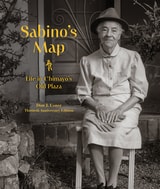
Sabino's Map
Life in Chimayó’s Old Plaza, Thirtieth Anniversary EditionDon J. Usner
Museum of New Mexico Press, 2024
“Brimming with voices, las voces de la gente…. the first-person narrator who returns again and again to the text like a knowing and trusted pariente inviting the reader to sit for a while in the Plaza del Cerro. —Jim Sagel
“Quite simply…the best history yet made of a northern New Mexico community. It is thorough, balanced, gracefully written, and blessed with an insider’s access and affection.”—William De Buys
Chimayó is renowned for its Hispano master weaving families, lowriders, and its storied church, El Santurio de Chimayó. The old Plaza del Cerro had once been the village’s center place, where locals gathered to pick up mail, socialize and celebrate religious and family events. Over the years after WWII, the plaza was neglected, but the memory of the once-vibrant place remained vivid in the stories of village elders.
The first edition of Sabino’s Map, published in 1995, documented oral histories of these elders. It would prove to be a critical turning point for many Chimayosos. At the Chimayó book launch, Usner recalls locals embraced the book, one cousin of his even declaring, “For the first time in my life I feel like I can be proud to be from Chimayó.” In the past thirty years since its publication, the community and its people have been revitalized with the help of the Chimayó Cultural Preservation Association and the establishment of a museum on the old plaza—in the home of Usner’s ancestors.
This landmark publication, read and passed on through generations, is considered a classic of New Mexico literature, alongside other treasured books including John Nichols’s Milagro Beanfield War, Rudolfo Anaya’s Bless Me Ultima, and Ruben Cobos’s Dictionary of New Mexico and Northern New Mexico Spanish.
Sacramento and the Catholic Church
Shaping a Capital CitySteven Avella
University of Nevada Press, 2008
Besides the numerous institutions that the Church sponsored, it brought together a wide spectrum of the city’s diverse ethnic populations and offered them several routes to assimilation. Catholic Sacramentans have always played an active role in government and in the city’s economy, and Catholic institutions provided a matrix for the creation of new communities as the city spread into neighboring suburbs. At the same time, the Church was forced to adapt itself to the needs and demands of its various ethnic constituents, particularly the flood of Spanish-speaking newcomers in the late twentieth century.

Sacred Divorce
Religion, Therapeutic Culture, and Ending Life PartnershipsJenkins, Kathleen E
Rutgers University Press, 2014
For more than five years, Jenkins observed religious support groups and workshops for the divorced and interviewed religious practitioners in the midst of divorces, along with clergy members who advised them. Her findings appear here in the form of eloquent and revealing stories about individuals managing emotions in ways that make divorce a meaningful, even sacred process. Clergy from mainline Protestant denominations to Baptist churches, Jewish congregations, Unitarian fellowships, and Catholic parishes talk about the concealed nature of divorce in their congregations. Sacred Divorce describes their cautious attempts to overcome such barriers, and to assemble meaningful symbols and practices for members by becoming compassionate listeners, delivering careful sermons, refitting existing practices like Catholic annulments and Jewish divorce documents (gets), and constructing new rituals.
With attention to religious, ethnic, and class variations, covering age groups from early thirties to mid-sixties and separations of only a few months to up to twenty years, Sacred Divorce offers remarkable insight into individual and cultural responses to divorce and the social emotions and spiritual strategies that the clergy and the faithful employ to find meaning in the breach. At once a sociological document, an ethnographic analysis, and testament of personal experience, Sacred Divorce provides guidance, strategies and answers to readers looking for answers and those looking to heal.
Sacred Ground
AMERICANS AND THEIR BATTLEFIELDSEdward Tabor Linenthal
University of Illinois Press, 1991
famous battlefields through patriotic rhetoric, monument building, physical
preservation, and battle reenactment. But each site is also a place where
different groups of Americans come to compete for ownership of cherished
national stories and to argue about the meaning of war, the importance
of martial sacrifice, and the significance of preserving the nation's
patriotic landscape.
From the anniversary speeches at Lexington and Concord that shaped the
image of the minuteman to Alamo Day speeches invoking the Texas "freedom
fighters" of 1836 in support of the contras in Nicaragua; from passionate
arguments over the placement of Confederate monuments at Gettysburg to
confrontations between militant American Indian Movement and "Custer
loyalists" during the Little Bighorn centennial in 1976; from the
treatment of the USS Arizona at Pearl Harbor to continuing attempts
to maintain the purity of these places in the face of commercialization---Sacred
Ground details the ongoing struggles to define, control, and subvert
patriotic faith as expressed at these ceremonial sites.
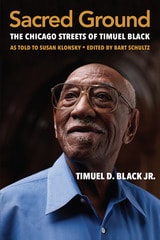
Sacred Ground
The Chicago Streets of Timuel BlackTimuel D. Black Jr., as told to Susan Klonsky, edited by Bart Schultz
Northwestern University Press, 2019
Sacred Ground opens in 1919, during the summer of the Chicago race riot, when infant Black and his family arrive in Chicago from Birmingham, Alabama, as part of the first Great Migration. He recounts in vivid detail his childhood and education in the Black Metropolis of Bronzeville and South Side neighborhoods that make up his "sacred ground."
Revealing a priceless trove of experiences, memories, ideas, and opinions, Black describes how it felt to belong to this place, even when stationed in Europe during World War II. He relates how African American soldiers experienced challenges and conflicts during the war, illuminating how these struggles foreshadowed the civil rights movement. A labor organizer, educator, and activist, Black captures fascinating anecdotes and vignettes of meeting with famous figures of the times, such as Duke Ellington and Martin Luther King Jr., but also with unheralded people whose lives convey lessons about striving, uplift, and personal integrity.
Rounding out this memoir, Black reflects on the legacy of his friend and mentee, Barack Obama, as well as on his public works and enduring relationships with students, community workers, and some very influential figures in Chicago and the world.

Sacred Pens and Public Voices
Latter-day Saint Women in Dialogue with AmericaLori Motzkus Wilkinson
University of Illinois Press, 2026
Though intellectually connected to figures outside the Church, the LDS women saw them less as
women's rights activists to emulate and more as speakers of truths that, regardless of the origin, should be embraced and harnessed. Wilkinson reveals how Emmeline B. Wells, Susa Young Gates, and other Latter-day Saint women supported and upheld institutional LDS authority and utilized the importance of women’s roles in the home and society as mechanisms for women’s advancement. Even as LDS women continued to engage with prominent national thinkers, their writings and lives demonstrated that they connected with the larger sphere of women’s rights activism before drawing on the LDS concept of women’s divine nature to reshape those ideals to uniquely religious ends.
Original and eye-opening, Sacred Pens and Public Voices revises established narratives about how LDS women interacted with and used ideas taken from national women’s movements.

Sacred Places
American Tourist Attractions in the Nineteenth CenturyJohn F. Sears
University of Massachusetts Press, 1999
Drawing on this fascinating body of material, Sacred Places examines the vital role which tourism played in fulfilling the cultural needs of nineteenth-century Americans. America was a new country in search of a national identity. Educated Americans desperately wished to meet European standards of culture and, at the same time, to develop a distinctly American literature and art. Tourism offered a means of defining America as a place and taking pride in the special features of its landscape. The country's magnificent natural wonders were a substitute for the cathedrals and monuments, the sense of history that Europe had built over the centuries. Moreover, Sears argues, tourist attractions like Mammoth Cave, Mount Auburn Cemetery, Yosemite, and Yellowstone functioned as sacred places for a nation with a diversity of religious sects and without ancient religious and national shrines. For nineteenth-century Americans, whose vision was shaped by the aesthetics of the sublime and the picturesque and by the popular nineteenth-century Romantic view of nature as temple, such places fulfilled their urgent need for cultural monuments and for places to visit which transcended ordinary reality.
But these nineteenth-century tourist attractions were also arenas of consumption. Niagara Falls was the most sublime of God's creations, a sacred place, which, like Mount Auburn Cemetery, was supposed to have a profound moral effect on the spectator. But it was also an emporium of culture where the tourist shopped for Niagara's wonders and for little replicas of the Falls in the form of souvenirs. In Sacred Places, Sears describes how this strange, sometimes amusing, juxtaposition of the mythic and the trivial, the sacred and the profane, the spiritual and the commercial remained a significant feature of American tourist attractions even after efforts were made at Yosemite, Yellowstone, and Niagara Falls to curb commercial and industrial intrusions.
Sears also explores how the nineteenth-century idealization of home stimulated the tourists' response to such places as the Willey House in the White Mountains, the rural cemeteries, and even the newly established asylums for the deaf, dumb, blind, and insane. And, in an intriguing account of Mauch Chunk, Pennsylvania, he examines the reasons why an important nineteenth-century anthracite transportation center was also a major tourist attraction.
Most of the attractions discussed in this book are still visited by millions of Americans. By illuminating their cultural meaning, Sacred Places prompts us to reflect on our own motivations and responses as tourists and reveals why tourism was and still is such an important part of American life.
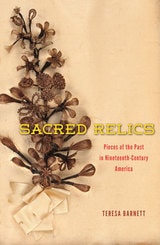
Sacred Relics
Pieces of the Past in Nineteenth-Century AmericaTeresa Barnett
University of Chicago Press, 2013
In Sacred Relics, Teresa Barnett explores the history of private collections of items like these, illuminating how Americans view the past. She traces the relic-collecting tradition back to eighteenth-century England, then on to articles belonging to the founding fathers and through the mass collecting of artifacts that followed the Civil War. Ultimately, Barnett shows how we can trace our own historical collecting from the nineteenth century’s assemblages of the material possessions of great men and women.
Sacrifice and Survival
Identity, Mission, and Jesuit Higher Education in the American SouthR. Eric Platt
University of Alabama Press, 2014
R. Eric Platt examines in Sacrifice and Survival the history and evolution of Jesuit higher education in the American South and hypothesizes that the identity and mission of southern Jesuit colleges and universities may have functioned as catalytic concepts that affected the “town and gown” relationships between the institutions and their host communities in ways that influenced whether they failed or adapted to survive.
The Catholic religious order known as the Society of Jesus (Jesuits) manages a global network of colleges and universities with a distinct Catholic identity and mission. Despite this immense educational system, several Jesuit institutions have closed throughout the course of the order’s existence. Societal pressures, external perceptions or misperceptions, unbalanced curricular structures rooted in liberal arts, and administrators’ slow acceptance of courses related to practical job seeking may all influence religious-affiliated educational institutions. The religious identity and mission of these colleges and universities are fundamentals that influence their interaction with external environs and contribute to their survival or failure.
Platt traces the roots of Jesuit education from the rise of Ignatius Loyola in the mid-sixteenth century through the European development of the Society of Jesus, Jesuit educational identity and mission, the migration of Jesuits to colonial New Orleans, the expulsion of Jesuits by Papal mandate, the reorganization of Jesuit education, their attempt to establish a network of educational institutions across the South, and the final closure of all but two southern Jesuit colleges and a set of high schools.
Sacrifice and Survival explores the implications of the Galveston Hurricane of 1900, yellow fever, Georgia floods, devastating fires, the Civil War, the expansion of New Orleans due to the 1884 Cotton Centennial Exposition, and ties between town and gown, as well as anti-Catholic/anti-Jesuit sentiment as the Society of Jesus pushed forward to create a system of southern institutions. Ultimately, institutional identity and mission critically impacted the survival of Jesuit education in the American South.

Sadomasochism in Everyday Life
The Dynamics of Power and PowerlessnessChancer, Lynn S.
Rutgers University Press, 1992
Lynn Chancer advances the provocative thesis that sadomasochism is far more prevalent in contemporary societies like the United States than we realize. According to Chancer, sexual sadomasochism is only the best-known manifestation of what is actually a much more broadly based social phenomenon. Moving from personal relationships to school, the workplace, and other interactions, Chancer uses a variety of examples that are linked by a recurrent pattern of behavior. She goes beyond the predominantly individualistic and psychological explanations generally associated with sadomasochism (including those popularized in the "how to" literature of the recent Women Who Love Too Much genre) toward a more sociological interpretation. Chancer suggests that the structure of societies organized along male-dominated and capitalistic lines reflects and perpetuates a sadomasochistic social psychology, creating a culture steeped in everyday experiences of dominance and subordination.
In the first part of the book, Chancer discusses the prevalence of sadomasochistic cultural imagery in contemporary America and examines sadomasochism through several perspectives. She develops a set of definitional traits both through existential analysis of an instance of S/M sex and by incorporating a number of Hegelian and psychoanalytic concepts. In the second part of the book, she places sadomasochism in a broader context by exploring whether and how it appears in the workplace and how it relates to gender and race.

Safe Space
Gay Neighborhood History and the Politics of ViolenceChristina B. Hanhardt
Duke University Press, 2013
Since the 1970s, a key goal of lesbian and gay activists has been protection against street violence, especially in gay neighborhoods. During the same time, policymakers and private developers declared the containment of urban violence to be a top priority. In this important book, Christina B. Hanhardt examines how LGBT calls for "safe space" have been shaped by broader public safety initiatives that have sought solutions in policing and privatization and have had devastating effects along race and class lines.
Drawing on extensive archival and ethnographic research in New York City and San Francisco, Hanhardt traces the entwined histories of LGBT activism, urban development, and U.S. policy in relation to poverty and crime over the past fifty years. She highlights the formation of a mainstream LGBT movement, as well as the very different trajectories followed by radical LGBT and queer grassroots organizations. Placing LGBT activism in the context of shifting liberal and neoliberal policies, Safe Space is a groundbreaking exploration of the contradictory legacies of the LGBT struggle for safety in the city.

Safehaven
The Allied Pursuit of Nazi Assets AbroadMartin Lorenz-Meyer
University of Missouri Press, 2007
As Germany faced inevitable defeat in World War II, the Allies became concerned that the Nazis would attempt to hide their assets in neutral countries—Switzerland, Sweden, Portugal, Spain, and Turkey—in order to revive their cause in later years. To address this danger, the United States, along with Britain and France as reluctant partners, started the “Safehaven” program to probe questions of secret foreign bank accounts, the German wartime gold trade, and the actions of German companies abroad toward the end of the Nazi regime. Initiated by the Federal Economic Administration, Safehaven was soon integrated with U.S. plans, advocated by Treasury Secretary Henry Morgenthau, to avert future German aggression. These proposals quickly fell out of favor, but the Morgenthau Plan’s suggestion to use all German assets as reparations remained attractive.
In this first detailed historical study of Safehaven in English, Martin Lorenz-Meyer focuses on policies of the Allies, revealing their disagreements about the program and addressing the historical roots of a problem that over decades the Cold War had successfully buried. Lorenz-Meyer shows how American administrative agencies were constantly at odds regarding Safehaven’s administration and how coordination of the program was further complicated by different assumptions held by the United States and Britain regarding its aims. Using Sweden as an example, he offers an investigation of the effects of Safehaven in the neutral countries, drawing comparisons with experiences of the program in Switzerland. His research discloses the sums involved and the neutral countries’ positions and also explores the complications posed by international law for any plan to expropriate German assets.
Over time, the neutral countries objected to uncompensated confiscations for a war in which they had not participated, and the United States gradually lost interest in infringing on German wealth because Germany was needed as a new ally. Lorenz-Meyer tells how Safehaven suffered from the discontinuation of wartime controls in a renewed climate of free trade. He also contends that the very problem that necessitated the program raised questions regarding the true neutrality of the countries involved.
Safehaven is a significant addition to the history of Third Reich and international relations, notably concerning American foreign policy. As America continues to face foreign-policy dilemmas regarding trade with enemies and issues of neutrality, Safehaven offers an illuminating case history that sheds new light on current affairs.

Safety Net
Welfare and Social Security, 1929-1979Coll, Blanche D
Rutgers University Press, 1995
Beginning with the stock market crash of 1929, Blanche Coll documents the evolution of the federal and state government policymaking for welfare and Social Security, our "safety net." As Coll points out, the policies that determine who is "entitled" to aid, how standard dollar amounts are set, child support responsibilities, the equitable fiscal division between state, federal, and local governments, and the resulting impact on the poorÐÐparticularly women and children of all racesÐÐhave fluctuated throughout the history of welfare.
Coll shows how demographic patterns, the definition of a family, the relative health of the economy, and Presidents' political agendas all deeply affect the system of entitlements to Social Security and welfare, the kernal of the American welfare state.
Safety Net is the only comprehensive history of modern welfare in the United States. Clearly written and unpolemical, it is based on a wealth of primary sources, interviews with key policymakers, and the authoritative analysis of a trained historian who served as a research administrator in the federal government through Democractic and Republican administrations. Saftey Net will be indispensable reading for everyone concerned with contemporary debates about welfare and Social Security.

Sagebrush Collaboration
How Harney County Defeated the Takeover of the Malheur Wildlife RefugePeter Walker
Oregon State University Press, 2018
Every American is co-owner of the most magnificent estate in the world—federal public forests, grazing lands, monuments, national parks, wildlife refuges, and other public places. The writer Wallace Stegner famously referred to public lands as “America’s best idea,” but there have always been some who oppose the idea for ideological reasons, or because they have a vested economic interest. In the current decade, federal public lands have been under physical threat as never before, with armed standoffs and takeovers that the US government has proved stunningly unsuccessful at prosecuting in federal courts.
One such incident was the takeover of the Malheur National Wildlife Refuge in Harney County, Oregon, in 2016. Armed militants seized the headquarters of the refuge for forty-one days and occupied the community for three months. Militants threatened and harassed local residents, pledging to “give back” the land to unnamed “rightful owners” in their effort to enact a fringe interpretation of the US Constitution.
Drawing on more than two years of intensive fieldwork, Sagebrush Collaboration shows that the militants failed in their objectives because the sensible and hardworking citizens of Harney County had invested decades in collaboratively solving the very problems that the militia used to justify their anti–federal government revolution.
In Sagebrush Collaboration, Peter Walker offers the first book-length study of why the 2016 takeover of the Malheur National Wildlife Refuge failed. His nuanced and deeply researched account provides the full context for the takeover, including the response from local and federal officials and the grassroots community resistance. It will be essential reading for years to come for anyone who wants to understand the ongoing battle over the future of America’s public lands.
Sagwitch
Shoshone Chieftan, Mormon Elder 1822-1887Scott Christensen
Utah State University Press, 1999
The Northwestern Shoshone knew as home the northern Great Salt Lake, Bear River, Cache, and Bear Lake valleys of northern Utah. Sagwitch was born at a time when his people traded with the mountain men. In the late 1850s, wagons brought Mormon farmers to settle in Cache Valley, the Northwestern Shoshone heartland. Emigrants and settlers reduced Shoshone access to traditional village sites and food resources. Relationships with the Mormons were mostly good but often strained, and the Shoshone treatment of migrants, who now traveled north and south as well as west and east through the area, was increasingly opportunistic. It only took a few violent incidents for a zealous army colonel to seek severe punishment of the Northwestern Shoshone on a winter morning in 1863. The Bear River Massacre was among the bloodiest engagements of America's Indian wars. Hundreds of Shoshone, including Sagwitch's wife and two sons, died; Sagwitch was wounded but escaped. The band was shattered, other chiefs dead.
The following years were very hard for the survivors. The federal government negotiated a treaty with them but failed to get Sagwitch's signature when, en route to the sessions, he was arrested and then wounded by a white assassin. With the world around him changed, Sagwitch sought accommodation with the most immediate threat to his people's traditional way of survival—the Mormons occupying the Shoshone's valleys.
This, then, is also the story of the conversion of Sagwitch and his band to the Mormon Church. Though not without problems, that conversion was long lasting and thorough. Sagwitch and other Shoshone would demonstrate in important ways their new religious devotion. With the assistance of Mormon leaders, they established the Washakie community in northern Utah. Though efforts to secure a land base had an uneven history, they partly succeeded, and the story of these Shoshone's attempts at rural farming diverged significantly from what happened on government reservations. When Sagwitch died, his death went almost unnoticed outside of Washakie, but his children and grandchildren continued to be important voices among a people who, after experiencing near annihilation, survived in the new world into which Sagwitch led them.
Sail, Steam, and Diesel
Moving Cargo on the Great LakesEric Hirsimaki
Michigan State University Press, 2024

Sailing into History
Great Lakes Bulk Carriers of the Twentieth Century and the Crews Who Sailed ThemFrank Boles
Michigan State University Press, 2017

Sailing to Freedom
Maritime Dimensions of the Underground RailroadEdited by Timothy D. Walker
University of Massachusetts Press, 2021
With innovative scholarship and thorough research, Sailing to Freedom highlights little-known stories and describes the less-understood maritime side of the Underground Railroad, including the impact of African Americans' paid and unpaid waterfront labor. These ten essays reconsider and contextualize how escapes were managed along the East Coast, moving from the Carolinas, Virginia, and Maryland to safe harbor in northern cities such as Philadelphia, New York, New Bedford, and Boston.
In addition to the volume editor, contributors include David S. Cecelski, Elysa Engelman, Kathryn Grover, Megan Jeffreys, Cheryl Janifer LaRoche, Mirelle Luecke, Cassandra Newby-Alexander, Michael D. Thompson, and Len Travers.

Sailor Of The Air
The 1917-1919 Letters and Diary of USN CMM/A Irving Edward SheelyLawrence D. Sheely
University of Alabama Press, 1993
In the winter of 1917, with most of the world at war, twenty-three-year-old Irving Edward Sheely of Albany, New York, enlisted in Naval Aviation and began his training at Pensacola Naval Air Station. When Congress declared ware on Germany on April 6, 1917, the combined strength of aviation within the Navy and Marine Corps was 48 officers, 239 enlisted men, 54 airplanes, one airship, and one air station.

Saint Katharine
The Life of Katharine DrexelCordelia Frances Biddle
Westholme Publishing, 2015
When Katharine Drexel was born in 1858, her grandfather, financier Francis Martin Drexel, had a fortune so vast he was able to provide a loan of sixty million dollars to the Union’s cause during the Civil War. Her uncle and mentor, Anthony, established Drexel University to provide instruction to the working class regardless of race, religion, or gender. Her stepmother was Emma Bouvier whose brother, John, became the great-grandfather of Jacqueline Bouvier Kennedy Onassis. Katharine Drexel’s family were American royalty. As a Philadelphia socialite, “Kitty,” as she was often called, adored formal balls and teas, rowing regattas, and sailing races. She was beautiful, intelligent, and high-spirited. But when her stepmother died in 1883, and her father two years later, a sense of desolation nearly overwhelmed her. She was twenty-seven and in possession of a staggering inheritance. Approached for aid by the Catholic Indian Missions, she surprised her family by giving generously of money and time. It was during this period of acute self-examination that she journeyed to Rome for a private audience with Pope Leo XIII. With characteristic energy and fervor, she detailed the plight of the Native Americans, and begged for additional missionaries to serve them. His reply astonished her. “Why not, my child, yourself become a missionary?”
In Saint Katharine: The Life of Katharine Drexel, Cordelia Frances Biddle recounts the extraordinary story of a Gilded Age luminary who became a selfless worker for the welfare and rights of America’s poorest persons. After years of supporting efforts on behalf of African Americans and American Indians, Katharine finally decided to follow her inner voice and profess vows. The act made headlines. Like her father and grandfather, she was a shrewd businessperson; she retained her financial autonomy and established her own order, the Sisters of the Blessed Sacrament. Until her death in 1955, she devoted herself and her inheritance to building much-needed schools in the South and Southwest, despite threats from the Ku Klux Klan and others. Pragmatic, sometimes willful, ardent, and a charismatic leader, Katharine Drexel was an indefatigable champion of justice and parity. When illness incapacitated her in later years, divine radiance was said to emanate from her, a radiance that led to her canonization on October 1, 2000.
Saints Observed
Studies of Mormon Village Life, 1850-2005Howard M. Bahr
University of Utah Press, 2014

Saints Without Halos
The Human Side of Mormon HistoryLeonard J Arrington
Signature Books, 1981
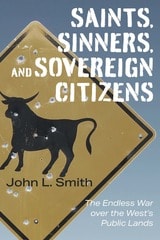
Saints, Sinners, and Sovereign Citizens
The Endless War over the West's Public LandsJohn L. Smith
University of Nevada Press, 2026
The grazing rights battle between Nevada rancher Cliven Bundy and the federal government, resulting in a tense, armed standoff between Bundy’s supporters and federal law enforcement officers, garnered international media attention in 2014. Saints, Sinners, and Sovereign Citizens places the Bundy conflict into the larger context of the Sagebrush Rebellion and the long struggle over the use of federal public lands in the American West.
Author John L. Smith skillfully captures the drama of the Bundy legal tangle amid the current political climate. Although no shots were fired during the standoff itself, just weeks later self-proclaimed Bundy supporters murdered two Las Vegas police officers and a civilian. In Eastern Oregon, other Bundy supporters occupied the federal offices of the Malheur National Wildlife Refuge, and one of them died in a hail of bullets.
While examining the complex history of federal public land policies, Smith exposes both sides of this story. He shows that there are passionate true believers on opposite sides of the insurrection, along with government agents and politicians in Washington complicit in efforts to control public lands for their wealthy allies and campaign contributors. With the promise of billions of dollars in natural resource profits and vast tracts of environmentally sensitive lands hanging in the balance, the West’s latest range war is the most important in the nation’s history. This masterful exposé raises serious questions about the fate of America’s public lands and the vehement arguments that are framing the debate from all sides.
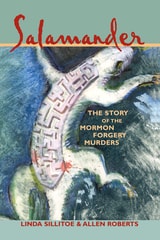
Salamander
The Story of the Mormon Forgery MurdersLinda Sillitoe
Signature Books, 2006
What was the “salamander letter” and why were so many people determined to possess—and to conceal—it? Why was this one of the most unusual cases in American forensic history?
A skilled con artist by anyone’s assessment, Mark Hofmann eluded exposure by police and document authenticators—the FBI, Library of Congress, the LDS historical department, and polygraph experts—until George Throckmorton discovered the telltale microscopic alligatoring that was characteristic of the forgeries. What ensued was a suspense-ridden cat-and-mouse game between seasoned prosecutors and a clever, homicidal criminal. In the end, this story only verifies that some facts are indeed stranger than fiction.
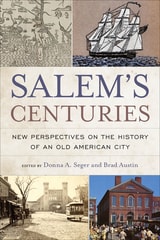
Salem's Centuries
New Perspectives on the History of an Old American CityEdited by Donna A. Seger and Brad Austin
Temple University Press, 2026
In advance of the city’s quadricentennial, the editors and contributors highlight the depth and diversity of Salem’s history, including stories of indigenous peoples, early settlers, African Americans, and immigrants, spanning from the American and industrial revolutions to World War II and the present. Chronologically arranged by century, chapters examine how Salem’s history has been lost or distorted in its public presentations over time.
Salem’s Centuries is a fresh look at an old American city. And yes, it includes the accused witches.
Contributors: Kimberly S. Alexander, Emerson W. Baker, Aviva Chomsky, Andrew Darien, Elizabeth Duclos-Orsello, Theresa Giard, Marilyn Hayward, Bethany Jay, Michele Louro, Elizabeth McKeigue, Robert W. McMicken, Dane A. Morrison, Maria Pride, J.D. Scrimgeour, Margo Shea, Hans Schwartz, Brian Valimont, Maryann Zujewski, and the editors
In the series History and the Public

Sales and Celebrations
Retailing and Regional Identity in Western New York State, 1920–1940Sarah Elvins
Ohio University Press, 2004
Between the two world wars, the retail world experienced tremendous changes. New forms of competition, expanded networks of communication and transportation, and the proliferation of manufactured goods posed challenges to department store and small shopkeeper alike.
In western New York, and in Buffalo and Rochester in particular, retailers were a crucial part of urban life, acting as cultural brokers and civic leaders. They were also cultivators of area pride. Even as they adopted the latest merchandising techniques or stocked the newest items, merchants emphasized their local roots and their ability to put a local spin on national trends and innovations. Regional identity became a powerful selling tool not only during the prosperity of the 1920s but also through the economic crisis of the Great Depression.
Sales and Celebrations explains how local traditions and institutions affected the evolution of American consumer culture. It expands our understanding of American consumerism, demonstrating that local particularities and loyalties could often coexist with, and occasionally challenge, the spread of mass consumption. In her award-winning study, Professor Sarah Elvins provides new insight into the relationship between America’s largest metropolises and its smaller centers. Retailers in Buffalo and Rochester did not simply imitate the practices of their counterparts in Manhattan and Chicago; they highlighted their unique ability to serve the wants and needs of their particular markets.
By drawing attention to this persistent power of the local, Sales and Celebrations illuminates a neglected aspect of the story of American culture in the interwar period.

Salleyland
Wildlife Adventures in Swamps, Sandhills, and ForestsWhit Gibbons
University of Alabama Press, 2023
WINNER OF THE SOUTH CAROLINA OUTDOOR PRESS ASSOCIATION'S EXCELLENCE IN CRAFT FOR THE BEST OUTDOOR BOOK AWARD
Adventures and misadventures exploring nature on a patch of “worthless” abandoned farmland
Following his retirement from academic life, renowned naturalist and writer Whit Gibbons and his family purchased a tract of abandoned farmland where the South Carolina piedmont meets the coastal plain. Described as backcountry scrubland, it was originally envisioned as a family retreat, but soon the property became Gibbons’s outdoor learning laboratory where he was often aided by his four grandchildren, along with a host of enthusiastic visitors.
Inspired by nature’s power to excite, educate, and provide a sense of place in the world, Gibbons invites readers to learn about their surrounding environments by describing his latest adventures and sharing expert advice for exploring the world in which we live. Peppered throughout with colorful personal anecdotes and told with Gibbons’s affable style and wit, Salleyland: Wildlife Adventures in Swamps, Sandhills, and Forests is more than a personal memoir or a record of place. Rather, it is an exercise in learning about a patch of nature, thereby reminding us to open our eyes to the complexity and wonder of the natural world.
Starting with the simple advice of following your own curiosity, Gibbons discusses different opportunities and methods for exploring one’s surroundings, introduces key ecological concepts, offers advice for cultivating habitat, explains the value of and different approaches to keeping lists and field journals, and celebrates the advances that cell phone photography and wildlife cameras offer naturalists of all levels. With Gibbons’s guidance and encouragement, readers will learn to embrace their inner scientists, equipped with the knowledge and encouragement to venture beyond their own front doors, ready to discover the secrets of their habitat, regardless of where they live.
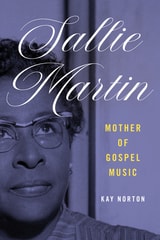
Sallie Martin, Mother of Gospel Music
Kay Norton
University of Illinois Press, 2026
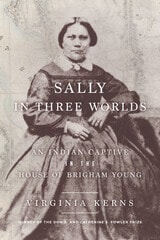
Sally in Three Worlds
An Indian Captive in the House of Brigham YoungVirginia Kerns
University of Utah Press, 2021
In this remarkable and deeply felt book, Virginia Kerns uncovers the singular and forgotten life of a young Indian woman who was captured in 1847 in what was then Mexican territory. Sold to a settler, a son-in-law of Brigham Young, the woman spent the next thirty years as a servant to Young’s family. Sally, as they called her, lived in the shadows, largely unseen. She was later remembered as a “wild” woman made “tame” who happily shed her past to enter a new and better life in civilization.
Drawing from a broad range of primary sources, Kerns retrieves Sally from obscurity and reconstructs her complex life before, during, and after captivity. This true story from the American past resonates deeply in the current moment, attentive as it is to killing epidemics and racial injustices. In telling Sally’s story, Kerns presents a new narrative of the American West.

Salmon, People, and Place
A Biologist's Search for Salmon RecoveryJim Lichatowich
Oregon State University Press, 2013
In Salmon, People, and Place, acclaimed fisheries biologist Jim Lichatowich eloquently exposes the misconceptions underlying salmon management and recovery programs that have fueled the catastrophic decline in Northwest salmon populations for more than a century. These programs will continue to fail, he suggests, so long as they regard salmon as products and ignore their essential relationship with their habitat.
But Lichatowich offers hope. In Salmon, People, and Place he presents a concrete plan for salmon recovery, one based on the myriad lessons learned from past mistakes. What is needed to successfully restore salmon, Lichatowich states, is an acute commitment to healing the relationships among salmon, people, and place.
A significant contribution to the literature on Pacific salmon, Salmon, People, and Place: A Biologist’s Search for Salmon Recovery is an essential read for anyone concerned about the fate of this Pacific Northwest icon.

Salsa Consciente
Politics, Poetics, and Latinidad in the Meta-BarrioAndrés Espinoza Agurto
Michigan State University Press, 2021
Salt Lantern
Traces of an American FamilyWilliam Towner Morgan
University of Iowa Press, 1997

Salt as a Factor in the Confederacy
Ella Lonn
University of Alabama Press, 1965
It is only when a prime necessity thrusts itself upon public attention by its absence that a person ceases to take it for granted. Only when he no longer has it, does he realize what an important ingredient for his palate and digestion is plain, ordinary salt, necessary alike for man and beast. He then recalls that the salt licks and salt springs have from the earliest times been centers of interest and development.
The author has searched into the archives of most of the states of the old confederacy, and also into departments of knowledge remote from her own, so that she has had to delve into geological libraries, consult colleagues in the fields of chemistry and physiology, and do more sums in arithmetic than have fallen to her lot since she was in the primary school. But it has been a pleasant and profitable search.
Salud Latina
Structural Inequality and the Social Determinants of Latino Health in the United StatesYoshira D. Macías Mejía
Michigan State University Press, 2027
Latinos living in the United States continue to face institutional racism and systemic oppression in many aspects of their lives. This volume focuses on discriminatory policies and practices in the health sector and reveals how they compound contemporary health inequities among Latinos. Through a combination of rigorous data analysis and personal narratives, the contributors explore critical dimensions of Latino health, including systemic disparities in healthcare access and insurance, the effects of state immigration policies on health outcomes, unique challenges facing undocumented immigrants, adolescent socio-emotional development, aging populations, Latina women’s physical and mental health, farmworker occupational hazards, and pathways toward health equity. Together, the chapters show that Latinos in the United States continue to face four fundamental barriers to health equity, namely immigrant legal status restrictions, anti-immigrant policies, inadequate quality care from healthcare systems lacking cultural competency, and limited occupational protections. This timely work provides essential evidence for policymakers, public health practitioners, and researchers seeking to understand and address persistent health disparities affecting America's largest ethnic minority population.
Salud!
The Rise Of Santa Barbara's Wine IndustryVictor W. Geraci
University of Nevada Press, 2018
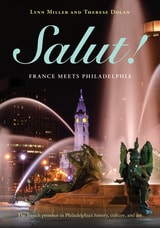
Salut!
France Meets PhiladelphiaLynn Miller and Therese Dolan
Temple University Press, 2021
One highly visible example of French influence on the city of Philadelphia is the Benjamin Franklin Parkway, modeled on the Champs-Élysées. In Salut!, Lynn Miller and Therese Dolan trace the fruitful, three-centuries-long relationship between the City of Brotherly Love and France. This detailed volume illustrates the effect of Huguenots settling in Philadelphia and 18-year-old William Penn visiting Paris, all the way up through more recent cultural offerings that have helped make the city the distinctive urban center it is today.
Salut! provides a magnifique history of Philadelphia seen through a particular cultural lens. The authors chronicle the French influence during colonial and revolutionary times. They highlight the contributions of nineteenth-century French philanthropists, such as Stephen Girard and the Dupont family. And they showcase the city’s vibrant visual arts community featuring works from the Philadelphia Museum of Art, the Rodin Museum, the Barnes Foundation, and the Joan of Arc sculpture, as well as studies of artists Thomas Eakins, Mary Cassatt, and Henry Ossawa Tanner. There is also a profile of renowned Le Bec-Fin chef Georges Perrier, who made Philadelphia a renowned culinary destination in the twentieth century.
With lavish illustrations and enthusiastic text, Salut!celebrates a potpourri of all things French in the Philadelphia region.
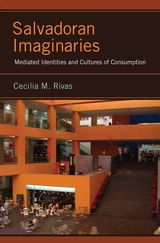
Salvadoran Imaginaries
Mediated Identities and Cultures of ConsumptionCecilia M. Rivas
Rutgers University Press, 2014
In Salvadoran Imaginaries, Cecilia M. Rivas takes us on a journey through twenty-first century El Salvador and to the diverse range of sites where the nation’s postwar identity is being forged. Combining field ethnography with media research, Rivas deftly toggles between the physical spaces where the new El Salvador is starting to emerge and the virtual spaces where Salvadoran identity is being imagined, including newspapers, literature, and digital media. This interdisciplinary approach enables her to explore the multitude of ways that Salvadorans negotiate between reality and representation, between local neighborhoods and transnational imagined communities, between present conditions and dreams for the future.
Everyday life in El Salvador may seem like a simple matter, but Rivas digs deeper, across many different layers of society, revealing a wealth of complex feelings that the nation’s citizens have about power, opportunity, safety, migration, and community. Filled with first-hand interviews and unique archival research, Salvadoran Imaginaries offers a fresh take on an emerging nation and its people.

Salvation in New England
Selections from the Sermons of the First PreachersEdited by Phyllis M. Jones and Nicholas R. Jones
University of Texas Press, 1977
The sermon as crafted by the early New England preachers was the most prominent literary form of its day, yet the earliest Puritan texts have as a rule been available only in rare-book collections. This anthology of sermons of the first generation of preachers fills a serious gap in American literature. The preachers collected here, the most widely published of their time, were among the eighty or more who emigrated to Massachusetts Bay during the 1630s. They are John Cotton of Boston, Thomas Shepard of Cambridge, and Thomas Hooker of Hartford, the three foremost "lights of the western churches," and two eminent colleagues, Peter Bulkeley of Concord and John Davenport, first of New Haven and later of Boston.
The selections are chosen to be representative of the lengthy works from which they are drawn, to reflect the major concerns and styles of the preachers' work as a whole, and to demonstrate the genre of the sermon as developed by the early American Puritans. Not only does this anthology represent an important contribution to literary history, but the sermons also illustrate a doctrine uniquely elaborated in this period—a consistent and emphatic narrative, mythlike in its repetition and heroics, of the progress of the soul from a state of nature to a state of salvation. This theme may be seen as a three-stage-development, although individual sermons may vary. These stages—preparation, vocation, and regeneration—determine the order of the selections.
The editors' introductory material supplies a comprehensive and thorough discussion of the early New England sermons, concentrating on their role, history, structure, style, and subject matter. A separate essay on the texts of the sermons describes the relationship between the early printed versions and their form as delivered in the pulpit. The introduction preceding each selection presents original research on the historical circumstances of the preaching and publication of the work from which the sermon is drawn. The editors have also provided brief biographies of the preacfiers represented here, an annotated list of recommended background reading, and the most exhaustive checklist available of authoritative editions of the sermons of these five preachers.
This book will be useful to colonial specialists as well as to students of early American literature, religion, and history. The texts are critically edited for readability, with modernized spelling and annotations of unfamiliar phrases and allusions.