Results by title
301 books match the query 'West (U.S.)' and 16 start with s

Sagebrush Collaboration
How Harney County Defeated the Takeover of the Malheur Wildlife RefugePeter Walker
Oregon State University Press, 2018
Every American is co-owner of the most magnificent estate in the world—federal public forests, grazing lands, monuments, national parks, wildlife refuges, and other public places. The writer Wallace Stegner famously referred to public lands as “America’s best idea,” but there have always been some who oppose the idea for ideological reasons, or because they have a vested economic interest. In the current decade, federal public lands have been under physical threat as never before, with armed standoffs and takeovers that the US government has proved stunningly unsuccessful at prosecuting in federal courts.
One such incident was the takeover of the Malheur National Wildlife Refuge in Harney County, Oregon, in 2016. Armed militants seized the headquarters of the refuge for forty-one days and occupied the community for three months. Militants threatened and harassed local residents, pledging to “give back” the land to unnamed “rightful owners” in their effort to enact a fringe interpretation of the US Constitution.
Drawing on more than two years of intensive fieldwork, Sagebrush Collaboration shows that the militants failed in their objectives because the sensible and hardworking citizens of Harney County had invested decades in collaboratively solving the very problems that the militia used to justify their anti–federal government revolution.
In Sagebrush Collaboration, Peter Walker offers the first book-length study of why the 2016 takeover of the Malheur National Wildlife Refuge failed. His nuanced and deeply researched account provides the full context for the takeover, including the response from local and federal officials and the grassroots community resistance. It will be essential reading for years to come for anyone who wants to understand the ongoing battle over the future of America’s public lands.

Saints, Sinners, and Sovereign Citizens
The Endless War over the West's Public LandsJohn L. Smith
University of Nevada Press, 2026
The grazing rights battle between Nevada rancher Cliven Bundy and the federal government, resulting in a tense, armed standoff between Bundy’s supporters and federal law enforcement officers, garnered international media attention in 2014. Saints, Sinners, and Sovereign Citizens places the Bundy conflict into the larger context of the Sagebrush Rebellion and the long struggle over the use of federal public lands in the American West.
Author John L. Smith skillfully captures the drama of the Bundy legal tangle amid the current political climate. Although no shots were fired during the standoff itself, just weeks later self-proclaimed Bundy supporters murdered two Las Vegas police officers and a civilian. In Eastern Oregon, other Bundy supporters occupied the federal offices of the Malheur National Wildlife Refuge, and one of them died in a hail of bullets.
While examining the complex history of federal public land policies, Smith exposes both sides of this story. He shows that there are passionate true believers on opposite sides of the insurrection, along with government agents and politicians in Washington complicit in efforts to control public lands for their wealthy allies and campaign contributors. With the promise of billions of dollars in natural resource profits and vast tracts of environmentally sensitive lands hanging in the balance, the West’s latest range war is the most important in the nation’s history. This masterful exposé raises serious questions about the fate of America’s public lands and the vehement arguments that are framing the debate from all sides.
Scenes from the High Desert
JULIAN STEWARD'S LIFE AND THEORYVirginia Kerns
University of Illinois Press, 2002
Searching for Golden Empires
Epic Cultural Collisions in Sixteenth-Century AmericaWilliam K. Hartmann
University of Arizona Press, 2014
Recounting eyewitness experiences that the Spaniards recorded in letters and memoirs, Hartmann describes ancient lifeways from Mexico to the western United States; Aztec accounts of the conquest; discussions between Aztec priests and Spanish priests about the nature of the universe; Cortés’s lifelong relationship with his famous Native mistress, Malinche (not to mention the mysterious fate of his wife); lost explorers who wandered from Florida to Arizona; and Marcos de Niza’s controversial reports of the “Seven Cities of Cíbola.”
Searching for Golden Empires describes how, even after the conquest of Mexico, Cortés remained a “wildcat” competitor with Coronado in a race to see who could find the “next golden empire,” believed to lie in the north. It is an exciting history of the shared story of the United States and Mexico, unveiling episodes both tragic and uplifting.
Serenity and Severity
Caleb Seeling
University Press of Colorado, 2016
Volume 5, Manifest West Series, Western Press Books
Serenity and severity form a classic Western dichotomy with many manifestations. Beautiful growth and renewal follow a terrifying and destructive forest fire. Rain upon a hayfield can be interpreted as grace or judgment from above, depending on the season. The unpredictability of nature provides hikers with a breathtaking view one day and a life-threatening scenario the next. Yet the nature of the West does not only imply the outdoors. The people of the West encounter serenity and severity in all aspects of life, and this duality impacts their identity and shapes their lifestyles, outlooks, worldviews, and values. This year’s collection includes political discussions, philosophical ponderings, and lighthearted humor that are all a part of life in the West.
For the fifth volume of Manifest West, twenty-nine writers explore this theme, revealing the duality of Western life through many different narrative trails—including governed environment, overwhelming fires, hiking adventures, and the effect of location on family. Creativity and diversity come to this anthology in both content and form, with flash fiction joining Manifest West’s standard genres of creative nonfiction, short fiction, and poetry. Their combined reflections enable us to see the intense relationship between humanity and nature; sometimes nature directs humans’ lives, to their harm and to their benefit, and other times, humanity abuses the very environment it cherishes as its home. Authors bring their personal styles, voices, and experiences with life in the West to contribute to a balanced and unique interpretation of serenity and severity.
Contributors: Rebecca Aronson, Betsy Bernfeld, Heidi E. Blankenship, Kaye Lynne Booth, Sarah B. Boyle, John Brantingham, William Cass, David Lavar Coy, Benjamin Dancer, Gail Denham, Patricia Frolander, John Haggerty, Lyla D. Hamilton, Michael Harty, Rick Kempa, Don Kunz, Ellaraine Lockie, Nathan Alling Long, Sarah Fawn Montgomery, Juan J. Morales, Lance Nizami, Ronald Pickett, Terry Severhill, David Stallings, Scott T. Starbuck, Abigail Van Kirk, Victoria Waddle, Evan Morgan Williams, Steven Wingate
Manifest West is Western Press Books’ literary anthology series. The press, affiliated with Western State Colorado University, produces one anthology annually and focuses on Western regional writing.
Sex and Death on the Western Emigrant Trail
The Biology of Three American TragediesDonald K. Grayson
University of Utah Press, 2018
The plights of these emigrant groups have been addressed by different historians in different ways; this book is the first to examine the tragedies in terms of biology. Grayson shows that who lived or died can largely be explained by age, sex, and family ties. His investigation reveals what happens when our cultural mechanisms for dealing with famine and extreme cold are reduced to only what our bodies can provide within structured social contexts. His results are surprising and not always intuitive as he investigates who survived in these life threatening situations.
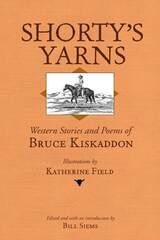
Shorty's Yarns
Western Stories and Poems of Bruce Kiskaddonedited by Bill Siems, illustrations by Katherine Field
Utah State University Press, 2004
In the world of cowboy poetry, no poet is better known or more widely appreciated than Bruce Kiskaddon. Though he died in 1950 his poems have been at the forefront of the cowboy poetry revival that began in the 1980s and have been reprinted frequently in published collections and anthologies. What is less known is that Kiskaddon during his lifetime also published stories. These humorous, realistic prose sketches of cowboy life were almost lost, but they are in their own right gems of literary Americana on a par with the poems. Originally published in the Western Livestock Journal between 1932 and 1939, the short stories drew on Kiskaddon's own experience of ranching in the Southwest and Australia to portray real life on the range. Bill Siems has recovered these stories and compiled and introduced them in this new collection, to which he has added a selection of Kiskaddon's poems and the original drawings that accompanied them, by Katherine Field, a fine, underappreciated western artist.
Set in Colorado, New Mexico, and Arizona, the stories are a loosely tied string of old timer's yarns with a continuing cast of engaging characters, whom Kiskaddon avoids reducing to cowboy stereotypes. They include, as Siems describes them, "Kiskaddon himself as the character Shorty. As a common waddy with a small man's feistiness and a young man's mischief, Shorty encounters the wicked world with a succession of companions: Bill, high-headed and a bit of an outlaw; Rildy Briggs, untamable and unstoppable young cowgirl; and Ike, an old-fashioned dandy and 'a very fortunate person.' More or less in the background is the Boss-actually a series of Bosses-generally affectionately respected as long as he remains democratic in his dealings with the waddies. Buffoonery is provided by a succession of pompous characters, from townspeople who look down their noses on wild, unwashed waddies to professors from the East who have read books on how ranches should be run."
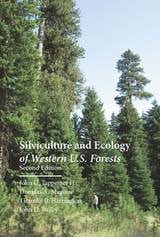
Silviculture and Ecology of Western U.S. Forests
John D. Bailey
Oregon State University Press, 2015
Silviculture and Ecology of Western U.S. Forests, Second Edition, is a text for students, professional forest managers, and scientists that summarizes both early and contemporary research and principles relevant to the silviculture, ecology, and multi-purpose management of western U. S. forests. Based on its authors’ significant experiences and contributions in the field, as well as nearly 1000 additional references, Silviculture and Ecology remains the only text that focuses on silviculture in western U.S. forests—providing background and basis for current biological, ecological, and managerial practices.
Detailed chapters on fire, tree growth, and management of complex stand structures, as well as shrub ecology and an ecosystem framework, are bolstered in the second edition. A new series of case studies illustrates how silvicultural practices are developed and modified as forests grow and new challenges and opportunities occur. Contemporary silvicultural practices, particularly pertaining to fire use, vegetation management, soil fertility, and fertilization have been updated, and modifications that enhance standard practices are demonstrated throughout the text.
In this comprehensive reference, readers entering the field will come to understand the significance of carefully managing forests by conscious design, and experienced silviculturists will benefit from the edition’s up-to-date information, providing forest users with a greater range of ecosystem services and consumable products alike.
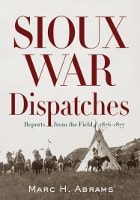
Sioux War Dispatches
Reports from the Field, 1876-1877Marc H. Abrams
Westholme Publishing, 2012
Rare, First-Hand Accounts from Newspaper Correspondents Describing the Course of America’s Largest Indian War, Compiled and Edited for the First Time in One Volume
“No one commands better the story of the Great Sioux War of 1876–1877 as presented in the nation’s newspapers than does Marc Abrams. Here is Abrams’s story of America’s greatest Indian war woven from those timely reports, augmented with insightful introductions and annotations. Abrams has produced a significant addition to the historiography of this endlessly fascinating struggle and its colorful personalities.” —Paul L. Hedren, author of After Custer: Loss and Transformation in Sioux Country
“Marc Abrams has provided an invaluable service to both scholars and lay readers in compiling this treasure trove of primary information. Like the correspondents he has come to know through his research, Marc has done the hard work; we need only read in comfort and benefit from his efforts.” —Douglas W. Ellison, author of Sole Survivor: An Examination of the Frank Finkel Narrative
“Marc Abrams’s book is an exciting and innovative approach that brings immediacy to the campaigns of Custer, Crook, and Miles, and teems with fascinating new detail. Sioux War Dispatches not only offers a gripping contemporary window into those times, it fills an important reference need as well.” —Jerome A. Greene, author of Stricken Field: The Little Bighorn Since 1876
Sioux War Dispatches: Reports from the Field, 1876-1877, tells the story of the Great Sioux War, including the battle of the Little Big Horn, primarily through the eyes of contemporary newspaper correspondents, both civilian and military. The volume begins with the Black Hills dilemma and the issue of the unceded territory (the disputed lands that were adjacent to the Great Sioux Reservation) and continues through to the spring of 1877 with the surrender of the legendary Sioux leader Crazy Horse. Along the way readers will learn about the Reynolds battle, the skirmish at Tongue River Heights, the battle of the Rosebud, the battle of the Little Big Horn, the skirmish at Warbonnet Creek, the fight at Slim Buttes, and more. In addition to numerous annotated excerpts from those who were there, are rare original dispatches, reprinted in full, that will take readers on a wild ride through several battles.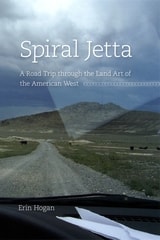
Spiral Jetta
A Road Trip through the Land Art of the American WestErin Hogan
University of Chicago Press, 2008
Erin Hogan hit the road in her Volkswagen Jetta and headed west from Chicago in search of the monuments of American land art: a salty coil of rocks, four hundred stainless steel poles, a gash in a mesa, four concrete tubes, and military sheds filled with cubes. Her journey took her through the states of Utah, Nevada, New Mexico, Arizona, and Texas. It also took her through the states of anxiety, drunkenness, disorientation, and heat exhaustion. Spiral Jetta is a chronicle of this journey.
A lapsed art historian and devoted urbanite, Hogan initially sought firsthand experience of the monumental earthworks of the 1970s and the 1980s—Robert Smithson’s Spiral Jetty, Nancy Holt’s Sun Tunnels, Walter De Maria’s Lightning Field, James Turrell’s Roden Crater, Michael Heizer’s Double Negative, and the contemporary art mecca of Marfa, Texas. Armed with spotty directions, no compass, and less-than-desert-appropriate clothing, she found most of what she was looking for and then some.
“I was never quite sure what Hogan was looking for when she set out . . . or indeed whether she found it. But I loved the ride. In Spiral Jetta, an unashamedly honest, slyly uproarious, ever-probing book, art doesn’t magically have the power to change lives, but it can, perhaps no less powerfully, change ways of seeing.”—Tom Vanderbilt, New York Times Book Review
“The reader emerges enlightened and even delighted. . . . Casually scrutinizing the artistic works . . . while gamely playing up her fish-out-of-water status, Hogan delivers an ingeniously engaging travelogue-cum-art history.”—Atlantic
“Smart and unexpectedly hilarious.”—Kevin Nance, Chicago Sun-Times
“One of the funniest and most entertaining road trips to be published in quite some time.”—June Sawyers, Chicago Tribune
“Hogan ruminates on how the work affects our sense of time, space, size, and scale. She is at her best when she reexamines the precepts of modernism in the changing light of New Mexico, and shows how the human body is meant to be a participant in these grand constructions.”—New Yorker

Staging Migrations toward an American West
From Ida B. Wells to Rhodessa JonesMarta Effinger-Crichlow
University Press of Colorado, 2014
Four case studies consider how the featured women—activist Ida B. Wells, singer Sissieretta "Black Patti” Jones, World War II black female defense-industry workers, and performance artist Rhodessa Jones—imagined and experienced the American West geographically and symbolically at different historical moments. Dissecting the varied ways they used migration to survive in the world from the viewpoint of theater and performance theory, Effinger-Crichlow reconceptualizes the migration histories of black women in nineteenth- and twentieth-century America.
This interdisciplinary study expands the understanding of the African American struggle for unconstrained movement and full citizenship in the United States and will interest students and scholars of American and African American history, women and gender studies, theater, and performance theory.

Stegner
Conversations On History And LiteratureWallace Stegner
University of Nevada Press, 1996
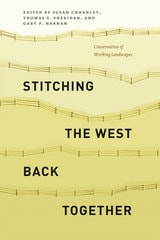
Stitching the West Back Together
Conservation of Working LandscapesEdited by Susan Charnley, Thomas E. Sheridan, and Gary P. Nabhan
University of Chicago Press, 2014
Featuring contributions from an impressive array of scientists, conservationists, scholars, ranchers, and foresters, Stitching the West Back Together explores that expanded, inclusive vision of environmentalism as it delves into the history and evolution of Western land use policy and of the working landscapes themselves. Chapters include detailed case studies of efforts to promote both environmental and economic sustainability, with lessons learned; descriptions of emerging institutional frameworks for conserving Western working landscapes; and implications for best practices and policies crucial to the future of the West’s working forests and rangelands. As economic and demographic forces threaten these lands with fragmentation and destruction, this book encourages a hopeful balance between production and conservation on the large, interconnected landscapes required for maintaining cultural and biological diversity over the longterm.
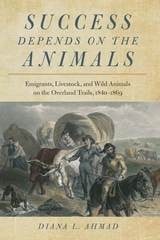
Success Depends on the Animals
Emigrants, Livestock, and Wild Animals on the Overland Trails, 1840–1869Diana L. Ahmad
University of Nevada Press, 2016
Between 1840 and 1869, thousands of people crossed the American continent looking for a new life in the West. Success Depends on the Animals explores the relationships and encounters that these emigrants had with animals, both wild and domestic, as they traveled the Overland Trail. In the longest migration of people in history, the overlanders were accompanied by thousands of work animals such as horses, oxen, mules, and cattle. These travelers also brought dogs and other companion animals, and along the way confronted unknown wild animals.
Ahmad’s study is the first to explore how these emigrants became dependent upon the animals that traveled with them, and how, for some, this dependence influenced a new way of thinking about the human-animal bond. The pioneers learned how to work with the animals and take care of them while on the move. Many had never ridden a horse before, let alone hitched oxen to a wagon. Due to the close working relationship that the emigrants were forced to have with these animals, many befriended the domestic beasts of burden, even attributing human characteristics to them.
Drawing on primary sources such as journals, diaries, and newspaper accounts, Ahmad explores how these new experiences influenced fresh ideas about the role of animals in pioneer life. Scholars and students of western history and animal studies will find this a fascinating and distinctive analysis of an understudied topic.

Sundancers and River Demons
Essays on Landscape and RitualConger Beasley Jr.
University of Arkansas Press, 1990
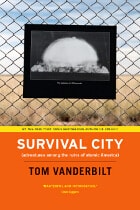
Survival City
Adventures among the Ruins of Atomic AmericaTom Vanderbilt
University of Chicago Press, 2002
On the road to Survival City, Tom Vanderbilt maps the visible and invisible legacies of the cold war, exhuming the blueprints for the apocalypse we once envisioned and chronicling a time when we all lived at ground zero. In this road trip among ruined missile silos, atomic storage bunkers, and secret test sites, a lost battleground emerges amid the architecture of the 1950s, accompanied by Walter Cotten’s stunning photographs. Survival City looks deep into the national soul, unearthing the dreams and fears that drove us during the latter half of the twentieth century.
“A crucial and dazzling book, masterful, and for me at least, intoxicating.”—Dave Eggers
“A genuinely engaging book, perhaps because [Vanderbilt] is skillful at conveying his own sense of engagement to the reader.”—Los Angeles Times
“A retracing of Dr. Strangelove as ordinary life.”—Greil Marcus, Bookforum