Results by title
991 books match the query 'Writing' and 65 start with s
SCOTLAND BRITAIN EMPIRE
WRITING THE HIGHLANDS, 1760-1860KENNETH MCNEIL
The Ohio State University Press, 2007
Kenneth McNeil invokes recent work in postcolonial studies to show how British writers of the Romantic period were actually shaping a more complex national and imperial consciousness. He discusses canonical works—the works of James Macpherson and Sir Walter Scott—and noncanonical and nonliterary works—particularly in the fields of historiography, anthropology, and sociology. This book calls for a rethinking of the “romanticization” of the Highlands and shows that Scottish writing on the Highlands reflects the unique circumstances of a culture simultaneously feeling the weight of imperial “anglobalization” while playing a vital role in its inception.
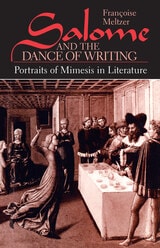
Salome and the Dance of Writing
Portraits of Mimesis in LiteratureFrançoise Meltzer
University of Chicago Press, 1987
Meltzer's readings of textual portraits—in the Gospel writers and Huysmans, Virgil and Stendhal, the Old Testament and Apuleius, Hawthorne and Poe, Kafka and Rousseau, Walter Scott and Mme de Lafayette—reveal an interplay of control and subversion: writing attempts to veil the visual and to erase the sensual in favor of "meaning," while portraiture, with its claims to bringing the natural object to "life," resists and eludes such control. Meltzer shows how this tension is indicative of a politics of repression and subversion intrinsic to the very act of representation. Throughout, she raises and illuminates fascinating issues: about the relation of flattery to caricature, the nature of the uncanny, the relation of representation to memory and history, the narcissistic character of representation, and the interdependency of representation and power.
Writing, thinking, speaking, dreaming, acting—the extent to which these are all controlled by representation must, Meltzer concludes, become "consciously unconscious." In the textual portrait, she locates the moment when this essential process is both revealed and repressed.
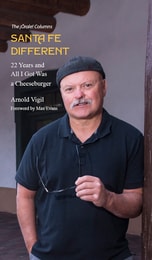
Santa Fe Different
22 Years and All I Got Was a CheeseburgerArnold Vigil
Museum of New Mexico Press, 2019
Saying And Silence
Frank Farmer
Utah State University Press, 2001
Frank Farmer has contributed important essays to the study of Bakhtin in composition, and in Saying and Silence he gathers some of those, along with several new essays, into a single volume. Scholars who specialize in Bakhtin will find this work engaging, but equally Farmer wants to explicate and apply Bakhtin for readers whose focus is teaching or some other nonspecialist dimension of writing scholarship.
Farmer explores the relationship between the meaningful word and the meaningful pause, between saying and silence, especially as the relationship emerges in our classrooms, our disciplinary conversations, and encounters with publics beyond the academy. Each of his chapters here addresses some aspect of how we and our students, colleagues, and critics have our say and speak our piece, often under conditions where silence is the institutionally sanctioned and preferred alternative. He has enlisted a number of Bakhtinian ideas (the superaddressee, outsideness, voice in dialogue) to help in the project of interpreting the silences we hear, naming the silences we do not hear, and of encouraging all silences to speak in ways that are freely chosen, not enforced.
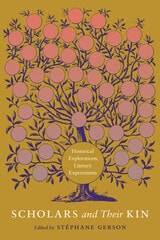
Scholars and Their Kin
Historical Explorations, Literary ExperimentsEdited by Stéphane Gerson
University of Chicago Press, 2025
Historians have often been discouraged from writing about their relatives, subjects who are deemed too close for objective analysis. But new work by scholars interested in their own families raises fascinating questions about subjectivity—and how historians might put it to use. It also invites historians to abandon traditional aspects of academic writing and draw, instead, on literary forms more equipped to highlight the relationships between scholar and material, feeling and reason.
Scholars and Their Kin embraces diverse approaches to such writing, bringing into the open the personal, professional, and historiographic complexities that ensue when scholars write intimate yet self-aware histories about their families. The first book devoted to this genre, which editor Stéphane Gerson terms “personal family history,” this anthology features ten essays and an afterword by scholars working in this vein. The contributors—varied in their disciplines, themes, and nationalities—reflect on their motivations and methodological choices, the politics of family history, and the institutional constraints they have sometimes faced. Making full use of the creative possibilities of voice and form, they expand the literary ambitions of personal family history, provide readers with narrative models, and address questions of shame, responsibility, love, gendered and racial violence, family archives, as well as the tall tales, myths, misrepresentations, memories, and omissions that suffuse family lives. Scholars and Their Kin will interest historians, scholars in other disciplines, and readers interested in family histories that open broader worlds.
Scientific Style and Format
The CSE Manual for Authors, Editors, and Publishers, Eighth EditionCouncil of Science Editors
University of Chicago Press, 2014
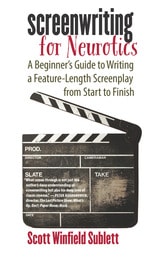
Screenwriting for Neurotics
A Beginner's Guide to Writing a Feature-Length Screenplay from Start to FinishScott Winfield Sublett
University of Iowa Press, 2014
Rather than throwing you into the writing process headfirst, Sublett guides you through the various decisions you need to make—about plot, character, structure, conflict—in the order you need to make them. He explains in straightforward terms the terminology and jargon, the theory and industry standards, and dispels common myths about screenwriting that can discourage or hold back a beginning writer.
Balancing theory and practice and offering valuable and insightful examples from recognizable and well-known classic and contemporary films, ranging from Casablanca to A Christmas Story to Clerks, Sublett provides the new writer with the necessary tools to successfully write a feature-length screenplay and offers a roadmap of where to go next. With an emphasis on helping a writer not just to begin, but also to finish a script, Screenwriting for Neurotics is the screenwriting book to help you actually write one.
Scribal Authorship and the Writing of History in Medieval England
Matthew Fisher
The Ohio State University Press, 2012
Securing a Place for Reading in Composition
The Importance of Teaching for TransferEllen C. Carillo
Utah State University Press, 2014
Securing a Place for Reading in Composition addresses the dissonance between the need to prepare students to read, not just write, complex texts and the lack of recent scholarship on reading-writing connections. Author Ellen C. Carillo argues that including attention-to-reading practices is crucial for developing more comprehensive literacy pedagogies. Students who can read actively and reflectively will be able to work successfully with the range of complex texts they will encounter throughout their post-secondary academic careers and beyond.
Considering the role of reading within composition from both historical and contemporary perspectives, Carillo makes recommendations for the productive integration of reading instruction into first-year writing courses. She details a “mindful reading” framework wherein instructors help students cultivate a repertoire of approaches upon which they consistently reflect as they apply them to various texts. This metacognitive frame allows students to become knowledgeable and deliberate about how they read and gives them the opportunity to develop the skills useful for moving among reading approaches in mindful ways, thus preparing them to actively and productively read in courses and contexts outside first-year composition.
Securing a Place for Reading in Composition also explores how the field of composition might begin to effectively address reading, including conducting research on reading, revising outcome statements, and revisiting the core courses in graduate programs. It will be of great interest to writing program administrators and other compositionists and their graduate students.
Seduction, Sophistry, and the Woman with the Rhetorical Figure
Michelle Ballif
Southern Illinois University Press, 2000
The rhetorical tradition, Michelle Ballif asserts, is based on the systematic exclusion of sophistry. In keeping with Aristotle’s prescription, rhetoric continues to be a counterpart to dialectic, a handmaiden to the pursuit of truth—even if that truth is merely probable.
According to Ballif, this search for truth manifests itself among current rhetoric and composition scholars in the form of an assumption that language is primarily communicative (i.e., that language can represent truth more or less faithfully). Ballif shows how invested we are in the notion of truth, in the idea that language represents truth, and in the assumption that the speaking/writing subject has, or should have, some essential relation to truth.
Provocatively, Ballif questions why the profession wants to retain these beliefs in the face of vociferous arguments from "new rhetorics" that the discipline no longer posits a foundational self or truth, and in the face of the poststructuralist critique, which has demonstrated that founding truth is always accomplished by first positing and then negating an “other.” As an alternative to this negative and violent rhetorical process, Ballif suggests a turn to sophistry as embodied in the figure of Woman, one with the power to seduce us (literally, to lead astray) from our truth and our demand for it.
This figuration of Woman, however, is not the dialectical other used to sustain the identity and privilege of Man. On the contrary, this Woman is an Other Woman: A Third Woman as a Third Sophistic practice that escapes Plato’s binary (philosophic rhetoric vs. sophistry) and renders the distinction between truth and deception incalculable. Ballif examines three figurations of the Third Woman as Third Sophistic as offered by Gorgias, Friedrich Nietzsche, and Jean Baudrillard.
Self+Culture+Writing
Autoethnography for/as Writing StudiesRebecca Jackson
Utah State University Press, 2021
Interest in autoethnography is growing among writing studies scholars, who see clear connections to well-known disciplinary conversations about personal narrative, as well as to the narrative turn in general and social justice efforts in particular. Contributions by authors from diverse backgrounds and institutional settings are organized into three parts: a section of writing studies autoethnographies, a section on how to teach autoethnography, and a section on how ideas about autoethnography in writing studies are evolving.
Self+Culture+Writing discusses the use of autoethnography in the writing classroom as both a research method and a legitimate way of knowing, providing examples of the genre and theoretical discussions that highlight the usefulness and limitations of these methods.
Contributors: Leslie Akst, Melissa Atienza, Ross Atkinson, Alison Cardinal, Sue Doe, Will Duffy, John Gagnon, Elena Garcia, Guadalupe Garcia, Caleb Gonzalez, Lilly Halboth, Rebecca Hallman Martini, Kirsten Higgins, Shereen Inayatulla, Aliyah Jones, Autumn Laws, Soyeon Lee, Louis M. Maraj, Kira Marshall-McKelvey, Jennifer Owen, Tiffany Rainey, Marcie Sims, Amanda Sladek, Trixie Smith, Anthony Warnke
Self-Development and College Writing
Nick Tingle
Southern Illinois University Press, 2004
Nick Tingle investigates the psychoanalytic dimensions of composition instruction in Self-Development and College Writing to boldly illustrate that mastering academic prose requires students to develop psychologically as well as cognitively. Asserting that writing instruction should be an engaging, developmental process for both teachers and students, he urges reaching for new levels of consciousness in the classroom to aid students in realigning their subjective relationships with knowledge and truth.
Drawing on psychoanalytic theory and twenty years of experience as a teacher, Tingle outlines the importance of moving beyond usual ways of thinking, abandoning the common sense of everyday reality, and coming to understand beliefs as beliefs and not absolutes. These developmental moves must be accompanied, Tingle says, by a new attitude towards language—not as something that points to things, but as a series of concepts that arrange the very things one points to. And this development is necessary not just in order to perform well in the writing class, but also to fully participate in and reap the academic rewards of structured, university life.
Self-Development and College Writing calls attention to the psychological destabilization this method may produce for students. Tingle explains that, if writing instructors are to respond to this destabilization, they must conceive of the classroom as a transitional space, or a kind of holding environment. They must also become aware of their psychological allegiances to particular theories of writing if they are to construct such environments.
But the goal of the transitional environment is worth pursuing, Tingle argues, contending that university education fails to address students’ developmental needs. With purposeful writing and deft analyses, Tingle shows that this goal also affords a means by which to place writing courses at the center of the educational curriculum. Conceived as a transitional space, the writing class may support and stabilize students in their developmental passage, thereby fostering an improved understanding of their academic work and, more importantly, an increased intellectual understanding of themselves and the complex world in which they live.
Semantic Tectonics
Writing Studies, Intersubjectivity, and the End of SolipsismDylan B. Dryer
Utah State University Press, 2026
Semantic Tectonics offers an engaging contribution to the ongoing conversation about the alliances of convenience and fissiparous relations among second--language writing, rhetoric, technical and professional communication, composition, and basic writing. From a theoretical perspective, the book brings together insights from a range of important scholars who have advanced relational alternatives to Cartesian dualisms of mind and body, self and other, thought and language. Naming these dualisms “solipsism,” the book extends these alternatives into empirical inquiries into the lexicogrammar of contemporary writing studies scholarship, using corpus analytics to bolster, and sometimes challenge, critical-discourse and content--analytic approaches.
With frequent pauses to explain and model corpus tools and applications, to pose questions for further inquiry, and to contemplate pedagogical or civic applications, Semantic Tectonics shows how the field’s social mission is constrained by tacit beliefs about critical concepts like language, self, context, genre, reflection, agency, and development. By foregrounding the empirical study of patterns in language itself, this book inspires readers to shift their perspective to the operational significance of word- and phrase-level discourse as sites for ideological and pedagogical intervention.
Sensemaking for Writing Programs and Writing Centers
Rita Malenczyk
Utah State University Press, 2023
The book is divided into two sections: Sensemaking with Tutors and Teachers, and Sensemaking and Institutional Structures. Chapter authors employ several theoretical approaches to sensemaking, ranging from individual experience to institutional history to document design, providing readers with ideas for how to administer and teach within their programs more effectively; how to advocate for their programs within larger university contexts; and how to positively influence the lives and careers of those they work with.
Sensemaking for Writing Programs and Writing Centers theorizes daily experiences from working lives and suggests problem-solving strategies. Writing program administrators, writing department chairs, and writing center directors, tutors, and staff will find value in its pages.
Serendipity in Rhetoric, Writing, and Literacy Research
Maureen Daly Goggin
Utah State University Press, 2018
In the course of research, most scholars have known moments of surprise, catastrophe, or good fortune, though they seldom refer to these occurrences in reports or discuss them with students. Serendipity in Rhetoric, Writing, and Literacy Research reveals the different kinds of work scholars, particularly those in rhetoric, writing, and literacy, need to do in order to recognize a serendipitous discovery or a missed opportunity.
In published scholarship and research, the path toward discovery seems clean and direct. The dead ends, backtrackings, start-overs, and stumbles that occur throughout the research process are elided, and seems that the researchers started at point A and arrived safely and neatly at point B without incident, as if by magic. The path, however, is never truly clear and straight. Research and writing is messy. Serendipity in Rhetoric, Writing, and Literacy Research features chapters from twenty-three writing scholars who have experienced moments of serendipity in their own work—not by magic or pure chance but through openness and active waiting, which offer an opportunity to prepare the mind.
Serendipity in Rhetoric, Writing, and Literacy Research illustrates the reality of doing research: there is no reliable prescription or one-size-fits-all manual, but success can be found with focused dedication and an open mind.
Contributors: Ellen Barton, Zachary C. Beare, Lynn Z. Bloom, Jennifer Clary-Lemon, Caren Wakerman Converse, Gale Coskan-Johnson, Kim Donehower, Bill Endres, Shirley E. Faulkner-Springfield, Lynée Lewis Gaillet, Brad Gyori, Judy Holiday, Gesa E. Kirsch, Lori Ostergaard, Doreen Piano, Liz Rohan, Ryan Skinnell, Patricia Wilde, Daniel Wuebben
Sexual Harassment and Cultural Change in Writing Studies
Patricia Freitag Ericsson
University Press of Colorado, 2020
Sexuality and the Politics of Ethos in the Writing Classroom
Zan Meyer Goncalves
Southern Illinois University Press, 2005
Applying the complexities of literacy development and personal ethos to the teaching of composition, Zan Meyer Goncalves challenges writing teachers to consider ethos as a series of identity performances shaped by the often-inequitable social contexts of their classrooms and communities. Using the rhetorical experiences of students who identify as lesbian, gay, bisexual, and/or transgender, she proposes a new way of thinking about ethos that addresses the challenges of social justice, identity, and transfer issues in the classroom.
Goncalves offers an innovative approach to teaching identity performance theory bound by social contexts. She applies this new approach to theories of specificity and intersectionality, illustrating how teachers can help students redefine the relationship between their social identities and their writing. She also addresses bringing social activism and identity politics into the classroom, helping writers make transfers across rhetorical contexts and linking students' interests to public conversations.
Theoretical and practical, Sexuality and the Politics of Ethos in the Writing Classroom provides teachers of first-year and advanced composition studies with useful, detailed assignments based in specific identity performance. Goncalves offers techniques to subvert oppressive language practices, while encouraging students to recognize themselves as writers, citizens, and active participants in their own educations and communities.
Shadow Modernism
Photography, Writing, and Space in Shanghai, 1925-1937William Schaefer
Duke University Press, 2017
Shaping Language Policy in the U.S.
The Role of Composition StudiesScott Wible
Southern Illinois University Press, 2013
In Shaping Language Policy in the U.S.: The Role of Composition Studies, author Scott Wible explores the significance and application of two of the Conference on College Composition and Communication’s key language policy statements: the 1974 Students’ Right to Their Own Language resolution and the 1988 National Language Policy. Wible draws from a wealth of previously unavailable archived material and professional literature to offer for the first time a comprehensive examination of these policies and their legacies that continue to shape the worlds of rhetoric, politics, and composition.
Wible demonstrates the continued relevance of the CCCC’s policies, particularly their role in influencing the recent, post-9/11 emergence of a national security language policy. He discusses in depth the role the CCCC’s language policy statements can play in shaping the U.S. government’s growing awareness of the importance of foreign language education, and he offers practical discussions of the policies’ pedagogical, professional, and political implications for rhetoric and composition scholars who engage contemporary debates about the politics of linguistic diversity and language arts education in the United States. Shaping Language Policy in the U.S. reveals the numerous ways in which the CCCC language policies have usefully informed educators’ professional practices and public service and investigates how these policies can continue to guide scholars and teachers in the future.
Silence and Listening as Rhetorical Arts
Edited by Cheryl Glenn and Krista Ratcliffe
Southern Illinois University Press, 2011
In Silence and Listening as Rhetorical Arts,editors Cheryl Glenn and Krista Ratcliffe bring together seventeen essays by new and established scholars that demonstrate the value and importance of silence and listening to the study and practice of rhetoric. Building on the editors’ groundbreaking research, which respects the power of the spoken word while challenging the marginalized status of silence and listening, this volumemakes a strong case for placing these overlooked concepts, and their intersections, at the forefront of rhetorical arts within rhetoric and composition studies.
Divided into three parts—History, Theory and Criticism, and Praxes—this book reimagines traditional histories and theories of rhetoric and incorporates contemporary interests, such as race, gender, and cross-cultural concerns, into scholarly conversations about rhetorical history, theory, criticism, and praxes. For the editors and the other contributors to this volume, silence is not simply the absence of sound and listening is not a passive act. When used strategically and with purpose—together and separately—silence and listening are powerful rhetorical devices integral to effective communication. The essays cover a wide range of subjects, including women rhetors from ancient Greece and medieval and Renaissance Europe; African philosophy and African American rhetoric; contemporary antiwar protests in the United States; activist conflict resolution in Israel and Palestine; and feminist and second-language pedagogies.
Taken together, the essays in this volume advance the argument that silence and listening are as important to rhetoric and composition studies as the more traditionally emphasized arts of reading, writing, and speaking and are particularly effective for theorizing, historicizing, analyzing, and teaching. An extremely valuable resource for instructors and students in rhetoric, composition, and communication studies, Silence and Listening as Rhetorical Arts will also have applications beyond academia, helping individuals, cultural groups, and nations more productively discern and implement appropriate actions when all parties agree to engage in rhetorical situations that include not only respectful speaking, reading, and writing but also productive silence and rhetorical listening.
Simple and Direct
A Rhetoric for WritersJacques Barzun
University of Chicago Press, 1994
Sing by the Burying Ground
EssaysMarianne Boruch
Northwestern University Press, 2024
In her fourth essay collection, award-winning author Marianne Boruch explores the possibilities of hope even in darkness. Through poetry, the silence of Trappist monks, the pandemic moment, the Wright brothers’ quirky stab at flight, treasured knickknacks, and more, this book celebrates the weird, the mundane, the overlooked, and the promise of a future. Though each essay is distinct, foraging fresh ways into Louise Glück, W. H. Auden, Elizabeth Bishop, Robert Frost, Marianne Moore, Sylvia Plath, John Berryman, Langston Hughes, and more, they are all connected through the thread of Emily Dickinson’s comment that her fate was to “sing, as a Boy does by the Burying Ground . . .” Even in times filled with horror, we find beauty. Maybe we can sing in the blackest of nights.
Thoughtful and expressive, this collection provides solace and humor for readers in a world where both are often in short supply.
Singular Texts/Plural Authors
Perspectives on Collaborative WritingLisa Ede and Andrea Lunsford
Southern Illinois University Press, 1992
Lisa Ede and Andrea Lunsford challenge the assumption that writing is a solitary act. That challenge is grounded in their own personal experience as long-term collaborators and in their extensive research, including a three-stage study of collaborative writing supported by the Fund for the Improvement of Post-Secondary Education.
The authors urge a fundamental change in our institutions to accommodate collaboration by radically resituating power in the classroom and by instituting rewards for collaborative work that equal rewards for single-authored work. They conclude with the injunction: "Today and in the twenty-first century, our data suggest, writers must be able to work together. They must, in short, be able to collaborate."
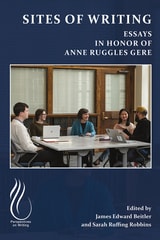
Sites of Writing
Essays in Honor of Anne Ruggles GereJames Edward Beitler
University Press of Colorado, 2026
Sites of Writing builds upon the multiple contributions of Anne Ruggles Gere across a long and highly productive career. The chapters in this edited collection, written by leading scholars (including some of Gere’s former students) to track her major contributions to writing studies, situate those contributions within the broader landscape of field development, and draw on those findings to assess important trends and project productive pathways for the future. The contributors to the collection consider disciplinary history, language and literacy, writing across the curriculum, digital rhetoric, writing’s extracurriculum, assessment, and English education, among other areas. Connecting these multiple fields of activity, Sites of Writing affirms Gere’s view of writing as a powerful social and cultural activity and of literacy, broadly conceived, as enabling cultural transformations and, in the process, transforming writing studies and other fields.
Situating Composition
Composition Studies and the Politics of LocationLisa Ede
Southern Illinois University Press, 2004
Responding to a growing pedagogical paralysis in debates over the nature and status of composition studies as an academic discipline, Lisa Ede offers a provocative inquiry into the politics of composition’s place in the academy. The result is a timely and engaging reflection on the rhetoric, ideology, and ethics of scholarship and instruction in composition studies today.
Situating Composition: Composition Studies and the Politics of Location delves into some of the most vexing issues presently facing the field: its status in relation to English studies, the nature and consequences of the writing process movement, the uneven professionalization of composition teachers, and the widening chasm between theory and practice. Ede interrogates key moments and texts in composition’s evolution, from the writing process movement to Susan Miller’s Textual Carnivals, through the interpretive lenses of historical analysis, theoretical critique, feminist and cultural theory, and Ede’s own two decades of experiences as a teacher and writing program administrator.
Questioning the narratives of progress and paradigm shifts that inform the field’s highly regarded recent theoretical studies, Ede urges scholars to carefully reconsider these claims, to honor the roles of teachers and students as more than dupes of ideology, and to more fully acknowledge—and utilize—the differences between the practice of theory and the practice of teaching. As academic hierarchies of knowledge increasingly privilege scholarship over instruction, Ede warns researchers to be cognizant of the politics and power inherent in their own location in the academy, particularly when professing to speak for teachers and students. To that end, the volume’s conclusion advocates pragmatic avenues for change and proffers topics for future discussion and debate.
Situating Portfolios
edited by Kathleen Blake Yancey & Irwin Weiser
Utah State University Press, 1997
Yancey and Weiser bring together thirty-one writing teachers from diverse levels of instruction, institutional settings, and regions to create a stimulating volume on the current practice in portfolio writing assessment. Contributors reflect on the explosion in portfolio practice over the last decade, why it happened, what comes next; discuss portfolios in hypertext, the web, and other electronic spaces; and consider emerging trends and issues that are involving portfolios in teacher assessment, faculty development, and graduate student experience.
Contributors: Peter Elbow, Pat Belanoff, Gail Hawisher, Cynthia Selfe, Brian Huot, Sandra Murphy, William Condon
Situating Writing Processes
Physicality, Improvisation, and the Teaching of WritingHannah Rule
University Press of Colorado, 2020
Sixteen Teachers Teaching
Two-Year College PerspectivesPatrick Sullivan
Utah State University Press, 2020
All of these teachers have spent their careers teaching multiple sections of writing classes each semester or term, so this book presents readers with an impressive—and perhaps unprecedented—abundance of pedagogical expertise, teaching knowledge, and classroom experience. Sixteen Teachers Teaching is a book filled with joyfulness, wisdom, and pragmatic advice. It has been designed to be a source of inspiration for high school and college English teachers as they go about their daily work in the classroom.
Contributors: Peter Adams, Jeff Andelora, Helane Adams Androne, Taiyon J. Coleman, Renee DeLong, Kathleen Sheerin DeVore, Jamey Gallagher, Shannon Gibney, Joanne Baird Giordano, Brett Griffiths, Holly Hassel, Darin Jensen, Jeff Klausman, Michael C. Kuhne, Hope Parisi, and Howard Tinberg
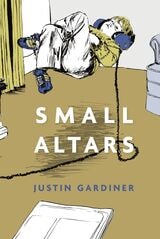
Small Altars
Justin Gardiner
Tupelo Press, 2024
In Small Altars, Justin Gardiner delves into the world of comic books and superheroes as a means for coming to terms with the many struggles of his brother’s life, as well as his untimely death, offering a lyric and honest portrayal of the tolls of mental illness, the redemptive powers of art and familial love, and the complex workings of grief.
Social Writing/Social Media
Publics, Presentations, and PedagogiesDouglas M. Walls
University Press of Colorado, 2018
Social media have been (for quite some time now) part of the fabric of our lives. But as with many new technologies, it often takes a while for us to be able to step back, assess the tool's impact, and consider what's next. This collection offers one of the first sets of scholarly work in our field that responds to social media's influence on both popular and extra-curricular writing as well as on scholarly communication. Too frequently, social media is dismissed as non-academic, unworthy of sustained attention by researchers. The authors featured here present compelling reasons why this oft-neglected form of writing deserves—and demands—continued academic response.
Social Writing/Social Media: Publics, Presentations, and Pedagogies makes this contribution by examining the impact of social media on three writing-related themes: publics and audiences, presentation of self and groups, and pedagogy at various levels of higher education. The contributors to this collection urge readers to pay attention to an undertheorized aspect of writing online—the acts of composing that occur specifically in social-media spaces. Organized in three sections—social media and public audiences; social media and presentation; and social media and pedagogy—it builds on previous explorations of the role of multimodality in composition studies by extending ongoing conversations that have asked readers to expand notions of literacy in the twenty-first century. By addressing the wide range of composing activities that take place in social media and the rich variety of genres, audiences, stylistic choices, and pedagogical possibilities, this collection offers an important contribution to our understanding of pedagogy and practice in social media spaces.
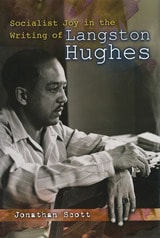
Socialist Joy in the Writing of Langston Hughes
Jonathan Scott
University of Missouri Press, 2007
Jonathan Scott has written the first book-length study to analyze the extraordinary range of Hughes’s creative output, showing that his unassailable reputation as one of America’s finest “folk poets” barely scratches the surface of his oeuvre. Scott offers a robust account of the relations between Hughes and political activism to show that Hughes’s direct involvement with the U.S. socialist movement of the 1920s and 1930s was largely responsible for the variety of his writing. Scott also contends that the goal of overthrowing white oppression produced a “socialist joy” that would express itself repeatedly in Hughes’s work during the anticommunist crusades of the 1950s and 1960s.
In his provocative study, Scott explores four areas of Hughes’s intellectual work: his relationship with Afro-Caribbean arts, Soviet Russia, and the Harlem Renaissance; his postwar newspaper writing for the African American press; his extensive cultural work as an anthologist; and his writings for young people. Through these analyses, Scott proposes the concept of “red, white, and black” as an alternative paradigm for appreciating Hughes in particular and the American scene in general.
Scott views Hughes not simply as a great author but as an American working-class intellectual trickster whose eccentric projects require a redefinition of the very concept of authorship. By focusing on Hughes’s intellectual method, Scott also contests the notion of reducing all African Americans to one undifferentiated social status beneath that of any class within the white oppressing group—a hallmark of racial oppression that has diminished, in the U.S. academy, Hughes’s international status.
As Scott persuasively argues, it is only through an understanding of Hughes’s literary method that we can undertake a thorough account of his prolific production during the cold war era. His book situates Hughes’s life and work in their proper contexts, both reconfirming Hughes’s reputation as an intellectual of the American Left and establishing his long-denied place in American studies as the most well-rounded writer of his time.

Socially Engaged Creative Practice
Contemporary Case StudiesEdited by Jess Moriarty and Kate Aughterson
Intellect Books, 2024
Each chapter of Socially Engaged Creative Practice focuses on an individual or group’s mode of working and methodological practice of performance across a range of modes, disciplines, and media, from community opera to online queer performance; from anti-racist classroom pedagogy to 1980s cabaret in nightclubs; from community art projects in schools to community writing projects in transport interchanges. The performers, writers, and creators represented here engage and grapple with contemporary performance as a situated practice and as a problem.
The personal perspective of each performer—as directors, librettists, producers, and writers—is explicitly located in a community, and the book offers a series of case studies detailing socially engaged work that aligns with concepts of performance and community.
Sojourning in Disciplinary Cultures
A Case Study of Teaching Writing in EngineeringMaureen Mathison
Utah State University Press, 2019
This volume represents the collective experiences and insights of writing consultants involved in the large-scale curriculum reform of the entire College of Engineering; they collaborated closely with faculty members of the various departments and taught writing to engineering students in engineering classrooms. Collaborators developed syllabi that incorporated writing into their courses in meaningful ways, designed lessons to teach various aspects of writing, created assignments that integrated engineering and writing theory and concepts, and worked one-on-one with students to provide revision feedback. Though interactions were sometimes tense, the two groups––writing and engineering––developed a “third culture” that generally placed students at the center of learning.
Sojourning in Disciplinary Cultures provides a guide to successful collaborations with STEM faculty that will be of interest to WPAs, instructors, and a range of both composition scholars and practitioners seeking to understand more about the role of writing and communication in STEM disciplines.
Contributors:
Linn K. Bekins, Sarah A. Bell, Mara K. Berkland, Doug Downs, April A. Kedrowicz, Sarah Read, Julie L. Taylor, Sundy Watanabe
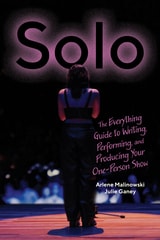
Solo
The Everything Guide to Writing, Performing, and Producing Your One-Person ShowArlene Malinowski and Julie Ganey
Northwestern University Press, 2026
The art of solo performance has exploded in the last twenty years as an immediate and accessible art form. The number of solo festivals grows every year, and artists are hungry for the opportunity to center their own voices and experiences. Solo is designed to feed that hunger.
Seasoned theater educators and performers Arlene Malinowski and Julie Ganey have compiled an invaluable guide for students and practitioners alike. Topics include high-stakes narratives, compelling characters, and the role of narrators, as well as practical exercises, interviews with performers at every stage of their careers, and examples from real one-person shows. Performers will also find advice on collaborating with directors, incorporating technical elements, and producing and marketing strategies.
Whether you’re just starting out or are a seasoned professional looking to refine your show-in-progress, Solo is an essential volume for anyone ready to bring their story to life onstage.
Solving Problems in Technical Communication
Edited by Johndan Johnson-Eilola and Stuart A. Selber
University of Chicago Press, 2012
The field of technical communication is rapidly expanding in both the academic world and the private sector, yet a problematic divide remains between theory and practice. Here Stuart A. Selber and Johndan Johnson-Eilola, both respected scholars and teachers of technical communication, effectively bridge that gap.
Something Old, Something New
College Writing Teachers and Classroom ChangeWendy Bishop. Foreword by Patrick Hartwell
Southern Illinois University Press, 1990
How do college writing teachers learn new ways to teach? Most current composition research focuses almost exclusively on student writers, ignoring the role the teacher plays in classroom development. Here is the first book to focus on college writing teachers and the ways in which they are affected by graduate rhetoric pedagogy courses.
Wendy Bishop observed teachers enrolled in a doctoral seminar, titled "Teaching Basic Writing," and then conducted case studies of five of those teachers in their college writing classrooms to investigate how their teaching practices changed and how their previous professional and personal histories influenced their ability to make those changes.
Speaking Up, Speaking Out
Lived Experiences of Non-Tenure-Track Faculty in Writing StudiesJessica Edwards
Utah State University Press, 2020
Each chapter suggests tangible ways that writing departments and supporters can be more thoughtful about their policies and practices as they work to create more equitable spaces for NTTF. Speaking Up, Speaking Out considers the rhetorical power of labeling and asserts why contingent faculty, for far too long, have been compared to and against TT faculty and often encouraged to reach the same or similar productivity with scholarship, teaching, and service that TT faculty produce. The myopic ideas about what is valued and whose position is deemed more important impacts contingent faculty in ways that, as contributors in this collection share, effect and affect faculty productivity, emotional health, and overall community involvement.
Contributors: Norah Ashe-McNalley, Sarah Austin, Rachel Azima, Megan Boeshart Burelle, Peter Brooks, Denise Comer, Jessica Cory, Liz Gumm, Brendan Hawkins, Heather Jordan, Nathalie Joseph, Julie Karaus, Christopher Lee, John McHone, Angie McKinnon Carter, Dauvan Mulally, Seth Myers, Liliana M. Naydan, Linda Shelton, Erica Stone, Elizabeth Vincelette, Lacey Wootton
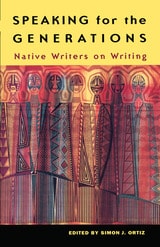
Speaking for the Generations
Native Writers on WritingEdited by Simon J. Ortiz
University of Arizona Press, 1997
Of varied backgrounds, the writers represent Indian heritages and cultures from the Pacific Northwest to the northern plains, from Canada to Guatemala. They are poets, novelists, and playwrights. And although their backgrounds are different and their statements intensely personal, they share common themes of their relationship to the land, to their ancestors, and to future generations of their people. From Gloria Bird's powerful recounting of personal and family history to Esther Belin's vibrant tale of her urban Native homeland in Los Angeles, these writers reveal the importance of place and politics in their lives. Leslie Marmon Silko calls upon the ancient tradition of Native American storytelling and its role in connecting the people to the land. Roberta J. Hill and Elizabeth Woody ponder some of the absurdities of contemporary Native life, while Guatemalan Victor Montejo takes readers to the Mayan world, where a native culture had writing and books long before Europeans came.
Together these pieces offer an inspiring portrait of what it means to be a Native writer in the twentieth century. With passion and urgency, these writers are speaking for themselves, for their land, and for the generations.
Speaking of Writing
Selected Hopwood LecturesNicholas Delbanco, Editor
University of Michigan Press, 1990
These essays were originally presented at the Hopwood Lecture series at the University of Michigan in conjunction with the annual awarding of the Hopwood Prizes in creative writing. The internationally recognized awards are granted by the bequest of playwright Avery Hopwood (1884-1928), who sought to encourage student work in the fields of dramatic writing, fiction, poetry, and the essay. The essays speak to the apprentice writer, finding their focus in a twinned discussion of the craft of prose and the art of poetry. The authors share an assumption that literature matters, and vitally, to the culture it reports on and sustains.
Speech Begins after Death
Michel Foucault
University of Minnesota Press, 2016
In 1968, Michel Foucault agreed to a series of interviews with critic Claude Bonnefoy, which were to be published in book form. Bonnefoy wanted a dialogue with Foucault about his relationship to writing rather than about the content of his books. The project was abandoned, but a transcript of the initial interview survived and is now being published for the first time in English. In this brief and lively exchange, Foucault reflects on how he approached the written word throughout his life, from his school days to his discovery of the pleasure of writing.
Wide ranging, characteristically insightful, and unexpectedly autobiographical, the discussion is revelatory of Foucault’s intellectual development, his aims as a writer, his clinical methodology (“let’s say I’m a diagnostician”), and his interest in other authors, including Raymond Roussel and Antonin Artaud. Foucault discloses, in ways he never had previously, details about his home life, his family history, and the profound sense of obligation he feels to the act of writing. In his Introduction, Philippe Artières investigates Foucault’s engagement in various forms of oral discourse—lectures, speeches, debates, press conferences, and interviews—and their place in his work.
Speech Begins after Death shows Foucault adopting a new language, an innovative autobiographical communication that is neither conversation nor monologue, and is one of his most personal statements about his life and writing.
Spirituality and the Writer
A Personal InquiryThomas Larson
Ohio University Press, 2019
Today, the surprisingly elastic form of the memoir embraces subjects that include dying, illness, loss, relationships, and self-awareness. Writing to reveal the inner self—the pilgrimage into one’s spiritual and/or religious nature—is a primary calling. Contemporary memoirists are exploring this field with innovative storytelling, rigorous craft, and new styles of confessional authorship. Now, Thomas Larson brings his expertise as a critic, reader, and teacher to the boldly evolving and improvisatory world of spiritual literature.
In his book-length essay Spirituality and the Writer, Larson surveys the literary insights of authors old and new who have shaped religious autobiography and spiritual memoir—from Augustine to Thomas Merton, from Peter Matthiessen to Cheryl Strayed. He holds them to an exacting standard: they must render transcendent experience in the writing itself. Only when the writer’s craft prevails can the fleeting and profound personal truths of the spirit be captured. Like its predecessor, Larson’s The Memoir and the Memoirist,Spirituality and the Writer will find a home in writing classrooms and book groups, and be a resource for students, teachers, and writers who seek guidance with exploring their spiritual lives.
Standing at the Threshold
Working through Liminality in the Composition and Rhetoric TAshipWilliam J. Macauley
Utah State University Press, 2021
These authors enrich the TA experience by supporting agency and self-efficacy, encouraging TAs to take active roles in understanding their positions and making the most of that experience. Many chapters are written by current or former TAs who are writing as a means of preparing, informing, and guiding new rhet/comp TAs, encouraging them to make choices about how they want to think through and participate in their teaching work.
The first work on the market to delve deeply into the TAship itself and what it means for the larger discipline, Standing at the Threshold provides a rich new theorizing based in the real experiences and liminalities of teaching assistants in composition and rhetoric, approached from a productive array of perspectives.
Contributors: Lew Caccia, Lillian Campbell, Rachel Donegan, Jaclyn Fiscus-Cannady, Jennifer K. Johnson, Ronda Leathers Dively, Faith Matzker, Jessica Restaino, Elizabeth Saur, Megan Schoettler, Kylee Thacker Maurer
Stick Houses
StoriesMatthew L.M. Fletcher
Michigan State University Press, 2025
These stories explore themes of home and belonging, and how Native people are not just one thing; they are both Native and non-Native blood. Some are deeply connected to their Anishinaabe heritage, while others have suffered a complete loss of their culture. Many Native people are conflicted about their background and suffer intergenerational trauma. These stories originate in dynamic environments and situations such as airports, college, Indian lawyering, and high school baseball games.
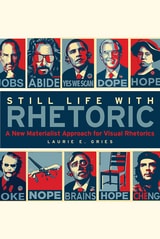
Still Life with Rhetoric
A New Materialist Approach for Visual RhetoricsLaurie Gries
Utah State University Press, 2015
In Still Life with Rhetoric, Laurie Gries forges connections among new materialism, actor network theory, and rhetoric to explore how images become rhetorically active in a digitally networked, global environment. Rather than study how an already-materialized “visual text” functions within a specific context, Gries investigates how images often circulate and transform across media, genre, and location at viral rates. A four-part case study of Shepard Fairey’s now iconic Obama Hope image elucidates how images reassemble collective life as they actualize in different versions, enter into various relations, and spark a firework of activity across the globe.
While intent on tracking the rhetorical life of a single, multiple image, Still Life with Rhetoric is most concerned with studying rhetoric in motion. To account for an image’s widespread circulation and emergent activities, Gries introduces iconographic tracking—a digital research method for tracing an image’s divergent rhetorical becomings. Yet Gries also articulates a dynamic set of theoretical principles for studying rhetoric as a distributed, generative, and unforeseeable event that is applicable beyond the study of visual rhetoric. With an eye toward futurity—the strands of time beyond a thing’s initial moment of production and delivery—Still Life with Rhetoric intends to be taken up by those interested in visual rhetoric, research methods, and theory.
Stories and Stone
Writing the Ancestral Pueblo HomelandReuben Ellis
University of Arizona Press, 1997
Collected here are more than fifty selections from a striking body of literature about the prehistoric Southwest: essays, stories, travelers' reports, and poems spanning more than four centuries of visitation. They include timeless writings such as John Wesley Powell's The Exploration of the Colorado River and Its Tributaries and Frank Hamilton Cushing's "Life at Zuni," plus contemporary classics ranging from Colin Fletcher's The Man Who Walked Through Time to Wallace Stegner's Beyond the Hundredth Meridian to Edward Abbey's "The Great American Desert." Reuben Ellis's introduction brings contemporary insight and continuity to the collection, and a section on "reading in place" invites readers to experience these great works amidst the landscapes that inspired them. For anyone who loves to roam ancient lands steeped in mystery, Stories and Stone is an incomparable companion that will enhance their enjoyment.
Stories from First-Year Composition
FYC Pedagogies that Foster Student Writing Identity and AgencyJo-Anne Kerr
University Press of Colorado, 2020
Stories of Becoming
Demystifying the Professoriate for Graduate Students in Composition and RhetoricClaire Lutkewitte
Utah State University Press, 2021
Using data from the study, the authors offer six specific strategies—including how to manage time, how to create a work/life balance, and how to collaborate with others—that readers can use to prepare for the composition and rhetoric job market and to begin their careers as full-time faculty members. Readers will learn about the possible responsibilities they may take on as new faculty, particularly those that go beyond teaching, research, service, and administration to include navigating the politics of higher education and negotiating professional identity construction. And they will also engage in activities and answer questions designed to deepen their understanding of the field and help them identify their own values and desired career trajectory.
Stories of Becoming demystifies the professoriate, compares what current new faculty have to say of their job expectations with the realities that students might face when on the job, and brings to light the invisible, behind-the-scenes work done by new faculty. It will be invaluable to graduate students, those who teach graduate students, new faculty, and hiring administrators in composition and rhetoric.
Storycraft, Second Edition
The Complete Guide to Writing Narrative NonfictionJack Hart
University of Chicago Press, 2021
In this new edition, Hart has expanded the book’s range to delve into podcasting and has incorporated new insights from recent research into storytelling and the brain. He has also added dozens of new examples that illustrate effective narrative nonfiction.
This edition of Storycraft is also paired with Wordcraft, a new incarnation of Hart’s earlier book A Writer’s Coach, now also available from Chicago.
Storycraft
The Complete Guide to Writing Narrative NonfictionJack Hart
University of Chicago Press, 2011
From the work of the New Journalists in the 1960s, to the New Yorker essays of John McPhee, Susan Orlean, Atul Gawande, and a host of others, to blockbuster book-length narratives such as Mary Roach’s Stiff or Erik Larson’s Devil in the White City, narrative nonfiction has come into its own. Yet writers looking for guidance on reporting and writing true stories have had few places to turn for advice. Now in Storycraft, Jack Hart, a former managing editor of the Oregonian who guided several Pulitzer Prize–winning narratives to publication, delivers what will certainly become the definitive guide to the methods and mechanics of crafting narrative nonfiction.
Hart covers what writers in this genre need to know, from understanding story theory and structure, to mastering point of view and such basic elements as scene, action, and character, to drafting, revising, and editing work for publication. Revealing the stories behind the stories, Hart brings readers into the process of developing nonfiction narratives by sharing tips, anecdotes, and recommendations he forged during his decades-long career in journalism. From there, he expands the discussion to other well-known writers to show the broad range of texts, styles, genres, and media to which his advice applies. With examples that draw from magazine essays, book-length nonfiction narratives, documentaries, and radio programs, Storycraft will be an indispensable resource for years to come.
Storying Writing Center Labor for Anti-Capitalist Futures
Genie Nicole Giaimo
University Press of Colorado, 2025