Results by title
104 books match the query 'Writings' and 6 start with s
Sabbatian Heresy
Writings on Mysticism, Messianism, and the Origins of Jewish ModernityEdited by Pawel Maciejko
Brandeis University Press, 2017
The pronouncements of Sabbatai Tsevi (1626–76) gave rise to Sabbatianism, a key messianic movement in Judaism that spread across Jewish communities in Europe, Asia, and North Africa. The movement, which featured a set of theological doctrines in which Jewish Kabbalistic tradition merged with Muslim and later Christian elements, suffered a setback with Tsevi’s conversion to Islam in 1666. Nonetheless, for another hundred and fifty years, Sabbatianism continued to exist as a heretical underground movement. It provoked intense opposition from rabbinic authorities for another century and had a significant impact on central developments of later Judaism, such as the Haskalah, the Reform movement, Hasidism, and the secularization of Jewish society. This volume provides a selection of the most original and influential texts composed by Sabbatai Tsevi and his followers, complemented by fragments of the works of their rabbinic opponents and contemporary observers and some literary works inspired by Sabbatianism. An introduction and annotations by Pawel Maciejko provide historical, political, and social context for the documents.
[more]

Selections from the Writings of James Nayler, 3rd ed.
Nayler James
QuakerPress, 2013
[more]
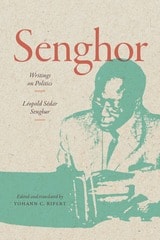
Senghor
Writings on PoliticsLéopold Sédar Senghor. Edited and translated by Yohann C. Ripert
Duke University Press, 2025
Senghor: Writings on Politics brings Léopold Sédar Senghor’s most vital essays, speeches, and political writings to English-language readers for the first time. Spanning the colonial and postcolonial years between 1937 and 1971, this volume captures Senghor’s evolution from a pioneering poet and cofounder of Négritude to the president of Senegal as he grappled with the complexities of postcolonial identity, governance, and cultural hybridity. Senghor’s reflections on topics ranging from federalism and decolonization to Francophonie reveal his commitment to weaving African and European cultural threads into a vision of global solidarity in ways that resonate with contemporary debates on race, culture, and politics. Inviting readers to engage with a seminal figure whose legacy continues to inspire new ways of thinking about freedom, independence, and coexistence, this landmark book furthers our understanding of one of the twentieth century’s most influential cultural thinkers.
[more]

Shrapnel Minima
Writings from Humanities UndergroundEdited by Prasanta Chakravarty
Seagull Books, 2014
This collection of essays, fiction, poetry and discussions, derived from the cult Internet magazine HumanitiesUnderground, provides entry into some of the most burning issues in the humanities in contemporary South Asia. The anthology brings together select pieces on such diverse issues as aesthetics and artistic craft, ethics and criticism, movements and institutions, and ideologies and reflections. Working at the cusps of the artistic and the political spheres, the anthology, like the magazine, argues that since our concerns for art and philosophy must be understood through the political, social and economic conditions that birth them, our writing and our reading must be attentive to the intricacies of these relationships and the contexts they create. This anthology of engaging essays will be of interest to scholars in the humanities both within South Asia and beyond.
[more]
Signs and Images
Writings on Art, Cinema and PhotographyRoland Barthes
Seagull Books, 2016
A major collection of essays and interviews from an iconic 20th-century philosopher in five volumes, now all available together in paperback.
Roland Barthes was a restless, protean thinker. A constant innovator—often as a daring smuggler of ideas from one discipline to another—he first gained an audience with his pithy essays on mass culture and then went on to produce some of the most suggestive and stimulating cultural criticism of the late twentieth century, including Empire of Signs, The Pleasure of the Text, and Camera Lucida. In 1976, this one-time structuralist outsider was elected to a chair at France’s preeminent Collège de France, where he chose to style himself as a professor of literary semiology until his death in 1980.
The greater part of Barthes’s published writings has been available to a French audience since 2002, but now, translator Chris Turner presents a collection of essays, interviews, prefaces, book reviews, and other journalistic material for the first time in English and divided into five themed volumes. Volume four, Signs and Images, gathers pieces related to his central concerns—semiotics, visual culture, art, cinema, and photography—and features essays on Marthe Arnould, Lucien Clergue, Daniel Boudinet, Richard Avedon, Bernard Faucon, and many more.
[more]
Spinoza’s Challenge to Jewish Thought
Writings on His Life, Philosophy, and LegacyEdited by Daniel B. Schwartz
Brandeis University Press, 2019
Arguably, no historical thinker has had as varied and fractious a reception within modern Judaism as Baruch (Benedict) Spinoza (1632–77), the seventeenth-century philosopher, pioneering biblical critic, and Jewish heretic from Amsterdam. Revered in many circles as the patron saint of secular Jewishness, he has also been branded as the worst traitor to the Jewish people in modern times. Jewish philosophy has cast Spinoza as marking a turning point between the old and the new, as a radicalizer of the medieval tradition and table setter for the modern. He has served as a perennial landmark and point of reference in the construction of modern Jewish identity. This volume brings together excerpts from central works in the Jewish response to Spinoza. True to the diversity of Spinoza’s Jewish reception, it features a mix of genres, from philosophical criticism to historical fiction, from tributes to diary entries, providing the reader with a sense of the overall historical development of Spinoza’s posthumous legacy.
[more]