Results by title
8812 books match the query 'Political Science' and 537 start with s
Street-Level Bureaucracy
Dilemmas of the Individual in Public ServiceMichael Lipsky
Russell Sage Foundation, 1983
Streets, Railroads, and the Great Strike of 1877
David O. Stowell
University of Chicago Press, 1999
Whereas most historians treat the event solely as a massive labor strike that targeted the railroads, David O. Stowell examines America's predicament more broadly to uncover the roots of this rebellion. He studies the urban origins of the Strike in three upstate New York cities—Buffalo, Albany, and Syracuse. He finds that locomotives rumbled through crowded urban spaces, sending panicked horses and their wagons careening through streets. Hundreds of people were killed and injured with appalling regularity. The trains also disrupted street traffic and obstructed certain forms of commerce. For these reasons, Stowell argues, The Great Strike was not simply an uprising fueled by disgruntled workers. Rather, it was a grave reflection of one of the most direct and damaging ways many people experienced the Industrial Revolution.
"Through meticulously crafted case studies . . . the author advances the thesis that the strike had urban roots, that in substantial part it represented a community uprising. . . .A particular strength of the book is Stowell's description of the horrendous accidents, the toll in human life, and the continual disruption of craft, business, and ordinary movement engendered by building railroads into the heart of cities."—Charles N. Glaab, American Historical Review
Streetwise
How Taxi Drivers Establish Customer's TrustworthinessDiego Gambetta
Russell Sage Foundation, 2005
Strength in Unity
Christian Base Communities and the Urban Popular Movement in Guadalajara, 1965–1994Brad H. Wright
University of Alabama Press, 2026
Examines how poor and working-class communities in Guadalajara organized through faith, education, and culture to claim dignity, justice, and the right to the city.
Strength in Unity: Christian Base Communities and the Urban Popular Movement in Guadalajara, 1965–1994 presents the grassroots history of Guadalajara’s urban popular movement, centering the voices and struggles of poor and working-class communities, especially women, who organized for dignity, justice, and the right to the city. Brad H. Wright brings to light the transformative role of Christian base communities and Freirean popular education as incubators of political consciousness and collective action in the face of authoritarian repression and neoliberal coaptation.
Drawing from oral histories, personal archives, and the records of the Sagrado Corazón nuns, Wright reconstructs a powerful counternarrative to dominant portrayals of marginalized populations as “apathetic” and “uneducated.” Strength in Unity reveals a vibrant culture of resistance where women led campaigns for basic services, built schools, and demanded access to transportation, using tools such as community newspapers, street theater, and music to mobilize and sustain solidarity.
This deeply researched and compellingly told history challenges conventional accounts of urban development and social movements in Latin America. Strength in Unity is essential reading for scholars, students, and activists interested in grassroots organizing, liberation theology, and the enduring power of community-led change.
Strengthening International Courts
The Hidden Costs of LegalizationLeslie Johns
University of Michigan Press, 2015
Examining detailed case studies of the International Court of Justice and the transition from the General Agreement on Tariffs and Trade to the World Trade Organization, Leslie Johns finds that a court’s design has nuanced and mixed effects on international cooperation. A strong court is ideal when laws are precise and the court is nested within a political structure like the European Union. Strong courts encourage litigation but make states more likely to comply with agreements when compliance is easy and withdraw from agreements when it is difficult. A weak court is optimal when law is imprecise and states can easily exit agreements with minimal political or economic repercussions. Johns concludes the book with recommendations for promoting cooperation by creating more precise international laws and increasing both delegation and obligation to international courts.
Strengthening Peace in Post-Civil War States
Transforming Spoilers into StakeholdersEdited by Matthew Hoddie and Caroline A. Hartzell
University of Chicago Press, 2010
Among the more frequent and most devastating of conflicts, civil wars—from Yugoslavia to Congo—frequently reignite and even spill over into the international sphere. Given the inherent fragility of civil war peace agreements, innovative approaches must be taken to ensure the successful resolution of these conflicts. Strengthening Peace in Post–Civil War States provides both analytical frameworks and a series of critical case studies demonstrating the effectiveness of a range of strategies for keeping the peace.
Coeditors Matthew Hoddie and Caroline A. Hartzell here contend that lasting peace relies on aligning the self-interest of individuals and communities with the society-wide goal of ending war; if citizens and groups have a stake in peace, they will seek to maintain and defend it. The rest of the contributors explore two complementary approaches toward achieving this goal: restructuring domestic institutions and soft intervention. Some essays examine the first tactic, which involves reforming governments that failed to prevent war, while others discuss the second, an umbrella term for a number of non-military strategies for outside actors to assist in keeping the peace.
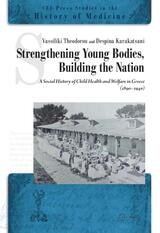
Strengthening Young Bodies, Building the Nation
A Social History of the Child Health and Welfare in Greece (1890–1940)Vassiliki Theodorou
Central European University Press, 2019

Strictly Personal and Confidential
The Letters Harry Truman Never MailedEdited by Monte M. Poen
University of Missouri Press, 1999
Harry S. Truman made plain speaking his trademark, and it was a common belief that "Give 'em hell" Harry spared few with his words. However, this fascinating collection of 140 amusing, angry, sarcastic, and controversial letters President Truman wrote but never mailed proves that conception wrong. Addressed to admirers and enemies alike, including Adlai Stevenson, Justice William Douglas, Dwight Eisenhower, Joe McCarthy, and Truman's wife, Bess, these intriguing letters cover such diverse subjects as the atomic bomb, running the country, and human greed.
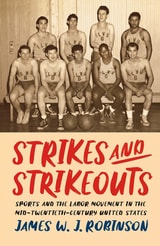
Strikes and Strikeouts
Sports and the Labor Movement in the Mid-Twentieth-Century United StatesJames W. J. Robinson
Rutgers University Press, 2027
During the first half of the twentieth century, the introduction of cheap or free recreation to the workplace provided a metaphorical place where ordinary working-class people of all races and genders gained access to physical leisure and developed bonds of camaraderie in the anti-fascist labor movement. Strikes and Strikeouts: Sports and the Labor Movement in the Mid-Twentieth-Century United States illustrates how this largely forgotten Labor Sports movement was critical in helping unions become forces for larger cultural change and essential to understanding the potency of the 1930-40s labor movement. Drawing from ten different labor and leftist social movement archives, Robinson strives to reconstruct the “people’s history." At its height, from the late 1930s to the early 1950s, the Labor Sports movement presented a real alternative to both apolitical and conservative sports and involved millions of working-class people. It was a key part of improving the lives of average Americans and helped build an anti-racist, anti-fascist, working class counterculture that helped change the United States through a strong labor movement. This movement brought higher living standards for working class people and the end of racial segregation in sports, which in turn aided the Civil Rights movement.
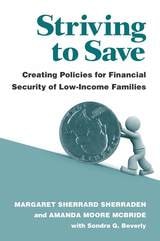
Striving to Save
Creating Policies for Financial Security of Low-Income FamiliesMargaret Sherrard Sherraden and Amanda Moore McBride
University of Michigan Press, 2010
---Tom Shapiro, Brandeis University
book provides an essential corrective to the unidimensional view of poor households as unable and unwilling to save."
---Michael Barr, University of Michigan

Strong Inside
Perry Wallace and the Collision of Race and Sports in the SouthAndrew Maraniss
Vanderbilt University Press, 2024
2015 RFK Book Awards Special Recognition
2015 Lillian Smith Book Award
2015 AAUP Books Committee "Outstanding" Title
When Strong Inside was first published ten years ago, no one could have predicted the impact the book would have on Vanderbilt University, Nashville, and communities across the nation. What began as a biography of Perry Wallace—the first African American basketball player in the Southeastern Conference (SEC)—became a catalyst for meaningful change and reconciliation between Wallace and the city that had rejected him. In this tenth-anniversary edition, scholars of race and sports Louis Moore and Derrick E. White provide a new foreword that places the story in the context of the study of sports and society, and author Andrew Maraniss adds a concluding chapter filling readers in on how events unfolded between Strong Inside’s publication in 2014 and Perry Wallace’s death in 2017 and exploring Wallace’s continuing legacy.
Wallace entered kindergarten the year that Brown v. Board of Education upended “separate but equal.” As a twelve-year-old, he sneaked downtown to watch the sit-ins at Nashville’s lunch counters. A week after Martin Luther King Jr.’s “I Have a Dream” speech, Wallace entered high school, and later saw the passage of the Civil Rights and Voting Rights acts. On March 19, 1966, his Pearl High School basketball team won Tennessee’s first integrated state tournament—the same day Adolph Rupp’s all-white Kentucky Wildcats lost to the all-Black Texas Western Miners in an iconic NCAA title game.
The world seemed to be opening up at just the right time, and when Vanderbilt recruited him, Wallace courageously accepted the assignment to desegregate the SEC. His experiences on campus and in the hostile gymnasiums of the Deep South turned out to be nothing like he ever imagined.

Strong Inside
Perry Wallace and the Collision of Race and Sports in the SouthAndrew Maraniss
Vanderbilt University Press, 2014
2015 RFK Book Awards Special Recognition
2015 Lillian Smith Book Award
2015 AAUP Books Committee "Outstanding" Title
Based on more than eighty interviews, this fast-paced, richly detailed biography of Perry Wallace, the first African American basketball player in the SEC, digs deep beneath the surface to reveal a more complicated and profound story of sports pioneering than we've come to expect from the genre. Perry Wallace's unusually insightful and honest introspection reveals his inner thoughts throughout his journey.
Wallace entered kindergarten the year that Brown v. Board of Education upended "separate but equal." As a 12-year-old, he sneaked downtown to watch the sit-ins at Nashville's lunch counters. A week after Martin Luther King Jr.'s "I Have a Dream" speech, Wallace entered high school, and later saw the passage of the Civil Rights and Voting Rights acts. On March 16, 1966, his Pearl High School basketball team won Tennessee's first integrated state tournament--the same day Adolph Rupp's all-white Kentucky Wildcats lost to the all-black Texas Western Miners in an iconic NCAA title game.
The world seemed to be opening up at just the right time, and when Vanderbilt recruited him, Wallace courageously accepted the assignment to desegregate the SEC. His experiences on campus and in the hostile gymnasiums of the Deep South turned out to be nothing like he ever imagined.
On campus, he encountered the leading civil rights figures of the day, including Stokely Carmichael, Martin Luther King Jr., Fannie Lou Hamer, and Robert Kennedy--and he led Vanderbilt's small group of black students to a meeting with the university chancellor to push for better treatment.
On the basketball court, he experienced an Ole Miss boycott and the rabid hate of the Mississippi State fans in Starkville. Following his freshman year, the NCAA instituted "the Lew Alcindor rule," which deprived Wallace of his signature move, the slam dunk.
Despite this attempt to limit the influence of a rising tide of black stars, the final basket of Wallace's college career was a cathartic and defiant dunk, and the story Wallace told to the Vanderbilt Human Relations Committee and later The Tennessean was not the simple story of a triumphant trailblazer that many people wanted to hear. Yes, he had gone from hearing racial epithets when he appeared in his dormitory to being voted as the university's most popular student, but, at the risk of being labeled "ungrateful," he spoke truth to power in describing the daily slights and abuses he had overcome and what Martin Luther King had called "the agonizing loneliness of a pioneer."

Strong Winds and Widow Makers
Workers, Nature, and Environmental Conflict in Pacific Northwest Timber CountrySteven C. Beda
University of Illinois Press, 2023
Often cast as villains in the Northwest's environmental battles, timber workers in fact have a connection to the forest that goes far beyond jobs and economic issues. Steven C. Beda explores the complex true story of how and why timber-working communities have concerned themselves with the health and future of the woods surrounding them. Life experiences like hunting, fishing, foraging, and hiking imbued timber country with meanings and values that nurtured a deep sense of place in workers, their families, and their communities. This sense of place in turn shaped ideas about protection that sometimes clashed with the views of environmentalists--or the desires of employers. Beda's sympathetic, in-depth look at the human beings whose lives are embedded in the woods helps us understand that timber communities fought not just to protect their livelihood, but because they saw the forest as a vital part of themselves.
Structural Injustice and the Law
Edited by Virginia Mantouvalou and Jonathan Wolff
University College London, 2024
Structural Injustice and the Law presents theoretical approaches and case studies demonstrating how the concept of structural injustice can aid legal analysis, and how legal reform can reduce, or even eliminate, some forms of structural injustice. The interdisciplinary topics discussed here in the book include domination, equality, human rights law, legal status, labor law, criminal justice, domestic homicide reviews, homelessness, regulatory public bodies, and the films of Ken Loach. Drawn together, these subjects build an invaluable resource for legal theorists exploring how to use the concept of structural injustice and political philosophers looking for nuanced accounts of the law’s role both in creating and mitigating structural injustice.

Struggle Over Utah's San Rafael Swell
Wilderness, National Conservation Areas, and National MonumentsJeffrey O. Durrant
University of Arizona Press, 2007
In detailing political and environmental squabbles over the San Rafael Swell, Durrant illuminates issues that confront land managers, bureaucrats, and elected officials throughout the country. He describes struggles between county commissioners and environmental activists, conflicts over water rights, proposals that repeatedly fail to gain government approval, and political posturings. Caught in the crossfire, and often overwhelmed, the Bureau of Land Management has seen its long-time mission—once centered on grazing and mining rights—transmogrify into a new and, to some, unsettling responsibility for recreation and preservation.
The sandstone crags and twisting valleys of the San Rafael Swell present a formidable landscape, but as this book clearly shows, the political landscape may be even more daunting, strewn with bureaucratic boulders and embedded with fixed positions on the functions and values of public land.
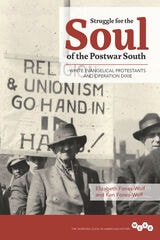
Struggle for the Soul of the Postwar South
White Evangelical Protestants and Operation DixieElizabeth Fones-Wolf and Ken Fones-Wolf
University of Illinois Press, 2015
The authors' nuanced look at working class religion reveals how laborers across the surprisingly wide evangelical spectrum interpreted their lives through their faith. Factors like conscience, community need, and lived experience led individual preachers to become union activists and mill villagers to defy the foreman and minister alike to listen to organizers. As the authors show, however, all sides enlisted belief in the battle. In the end, the inability of northern organizers to overcome the suspicion with which many evangelicals viewed modernity played a key role in Operation Dixie's failure, with repercussions for labor and liberalism that are still being felt today.
Identifying the role of the sacred in the struggle for southern economic justice, and placing class as a central aspect in southern religion, Struggle for the Soul of the Postwar South provides new understandings of how whites in the region wrestled with the options available to them during a crucial period of change and possibility.
Struggle in the Andes
Peasant Political Mobilization in PeruBy Howard Handelman
University of Texas Press, 1975
A massive land-seizure movement first erupted in Peru in 1958 and spread across the Andean highlands in 1963–1964. Several hundred peasant communities in the Peruvian Andes occupied neighboring haciendas in an attempt to retake lands they felt had been stolen from them over the years. Hacienda peasants also participated in this movement, forming peasant sindicatos (unions) to improve their labor conditions.
The land-seizure movement brought with it an upsurge in community political mobilization. Throughout the highlands, village leaders banded together in regional federations, often allying themselves with progressive or radical urban groups. Radical activists from labor unions and university student groups joined with indigenous peasant leaders, breaking down the highland peasantry’s traditional isolation from the political system.
Struggle in the Andes is an analysis of the causes and consequences of extensive social and political mobilization among Peru’s peasant population in the 1960s. In addition to describing the growth of the peasant land movement, Howard Handelman investigates the social and economic conditions that contributed to rural unrest. Using data that he collected in forty-one diverse highland communities, Handelman examines the correlates of peasant political activity, concluding that land seizures in the traditional southern sierra had different origins and political implications than did unrest in the more socioeconomically modernized central highlands.
The data suggest a model of peasant mobilization that calls into question prevailing scholarly hypotheses on the relationships between modernization, peasant political mobilization, and radicalization. Handelman discusses the land-reform program and the accompanying rural mobilization that was being implemented by Peru’s reformist military regime. Using his model of peasant mobilization, he speculates on the possible effects of the government’s contemporary programs on future peasant political behavior.
Struggle over Identity
The Official and the Alternative "Belarusianness"Nelly Bekus
Central European University Press, 2010
Rejecting the cliché about “weak identity and underdeveloped nationalism,” Bekus argues for the co-existence of two parallel concepts of Belarusianness—the official and the alternative one—which mirrors the current state of the Belarusian people more accurately and allows for a different interpretation of the interconnection between the democratization and nationalization of Belarusian society.
The book describes how the ethno-symbolic nation of the Belarusian nationalists, based on the cultural capital of the Golden Age of the Belarusian past (17th century) competes with the “nation” institutionalized and reified by the numerous civic rituals and social practices under the auspices of the actual Belarusian state.
Comparing the two concepts not only provides understanding of the logic that dominates Belarusian society’s self-description models, but also enables us to evaluate the chances of alternative Belarusianness to win this unequal struggle over identity.
Struggles for Political Change in the Arab World
Regimes, Oppositions, and External Actors after the SpringEdited by Lisa Blaydes, Amr Hamzawy, and Hesham Sallam
University of Michigan Press, 2022
The advent of the Arab Spring in late 2010 was a hopeful moment for partisans of progressive change throughout the Arab world. Authoritarian leaders who had long stood in the way of meaningful political reform in the countries of the region were either ousted or faced the possibility of political if not physical demise. The downfall of long-standing dictators as they faced off with strong-willed protesters was a clear sign that democratic change was within reach. Throughout the last ten years, however, the Arab world has witnessed authoritarian regimes regaining resilience, pro-democracy movements losing momentum, and struggles between the first and the latter involving regional and international powers.
This volume explains how relevant political players in Arab countries among regimes, opposition movements, and external actors have adapted ten years after the onset of the Arab Spring. It includes contributions on Egypt, Morocco, Kuwait, Saudi Arabia, Syria, Algeria, Sudan, Lebanon, Iraq, Jordan, Yemen, and Tunisia. It also features studies on the respective roles of the United States, China, Iran, and Turkey vis-à-vis questions of political change and stability in the Arab region, and includes a study analyzing the role of Saudi Arabia and its allies in subverting revolutionary movements in other countries.
Struggles for the Human
Violent Legality and the Politics of RightsLara Montesinos Coleman
Duke University Press, 2024
Struggling Giants
City-Region Governance in London, New York, Paris, and TokyoPaul Kantor
University of Minnesota Press, 2012
Throughout the past thirty years a small number of city-regions have achieved unprecedented global status in the world economy while undergoing radical changes. Struggling Giants examines the transformation of four of the most significant metropolises: London, New York, Paris, and Tokyo. This volume analyzes the thorniest issues these sprawling city-regions have faced, including ameliorating social problems through public policies, the effect of globalization on local governance, and the relationships between local, regional, and national institutions.
Three critical themes frame Struggling Giants. The first is the continuing struggle for governability in the midst of regional governmental fragmentation. The second theme is how the city-regions fight to manage powerful political biases. Policy-making is often selective, the authors find, and governments are more responsive to economic exigencies than to social or environmental needs. Finally, these city-regions are shown to be strong economic leaders in part because they are able to change—although the authors reveal that pragmatism and piecemeal policy solutions can still prevail.
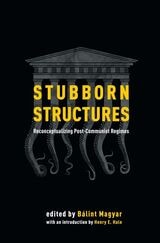
Stubborn Structures
Reconceptualizing Post-Communist RegimesHenry E. Hale
Central European University Press, 2019
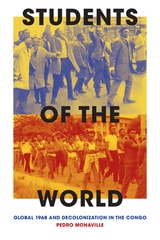
Students of the World
Global 1968 and Decolonization in the CongoPedro Monaville
Duke University Press, 2022
Studies in Labor Markets
Sherwin Rosen
University of Chicago Press, 1981
Originally presented at a Universities-National Bureau Committee for Economic Research conference on labor markets in 1978, and not published elsewhere, the thirteen papers treat four interrelated themes: labor mobility, job turnover, and life-cycle dynamics; the analysis of unemployment compensation and employment policy; labor market discrimination; and labor market information and investment. The Introduction by Sherwin Rosen provides a thoughtful guide to the contents of the papers and offers suggestions for continuing research.

Studies in Philosophy, Politics, and Economics
F. A. Hayek
University of Chicago Press, 1967
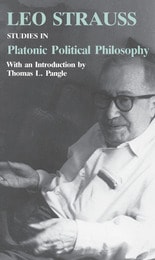
Studies in Platonic Political Philosophy
Leo Strauss
University of Chicago Press, 1983
As his choice of title indicates, the heart of Strauss's work is Platonism—a Platonism that is altogether unorthodox and highly controversial. These essays consider, among others, Heidegger, Husserl, Nietzsche, Marx, Moses Maimonides, Machiavelli, and of course Plato himself to test the Platonic understanding of the conflict between philosophy and political society. Strauss argues that an awesome spritual impoverishment has engulfed modernity because of our dimming awareness of that conflict.
Thomas Pangle's Introduction places the work within the context of the entire Straussian corpus and focuses especially on Strauss's late Socratic writings as a key to his mature thought. For those already familiar with Strauss, Pangle's essay will provoke thought and debate; for beginning readers of Strauss, it provides a fine introduction. A complete bibliography of Strauss's writings if included.

Studies in the Formation of the Nation-state in Latin America
Edited by James Dunkerley
University of London Press, 2002
Contributors include Miguel Angel Centeno (Princeton University), Malcolm Deas (St Antony's College, Oxford), James Dunkerley (Institute of Latin American Studies, University of London), Paul Gootenberg (State University of New York at Stony Brook), Alan Knight (St Antony's College, Oxford), Colin Lewis (London School of Economics), Fernando Lopez Alves (University of California, Santa Barbara), David McCreery (Georgia State University), Florencia Mallon (University of Wisconsin), Seemin Qayum (Goldsmiths College, University of London), Guy Thomson (University of Warwick), and Steven Topik (University of California, Irvine). James Dunkerley is director of the Institute of Latin American Studies, University of London, and also professor of politics at Queen Mary, University of London. He is coeditor of the Journal of Latin American Studies. His most recent books are Americana:The Americas in the World, around 1850 (or 'Seeing the Elephant' as the Theme for an Imaginary Western) (2000) and Warriors and Scribes: Essays in the History and Politics of Latin America (2000).

Studies into Darkness
The Perils and Promise of Freedom of SpeechEdited by Carin Kuoni and Laura Raicovich
Amherst College Press, 2022
Contributions by Zach Blas, Mark Bray, Natalie Diaz, Aruna D’Souza, Silvia Federici and Gabriela López Dena, Jeanne van Heeswijk, shawné michaelain holloway, Prathibha Kanakamedala and Obden Mondésir, Amar Kanwar, Carin Kuoni, Lyndon, Debora, and Abou, Svetlana Mintcheva, Mendi + Keith Obadike, Vanessa Place, Laura Raicovich, Michael Rakowitz, Kameelah Janan Rasheed, and Nabiha Syed.
Study Guide to China
Adapting the Past, Confronting the FutureThomas Buoye
University of Michigan Press, 2003
Each section, in addition to essay and excerpts, also includes a bibliography of additional topical works as well as suggestions for complementary video and internet teaching resources.
Subaltern Studies Reader, 1986-1995
Ranajit Guha
University of Minnesota Press, 1997
Subterranean Matters
Cooperative Mining and Resource Nationalism in Plurinational BoliviaAndrea Marston
Duke University Press, 2024
Subversions of the American Century
Filipino Literature in Spanish and the Transpacific Transformation of the United StatesAdam Lifshey
University of Michigan Press, 2016
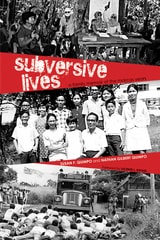
Subversive Lives
A Family Memoir of the Marcos YearsSusan F. Quimpo
Ohio University Press, 2016
From the 1960s to the 1990s, seven members of the Quimpo family dedicated themselves to the anti-Marcos resistance in the Philippines, sometimes at profound personal cost. In this unprecedented memoir, eight siblings (plus one by marriage) tell their remarkable stories in individually authored chapters that comprise a family saga of revolution, persistence, and, ultimately, vindication, even as easy resolution eluded their struggles.
Subversive Lives tells of attempts to smuggle weapons for the New People’s Army (the armed branch of the Communist Party of the Philippines); of heady times organizing uprisings and strikes; of the cruel discovery of one brother’s death and the inexplicable disappearance of another (now believed to be dead); and of imprisonment and torture by the military. These stories show the sacrifices and daily heroism of those in the movement. But they also reveal its messy legacies: sons alienated from their father; daughters abused by the military; friends betrayed; and revolutionary affection soured by intractable ideological differences.
The rich and distinctive contributions span the martial law years of Ferdinand Marcos’s rule. Subversive Lives is a riveting and accessible primer for those unfamiliar with the era, and a resonant history for those with a personal connection to what it meant to be Filipino at that time, or for anyone who has fought political repression.

Subversive Stages
Theater in Pre- and Post-Communist Hungary, Romania and BulgariaIleana Alexandra Orlich
Central European University Press, 2017
Succeeding Generations
On the Effects of Investments in ChildrenRobert Haveman
Russell Sage Foundation, 1994
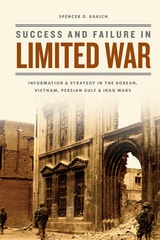
Success and Failure in Limited War
Information and Strategy in the Korean, Vietnam, Persian Gulf, and Iraq WarsSpencer D. Bakich
University of Chicago Press, 2014
Traditional assessments of wartime strategy focus on the relationship between the military and civilians, but Bakich argues that we must take into account the information flow patterns among top policy makers and all national security organizations. By examining the fate of American military and diplomatic strategy in four limited wars, Bakich demonstrates how not only the availability and quality of information, but also the ways in which information is gathered, managed, analyzed, and used, shape a state’s ability to wield power effectively in dynamic and complex international systems.
Utilizing a range of primary and secondary source materials, Success and Failure in Limited War makes a timely case for the power of information in war, with crucial implications for international relations theory and statecraft.

Succession to High Office in Botswana
Three Case StudiesJack Parson
Ohio University Press, 1990
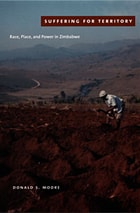
Suffering for Territory
Race, Place, and Power in ZimbabweDonald S. Moore
Duke University Press, 2005
Moore makes a significant contribution to postcolonial theory with his conceptualization of “entangled landscapes” by articulating racialized rule, situated sovereignties, and environmental resources. Fusing Gramscian cultural politics and Foucault’s analytic of governmentality, he enlists ethnography to foreground the spatiality of power. Suffering for Territory demonstrates how emplaced micro-practices matter, how the outcomes of cultural struggles are contingent on the diverse ways land comes to be inhabited, labored upon, and suffered for.
Suffrage and citizenship in Ireland, 1912-18
Senia Pašeta
University of London Press, 2019
Sugar Cane Capitalism and Environmental Transformation
An Archaeology of Colonial Nevis, West IndiesMarco G. Meniketti
University of Alabama Press, 2015
In this deeply researched and multifaceted study, Marco G. Meniketti demonstrates how the landscape of the small Caribbean island of Nevis preserves and reveals artifacts and evidence of the highly complex and interrelated seventeenth- to nineteenth-century “Atlantic Economy,” comprising early capitalist sugar production, the African slave trade, and European settlement.
Sugar Cane Capitalism and Environmental Transformation is based on twelve seasons of meticulous archaeological field work and documentary research. Although Nevis was once a bustling hub of the British colonial project, the emigration of emancipated slaves and abandonment by European planters left large swathes of Nevis vacant. Reclaimed by forests and undisturbed by later waves of economic development, the island—dotted with fascinating ruins, debris from the sugar industry, windmills, chimneys, and multistoried great house—provided Meniketti with an ideal subject for archaeological inquiry.
Through intensive archaeological and landscape surveys of multiple key plantation sites, Meniketti traces the development of Nevis from its initial European settlement in 1627 to its central role as a British mercantile hub and a laboratory and prototype of capitalist sugar cultivation. His nuanced analysis explains the backdrop of European political and economic rivalries, of which the colonial agro-industrial enterprises were the physical manifestations, and makes telling comparisons with Dutch and French archaeological sites. The work also compares and contrasts the adoption of capitalist modes of sugar production and socialization at wealthy and middling plantation sites.
Supported with a wealth of photos, tables, and maps, Sugar Cane Capitalism and Environmental Transformation offers a vital case study of one island whose environment and archaeological record illuminates the complex webs of Atlantic history.
Sugarcane and Rum
The Bittersweet History of Labor and Life on the Yucatán PeninsulaJohn R. Gust and Jennifer P. Mathews
University of Arizona Press, 2020
While the Yucatán Peninsula of Mexico may conjure up images of vacation getaways and cocktails by the sea, these easy stereotypes hide a story filled with sweat and toil. The story of sugarcane and rum production in the Caribbean has been told many times. But few know the bittersweet story of sugar and rum in the jungles of the Yucatán Peninsula during the nineteenth century. This is much more than a history of coveted commodities. The unique story that unfolds in John R. Gust and Jennifer P. Mathews’s new history Sugarcane and Rum is told through the lens of Maya laborers who worked under brutal conditions on small haciendas to harvest sugarcane and produce rum.
Gust and Mathews weave together ethnographic interviews and historical archives with archaeological evidence to bring the daily lives of Maya workers into focus. They lived in a cycle of debt, forced to buy all of their supplies from the company store and take loans from the hacienda owners. And yet they had a certain autonomy because the owners were so dependent on their labor at harvest time. We also see how the rise of cantinas and distilled alcohol in the nineteenth century affected traditional Maya culture and that the economies of Cancún and the Mérida area are predicated on the rum-influenced local social systems of the past. Sugarcane and Rum brings this bittersweet story to the present and explains how rum continues to impact the Yucatán and the people who have lived there for millennia.
Sugarland
The Transformation of the Countryside in Communist AlbaniaArtan R. Hoxha
Central European University Press, 2023
In this historical monograph on non-urban communist Albania, Artan Hoxha discusses the ambitious development project that turned a swampland into a site of sugar production after 1945. The author seeks to free the history of Albanian communism from the stereotypes that still circulate about it with stigmas of an aberration, paranoia, extreme nationalism, and xenophobia.
This micro-history of the agricultural and industrial transformation of a zone in southeastern Albania, explores a wide range of issues including modernization, development, and social, cultural, and economic policies. In addition to analyzing the collectivization of agriculture, Hoxha shows how communism affected the lives of ordinary rural people. As elsewhere in the Communist Bloc, the Albanian regime borrowed developmental projects from the past and implemented them using social mobilization and a command economy. The abundant archival resources along with interviews in the field attest to the authorities’ efforts to increase consumption and to radically transform people’s tastes. But the book argues that despite the repressive environment, people involved in the sugar project were not simply passive receivers of models from the nation's capital. The author also describes that—in defiance of Cold War bipolarity—technological requirements and social policy considerations required a degree of engagement with the broader world.

Suicide Bombers
Allah's New MartyrsFarhad Khosrokhavar
Pluto Press, 2005

Suing the Tobacco and Lead Pigment Industries
Government Litigation as Public Health PrescriptionDonald G. Gifford
University of Michigan Press, 2010
---David Owen, Carolina Distinguished Professor of Law, and Director of Tort Law Studies, University of South Carolina
Sunbelt Capitalism and the Making of the Carceral State
Kirstine Taylor
University of Chicago Press, 2025
The story of how the American South became the most incarcerated region in the world’s most incarcerated nation.
Sunbelt Capitalism and the Making of the Carceral State examines the evolution of southern criminal punishment from Jim Crow to the dawn of mass incarceration, charting this definitive era of carceral transformation and expansion in the southern United States. The demise of the county chain gang, the professionalization of police, and the construction of large-scale prisons were among the sweeping changes that forever altered the southern landscape and bolstered the region’s capacity to punish. What prompted this southern revolution in criminal punishment?
Kirstine Taylor argues that the crisis in the cotton fields and the arrival of Sunbelt capitalism in the south’s rising metropolises prompted lawmakers to build expansive, modern criminal punishment systems in response to Brown v. Board of Education and the Black freedom movements of the 1960s and ‘70s. Taking us inside industry-hunting expeditions, school desegregation battles, the sit-in movement, prisoners’ labor unions, and policy commissions, Taylor tells the story of how a modernizing south became the most incarcerated region in the globe’s most incarcerated nation.
Sunbelt Capitalism and the Making of the Carceral State
Kirstine Taylor
University of Chicago Press, 2025
This is an auto-narrated audiobook version of this book.
The story of how the American South became the most incarcerated region in the world’s most incarcerated nation.
Sunbelt Capitalism and the Making of the Carceral State examines the evolution of southern criminal punishment from Jim Crow to the dawn of mass incarceration, charting this definitive era of carceral transformation and expansion in the southern United States. The demise of the county chain gang, the professionalization of police, and the construction of large-scale prisons were among the sweeping changes that forever altered the southern landscape and bolstered the region’s capacity to punish. What prompted this southern revolution in criminal punishment?
Kirstine Taylor argues that the crisis in the cotton fields and the arrival of Sunbelt capitalism in the south’s rising metropolises prompted lawmakers to build expansive, modern criminal punishment systems in response to Brown v. Board of Education and the Black freedom movements of the 1960s and ‘70s. Taking us inside industry-hunting expeditions, school desegregation battles, the sit-in movement, prisoners’ labor unions, and policy commissions, Taylor tells the story of how a modernizing south became the most incarcerated region in the globe’s most incarcerated nation.
Sunbelt Cities
Politics and Growth since World War IIEdited by Richard M. Bernard and Bradley R. Rice
University of Texas Press, 1983
Between 1940 and 1980, the Sunbelt region of the United States grew in population by 112 percent, while the older, graying Northeast and Midwest together grew by only 42 percent. Phoenix expanded by an astonishing 1,138 percent. San Diego, Houston, Dallas–Fort Worth, Tampa, Miami, and Atlanta quadrupled in size. Even a Sunbelt laggard such as New Orleans more than doubled its population.
Sunbelt Cities brings together a collection of outstanding original essays on the growth and late-twentieth-century political development of the major metropolitan areas below the thirty-seventh parallel. The cities surveyed are Albuquerque, Atlanta, Dallas–Fort Worth, Houston, Los Angeles, Miami, New Orleans, Oklahoma City, Phoenix, San Antonio, San Diego, and Tampa. Each author examines the economic and social causes of postwar population growth in the city under consideration and the resulting changes in its political climate. Major causes of growth such as changing economic conditions, industrial recruitment, lifestyle preferences, and climate are discussed. Particular attention is paid to the role of the federal government, especially the Pentagon, in encouraging development in the Sunbelt. Describing characteristic political developments of many of these cities, the authors note shifting political alliances, the ouster of machines and business elites from political power, and the rise of minority and neighborhood groups in local politics.
Sunbelt Cities is the first full-scale scholarly examination of the region popularly conceived as the Sunbelt. As one of the first works to thoroughly examine a wide range of cities within the region, it has served as a standard reference on the area for some time.
Super Imperialism
The Origin and Fundamentals of U.S. World DominanceMichael Hudson
Pluto Press, 2003
Superfluous Southerners
Cultural Conservatism and the South, 1920-1990John J. Langdale III
University of Missouri Press, 2012
Supermadre
Women in Politics in Latin AmericaBy Elsa M. Chaney
University of Texas Press, 1979
The title of this book, Supermadre, is ironic. It means, not that women have begun to exercise real power in Latin American political life, but that their participation is mostly confined to roles that are extensions of their roles as mothers—health, education, welfare, for example—and then only on the lower levels of policy-making.
Elsa Chaney begins her study with an examination of various attempts to explain women's virtual absence from decision-making councils not only in Latin America but also world-wide, concluding that their motherhood role has had the profoundest effect on the nature of their political activities. She then analyzes the images and realities of women in Latin American society from colonial times to the present.
The remainder of the book is a detailed study of women in politics and government in Latin America, with emphasis on the contrasting cases of Peru and Chile. In conclusion, Chaney suggests that women will make only slow progress toward full participation in public life until they themselves stop seeing their role in politics as that of the supermadre.