Results by title
18284 books match the query 'United States' and 1181 start with s
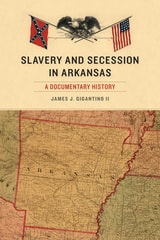
Slavery and Secession in Arkansas
A Documentary HistoryJames J. Gigantino
University of Arkansas Press, 2015
The absorbing documents collected in Slavery and Secession in Arkansas trace Arkansas’s tortuous road to secession and war. Drawn from contemporary pamphlets, broadsides, legislative debates, public addresses, newspapers, and private correspondence, these accounts show the intricate twists and turns of the political drama in Arkansas between early 1859 and the summer of 1861. From an early warning of what Republican political dominance would mean for the South, through the initial rejection of secession, to Arkansas’s final abandonment of the Union, readers, even while knowing the eventual outcome, will find the journey both suspenseful and informative.
Revealing both the unique features of the secession story in Arkansas and the issues that Arkansas shared with much of the rest of the South, this collection illustrates how Arkansans debated their place in the nation and, specifically, how the defense of slavery—as both an assurance of continued economic progress and a means of social control—remained central to the decision to leave the Union and fight alongside much of the South for four bloody years of civil war.
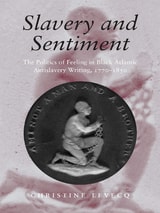
Slavery and Sentiment
The Politics of Feeling in Black Atlantic Antislavery Writing, 1770-1850Christine Levecq
University of New Hampshire Press, 2008
Levecq examines liberalism and republicanism, the main Anglo-American political ideologies of the period, in the antislavery texts of a range of African-American and Afro-British authors. Disclosing the political content hitherto unexamined in this kind of writing, she shows that while the overall story is one of increased liberalization of ideology on both sides of the Atlantic, the republican ideal persisted, particularly among black authors with transatlantic connections.
Demonstrating that such writers as Phillis Wheatley, Ignatius Sancho, Olaudah Equiano, Frederick Douglass, and Mary Prince were men and women of their times, Levecq provides valuable new insight into the ideological world of black Atlantic writers and puts them, for the first time, on modernity’s political map.

Slavery and the Catholic Church in the United States
Historical StudiesDavid J. Endres
Catholic University of America Press, 2023
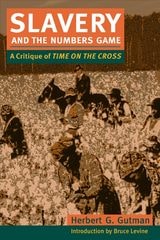
Slavery and the Numbers Game
A CRITIQUE OF TIME ON THE CROSSHerbert G. Gutman
University of Illinois Press, 1975
This detailed analysis of slavery in the antebellum South was written in 1975 in response to the prior year's publication of Robert Fogel and Stanley Engerman's controversial Time on the Cross, which argued that slavery was an efficient and dynamic engine for the southern economy and that its success was due largely to the willing cooperation of the slaves themselves.
Noted labor historian Herbert G. Gutman was unconvinced, even outraged, by Fogel and Engerman's arguments. In this book he offers a systematic dissection of Time on the Cross, drawing on a wealth of data to contest that book's most fundamental assertions. A benchmark work of historical inquiry, Gutman's critique sheds light on a range of crucial aspects of slavery and its economic effectiveness.
Gutman emphasizes the slaves' responses to their treatment at the hands of slaveowners. He shows that slaves labored, not because they shared values and goals with their masters, but because of the omnipresent threat of 'negative incentives,' primarily physical violence.
In his introduction to this new edition, Bruce Levine provides a historical analysis of the debate over Time on the Cross. Levine reminds us of the continuing influence of the latter book, demonstrated by Robert W. Fogel's 1993 Nobel Prize in Economic Sciences, and hence the importance and timeliness of Gutman's critique.
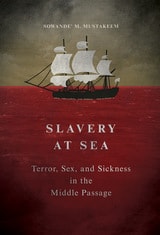
Slavery at Sea
Terror, Sex, and Sickness in the Middle PassageSowande M Mustakeem
University of Illinois Press, 2016
Sowande' Mustakeem's groundbreaking study goes inside the Atlantic slave trade to explore the social conditions and human costs embedded in the world of maritime slavery. Mining ship logs, records and personal documents, Mustakeem teases out the social histories produced between those on traveling ships: slaves, captains, sailors, and surgeons. As she shows, crewmen manufactured captives through enforced dependency, relentless cycles of physical, psychological terror, and pain that led to the the making--and unmaking--of enslaved Africans held and transported onboard slave ships. Mustakeem relates how this process, and related power struggles, played out not just for adult men, but also for women, children, teens, infants, nursing mothers, the elderly, diseased, ailing, and dying. Mustakeem offers provocative new insights into how gender, health, age, illness, and medical treatment intersected with trauma and violence transformed human beings into the world's most commercially sought commodity for over four centuries.
Slavery in Alabama
James Benson Sellers
University of Alabama Press, 1994
The only comprehensive statewide study of the institution of slavery in Alabama
Since its initial publication in 1950, Slavery in Alabama remains the only comprehensive statewide study of the institution of slavery in Alabama. Sellers concentrates on examining the social and economic aspects of how slavery operated in the state. After a brief discussion of slavery under imperial rulers of the colonial and territorial periods, Sellers focuses on the transplantation of the slavery system from the Atlantic seaboard states to Alabama.
Sellers used the primary sources available to him, including government documents, county and city records, personal papers, church records, and newspapers. His discussions of the church and the slave, and his treatment of the proslavery defense, deepen the comprehensiveness of his study. His two sections of photographs are special touches showing former slaves and churches with slave galleries.
Slavery's Descendants
Shared Legacies of Race and ReconciliationJill Strauss
Rutgers University Press, 2019
Slavery’s Descendants brings together contributors from a variety of racial backgrounds, all members or associates of a national racial reconciliation organization called Coming to the Table, to tell their stories of dealing with America’s racial past through their experiences and their family histories. Some are descendants of slaveholders, some are descendants of the enslaved, and many are descendants of both slaveholders and slaves. What they all have in common is a commitment toward collective introspection, and a willingness to think critically about how the nation’s histories of oppression continue to ripple into the present, affecting us all.
The stories in Slavery’s Descendants deal with harrowing topics—rape, lynching, cruelty, shame—but they also describe acts of generosity, gratitude, and love. Together, they help us confront the legacy of slavery to reclaim a more complete picture of U.S. history, one cousin at a time.
Funding for the production of this book was provided by Furthermore, a program of the J. M. Kaplan Fund (https://www.furthermore.org).

Slavery's End In Tennessee
John Cimprich
University of Alabama Press, 1985
Slavery
A Problem in American Institutional and Intellectual LifeStanley M. Elkins
University of Chicago Press, 1987
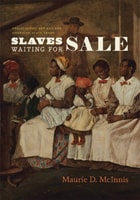
Slaves Waiting for Sale
Abolitionist Art and the American Slave TradeMaurie D. McInnis
University of Chicago Press, 2011
In 1853, Eyre Crowe, a young British artist, visited a slave auction in Richmond, Virginia. Harrowed by what he witnessed, he captured the scene in sketches that he would later develop into a series of illustrations and paintings, including the culminating painting, Slaves Waiting for Sale, Richmond, Virginia.

Slaves of the State
Black Incarceration from the Chain Gang to the PenitentiaryDennis Childs
University of Minnesota Press, 2015
The Thirteenth Amendment to the United States Constitution, passed in 1865, has long been viewed as a definitive break with the nation’s past by abolishing slavery and ushering in an inexorable march toward black freedom. Slaves of the State presents a stunning counterhistory to this linear narrative of racial, social, and legal progress in America.
Dennis Childs argues that the incarceration of black people and other historically repressed groups in chain gangs, peon camps, prison plantations, and penitentiaries represents a ghostly perpetuation of chattel slavery. He exposes how the Thirteenth Amendment’s exception clause—allowing for enslavement as “punishment for a crime”—has inaugurated forms of racial capitalist misogynist incarceration that serve as haunting returns of conditions Africans endured in the barracoons and slave ship holds of the Middle Passage, on plantations, and in chattel slavery.
Childs seeks out the historically muted voices of those entombed within terrorizing spaces such as the chain gang rolling cage and the modern solitary confinement cell, engaging the writings of Toni Morrison and Chester Himes as well as a broad range of archival materials, including landmark court cases, prison songs, and testimonies, reaching back to the birth of modern slave plantations such as Louisiana’s “Angola” penitentiary.
Slaves of the State paves the way for a new understanding of chattel slavery as a continuing social reality of U.S. empire—one resting at the very foundation of today’s prison industrial complex that now holds more than 2.3 million people within the country’s jails, prisons, and immigrant detention centers.
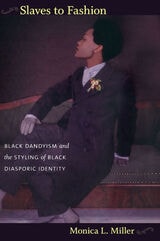
Slaves to Fashion
Black Dandyism and the Styling of Black Diasporic IdentityMonica L. Miller
Duke University Press, 2009
Dandyism was initially imposed on black men in eighteenth-century England, as the Atlantic slave trade and an emerging culture of conspicuous consumption generated a vogue in dandified black servants. “Luxury slaves” tweaked and reworked their uniforms, and were soon known for their sartorial novelty and sometimes flamboyant personalities. Tracing the history of the black dandy forward to contemporary celebrity incarnations such as Andre 3000, Miller explains how black people became arbiters of style and how they have historically used the dandy’s signature tools—clothing, gesture, and wit—to break down limiting identity markers and propose new ways of fashioning political and social possibility in the black Atlantic world. With an aplomb worthy of her iconographic subject, she considers the black dandy in relation to nineteenth-century American literature and drama, W. E. B. Du Bois’s reflections on black masculinity and cultural nationalism, the modernist aesthetics of the Harlem Renaissance, and representations of black cosmopolitanism in contemporary visual art.
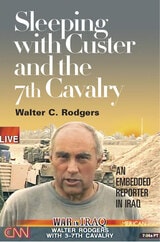
Sleeping with Custer and the 7th Cavalry
An Embedded Reporter in IraqWalter C. Rodgers
Southern Illinois University Press, 2005
An essential document of the first American war of the new century
Under a full opalescent moon in the spring of 2003, CNN correspondent Walter C. Rodgers and three colleagues climbed into an unarmored Humvee loaded with satellite transmission equipment and fell into column formation with the MIAI Abrams battle tanks and Bradley fighting vehicles of Apache Troop, Third Squadron, of the storied 7th Cavalry and crossed the Line of Departure between Kuwait and Iraq. Sleeping with Custer and the 7th Cavalry: An Embedded Reporter in Iraq is Rodgers’s account of the fight from the Kuwaiti border to the Iraqi capital of Baghdad.
Rodgers was embedded with the “tip of the tip of the spear,” the armored reconnaissance unit tasked with clearing the way for the invasion of Iraq. For the next three weeks Rodgers—a seasoned combat correspondent who has covered armed conflicts in the West Bank, along the “Green Line” in Lebanon, and in Sarajevo, Azerbaijan, and Afghanistan—was a first-person witness to the opening campaign of the most significant war America has embarked upon since Vietnam.
Rodgers and his journalistic colleagues in Operation Iraqi Freedom became pioneers in the process of embedding, the placing of journalists who can transmit video reports in real time under combat conditions with no censoring authority to block their reporting. During this journey into war, Rodgers and his crew embraced the dangers, the numbing fatigue, and the moments of stark fear of the young armored cavalrymen they lived with twenty-four hours each day, an experience that created for them the lifelong bond that only soldiers serving together under fire share.
Rodgers also details his return visit to Iraq a year later, reflecting on the nature of war and sharing his personal feelings about a conflict that has claimed the lives of over fifteen hundred American men and women. The volume is illustrated with photographs taken during the invasion by Jeff Barwise, the CNN engineer who accompanied Rodgers.

Slices and Lumps
Division and Aggregation in Law and LifeLee Anne Fennell
University of Chicago Press, 2019
Lee Anne Fennell explores how both types of challenges—carving out useful slices and assembling useful lumps—surface in myriad contexts, from hot button issues like conservation and eminent domain to developments in the sharing economy to personal struggles over work, money, time, diet, and exercise. Yet the significance of configuration is often overlooked, leading to missed opportunities for improving our lives. With a technology-fueled entrepreneurial explosion underway that is dividing goods, services, and jobs in novel ways, and as urbanization and environmental threats raise the stakes for assembling resources and cooperation, this is an especially exciting and crucial time to confront questions of slicing and lumping. The future of the city, the workplace, the marketplace, and the environment all turn on matters of configuration, as do the prospects for more effective legal doctrines, for better management of finances and health, and more. This book reveals configuration’s power and potential—as a unifying concept and as a focus of public and private innovation.
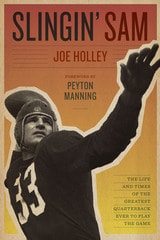
Slingin' Sam
The Life and Times of the Greatest Quarterback Ever to Play the GameBy Joe Holley
University of Texas Press, 2012
Dan Jenkins calls him “the greatest quarterback who ever lived, college or pro.” Slingin’ Sammy Baugh, who played for TCU and the Washington Redskins, single-handedly revolutionized the game of football. While the pros still wore leather helmets and played the game more like rugby, Baugh’s ability to throw the ball with rifle-like accuracy made the forward pass a strategic weapon, not a desperation heave. Like Babe Ruth, who changed the very perception of how baseball is played, Slingin’ Sam transformed the notion of offense in football and how much yardage can be gained through the air. As the first modern quarterback, Baugh led the Redskins to five title games and two NFL championships, while leading the league in passing six times—a record that endures to this day—and in punting four times. In 1943, the triple-threat Baugh also scored a triple crown when he led the league in passing, punting, and interceptions.
Slingin’ Sam is the first major biography of this legendary quarterback, one of the first inductees into the Pro Football Hall of Fame. Joe Holley traces the whole arc of Baugh’s life (1914–2008), from his small-town Texas roots to his college ball success as an All-American at TCU, his brief flirtation with professional baseball, and his stellar career with the Washington Redskins (1937–1952), as well as his later career coaching the New York Titans and Houston Oilers and ranching in West Texas. Through Holley’s vivid descriptions of close-fought games, Baugh comes alive both as the consummate all-around athlete who could play every minute of every game, on both offense and defense, and as an all-around good guy.
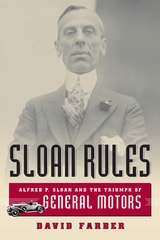
Sloan Rules
Alfred P. Sloan and the Triumph of General MotorsDavid Farber
University of Chicago Press, 2002
Here, for the first time, is a study of both the difficult man and the pathbreaking executive. Sloan Rules reveals the GM genius as not only a driven manager of men, machines, money, and markets but also a passionate and not always wise participant in the great events of his day. Sloan, for example, reviled Franklin Roosevelt and the New Deal; he firmly believed that politicians, government bureaucrats, and union leaders knew next to nothing about the workings of the new consumer economy, and he did his best to stop them from intervening in the private enterprise system. He was instrumental in transforming GM from the country's largest producer of cars into the mainstay of America's "Arsenal of Democracy" during World War II; after the war, he bet GM's future on renewed American prosperity and helped lead the country into a period of economic abundance. Through his business genius, his sometimes myopic social vision, and his vast fortune, Sloan was an architect of the corporate-dominated global society we live in today.
David Farber's story of America's first corporate genius is biography of the highest order, a portrait of an extraordinarily compelling and skillful man who shaped his era and ours.
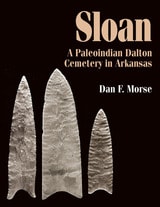
Sloan
A Paleoindian Dalton Cemetery in ArkansasDan Morse
University of Arkansas Press, 1997
New in Paper!
Excavated in 1974, the Sloan site in northeast Arkansas is the earliest recognized cemetery in the New World, containing the graves of a small group of Native Americans who died over ten thousand years ago. Although no skeletons were found in the acidic soil, the number, size, and quality of its artifacts attest to the presence of a far more complicated and sophisticated culture than had previously been thought to exist during the Dalton period.
Bringing together the work of thirteen eminent scholars, Dan F. Morse describes and assesses the assemblage of points, adzes, scrapers, abraders, and other stone artifacts as an indicator of the territorial stability of late Pleistocene peoples. The tools show that hunter-gatherer-fisher populations lived in small, semipermanent villages, hunted and butchered white-tailed deer, processed and ate vegetables, and made dugout canoes. And they buried their dead in cemeteries, a practice previously associated only with the rise of horticultural societies. Many of the tools are unused, suggesting ritual interments and a well-developed system of trade with groups in rockier areas.
Including an overview of the Dalton period in the southeastern United States and a discussion of the region’s geologic and vegetal prehistory—and newly supported by extensive high-quality image galleries now available at the website of the Arkansas Archeological Survey (see inside cover)—this comprehensive study of the Sloan artifacts provides a multifaceted assessment of a site rich in information about the technology of a single prehistoric society.

Slovenes in Michigan
James E. Seelye
Michigan State University Press, 2017

Slow Fuse of the Possible
A Memoir of Poetry and PsychoanalysisKate Daniels
West Virginia University Press, 2022
Slow Fuse of the Possible is a poet’s narrative of a troubled psychoanalysis. It is also a commanding meditation on the powers of language, for good and for ill.
From the beginning of their time together, it is clear that the enigmatic analyst and Daniels are not a good match, yet both are determined to continue their work—the former in nearly complete silence, and the latter as best she can with the tools at her disposal: careful attention to language, deep reading, and literary imagination. Throughout, the story is filtered through the mind of Emily Dickinson, whose poetry Daniels uses as a fulcrum for the interpretation of her own experience. The book is saturated with Dickinson’s verse, and Dickinson is an increasingly haunting presence as crises emerge and the author unravels.
This compelling lyric memoir, so richly steeped in all facets of language and the literary, allows readers a glimpse into the mind of a renowned poet, revealing the dazzling and anguished connections between poetry and psychoanalysis.
Slumming in New York
From the Waterfront to Mythic HarlemRobert M. Dowling
University of Illinois Press, 2006
Using the methods of ethnicity theory, black studies, regional studies, literary studies, and popular culture, Robert M. Dowling reveals the way in which "outsider" authors helped alleviate New York's mounting social anxieties by popularizing "insider" voices from neighborhoods as distinctive as the East Side waterfront, the Bowery, the Tenderloin's "black Bohemia," the Jewish Lower East Side, and mythic Harlem.
Slumming
Sexual and Racial Encounters in American Nightlife, 1885-1940Chad Heap
University of Chicago Press, 2009
Small Arms at Gettysburg
Infantry and Cavalry Weapons in America's Greatest BattleJoseph G. Bilby
Westholme Publishing, 2023
The Effect of Soldiers’ Weapons on the Turning Point of the Civil War
The three-day battle of Gettysburg has probably been the subject of more books and articles than any other comparable event. Surprisingly, until this work, no one has analyzed the firearms and other individual soldier’s weapons used at Gettysburg in any great detail. The battle was a watershed, with military weapons technologies representing the past, present, and future—sabers, smoothbores, rifles, and breechloaders—in action alongside each other, providing a unique opportunity to compare performance and use, as well as determining how particular weapons and their deployment affected the outcome and course of the battle.
Small Arms at Gettysburg: Infantry and Cavalry Weapons in America’s Greatest Battle covers all of the individual soldier’s weapons—muskets, rifle-muskets, carbines, repeaters, sharpshooter arms, revolvers, and swords—providing a detailed examination of their history and development, technology, capabilities, and use on the field at Gettysburg. Here we learn that the smoothbore musket, although beloved by some who carried it, sang its swan song, the rifle-musket began to come into its own, and the repeating rifle, although tactically mishandled, gave a glimpse of future promise. This is the story of the weapons and men who carried them into battle during three days in July 1863.

Small Business and the Public Library
Strategies for a Successful PartnershipLuise Weiss
American Library Association, 2011
Small Change
Money, Political Parties, and Campaign Finance ReformRaymond J. La Raja
University of Michigan Press, 2010
Reformers lament that, with every effort to regulate the sources of campaign funding, candidates creatively circumvent the new legislation. But in fact, political fundraisers don't need to look for loopholes because, as Raymond J. La Raja proves, legislators intentionally design regulations to gain advantage over their partisan rivals.
La Raja traces the history of the U.S. campaign finance system from the late nineteenth century through the passage of the Bipartisan Campaign Reform Act (BCRA) of 2002. Then, using the 2004 presidential election as a case study, he compares the ways in which Democrats and Republicans adapted their national fund-raising and campaigning strategies to satisfy BCRA regulations. Drawing upon this wealth of historical and recent evidence, he concludes with recommendations for reforming campaign finance in ways that promote fair competition among candidates and guarantee their accountability to voters.
Small Change offers an engaging account of campaign finance reforms' contradictory history; it is a must-read for anyone concerned about influence of money on democratic elections.
Small Cities USA
Growth, Diversity, and InequalityNorman, Jon R
Rutgers University Press, 2012
Drawing on an assessment of eighty small cities between 1970 and 2000, Norman considers the factors that have altered the physical, social, and economic landscapes of such places. These cities are examined in relation to new patterns of immigration, shifts in the global economy, and changing residential preferences. Small Cities USA presents the first large-scale comparison of smaller cities over time in the United States, showing that small cities that have prospered over time have done so because of diverse populations and economies. These "glocal" cities, as Norman calls them, are doing well without necessarily growing into large metropolises.
Small Differences That Matter
Labor Markets and Income Maintenance in Canada and the United StatesEdited by David Card and Richard B. Freeman
University of Chicago Press, 1993
For example:
-Canada's social safety net, more generous than the American one, produced markedly lower poverty rates in the 1980s.
-Canada saw a smaller increase in earnings inequality than the United States did, in part because of the strength of Canadian unions, which have twice the participation that U.S. unions do.
-Canada's unemployment figures were much higher than those in the United States, not because the Canadian economy failed to create jobs but because a higher percentage of nonworking time was reported as unemployment.
These disparities have become noteworthy as policy makers cite the experiences of the other country to support or oppose particular initiatives.
Small Donors in US Politics
Myth and RealityZachary Albert and Raymond J. La Raja
University of Chicago Press, 2026
A myth-busting investigation of small donors: who they are, how they spend their money, and whose campaigns actually benefit from their donations.
Many political reformers argue that more robust small donor participation in US campaigns would reduce the influence of the wealthiest Americans and improve political responsiveness to ordinary citizens. Drawing on extensive data, including surveys and campaign records, Zachary Albert and Raymond J. La Raja largely dispel this myth, offering the first comprehensive portrait to date of small donors in US elections.
Although small donor contributions to high-profile, national races have increased markedly since 2018, the US campaign finance system allows for even larger sums of money from Super PACs and other independent spending groups. Moreover, small donors are mostly similar to their larger contributor counterparts: both are socioeconomically advantaged, strongly partisan, ideologically extreme, and distinct from non-donors. Small donors can also be impulsive: they tend to give mostly to high-profile candidates on the ideological extremes, empowering media celebrities and norm-breakers rather than consensus-builders, and they underinvest in competitive and down-ballot races. Importantly, the candidates who rely most heavily on small donor support are not necessarily better legislators or representatives.
Yet, the story is not entirely bleak. Small donors bring energy and resources, especially for challengers and outsider candidates. The book shows how reforms could channel this energy more productively—by strengthening political parties, emphasizing local representation, and creating systems that broaden participation beyond the most ideological citizens.
Timely, accessible, and grounded in data, Small Donors in US Politics reveals both the promise and the peril of small donor politics—and what it will take to make money in politics serve democracy, not undermine it.
Small Public Library Management
Jane Pearlmutter
American Library Association, 2012

Small Public Library Management, Second Edition
Cindy Fesemyer and Christina Jones
American Library Association, 2025
- benefit from this handbook’s up-to-date perspectives on what it takes to run your library in today’s post-pandemic, politically polarized, technologically advanced, socially isolated world;
- receive to-the-point advice on governance, strategic planning, human resources, policy development, facilities, services and programs, and other foundational tasks;
- become informed on how to safeguard intellectual freedom, handle challenges to materials and programming, and protect patron privacy;
- get pointers on broadening their personal network, understanding what outside resources are available, and spearheading effective advocacy and community engagement;
- learn from real-life “Success Stories” and “On the Job” words of wisdom sprinkled throughout the text; and
- find adaptable templates, self-enrichment activities, and other tools to facilitate ongoing professional development.

Small Town in Mass Society
Class, Power, and Religion in a Rural Community (rev. ed.)Arthur J. Vidich and Joseph BensmanForeword by Michael W. Hughey
University of Illinois Press, 2000
Through a close study of "Springdale, New York," Arthur J. Vidich and Joseph Bensman depict the small town as continuously and increasingly drawn into the central institutions and processes of the total society. Vidich and Bensman based their conclusions on extensive interviews with and close observation of the inhabitants of one community. The original publication of the book caused a sharp response among the town's citizens who felt their trust had been violated and their town misrepresented.
The present volume includes the editorials and correspondence evoked by that controversy, the authors' articles describing their methodology, a new foreword by Michael W. Hughey, and a new afterword in which Arthur J. Vidich recounts the creation and history of the book.

Small-Town Heroes
Images of Minor League BaseballHank Davis
University of Iowa Press, 1997
For many baseball fans, a major league game is a flickering image on a television screen or a story in a newspaper. Real baseball is played in their hometown, in a ballpark that seats 5,000 fans, not 50,000. The players wear uniforms like the ones seen on television, but their names are not household words—unless it happens to be summer and you are living in Bluefield, West Virginia, or Cedar Rapids, Iowa, or Batavia, New York.
In 1993, ex-New Yorker Hank Davis put a successful career in psychology and music journalism on hold and went off on a loving odyssey through twenty-eight host towns in search of minor league baseball. Writing with beguiling charm and a firm knowledge of the game, he traveled the back roads of small-town Canada and America and found more than he bargained for: a wondrous cast of characters on the field, in the stands, and on the way to the ballpark. Davis recorded them with his splendid, incisive prose and his remarkable photographs. Along the way he encountered not only the baseball stars of the future, like Derek Jeter, Terrell Wade, and Tim Crabtree, but also a host of fascinating unknowns and longshots. They, too, have stories to tell that will not appear on the stat sheets.
With infectious energy, Davis also looked beyond the players. There are coaches, men in their forties and beyond, making arduous bus trips with players half their age. There are assistant general managers happy to scrub toilets and paint dugouts just to be close to the game. Kids sell Cracker Jacks in Bluefield, and grown-ups operate the mechanical bull at Durham Athletic Park.
Davis finds the small-town setting a universe unto itself. Within it, minor league baseball is lost in a time warp. Unabashedly unsophisticated, it has all the quirky charm of a traveling carnival—full of hawkers and gawkers and the unaffected simplicity of a concert in the park on a hot July night. Davis' full account of his baseball journey is rich with detail inside and outside the ballpark.

Small
Life and Death on the Front Lines of Pediatric SurgeryCatherine Musemeche
Dartmouth College Press, 2014
Smart Casual
The Transformation of Gourmet Restaurant Style in AmericaAlison Pearlman
University of Chicago Press, 2013
Smart Copyright Compliance for Schools
Rebecca P. Butler
American Library Association, 2009
Smile
A Picture History of Olympic Park, 1887-1965Siegel, Alan A
Rutgers University Press, 1995
Smoke in Their Eyes
Lessons in Movement Leadership from the Tobacco WarsMichael Pertschuk
Vanderbilt University Press, 2001
A lifelong public health leader and tobacco control advocate, Pertschuk provides uncommon insight into the movement and its opposition. Questions that reveal themselves here can be applied to public advocacy as a whole: how can movement leaders gauge and best employ popular support? Who has legitimacy to speak on behalf of a particular public cause? And perhaps most crucially, how is it possible for those whose cause is a moral one to strike political compromise? With a narrative as compelling as the issues it raises, Smoke in Their Eyes will be of great interest to everyone from students of public advocacy and political science to general readers.
Smoke-Filled Rooms
A Postmortem on the Tobacco DealW. Kip Viscusi
University of Chicago Press, 2002
With Smoke-Filled Rooms,W. Kip Viscusi provides unexpected answers to these questions, drawing on an impressive range of data on several topics central to the smoking policy debate. Based on surveys of smokers in the United States and Spain, for instance, he demonstrates that smokers actually overestimate the dangers of smoking, indicating that they are well aware of the risks involved in their choice to smoke. And while smoking does increase medical costs to the states, Viscusi finds that these costs are more than financially balanced by the premature mortality of smokers, which reduces their demands on state pension and health programs, so that, on average, smoking either pays for itself or generates revenues for the states.
Viscusi's eye-opening assessment of the tobacco lawsuits also includes policy recommendations that could frame these debates in a more productive way, such as his suggestion that the FDA should develop a rating system for cigarettes and other tobacco products based on their relative safety, thus providing an incentive for tobacco manufacturers to compete among themselves to produce safer cigarettes. Viscusi's hard look at the facts of smoking and its costs runs against conventional thinking. But it is also necessary for an informed and realistic debate about the legal, financial, and social consequences of the tobacco lawsuits.
People making $50,000 or more pay .08 percent of their income in cigarette taxes, but people with incomes of less than $10,000 pay 1.62 percenttwenty times as much. The maintenance crew at the Capitol will bear more of the "sin tax" levied on cigarettes than will members of Congress who voted to boost it.
Cigarettes are not a financial drain to the U.S. In fact, they are self-financing, as a consequence of smokers' premature mortality.
The general public estimates that 47 out of 100 smokers will die from lung cancer because they smoke. Smokers believe that 40 out of 100 will die of the disease. Scientists estimate the actual number of 100 smokers who will die from lung cancer to be between 7 and 13.
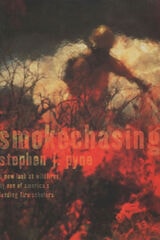
Smokechasing
Stephen J. Pyne
University of Arizona Press, 2003
Smokechasing presents commentaries by one of America's leading fire scholars, who analyzes fire the way another might an election campaign or a literary work. "Smokechasing" is an American coinage describing the practice of sending firefighters into the wild to track down the source of reported smoke. Now a self-described "friendly fire critic" tracks down more of the history and lore of fire in a collection that focuses on wildland fire and its management. Building on and complementing a previous anthology, World Fire, this new collection features thirty-two original articles and substantial revisions of works that have previously appeared in print. Pyne addresses many issues that have sparked public concern in the wake of disastrous wildfires in the West, such as fire ecology, federal fire management, and questions relating to fire suppression. He observes that the mistake in fire policy has been not that wildfires are suppressed but that controlled fires are no longer ignited; yet the attempted forced reintroduction of fire through prescribed burning has proved difficult, and sometimes damaging. There are, Pyne argues, many fire problems; some have technical solutions, some not. But there is no evading humanity's unique power and responsibility: what we don't do may be as ecologically powerful as what we do.
Throughout the collection, Pyne makes it clear that humans and fire interact at particular places and times to profoundly shape the world, and that understanding the contexts in which fire occurs can tell us much about the world's natural and cultural landscapes. Fire's context gives it its meaning, and Smokechasing not only helps illuminate those contexts but also shows us how to devise new contexts for tomorrow's fires.
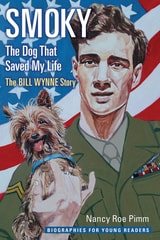
Smoky, the Dog That Saved My Life
The Bill Wynne StoryNancy Roe Pimm
Ohio University Press, 2019
World War II soldier Bill Wynne met Smoky while serving in New Guinea, where the dog, who was smaller than Wynne’s army boot, was found trying to scratch her way out of a foxhole. After he adopted her, she served as the squadron mascot and is credited as being the first therapy dog for the emotional support she provided the soldiers. When they weren’t fighting, Bill taught Smoky hundreds of tricks to entertain the troops. Smoky became a war hero herself at an airstrip in Luzon, the Philippines, where she helped save forty airplanes and hundreds of soldiers from imminent attack.
After the war, Bill worked as a Hollywood animal trainer and then returned to his hometown of Cleveland, Ohio. He and Smoky continued to perform their act, even getting their own TV show, How to Train Your Dog with Bill Wynne and Smoky.
Nancy Roe Pimm presents Bill and Smoky’s story to middle-grade readers in delightful prose coupled with rich archival illustrations. Children will love learning about World War II from an unusual perspective, witnessing the power of the bond between a soldier and his dog, and seeing how that bond continued through the exciting years following the war.
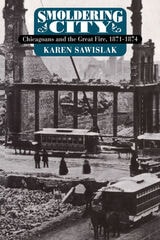
Smoldering City
Chicagoans and the Great Fire, 1871-1874Karen Sawislak
University of Chicago Press, 1995
In a detailed account, drawn on memoirs, private correspondences, and other documents, Sawislak chronicles years of widespread, sometimes bitter, social and political conflict in the fire's wake, from fights over relief soup kitchens to cries against profiteering and marches on city hall by workers burned out of their homes. She shows how through the years of rebuilding the people of Chicago struggled to define civic order—and the role that "good citizens" would play within it. As they rebuilt, she writes, Chicagoans confronted hard questions about charity and social welfare, work and labor relations, morality, and the limits of state power. Their debates in turn exposed the array of values and interests that different class, ethnic, and religious groups brought to these public discussions.
"Sawislak combines the copious detail of a historian with the vivid portrayals of a storyteller in her investigation of the infamous Chicago fire. . . . Highlighted by historical maps, plates and engravings, with an epilogue and notes, Smoldering City presents an extremely thorough and engaging study of this extraordinary disaster."—Publishers Weekly
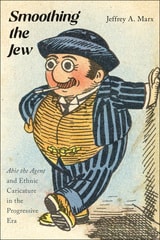
Smoothing the Jew
"Abie the Agent" and Ethnic Caricature in the Progressive EraJeffrey A. Marx
Rutgers University Press, 2024
Smoothing the Jew investigates how Jewish artists of the time attempted to “smooth over” these demeaning portrayals by focusing on the first Jewish comic strip published in English, Harry Hershfield’s Abie the Agent. Jeffrey Marx demonstrates how Hershfield created a Jewish protagonist who in part reassured nativists of the Jews’ ability to assimilate into American society while also encouraging immigrants and their children that, over time, they would be able to adopt American customs without losing their distinctly Jewish identity.

Smothered and Covered
Waffle House and the Southern ImaginaryTy Matejowsky
University of Alabama Press, 2023
A critical meditation of the iconic 24-7 roadside chain and its place in the southern imaginary
Waffle House has long been touted as an icon of the American South. The restaurant’s consistent foregrounding as a resonant symbol of regional character proves relevant for understanding much about the people, events, and foodways shaping the sociopolitical contours of today’s Bible Belt. Whether approached as a comedic punchline on the Internet, television, and other popular media or elevated as a genuine touchstone of messy American modernity, Waffle House, its employees, and everyday clientele do much to transcend such one-dimensional characterizations, earning distinction in ways that regularly go unsung.
Smothered and Covered: Waffle House and the Southern Imaginary is the first book to socioculturally assess the chain within the field of contemporary food studies. In this groundbreaking work, Ty Matejowsky argues that Waffle House’s often beleaguered public persona is informed by various complexities and contradictions. Critically unpacking the iconic eatery from a less reductive perspective offers readers a more realistic and nuanced portrait of Waffle House, shedding light on how it both reflects and influences a prevailing southern imaginary—an amorphous and sometimes conflicting collection of images, ideas, attitudes, practices, linguistic accents, histories, and fantasies that frames understandings about a vibrant if also paradoxical geographic region.
Matejowsky discusses Waffle House’s roots in established southern foodways and traces the chain’s development from a lunch-counter restaurant that emerged across the South. He also considers Waffle House’s place in American and southern popular culture, highlighting its myriad depictions in music, television, film, fiction, stand-up comedy, and sports. Altogether, Matejowsky deftly and persuasively demonstrates how Waffle House serves as a microcosm of today’s South with all the accolades and criticisms this distinction entails.

Smuggled Chinese
Ko-Lin Chin
Temple University Press, 1999
When the Golden Venture ran aground off New York's coast in 1993 and ten of the 260 Chinese on board drowned, the public outcry about human smuggling became front-page news. Probing into the causes and consequences of this clandestine traffic, Ko-lin Chin has interviewed more than 300 people -- smugglers, immigrants, government officials, and business owners -- in the United States, China, and Taiwan. Their poignant and chilling testimony describes a flourishing industry in which smugglers -- big and little snakeheads -- command fees as high as $30,000 to move desperate but hopeful men and women around the world. For many who survive the hunger, filthy and crowded conditions, physical and sexual abuse, and other perils of the arduous journey, life in the United States, specifically in New York's Chinatown, is a disappointment if not a curse. Few will return to China, though, because their families depend on the money and status gained by having a relative in the States.
In Smuggled Chinese, Ko-lin Chin puts a human face on this intractable international problem, showing how flaws in national policies and lax law enforcement perpetuate the cycle of desperation and suffering. He strongly believes, however, that the problem of human smuggling will continue as long as China's citizens are deprived of fundamental human rights and economic security.
Smuggled Chinese will engage readers interested in human rights, Asian and Asian American studies, urban studies, and sociology.
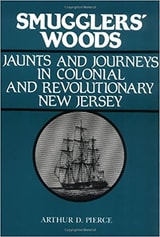
Smuggler's Woods
Jaunts and Journeys in Colonial and Revolutionary New JerseyPierce, Arthur
Rutgers University Press, 1964
Snake's Daughter
The Roads in and out of WarGail Hosking Gilberg
University of Iowa Press, 1997
Gail Hosking Gilberg's father was a hero, a valiant soldier decorated posthumously with the Medal of Honor, a man who served his country throughout his entire adult life. But Charles Hosking was a mystery to his daughter. He was killed in Vietnam a week after her seventeenth birthday. She buried the war, the protests, the medal, and her military upbringing along with her father, so much so that she felt cut off from herself. It took more than twenty years for her to recognize the stirrings of a father and a daughter not yet at peace.
Gilberg began a journey—two journeys really—to find out who her father was and in the process to find herself. She explored her buried rage, shame, and silence, and examined how war had shaped her life. In studying the photo albums that her father had left behind, Gilberg found that the photographs demanded that she give voice to her feelings, then release her silent words, words that had no meaning in war for her father yet had all the meaning in the world for her. The result was an epiphany. The photographs became the roads she took in and out of war, and her words brought her father home. Snake's Daughter reveals the crossroads where a soldier father's life and a daughter's life connect.
Snake's Daughter is an arresting and anguished narrative that gives voice to an experience Gail Hosking Gilberg shares with thousands of Americans, including military “brats” whose parents served their country and often gave their lives in the process.

Snapshots and Short Notes
Images and Messages of Early Twentieth-Century Photo PostcardsKenneth Wilson
University of North Texas Press, 2020
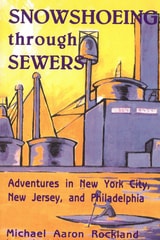
Snowshoeing Through Sewers
Adventures in New York City, New Jersey, and PhiladelphiaMichael Aaron Rockland
Rutgers University Press, 2008
In these ten alternately poetic and comic tales of adventure in the New York/Philadelphia corridor, the most densely populated chunk of America, Rockland walks and bikes areas meant only for cars and paddles through waters capable of dissolving canoes. He hikes the length of New York's Broadway, camps in New York City, treks across Philadelphia, pedals among the tractor trailers of Route 1 in New Jersey, and paddles around Manhattan and through the dark tunnels under Trenton.
Whereas Henry David Thoreau built his cabin on Walden Pond to get out of town, for Rockland, the challenge is to head into town. As he writes, "in the late twentieth century, a weed and trash-filled city lot . . . may be a better place than the wilderness to contemplate one's relationship to nature."
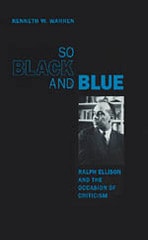
So Black and Blue
Ralph Ellison and the Occasion of CriticismKenneth W. Warren
University of Chicago Press, 2003
What would it mean to read Invisible Man as a document of Jim Crow America? Using Ralph Ellison's classic novel and many of his essays as starting points, Kenneth W. Warren illuminates the peculiar interrelation of politics, culture, and social scientific inquiry that arose during the post-Reconstruction era and persisted through the Civil Rights movement. Warren argues that Ellison's novel expresses the problem of who or what could represent and speak for the Negro in an age of limited political representation.
So Black and Blue shows that Ellison's successful transformation of these limits into possibilities has also, paradoxically, cast a shadow on the postsegregation world. What can be the direction of African American culture once the limits that have shaped it are stricken down? Here Warren takes up the recent, ongoing, and often contradictory veneration of Ellison's artistry by black writers and intellectuals to reveal the impoverished terms often used in discussions about the political and cultural future of African Americans. Ultimately, by showing what it would mean to take seriously the idea of American novels as creatures of their moment, Warren questions whether there can be anything that deserves the label of classic American literature.

So Far Away
A Daughter's Memoir of Life, Loss, and LoveChristine W. Hartmann
Vanderbilt University Press, 2011
Christine's father, as it turned out, prepared too slowly for old age. Before he had made any decision, fate disabled him through a series of strokes. Confined to a nursing home, severely impaired by dementia and frustrated by his circumstances, his life epitomized the predicament her mother wanted to avoid.
So Far Away gives us an intimate view of a person interacting with and reacting to her parents at the ends of their lives. In a richly detailed, poignant story of family members' separate yet interwoven journeys, it underscores the complexities and opportunities that life presents each one of us.
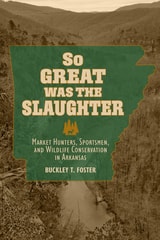
So Great Was the Slaughter
Market Hunters, Sportsmen, and Wildlife Conservation in ArkansasBuckley T. Foster
University of Alabama Press, 2025
Winner of the 2026 J.G. Ragsdale Book Award
So Great Was the Slaughter reveals the untold story of Arkansas conservation pioneers who saved the state’s game and fish populations. As Arkansas entered the twentieth century, the national demand for meat combined with the ability to ship millions of animals to hungry cities like New Orleans, Memphis, and Chicago had driven many species, including bison and passenger pigeons, to extinction in Arkansas. Many others, including deer, bear, turkey, quail, and fish, were in danger of disappearing.
In response, an unlikely coalition of Arkansas sportsmen, hunters, and conservationists created a vision for conservation legislation, game laws, and the establishment of fish hatcheries and wildlife refuges. With support from influential outsiders like E. A. McIlhenny and the United States Biological Survey, they waged a long battle against entrenched political and commercial interests.
Buckley Foster’s meticulous research reveals how these pioneers fought to save the state’s wildlife resources from destruction and laid the foundations for sustainable, modern wildlife management in Arkansas. So Great Was the Slaughter will fascinate hunters, conservationists, historians, and those interested in the history of wildlife conservation and conflicts between market hunters and sportsmen in the United States and the American South.