Results by title
22279 books match the query 'Social Science' and 1635 start with s

Siege of the Spirits
Community and Polity in BangkokMichael Herzfeld
University of Chicago Press, 2016
Herzfeld argues that even though the residents of Pom Mahakan have lost every legal battle the city government has dragged them into, they have won every public relations contest, highlighting their struggle as one against bureaucrats who do not respect the age-old values of Thai/Siamese social and cultural order. Such values include compassion for the poor and an understanding of urban space as deeply embedded in social and ritual relations. In a gripping account of their standoff, Herzfeld—who simultaneously argues for the importance of activism in scholarship—traces the agile political tactics and styles of the community’s leadership, using their struggle to illuminate the larger difficulties, tensions, and unresolved debates that continue to roil Thai society to this day.

Sierra Leone's Settler Women Traders
Women on the Afro-European FrontierE. Frances White
University of Michigan Press, 1987
Sightlines
Race, Gender, and Nation in Contemporary Australian TheatreHelen Gilbert
University of Michigan Press, 1998
Sign Language Archaeology
Understanding the Historical Roots of American Sign LanguageTed Supalla
Gallaudet University Press, 2014
By tracing the writings of selected individuals, this study reconstructs the historical context for early ASL grammar. It describes the language used in each century and how it changed, and focuses on the rediscovery of the literary legacy of the Deaf American voice. Sign Language Archaeology reveals the contrast between folk etymology and scientific etymology and allows readers to see ASL in terms of historical linguistics.
Sign Language Interpreting for Theatre
A Collaborative ApproachLynnette Taylor
Gallaudet University Press, 2025
Written by three veteran interpreters with deep roots in the Deaf community and the performing arts, Sign Language Interpreting for Theatre is the first of its kind: a comprehensive guide to the art of sign language interpreting for the theatre as a collaborative practice. Drawing from their years of experience of interpreting On- and Off-Broadway and blending the theoretical with the practical, Lynnette Taylor, Stephanie Feyne, and Candace Broecker Penn provide guiding principles, best practices, processes, and strategies for creating dynamic, collaborative, culturally grounded sign language translations for theatre performances. Written in an engaging, conversational style, chapters include in-depth discussion of both theory and practice, providing techniques for translation and stagecraft along with practical insights for issues such as interpreting team attributes, character depiction, working with scripts, song translations, interpreting for young audiences, and interpreting virtual and recorded performances. With its emphasis upon dialogic interpretation, shared responsibility, and alliances, this guide is an indispensable resource for interpreters, educators, and theatre professionals.
Sign Languages in Contact
David Quinto-Pozos
Gallaudet University Press, 2007
The 13th Volume in the Sociolinguistics in Deaf Communities Series
This volume collects for the first time various accounts of contact between sign languages throughout the world, presenting an exciting opportunity to further understand the structural and social factors of this linguistic component in Deaf communities. Editor David Quinto-Pozos has divided Sign Languages in Contact into four parts, starting with Contact in a Trilingual Setting. The sole essay in this section features a study of Maori signs by Rachel McKee, David McKee, Kirsten Smiler, and Karen Pointon that reveals the construction of indigenous Deaf identity in New Zealand Sign Language.
In Part Two: Lexical Comparisons, Jeffrey Davis conducts an historic, linguistic assessment of varieties of North American Indian sign languages. Daisuke Sasaki compares the Japanese Sign Language lexicon with that of Taiwan Sign Language by focusing on signs that share the same meaning and all parameters except for their handshapes. Judith Yoel’s chapter takes up the entirety of Part Three: Language Attrition, with her analysis of the erosion of Russian Sign Language among immigrants to Israel.
The final part describes how educators and other “foreign”visitors can influence indigenous sign languages. Karin Hoyer delineates the effects of international sign and gesture on Albanian Sign Language. Jean Ann, Wayne H. Smith, and Chiangsheng Yu close this significant collection by assessing contact between Mainland China’s sign language and Taiwan Sign Language in the Ch’iying School in Taiwan.
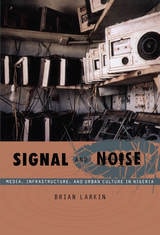
Signal and Noise
Media, Infrastructure, and Urban Culture in NigeriaBrian Larkin
Duke University Press, 2008
Media technologies were introduced to Nigeria by colonial regimes as part of an attempt to shape political subjects and create modern, urban Africans. Larkin considers the introduction of media along with electric plants and railroads as part of the wider infrastructural project of colonial and postcolonial urbanism. Focusing on radio networks, mobile cinema units, and the building of cinema theaters, he argues that what media come to be in Kano is the outcome of technology’s encounter with the social formations of northern Nigeria and with norms shaped by colonialism, postcolonial nationalism, and Islam. Larkin examines how media technologies produce the modes of leisure and cultural forms of urban Africa by analyzing the circulation of Hindi films to Muslim Nigeria, the leisure practices of Hausa cinemagoers in Kano, and the dynamic emergence of Nigerian video films. His analysis highlights the diverse, unexpected media forms and practices that thrive in urban Africa. Signal and Noise brings anthropology and media together in an original analysis of media’s place in urban life.

Signed Language Interpreting in Brazil
Ronice Müller de Quadros
Gallaudet University Press, 2012
The ninth volume in the Studies in Interpretation series offers six succinct chapters on the state of signed language interpreting by Brazil by editors Ronice Müller de Quadros, Earl Fleetwood, Melanie Metzger and ten Brazilian researchers. The first chapter advocates for the affiliation of Brazilian Sign Language (Libras) interpretation research with the field of Translation Studies to generate greater academic power empowerment of Libras. The second chapter outlines how Brazilian sign language interpreters construct a position in discourse. Chapter 3 explores the possibility that bimodal, bilingual interpreters—hearing children of deaf adults—face unique cognitive tasks compared to unimodal bilingual interpreters.
Chapter 4 describes how the systematic expansion and documentation of new academic and technical terms in Brazilian Sign Language, in which fingerspelling is uncommon, resulted in the development of an online glossary. The fifth chapter details the challenges of Libras interpreters in high schools. Chapter 6 concludes this revealing collection with findings on whether gender traits influence the act of interpretation of Brazilian Sign Language.

Signed Languages
Discoveries from International ResearchValerie Dively
Gallaudet University Press, 2001
Signed Languages: Discoveries from International Research collects the thirteen freshest, most innovative papers presented at the sixth Theoretical Issues in Sign Language Research conference in 1998, the largest of its kind ever convened. Presented together in this timely compendium, the research reflects the current trend toward focusing on international signed languages that previously have been ignored, including those of Sweden, Israel, Venezuela, and northern Nigeria.
The anthology is divided into six sections: Phonology, Morphology and Syntax, Psycholinguistics, Language Acquisition, Sociolinguistics, and Poetics. In Part One, articulatory constraints and the sign language of the Netherlands are addressed. In Part Two, researchers tackle noun classifiers, nonhanded signs, and verb classes in the signed languages of Sweden, the United States, and Israel respectively. Part Three offers the study, "Functional Consequences of Modality: Spatial Coding in Working Memory for Signs."
Language acquisition is analyzed in both adult learners and deaf children in Part Four. Part Five reports on the relationship between language and society around the world, focusing particularly on the signed languages of Venezuela and northern Nigeria. Part Six considers the techniques employed in British Sign Language poetry and ASL poetry.

Significant Others
Interpersonal and Professional Commitments in AnthropologyEdited by Richard Handler
University of Wisconsin Press, 2004
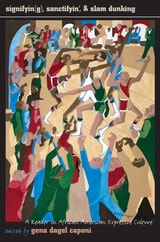
Signifyin(g), Sanctifyin', and Slam Dunking
A Reader in African American Expressive CultureGena Tabery
University of Massachusetts Press, 1999
Observers of American society have long noted the distinctive contribution of African Americans to the nation's cultural life. We find references to African American music and dance, black forms of oral expression, even a black style of playing basketball. But what do such terms really mean? Is it legitimate to talk about a distinct African American aesthetic, or is this simply a vestige of an outmoded racial essentialism? What makes a particular form of cultural expression “black” other than the fact that some African Americans may practice it? These are some of the questions addressed in the readings gathered in this volume by Gena Dagel Caponi. The essays, some previously published and others new, spring from a variety of disciplines and cover a broad range of topics, from the communal ritual of the ring shout to the evolution of rap to the improvisational genius of Michael Jordan. While each piece focuses on a different aspect of African American expressive culture, together they reveal a set of creative principles, techniques, and practices—a cultural aesthetic—that is remarkably consistent and resilient.
Signifying Bodies
Disability in Contemporary Life WritingG. Thomas Couser
University of Michigan Press, 2010
"Thomas Couser's Signifying Bodies comes at a crucial moment when debates about physician assisted suicide, genetic engineering, and neo-natal screening are raising the question of what constitutes a 'life worth living' for persons with disabilities. Couser's work engages these debates by exploring the extensive number of personal narratives by or about persons with disabilities. As Couser brilliantly demonstrates through synoptic readings, these works challenge the 'preferred rhetorics' by which such narratives are usually written (triumphalist, gothic, nostalgic) while making visible the variegated nature of embodied life."
---Michael Davidson, University of California, San Diego
"Signifying Bodies shows us that life writing about disability is . . . everywhere. . . . From obituary to documentary film to ethnography to literary memoir to the law, the book casts a wide net, detailing how various written and filmed responses to disability both enact and resist conventional narrative patterns. [This] not only broadens our idea about where to look for life writing, but also demonstrates how thoroughly stereotypes about disability mediate our social and artistic languages---even when an author has (so-called) the best intentions."
---Susannah B. Mintz, Skidmore College
Memoirs have enjoyed great popularity in recent years, experiencing significant sales, prominent reviews, and diverse readerships. Signifying Bodies shows that at the heart of the memoir phenomenon is our fascination with writing that focuses on what it means to live in, or be, an anomalous body---in other words, what it means to be disabled. Previous literary accounts of the disabled body have often portrayed it as a stable entity possibly signifying moral deviance or divine disfavor, but contemporary writers with disabilities are defining themselves and depicting their bodies in new ways. Using the insights of disability studies and source material ranging from the Old and New Testaments to the works of authors like Lucy Grealy and Simi Linton and including contemporary films such as Million Dollar Baby, G. Thomas Couser sheds light on a broader cultural phenomenon, exploring topics such as the ethical issues involved in disability memoirs, the rhetorical patterns they frequently employ, and the complex relationship between disability narrative and disability law.
G. Thomas Couser is Professor of English at Hofstra University.

Signifying Europe
Johan Fornäs
Intellect Books, 2012
Signifying Europe provides a systematic overview of the wide range of symbols used to represent Europe and Europeanness, both by the political elite and the broader public. Through a critical interpretation of the meanings of the various symbols—and their often contradictory or ambiguous dimensions—Johan Fornäs uncovers illuminating insights into how Europe currently identifies itself and is identified by others outside its borders. While the focus is on the European Union’s symbols, those symbols are also interpreted in relation to other symbols of Europe. Offering insight into the cultural dimensions of European unification, this volume will appeal to students, scholars, and politicians interested in European policy issues, cultural studies, and postnational cultural identity.
Signifying Without Specifying
Racial Discourse in the Age of ObamaLi, Stephanie
Rutgers University Press, 2011
On the campaign trail, Barack Obama faced a difficult task—rallying African American voters while resisting his opponents’ attempts to frame him as “too black” to govern the nation as a whole. Obama’s solution was to employ what Toni Morrison calls “race-specific, race-free language,” avoiding open discussions of racial issues while using terms and references that carried a specific cultural resonance for African American voters.
Stephanie Li argues that American politicians and writers are using a new kind of language to speak about race. Challenging the notion that we have moved into a “post-racial” era, she suggests that we are in an uneasy moment where American public discourse demands that race be seen, but not heard. Analyzing contemporary political speech with nuanced readings of works by such authors as Toni Morrison, Jhumpa Lahiri, and Colson Whitehead, Li investigates how Americans of color have negotiated these tensions, inventing new ways to signal racial affiliations without violating taboos against open discussions of race.

Signing and Belonging in Nepal
Erika Hoffmann-Dilloway
Gallaudet University Press, 2016
In this book, Erika Hoffmann-Dilloway presents an accessible examination of deafness in Nepal. As a linguistic anthropologist, she describes the emergence of Nepali Sign Language and deaf sociality in the social and historical context of Nepal during the last decades before the Hindu Kingdom became a secular republic. She then shows how the adoption of an ethno-linguistic model interacted with the ritual pollution model, or the prior notion that deafness results from bad karma. Her focus is on the impact of these competing and co-existing understandings of deafness on three groups: signers who adopted deafness as an ethnic identity, homesigners whose ability to adopt that identity is hindered by their difficulties in acquiring Nepali Sign Language, and hearing Nepalis who interact with Deaf signers. Comparing these contexts demonstrates that both the ethno-linguistic model and the ritual pollution model, its seeming foil, draw on the same basic premise: that both persons and larger social formations are mutually constituted through interaction. Signing and Belonging in Nepal is an ethnography that studies a rich and unique Deaf culture while also contributing to larger discussions about social reproduction and social change.

Signing in Puerto Rican
A Hearing Son and His Deaf FamilyAndrés Torres
Gallaudet University Press, 2009
The only child of deaf Puerto Rican immigrants, Andrés Torres grew up in New York City in a large, extended family that included several deaf aunts and uncles. In Signing in Puerto Rican: A Hearing Son and His Deaf Family, he opens a window into the little known culture of Deaf Latinos chasing the immigrant American dream. Like many children of deaf adults (codas), Torres loved his parents deeply but also longed to be free from being their interpreter to the hearing world. Torres’s story is unique in that his family communicated in three languages. The gatherings of his family reverberated with “deaf talk,” in sign, Spanish, and English. What might have struck outsiders as a strange chaos of gestures and mixed spoken languages was just normal for his family.
Torres describes his early life as one of conflicting influences in his search for identity. His parents’ deep involvement in the Puerto Rican Society for the Catholic Deaf led him to study for the priesthood. He later left the seminary as his own ambitions took hold. Torres became very active in the Puerto Rico independence party against the backdrop of the Civil Rights movement and protest against the Vietnam War. Throughout these defining events, Torres’s journey never took him too far from his Deaf Puerto Rican family roots and the passion of arms, hands, and fingers filling the air with simultaneous translation and understanding.

Signs Of Danger
Waste, Trauma, and Nuclear ThreatPeter C. Van Wyck
University of Minnesota Press, 2004
Questions the literal burying of the nuclear threat and how it relates to expectations for our future
A rising ocean. A falling building. A toxic river. Species extinguished. A nuclear landscape. In a world so configured, the state of contemporary ecological thought and practice is woefully—and perilously—inadequate. Focusing on the government’s nuclear waste burial program in Carlsbad, New Mexico, Signs of Danger begins the urgent work of finding a new way of thinking about ecological threat in our time.
The Waste Isolation Pilot Plant in Carlsbad began receiving shipments in 1999. With a proposed closing date of 2030, this repository for nuclear waste must be secured with a sign, the purpose of which will be to keep people away for three hundred generations. In the official documents uncovered by Peter van Wyck, we encounter a government bureaucracy approaching the issue of nuclear waste as a technical problem only to find itself confronting a host of intractable philosophical issues concerning language, culture, and history. Signs of Danger plumbs these depths as it shows us how the problem raised in the desert of New Mexico is actually the problem of a culture grappling with ecological threats and with questions of the limits of meaning and representation in the deep future. The reflections at the center of this book—on memory, trauma, disaster, representation, and the virtual—are aimed at defining the uniquely modern status of environmental and nuclear threats. They offer invaluable insights into the interface of where culture ends and nature begins, and how such a juncture is closely linked with questions of risk, concepts of history, and the cultural experience of time.Winner of the 2005 Gertrude J. Robinson Book Prize of the Canadian Communication Association
Signs and Cities
Black Literary PostmodernismMadhu Dubey
University of Chicago Press, 2003
Dubey shows how black novelists from the last three decades have reconsidered the modern urban legacy and thus articulated a distinctly African-American strain of postmodernism. She argues that novelists such as Octavia Butler, Samuel Delany, Toni Morrison, Gloria Naylor, Ishmael Reed, Sapphire, and John Edgar Wideman probe the disillusionment of urban modernity through repeated recourse to tropes of the book and scenes of reading and writing. Ultimately, she demonstrates that these writers view the book with profound ambivalence, construing it as an urban medium that cannot recapture the face-to-face communities assumed by oral and folk forms of expression.

Signs and Wonders
Religious Rhetoric and the Preservation of Sign LanguageTracy Ann Morse
Gallaudet University Press, 2014
In Chapter One, Morse analyzes Thomas Hopkins Gallaudet’s use of religious references in his 1817 maiden address at the first American school for deaf students. She examines his and other speeches as examples of the intersection of education for deaf Americans and Protestant missionary efforts to convert them. In the second chapter, she presents the different religious perspectives of the two deaf education camps: Manualists argued that sign language was a gift from God, while Oralists viewed hand gestures as animal-like, indicative of lower evolutionary development.
Chapter Three explores the religious rhetoric in churches, sanctuaries where sign language flourished and deaf members formed relationships. In the fourth chapter, Morse shows how Deaf activist George Veditz signed using religious themes in his political films. She also comments on the impact of the bilingual staging of Big River: The Adventures of Huckleberry Finn, which began to change the hearing world’s opinion about the Deaf community. Morse concludes with speculation on the shifting terrain for deaf people due to technological innovations that might supplant religious rhetoric as a tool to support the Deaf community.
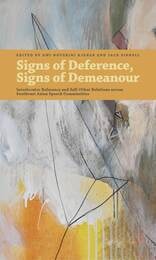
Signs of Deference, Signs of Demeanour
Interlocutor Reference and Self-Other Relations across Southeast Asian Speech CommunitiesEdited by Dwi Noverini Djenar and Jack Sidnell
National University of Singapore Press, 2022
A study of interlocutor reference that significantly deepens our understanding of the ways in which self-other relations are linguistically mediated in social interaction, based on the analysis of Southeast Asian languages.
Terms used by speakers to refer to themselves and their interlocutors form one of the ways that language expresses, defines, and creates a field for working out social relations. Because this field of study in sociolinguistics historically has focused on Indo-European languages, it has tended to dwell on references to the addressee—for example, the choice between tu and vous when addressing someone in French. This book uses the study of Southeast Asian languages to theorize interlocutor reference more broadly, significantly deepening our understanding of the ways in which self-other relations are linguistically mediated in social interaction. As the authors explain, Southeast Asian systems exceed in complexity and nuance the well-described cases of Europe in two basic ways. First, in many languages of Southeast Asia, a speaker must select an appropriate reference form not only for other/addressee but also for self/speaker. Second, in these languages, in addition to pronouns, speakers draw upon a range of common and proper nouns including names, kin terms, and titles, in referring to themselves and the addressee. Acts of interlocutor reference, therefore, inevitably do more than simply identify the speaker and addressee; they also convey information about the proposed relation between interlocutors. Bringing together studies from both small-scale and large, urbanized communities across Mainland and Insular Southeast Asia, this is an important contribution to the regional linguistic and anthropological literature.
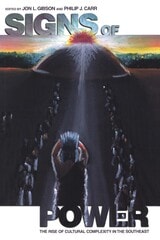
Signs of Power
The Rise of Cultural Complexity in the SoutheastEdited by Jon L. Gibson and Philip J. Carr
University of Alabama Press, 2004
Traces the sources of power and large-scale organization of prehistoric peoples among Archaic societies.
By focusing on the first instances of mound building, pottery making, fancy polished stone and bone, as well as specialized chipped stone, artifacts, and their widespread exchange, this book explores the sources of power and organization among Archaic societies. It investigates the origins of these technologies and their effects on long-term (evolutionary) and short-term (historical) change.
The characteristics of first origins in social complexity belong to 5,000- to 6,000-year-old Archaic groups who inhabited the southeastern United States. In Signs of Power, regional specialists identify the conditions, causes, and consequences that define organization and social complexity in societies. Often termed "big mound power," these considerations include the role of demography, kinship, and ecology in sociocultural change; the meaning of geometry and design in sacred groupings; the degree of advancement in stone tool technologies; and differentials in shell ring sizes that reflect social inequality.
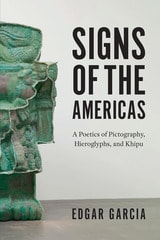
Signs of the Americas
A Poetics of Pictography, Hieroglyphs, and KhipuEdgar Garcia
University of Chicago Press, 2020
Garcia tells the story of the present life of these sign-systems, examining the contemporary impact they have had on poetry, prose, visual art, legal philosophy, political activism, and environmental thinking. In doing so, he brings together a wide range of indigenous and non-indigenous authors and artists of the Americas, from Aztec priests and Amazonian shamans to Simon Ortiz, Gerald Vizenor, Jaime de Angulo, Charles Olson, Cy Twombly, Gloria Anzaldúa, William Burroughs, Louise Erdrich, Cecilia Vicuña, and many others. From these sources, Garcia depicts the culture of a modern, interconnected hemisphere, revealing that while these “signs of the Americas” have suffered expropriation, misuse, and mistranslation, they have also created their own systems of knowing and being. These indigenous systems help us to rethink categories of race, gender, nationalism, and history. Producing a new way of thinking about our interconnected hemisphere, this ambitious, energizing book redefines what constitutes a “world” in world literature.
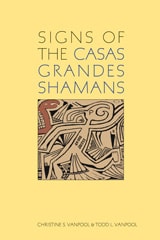
Signs of the Casas Grandes Shamans
VanPool Christine & Todd
University of Utah Press, 2007
Looking through this window, authors Christine and Todd VanPool find a world centered on shamans who took spiritual journeys to consort with supernatural creatures. The shamans called upon horned serpents to bring rain, the lifeblood for farmers living in the Chihuahuan desert; dealt with snakes that held powers more potent than their bites; and raised, sacrificed, and buried macaws as ritual offerings to ensure water and fertility.
These findings challenge long-held beliefs about Southwestern religion and force a reconsideration of the importance of shamanism in the development of social differentiation in societies around the world.
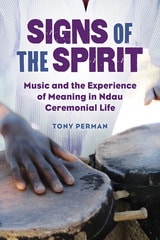
Signs of the Spirit
Music and the Experience of Meaning in Ndau Ceremonial LifeTony Perman
University of Illinois Press, 2020
Perman's encounters with the spirits, the mediums who bring them back, and the accompanying rituals form the heart of his ethnographic account of how the Ndau experience ceremonial musicking. As Perman witnessed other ceremonies, he discovered that music and dancing shape the emotional lives of Ndau individuals by inviting them to experience life's milestones or cope with its misfortunes as a group. Signs of the Spirit explores the historical, spiritual, and social roots of ceremonial action and details how that action influences the Ndau's collective approach to their future. The result is a vivid ethnomusicological journey that delves into the immediacy of musical experience and the forces that transform ceremonial performance into emotions and community.
Signs
Journal of Women in Culture and Society, volume 45 number 2 (Winter 2020)The University of Chicago Press
University of Chicago Press Journals, 2020
Signs
Journal of Women in Culture and Society, volume 45 number 3 (Spring 2020)The University of Chicago Press
University of Chicago Press Journals, 2020
Signs
Journal of Women in Culture and Society, volume 45 number 4 (Summer 2020)The University of Chicago Press
University of Chicago Press Journals, 2020

Signs
Journal of Women in Culture and Society, volume 46 number 1 (Autumn 2020)The University of Chicago Press
University of Chicago Press Journals, 2020
Signs
Journal of Women in Culture and Society, volume 46 number 2 (Winter 2021)The University of Chicago Press
University of Chicago Press Journals, 2021
Signs
Journal of Women in Culture and Society, volume 46 number 3 (Spring 2021)The University of Chicago Press
University of Chicago Press Journals, 2021
Signs
Journal of Women in Culture and Society, volume 46 number 4 (Summer 2021)The University of Chicago Press
University of Chicago Press Journals, 2021
Signs
Journal of Women in Culture and Society, volume 47 number 1 (Autumn 2021)The University of Chicago Press
University of Chicago Press Journals, 2021
Signs
Journal of Women in Culture and Society, volume 47 number 2 (Winter 2022)The University of Chicago Press
University of Chicago Press Journals, 2022
Signs
Journal of Women in Culture and Society, volume 47 number 3 (Spring 2022)The University of Chicago Press
University of Chicago Press Journals, 2022
Signs
Journal of Women in Culture and Society, volume 47 number 4 (Summer 2022)The University of Chicago Press
University of Chicago Press Journals, 2022
Signs
Journal of Women in Culture and Society, volume 48 number 1 (Autumn 2022)The University of Chicago Press
University of Chicago Press Journals, 2022

Signs
Journal of Women in Culture and Society, volume 48 number 2 (Winter 2023)The University of Chicago Press
University of Chicago Press Journals, 2023
Signs
Journal of Women in Culture and Society, volume 48 number 3 (Spring 2023)The University of Chicago Press
University of Chicago Press Journals, 2023
Signs
Journal of Women in Culture and Society, volume 48 number 4 (Summer 2023)The University of Chicago Press
University of Chicago Press Journals, 2023
Signs
Journal of Women in Culture and Society, volume 49 number 1 (Autumn 2023)The University of Chicago Press
University of Chicago Press Journals, 2023
Signs
Journal of Women in Culture and Society, volume 49 number 2 (Winter 2024)The University of Chicago Press
University of Chicago Press Journals, 2024
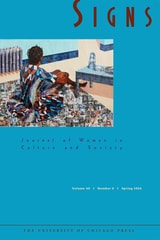
Signs
Journal of Women in Culture and Society, volume 49 number 3 (Spring 2024)The University of Chicago Press
University of Chicago Press Journals, 2024
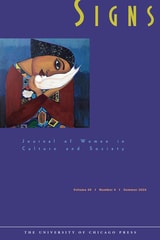
Signs
Journal of Women in Culture and Society, volume 49 number 4 (Summer 2024)The University of Chicago Press
University of Chicago Press Journals, 2024
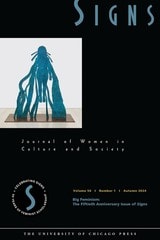
Signs
Journal of Women in Culture and Society, volume 50 number 1 (Autumn 2024)The University of Chicago Press
University of Chicago Press Journals, 2024
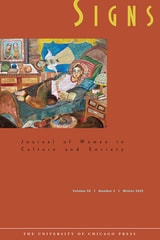
Signs
Journal of Women in Culture and Society, volume 50 number 2 (Winter 2025)The University of Chicago Press
University of Chicago Press Journals, 2025
Signs
Journal of Women in Culture and Society, volume 50 number 3 (Spring 2025)The University of Chicago Press
University of Chicago Press Journals, 2025
Signs
Journal of Women in Culture and Society, volume 50 number 4 (Summer 2025)The University of Chicago Press
University of Chicago Press Journals, 2025
Signs
Journal of Women in Culture and Society, volume 51 number 1 (Autumn 2025)The University of Chicago Press
University of Chicago Press Journals, 2025
Signs
Journal of Women in Culture and Society, volume 51 number 2 (Winter 2026)The University of Chicago Press
University of Chicago Press Journals, 2026
Signs
Journal of Women in Culture and Society, volume 51 number 3 (Spring 2026)The University of Chicago Press
University of Chicago Press Journals, 2026