Results by title
28167 books match the query 'History' and 1838 start with s

She's Got a Gun
Nancy Floyd
Temple University Press, 2008
Sympathetic but unsentimental, Floyd presents gun-toting women young and old, including an eleven-year-old girl competing in her first gun competition, a woman whose grandmother was killed by an intruder, and a war veteran who experienced firefights while stationed in Iraq. Whatever you might think about gun-toting women before you open this book, your preconceptions are sure to be shattered by the end.
She's the Boss
The Rise of Women’s Entrepreneurship since World War IIDebra Michals
Rutgers University Press, 2025
She’s the Boss chronicles the forces that made entrepreneurship attractive to women. In rich detail, Debra Michals shares the stories of the countless women of all races, ethnicities, genders, and abilities who contributed to this important history. The book also explores the intersection of women’s personal choices within changing social, political, and economic factors, such as the rising divorce rates of the 1960s and 1970s, ongoing workplace and credit discrimination, civil and women’s rights activism and activist entrepreneurs, the 1970s recession and 1980s “Reagan Revolution,” and more recently, the internet, crowd-funding, and social entrepreneurship.

Sheep Industry of Territorial New Mexico
Livestock, Land, and DollarsJon M. Wallace
University Press of Colorado, 2023
Author Jon Wallace tells the story of evolving living conditions as the sheep industry came to encompass innumerable families of modest means. The transformation improved many New Mexicans’ lives and helped establish the territory as a productive part of the United States. There was a cost, however, with widespread ecological changes to the lands—brought about in large part by heavy grazing. Following the US annexation of New Mexico, new markets for mutton and wool opened. Well-connected, well-financed Anglo merchants and growers who had recently arrived in the territory took advantage of the new opportunity and joined their Hispanic counterparts in entering the sheep industry.
The Sheep Industry of Territorial New Mexico situates this socially imbued economic story within the larger context of the environmental consequences of open-range grazing while examining the relationships among Hispanic, Anglo, and Indigenous people in the region. Historians, students, general readers, and specialists interested in the history of agriculture, labor, capitalism, and the US Southwest will find Wallace’s analysis useful and engaging.

Sheer Misery
Soldiers in Battle in WWIIMary Louise Roberts
University of Chicago Press, 2021
Sheer Misery trains a humane and unsparing eye on the corporeal experiences of the soldiers who fought in Belgium, France, and Italy during the last two years of the war. In the horrendously unhygienic and often lethal conditions of the front line, their bodies broke down, stubbornly declaring their needs for warmth, rest, and good nutrition. Feet became too swollen to march, fingers too frozen to pull triggers; stomachs cramped, and diarrhea stained underwear and pants. Turning away from the accounts of high-level military strategy that dominate many WWII chronicles, acclaimed historian Mary Louise Roberts instead relies on diaries and letters to bring to life visceral sense memories like the moans of the “screaming meemies,” the acrid smell of cordite, and the shockingly mundane sight of rotting corpses. As Roberts writes, “For soldiers who fought, the war was above all about their bodies.”
Sheer Presence
The Veil in Manet’s ParisMarni Reva Kessler
University of Minnesota Press, 2006

Shelby’s Expedition to Mexico
An Unwritten Leaf of the WarJohn R. Edwards
University of Arkansas Press, 2007
Confederate general Joseph O. Shelby and his legendary Iron Brigade refused to acknowledge the end of the Civil War. Instead, they fought their way to Mexico in search of a place where they could continue to defy the U.S. government. These veteran Missouri cavalrymen clawed their way for fifteen hundred miles, fighting Juaristas, Indians, desperados, and disgruntled gringos. They disbanded only after they had offered their services to Emperor Maximilian and were turned down.
Shelby’s adjutant, journalist John N. Edwards, first published his story of the exploits of this superb mounted brigade and its quixotic final march in 1872. Conger Beasley provides a lively introduction that includes the first biographical sketch of the author. The 1969 movie The Undefeated starring John Wayne and Rock Hudson was based upon Shelby’s expedition.
Shelley and His Readers
Beyond Paranoid PoliticsKim Wheatley
University of Missouri Press, 1999
In Shelley and His Readers, the first full-length critical analysis of the dialogue between Shelley's poetry and its contemporary reviewers, Kim Wheatley argues that Shelley's idealism can be recovered through the study of his poetry's reception. Incorporating extensive research in major early-nineteenth-century British periodicals, Wheatley integrates a reception-based methodology with careful textual analysis to demonstrate that the early reception of Shelley's work registers the immediate impact of the poet's increasingly idealistic passion for reforming the world.
Wheatley examines Shelley's poetry within the context of Romantic-era "paranoid politics," a simultaneously empowering and disabling dynamic in which the reviewers employ a heightened language of defensiveness and persecution that paints their adversaries as Satanic rebels against orthodoxy. This "paranoid style" displays a preoccupation with the efficacy of the printed word and singles out radical writers such as Shelley as sources of social contamination.
Using Shelley's Queen Mab to illustrate his early radicalism, Wheatley demonstrates that the poet, like his contemporary reviewers, is caught up in paranoid rhetoric. Failing to challenge the assumptions underlying the paranoid style-conspiracy and contagion-in this poem Shelley takes merely a defiant, oppositional stance. However, Shelley's later poems, exemplified by Prometheus Unbound and Adonais, circumvent the reviewers' rhetoric through their boldly experimental language, a process registered by the reviewers' own responses. These less explicitly political poems transcend the dynamics of cultural paranoia by shifting to an apolitical conception of the aesthetic. In collaboration with its early readers, Shelley's poetry thus moves momentarily beyond paranoid politics.
The final chapter of this study argues that the posthumous reception of Adonais uniquely replicates the elegiac moves and complex idealism of the poem, concluding with a discussion of how the Shelley circle aestheticized the poet after his death.
Shelley and His Readers offers a new approach to the question of how to recuperate Romantic idealism in the face of challenges from both deconstructive and historicist criticism. Its innovative use of reception-based analysis will make this book invaluable not only to specialists of the Romantic period but also to anyone interested in new developments in literary criticism.
Shellfish for the Celestial Empire
The Rise and Fall of Commercial Abalone Fishing in CaliforniaTodd J. Braje
University of Utah Press, 2016
In the 1800s, when California was captivated by gold fever, a small group of Chinese immigrants recognized the fortune to be made from the untapped resources along the state’s coast, particularly from harvesting the black abalone of southern and Baja California. These immigrants, with skills from humble beginnings in a traditional Chinese fishing province, founded California’s commercial abalone industry, and led its growth and expansion for several decades. By the turn of the twentieth century, however, their successful livelihood was stolen from them through targeted legislation of the U.S. and California governments.
Today, the physical evidence of historical Chinese abalone fishing on the mainland has been erased by development. On California’s Channel Islands, however, remnants of temporary abalone collecting and processing camps lie scattered along the coastlines. These sites hold a treasure trove of information, stories, lifeways, and history. Braje has excavated many of these sites and uses them to explore the history of Chinese abalone fishing, presenting a microcosm of the broader history of Chinese immigrants in America—their struggles, their successes, the institutionalized racism they faced, and the unique ways in which they helped to shape the identity of the United States.
Shelter Poverty
New Ideas on Housing AffordabilityMichael E. Stone
Temple University Press, 1993

Shelter and Storm
At Home in the Driftlessdean
University of Minnesota Press, 2025
Living mindfully with nature during a time of uncertainty
In the midst of the environmental crises of the early twenty-first century, Tamara Dean sought a way to live lightly on the planet. Her quest drew her to a landscape unlike any other: the Driftless area of Wisconsin, a region untouched by glaciers, marked by steep hills and deeply carved valleys, capped with forests and laced with cold, spring-fed streams. There, she confronted, in ways large and small, the challenges of meeting basic needs while facing the ravages of climate change—an experience at once soul-stirring and practical that she recounts in Shelter and Storm.
Dean’s boundless curiosity and gift for storytelling imbue these essays with urgency and a sense of adventure. She invites readers to share in her discoveries while hunting for water, learning that a persistent weed could be food, or burning a hayfield to recreate a prairie. Contending with the fallout of fires, floods, and tornadoes, she offers responses to natural disasters that reflect the importance of community, now and for generations to come. Whether tracking down a rare, blue-glowing firefly, engineering a beaver-friendly waterway to appease a dying neighbor, or building a house of earthen blocks, Dean unites personal experience with science and history, presenting a perspective as informative as it is compelling.
Keenly attentive to the stakes for our planet’s future—and the implications of extreme weather, shifting agricultural practices, and political divides—Shelter and Storm illuminates a thoughtful way forward for anyone concerned about climate change and its far-reaching consequences or for anyone searching, as Dean has, for a more sustainable way to live.
Retail e-book files for this title are screen-reader friendly.
Shelter from the Machine
Homesteaders in the Age of CapitalismJason G. Strange
University of Illinois Press, 2020
Jason Strange shows where homesteaders fit, and don't fit, within contemporary America. Blending history with personal stories, Strange visits pig roasts and bohemian work parties to find people engaged in a lifestyle that offers challenge and fulfillment for those in search of virtues like self-employment, frugality, contact with nature, and escape from the mainstream. He also lays bare the vast differences in education and opportunity that leave some homesteaders dispossessed while charting the tensions that arise when people seek refuge from the ills of modern society—only to find themselves indelibly marked by the system they dreamed of escaping.
Shepherd of the Hills Country
Tourism Transforms the Ozarks, 1880s-1930sLynn Morrow
University of Arkansas Press, 1999
Modern tourism in the Ozark Mountains of Missouri and Arkansas is concentrated around the area’s glistening man-made lakes, its fish-filled streams and rivers, and the entertainment mecca of Branson. But recreational excursions into this part of the country began over one hundred years ago as urban Midwesterners, many of them captivated by Harold Bell Wright’s novel The Shepherd of the Hills, sought the outdoors for spiritual and physical regeneration.
Morrow and Myers-Phinney excavate the beginnings of commercial tourism in the region and follow it through six decades as the influx of visitors who became familiar with the Ozarks and its investment opportunities brought capital, new commerce, and additional residents to the hills. Chapters focus on float fishing, game parks, cave exploration, the influence of the railroad, and the men who were instrumental in the region’s transformation. The authors discuss traditional lifestyles rooted in “living off the land,” with stock raising and lumbering providing basic subsistence, and changes wrought by tourism, which affected all classes of people across the White River landscape. They describe the flowering of “Ozarks folklore”—how stories told around gravel-bar fishing camps and retold by newspaper journalists translated the hills’ oral tradition for mass audiences.
While the main theme of this study is the development of tourism, it is also a social history of the interior highlands of the Ozarks. We see how the residents and their way of life were discovered, exploited, and changed by new opportunities and the demands of tourism and increasing trade. As such, this book is a valuable new addition to the University of Arkansas Press’s Ozarks Collection.

Sherabad Oasis
Tracing Historical Landscape in Southern UzbekistanEdited by Ladislav Stanco and Petra Tušlová
Karolinum Press, 2020
Edited by Ladislav Stančo and Petra Tušlová, this volume continues the significant work of Czech researchers in Uzbekistan, a key Central Asian republic at the crossroads of history and culture.
Sherman's Forgotten General
Henry W. SlocumBrian C. Melton
University of Missouri Press, 2007
Henry Warner Slocum, a Union major general who was a corps and army commander in the Civil War, served from the first call for troops until he stood with William Tecumseh Sherman to receive Joseph E. Johnston’s surrender after Appomattox. He saw action at Bull Run, Chancellorsville, and Gettysburg, and by the end of the war he had taken command of the Army of Georgia, yet historians have largely overlooked this key commander.
Brian Melton has written the first scholarly account of this important general—the first full-length biography in nearly a century—who as one of Sherman’s most trusted commanders exercised significant influence during the Civil War. Although Slocum is remembered primarily for his lackluster performance at Gettysburg, Melton discloses that there is more to him than current history credits, offering a holistic account of his life to show that his career was much more significant than has been supposed.
Slocum took on the characteristics of the leaders he served, and Melton reveals how Slocum’s attitudes and tactics changed dramatically between commanders to explain why he proved to be of little help to George McClellan and almost a liability while serving under “Fighting Joe” Hooker and yet was an effective commander under Sherman. Slocum became Sherman’s “left arm” and adapted so thoroughly to his style of generalship that he anticipated the general’s intentions on two important occasions, and Melton contends that Slocum was a much more important contributor to the success of Sherman’s later campaigns than has been acknowledged, becoming at times more aggressive and driving than Sherman himself.
Melton ultimately considers Slocum’s fate as one of the forgotten generals of the Civil War—brought on largely by his joining the Democratic Party in 1865—and demonstrates why previous simplistic depictions of Slocum miss the mark. By providing the first detailed look at this important second-tier commander, Sherman’s Forgotten General illuminates the influences, events, and individuals of Slocum’s career to show that, while he may not have changed the course of the war, he played a conspicuous and important role in its successful execution that has long deserved to be recognized.
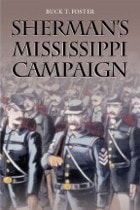
Sherman's Mississippi Campaign
Buck T. Foster
University of Alabama Press, 2006
The campaign that shaped Sherman's path to victory and changed the future of Civil War warfare.
With the fall of Vicksburg to Union forces in mid-1863, the Federals began work to extend and consolidate their hold on the lower Mississippi Valley. As a part of this plan, Major General William Tecumseh Sherman set out from Vicksburg on February 3, 1864, with an army of some 25,000 infantry and a battalion of cavalry. They expected to be joined by another Union force moving south from Memphis and supported themselves off the land as they traveled due east across Mississippi.
Sherman entered Meridian on February 14 and thoroughly destroyed its railroad facilities, munitions plants, and cotton stores, before returning to Vicksburg. Though not a particularly effective campaign in terms of enemy soldiers captured or killed, it offers a rich opportunity to observe how this large-scale raid presaged Sherman’s Atlanta and Carolina campaigns, revealing the transformation of Sherman’s strategic thinking.
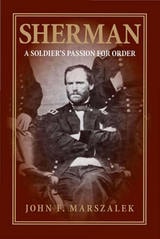
Sherman
A Soldier's Passion for OrderJohn F. Marszalek
Southern Illinois University Press, 1993
Sherman: A Soldier’s Passion for Order is the premier biography of William Tecumseh Sherman, the Civil War commander known for his “destructive war” policy against Confederates and as a consummate soldier. This updated edition of John F. Marszalek’s award-winning book presents the general as a complicated man who, fearing anarchy, searched for the order that he hoped would make his life a success.
Sherman was profoundly influenced by the death of his father and his subsequent relationship with the powerful Whig politician Thomas Ewing and his family. Although the Ewings treated Sherman as one of their own, the young Sherman was determined to make it on his own. He graduated from West Point and moved on to service at military posts throughout the South. This volume traces Sherman’s involvement in the Mexican War in the late 1840s, his years battling prospectors and deserting soldiers in gold-rush California, and his 1850 marriage to his foster sister, Ellen. Later he moved to Louisiana, and, after the state seceded, Sherman returned to the North to fight for the Union.
Sherman covers the general’s early Civil War assignments in Kentucky and Missouri and his battles against former Southern friends there, the battle at Shiloh, and his rise to become second only to Grant among the Union leadership. Sherman’s famed use of destructive war, controversial then and now, is examined in detail. The destruction of property, he believed, would convince the Confederates that surrender was their best option, and Sherman’s successful strategy became the stuff of legend.
This definitive biography, which includes forty-six illustrations, effectively refutes misconceptions surrounding the controversial Union general and presents Sherman the man, not the myth.

Sherwood Anderson and Other Famous Creoles
A Gallery of Contemporary New OrleansDrawings by William Spratling<br>Text by William Faulkner
University of Texas Press, 1966
"When Bill Faulkner came to New Orleans he was a skinny little guy, three years older than I, and was not taken very seriously except by a few of us." Thus the late William Spratling, popularly known as the Taxco "Silver King," recalled the mid-1920's, when Faulkner, a young man fresh from Oxford, Mississippi, roomed with Spratling in Pirates Alley.
"By the time I would be up, say at seven, Bill would already be out on the little balcony over the garden tapping away on his portable, an invariable glass of alcohol-and-water at hand."
A result of their friendship was a book depicting "various people who were then engaged … with the arts in New Orleans." It was based on firsthand observation.
"There were casual parties with wonderful conversation and with plenty of grand, or later to be grand, people." Some of the names, in addition to Sherwood Anderson, were Horace Liveright, Carl Van Doren, Carl Sandberg, John Dos Passos, Anita Loos, and Oliver La Farge.
Spratling supplied sharp caricatures of the people and Faulkner contributed succinct captions and a Foreword. It was all "sort of a private joke," but the four hundred copies were sold within a week and the original edition is now a collector's item. This book is a charming reminder of exciting days and talented people.

Sherwood Anderson
A Writer in America, Volume 2Walter B. Rideout
University of Wisconsin Press, 2006
Walter Rideout’s Sherwood Anderson: A Writer in America is a seminal work that reintroduces us to this important, yet recently neglected, American writer, giving him long overdue attention. This second volume of the monumental two-volume work covers Anderson’s life after his move in the mid-1920s to “Ripshin,” his house near Marion, Virginia (where Volume 1 ended.) The second volume covers his return to business pursuits; his extensive travels in the South touring factories, which resulted in his political involvement in labor struggles and several books on the topic; and finally his unexpected death in 1941.
No other existing Anderson biography, the most recent of which was published nearly twenty years ago, is as thoroughly researched, so extensively based on primary sources and interviews with a range of Anderson’s friends and family members, or as complete in its vision of the man and the writer. Rideout uncovers much new information about events and people in Anderson’s life and provides a new perspective on many of his works. This two-volume biography presents Anderson’s many remarkable attributes more clearly than ever before, while astutely placing his life and writings in the broader social, political, and artistic movements of his times.
Outstanding Book, selected by the American Association of School Librarians, and Best Books for General Audiences, selected by the Public Library Association
Outstanding Academic Title, Choice Magazine
Winner, Biography Award, Society of Midland Authors
Shifting Borders and a Tattered Passport
Intellectual Journeys of a Mormon AcademicArmand L. Mauss
University of Utah Press, 2012
The life of a Mormon intellectual in the secular academic community is likely to include some contradictions between belief, scholarship, and the changing times. In his memoir, Armand L. Mauss recounts his personal and intellectual struggles—inside and outside the LDS world—from his childhood to his days as a graduate student at UC Berkeley in the 1960s through his many years as a professor.
As an important and influential observer and author in the Mormon intellectual world, Mauss has witnessed how, in attempting to suppress independent and unsponsored scholarship during the final decades of the twentieth century, LDS leaders deliberately marginalized important intellectual support and resources that could have helped, in the twenty-first century, to refurbish the public image of the church. As a sociologist, he notes how the LDS Church, as a large, complex organization, strives to adjust its policies and practices in order to maintain an optimal balance between unique, appealing claims on the one hand and public acceptance on the other. He also discusses national and academic controversies over the New Religious Movements of the 1960s and 1970s. Writing in clear language, Mauss shows how he has navigated the boundaries where his faith and academic life intersect, and reveals why a continuing commitment to the LDS Church must be a product of choice more than of natural or supernatural “proof.”
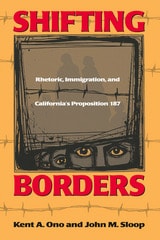
Shifting Borders
Rhetoric, Immigration And Prop 187Kent Ono
Temple University Press, 2002
"Like articles representing the positions of proponents of the measure, those representing opponents constructing the nation as potentially in danger as a result of undocumented immigration."
How do we learn to recognize the damning effects of good rhetorical intentions? And where will we find arguments which escape this trap that permeates the liberal social policy world? Shifting Borders uses an evaluation of the debate over California Proposition 187 to demonstrate how this quandary is best understood by close interrogation of mainstream reports and debates and by bringing to the fore voices that are often left out of mediated discussions.
It is these voices outside the mainstream, so-called "outlaw" discourses, that hold the best possibilities for real social change. To illustrate their claim, the authors present dominant and outlaw discourses around Proposition 187, from television reports, internet chat sites, and religious discourse to coverage of the Los Angeles Times. Their critique ably demonstrates how difficult it is to maintain a position outside the mainstream, but also how important it is for the press, citizens and scholars to actively search out such voices. The findings are organized through a model that provides an innovative method for understanding events and arguments through their rhetorical and communicative construction. In a world where the mediated word defines so much of what we know, Shifting Borders provides a lucid introduction to analyzing the spoken and written word that constitutes political debate in contemporary U.S. culture. In doing so, it makes an important contribution to any future development of progressive political strategy.
postamble();
Shifting Memories
The Nazi Past in the New GermanyKlaus Neumann
University of Michigan Press, 2000
The case studies address, for example, the legacy of the so-called Celler Hasenjagd (the hunting down of concentration camp prisoners who survived an Allied air raid in April 1945 in a town in Lower Saxony); efforts by the City of Hildesheim to memorialize the Kristallnacht pogrom; attempts by Italian, Jewish, and Sinti survivors to commemorate their suffering in two West German towns; the posthumous reputation of a German communist imprisoned in Buchenwald and credited with having saved the lives of 159 Jewish children; and the public memories of the Ravensbrück and Buchenwald concentration camps in East Germany.
Directed at an audience curious about contemporary Germany, this book will appeal to those interested in issues of public and social memory, and in the legacy of Auschwitz.
Klaus Neumann is a historian who has taught in universities in Germany and Australia and written about social memories in the Pacific Islands, Australia, and Germany. Previous books include Not the Way It Really Was and Rabaul Yu Swit Moa Yet. He lives in Richmond, Australia.
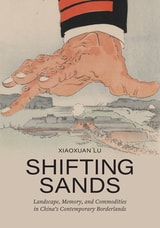
Shifting Sands
Landscape, Memory, and Commodities in China's Contemporary BorderlandsXiaoxuan Lu
University of Texas Press, 2023
How China’s borderlands transformed politically and culturally throughout the twentieth and twenty-first centuries.
China’s land borders, shared with fourteen other nations, are the world’s longest. Like all borders, they are not just lines on a map but also spaces whose histories and futures are defined by their frontier status. An ambitious appraisal of China’s borderlands, Shifting Sands addresses the full scope and importance of these regions, illustrating their transformation from imperial backwaters to hotbeds of resource exploitation and human development in the age of neoliberal globalization.
Xiaoxuan Lu brings to bear an original combination of archival research, fieldwork, cartography, and landscape analysis, broadening our understanding of the political economy and cultural changes in China’s borderlands in the twentieth and twenty-first centuries. While conventional wisdom looks to the era of Deng Xiaoping for China’s “opening,” Lu shows the integration of China’s borderlands into national and international networks from Sun Yat-sen onward. Yet, while the state has left a firm imprint on the borderlands, they were hardly created by China alone. As the Chinese case demonstrates, all borderlands are transnational, their physical and socioeconomic landscapes shaped by multidirectional flows of materials, ideas, and people.

Shih-shuo Hsin-yü
A New Account of Tales of the WorldBy Liu I-ch’ing; With commentary by Liu Chün; Translated with introduction and notes by Richard B. Mather
University of Michigan Press, 2002
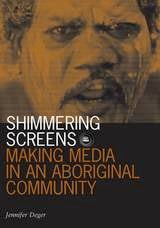
Shimmering Screens
Making Media in an Aboriginal CommunityJennifer Deger
University of Minnesota Press, 2006
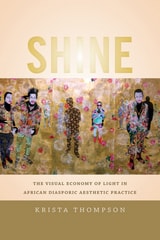
Shine
The Visual Economy of Light in African Diasporic Aesthetic PracticeKrista Thompson
Duke University Press, 2015
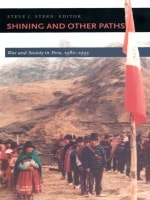
Shining and Other Paths
War and Society in Peru, 1980-1995Steve J. Stern, ed.
Duke University Press, 1998
The contributors—a team of Peruvian and U.S. historians, social scientists, and human rights activists—explore the origins, social dynamics, and long-term consequences of the effort by Shining Path to effect an armed communist revolution. The book begins by interpreting Shining Path’s emergence and decision for war as one logical culmination, among several competing culminations, of trends in oppositional politics and social movements. It then traces the experiences of peasants and refugees to demonstrate how human struggle and resilience came together in grassroots determination to defeat Shining Path, and explores the unsuccessful efforts of urban shantytown dwellers, as well as rural and urban activists, to build a “third path” to social justice. Integral to this discussion is an examination of women’s activism and consciousness during the years of the crisis. Finally, this book analyzes the often paradoxical and unintended legacies of this tumultuous period for social and human rights movements, and for presidential and military leadership in Peru.
Extensive field research, broad historical vision, and strong editorial coordination enable the authors to write a coherent and deeply humanistic account, one that draws out the inner tragedies, ambiguities, and conflicts of the war.
Providing historically grounded explication of the conflicts that reshaped contemporary Peru, Shining and Other Paths will be widely read by Latin Americanists, historians, anthropologists, gender theorists, sociologists, political scientists, and human rights activists.
Contributors. Jo-Marie Burt, Marisol de la Cadena, Isabel Coral Cordero, Carlos Iván Degregori, Iván Hinojosa, Carlos Basombrío Iglesias, Florencia E. Mallon, Nelson Manrique, Hortensia Muñoz, Enrique Obando, Patricia Oliart, Ponciano del Pino H., José Luis Rénique, Orin Starn, Steve J. Stern

Ship Captain's Daughter
Growing Up on the Great LakesAnn Michler Lewis
Wisconsin Historical Society Press, 2015
Ann Lewis's childhood was marked by an unusual rhythm. Each year the thawing and freezing of the Great Lakes signaled the beginning and end of the shipping season, months of waiting that were punctuated by brief trips to various ports to meet her father, the captain.
With lively storytelling and vivid details, Lewis captures the unusual life of shipping families whose days and weeks revolved around the shipping industry on the Great Lakes. She paints an intriguing and affectionate portrait of her father, a talented pianist whose summer job aboard an ore freighter led him to a life on the water. Working his way up from deckhand to ship captain, Willis Michler became the master of thirteen ships over a span of twenty-eight years. From the age of twelve, Ann accompanied the captain to the ports of Milwaukee, Chicago, Toledo, and Cleveland on the lower Great Lakes. She describes sailing through stormy weather and starry nights, visiting the engine room, dining at the captain's table, and wheeling the block-long ship with her father in the pilot house. Through her mother's stories and remarks, Lewis also reveals insights into the trials and rewards of being a ship captain's wife. The book is enhanced by the author's vintage snapshots, depicting this bygone lifestyle.
Ships and Shipwrecks of the Au Sable Shores Region of Western Lake Huron
John M. O'Shea
University of Michigan Press, 2004

Ships and Shipwrecks
Stories from the Great LakesRichard Gebhart
Michigan State University Press, 2022
Shipwreck Modernity
Ecologies of Globalization, 1550–1719Steve Mentz
University of Minnesota Press, 2015
Shipwreck Modernity engages early modern representations of maritime disaster in order to describe the global experience of ecological crisis. In the wet chaos of catastrophe, sailors sought temporary security as their worlds were turned upside down. Similarly, writers, poets, and other thinkers searched for stability amid the cultural shifts that resulted from global expansion. The ancient master plot of shipwreck provided a literary language for their dislocation and uncertainty.
Steve Mentz identifies three paradigms that expose the cultural meanings of shipwreck in historical and imaginative texts from the mid-sixteenth through the early eighteenth centuries: wet globalization, blue ecology, and shipwreck modernity. The years during which the English nation and its emerging colonies began to define themselves through oceangoing expansion were also a time when maritime disaster occupied sailors, poets, playwrights, sermon makers, and many others. Through coming to terms with shipwreck, these figures adapted to disruptive change.
Traces of shipwreck ecology appear in canonical literature from Shakespeare to Donne to Defoe and also in sermons, tales of survival, amateur poetry, and the diaries of seventeenth-century English sailors. The isolated islands of Bermuda and the perils of divine anger hold central places. Modern sailor-poets including Herman Melville serve as valuable touchstones in the effort to parse the reality and understandings of global shipwreck.
Offering the first ecocritical account of early modern shipwreck narratives, Shipwreck Modernity reveals the surprisingly modern truths to be found in these early stories of ecological collapse.

Shipwreck in the Early Modern Hispanic World
Carrie L. Ruiz
Bucknell University Press, 2022

Shock Cities
The Environmental Transformation and Reform of Manchester and ChicagoHarold L. Platt
University of Chicago Press, 2005
Shock Cities also recasts the age of industry within a larger frame of nature. Frightening epidemics and unnatural "natural disasters" forced the city dwellers onto the path of environmental reform. Crusaders for social justice such as Chicago's Jane Addams and Manchester's Charles Rowley led class-bridging campaigns to clean up the slums. Women activists and other "municipal housekeepers" promoted regulations to reduce air pollution. Public health experts directed efforts to improve sanitation.
Out of these reform movements, the Progressives formulated new concepts of environmental conservation and regional planning. Comparing the two cities, Platt highlights the ways in which political culture and institutions act to turn social geography into physical shapes on the ground. This focus on the political formation of urban space helps illuminate questions of social and environmental justice. Shock Cities will be of enormous value to students of ecology, technology, urban planning, and public health in the Western world.

Shock Therapy
A History of Electroconvulsive Treatment in Mental IllnessShorter, Edward
Rutgers University Press, 2007
In this book, Edward Shorter and David Healy trace the controversial history of ECT and other "shock" therapies. Drawing on case studies, public debates, extensive interviews, and archival research, the authors expose the myths about ECT that have proliferated over the years. By showing ECT's often life-saving results, Shorter and Healy endorse a point of view that is hotly contested in professional circles and in public debates, but for the nearly half of all clinically depressed patients who do not respond to drugs, this book brings much needed hope.

Shock Therapy
Psychology, Precarity, and Well-Being in Postsocialist RussiaTomas Matza
Duke University Press, 2018
Shock Values
Prices and Inflation in American DemocracyCarola Binder
University of Chicago Press, 2024
ONE OF THE WALL STREET JOURNAL'S 10 BEST BOOKS OF 2024
How inflation and deflation fears shape American democracy.
Many foundational moments in American economic history—the establishment of paper money, wartime price controls, the rise of the modern Federal Reserve—occurred during financial panics as prices either inflated or deflated sharply. The government’s decisions in these moments, intended to control price fluctuations, have produced both lasting effects and some of the most contentious debates in the nation’s history.
A sweeping history of the United States’ economy and politics, Shock Values reveals how the American state has been shaped by a massive, ever-evolving effort to insulate its economy from the real and perceived dangers of price fluctuations. Carola Binder narrates how the pains of rising and falling prices have brought lasting changes for every generation of Americans. And with each brush with price instability, the United States has been reinvented—not as a more perfect union, but as a reflection of its most recent failures.
Shock Values tells the untold story of prices and price stabilization in the United States. Expansive and enlightening, Binder recounts the interest-group politics, legal battles, and economic ideas that have shaped a nation from the dawn of the republic to the present.

Shoddy
From Devil’s Dust to the Renaissance of RagsHanna Rose Shell
University of Chicago Press, 2020
In Shoddy: From Devil’s Dust to the Renaissance of Rags, Hanna Rose Shell takes readers on a journey to discover shoddy, from Haiti to the “shoddy towns” of West Yorkshire in England, to the United States, back in time to the British cholera epidemics and the American Civil War, and into agricultural fields, textile labs, and rag-shredding factories. Shell’s narrative is both literary and historical, drawing on an extraordinary range of sources, from court cases to military uniforms, mattress labels to medical textbooks, political cartoons to high art. Shoddy moves between genres, bringing richly drawn characters and unexpected objects to life. Along the way, shoddy becomes equally an evocative object and a portal into another world.
Almost since the time it first appeared, shoddy was both ubiquitous and controversial. In part because it was often so hard to detect, it was inherently suspicious. Public health experts worried about sanitation and disease—how could old clothes be disinfected? As well, the idea of wearing someone else’s old clothes so close to your own skin was discomforting in and of itself. Could you sleep peacefully knowing that your mattress was very likely to be stuffed with dead soldiers’ overcoats? The use of the term “virgin” wool, the idea of virginity in relation to clothes, in fact emerged as an effort by the wool industry to counter shoddy’s appeal: to make shoddy seem shoddy. Over time, shoddy would capture a host of personal, ethical, commercial, and societal failings. And yet, there was always, within shoddy, the alluring concept of regeneration, of what we today think of as conscious clothing, eco-fashion, sustainable textiles.
Shell exposes an interwoven tale of industrial espionage, political infighting, scientific inquiry, ethnic prejudices, and war profiteering. Discarded clothes may make many journeys over the course of several lifetimes. Not only in your garments, but under your rug, in your mattress pads, piano blankets, in the peculiar confetti-like stuffing in your mailing envelopes, even in the insulation in your walls. Though it began with wool, over the past century the shredding “devil” has turned to synthetics from nylon stockings to Kevlar. Shoddy is likely connected to something you are wearing right now. After reading, you will never use the word shoddy or think about your clothes, the environment, sustainability, or the intermingled world around you the same way again.
Shooting Polaris
A Personal Survey in the American WestJohn Hales
University of Missouri Press, 2005
Shooting a Revolution
Visual Media and Warfare in SyriaDonatella Della Ratta
Pluto Press, 2018
Drawing on a decade of ethnographic research conducted in Syria and neighboring countries, Donatella Della Ratta examines here how the networked age shapes contemporary warfare, from conflict on the ground to the performance of violence on the screen. Her findings present a stark parallel to the digital democracy offered by techno-utopians, delving into the dark side of web 2.0 practices, where visual regimes of representation and media production are put in service of modes of destruction.
A vivid account of the politics of Syria’s visual media, from commercial television to citizen journalism and Daesh propaganda, Shooting a Revolution offers fascinating insight into the media’s role in transforming conflict zones in the digital age.
Shooting for Change
Korean Photography after the WarJung Joon Lee
Duke University Press, 2024
Shooting from the Hip
Photography, Masculinity, and Postwar AmericaPatricia Vettel-Becker
University of Minnesota Press, 2005

Shopping
Material Culture PerspectivesDeborah C. Andrews
University of Delaware Press, 2015
Published by University of Delaware Press. Distributed worldwide by Rutgers University Press.

Short-Changed?
South Africa since ApartheidColin Bundy
Ohio University Press, 2015
What have been the most significant developments—political, social, economic—in South Africa since 1994? How much has changed since the demise of apartheid, and how much remains stubbornly the same? Should one celebrate a robust democracy now two decades old, or lament the corrosive effects of factionalism, greed, and corruption on political life? Colin Bundy tries to answer such questions, while avoiding simplistic or one-sided assessments of life under Mandela, Mbeki, and Zuma. He recognizes real advances under ANC rule but also identifies the limits and contradictions of such progress. Bundy demonstrates, too, how the country’s past permeates the present, complicating and constraining the politics of transition, so that genuine transformation has been short-changed.

Shortcut or Piecemeal
Economic Development Strategies and Structural ChangeJan Winiecki
Central European University Press, 2016
Shoshonean Peoples and the Overland Trail
Frontiers of the Utah Superintendency of Indian Affairs, 1849–1869Richard Saunders
Utah State University Press, 2007
This compilation of Dale Morgan’s historical work on Indians in the Intermountain West focuses primarily on the Shoshone who lived near the Oregon and California trails. Three connected works by Morgan are included: First is his classic article on the history of the Utah Superintendency of Indian Affairs. This is followed by an important set of government reports and correspondence from the National Archives concerning the Eastern Shoshone and their leader Washakie. Morgan heavily annotated these for serial publication in the Annals of Wyoming. He also wrote a previously unpublished history of early relations among the Western Shoshone, emigrants, and the government along the California Trail. Morgan biographer Richard L. Saunders introduced, edited, and further annotated this collection. His introduction includes an intellectual biography of Morgan that focuses on the place of the anthologized pieces in Morgan’s corpus. Gregory E. Smoak, a leading historian of the Shoshone, contributed an ethnohistorical essay as additional context for Morgan’s work.

Shoshoni Frontier and Bear River Massacre
Brigham Madsen
University of Utah Press, 1985
Bear River was the culmination of events from nearly two decades of Indian-white interaction. The Shoshoni homelands encompassed a huge expanse of territory and were traversed by the main paths of western travel, forcing Indian-white encounters. Initially friendly and accommodating to white travelers in the 1840s, by the late 1850s resentment soared among the Indians as they were killed and their food stocks were consumed by emigrants and their livestock. The process of white appropriation of Indian lands reached crisis proportions in the Far West and Great Basin before it did on the Great Plains.
In the historiography of western Indians, few have appreciated the role of tribes inhabiting the regions of along the Oregon and California Trails. Madsen makes a compelling argument that precedents were established that were followed again and again on subsequent western Indian frontiers, offering a new view of early encounters in the Trans-Mississippi West. This detailed narrative of the events and conflicts that culminated in the massacre remains the definitive account of this bloody chapter in United States-Native American relations.
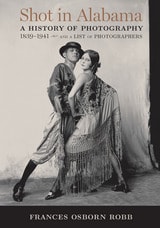
Shot in Alabama
A History of Photography, 1839–1941, and a List of PhotographersFrances Osborn Robb
University of Alabama Press, 2016
A landmark study of vernacular and professional photography, from 1839 to 1941, that frames Alabama’s history through its images.
Shot in Alabama by Frances Osborn Robb is a visual and textual narrative of Alabama’s photographic history from 1839 to 1941. It describes the phenomenon of photography as practiced in Alabama as a major cultural force, paying close attention to the particular contexts from which each image emerges and the fragments of microhistory that each image documents.
Presented chronologically—from the very first photograph ever taken in the state to the appearance of cameras as commonplace possessions in mid-twentieth-century households—Robb draws into sharp relief the eras of daguerreotypes, Civil War photography, photographic portraiture at the end of the nineteenth century, urban and rural photography in the early twentieth century, WPA photography during the Great Depression, postcards and tourist photography, and pre–World War II illustrated books and art photographs. Robb also examines a wide spectrum of vernacular photography: Alabama-made photographs of everyday people and places, the photographs that fill dresser drawers and shoeboxes, a vast array of unusual images against which Alabama’s more typical iconography can be measured.
She also chronicles the work of hundreds of photographers—black and white, amateur and professional, women and men—some little-known outside their communities, some of them the medium’s most important practitioners. “Who Shot Alabama?” is an accompanying appendix that includes 1,400 photographers by name, working dates, and location—a resource that will help countless individuals, families, and archives identify the specific Alabama photographers whose names appear on family photographs or those in institutional collections.
Shot in Alabama is an insightful document of photography as both a communicator and creator of social, cultural, economic, and visual history. It highlights the very personal worlds rendered by individual photographs as well as the larger panorama of Alabama history as seen through the photographs collectively. A landmark work of research, curation, and scholarship, it fills the void of published history on Alabama photography and is an invaluable resource for historians, archivists, librarians, collectors, hobbyists, and readers with an interest in Alabama history or historic photography. Shot in Alabama is a book that all Alabamians will want on their coffee tables.

Shot on Location
Postwar American Cinema and the Exploration of Real PlacePalmer, R. Barton
Rutgers University Press, 2016
Renowned film scholar R. Barton Palmer answers this question in Shot on Location by exploring the historical, ideological, economic, and technological developments that led Hollywood to head back outside in order to capture footage of real places. His groundbreaking research reveals that wartime newsreels had a massive influence on postwar Hollywood film, although there are key distinctions to be made between these movies and their closest contemporaries, Italian neorealist films. Considering how these practices were used in everything from war movies like Twelve O’Clock High to westerns like The Searchers, Palmer explores how the blurring of the formal boundaries between cinematic journalism and fiction lent a “reality effect” to otherwise implausible stories.
Shot on Location describes how the period’s greatest directors, from Alfred Hitchcock to Billy Wilder, increasingly moved beyond the confines of the studio. At the same time, the book acknowledges the collaborative nature of moviemaking, identifying key roles that screenwriters, art designers, location scouts, and editors played in incorporating actual geographical locales and social milieus within a fictional framework. Palmer thus offers a fascinating behind-the-scenes look at how Hollywood transformed the way we view real spaces.

Shots in the Dark
Japan, Zen, and the WestShoji Yamada
University of Chicago Press, 2009
In the years after World War II, Westerners and Japanese alike elevated Zen to the quintessence of spirituality in Japan. Pursuing the sources of Zen as a Japanese ideal, Shoji Yamada uncovers the surprising role of two cultural touchstones: Eugen Herrigel’s Zen in the Art of Archery and the Ryoanji dry-landscape rock garden. Yamada shows how both became facile conduits for exporting and importing Japanese culture.
First published in German in 1948 and translated into Japanese in 1956, Herrigel’s book popularized ideas of Zen both in the West and in Japan. Yamada traces the prewar history of Japanese archery, reveals how Herrigel mistakenly came to understand it as a traditional practice, and explains why the Japanese themselves embraced his interpretation as spiritual discipline. Turning to Ryoanji, Yamada argues that this epitome of Zen in fact bears little relation to Buddhism and is best understood in relation to Chinese myth. For much of its modern history, Ryoanji was a weedy, neglected plot; only after its allegorical role in a 1949 Ozu film was it popularly linked to Zen. Westerners have had a part in redefining Ryoanji, but as in the case of archery, Yamada’s interest is primarily in how the Japanese themselves have invested this cultural site with new value through a spurious association with Zen.

Shovel Ready
Archaeology and Roosevelt's New Deal for AmericaBernard K. Means
University of Alabama Press, 2013
John L. Cordell / John F. Doershuk / David H. Dye /Scott W. Hammerstedt / Janet R. Johnson / Kevin Kiernan /Gregory D. Lattanzi /Patrick C. Livingood / Anna R. Lunn / Bernard K. Means / Stephen E. Nash / Amanda L. Regnier / Sissel Schroeder / James R. Wettstaed

Show Me the Bone
Reconstructing Prehistoric Monsters in Nineteenth-Century Britain and AmericaGowan Dawson
University of Chicago Press, 2016
Show Me the Bone tells the story of the rise and fall of this famous claim, tracing its fortunes from Europe to America and showing how it persisted in popular science and literature and shaped the practices of paleontologists long after the method on which it was based had been refuted. In so doing, Gowan Dawson reveals how decisively the practices of the scientific elite were—and still are—shaped by their interactions with the general public.