22279 books match the query 'Social Science' and 1635 start with s
cover of Social Class: How Does It Work?

Social Class

How Does It Work?

Annette Lareau

Russell Sage Foundation, 2008
Class differences permeate the neighborhoods, classrooms, and workplaces where we lead our daily lives. But little is known about how class really works, and its importance is often downplayed or denied. In this important new volume, leading sociologists systematically examine how social class operates in the United States today. Social Class argues against the view that we are becoming a classless society. The authors show instead the decisive ways social class matters—from how long people live, to how they raise their children, to how they vote. The distinguished contributors to Social Class examine how class works in a variety of domains including politics, health, education, gender, and the family. Michael Hout shows that class membership remains an integral part of identity in the U.S.—in two large national surveys, over 97 percent of Americans, when prompted, identify themselves with a particular class. Dalton Conley identifies an intangible but crucial source of class difference that he calls the "opportunity horizon"—children form aspirations based on what they have seen is possible. The best predictor of earning a college degree isn't race, income, or even parental occupation—it is, rather, the level of education that one's parents achieved. Annette Lareau and Elliot Weininger find that parental involvement in the college application process, which significantly contributes to student success, is overwhelmingly a middle-class phenomenon. David Grusky and Kim Weeden introduce a new model for measuring inequality that allows researchers to assess not just the extent of inequality, but also whether it is taking on a more polarized, class-based form. John Goldthorpe and Michelle Jackson examine the academic careers of students in three social classes and find that poorly performing students from high-status families do much better in many instances than talented students from less-advantaged families. Erik Olin Wright critically assesses the emphasis on individual life chances in many studies of class and calls for a more structural conception of class. In an epilogue, journalists Ray Suarez, Janny Scott, and Roger Hodge reflect on the media's failure to report hardening class lines in the United States, even when images on the nightly news—such as those involving health, crime, or immigration—are profoundly shaped by issues of class. Until now, class scholarship has been highly specialized, with researchers working on only one part of a larger puzzle. Social Class gathers the most current research in one volume, and persuasively illustrates that class remains a powerful force in American society.
[more]
cover of Social Commitments in a Depersonalized World

Social Commitments in a Depersonalized World

Edward J. Lawler

Russell Sage Foundation, 2009

As individuals' ties to community organizations and the companies they work for weaken, many analysts worry that the fabric of our society is deteriorating. But others counter that new social networks, especially those forming online, create important and possibly even stronger social bonds than those of the past. In Social Commitments in a Depersonalized World, Edward Lawler, Shane Thye, and Jeongkoo Yoon examine interpersonal and group ties and propose a new theory of social commitments, showing that multiple interactions, group activities and, particularly, emotional attachment, are essential for creating and sustaining alignments between individuals and groups. Lawler, Thye, and Yoon acknowledge that long-term social attachments have proven fragile in a volatile economy where people increasingly form transactional associations—based not on collective interest but on what will yield the most personal advantage in a society shaped by market logic. Although person-to-group bonds may have become harder to sustain, they continue to play a vital role in maintaining healthy interactions in larger social groups from companies to communities. Drawing on classical and contemporary sociology, organizational psychology, and behavioral economics, Social Commitments in a Depersonalized World shows how affiliations—particularly those that involve a profound emotional component—can transcend merely instrumental or transactional ties and can even transform these impersonal bonds into deeply personal ones. The authors study the structures of small groups, corporations, economic transactions, and modern nation-states to determine how hierarchies, task allocation, and social identities help or hinder a group's vitality. They find that such conditions as equal status, interdependence, and overlapping affiliations figure significantly in creating and sustaining strong person-to-group bonds. Recurring collaboration with others to achieve common goals—along with shared responsibilities and equally valued importance within an organization—promote positive and enduring feelings that enlarge a person's experience of a group and the significance of their place within it. Employees in organizations with strong person-to-group ties experience a more unified, collective identity. They tend to work more cost effectively, meet company expectations, and better regulate their own productivity and behavior. The authors make clear that the principles of their theory have implications beyond business. With cultures pulling apart and crashing together like tectonic plates, much depends on our ability to work collectively across racial, cultural, and political divides. The new theory in Social Commitments in a Depersonalized World provides a way of thinking about how groups form and what it takes to sustain them in the modern world.
[more]
cover of Social Constructions of Deafness: Examining Deaf Languacultures in Education

Social Constructions of Deafness

Examining Deaf Languacultures in Education

Thomas P. Horejes

Gallaudet University Press, 2012

Thomas P. Horejes’s new book focuses on revealing critical knowledge that addresses certain social justice issues, including deafness, language, culture, and deaf education. He conveys this information through discourses about his own experiences being deaf and through his research in which he “stresses the contingency of the social” in educational institutions.

       In Social Constructions of Deafness: Examining Deaf Languacultures in Education, Horejes contends that schools as social institutions play powerful and exacting roles in the creation and maintenance of social constructions such as language and culture for deaf children. He subscribes to Michael Agar’s concept of “languaculture,” defined as the inextricable relationship between language and culture in which a specific language will shape and influence culture. His approach employs other anthropological terminology as he connects his personal experience as a deaf student (emic) to academic research on deafness (etic) to bring understanding to the multidimensional aspects of his own negotiated identities.

       Horejes extends his inquiry through his analysis of two kindergarten classes for deaf students, one orally oriented and the other conducted using sing language. His findings are sobering evidence of the myriad challenges educators face in defining appropriate academic, linguistic, and cultural pedagogy for deaf children in schools and other social institutions.

[more]
cover of Social Contracts Under Stress: The Middle Classes of America, Europe, and Japan at the Turn of the Century

Social Contracts Under Stress

The Middle Classes of America, Europe, and Japan at the Turn of the Century

Olivier Zunz

Russell Sage Foundation, 2002

The years following World War II saw a huge expansion of the middle classes in the world's industrialized nations, with a significant part of the working class becoming absorbed into the middle class. Although never explicitly formalized, it was as though a new social contract called for government, business, and labor to work together to ensure greater political freedom and more broadly shared economic prosperity. For the most part, they succeeded. In Social Contracts Under Stress, eighteen experts from seven countries examine this historic transformation and look ahead to assess how the middle class might fare in the face of slowing economic growth and increasing globalization. The first section of the book focuses on the differing experiences of Germany, Britain, France, the United States, and Japan as they became middle-class societies. The British working classes, for example, were slowest to consider themselves middle class, while in Japan by the 1960s, most workers had abandoned working-class identity. The French remain more fragmented among various middle classes and resist one homogenous entity. Part II presents compelling evidence that the rise of a huge middle class was far from inclusive or free of social friction. Some contributors discuss how the social contract reinforced long-standing prejudices toward minorities and women. In the United States, Ira Katznelson writes, Southern politicians used measures that should have promoted equality, such as the GI bill, to exclude blacks from full access to opportunity. In her review of gender and family models, Chiara Saraceno finds that Mediterranean countries have mobilized the power of the state to maintain a division of labor between men and women. The final section examines what effect globalization might have on the middle class. Leonard Schoppa's careful analysis of the relevant data shows how globalization has pushed "less skilled workers down and more skilled workers up out of a middle class that had for a few decades been home to both." Although Europe has resisted the rise of inequality more effectively than the United States or Japan, several contributors wonder how long that resistance can last. Social Contracts Under Stress argues convincingly that keeping the middle class open and inclusive in the face of current economic pressures will require a collective will extending across countries. This book provides an invaluable guide for assessing the issues that must be considered in such an effort.
[more]
cover of Social Control and Social Change

Social Control and Social Change

Edited by John Paul Scott and Sarah F. Scott

University of Chicago Press, 1971

Social Control and Social Change is a unique and timely attempt to understand and elaborate the process of social control. An interdisciplinary study from the Center for Research on Social Behavior at Bowling Green University, this book develops some general theories of social control as it exists in human and nonhuman societies and indicates areas in which important new research can be done. The authors present not only theoretical discussions of the various aspects of control processes—biological, political, psychological, social, and social-psychological—but also include detailed research and indicate practical applications of the newer scientific perspectives of social control.
[more]
cover of Social Control in Europe: Volume 1, 1500–1800

Social Control in Europe

Volume 1, 1500–1800

Herman Roodenburg and Pieter Spierenburg

The Ohio State University Press, 2004

This first volume of a two-volume collection of essays provides a comprehensive examination of the idea of social control in the history of Europe. The uniqueness of these volumes lies in two main areas. First, the contributors compare methods of social control on many levels, from police to shaming, church to guilds. Second, they look at these formal and informal institutions as two-way processes. Unlike many studies of social control in the past, the scholars here examine how individuals and groups that are being controlled necessarily participate in and shape the manner in which they are regulated. Hardly passive victims of discipline and control, these folks instead claimed agency in that process, accepting and resisting—and thus molding—the controls under which they functioned. The essays in this volume focus on the interplay of ecclesiastical institutions and the emerging states, examining discipline from a bottom-up perspective.
[more]
cover of Social Control in Europe: Volume 2, 1800–2000

Social Control in Europe

Volume 2, 1800–2000

Clive Emsley, Eric Johnson, and Pieter Spierenburg

The Ohio State University Press, 2004

This second volume of a two-volume collection of essays provides a comprehensive examination of the idea of social control in the history of Europe. The uniqueness of these volumes lies in two main areas. First, the contributors compare methods of social control on many levels, from police to shaming, church to guilds. Second, they look at these formal and informal institutions as two-way processes. Unlike many studies of social control in the past, the scholars here examine how individuals and groups that are being controlled necessarily participate in and shape the manner in which they are regulated. Hardly passive victims of discipline and control, these folks instead claimed agency in that process, accepting and resisting—and thus molding—the controls under which they functioned.

The essays in this volume explore the various means by which communities in nineteenth- and twentieth-century Europe were subjected to forms of discipline, noting how the communities themselves generated their own forms of internal control. In addition, the essays discuss various policing institutions, exploring in particular the question of how liberal and totalitarian regimes differed in their styles of control, repression, and surveillance.

[more]
cover of Social Control of the Drinking Driver

Social Control of the Drinking Driver

Edited by Michael D. Laurence, John R. Snortum, and Franklin E. Zimring

University of Chicago Press, 1988

Drunken driving is the most serious crime likely to be committed by an adult. Each year in the United States it is responsible for approximately 20,000 fatalities, more than 500,000 arrests, and millions of violations. It involves a wider variety of social classes and economic strata than any other major violation of the law. Only recently, however, has the problem of alcohol and traffic safety received attention as a public policy issue.

Social Control of the Drinking Driver lays the groundwork for a much needed integration of methods, principles, and priorities. Law, criminology, biology, psychology, sociology, economics, public policy—the disciplines concerned with the problem of drinking and driving are many and varied, and research crosses national boundaries as well. It is not surprising, therefore, that an integrated general perspective has not yet emerged. Drawing on fourteen specialists and surveying the situations in nine countries, this book presents a comprehensive statement of current knowledge about drunken driving and its control.

[more]
cover of Social Currents in Eastern Europe: The Sources and Consequences of the Great Transformation

Social Currents in Eastern Europe

The Sources and Consequences of the Great Transformation

Sabrina P. Ramet

Duke University Press, 1994

Social Currents in Eastern Europe traces the diverse social currents that have developed alongside and interacted with political and economic forces to bring about change in Eastern Europe. In this second edition—which significantly updates and expands the previous edition to include a new introduction, revisions throughout, as well as five new chapters, including timely material on ethnic war in the former Yugoslavia—Ramet extends and develops the theory of social change upon which the book is based.
Ramet draws on interviews conducted over a ten-year period with individuals active in arenas for social change—intellectual dissent, feminism, religious activism, youth cultures and movements, and trade unionism—in eight East European countries: East Germany, Poland, Czechoslovakia, Hungary, Yugoslavia, Romania, Bulgaria, and Albania. She shows how the processes leading to the ultimate collapse of communism began more than a decade earlier and how they were necessarily manifested in spheres as diverse as religion and rock music.
Ramet also examines the consequences of the "Great Transformation" and analyzes the numerous unresolved problems that these societies currently confront, whether it be in the arena of economics, political legitimation, or the challenges of establishing a civil society free of chauvinism.

[more]
cover of Social Darwinism: Science and Myth in Anglo-American Social Thought

Social Darwinism

Science and Myth in Anglo-American Social Thought

Robert C. Bannister

Temple University Press, 1989

"The most systematic and comprehensive effort yet made to assess the role played by Darwinian ideas in the writings of English-speaking social theorists of the late-nineteenth and early-twentieth centuries." --Isis "In seeking to set the record straight, Bannister cuts through the amalgam with an intellectual shredder, exposing the illogic and incompatibility involved in fusing Charles Darwin's On the Origin of Species with Herbert Spencer's Social Statics.... Bannister's familiarity with relevant texts and their reception by contemporary social theorists, scholars, and critics on both sides of the Atlantic is impressive." --Journal of Interdisciplinary History "A fine contribution to Anglo-American intellectual history." --Journal of American History
[more]
cover of Social Diagnosis

Social Diagnosis

Mary Ellen Richmond

Russell Sage Foundation, 1917

Social Diagnosis is the classic in social work literature. In it Miss Richmond first established a technique of social casework. She discusses the nature and uses of social evidence, its tests and their practical application, and summarizes the lessons to be learned from history, science, and the law. While other aids in diagnosis have been added to the caseworker's equipment, the assembling of social evidence is still an important discipline of the profession, to which this volume continues to make a significant contribution. No revision of the book has ever been made nor does any later book take its place.
[more]
cover of Social Enterprise: A Global Comparison

Social Enterprise

A Global Comparison

Edited by Janelle A. Kerlin

University Press of New England, 2009

Social enterprise—the use of market-based, civil society approaches to address social issues—has been a growing phenomenon for over twenty years. Gathering essays by researchers and practitioners from around the globe, this volume examines, from a local perspective, the diverse ways in which social enterprise has emerged in different regions. Each chapter examines the conceptualization, history, legal and political frameworks, supporting institutions, and latest developments and challenges for social enterprise in a given region or country. In the final chapter, Janelle A. Kerlin presents a comparative analysis of the various models and contexts for social enterprise, showing how particular strengths in each environment lead to different enterprise initiative models.
[more]
cover of Social Exchange and Interaction

Social Exchange and Interaction

Edited by Edwin N. Wilmsen

University of Michigan Press, 1972

Contributors in this volume are concerned with the role of exchange in maintaining social systems as diverse as aboriginal Australia, 1960s Madagascar, and prehistoric Mesopotamia. Contributions by Aram A. Yengoyan, George C. Frison, Richard I. Ford, Stuart Struever, Gail L. Houart, Peter Benedict, Henry T. Wright, Conrad P. Kottak, and Kent V. Flannery.
[more]
cover of Social Exchange: Barter as Economic and Cultural Activism in Medellín, Colombia

Social Exchange

Barter as Economic and Cultural Activism in Medellín, Colombia

Brian J. Burke

Rutgers University Press, 2022

Money occupies a powerful place in our lives – it is a problem, a goal, and motivator, a measure of self-worth and national progress, and even an influence on how we relate to each other and to nature – but what happens when communities start to reinvent money and markets? Over the last twenty-five years, grassroots activists in Medellín, Colombia, have used barter markets and community currencies as one strategy to re-weave a social fabric shredded by violence and to establish an economy founded on respect and reciprocity rather than exploitation. In Social Exchange, Brian J. Burke provides a deep ethnographic investigation of this activism and its effects. This story draws us into the cultural and material effects of capitalism and narco-violence, while also helping us understand what new radical imaginations look like and how people bring them to life. The result is an intimate glimpse of urban life in Latin America, as well as a broader analysis of non-capitalist or post-capitalist possibility.
[more]
cover of Social Experimentation

Social Experimentation

Edited by Jerry A. Hausman and David A. Wise

University of Chicago Press, 1985

Since 1970 the United States government has spent over half a billion dollars on social experiments intended to assess the effect of potential tax policies, health insurance plans, housing subsidies, and other programs. Was it worth it? Was anything learned from these experiments that could not have been learned by other, and cheaper, means? Could the experiments have been better designed or analyzed? These are some of the questions addressed by the contributors to this volume, the result of a conference on social experimentation sponsored in 1981 by the National Bureau of Economic Research.

The first section of the book looks at four types of experiments and what each accomplished. Frank P. Stafford examines the negative income tax experiments, Dennis J. Aigner considers the experiments with electricity pricing based on time of use, Harvey S. Rosen evaluates housing allowance experiments, and Jeffrey E. Harris reports on health experiments. In the second section, addressing experimental design and analysis, Jerry A. Hausman and David A. Wise highlight the absence of random selection of participants in social experiments, Frederick Mosteller and Milton C. Weinstein look specifically at the design of medical experiments, and Ernst W. Stromsdorfer examines the effects of experiments on policy. Each chapter is followed by the commentary of one or more distinguished economists.
[more]
cover of Social Forces in Southeast Asia

Social Forces in Southeast Asia

Cora DuBois

University of Minnesota Press, 1949

Social Forces in Southeast Asia was first published in 1949. Minnesota Archive Editions uses digital technology to make long-unavailable books once again accessible, and are published unaltered from the original University of Minnesota Press editions.

"Forces are at work in Southeast Asia which deserve the most judicious attention of diplomats, the best analysis by social scientists, and a highly serious interest on the part of all responsible people in the Western World."

The application of cultural anthropology to problems of world politics and economics presented here has been made by a ranking authority in the field. Dr. Du Bois is the author of The People of Alor and before World War Two she was anthropologist at Sarah Lawrence College. During the war she was associated with the Office of Strategic Services in charge of Indonesian and South Asian research, with headquarters at Kandy, Ceylon. Since October 1945 she has been chief of the Southern Areas Branch, Office of Intelligence Research, Department of State.

Siam, Burma, French Indochina, Malaya, and Indonesian Archipelago, and the Philippines offer a geographic unit rich in material for the social scientist, including, as it does, more diverse cultural strains than any other area of the world. The author considers the impact of European colonization on the region, analyzes the tensions created by value difference between East and West, and offers predictions on the course Southeast Asia will take in the future.

Dr. Du Bois has risen above statistical science and narrow specialization to wide interpretation and application. The book is full of exciting theses and suggestive ideas which should open new areas for both factual investigation and creative speculation.

Dr. Du Bois sees a growing consciousness of nationality in these states of Southeast Asia—and eagerness to work out their common problems and a desire to participate in the United Nations, but she does not minimize the grave economic difficulties of the area or the chance that it will become another powder keg if the states become pawns of the big powers.

[more]
cover of Social Forecasting Methodology: Suggestions for Research

Social Forecasting Methodology

Suggestions for Research

Daniel P. Harrison

Russell Sage Foundation, 1976

A volume in the Social Science Frontiers series, which are occasional publications reviewing new fields for social science development. These occasional publications seek to summarize recent work being done in particular areas of social research, to review new developments in the field, and to indicate issues needing further investigation. The publications are intended to help orient those concerned with developing current research programs and broadening the use of social science in the policy-making process. A Volume in the Russell Sage Foundation's Social Science Frontiers Series
[more]
cover of Social Formation and Symbolic Landscape

Social Formation and Symbolic Landscape

Denis E. Cosgrove

University of Wisconsin Press, 1998

Hailed as a landmark in its field since its first publication in 1984, Denis E. Cosgrove’s Social Formation and Symbolic Landscape has been influential well beyond geography. It has continued to spark lively debate among historians, geographers, art historians, social theorists, landscape architects, and others interested in the social and cultural politics of landscape.

[more]
cover of Social Functions of Language in a Mexican-American Community

Social Functions of Language in a Mexican-American Community

George Carpenter Barker

University of Arizona Press, 1972

Social Functions of Language in a Mexican-American Community is an inquiry into how language functions in the life of a bilingual minority group in process of cultural change, this study investigated the acculturation and assimilation of individuals of Mexican descent living in Tucson, Arizona. Specifically, the language usage and interpersonal relations of individuals from representative families in the bilingual community of Tucson, the usage of bilingual social groups in the community, and the linguistic and cultural contacts between bilinguals and members of the larger Tucson community were examined.

Data were drawn from observational studies of individuals and families; observation of group activities; and observation of, supplemented by questionnaires on, the cultural interests of Mexican children and their families. Some conclusions of the study were that Spanish came to be identified in the Mexican community as the language of intimate and family relations, while English came to be identified as the language of formal social relations and of all relations with Anglos. It was also found that the younger American-born group reject both Spanish and English in favor of their own language, Pachuco. Tables depicting the characteristics of 20 families, the language usage of families, and the language usage in personal relationships of English and Spanish are included. Suggestions for further research are made. 

[more]
cover of Social Identities in the Classic Maya Northern Lowlands: Gender, Age, Memory, and Place

Social Identities in the Classic Maya Northern Lowlands

Gender, Age, Memory, and Place

By Traci Ardren

University of Texas Press, 2015

Using new archaeological data from four major cities of the Classic Maya world, this book explores how gender, age, familial and community memories, and the experience of living in an urban setting interacted to form social identities.

Social Identities in the Classic Maya Northern Lowlands plumbs the archaeological record for what it can reveal about the creation of personal and communal identities in the Maya world. Using new primary data from her excavations at the sites of Yaxuna, Chunchucmil, and Xuenkal, and new analysis of data from Dzibilchaltun in Yucatan, Mexico, Traci Ardren presents a series of case studies in how social identities were created, shared, and manipulated among the lowland Maya.

Ardren argues that the interacting factors of gender, age, familial and community memories, and the experience of living in an urban setting were some of the key aspects of Maya identities. She demonstrates that domestic and civic spaces were shaped by gender-specific behaviors to communicate and reinforce gendered ideals. Ardren discusses how child burials disclose a sustained pattern of reverence for the potential of childhood and the power of certain children to mediate ancestral power. She shows how small shrines built a century after Yaxuna was largely abandoned indicate that its remaining residents used memory to reenvision their city during a time of cultural reinvention. And Ardren explains how Chunchucmil’s physical layout of houses, plazas, and surrounding environment denotes that its occupants shared an urban identity centered in the movement of trade goods and economic exchange. Viewing this evidence through the lens of the social imaginary and other recent social theory, Ardren demonstrates that material culture and its circulations are an integral part of the discourse about social identity and group membership.

[more]
cover of Social Indicator Models

Social Indicator Models

Kenneth C. Land

Russell Sage Foundation, 1975
Deals in comprehensive fashion with a diverse array of objective and subjective social indicators and shows how these indicators can be used, potentially, to inform and perhaps guide social policy. Written with clarity and authority, it will be of paramount interest to those concerned with the interpretation and analysis of social indicators and to those interested in their use. For the former, it serves as an illuminating introduction to some of the analytical tasks that lie ahead in the study of social indicators. For the latter, it provides a solid foundation upon which future policy analysis may be based.
[more]
cover of Social Inequality

Social Inequality

Kathryn Neckerman

Russell Sage Foundation, 2004

Inequality in income, earnings, and wealth has risen dramatically in the United States over the past three decades. Most research into this issue has focused on the causes—global trade, new technology, and economic policy—rather than the consequences of inequality. In Social Inequality, a group of the nation's leading social scientists opens a wide-ranging inquiry into the social implications of rising economic inequality. Beginning with a critical evaluation of the existing research, they assess whether the recent run-up in economic inequality has been accompanied by rising inequality in social domains such as the quality of family and neighborhood life, equal access to education and health care, job satisfaction, and political participation. Marcia Meyers and colleagues find that many low-income mothers cannot afford market-based child care, which contributes to inequality both at the present time—by reducing maternal employment and family income—and through the long-term consequences of informal or low-quality care on children's educational achievement. At the other end of the educational spectrum, Thomas Kane links the growing inequality in college attendance to rising tuition and cuts in financial aid. Neil Fligstein and Taek-Jin Shin show how both job security and job satisfaction have decreased for low-wage workers compared with their higher-paid counterparts. Those who fall behind economically may also suffer diminished access to essential social resources like health care. John Mullahy, Stephanie Robert, and Barbara Wolfe discuss why higher inequality may lead to poorer health: wider inequality might mean increased stress-related ailments for the poor, and it might also be associated with public health care policies that favor the privileged. On the political front, Richard Freeman concludes that political participation has become more stratified as incomes have become more unequal. Workers at the bottom of the income scale may simply be too hard-pressed or too demoralized to care about political participation. Social Inequality concludes with a comprehensive section on the methodological problems involved in disentangling the effects of inequality from other economic factors, which will be of great benefit to future investigators. While today's widening inequality may be a temporary episode, the danger is that the current economic divisions may set in motion a self-perpetuating cycle of social disadvantage. The most comprehensive review of this quandary to date, Social Inequality maps out a new agenda for research on inequality in America with important implications for public policy.
[more]
cover of Social Inequality in Oaxaca:  A History of Resistance and Change

Social Inequality in Oaxaca

A History of Resistance and Change

Arthur Murphy

Temple University Press, 1991
"Anthropologists Murphy and Stepick trace urbanization in the capital city of the state of Oaxaca for more than 2,000 years. Their study represents a micro perspective that describes the colonias populares, the poor neighborhoods, and the struggles of Oaxacans to survive and improve life in marginal communities.... The book is well organized, with excellent annotated footnotes and a reading list." --Choice This may be the only book that analyzes the urbanization of one area from its origins more than two thousand years ago to the present. Arthur Murphy and Alex Stepick examine Oaxaca, Mexico, where they have been doing research regularly for the last twenty years. Paying particular attention to neighborhoods, families, and economic activities, they focus on issues of poverty and inequality. Oaxaca is a city marked by socioeconomic inequality that has felt the alternating trends of integration into and isolation from the broader world. It is a city in which tens of thousands of households resolutely try to adapt, to survive and pass on something of themselves to their children. With rich ethnographic material and historical research, Murphy and Stepick describe gender roles, the dynamic nature of households, the importance of compadrazgo (co-godparenthood) as a social institution, class-based political struggles and strikes, and the role of children in redeeming their parents from poverty. Individual life histories emerge from their research, each representing diverse class, familial, and economic structures within Oaxacan society. "Murphy and Stepick catch Oaxaca at a special time in its history. When the illustrious works of theory in the academic disciplines have faded, when Foucault is a footnote and deconstruction derided, books like this one will still be valuable. A portrait of a city during the most difficult period of its country's recent economic history." --Henry A. Selby (from the Foreword)
[more]
cover of Social Justice in Diverse Suburbs: History, Politics, and Prospects

Social Justice in Diverse Suburbs

History, Politics, and Prospects

Christopher Niedt

Temple University Press, 2013

American suburbs have been seen as both exclusive idylls for elites as well as crucibles for new ideologies of gender, class, race, and property. But few have considered what the growing diversity of suburban America has meant for progressive social, economic, and political justice movements. Social Justice in Diverse Suburbs is a pioneering and multidisciplinary volume that reassesses commonplace understandings of suburban activism. 

Editor Christopher Niedt and his contributors shed light on organizing and conflict in the suburbs with historical and contemporary case studies. Chapters address topical issues ranging from how suburbanites actively fought school segregation to industrial pollution and displacement along the suburban-rural fringe. Social Justice in Diverse Suburbs also considers struggles for integration and environmental justice as well as efforts to preserve suburban history and organize immigrant communities.

Contributors include: Douglas R. Appler, Aaron Cavin, Nancy A. Denton, Lisa Feldstein, Casey Gallagher, Anne Galletta, Joseph Gibbons, Robert Gioielli, Lucas Owen Kirkpatrick, JoAnna Mitchell-Brown, Manuel Pastor, john a. powell, Jason Reece, Alex Schafran, June Williamson, and the editor.

[more]
cover of Social Justice: Theories, Issues, and Movements

Social Justice

Theories, Issues, and Movements

Capeheart, Loretta

Rutgers University Press, 2007

An eye for an eye, the balance of scales--for centuries, these and other traditional concepts exemplified the public's perception of justice. Today, popular culture, including television shows like Law and Order, informs the public's vision. But do age-old symbols, portrayals in the media, and existing systems truly represent justice in all of its nuanced forms, or do we need to think beyond these notions?

In Social Justice: Theories, Issues, and Movements, Loretta Capeheart and Dragan Milovanovic respond to the need for a comprehensive introduction to this topic. The authors argue that common conceptions of criminal justice--which accept, for the most part, a politically established definition of crime--are too limited. Instead, they show the relevancy of history, political economy, culture, critique, and cross-cultural engagement to the advancement of justice.

Drawing on contemporary issues ranging from globalization to the environment, this essential textbook--ideal for course use--encourages practitioners, reformists, activists, and scholars to question the limits of the law in its present state in order to develop a fairer system at the local, national, and global levels.

[more]
cover of Social Justice: Theories, Issues, and Movements (Revised and Expanded Edition)

Social Justice

Theories, Issues, and Movements (Revised and Expanded Edition)

Loretta Capeheart

Rutgers University Press, 2020

An eye for an eye, the balance of the scales – for centuries, these and other traditional concepts exemplified the public’s perception of justice. Today, popular culture, including television shows like Law and Order, informs the public’s vision. But do age-old symbols, portrayals in the media, and existing systems truly represent justice in all of its nuanced forms, or do we need to think beyond these notions? The second edition of Social Justice: Theories, Issues, and Movements responds to the need for a comprehensive introduction to these issues.
 
Theories of social justice are presented in an accessible fashion to encourage engagement of students, activists, and scholars with these important lines of inquiry. Issues are analyzed utilizing various theories for furthering engagement in possibilities. Struggles for justice -- from legal cases to on the ground movements -- are presented for historical context and to inform the way forward.

 
[more]
cover of Social Knowledge in the Making

Social Knowledge in the Making

Edited by Charles Camic, Neil Gross, and Michèle Lamont

University of Chicago Press, 2011

Over the past quarter century, researchers have successfully explored the inner workings of the physical and biological sciences using a variety of social and historical lenses. Inspired by these advances, the contributors to Social Knowledge in the Making turn their attention to the social sciences, broadly construed. The result is the first comprehensive effort to study and understand the day-to-day activities involved in the creation of social-scientific and related forms of knowledge about the social world.
 
The essays collected here tackle a range of previously unexplored questions about the practices involved in the production, assessment, and use of diverse forms of social knowledge. A stellar cast of multidisciplinary scholars addresses topics such as the changing practices of historical research, anthropological data collection, library usage, peer review, and institutional review boards. Turning to the world beyond the academy, other essays focus on global banks, survey research organizations, and national security and economic policy makers. Social Knowledge in the Making is a landmark volume for a new field of inquiry, and the bold new research agenda it proposes will be welcomed in the social science, the humanities, and a broad range of nonacademic settings.
[more]
cover of Social Life in Northwest Alaska: The Structure of Inupiaq Eskimo Nations

Social Life in Northwest Alaska

The Structure of Inupiaq Eskimo Nations

Ernest Burch Jr.

University of Alaska Press, 2006

This landmark volume will stand for decades as one of the most comprehensive studies of a hunter-gatherer population ever written. In this third and final volume in a series on the early contact period Iñupiaq Eskimos of northwestern Alaska, Burch examines every topic of significance to hunter-gatherer research, ranging from discussions of social relationships and settlement structure to nineteenth-century material culture.
[more]
cover of Social Media Tribes: Jordan's Bedouin and the Margins of the State

Social Media Tribes

Jordan's Bedouin and the Margins of the State

Geoffrey F. Hughes

University of Texas Press, 2026

An examination of the uses of social media in Jordan through the experiences of Bedouin tribespeople.

It has become something of a cliché to say that social media is making us tribal. But what do self-styled tribespeople themselves think about social media, and how might they help us better understand the role of the internet in our current political moment? Drawing on in-depth ethnographic fieldwork among Bedouin in Jordan, Social Media Tribes underscores the varied but broadly intelligible ways in which distinctive groups domesticate social media to suit their needs.

Organized around key concepts in Bedouin life (including tribalism, envy, and mercy), Social Media Tribes moves between Facebook-mediated tribal truces, upstart online media platforms, palatial urban villas where self-appointed sheikhs dispense justice, and street clashes organized over WhatsApp in rural communities ignored by state development projects. A meticulous researcher and insightful participant-observer, Geoffrey Hughes reframes social media as part of a global renegotiation of the state-society divide that both preceded the emergence of social media platforms and, in turn, feeds off of them. In this telling, the internet represents a new frontier that, like older frontiers, heralds both novel freedoms and novel forms of social control.

[more]
cover of Social Media in Emergent Brazil: How the Internet Affects Social Mobility

Social Media in Emergent Brazil

How the Internet Affects Social Mobility

Juliano Spyer

University College London, 2017

Since the birth of the internet, low-income Brazilians have received little government support to help them access it. In response, they have largely self-financed their digital migration, which can be seen in the rise of internet cafés in working-class neighborhoods and families purchasing their own computers through special agreements. Juliano Spyer argues that social media is the way for low-income Brazilians to stay connected, despite systematic ridicule from the more affluent, thus suggesting that social media serves a crucial function in strengthening traditional social relations.
[more]
cover of Social Media in Industrial China

Social Media in Industrial China

Xinyuan Wang

University College London, 2016

‘Life outside the mobile phone is unbearable.’ Lily, 19, factory worker Described as the biggest migration in human history, an estimated 250 million Chinese people have left their villages in recent decades to live and work in urban areas. Xinyuan Wang spent 15 months living among a community of these migrants in a small factory town in southeast China to track their use of social media. It was here she witnessed a second migration taking place: a movement from offline to online. As Wang argues, this is not simply a convenient analogy but represents the convergence of two phenomena as profound and consequential as each other, where the online world now provides a home for the migrant workers who feel otherwise ‘homeless’. Wang’s fascinating study explores the full range of preconceptions commonly held about Chinese people – their relationship with education, with family, with politics, with ‘home’ – and argues why, for this vast population, it is time to reassess what we think we know about contemporary China and the evolving role of social media.
[more]
cover of Social Media in Northern Chile: Posting the Extraordinarily Ordinary

Social Media in Northern Chile

Posting the Extraordinarily Ordinary

Nell Haynes

University College London, 2016
Based on 15 months of ethnographic research in the city of Alto Hospicio in northern Chile, this book describes how the residents use social media, and the consequences of this use in their daily lives. Nell Haynes argues that social media is a place where Alto Hospicio’s residents – or Hospiceños – express their feelings of marginalisation that result from living in city far from the national capital, and with a notoriously low quality of life compared to other urban areas in Chile. In actively distancing themselves from residents in cities such as Santiago, Hospiceños identify as marginalised citizens, and express a new kind of social norm. Yet Haynes finds that by contrasting their own lived experiences with those of people in metropolitan areas, Hospiceños are strengthening their own sense of community and the sense of normativity that shapes their daily lives. This exciting conclusion is illustrated by the range of social media posts about personal relationships, politics and national citizenship, particularly on Facebook.
[more]
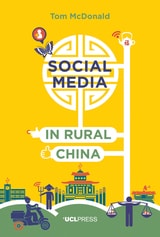
cover of Social Media in Rural China: Social Networks and Moral Frameworks

Social Media in Rural China

Social Networks and Moral Frameworks

Tom McDonald

University College London, 2016
China’s distinctive social media platforms have gained notable popularity among the nation’s vast number of internet users, but has China’s countryside been ‘left behind’ in this communication revolution? Tom McDonald spent 15 months living in a small rural Chinese community researching how the residents use social media in their daily lives. His ethnographic findings suggest that, far from being left behind, many rural Chinese people have already integrated social media into their everyday experience. Throughout his ground-breaking study, McDonald argues that social media allows rural people to extend and transform their social relationships by deepening already existing connections with friends known through their school, work or village, while also experimenting with completely new forms of relationships through online interactions with strangers, particularly when looking for love and romance. By juxtaposing these seemingly opposed relations, rural social media users are able to use these technologies to understand, capitalise on and challenge the notions of morality that underlie rural life.
[more]
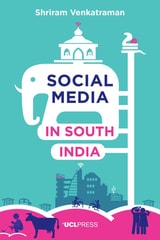
cover of Social Media in South India

Social Media in South India

Shriram Venkatraman

University College London, 2017
This book is one of the first ethnographic studies to explore the use of social media in the everyday lives of people in Tamil Nadu, a region of South India experiencing rapid change. In the past decade, there has been an influx of IT companies into a space once dominated by agriculture, resulting in a complex juxtaposition between an evolving knowledge economy and the traditions of rural life. This study suggests there is a blurring of boundaries and asserts that the use of various social media platforms in the region, while seeming to induce societal change, also remain bound by local practices influenced by class, age, gender, and caste.
[more]
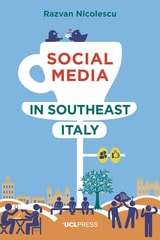
cover of Social Media in Southeast Italy: Crafting Ideals

Social Media in Southeast Italy

Crafting Ideals

Razvan Nicolescu

University College London, 2016

Why is social media in southeast Italy so predictable when it is used by such a range of different people?

This book describes the impact of social media on the population of a town in the southern region of Puglia, Italy. Razvan Nicolescu spent 15 months living among the town’s residents, exploring what it means to be an individual on social media. Why do people from this region conform on platforms that are designed for personal expression?

Nicolescu argues that social media use in this region of the world is related to how people want to portray themselves. He pays special attention to the ability of users to craft their appearance in relation to collective ideals, values, and social positions, and how this feature of social media has, for the residents of the town, become a moral obligation: they are expected to be willing to adapt their appearance to suit their different audiences at the same time, which is crucial in a town where religion and family are at the heart of daily life.  

[more]
cover of Social Media in Southeast Turkey: Love, Kinship and Politics

Social Media in Southeast Turkey

Love, Kinship and Politics

Elisabetta Costa

University College London, 2016
This book presents an ethnographic study of social media in Mardin, a medium-sized town located in the Kurdish region of Turkey. The town is inhabited mainly by Sunni Muslim Arabs and Kurds, and has been transformed in recent years by urbanisation, neoliberalism and political events. Elisabetta Costa uses her 15 months of ethnographic research to explain why public-facing social media is more conservative than offline life. Yet, at the same time, social media has opened up unprecedented possibilities for private communications between genders and in relationships among young people – Costa reveals new worlds of intimacy, love and romance. She also discovers that, when viewed from the perspective of people’s everyday lives, political participation on social media looks very different to how it is portrayed in studies of political postings separated from their original complex, and highly socialised, context.
[more]
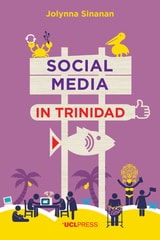
cover of Social Media in Trinidad: Values and Visibility

Social Media in Trinidad

Values and Visibility

Jolynna Sinanan

University College London, 2017
Drawing on fifteen months of ethnographic research in one of the most under-developed towns on the Caribbean island of Trinidad, this book describes the uses and consequences of social media for the town’s residents. Jolynna Sinanan argues that this semi-urban region is a place in between: somewhere city dwellers look down on but that other villagers look up to. The town’s chief core value asserts that one should not elevate oneself over others, and Sinanan explores how residents carefully navigate social media as a tool for visibility while still advocating against more cosmopolitan values.      
[more]
cover of Social Media in an English Village: (Or how to keep people at just the right distance)

Social Media in an English Village

(Or how to keep people at just the right distance)

Daniel Miller

University College London, 2016

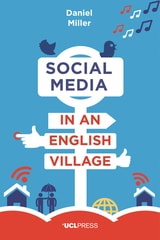
Daniel Miller spent 18 months undertaking an ethnographic study with the residents of an English village, tracking their use of the different social media platforms. Following his study, he argues that a focus on platforms such as Facebook, Twitter and Instagram does little to explain what we post on social media. Instead, the key to understanding how people in an English village use social media is to appreciate just how ‘English’ their usage has become. He introduces the ‘Goldilocks Strategy’: how villagers use social media to calibrate precise levels of interaction ensuring that each relationship is neither too cold nor too hot, but ‘just right’. He explores the consequences of social media for groups ranging from schoolchildren through to the patients of a hospice, and he compares these connections to more traditional forms of association such as the church and the neighbourhood. Above all, Miller finds an extraordinary clash between new social media that bridges the private and the public domains, and an English sensibility that is all about keeping these two domains separate.
[more]
cover of Social Media-New Masses

Social Media-New Masses

Edited by Inge Baxmann, Timon Beyes, and Claus Pias

Diaphanes, 2016

Mass gatherings are at the center of contemporary discussions about community formation, communication, and social control. As new digital technologies and social media platforms have emerged, the concept of the mass gathering has evolved in parallel to take account of the different ways masses and crowds may form, including digital masses like flash mobs and protest groups. At the same time, these new digital masses provide a remarkable opportunity to reevaluate the broader historiographical framework surrounding mass gatherings.
           
With Social Media—New Masses, Inge Baxmann, Timon Beyes, and Claus Pias have brought together a diverse group of sociologists, media and cultural studies theorists, and historians of knowledge and technology who, together, outline the contours of this expanding field of research and analyze the differences between the old and new conceptions of masses and the distinct conditions and political consequences for each. Contributors to the volume include Marie-Luise Angerer, Dirk Baecker, Christian Borch, Christoph Engemann, Charles Ess, Wolfgang Hagen, Peter Krapp, Mirko Tobias Schäfer, and Sebastian Vehlken.
 
[more]
cover of Social Movements in the World-System: The Politics of Crisis and Transformation

Social Movements in the World-System

The Politics of Crisis and Transformation

Jackie Smith

Russell Sage Foundation, 2012
Global crises such as rising economic inequality, volatile financial markets, and devastating climate change illustrate the defects of a global economic order controlled largely by transnational corporations, wealthy states, and other elites. As the impacts of such crises have intensified, they have generated a new wave of protests extending from the countries of the Middle East and North Africa throughout Europe, North America, and elsewhere. This new surge of resistance builds upon a long history of transnational activism as it extends and develops new tactics for pro-democracy movements acting simultaneously around the world. In Social Movements in the World-System, Jackie Smith and Dawn Wiest build upon theories of social movements, global institutions, and the political economy of the world-system to uncover how institutions define the opportunities and constraints on social movements, which in turn introduce ideas and models of action that help transform social activism as well as the system itself. Smith and Wiest trace modern social movements to the founding of the United Nations, as well as struggles for decolonization and the rise of national independence movements, showing how these movements have shifted the context in which states and other global actors compete and interact. The book shows how transnational activism since the end of the Cold War, including United Nations global conferences and more recently at World Trade Organization meetings, has shaped the ways groups organize. Global summits and UN conferences have traditionally provided focal points for activists working across borders on a diverse array of issues. By engaging in these international arenas, movements have altered discourses to emphasize norms of human rights and ecological sustainability over territorial sovereignty. Over time, however, activists have developed deeper and more expansive networks and new spaces for activism. This growing pool of transnational activists and organizations democratizes the process of organizing, enables activists to build on previous experiences and share knowledge, and facilitates local actions in support of global change agendas. As the world faces profound financial and ecological crises, and as the United States' dominance in the world political economy is increasingly challenged, it is especially urgent that scholars, policy analysts, and citizens understand how institutions shape social behavior and the distribution of power. Social Movements in the World-System helps illuminate the contentious and complex interactions between social movements and global institutions and contributes to the search for paths toward a more equitable, sustainable, and democratic world. A Volume in the American Sociological Association's Rose Series in Sociology
[more]
cover of Social Norms

Social Norms

Michael Hechter

Russell Sage Foundation, 2001

Social norms are rules that prescribe what people should and should not do given their social surroundings and circumstances. Norms instruct people to keep their promises, to drive on the right, or to abide by the golden rule. They are useful explanatory tools, employed to analyze phenomena as grand as international diplomacy and as mundane as the rules of the road. But our knowledge of norms is scattered across disciplines and research traditions, with no clear consensus on how the term should be used. Research on norms has focused on the content and the consequences of norms, without paying enough attention to their causes. Social Norms reaches across the disciplines of sociology, economics, game theory, and legal studies to provide a well-integrated theoretical and empirical account of how norms emerge, change, persist, or die out. Social Norms opens with a critical review of the many outstanding issues in the research on norms: When are norms simply devices to ease cooperation, and when do they carry intrinsic moral weight? Do norms evolve gradually over time or spring up spontaneously as circumstances change? The volume then turns to case studies on the birth and death of norms in a variety of contexts, from protest movements, to marriage, to mushroom collecting. The authors detail the concrete social processes, such as repeated interactions, social learning, threats and sanctions, that produce, sustain, and enforce norms. One case study explains how it can become normative for citizens to participate in political protests in times of social upheaval. Another case study examines how the norm of objectivity in American journalism emerged: Did it arise by consensus as the professional creed of the press corps, or was it imposed upon journalists by their employers? A third case study examines the emergence of the norm of national self-determination: has it diffused as an element of global culture, or was it imposed by the actions of powerful states? The book concludes with an examination of what we know of norm emergence, highlighting areas of agreement and points of contradiction between the disciplines. Norms may be useful in explaining other phenomena in society, but until we have a coherent theory of their origins we have not truly explained norms themselves. Social Norms moves us closer to a true understanding of this ubiquitous feature of social life.
[more]
cover of Social Norms and Economic Institutions

Social Norms and Economic Institutions

Kenneth J. Koford and Jeffrey B. Miller, Editors

University of Michigan Press, 1991

Economists, philosophers, and legal scholars come together in Social Norms and Economic Institutions to examine how economists' rational decision-making models are influenced by ethical values and social norms.   Economists find it difficult to include considerations of ethical values and social norms in their behavioral models, for these factors are neither goods nor constraints in the usual sense. And, while custom and social norms influence individual behavior, economists have not determined how they affect aggregate economic outcomes. Editors Kenneth J. Koford and Jeffrey B. Miller argue persuasively that these powerful societal and cultural forces influence decision making in important ways that cannot be captured by models that take into account only self-interested behavior.   The contributors address such questions as how norms change, how a common sense of fairness can survive in a world of heterogeneous values, how such principles can help to determine appropriate penalties for corporate misconduct, and how fairness can be an important element in determining a "fair" bargaining equilibrium in contract negotiations.   Sociologists, philosophers, business ethicists, legal scholars, and economists alike will appreciate the value of this volume in enriching their understanding of how ethical values and social norms can be incorporated in standard behavioral models.
[more]
cover of Social Organization in South China, 1911–1949: The Case of Kuan Lineage in K’ai-p’ing County

Social Organization in South China, 1911–1949

The Case of Kuan Lineage in K’ai-p’ing County

Yuen-fong Woon

University of Michigan Press, 1984

Bridging the collapse of the Confucian state and the establishment of the People’s Republic of China, the period 1911–49 is particularly fascinating to historians, anthropologists, sociologists and political scientists. Unfortunately, it is also a very confusing period, full of shifts and changes in economic, social, and political organizations. The social implications of these changes, and the relationships between officials on the subdistrict level, the unofficial leaders, and the bulk of the peasantry remain inadequately known. South China, which nurtured the Communist Party in its formative years, is a particularly interesting case. In this study I use the Kuan lineage of K’ai-p’ing as a case study to show the effects of demographic, economic, administrative, and educational changes after the Treaty of Nanking (1842) on patrilineal kinship as a principle of social organization in South China. [vii]
[more]
cover of Social Patterns in Normal Aging: Findings from the Duke Longitudinal Studies

Social Patterns in Normal Aging

Findings from the Duke Longitudinal Studies

Erdman Palmore

Duke University Press, 1981

Erdman Palmore has written a comprehensive, systematic summary of all extant findings on social patterns in normal aging learned from the landmark Duke Longitudinal Studies in aging. Palmore discusses the implications of these findings for major issues in gerontology and answers such questions as: Do elderly people reduce their social activity? Do they come to resemble one another or become more different as they age? Do major events in later life produce stress resulting in physical and/or mental illnesses? Does sexual activity maintain or reduce life satisfaction and longevity? Palmore's conclusions challenge many current ideas and prejudices widely held about people over the age of 65.
[more]
cover of Social Policy and Welfare: A Clear Guide

Social Policy and Welfare

A Clear Guide

Tom Burden

Pluto Press, 1998

[more]
cover of Social Programs that Work

Social Programs that Work

Jonathan Crane

Russell Sage Foundation, 1998

Many Americans seem convinced that government programs designed to help the poor have failed. Social Programs That Work shows that this is not true. Many programs have demonstrably improved the lives of people trapped at the bottom of the social and economic ladder. Social Programs That Work provides an in-depth look at some of the nation's best interventions over the past few decades, and considers their potential for national expansion. Examined here are programs designed to improve children's reading skills, curb juvenile delinquency and substance abuse, and move people off welfare into the workforce. Each contributor discusses the design and implementation of a particular program, and assesses how well particular goals were met. Among the critical issues addressed: Are good results permanent, or do they fade over time? Can they be replicated successfully under varied conditions? Are programs cost effective, and if so are the benefits seen immediately or only over the long term? How can public support be garnered for a large upfront investment whose returns may not be apparent for years? Some programs discussed in this volume were implemented only on a small, experimental scale, prompting discussion of their viability at the national level. An important concern for social policy is whether one-shot programs can lead to permanent results. Early interventions may be extremely effective at reducing future criminal behavior, as shown by the results of the High/Scope Perry preschool program. Evidence from the Life Skills Training Program suggests that a combination of initial intervention and occasional booster sessions can be an inexpensive and successful approach to reducing adolescent substance abuse. Social Programs That Work also acknowledges that simply placing welfare recipients in jobs isn't enough; they will also need long-term support to maintain those jobs. The successes and failures of social policy over the last thirty-five years have given us valuable feedback about the design of successful social policy. Social Programs That Work represents a landmark attempt to use social science criteria to identify and strengthen the programs most likely to make a real difference in addressing the nation's social ills.
[more]
cover of Social Reproduction Theory and the Socialist Horizon: Work, Power and Political Strategy

Social Reproduction Theory and the Socialist Horizon

Work, Power and Political Strategy

Aaron Jaffe

Pluto Press, 2020

How do we integrate the theoretical underpinnings of social reproduction theory (SRT) into our understanding of the social harms inflicted upon us? How can we use it to inform our struggles and affect societal change under capitalism? Integrating our understanding of productive and reproductive spheres and exploring the connection between identity-based oppression and class exploitation, SRT has emerged as a powerful Marxist frame for social analysis and political practice. In this book, Aaron Jaffe extracts SRT's radical potential, relying on recent struggles, including the International Women's Strike and the teachers' strikes, showing how we can use SRT to motivate socialist politics and strategy. Using social reproduction theory to appreciate distinct forms of social domination, this unique and necessary book will have vital strategic implications for anti-capitalists, anti-racists, LGBT activists, disability activists and feminists.
[more]
cover of Social Research for our Times: Thomas Coram Research Unit past, Present and Future

Social Research for our Times

Thomas Coram Research Unit past, Present and Future

Edited by Claire Cameron, Alison Koslowski, Alison Lamont, and Peter Moss

University College London, 2023

A collection of research and findings from the Thomas Coram Research Unit.

For fifty years, researchers at UCL’s Thomas Coram Research Unit have been undertaking ground-breaking policy-relevant social research. Their main focus has been social issues affecting children, young people, and families and the services provided for them. Social Research for our Times brings together different generations of researchers from the Unit to share some of the most important results of their studies.

Two sections focus on the main findings and conclusions from research into children and children services and on family life, minoritized groups, and gender. A third section is devoted to the innovative methods that have been developed and used to undertake research in these complex areas. Running through the book is a key strategic question: what should be the relationship between research and policy? Or put another way, what does “policy-relevant research” mean? This perennial question has gained new importance in the post-COVID, post-Brexit world that we have entered, making this text a timely intervention for sharing decades of experience. Taking a unique opportunity to reflect on the research context as well as research findings, this book will be of interest to researchers, teachers, students, and those involved in policy-making both in and beyond dedicated research units, and it can be read as a whole or sampled for individual standalone chapters.

 
[more]
cover of Social Research in the Judicial Process: Cases, Readings, and Text

Social Research in the Judicial Process

Cases, Readings, and Text

Wallace D. Loh

Russell Sage Foundation, 1984
"How to inform the judicial mind," Justice Frankfurter remarked during the school desegregation cases, "is one of the most complicated problems." Social research is a potential source of such information. Indeed, in the 1960s and 1970s, with activist courts at the forefront of social reform, the field of law and social science came of age. But for all the recent activity and scholarship in this area, few books have attempted to create an intellectual framework, a systematic introduction to applied social-legal research. Social Research in the Judicial Process addresses this need for a broader picture. Designed for use by both law students and social science students, it constructs a conceptual bridge between social research (the realm of social facts) and judicial decision making (the realm of social values). Its unique casebook format weaves together judicial opinions, empirical studies, and original text. It is a process-oriented book that teaches skills and perspectives, cultivating an informed sensitivity to the use and misuse of psychology, social psychology, and sociology in apellate and trial adjudication. Among the social-legal topics explored are school desegregation, capital punishment, jury impartiality, and eyewitness identification. This casebook is remarkable for its scope, its accessibility, and the intelligence of its conceptual integration. It provides the kind of interdisciplinary teaching framework that should eventually help lawyers to make knowledgeable use of social research, and social scientists to conduct useful research within a legally sophisticated context.
[more]
cover of Social Science Knowledge and Economic Development: An Institutional Design Perspective

Social Science Knowledge and Economic Development

An Institutional Design Perspective

Vernon W. Ruttan

University of Michigan Press, 2003

Ruttan advances a model of institutional change, which creates an environment where resource and cultural endowments and technical change can take place. The disequilibria resulting from such changes create opportunities for the design of more efficient institutional arrangements. The design perspective employed in the book stands in sharp contrast to organic or evolutionary perspectives.
With its emphasis on interdisciplinarity, Social Science Knowledge and Economics Developmentis important reading for social scientists, development economists, and in the development studies classroom.
Vernon W. Ruttan is Regents Professor Emeritus in the Department of Applied Economics at the University of Minnesota.
[more]