Results by title
5159 books match the query 'Biography' and 320 start with s
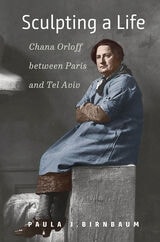
Sculpting a Life
Chana Orloff between Paris and Tel AvivPaula J. Birnbaum
Brandeis University Press, 2022
In Sculpting a Life, the first book-length biography of sculptor Chana Orloff (1888-1968), author Paula Birnbaum tells the story of a fiercely determined and ambitious woman who fled antisemitism in Ukraine, emigrated to Palestine with her family, then travelled to Paris to work in haute couture before becoming an internationally recognized artist. Against the backdrop of revolution, world wars, a global pandemic and forced migrations, her sculptures embody themes of gender, displacement, exile, and belonging. A major figure in the School of Paris, Orloff contributed to the canon of modern art alongside Picasso, Modigliani and Chagall.
Stories from her unpublished memoir enrich this life story of courage, perseverance, and extraordinary artistic accomplishments that take us through the aftermath of the Holocaust when Orloff lived between Paris and Tel Aviv. This biography brings new perspectives and understandings to Orloff’s multiple identities as a cosmopolitan émigré, woman, and Jew, and is a much-needed intervention into the narrative of modern art.
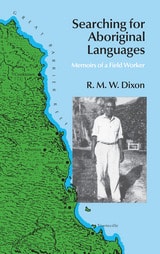
Searching for Aboriginal Languages
Memoirs of a Field WorkerR. M. W. Dixon
University of Chicago Press, 1989
As he made his way through northern Australia, Dixon was dependent on rumors of Aboriginal speakers, the unreliable advice of white Australians, and the faulty memories of many of the remaining speakers of the languages. Suggestions of informants led him on a circuitous trail through the bush, to speakers such as the singer Willie Kelly in Ravenshoe, who wanted his recordings sent to the south, "where white people would pay big money to hear a genuine Aborigine sing" and Chloe Grant in Murray Upper, who told tales in four dialects of digging wild yams, of the blue-tongue lizard Banggara, and of the arrival of Captain Cook. Dixon tells of obtaining the trust of possible informants, of learning the customs and terrain of the country, and of growing understanding of the culture and tradition of his subjects. And he explains his surprise at his most unexpected discovery: that the rich oral tradition of the "primitive" Aborigines could yield a history of a people, as told by that people, that dates to almost ten millenia before.
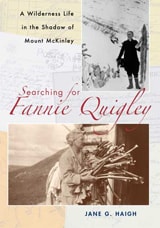
Searching for Fannie Quigley
A Wilderness Life in the Shadow of Mount McKinleyJane G. Haigh
Ohio University Press, 2007
At the age of 27, Fannie Sedlacek left her Bohemian homestead in Nebraska to join the gold rush to the Klondike. From the Klondike to the Tanana, Fannie continued north, finally settling in Katishna near Mount McKinley. This woman, later known as Fannie Quigley, became a prospector who staked her own claims and a cook who ran a roadhouse. She hunted and trapped and thrived for nearly forty years in an environment that others found unbearable.
Her wilderness lifestyle inspired many of those who met her to record their impressions of this self-sufficient woman, who died in 1944. To many of the 700,000 annual visitors to Denali National Park she is a symbol of the enduring spirit of the original pioneers.
Searching for Fannie Quigley: A Wilderness Life in the Shadow of Mount McKinley goes beyond the mere biographical facts of this unique woman’s journey. It also tells historian Jane G. Haigh’s own story of tracking and tracing the many paths that Fannie Quigley’s intriguing life took. Uncovering remote clues, digging through archives, and listening to oral accounts from a wide array of sources, Haigh has fashioned this rich lode into a compelling narrative.
In Searching for Fannie Quigley, Haigh separates fact from fiction to reveal the true story of this highly mythologized pioneer woman.
Searching for Freedom after the Civil War
Klansman, Carpetbagger, Scalawag, and FreedmanG. Ward Hubbs
University of Alabama Press, 2015
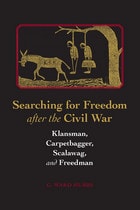
Examines the life stories and perspectives about freedom in relation to the figures depicted in an infamous Reconstruction-era political cartoon
The cartoon first appeared in the Tuskaloosa Independent Monitor, published by local Ku Klux Klan boss Ryland Randolph, as a swaggering threat aimed at three individuals. Hanged from an oak branch clutching a carpetbag marked “OHIO” is the Reverend Arad S. Lakin, the Northern-born incoming president of the University of Alabama. Swinging from another noose is Dr. Noah B. Cloud—agricultural reformer, superintendent of education, and deemed by Randolph a “scalawag” for joining Alabama’s reformed state government. The accompanying caption, penned in purple prose, similarly threatens Shandy Jones, a politically active local man of color.
Using a dynamic and unprecedented approach that interprets the same events through four points of view, Hubbs artfully unpacks numerous layers of meaning behind this brutal two-dimensional image.
The four men associated with the cartoon—Randolph, Lakin, Cloud, and Jones—were archetypes of those who were seeking to rebuild a South shattered by war. Hubbs explores these broad archetypes but also delves deeply into the four men’s life stories, writings, speeches, and decisions in order to recreate each one’s complex worldview and quest to live freely. Their lives, but especially their four very different understandings of freedom, help to explain many of the conflicts of the 1860s. The result is an intellectual tour de force.
General readers of this highly accessible volume will discover fascinating new insights about life during and after America’s greatest crisis, as will scholars of the Civil War, Reconstruction, and southern history.
Searching for Jim
Slavery in Sam Clemens's WorldTerrell Dempsey
University of Missouri Press, 2005
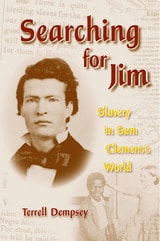
During Sam’s earliest years, his father, John Marshall Clemens, had significant interaction with slaves. Newly discovered court records show the senior Clemens in his role as justice of the peace in Hannibal enforcing the slave ordinances. With the death of his father, young Sam was apprenticed to learn the printing and newspaper trade. It was in the newspaper that slaves were bought and sold, masters sought runaways, and life insurance was sold on slaves. Stories the young apprentice typeset helped Clemens learn to write in black dialect, a skill he would use throughout his writing, most notably in Huckleberry Finn.
Missourians at that time feared abolitionists across the border in Illinois and Iowa. Slave owners suspected every traveling salesman, itinerant preacher, or immigrant of being an abolition agent sent to steal slaves. This was the world in which Sam Clemens grew up. Dempsey also discusses the stories of Hannibal’s slaves: their treatment, condition, and escapes. He uncovers new information about the Underground Railroad, particularly about the role free blacks played in northeast Missouri.
Carefully reconstructed from letters, newspaper articles, sermons, speeches, books, and court records, Searching for Jim offers a new perspective on Clemens’s writings, especially regarding his use of race in the portrayal of individual characters, their attitudes, and worldviews. This fascinating volume will be valuable to anyone trying to measure the extent to which Clemens transcended the slave culture he lived in during his formative years and the struggles he later faced in dealing with race and guilt. It will forever alter the way we view Sam Clemens, Hannibal, and Mark Twain.

Seattle Sports
Play, Identity, and Pursuit in the Emerald CityTerry Anne Scott
University of Arkansas Press, 2020
Seattle Sports: Play, Identity, and Pursuit in the Emerald City, edited by Terry Anne Scott, explores the vast and varied history of sports in this city where diversity and social progress are reflected in and reinforced by play. The work gathered here covers Seattle’s professional sports culture as well as many of the city’s lesser-known figures and sports milestones. Fresh, nuanced takes on the Seattle Mariners, Supersonics, and Seahawks are joined by essays on gay softball leagues, city court basketball, athletics in local Japanese American communities during the interwar years, ultimate, the fierce women of roller derby, and much more. Together, these essays create a vivid portrait of Seattle fans, who, in supporting their teams—often in rain, sometimes in the midst of seismic activity—check the country’s implicit racial bias by rallying behind outspoken local sporting heroes.

Secret Life of a Black Aspie
A MemoirAnand Prahlad
University of Alaska Press, 2017
For the first four years of his life, Prahlad didn’t speak. But his silence didn’t stop him from communicating—or communing—with the strange, numinous world he found around him. Ordinary household objects came to life; the spirits of long-dead slave children were his best friends. In his magical interior world, sensory experiences blurred, time disappeared, and memory was fluid. Ever so slowly, he emerged, learning to talk and evolving into an artist and educator. His journey takes readers across the United States during one of its most turbulent moments, and Prahlad experiences it all, from the heights of the Civil Rights Movement to West Coast hippie enclaves to a college town that continues to struggle with racism and its border state legacy.
Rooted in black folklore and cultural ambience, and offering new perspectives on autism and more, The Secret Life of a Black Aspie will inspire and delight readers and deepen our understanding of the marginal spaces of human existence.

Secrets I Won't Take with Me
Home, War, and the Struggle for Peace in IsraelYossi Beilin
University of Alabama Press, 2025
An Israeli political leader’s riveting first-hand account of pivotal moments from recent Israeli history, including the Oslo Peace Accords, the founding of the Birthright Initiative, the assassination of Yitzhak Rabin, the rise of the Israeli far right, and more
In Secrets I Won't Take with Me, Yossi Beilin, a key Israeli political and ministerial leader, offers an intimate and candid memoir that chronicles pivotal events in the nation’s recent history. From the crucible of its founding to the complexities of the modern era, Beilin reveals an insider’s perspective and previously undocumented insights about the events that have and continue to shape Israel.
Beginning his career as an academic and a journalist, Beilin became the spokesperson of the Labor Party in 1977. Among his many career highlights include the chairmanship of the Meretz-Yachad Party, Minister of Justice, Minister of Religious Affairs, and Deputy Finance Minister, and perhaps most significantly, as Deputy Foreign Minister during the Israel-PLO Oslo Peace Accords. As a key architect of the Oslo Peace Accords, he shares unprecedented details of the negotiations that defined an era.
Beyond diplomacy, Beilin illuminates his role in shaping Israel’s identity, from steering Israel away from its alliance with apartheid South Africa to the foundation of the influential Birthright program. With unflinching honesty, Beilin navigates the triumphs and tragedies of a nation, from the euphoria of the Six-Day War to the heartbreak of Yitzhak Rabin’s assassination. A deeply personal memoir of one man’s life interwoven with a nation’s, Beilin’s stunning account of his career serves as a masterful tour d’horizon of Israel’s recent past and evolving future.

Secrets of the Sun
A MemoirMako Yoshikawa
The Ohio State University Press, 2024
See Me Naked
Black Women Defining Pleasure in the Interwar EraTara T. Green
Rutgers University Press, 2022

See Sam Run
A Mother's Story of AutismPeggy Heinkel-Wolfe
University of North Texas Press, 2008
Seeds of Disquiet
Cheryl Heppner
Gallaudet University Press, 1992
In her autobiography Seeds of Disquiet, Cheryl Heppner writes of experiencing severe hearing loss twice. Spinal meningitis caused a profound loss of hearing when she was six, and for the next 18 years she worked hard to live the life of a “normal” hearing person. Through exhaustive work in speech therapy and speechreading, she excelled in school and college, performing Herculean feats without the assistance of trained interpreters or notetakers.
Then, when she was 25, two strokes left her completely deaf. For the next 20 years she worked to recreate her life through sign language and the Deaf community. The process stunned her by revealing how much she had missed before. Initially embittered, Cheryl Heppner later went on to use her astonishing energy as an advocate for deaf and hard of hearing people.
Seeds of Disquiet celebrates her accomplishments, the most significant of which, perhaps, was her reconciliation with her loved ones from her former life with her new outlook.

Seeing Baya
Portrait of an Algerian Artist in ParisAlice Kaplan
University of Chicago Press, 2024
On a flower farm in colonial Algeria, a servant and field worker known as Baya escaped the drudgery of her labor by coloring the skirts in fashion magazines. Three years later, in November 1947, her paintings and fanciful clay beasts were featured in a solo show in Paris. She wasn’t yet sixteen years old. In this first biography of Baya, Alice Kaplan tells the story of a young woman seemingly trapped in subsistence who becomes a sensation in the French capital, then mysteriously fades from the history of modern art—only to reemerge after independence as an icon of Algerian artistic heritage.
The toast of Paris for the 1947 season, Baya inspired colonialist fantasies about her “primitive” genius as well as genuine appreciation. She was featured in newspapers, on the radio, and in a newsreel; her art was praised by Breton and Camus, Marchand and Braque. At the dawn of Algerian liberation, her appearance in Paris was used to stage the illusion of French-Algerian friendship, while horrific French massacres in Algeria were still fresh in memory.
Kaplan uncovers the central figures in Baya’s life and the role they played in her artistic career. Among the most poignant was Marguerite Caminat-McEwen-Benhoura, who took Baya from her sister’s farm to Algiers, where Baya worked as Marguerite’s maid and was given paint and brushes. A complex and endearing character, Marguerite—and her Pygmalion ambitions—was decisive in shaping Baya’s destiny. Kaplan also looks closely at Baya’s earliest paintings with an eye to their themes, their palette and design, and their enduring influence.
In vivid prose that brings Baya’s story into the present, Kaplan’s book, the fruit of scrupulous research in Algiers, Blida, Paris, and Provence, allows us to see in a whole new light the beloved artist who signed her paintings simply “Baya.”

Seeing Language in Sign
The Work of William C. StokoeJane Maher
Gallaudet University Press, 1996
Seeing Sideways
A Memoir of Music and MotherhoodBy Kristin Hersh
University of Texas Press, 2021
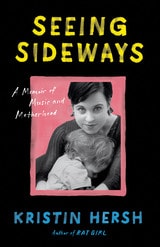
Doony, Ryder, Wyatt, Bodhi. The names of Kristin Hersh’s sons are the only ones included in her new memoir, Seeing Sideways. As the book unfolds and her sons’ voices rise from its pages, it becomes clear why: these names tell the story of her life.
This story begins in 1990, when Hersh is the leader of the indie rock group Throwing Muses, touring steadily, and the mother of a young son, Doony. The chapters that follow reveal a woman and mother whose life and career grow and change with each of her sons: the story of a custody battle for Doony is told alongside that of Hersh’s struggles with her record company and the resulting PTSD; the tale of breaking free from her record label stands in counterpoint to her recounting of her pregnancy with Ryder; a period of writer’s block coincides with the development of Wyatt as an artist and the family’s loss of their home; and finally, soon after Bodhi’s arrival, Hersh and her boys face crises from which only strange angels can save them. Punctuated with her own song lyrics, Seeing Sideways is a memoir about a life strange enough to be fiction, but so raw and moving that it can only be real.

Seeking the One Great Remedy
Francis George Shaw and Nineteenth-Century ReformLorien Foote
Ohio University Press, 2003
A radical abolitionist and early feminist, Francis George Shaw (1809–1882) was a prominent figure in American reform and intellectual circles for five decades. He rejected capitalism in favor of a popular utopian socialist movement; during the Civil War and Reconstruction, he applied his radical principles to the Northern war effort and to freedmen’s organizations.
A partnership with Henry George in the late 1870s provided an international audience for Shaw’s alternative vision of society. Seeking the One Great Remedy is the biography of this remarkable and influential man. In compelling detail, author Lorien Foote depicts the many aspects and exploits of the Shaw family. Their activities provide a perspective on the course of American reform that calls into question previous interpretations of the reform movement of this period.
Francis George Shaw is perhaps best known as the father of Robert Gould Shaw, subject of the movie Glory. Francis and his wife, Sarah Blake Shaw, achieved considerable notoriety for their activities, including their effort to shape public opinion during the Civil War. Turning the tragic death of their son into a public relations and propaganda triumph, they altered Northern opinion about the war and shaped a historical perception of the famous Massachusetts Fifty-fourth that continues today.
Seeking the One Great Remedy argues that social radicalism was pervasive among elite reformers before and after the Civil War and finds in the dramatic story of Francis George Shaw a model of that cause.

Selected Letters, 1514-1543
Maria Salviati de’ Medici
Iter Press, 2022
In recent years, there has been an upsurge of interest in Maria Salviati de’ Medici, specifically, in her role in Medici governance and her relationships with other members of the Medici court. Maria Salviati’s surviving correspondence documents a life spent close to the centers of Medici power in Florence and Rome, giving witness to its failures, resurrection, and eventual triumph. Presented here for the first time in English, this book is a representative sample of Maria’s surviving letters that document her remarkable life through a tumultuous period of Italian Renaissance history. While she earned the exasperation of some, she gained the respect of many more. Maria ended her life as an influential dowager, powerful intercessor for local Tuscans of all strata, and wise elder in Duke Cosimo I’s court. The first critical, analytical, biographical work on Maria Salviati de’ Medici’s life and letter-writing in English.

Selected Papers, Volume 7
The Non-Radial Oscillations of Stars in General Relativity and Other WritingsS. Chandrasekhar
University of Chicago Press, 1997
world through the eyes of one of the twentieth century's most brilliant
and sensitive scientists. Conceived by Chandrasekhar as a supplement to
his Selected Papers, this volume begins with eight papers he
wrote with Valeria Ferrari on the non-radial oscillations of stars. It
then explores some of the themes addressed in Truth and Beauty,
with meditations on the aesthetics of science and the world it examines.
Highlights include: "The Series Paintings of Claude Monet and the
Landscape of General Relativity," "The Perception of Beauty and the
Pursuit of Science," "On Reading Newton's Principia at Age Past
Eighty," and personal recollections of Indira Gandhi, Jawaharlal Nehru,
and others.
Selected Papers, Volume 7 paints a picture of Chandra's universe,
filled with stars and galaxies, but with space for poetics, paintings,
and politics.
The late S. Chandrasekhar was best known for his discovery of the upper
limit to the mass of a white dwarf star, for which he received the Nobel
Prize in Physics in 1983. He was the author of many books, including
The Mathematical Theory of Black Holes and, most recently,
Newton's Principia for the Common Reader.
Self as Nation
Contemporary Hebrew AutobiographyTamar S. Hess
Brandeis University Press, 2016
Self-Made Woman
A MemoirDenise Chanterelle DuBois
University of Wisconsin Press, 2017
Defying all expectations, DuBois didn't crash and burn. Embracing her identity as a woman, she remade herself. Writing with resolute honesty and humor, she confronts both her past and her present to tell an American story of self-discovery.
Selling Black History for Carter G. Woodson
A Diary, 1930-1933Lorenzo J. Greene, Edited & Intro by Arvarh E. Strickland
University of Missouri Press, 1996
In the summer of 1930, Lorenzo Johnston Greene, a graduate of Howard University and a doctoral candidate at Columbia University, became a book agent for the man with the undisputed title of "Father of Negro History," Carter G. Woodson. With little more than determination, Greene, along with four Howard University students, traveled throughout the South and Southeast selling books published by Woodson's Associated Publishers. Their dual purpose was to provide needed funds for the Association for the Study of Negro Life and History and to promote the study of African American history. Greene returned east by way of Chicago, and, for a time, he settled in Philadelphia, selling books there and in the nearby cities of Delaware and New Jersey. He left Philadelphia in 1931 to conduct a survey in Washington, D.C., of firms employing and not employing black workers.
From 1930 until 1933, when Greene began teaching at Lincoln University in Jefferson City, Missouri, Selling Black History for Carter G. Woodson provides a unique firsthand account of conditions in African American communities during the Great Depression. Greene describes in the diary, often in lyrical terms, the places and people he visited. He provides poignant descriptions of what was happening to black professional and business people, plus working-class people, along with details of high school facilities, churches, black business enterprises, housing, and general conditions in communities. Greene also gives revealing accounts of how the black colleges were faring in 1930.
Selling Black History for Carter G. Woodson offers important glimpses into the private thoughts of a young man of the 1930s, a developing intellectual and scholar. Greene's diary also provides invaluable insights into the personality of Carter Woodson that are not otherwise available. This fascinating and comprehensive view of black America during the early thirties will be a welcome addition to African American studies.

Senator Dennis DeConcini
From the Center of the AisleDennis DeConcini and Jack L. August, Jr.
University of Arizona Press, 2006
A vigilant centrist, who got results by building coalitions on both sides of the aisle, Senator DeConcini’s approach was not bound to strict party alliances but was deeply rooted in the independent political environment of Arizona. During his career, he sponsored legislation limiting the sale of assault weapons, which provoked the National Rifle Association. He confounded Democratic Party regulars by supporting Clarence Thomas during the controversial confirmation hearings and again split with his party in his support for William Rehnquist’s nomination to Chief Justice. In 1980 he voted for Ronald Reagan, but in 1993 he cast the swing vote for President Bill Clinton’s tax bill, which was strongly opposed by Republicans in Arizona.
This political memoir will be of interest to anyone concerned with the inner workings of the U.S. Senate or Arizona politics and offers relevant insights into today’s political climate.

Senator Howard Cannon of Nevada
A BiographyMichael Vernetti
University of Nevada Press, 2015
Born to a devout Mormon family in a small farming community in southwest Utah, Cannon served in the Army Air Force during World War II and emerged from the war as a hero. Soon he was part of the postwar migration of ambitious, adventurous Americans to the booming desert city of Las Vegas, where he practiced law and entered local politics. In 1958 he was elected to the U.S. Senate and joined a group of influential young Democratic senators who were to play a major role in shaping the country’s future. His service on the Aeronautical and Space Sciences Committee and the Armed Services Committee led to major changes in the air travel industry, including deregulation, and to increased support for national military preparedness.
Senator Leahy
A Life in ScenesPhilip Baruth
University Press of New England, 2017

Senator Thomas J. Walsh of Montana
Law and Public Affairs, from TR to FDRJ. Leonard Bates
University of Illinois Press, 1999
Walsh fought throughout his long career against corruption and monopoly power. During his early years as a lawyer-politician in Helena, he was often in conflict with the "Copper Kings" and other powerful figures. As a senator, he became an internationalist, working throughout the 1920s for naval disarmament, the World Court, the St. Lawrence Seaway, and the Kellogg-Briand Pact for the "outlawry" of war.
In his most celebrated coup, breaking open the Teapot Dome scandal of 1923-24, Walsh revealed that the secretary of the interior had accepted "loans" from oil men in return for leases of U.S. naval oil reserves. Working through the Public Lands Committee of the Senate, Walsh enjoyed support for his investigation from members of both parties, and the Supreme Court endorsed his interpretation of the scandal in 1927. Shortly before his death, he presided over the Democratic National Convention that nominated Franklin Roosevelt and served for a brief time as a key figure in the new leader's circle.
Drawing on archival sources of unprecedented depth, including personal letters between Walsh and his first wife, Elinor McClements Walsh, Bates's expansive study paints a richly detailed portrait of an influential and principled figure whose political career spanned world war, depression, and the administrations of six presidents.

Senda Berenson
The Unlikely Founder of Women's BasketballRalph Melnick
University of Massachusetts Press, 2007
In the winter of 1892 the new instructor of physical training at Smith College, a diminutive young woman with a heavy accent, introduced her students to an adaptation of James Naismith's new game of Basket Ball. An immediate if unexpected success, the game spread to other women's schools across the country, and soon its founder, Senda Berenson (1868–1954), was called upon to codify its distinctive set of gender-specific rules. Emphasizing team passing and position over individual play, the version she instituted defined women's basketball for seventy years and eventually earned her the honor of being the first female elected to the Basketball Hall of Fame.
Yet as Ralph Melnick points out, Berenson's pioneering role in the history of women's athletics was more a matter of accident than destiny. A Jewish immigrant from Lithuania, prone to ill health throughout her childhood, she enrolled in the Boston Normal School for Gymnastics in the fall of 1890 with the hope of strengthening herself so that she could pursue a career as a pianist, dancer, or painter. Instead she soon became both a practitioner and a proponent of a new approach to women's physical education, one aimed at providing a “natural outlet of the play instinct,” developing “endurance and physical courage” as well as “quickness of thought and action,” and promoting through teamwork the “power of organization” women needed to achieve full social equality.
Extending her work into the factories and blighted urban tenements of America, Berenson later won the recognition of Jane Addams, Margaret Sanger, and other progressive reformers. Believing that “Americans have forgotten how to play,” she wanted to teach others to live “joyfully—beautifully.” For Berenson, the physical culture of exercise and games, played not for competition but for personal and social development as well as sheer enjoyment, was but another form of art.
This convergence of athletics and aesthetics was hardly surprising, Melnick explains, because the single most important influence on Senda Berenson's life was her brother, the renowned art critic and connoisseur Bernard Berenson. The two siblings wrote frequently to each other over the course of their lives, and the author draws heavily on their correspondence throughout the book to create an intimate and insightful portrait of a remarkable American woman.
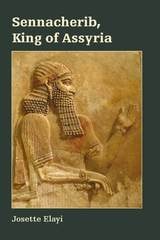
Sennacherib, King of Assyria
Josette Elayi
SBL Press, 2018
A critical resource for students and scholars of the ancient Near East and the Bible
Josette Elayi’s Sennacherib, King of Assyria is the only biography of Sargon II’s famous son. Elayi traces the reign of Sennacherib in context in order to illuminate more fully the life and contributions of this warlord, builder, innovator, and social reformer—a unique figure among the Assyrian kings. Elayi offers both an evaluation of this royal figure and an assessment of the Assyrian Empire by interpreting the historical information surrounding the decisive events of his reign.
Features:
- Exploration of why Sennacherib did not seize Jerusalem or remove Hezekiah from the throne
- An extensive investigation of annals, royal inscriptions, letters, palace reliefs, clay tablets, and excavation reports
- Maps and tables

Sergei Paradjanov
Shadows of Forgotten AncestorsJoshua First
Intellect Books, 2016
This book is the first full-length companion to the film. In addition to a synopsis of the plot and a close analysis of the many levels of symbolism in the film, it offers a history of the film’s legendarily troubled production process (which included Paradjanov challenging a cinematographer to a duel). The book closes with an account of the film’s reception by critics, ordinary viewers, and Soviet officials, and the numerous controversies that have kept it a subject of heated debate for decades. An essential companion to a fascinating, complicated work of cinema art, this book will be invaluable to students, scholars, and regular film buffs alike.

Sergei Prokofiev
A BiographyUniversity Press of New England, 2002

Serving Genius
Carlo Maria GiuliniThomas D. Saler
University of Illinois Press, 2020
Serving Genius tells the life story of Carlo Maria Giulini, one of the most renowned and beloved conductors of the twentieth century. Detailing Giulini's extraordinary professional career, Thomas D. Saler also chronicles Giulini's personal life, including his musical awakening while growing up amid the spectacular beauty of the Dolomite mountains, his years as a student in Rome's Academy of St. Cecilia, his conscription into the Italian army during World War II, his nine months in hiding for his anti-fascist and pacifist beliefs, and his selfless devotion to his wife, Marcella.
A humble master who shunned the limelight, Giulini took a deeply emotional and subjective approach to making music. Saler provides uniquely detailed analysis of Giulini's nuanced musicianship and the way he conveyed that musicianship to the orchestra through physical gestures. Meditating on the very art of conducting at which Giulini excelled, Saler discusses each of the conductor's major musical appointments, including stints with the Chicago Symphony Orchestra, Philharmonia Orchestra, Vienna Symphony, and Los Angeles Philharmonic. The book also addresses his repertoire of choice, leadership style, and moral framework.
Drawing on extensive interviews with Giulini's family, music critics, arts administrators, orchestra members, and collaborating soloists, Serving Genius draws out the personal amid the professional life of this giant among twentieth-century conductors.

Setsuko's Secret
Heart Mountain and the Legacy of the Japanese American IncarcerationShirley Ann Higuchi
University of Wisconsin Press, 2020
Only after a serious cancer diagnosis did Shirley's mother, Setsuko, share her vision for a museum at the site of the former camp, where she had been donating funds and volunteering in secret for many years. After Setsuko's death, Shirley skeptically accepted an invitation to visit the site, a journey that would forever change her life and introduce her to a part of her mother she never knew.
Navigating the complicated terrain of the Japanese American experience, Shirley patched together Setsuko's story and came to understand the forces and generational trauma that shaped her own life. Moving seamlessly between family and communal history, Setsuko's Secret offers a clear window into the "camp life" that was rarely revealed to the children of the incarcerated. This volume powerfully insists that we reckon with the pain in our collective American past.
Settlin’
Stories of Madison’s Early African American FamiliesMuriel Simms
Wisconsin Historical Society Press, 2018
Seven Aunts
Staci Lola Drouillard
University of Minnesota Press, 2022
Part memoir, part cultural history, these memories of seven aunts holding home and family together tell a crucial, often overlooked story of women of the twentieth century
They were German and English, Anishinaabe and French, born in the north woods and Midwestern farm country. They moved again and again, and they fought for each other when men turned mean, when money ran out, when babies—and there were so many—added more trouble but even more love. These are the aunties: Faye, who lived in California, and Lila, who lived just down the street; Doreen, who took on the bullies taunting her “mixed-blood” brothers and sisters; Gloria, who raised six children (no thanks to all of her “stupid husbands”); Betty, who left a marriage of indenture to a misogynistic southerner to find love and acceptance with a Norwegian logger; and Carol and Diane, who broke the warped molds of their own upbringing.
From the fabric of these women’s lives, Staci Lola Drouillard stitches a colorful quilt, its brightly patterned pieces as different as her aunties, yet alike in their warmth and spirit and resilience, their persistence in speaking for their generation. Seven Aunts is an inspired patchwork of memoir and reminiscence, poetry, testimony, love letters, and family lore.
In this multifaceted, unconventional portrait, Drouillard summons ways of life largely lost to history, even as the possibilities created by these women live on. Unfolding against a personal view of the settler invasion of the Midwest by men who farmed and logged, fished and hunted and mined, it reveals the true heart and soul of that history: the lives of the women who held together family, home, and community—women who defied expectations and overwhelming odds to make a place in the world for the next generation.

Seven Summers
A Naturalist Homesteads in the Modern WestJulia Corbett
University of Utah Press, 2013
Seven Summers is the story of a naturalist-turned-professor who flees city life each summer with her pets and power tools to pursue her lifelong dream—building a cabin in the Wyoming woods. With little money and even less experience, she learns that creating a sanctuary on her mountain meadow requires ample doses of faith, patience, and luck. This mighty task also involves a gradual and sometimes painful acquisition of flexibility and humility in the midst of great determination and naive enthusiasm.
For Corbett, homesteading is not about wresting a living from the land, but respecting and immersing herself in it—observing owls and cranes, witnessing seasons and cycles, and learning the rhythms of wind and weather in her woods and meadow. The process changes her in unexpected ways, just as it did for women homesteaders more than a century ago. The more she works with wood, the more she understands the importance of “going with the grain” in wood as well as in life. She must learn to let go, to move through loss and grief, to trust her voice, and to balance independence and dependence. Corbett also gains a better understanding of her fellow Wyomingites, a mix of ranchers, builders, gas workers, and developers, who share a love of place but often hold decidedly different values. This beautifully written memoir will appeal to readers who appreciate stories of the western landscape, independent women, or the appreciation of the natural world.

Seven Wheelchairs
A Life beyond PolioGary Presley
University of Iowa Press, 2008
Presley is no wheelchair hero, no inspiring figure preaching patience and gratitude. An army brat turned farm kid, newly arrived in a conservative rural community, he was immobilized before he could take the next step toward adulthood. Prevented, literally, from taking that next step, he became cranky and crabby, anxious and alienated, a rolling responsibility crippled not just by polio but by anger and depression, “a crip all over, starting with the brain.” Slowly, however, despite the limitations of navigating in a world before the Americans with Disabilities Act, he builds an independent life.
Now, almost fifty years later, having worn out wheelchair after wheelchair, survived post-polio syndrome, and married the woman of his dreams, Gary has redefined himself as Gimp, more ready to act out than to speak up, ironic, perceptive, still cranky and intolerant but more accepting, more able to find joy in his family and his newfound religion. Despite the fact that he detests pity, can spot condescension from miles away, and refuses to play the role of noble victim, he writes in a way that elicits sympathy and understanding and laughter. By giving his readers the unromantic truth about life in a wheelchair, he escapes stereotypes about people with disabilities and moves toward a place where every individual is irreplaceable.

Seventeen Years in Alaska
A Depiction of Life Among the Indians of YakutatAlbin Johnson
University of Alaska Press, 2014
Seventeen Years in Alaska is Johnson’s eyewitness account of this tumultuous time. It is a captivating narrative of an ancient people facing rapid change and of the missionaries working to stem a corrupting tide. His journals offer a candid look at the beliefs and lives of missionaries, and they ultimately reveal the profound effect that he and other missionaries had on the Tlingit. Tracing nearly two decades of spiritual hopes and earthbound failures, Johnson’s memoir is a fascinating portrait of a rapidly changing world in one of the most far-flung areas of the globe.
Seventh Generation Earth Ethics
Native Voices of WisconsinPatty Loew
Wisconsin Historical Society Press, 2025
Indigenous perspectives on sustainability, culture, and community
In this collection of twelve biographies, one from each of the Native nations in Wisconsin, author Patty Loew (Bad River Ojibwe) introduces readers to prominent figures in Native sustainability—people whose life’s work reflects the traditional ecological knowledge and cultural values of their people.
Born out of Loew’s thirty years as a journalist and historian, Seventh Generation Earth Ethics highlights individuals who helped to sustain and nurture their nations.
Walter Bresette, Red Cliff Ojibwe, community activist
Hilary Waukau, Menominee, environmental warrior
Frances Van Zile, Mole Lake (Sokaogon) Ojibwe, keeper of the water
James Schlender, Lac Courte Oreilles Ojibwe, treaty rights guardian
Jose Rose, Bad River Ojibwe, elder, environmentalist, and scholar
Dorothy Davids, Stockbridge-Munsee Community Band of Mohican Indians, educator
William Gollnick, Oneida, culture keeper
Thomas St. Germaine, Lac du Flambeau Ojibwe, attorney
Truman Lowe, Ho-Chunk, organic sculpture artist
Jenny and Mary Thunder, Forest County Potawatomi, medicine women
Wanda McFaggen, St. Croix Ojibwe, Tribal Historic Preservationist
Caroline Andler, Brothertown Indian Nation, genealogist
The indigenous people whose lives are depicted in Seventh Generation Earth Ethics understood the cultural gravity that kept their people rooted to their ancestral lands and acted in ways that ensured the growth and success of future generations.

Sewall Wright and Evolutionary Biology
William B. Provine
University of Chicago Press, 1986
"In Sewall Wright and Evolutionary Biology . . . Provine has produced an intellectual biography which serves to chart in considerable detail both the life and work of one man and the history of evolutionary theory in the middle half of this century. Provine is admirably suited to his task. . . . The resulting book is clearly a labour of love which will be of great interest to those who have a mature interest in the history of evolutionary theory."-John Durant, ;ITimes Higher Education Supplement;X

Sex Talks to Girls
A MemoirMaureen Seaton
University of Wisconsin Press, 2008

Sex and the Founding Fathers
The American Quest for a Relatable PastThomas A. Foster
Temple University Press, 2016
Biographers, journalists, and satirists have long used the subject of sex to define the masculine character and political authority of America's Founding Fathers. Tracing these commentaries on the Revolutionary Era's major political figures in Sex and the Founding Fathers, Thomas Foster shows how continual attempts to reveal the true character of these men instead exposes much more about Americans and American culture than about the Founders themselves.
Sex and the Founding Fathers examines the remarkable and varied assessments of the intimate lives of George Washington, Thomas Jefferson, John Adams, Benjamin Franklin, Alexander Hamilton, and Gouverneur Morris from their own time to ours. Interpretations can change radically; consider how Jefferson has been variously idealized as a chaste widower, condemned as a child molester, and recently celebrated as a multicultural hero.
Foster considers the public and private images of these generally romanticized leaders to show how each generation uses them to reshape and reinforce American civic and national identity.
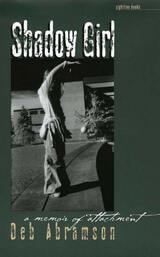
Shadow Girl
A Memoir Of AttachmentDeb Abramson
University of Iowa Press, 2002
In this psychological portrait of a family bound together by the uneasy permutations of love, Abramson relies not on sensationalist narrative but on a collection of the many small moments that glitter along the bumpy path of her life. Now and then she provides a broader, connecting perspective by stepping out of her story to reflect on the meaning of it all from the standpoint of the insightful, healed person she has managed—against all odds—to become.
Rich in metaphor and intimate detail, this is a lyrical story about moving from isolation toward connection, about seeing childhood not as a crippling refuge but as a point of departure, about discovering that it is possible to “have your shadows as well as your light.”

Shadow Patterns
Reflections on Fay Jones and His ArchitectureJeff Shannon
University of Arkansas Press, 2017
Winner, 2017 Ned Shank Award for Outstanding Preservation Publication from Preserve Arkansas
Shadow Patterns: Reflections on Fay Jones and His Architecture is a collection of critical essays and personal accounts of the man the American Institute of Architects honored with its highest award, the Gold Medal, in 1990.
The essays range from the academic, with appreciations and observations by Juhanni Palaasma and Robert McCarter and Ethel Goodstein-Murphree, to personal reflections by clients and friends. Two of Arkansas’s most accomplished writers, Roy Reed and Ellen Gilchrist, who each live in Fay Jones houses, have provided intimate portrayals of what it’s like to live in, and manage the quirks of, a “house built by a genius,” where “light is everywhere. . . . Everything is quiet, and everything is a surprise,” as Gilchrist says.
Through this compendium of perspectives, readers will learn about Jones’s personal qualities, including his strong will, his ability to convince other people of the rightness of his ideas, and yet his willingness, at times, to change his mind. We also enter into the work: powerful architecture like Stoneflower and Thorncrown Chapel and Pinecote Pavilion, along with private residences ranging from the modest to the monumental. And we learn about his relationship with his mentor, Frank Lloyd Wright.
Shadow Patterns broadens and enriches our understanding of this major figure in American architecture of the twentieth century.

Shadow of Shiloh
Major General Lew Wallace in the Civil WarGail Stephens
Indiana Historical Society Press, 2010

Shadow of the Racketeer
Scandal in Organized LaborDavid Witwer
University of Illinois Press, 2008
From a behind-the-scenes perspective, David Witwer describes how Pegler and his publisher, the politically powerful Roy W. Howard, shaped the news coverage of this scandal in ways that obscured the corrupt ties between employers and the mob while emphasizing the perceived menace of union leaders empowered by New Deal legislation that had legitimized organized labor. Pegler, Howard, and the rest of the mainstream press pointedly ignored evidence of the active role that business leaders took in the corruption, which badly tarnished the newly reborn labor movement.
Because he was more concerned with pursuing political gains for the conservative movement, Pegler's investigative journalism did little to reform union governance or organized crime's influence on labor unions. The union corruption scandal only undercut the labor movement. Pegler's continuing campaign against labor corruption framed the issue in ways that set the stage for postwar political defeats, culminating with the 1947 Taft-Hartley Act, which greatly limited the power of labor unions in the United States.
Demonstrating clearly and convincingly how journalism is wielded as a political weapon, Witwer studies a broad range of forces at play in the labor union scandal and its impact, including the influence of the press, organized crime, political corruption, and businessmen following their own economic imperatives.

Shadows on the Klamath
A Woman in the WoodsLouise Wagenknecht
Oregon State University Press, 2021
With Shadows on the Klamath, Louise Wagenknecht completes her trilogy about life in remote northwestern California. In this new work, she recounts her years in the Forest Service, starting as a clerical worker on the Klamath National Forest before moving to a field position where she did everything from planting trees to fighting fires.
Her story is about a Forest Service in transition, as forest management practices began to shift. Not least among these changes was the presence of women in the ranks—a change that many in the Forest Service resisted. Wagenknecht blends the personal and professional to describe land management in the West and the people who do it—their friendships, rivalries, and rural communities.
Anyone with an interest in the Klamath-Siskiyou region, or the history of women in natural resource agencies, or the many issues associated with industrial forestry, should read this book for its valuable firsthand perspective. General readers interested in the rural West and personal memoir will also be richly rewarded.
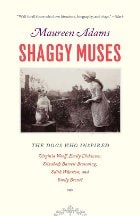
Shaggy Muses
The Dogs who Inspired Virginia Woolf, Emily Dickinson, Elizabeth Barrett Browning, Edith Wharton, and Emily BrontëMaureen Adams
University of Chicago Press, 2011
“You’ll call this sentimental—perhaps—but then a dog somehow represents the private side of life, the play side,” Virginia Woolf confessed to a friend. In this charming and engaging book, Maureen Adams celebrates this private, playful side telling readers about the relationships between five remarkable women writers and their dogs.
In Shaggy Muses, Adams explores the work and lives of these authors through the various roles played by their most devoted companions. Elizabeth Barrett Browning was rescued from a life of passivity and illness by Flush, a lively, possessive (and frequently dog-napped!) golden Cocker Spaniel. Emily Brontë’s fierce Mastiff mix, Keeper, provided a safe and loving outlet for the writer’s equally fierce spirit. Emily Dickinson found companionship with Carlo, the gentle, giant Newfoundland who soothed her emotional terrors. A troop of ever-faithful Pekingese warmed Edith Wharton’s lonely heart during her restless travels among Europe and America’s social and intellectual elite. And Virginia Woolf developed a deep attachment to Pinka, a black Cocker Spaniel who was both gift from her lover, Vita Sackville-West, and a link to her husband Leonard.
Based on diaries, letters, and other contemporary accounts—and featuring many illustrations of the writers and their dogs—these five miniature biographies allow unparalleled intimacy with women of genius in their hours of domestic ease and inner vulnerability.

Shake Terribly the Earth
Stories from an Appalachian FamilySarah Beth Childers
Ohio University Press, 2013
In a thoughtful, humorous voice born of Appalachian storytelling, Childers brings to life in these essays events that affected the entire region: large families that squeezed into tiny apartments during the Great Depression, a girl who stepped into a rowboat from a second-story window during Huntington’s 1937 flood, brothers who were whisked away to World War II and Vietnam, and a young man who returned home from the South Pacific and worked his life away as a railroad engineer.
Childers uses these family tales to make sense of her personal journey and find the joy and clarity that often emerge after the earth shakes terribly beneath us.
Shakespeare the Actor and the Purposes of Playing
Meredith Anne Skura
University of Chicago Press, 1993
Despite the obvious differences between our theater and Shakespeare's, sixteenth-century testimony suggests that the experience of acting has not changed much over the centuries. Beginning with a psychoanalytically informed account of acting today, Skura shows how this intense and ambivalent experience appears not only in literal references to acting in Shakespearean drama but also in recurring narrative concerns, details of language, and dramatic strategies used to engage the audience. Looking at the plays in the context of both public and private worlds outside the theater, Skura rereads the canon to identify new configurations in the plays and new ways of understanding theatrical self-consciousness in Renaissance England. Rich in theatrical, psychoanalytic, biographical, and historical insight, this book will be invaluable to students of Shakespeare and instructive to all readers interested in the dynamics of performance.

Shall I Say A Kiss?
The Courtship Letters of a Deaf Couple, 1936-1938Lennard J. Davis
Gallaudet University Press, 1999
Upon the death of his father Morris at age 82, Lennard Davis found among his effects a trove of letters, kept in careful chronological order, that dated from 1936. The letters ended in 1938, when Eva Weintrobe came to America to marry Morris, and they provide the core of Shall I Say A Kiss?, their courtship by correspondence. In his framing comments, Davis speculates that his parents met perhaps four or five times before they wed, a fact that heightens the importance of these letters to their fate. Davis illustrates vast contrasts between Morris and Eva, both to each other (Morris was 38; Eva was 26), and to themselves in later life as witnessed by their son. Where Davis saw his father brimming with confidence and a sense of superior intellect while his mother acted as the reserved, dutiful wife, he was startled to learn through their letters that she could be the shrewd questioning correspondent even as his father wrote as an unsure, imploring suitor.
Shall I Say A Kiss? opens a window into the lives of two working-class, Jewish, British, Deaf people in the 1930s. This striking book reveals a consistent, journal-like account of the “lived” experience of Deaf people during the tumultuous times just prior to World War II. Because the correspondence is mainly composed of Eva’s letters, the focus sharpens even further as a record of the life and opinions of a young, working-class, Deaf woman about to embark upon marriage and life in a new country. The challenges she faced, including de facto racial barriers for both deaf and Jewish immigrants, and the prospect of uniting with a man she knew mostly through his letters alone, make for a compelling and emotional trip through her life. Shall I Say A Kiss? serves as a singular social document and also as an engaging and often moving narrative that will win audiences among academics and romantics alike.

Shaping the Netherlandish Canon
Karel Van Mander's Schilder-BoeckWalter S. Melion
University of Chicago Press, 1992
of Italian art, Karel van Mander's Schilder-Boeck (or
Book on Picturing) has long been recognized for its critical
and historical influence—and yet, until now, no
comprehensive account of the book's conception, aims, and
impact has been available. In this in-depth analysis of the
content and context of Van Mander's work, Walter S. Melion
reveals the Schilder-Boeck's central importance to an
understanding of northern Renaissance and Baroque art.
By interpreting the terminology employed in the
Schilder-Boeck, Melion establishes the text's
relationship to past and contemporary art theory. Van Mander
is seen here developing his critical categories and then
applying them to Ancient, Italian, and Netherlandish artists
in order to mark changes within a culture and to characterize
excellence for each region. Thus Melion demonstrates how Van
Mander revised both the structure and critical language of
Vasari's Lives to refute the Italian's claims for the
superiority of the Tuscan style, and to clarify northern
artistic traditions and the concerns of Netherlandish
artists. A much needed corrective to the view that Dutch art
of the period was lacking in theory, Melion's work offers a
compelling account of a sixteenth- and seventeenth-century
theoretical and critical perspective and shows how this
perspective suggests a rereading of northern art.
Walter S. Melion is assistant professor of art history
at The Johns Hopkins University.