Results by title
5550 books match the query 'Biography & Autobiography' and 348 start with s
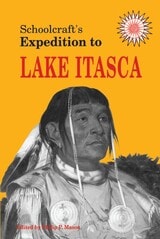
Schoolcraft's Expedition to Lake Itasca
Philip P. Mason
Michigan State University Press, 1993
Scientist, explorer, historian, and Indian agent Henry Rowe Schoolcraft's name must be included in the pantheon of early nineteenth-century adventurers who were in the vanguard of American expansion into the heart of the continent. While some, individuals like William Clark, Meriwether Lewis, John C. Fremont, and Kit Carson did not stop until they reached the Pacific Ocean, others took it as their task to explore the cast, unknown interior; chief among this group was Henry Rowe Schoolcraft. Originally issued by Michigan State University Press in 1958, Schoolcraft's Expedition to Lake Itasca contains a semi-official report of his 1832 trip to the upper Mississippi region. His purposes for exploring the area, now part of Minnesota, were to quell a feud between warring Chippewa and Sioux factions and to locate the Mississippi headwaters. Although he did not stop the fighting, Schoolcraft did discover the river's true source and left us an unsurpassed account of life in the region in the 1830s. Anyone interested in the early white exploration of the upper Midwest should own a copy of this valuable resource.
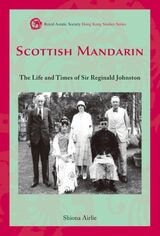
Scottish Mandarin
The Life and Times of Sir Reginald JohnstonShiona Airlie
Hong Kong University Press, 2012
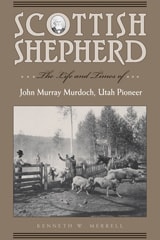
Scottish Shepherd
The Life and Times of John Murray Murdoch, Utah PioneerMerrell, Kenneth W
University of Utah Press, 2007
Murdoch embraced Mormonism and set out for the Utah Territory in 1852 with his wife, Ann, and their family. En route they suffered the deaths of their two young children. Two years later, John’s mother, Wee Granny, and Ann’s brother, James Steele, both perished, along with many others of the ill-fated Martin handcart company, as they attempted to immigrate to Salt Lake City.
Murdoch was a respected member of the community and participated in the military preparations and maneuvers against the U.S. Army in the 1857 Utah War. Eventually the family moved to the Heber valley as early settlers there. Murdoch later became one of Wasatch county’s first elected officials and helped establish the sheep-ranching industry in Utah. The 'everyman' aspect of John Murdoch’s life makes his a compelling story. It will fascinate anyone interested in the individuals who helped create Utah's history.
Winner of the Evans Handcart Award.

Scoundrels to the Hoosegow
Perry Mason Moments and Entertaining Cases from the Files of a Prosecuting AttorneyMorley Swingle
University of Missouri Press, 2007
I closed my direct examination of narcotics officer Bill Bohnert by asking, "Detective Bohnert, do you see in the courtroom today the man we just saw on the tape, selling the crack cocaine to Darren Bullard?"
Bohnert pointed to Robert Funt.
"He's right there. . . ."
I heard laughter in the courtroom. I glanced at the defendant, who had dutifully raised his hand.
The prisoners seated behind him were laughing. They recognized a Perry Mason moment when they saw one.
Bohnert continued, "He's the one with his hand raised in the air."
It has been said that the public prosecutor has more power over life, liberty, and reputation than any other person—a daunting proposition, but perhaps less intimidating when that official’s perspective is tempered by humor and compassion.
In Scoundrels to the Hoosegow, a veteran prosecutor who is also a consummate storyteller shares more than thirty entertaining legal stories drawn from real life, re-creating, with verve and wit, villains, heroes, and ordinary citizens. In cases both tragic and hilarious, Morley Swingle offers a behind-the-scenes look at the justice system, taking readers from the scene of the crime to the courtroom as he explores the worlds of judges, attorneys, police officers, and criminals.
Informed by a deep appreciation of Mark Twain, Swingle aims to do for his profession what Clemens did for riverboat piloting. He leads readers on an enjoyable romp through crime and punishment, while offering a clear exposition of legal points—from the subtleties of cross-examination to the role of plea bargaining.
In cases ranging from indecent exposure to conspiracy to commit murder, Swingle considers the fine line between pornography and obscenity and discusses sensitive issues surrounding first-degree murder and the death penalty. Whether describing a drunken but well-meaning probationer who frees the dogs on “death row” or the woman who tries to hire a reluctant hit man to dispose of her husband, he combines true crime and legal analysis with a healthy dose of humor—and shares the occasional “Perry Mason moment” in which a trial dramatically shifts direction.
Not since the author of Anatomy of a Murder, Robert Traver, wrote Small Town D.A. fifty years ago has an American prosecutor penned such a candid, revealing, and funny account of the job—an altogether satisfying book that sentences the reader to many hours of enjoyment.
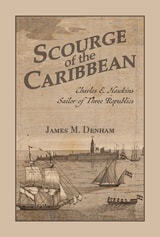
Scourge of the Caribbean
Charles E. Hawkins, Sailor of Three RepublicsJames M. Denham
University of Alabama Press, 2026
Illuminates the early American period in the upper Caribbean
Scourge of the Caribbean explores the mysterious and dramatic life and career of Charles E. Hawkins, a relatively unknown naval figure in early national America. Hawkins’s action-packed life at sea in his brief but accomplished career reveals much about an era when the rules of the maritime world, especially in the Caribbean, were in flux. For the US Navy and its commanders, the Caribbean presented an untold number of ambiguities: revolutionary juntas, privateering, piracy, and deadly disease, all within some of the most beautiful landscapes and waterscapes on earth.
Hawkins, from a well-connected family, took to the sea as a midshipman in the US Navy. Stalled promotion, economic setbacks, and blunted opportunities stymied the young officer, but ambition, combined with varied experiences and maritime pursuits, presented other prospects. At a time when individual agency mattered most, Hawkins stepped outside traditional boundaries of conduct on numerous occasions. Hawkins followed a mentor into the Mexican navy and became the most successful and feared raider of Spanish ships, earning the sobriquet “scourge” because of his raids along Cuba’s northern coast. In 1835, Hawkins joined the Texas independence movement against Mexico. Within the historical narrative are lurid accounts of adultery, affairs of honor, a bloody assassination, and complicated maritime legal battles. Based on prodigious research, this lively tale will appeal to those interested in maritime and early American history and the upper Caribbean in the Age of Sail.
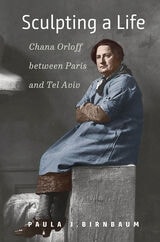
Sculpting a Life
Chana Orloff between Paris and Tel AvivPaula J. Birnbaum
Brandeis University Press, 2022
In Sculpting a Life, the first book-length biography of sculptor Chana Orloff (1888-1968), author Paula Birnbaum tells the story of a fiercely determined and ambitious woman who fled antisemitism in Ukraine, emigrated to Palestine with her family, then travelled to Paris to work in haute couture before becoming an internationally recognized artist. Against the backdrop of revolution, world wars, a global pandemic and forced migrations, her sculptures embody themes of gender, displacement, exile, and belonging. A major figure in the School of Paris, Orloff contributed to the canon of modern art alongside Picasso, Modigliani and Chagall.
Stories from her unpublished memoir enrich this life story of courage, perseverance, and extraordinary artistic accomplishments that take us through the aftermath of the Holocaust when Orloff lived between Paris and Tel Aviv. This biography brings new perspectives and understandings to Orloff’s multiple identities as a cosmopolitan émigré, woman, and Jew, and is a much-needed intervention into the narrative of modern art.
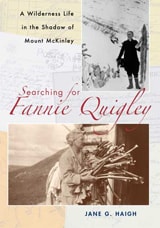
Searching for Fannie Quigley
A Wilderness Life in the Shadow of Mount McKinleyJane G. Haigh
Ohio University Press, 2007
At the age of 27, Fannie Sedlacek left her Bohemian homestead in Nebraska to join the gold rush to the Klondike. From the Klondike to the Tanana, Fannie continued north, finally settling in Katishna near Mount McKinley. This woman, later known as Fannie Quigley, became a prospector who staked her own claims and a cook who ran a roadhouse. She hunted and trapped and thrived for nearly forty years in an environment that others found unbearable.
Her wilderness lifestyle inspired many of those who met her to record their impressions of this self-sufficient woman, who died in 1944. To many of the 700,000 annual visitors to Denali National Park she is a symbol of the enduring spirit of the original pioneers.
Searching for Fannie Quigley: A Wilderness Life in the Shadow of Mount McKinley goes beyond the mere biographical facts of this unique woman’s journey. It also tells historian Jane G. Haigh’s own story of tracking and tracing the many paths that Fannie Quigley’s intriguing life took. Uncovering remote clues, digging through archives, and listening to oral accounts from a wide array of sources, Haigh has fashioned this rich lode into a compelling narrative.
In Searching for Fannie Quigley, Haigh separates fact from fiction to reveal the true story of this highly mythologized pioneer woman.
Searchlight
The Camp That Didn't FailHarry Reid
University of Nevada Press, 2007
Second Life
A West Bank MemoirJanet Gunn
University of Minnesota Press, 1995

Second-Place Mo
Morris Udall ’76 and the Twilight of Democratic LiberalismJon Krampner
Michigan State University Press, 2027
Second-Place Mo examines the rightward drift of the Democratic Party that began in earnest with Jimmy Carter’s defeat of Morris “Mo” Udall for the Democratic presidential nomination in 1976—a turning point that set the party toward a free-market economy and away from economic liberalism.
The candidacy of Mo Udall, a congressman from Arizona, was the first time in almost a century that a member of the House of Representatives had a chance to become president; it also promised a continuation of the Democrats’ tradition of New Deal liberalism, which had been the party’s guiding star since the 1930s. But the Udall campaign was rocked by events beyond its control, its own mistakes, and the whirlwind candidacy of Jimmy Carter, who went on to win the nomination and the presidency.
Mo Udall chalked up eight second-place primary finishes without a victory. His candidacy was memorable for his dogged persistence, sunny good humor, and unabashed liberalism. This book chronicles a Democratic primary filled with memorable candidates, including the militarist and arch-Zionist Scoop Jackson; the newly minted more-populist-than-thou Fred Harris; the Hamlet-like figures of Birch Bayh and Hubert Humphrey; the fading, injured apostle of the Confederate South, George Wallace; the affable yet ineffective Kennedy in-law, Sargent Shriver; the anti-abortion housewife from Long Island, Ellen McCormack; and others. All are vividly brought to life—including Jimmy Carter, a thrower of sharp elbows before he became the beloved, humanitarian former president—set against the backdrop of Udall’s doomed effort.
Second-Place Mo examines why Udall’s 1976 campaign failed and what lessons his near misses hold for contemporary politics. Along the way, it recovers a figure whose principled liberalism and self-deprecating humor offer an instructive contrast to the politics of our own moment.
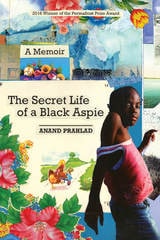
Secret Life of a Black Aspie
A MemoirAnand Prahlad
University of Alaska Press, 2017
For the first four years of his life, Prahlad didn’t speak. But his silence didn’t stop him from communicating—or communing—with the strange, numinous world he found around him. Ordinary household objects came to life; the spirits of long-dead slave children were his best friends. In his magical interior world, sensory experiences blurred, time disappeared, and memory was fluid. Ever so slowly, he emerged, learning to talk and evolving into an artist and educator. His journey takes readers across the United States during one of its most turbulent moments, and Prahlad experiences it all, from the heights of the Civil Rights Movement to West Coast hippie enclaves to a college town that continues to struggle with racism and its border state legacy.
Rooted in black folklore and cultural ambience, and offering new perspectives on autism and more, The Secret Life of a Black Aspie will inspire and delight readers and deepen our understanding of the marginal spaces of human existence.
Secretaries of the Moon
The Letters of Wallace Stevens and José Rodriguez FeoBeverly Coyle and Alan Filreis, eds.
Duke University Press, 1986
Coyle and Filreis present the entire extant correspondence between the two men. The fifty-one Rodriguez Feo letters and ten of the numerous Stevens letters are printed here for the first time, and the exchange between the two is unusually complete. The work includes a critical introduction and complete annotation of the letters.

Secrets I Won't Take with Me
Home, War, and the Struggle for Peace in IsraelYossi Beilin
University of Alabama Press, 2025
An Israeli political leader’s riveting first-hand account of pivotal moments from recent Israeli history, including the Oslo Peace Accords, the founding of the Birthright Initiative, the assassination of Yitzhak Rabin, the rise of the Israeli far right, and more
In Secrets I Won't Take with Me, Yossi Beilin, a key Israeli political and ministerial leader, offers an intimate and candid memoir that chronicles pivotal events in the nation’s recent history. From the crucible of its founding to the complexities of the modern era, Beilin reveals an insider’s perspective and previously undocumented insights about the events that have and continue to shape Israel.
Beginning his career as an academic and a journalist, Beilin became the spokesperson of the Labor Party in 1977. Among his many career highlights include the chairmanship of the Meretz-Yachad Party, Minister of Justice, Minister of Religious Affairs, and Deputy Finance Minister, and perhaps most significantly, as Deputy Foreign Minister during the Israel-PLO Oslo Peace Accords. As a key architect of the Oslo Peace Accords, he shares unprecedented details of the negotiations that defined an era.
Beyond diplomacy, Beilin illuminates his role in shaping Israel’s identity, from steering Israel away from its alliance with apartheid South Africa to the foundation of the influential Birthright program. With unflinching honesty, Beilin navigates the triumphs and tragedies of a nation, from the euphoria of the Six-Day War to the heartbreak of Yitzhak Rabin’s assassination. A deeply personal memoir of one man’s life interwoven with a nation’s, Beilin’s stunning account of his career serves as a masterful tour d’horizon of Israel’s recent past and evolving future.

Secrets and Rivals
Wartime Letters and the Parents I Never KnewR. Bruce Larson
University of Missouri Press, 2015
Reading through the letters, he is drawn into his parents’ courtship amid the hardships of separation and war. Beyond the tumultuous romance, Larson finds that he barely recognizes his father, whom he knew only as distant and impassive. He uncovers shocking truths about his mother, Ruth, whom family lore had pigeonholed as sweetly pious.
At the time of the letters, Bob is a young Coast Guard clerk fighting off depression with thoughts of his dream girl back home. Back in Minnesota, Ruth passes the days adrift in romantic fantasies and liaisons with local admirers. Bob’s suspicions about Ruth and his obsession with her from afar threaten the young man’s fragile hold on his sanity, but he will not give her up. Decades later, their son comes to feel a tenderness for both his parents and to understand how their losses, fears, and reluctance can transform and refashion family bonds.

Secrets of the Sun
A MemoirMako Yoshikawa
The Ohio State University Press, 2024
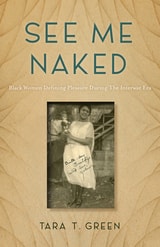
See Me Naked
Black Women Defining Pleasure in the Interwar EraTara T. Green
Rutgers University Press, 2022
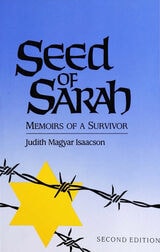
Seed of Sarah
Memoirs of a SurvivorJudith Magyar Isaacson
University of Illinois Press, 1990
Seeds of Disquiet
Cheryl Heppner
Gallaudet University Press, 1992
In her autobiography Seeds of Disquiet, Cheryl Heppner writes of experiencing severe hearing loss twice. Spinal meningitis caused a profound loss of hearing when she was six, and for the next 18 years she worked hard to live the life of a “normal” hearing person. Through exhaustive work in speech therapy and speechreading, she excelled in school and college, performing Herculean feats without the assistance of trained interpreters or notetakers.
Then, when she was 25, two strokes left her completely deaf. For the next 20 years she worked to recreate her life through sign language and the Deaf community. The process stunned her by revealing how much she had missed before. Initially embittered, Cheryl Heppner later went on to use her astonishing energy as an advocate for deaf and hard of hearing people.
Seeds of Disquiet celebrates her accomplishments, the most significant of which, perhaps, was her reconciliation with her loved ones from her former life with her new outlook.
Seedtime III
Notebooks, 1995–1998Phlippe Jaccottet
Seagull Books, 2021
Seedtime III, which brings this series to a close, records numerous fleeting thoughts, ephemeral experiences, and philosophical observations from a renowned poet well into his seventies, charting the single steps—sometimes forwards, sometimes back—taken in a lifelong attempt to transcend the limits of art. The inconclusive nature of the notebook entries, their tentativeness and lack of resolution, renders them as intriguing and evocative as some of Jaccottet’s best works. In them readers will find a life full of the kind of contemplation that attracts yet eludes most of us in our daily existence.

Seeing Baya
Portrait of an Algerian Artist in ParisAlice Kaplan
University of Chicago Press, 2024
On a flower farm in colonial Algeria, a servant and field worker known as Baya escaped the drudgery of her labor by coloring the skirts in fashion magazines. Three years later, in November 1947, her paintings and fanciful clay beasts were featured in a solo show in Paris. She wasn’t yet sixteen years old. In this first biography of Baya, Alice Kaplan tells the story of a young woman seemingly trapped in subsistence who becomes a sensation in the French capital, then mysteriously fades from the history of modern art—only to reemerge after independence as an icon of Algerian artistic heritage.
The toast of Paris for the 1947 season, Baya inspired colonialist fantasies about her “primitive” genius as well as genuine appreciation. She was featured in newspapers, on the radio, and in a newsreel; her art was praised by Breton and Camus, Marchand and Braque. At the dawn of Algerian liberation, her appearance in Paris was used to stage the illusion of French-Algerian friendship, while horrific French massacres in Algeria were still fresh in memory.
Kaplan uncovers the central figures in Baya’s life and the role they played in her artistic career. Among the most poignant was Marguerite Caminat-McEwen-Benhoura, who took Baya from her sister’s farm to Algiers, where Baya worked as Marguerite’s maid and was given paint and brushes. A complex and endearing character, Marguerite—and her Pygmalion ambitions—was decisive in shaping Baya’s destiny. Kaplan also looks closely at Baya’s earliest paintings with an eye to their themes, their palette and design, and their enduring influence.
In vivid prose that brings Baya’s story into the present, Kaplan’s book, the fruit of scrupulous research in Algiers, Blida, Paris, and Provence, allows us to see in a whole new light the beloved artist who signed her paintings simply “Baya.”
Seeing Language in Sign
The Work of William C. StokoeJane Maher
Gallaudet University Press, 2010
In 1955 William C. Stokoe arrived at Gallaudet College (later Gallaudet University) to teach English where he was first exposed to deaf people signing. While most of his colleagues dismissed signing as mere mimicry of speech, Stokoe saw in it elements of a distinctive language all its own. Seeing Language in Sign traces the process that Stokoe followed to prove scientifically and unequivocally that American Sign Language (ASL) met the full criteria of linguistics—phonology, morphology, syntax, semantics and use of language—to be classified a fully developed language.
This perceptive account dramatically captures the struggle Stokoe faced in persuading the establishment of the truth of his discovery. Other faculty members ridiculed or reviled him, and many deaf members of the Gallaudet community laughed at his efforts. Seeing Language in Sign rewards the reader with a rich portrayal of an undaunted advocate who, like a latter-day Galileo, pursued his vision doggedly regardless of relentless antagonism. He established the Linguistics Research Laboratory, then founded the journal Sign Language Studies to sustain an unpopular dialogue until the tide changed. His ultimate vindication corresponded with the recognition of the glorious culture and community that revolves around Deaf people and their language, ASL.
Seeing Sideways
A Memoir of Music and MotherhoodBy Kristin Hersh
University of Texas Press, 2021
Doony, Ryder, Wyatt, Bodhi. The names of Kristin Hersh’s sons are the only ones included in her new memoir, Seeing Sideways. As the book unfolds and her sons’ voices rise from its pages, it becomes clear why: these names tell the story of her life.
This story begins in 1990, when Hersh is the leader of the indie rock group Throwing Muses, touring steadily, and the mother of a young son, Doony. The chapters that follow reveal a woman and mother whose life and career grow and change with each of her sons: the story of a custody battle for Doony is told alongside that of Hersh’s struggles with her record company and the resulting PTSD; the tale of breaking free from her record label stands in counterpoint to her recounting of her pregnancy with Ryder; a period of writer’s block coincides with the development of Wyatt as an artist and the family’s loss of their home; and finally, soon after Bodhi’s arrival, Hersh and her boys face crises from which only strange angels can save them. Punctuated with her own song lyrics, Seeing Sideways is a memoir about a life strange enough to be fiction, but so raw and moving that it can only be real.
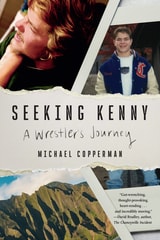
Seeking Kenny
A Wrestler's JourneyMichael Copperman
University of Iowa Press, 2026
Michael Copperman considers the life and untimely death of Cox, reconstructing memories of his former training partner with the help of Cox’s family, friends, fans, and fellow wrestlers. Seeking Kenny is, in part, an ode to a storied athlete. But it’s also a cautionary tale about the mental and bodily extremes Cox demanded for his achievements. Copperman asks what it means to live past one’s “glory days,” and what roles loss, grief, faith, and memory play when athletes leave pieces of themselves behind.

Seeking the One Great Remedy
Francis George Shaw and Nineteenth-Century ReformLorien Foote
Ohio University Press, 2003
A radical abolitionist and early feminist, Francis George Shaw (1809–1882) was a prominent figure in American reform and intellectual circles for five decades. He rejected capitalism in favor of a popular utopian socialist movement; during the Civil War and Reconstruction, he applied his radical principles to the Northern war effort and to freedmen’s organizations.
A partnership with Henry George in the late 1870s provided an international audience for Shaw’s alternative vision of society. Seeking the One Great Remedy is the biography of this remarkable and influential man. In compelling detail, author Lorien Foote depicts the many aspects and exploits of the Shaw family. Their activities provide a perspective on the course of American reform that calls into question previous interpretations of the reform movement of this period.
Francis George Shaw is perhaps best known as the father of Robert Gould Shaw, subject of the movie Glory. Francis and his wife, Sarah Blake Shaw, achieved considerable notoriety for their activities, including their effort to shape public opinion during the Civil War. Turning the tragic death of their son into a public relations and propaganda triumph, they altered Northern opinion about the war and shaped a historical perception of the famous Massachusetts Fifty-fourth that continues today.
Seeking the One Great Remedy argues that social radicalism was pervasive among elite reformers before and after the Civil War and finds in the dramatic story of Francis George Shaw a model of that cause.

Selected Letters of Stéphane Mallarmé
Stéphane Mallarmé
University of Chicago Press, 1988
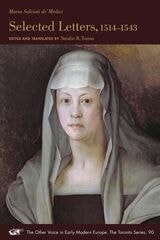
Selected Letters, 1514-1543
Maria Salviati de’ Medici
Iter Press, 2022
In recent years, there has been an upsurge of interest in Maria Salviati de’ Medici, specifically, in her role in Medici governance and her relationships with other members of the Medici court. Maria Salviati’s surviving correspondence documents a life spent close to the centers of Medici power in Florence and Rome, giving witness to its failures, resurrection, and eventual triumph. Presented here for the first time in English, this book is a representative sample of Maria’s surviving letters that document her remarkable life through a tumultuous period of Italian Renaissance history. While she earned the exasperation of some, she gained the respect of many more. Maria ended her life as an influential dowager, powerful intercessor for local Tuscans of all strata, and wise elder in Duke Cosimo I’s court. The first critical, analytical, biographical work on Maria Salviati de’ Medici’s life and letter-writing in English.
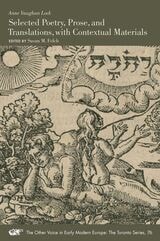
Selected Poetry, Prose, and Translations, with Contextual Materials
Anne Vaughan Lock
Iter Press, 2021
This volume provides a collection of Lock’s works presented in modern spelling, and it includes additional contemporary materials that place her voice in the larger context of the Tudor period, offering insight into the intertwined complexities of political, social, and religious life in sixteenth-century England.
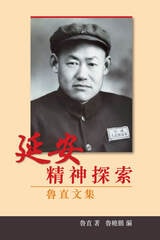
Selected Writings of Lu Zhi
Zhi Lu
Hong Kong University Press, 2026
A Chinese-language collection of writing from Lu Zhi, who devoted his life to the revolutionary cause and published numerous articles in Jiefang Daily,People’s Daily, and other newspapers.
Selected Writings of Lu Zhi is divided into three parts, featuring the author’s views on the construction of the Shaan-Gan-Ning Border Region, political and cultural work in the army, and the economic development of the new China. Lu Zhi’s writings not only embody the “Yan’an Spirit” but also allow readers to gain insight into his personal experiences and the revolutionary atmosphere in China during the 1940s and 1950s. This collection also provides scholars with valuable primary historical materials and serves as an important reference for the study of China’s revolutionary history and the development of socialist economic construction.
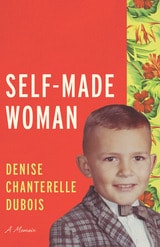
Self-Made Woman
A MemoirDenise Chanterelle DuBois
University of Wisconsin Press, 2017
Defying all expectations, DuBois didn't crash and burn. Embracing her identity as a woman, she remade herself. Writing with resolute honesty and humor, she confronts both her past and her present to tell an American story of self-discovery.

Self-Portrait in Words
Collected Writings and Statements, 1903-1950Max Beckmann
University of Chicago Press, 1997
"Barbara Copeland Buenger . . . has done an excellent job of editing and annotating Beckmann's voluminous private and public writings."—Andrea Barnet, New York Times Book Review
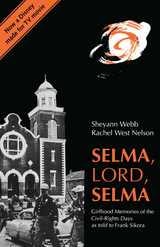
Selma, Lord, Selma
Girlhood Memories of the Civil Rights DaysSheyann Webb
University of Alabama Press, 1997
Witness the Civil Rights Movement through the eyes of two children.
Sheyann Webb was eight years old and Rachel West was nine when Dr. Martin Luther King Jr. arrived in Selma, Alabama, on January 2, 1965. He came to organize non-violent demonstrations against discriminatory voting laws. Selma, Lord, Selma is their firsthand account of the events from that turbulent winter of 1965--events that changed not only the lives of these two little girls but the lives of all Alabamians and all Americans. From 1975 to 1979, award-winning journalist Frank Sikora conducted interviews with Webb and West, weaving their recollections into this luminous story of fear and courage, struggle and redemption that readers will discover is Selma, Lord, Selma.
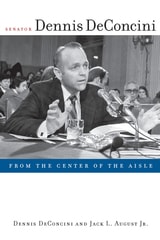
Senator Dennis DeConcini
From the Center of the AisleDennis DeConcini and Jack L. August, Jr.
University of Arizona Press, 2006
A vigilant centrist, who got results by building coalitions on both sides of the aisle, Senator DeConcini’s approach was not bound to strict party alliances but was deeply rooted in the independent political environment of Arizona. During his career, he sponsored legislation limiting the sale of assault weapons, which provoked the National Rifle Association. He confounded Democratic Party regulars by supporting Clarence Thomas during the controversial confirmation hearings and again split with his party in his support for William Rehnquist’s nomination to Chief Justice. In 1980 he voted for Ronald Reagan, but in 1993 he cast the swing vote for President Bill Clinton’s tax bill, which was strongly opposed by Republicans in Arizona.
This political memoir will be of interest to anyone concerned with the inner workings of the U.S. Senate or Arizona politics and offers relevant insights into today’s political climate.

Senator Howard Cannon of Nevada
A BiographyMichael Vernetti
University of Nevada Press, 2015
Born to a devout Mormon family in a small farming community in southwest Utah, Cannon served in the Army Air Force during World War II and emerged from the war as a hero. Soon he was part of the postwar migration of ambitious, adventurous Americans to the booming desert city of Las Vegas, where he practiced law and entered local politics. In 1958 he was elected to the U.S. Senate and joined a group of influential young Democratic senators who were to play a major role in shaping the country’s future. His service on the Aeronautical and Space Sciences Committee and the Armed Services Committee led to major changes in the air travel industry, including deregulation, and to increased support for national military preparedness.
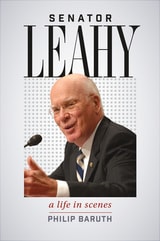
Senator Leahy
A Life in ScenesPhilip Baruth
University Press of New England, 2017
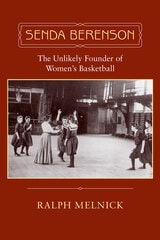
Senda Berenson
The Unlikely Founder of Women's BasketballRalph Melnick
University of Massachusetts Press, 2007
In the winter of 1892 the new instructor of physical training at Smith College, a diminutive young woman with a heavy accent, introduced her students to an adaptation of James Naismith's new game of Basket Ball. An immediate if unexpected success, the game spread to other women's schools across the country, and soon its founder, Senda Berenson (1868–1954), was called upon to codify its distinctive set of gender-specific rules. Emphasizing team passing and position over individual play, the version she instituted defined women's basketball for seventy years and eventually earned her the honor of being the first female elected to the Basketball Hall of Fame.
Yet as Ralph Melnick points out, Berenson's pioneering role in the history of women's athletics was more a matter of accident than destiny. A Jewish immigrant from Lithuania, prone to ill health throughout her childhood, she enrolled in the Boston Normal School for Gymnastics in the fall of 1890 with the hope of strengthening herself so that she could pursue a career as a pianist, dancer, or painter. Instead she soon became both a practitioner and a proponent of a new approach to women's physical education, one aimed at providing a “natural outlet of the play instinct,” developing “endurance and physical courage” as well as “quickness of thought and action,” and promoting through teamwork the “power of organization” women needed to achieve full social equality.
Extending her work into the factories and blighted urban tenements of America, Berenson later won the recognition of Jane Addams, Margaret Sanger, and other progressive reformers. Believing that “Americans have forgotten how to play,” she wanted to teach others to live “joyfully—beautifully.” For Berenson, the physical culture of exercise and games, played not for competition but for personal and social development as well as sheer enjoyment, was but another form of art.
This convergence of athletics and aesthetics was hardly surprising, Melnick explains, because the single most important influence on Senda Berenson's life was her brother, the renowned art critic and connoisseur Bernard Berenson. The two siblings wrote frequently to each other over the course of their lives, and the author draws heavily on their correspondence throughout the book to create an intimate and insightful portrait of a remarkable American woman.
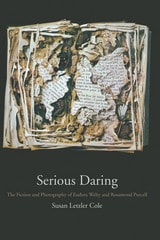
Serious Daring
The Fiction and Photography of Eudora Welty and Rosamond PurcellSusan Letzler Cole
University of Arkansas Press, 2016
Serious Daring is the story of the complementary journeys of two American women artists, celebrated fiction writer Eudora Welty and internationally acclaimed photographer Rosamond Purcell, each of whom initially practiced, but then turned from, the art form ultimately pursued by the other.
For both Welty and Purcell, the art realized is full of the art seemingly abandoned. Welty’s short stories and novels use images of photographs, photographers, and photography. Purcell photographed books, texts, and writing.
Both women make compelling art out of the seeming tension between literary and visual cultures. Purcell wrote a memoir in which photographs became endnotes. Welty re-emerged as a photographer through the publication of four volumes of what she called her “snapshots,” magnificent black-and-white photographs of small-town Mississippi and New York City life.
Serious Daring is a fascinating look at how the road not taken can stubbornly accompany the chosen path, how what is seemingly left behind can become a haunting and vital presence in life and art.
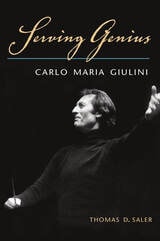
Serving Genius
Carlo Maria GiuliniThomas D. Saler
University of Illinois Press, 2020
Serving Genius tells the life story of Carlo Maria Giulini, one of the most renowned and beloved conductors of the twentieth century. Detailing Giulini's extraordinary professional career, Thomas D. Saler also chronicles Giulini's personal life, including his musical awakening while growing up amid the spectacular beauty of the Dolomite mountains, his years as a student in Rome's Academy of St. Cecilia, his conscription into the Italian army during World War II, his nine months in hiding for his anti-fascist and pacifist beliefs, and his selfless devotion to his wife, Marcella.
A humble master who shunned the limelight, Giulini took a deeply emotional and subjective approach to making music. Saler provides uniquely detailed analysis of Giulini's nuanced musicianship and the way he conveyed that musicianship to the orchestra through physical gestures. Meditating on the very art of conducting at which Giulini excelled, Saler discusses each of the conductor's major musical appointments, including stints with the Chicago Symphony Orchestra, Philharmonia Orchestra, Vienna Symphony, and Los Angeles Philharmonic. The book also addresses his repertoire of choice, leadership style, and moral framework.
Drawing on extensive interviews with Giulini's family, music critics, arts administrators, orchestra members, and collaborating soloists, Serving Genius draws out the personal amid the professional life of this giant among twentieth-century conductors.

Setsuko's Secret
Heart Mountain and the Legacy of the Japanese American IncarcerationShirley Ann Higuchi
University of Wisconsin Press, 2020
Only after a serious cancer diagnosis did Shirley's mother, Setsuko, share her vision for a museum at the site of the former camp, where she had been donating funds and volunteering in secret for many years. After Setsuko's death, Shirley skeptically accepted an invitation to visit the site, a journey that would forever change her life and introduce her to a part of her mother she never knew.
Navigating the complicated terrain of the Japanese American experience, Shirley patched together Setsuko's story and came to understand the forces and generational trauma that shaped her own life. Moving seamlessly between family and communal history, Setsuko's Secret offers a clear window into the "camp life" that was rarely revealed to the children of the incarcerated. This volume powerfully insists that we reckon with the pain in our collective American past.
Seven American Poets from MacLeish to Nemerov
An IntroductionDenis Donoghue
University of Minnesota Press, 1975

Seven American Women Writers of the Twentieth Century
An IntroductionMaureen Howard, Editor
University of Minnesota Press, 1977
Seven American Women Writers of the Twentieth Century was first published in 1977. Minnesota Archive Editions uses digital technology to make long-unavailable books once again accessible, and are published unaltered from the original University of Minnesota Press editions.
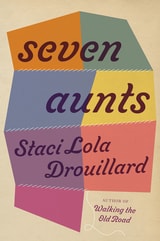
Seven Aunts
Staci Lola Drouillard
University of Minnesota Press, 2022
Part memoir, part cultural history, these memories of seven aunts holding home and family together tell a crucial, often overlooked story of women of the twentieth century
They were German and English, Anishinaabe and French, born in the north woods and Midwestern farm country. They moved again and again, and they fought for each other when men turned mean, when money ran out, when babies—and there were so many—added more trouble but even more love. These are the aunties: Faye, who lived in California, and Lila, who lived just down the street; Doreen, who took on the bullies taunting her “mixed-blood” brothers and sisters; Gloria, who raised six children (no thanks to all of her “stupid husbands”); Betty, who left a marriage of indenture to a misogynistic southerner to find love and acceptance with a Norwegian logger; and Carol and Diane, who broke the warped molds of their own upbringing.
From the fabric of these women’s lives, Staci Lola Drouillard stitches a colorful quilt, its brightly patterned pieces as different as her aunties, yet alike in their warmth and spirit and resilience, their persistence in speaking for their generation. Seven Aunts is an inspired patchwork of memoir and reminiscence, poetry, testimony, love letters, and family lore.
In this multifaceted, unconventional portrait, Drouillard summons ways of life largely lost to history, even as the possibilities created by these women live on. Unfolding against a personal view of the settler invasion of the Midwest by men who farmed and logged, fished and hunted and mined, it reveals the true heart and soul of that history: the lives of the women who held together family, home, and community—women who defied expectations and overwhelming odds to make a place in the world for the next generation.

Seven Summers
A Naturalist Homesteads in the Modern WestJulia Corbett
University of Utah Press, 2013
Seven Summers is the story of a naturalist-turned-professor who flees city life each summer with her pets and power tools to pursue her lifelong dream—building a cabin in the Wyoming woods. With little money and even less experience, she learns that creating a sanctuary on her mountain meadow requires ample doses of faith, patience, and luck. This mighty task also involves a gradual and sometimes painful acquisition of flexibility and humility in the midst of great determination and naive enthusiasm.
For Corbett, homesteading is not about wresting a living from the land, but respecting and immersing herself in it—observing owls and cranes, witnessing seasons and cycles, and learning the rhythms of wind and weather in her woods and meadow. The process changes her in unexpected ways, just as it did for women homesteaders more than a century ago. The more she works with wood, the more she understands the importance of “going with the grain” in wood as well as in life. She must learn to let go, to move through loss and grief, to trust her voice, and to balance independence and dependence. Corbett also gains a better understanding of her fellow Wyomingites, a mix of ranchers, builders, gas workers, and developers, who share a love of place but often hold decidedly different values. This beautifully written memoir will appeal to readers who appreciate stories of the western landscape, independent women, or the appreciation of the natural world.

Seven Wheelchairs
A Life beyond PolioGary Presley
University of Iowa Press, 2008
Presley is no wheelchair hero, no inspiring figure preaching patience and gratitude. An army brat turned farm kid, newly arrived in a conservative rural community, he was immobilized before he could take the next step toward adulthood. Prevented, literally, from taking that next step, he became cranky and crabby, anxious and alienated, a rolling responsibility crippled not just by polio but by anger and depression, “a crip all over, starting with the brain.” Slowly, however, despite the limitations of navigating in a world before the Americans with Disabilities Act, he builds an independent life.
Now, almost fifty years later, having worn out wheelchair after wheelchair, survived post-polio syndrome, and married the woman of his dreams, Gary has redefined himself as Gimp, more ready to act out than to speak up, ironic, perceptive, still cranky and intolerant but more accepting, more able to find joy in his family and his newfound religion. Despite the fact that he detests pity, can spot condescension from miles away, and refuses to play the role of noble victim, he writes in a way that elicits sympathy and understanding and laughter. By giving his readers the unromantic truth about life in a wheelchair, he escapes stereotypes about people with disabilities and moves toward a place where every individual is irreplaceable.

Seven Words for Wind
Essays and Field Notes from Alaska's Pribilof IslandsSumner MacLeish
University of Alaska Press, 2008
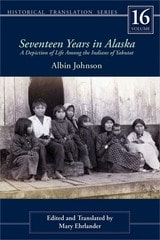
Seventeen Years in Alaska
A Depiction of Life Among the Indians of YakutatAlbin Johnson
University of Alaska Press, 2014
Seventeen Years in Alaska is Johnson’s eyewitness account of this tumultuous time. It is a captivating narrative of an ancient people facing rapid change and of the missionaries working to stem a corrupting tide. His journals offer a candid look at the beliefs and lives of missionaries, and they ultimately reveal the profound effect that he and other missionaries had on the Tlingit. Tracing nearly two decades of spiritual hopes and earthbound failures, Johnson’s memoir is a fascinating portrait of a rapidly changing world in one of the most far-flung areas of the globe.

Sewall Wright and Evolutionary Biology
William B. Provine
University of Chicago Press, 1986
"In Sewall Wright and Evolutionary Biology . . . Provine has produced an intellectual biography which serves to chart in considerable detail both the life and work of one man and the history of evolutionary theory in the middle half of this century. Provine is admirably suited to his task. . . . The resulting book is clearly a labour of love which will be of great interest to those who have a mature interest in the history of evolutionary theory."-John Durant, ;ITimes Higher Education Supplement;X
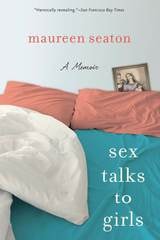
Sex Talks to Girls
A MemoirMaureen Seaton
University of Wisconsin Press, 2008

Sex, Death, and Minuets
Anna Magdalena Bach and Her Musical NotebooksDavid Yearsley
University of Chicago Press, 2019
Sex, Death, and Minuets offers the first in-depth study of these notebooks and their owner, reanimating Anna Magdalena as a multifaceted historical subject—at once pious and bawdy, spirited and tragic. In these pages, we follow Magdalena from young and flamboyant performer to bereft and impoverished widow—and visit along the way the coffee house, the raucous wedding feast, and the family home. David Yearsley explores the notebooks’ more idiosyncratic entries—like its charming ditties on illicit love and searching ruminations on mortality—against the backdrop of the social practices and concerns that women shared in eighteenth-century Lutheran Germany, from status in marriage and widowhood, to fulfilling professional and domestic roles, money, fashion, intimacy and sex, and the ever-present sickness and death of children and spouses. What emerges is a humane portrait of a musician who embraced the sensuality of song and the uplift of the keyboard, a sometimes ribald wife and oft-bereaved mother who used her cherished musical notebooks for piety and play, humor and devotion—for living and for dying.
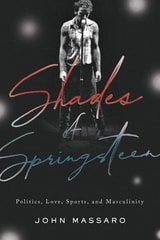
Shades of Springsteen
Politics, Love, Sports, and MasculinityJohn Massaro
Rutgers University Press, 2021
In this unique blend of memoir and musical analysis, John Massaro reflects on his experiences as a lifelong fan of The Boss and one of the first professors to design a college course on Springsteen’s work. Focusing on five of the Jersey rocker’s main themes—love, masculinity, sports, politics, and the power of music—he shows how they are represented in Springsteen’s lyrics and shares stories from his own life that powerfully resonate with those lyrics. Meanwhile, paying tribute to Springsteen’s inclusive vision, he draws connections among figures as seemingly disparate as James Joyce, Ta-Nehisi Coates, Thomas Aquinas, Bobby Darin, and Lin-Manuel Miranda. Shades of Springsteen offers a deeply personal take on the musical and cultural legacies of an American icon.
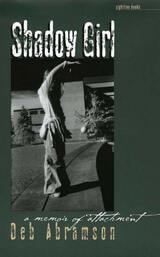
Shadow Girl
A Memoir Of AttachmentDeb Abramson
University of Iowa Press, 2002
In this psychological portrait of a family bound together by the uneasy permutations of love, Abramson relies not on sensationalist narrative but on a collection of the many small moments that glitter along the bumpy path of her life. Now and then she provides a broader, connecting perspective by stepping out of her story to reflect on the meaning of it all from the standpoint of the insightful, healed person she has managed—against all odds—to become.
Rich in metaphor and intimate detail, this is a lyrical story about moving from isolation toward connection, about seeing childhood not as a crippling refuge but as a point of departure, about discovering that it is possible to “have your shadows as well as your light.”