Results by title
3388 books match the query 'Fiction' and 233 start with s
Separate from the World
An Ohio Amish MysteryP. L. Gaus
Ohio University Press, 2008
The investigations of these two deaths become intertwined as Professor Branden again teams up with his colleagues Pastor Cal Troyer and Sheriff Bruce Robertson to seek explanations for these bizarre events.
Separate from the World is a story of a rift between two Amish factions, one that favors the use of medicine and that participates in a college study of genetic traits particular to the Amish community, and the other that rejects any outside influence.
Once more, P. L. Gaus takes us inside a separate culture and, in a manner both gentle and grim, highlights the complex relationship of the Amish and the “English” as they live inside or outside each other’s orbits.
September
MirageThomas Lehr
Seagull Books, 2013

Sequels
An Annotated Guide to Novels in Series, Fourth EditionAmerican Library Association, 2009
Serious Daring
The Fiction and Photography of Eudora Welty and Rosamond PurcellSusan Letzler Cole
University of Arkansas Press, 2016
Serious Daring is the story of the complementary journeys of two American women artists, celebrated fiction writer Eudora Welty and internationally acclaimed photographer Rosamond Purcell, each of whom initially practiced, but then turned from, the art form ultimately pursued by the other.
For both Welty and Purcell, the art realized is full of the art seemingly abandoned. Welty’s short stories and novels use images of photographs, photographers, and photography. Purcell photographed books, texts, and writing.
Both women make compelling art out of the seeming tension between literary and visual cultures. Purcell wrote a memoir in which photographs became endnotes. Welty re-emerged as a photographer through the publication of four volumes of what she called her “snapshots,” magnificent black-and-white photographs of small-town Mississippi and New York City life.
Serious Daring is a fascinating look at how the road not taken can stubbornly accompany the chosen path, how what is seemingly left behind can become a haunting and vital presence in life and art.
Serious Reflections During the Life and Surprising Adventures of Robinson Crusoe with his Vision of the Angelick World
The Stoke Newington EditionDaniel Defoe
Bucknell University Press, 2022
Setting the Lawn on Fire
A NovelMack Friedman
University of Wisconsin Press, 2007
Setting the Lawn on Fire, the first novel by critically acclaimed writer Mack Friedman, trails its narrator through his obsessions with sex, drugs, art, and poison. Ivan, a young Jewish boy from Milwaukee, embarks on a journey of sexual discovery that leads him from Wisconsin to Alaska, Philadelphia, and Mexico through stints as a fishery worker, artist, and finally a hustler who learns to provide the blank canvas for other people’s dreams. The result is a new kind of coming-of-age story that sees passion from every angle because its protagonist is every kind of lover: the seducer and the seduced, the pornographer and the model, the hunter and the prey, the trick and the john. In the end, Setting the Lawn on Fire is also something rare—a fully realized, contemporary romance that illuminates the power of desire and the rituals of the body, the brain, and the heart that attempt to contain our passions.
Settlers Valley
Jerry Apps
University of Wisconsin Press, 2021
In this eminently readable story, Jerry Apps delves into the heart of small-town America. Reckoning with timely problems and opinions that divide us, he shows us the power in restoring our relationships with nature and our communities.
Settlers of Unassigned Lands
Charles McLeod
University of Michigan Press, 2015
Seven Days in August
Brit Bildøen
Seagull Books, 2016
A few years after the deadly 2011 terror attack in Norway’s Utøya Island, Otto and Sofie are attempting to put the pieces of their life back together without their beloved daughter, who was murdered alongside countless other youths on one of the worst days in Norway’s history. Seven Days in August is the story of Otto and Sofie’s grief, painstakingly narrated over just one week—a window into their attempts to navigate a life together, face to face with their own helplessness and mortality.

Seven Days to the Funeral
Ján Rozner
Karolinum Press, 2024
Seven Days to the Funeral is the fictionalized memoir of Ján Rozner, a leading Slovak journalist, critic, dramaturg, and translator. Rozner and his wife Zora Jesenská were champions of the Prague Spring and were blacklisted after the Soviet-led invasion of Czechoslovakia in 1968. When Jesenská died in 1972, her funeral became a political event and attendees faced recriminations.
A painstaking account of the week after his wife’s death, Seven Days to the Funeral is a historical record of the devastating impact of the period after the invasion. Through ruthless portraits of key figures in Slovak culture, the book provides a fascinating cultural history of Slovakia from 1945 to 1972. It is also a moving love story of an unlikely couple. Although Rozner began the book in 1976, it was left unfinished upon his death. The book was published posthumously in 2009 by his second wife Sláva Roznerová.
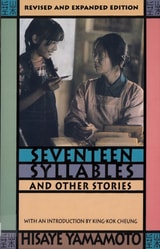
Seventeen Syllables and Other Stories
Yamamoto, Hisaye
Rutgers University Press, 2001
In addition to the contents of the original volume, this edition brings back into print the following works:
- Death Rides the Rails to Poston
- Eucalyptus
- A Fire in Fontana
- Florentine Gardens
Seventeen Syllables and Other Stories
Yamamoto, Hisaye
Rutgers University Press, 2001
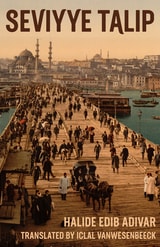
Seviyye Talip
Halide Edib Adivar
University of Texas Press, 2024
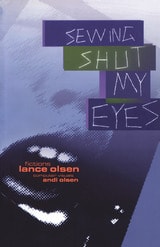
Sewing Shut My Eyes
Lance Olsen
University of Alabama Press, 2000
Sewing Shut My Eyes is a tour-de-force avant-pop anti-spectacle—nine darkly satiric out-takes of America tubing. Visions of mid-air synchronicities, robotic cockroaches, cyborg poets and one monstrous HDTV, all rendered in a hypo-manic style of electrified clauses and full-throttle patter. Here's Mona Sausalito, self-proclaimed "fricking gorgeous" bad-little-girl for Escort a la Mode and, on the side, Neogoth lyricist in the band of her boyfriend Mosh ("His real name is Marvin Goldstein"). Mona wants to be a poet. "I write about human sacrifices, cannibalism, vampires, and stuff. Mosh loves my work. He says we're all going to be famous some day. Only right now we're not, which bites, cuz I've been writing for like almost ten months. These things take time, I guess."
Olsen hallucinates a turned-on, channel-surfing nation where pain has become home theater and given enough channels, watching would beat sex. A nameless agent of the ultimate phantom bureaucracy holds his Yeltsin-70 at the ready and recalls O.J. on trial, supermodels and styrofoam landscapes, America screening fast and addictive. In the title story, Kerwin Penumbro wakes on his birthday to the ultimate tv, the renowned Mitsubishi Stealth, and at a point thirty-three thousand feet above the triangulation of Iron Lightning, Faith, and Thunder Butte, SD, Itty Snibb, supremely confident dwarf and prosperous entrepreneur, prepares to meet God.
These are fictions for minds lit with cathode-ray tubes, hands pixilated with static, for bodies that have become switching stations for the Society of the Spectacle.
The only thing left to do is start sewing shut our eyes.
Sex for the Millennium
Extreme TalesHarold Jaffe
University of Alabama Press, 2026
An innovative work of experimental prose examining the entanglements of media, authority, and embodied experience.
Sex for the Millennium: Extreme Tales by Harold Jaffe is a provocative collection of experimental narratives that push the boundaries of form, language, and subject matter. Blending fiction, satire, and cultural commentary, the book presents a series of fragmented “extreme” episodes that explore the intersections of desire, power, and media in contemporary society.
Jaffe uses the concept of sex as a central metaphor rather than a literal focus, exploring how desire can be shaped, controlled, and commodified within larger social and political systems. Rather than following a traditional plot, Jaffe constructs a shifting landscape populated by characters caught in systems of control shaped by institutions, technology, and consumer culture. The stories examine how identity and intimacy are mediated by external forces.
Jaffe's work reflects postmodern literary traditions, using disjointed narratives and abrupt tonal shifts to unsettle the reader. His writing challenges social norms and exposes the underlying mechanisms of authority and manipulation at work in everyday life. With dark humor and intentional provocation, Sex for the Millennium: Extreme Tales offers a critique of modern culture, inviting readers to confront questions about autonomy, authenticity, and the influence of media in shaping human experience.
Sex with Strangers
Michael Lowenthal
University of Wisconsin Press, 2021
Recognizing that any partner is unknowable on some level, Michael Lowenthal writes about how intimacy can make strangers of us all. A newly ordained priest struggles with guilt and longing when he runs into his ex-girlfriend. A woman weighs the cost of protecting her daughter from a man they both adore. A teenage busboy has a jolting brush with a famous musician. A young man tries to salvage a long-distance relationship while caring for his mentor, an erotic writer dying of AIDS.
In edgy, disquieting stories, Lowenthal traces the paths that attraction and erotic encounters take, baffling and rueful as often as electrifying. This fraught and funny volume forces us to grapple with our own subconscious desires and question how well we can ever really know ourselves.
Señora Rodríguez and Other Worlds
Martha Cerda
Duke University Press, 1997
A bestselling writer widely celebrated in her native Mexico, Martha Cerda defines her own turn along the path of Latin American magical realism. In this novel the feminine, the practical, and the earthy blend with the fantastic and phantasmagoric. Tragedy and playfulness, sophistication and naiveté mingle. What is at once a comedy of manners, a delightful collection of loosely related anecdotes, stories, sketches, and epiphanies, is also an artful entree into several literary and philosophical questions—the relationship between language and reality and the power of one to create and alter the other; the link between chaos and different forms of organization that pass for order.
Shadow of Things to Come
Kossi Efoui
Seagull Books, 2013
In an unnamed African nation, the people are subject to a state of perpetual warfare and to an Orwellian abuse of language that strips from language its meaning and renders life senseless. And in a bare room lit only by moonlight, a young man hides, waiting for the mysterious crocodile-men to come and help him escape from the violent tyranny of the state. While he waits, he tells his story.
This is Kossi Efoui’s catastrophic and carnivalesque dreamscape, the dark setting of The Shadow of Things to Come. Here, men and women are taken in the night, spirited away from their families, and sent to plantation penal colonies to be worked to the edge of madness. When they return, they are empty shells, their lost time referred to as the “Time of Annexation.” But though his parents were taken, our protagonist survived, first in the care of a quirky benefactress named Mama Maize, then under the wing of the state itself, as a student at one of its elite schools. When he meets a bookseller named Axis Kemal, however, he has found a surrogate father, an eccentric and wise man who can bring him out of the meaningless confusion and tell him the truth about the society he lives in.
Through his characters, Efoui speaks out against atrocity and the abuse of power, but more, he writes against political rhetoric and the destruction of meaning by government. This novel is a love letter to language and, in Chris Turner’s dazzling translation, it becomes a stunning introduction for English-language readers to an exciting new talent.
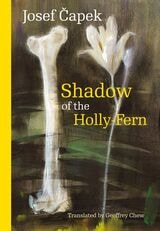
Shadow of the Holly-Fern
Josef Capek
Karolinum Press, 2026
The first English translation of Josef Capek’s classic novella explores what happens when a single violent act changes everything.
Two young poachers are caught by a gamekeeper and, in a moment of panic, shoot him. What began as a reckless adventure in pursuit of a deer becomes a desperate and increasingly hopeless flight through the forest.
Shadow of the Holly-Fern stands among the finest literary achievements of Josef Capek, the Czech painter and illustrator who died in a Nazi concentration camp in 1945 for his democratic convictions. The balladic novella is distinguished by its powerful portrayal of the fugitives’ inner lives; initially intoxicated by the beauty of the forest and a sense of freedom, they gradually succumb to mounting despair. Its intense focus on guilt and conscience recalls Crime and Punishment by Fyodor Dostoevsky, while its language remains intensely lyrical and evocative. First published in 1930, the book remains one of the enduring masterpieces of Czech literature and is presented here in English for the first time in a lucid translation by Geoffrey Chew.
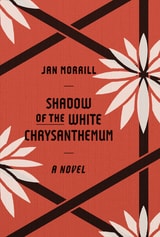
Shadow of the White Chrysanthemum
A NovelJan Morrill
University of Arkansas Press, 2027
In 1957 Berkeley, California, Nobu Kimura runs a nursery with his older brother, Taro—until a hidden letter exposes a family secret and reopens old wounds left by his family’s internment. As Nobu wrestles with a renewed sense of betrayal, Taro, still haunted by wartime memories, confronts his own deepest fears when he learns he is about to become a father.
In Arkansas, their sister, Sachiko Kimura Baker, and her best friend, Jubie, watch nine Black students attempt to enter the newly desegregated Little Rock Central High School. The past collides with the present when Terrence Harris—a man who caused one of the Kimura family’s darkest moments—unexpectedly saves Sachiko and her daughter, forcing the family to reckon with old hatreds, buried truths, and the possibility of forgiveness.
In the midst of the family’s turmoil, their mother’s return from Japan brings revelations about the misunderstandings that have kept her away since the war’s end. Yet even as some of the family begins to heal, Nobu retreats further into a dangerous obsession with honor, shame, and revenge—a spiral that threatens to shatter the family.
Set in the aftermath of Japanese American internment and against the rising heat of the civil rights movement, Shadow of the White Chrysanthemum continues the Kimura family saga that began with Jan Morrill’s The Red Kimono and explores the bonds that hold a family together—and the secrets that threaten to break them apart.
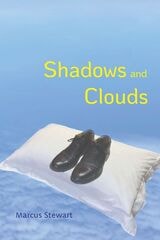
Shadows and Clouds
Marcus Stewart
Omnidawn, 2023
Through the stories in Shadows and Clouds, Marcus Stewart invites us to consider how things are not always as they appear or as we remember them, instead locating reality in the imagination and the dream world. While animals understand the world without words, humans create our experiences as stories, translating past and future into tales told in the present. Stewart's stories take the notion of storytelling and expand to a consideration of how truth, misremembering, logic, lying, and uncertainty play together to affect our experience of reality. In an alternate reading of time, Stewart poses the suggestion that you may already have a future memory of reading this book, and reading the stories backward may bring us back to the present.
Shadows and Clouds is the winner of the 2021 Omnidawn Fabulist Fiction Chapbook / Novelette Contest, chosen by Theodora Ziolkowski.
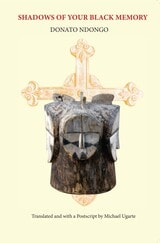
Shadows of Your Black Memory
Donato Ndongo
Swan Isle Press, 2007
Now in paperback, Shadows of Your Black Memory masterfully exposes the cultural fissures of Ndongo’s native land. “Spanish Guinea” is a heated, sensual landscape with exotic animals and trees, ancient rituals, ghosts, saints, and sinners. We come to know the narrator’s extended family, the people of his village, merchants, sorcerers, and Catholic priests; we see them critically at times, even humorously, yet always with compassion and a magical dignity. Michael Ugarte’s sensitive translation captures the spirit of the original Spanish prose and makes Ndongo’s powerful, gripping tale available to English-speaking readers for the first time.
Shamara and Other Stories
Svetlana Vasilenko
Northwestern University Press, 1999
Shame
Grant Maierhofer
University of Alabama Press, 2022
A kaleidoscopic sequence of autofictional narratives about identity, grief, and narrative itself.
Shame is a daring exploration of the potential and limits of memory and self. Here we meet Grant Maierhofer at various points within his life then, now, and in the future as he investigates the sense of shame that haunts the course of his days. The real and unreal, fact and fiction, blur together in a Kaufmanesque sequence of overlapping narratives about who we really are, how we cope with regret, and the repetitions of our behavior.
Through lists, fragments, recollections, and rants, the story of a son’s vexing grief for his father emerges. A sober addict trying to figure out how to navigate pleasure, diversion, and escape. A father trying to figure out marriage, children, maturity, and responsibility. A confused observer in a world constantly torn apart by media, politics, and aggression. A meditation on the nature of art, and art’s place in contemporary life.
Sharp and Dangerous Virtues
A NovelMartha Moody
Ohio University Press, 2012
It’s 2047 in Dayton, Ohio. In response to food and water shortages, the U.S. government has developed an enormous, and powerfully successful, agricultural area—the “Heartland Grid”—just north of the city. In the meantime, in the wake of declining American power a multinational force has established itself in Cleveland. Behind these quickly shifting alliances lies a troubling yet tantalizing question: what will the American future look like?
Sharp and Dangerous Virtues is the story of ordinary people caught in situations they had never planned for or even imagined. There are Chad and Sharis, a married couple with two sons, holding out for normal life in their decaying suburb; Tuuro, a black church custodian whose false confession of murder is used for political purposes; Lila, Dayton’s aging, lonely Commissioner of Water, who dreams of being part of the “pure” existence of the Grid residents; and Charles and Diana, idealistic lovers trying desperately to preserve the nature center that has become their refuge.
What will these people do? What choices are left for them, and what choices have been taken away? Whom and what can they trust? Novelist Moody—known for her vivid portrayals of complicated characters and relationships in novels such as Best Friends and Sometimes Mine—weaves together cataclysmic events and the most intimate of human emotions to create a future that seems achingly real. Sharp and Dangerous Virtues will change the way you think and feel.
Sherlock Holmes and the Eisendorf Enigma
Larry Millett
University of Minnesota Press, 2019
Dogged by depression, doubt, and—as a trip to the Mayo Clinic has revealed—emphysema, 66-year-old Sherlock Holmes is preparing to return to England when he receives a shock: a note slipped under his hotel room door, from a vicious murderer
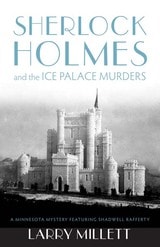
Sherlock Holmes and the Ice Palace Murders
Larry Millett
University of Minnesota Press, 2010
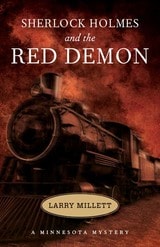
Sherlock Holmes and the Red Demon
Larry Millett
University of Minnesota Press, 2010
The manuscript contains the story of how Sherlock Holmes and Watson traveled to Minnesota to track a murderous arsonist—known only as the Red Demon—who is threatening both Hill and his Great Northern Railway. Set against the backdrop of the real, devastating Hinckley forest fire of 1894, Sherlock Holmes and the Red Demon is the tense and atmospheric first novel in Larry Millett’s classic series of adventures that brought Sherlock Holmes and Dr. Watson to Minnesota.
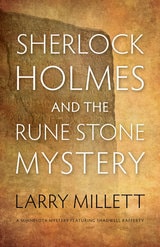
Sherlock Holmes and the Rune Stone Mystery
Larry Millett
University of Minnesota Press, 2012
Sherlock Holmes is bored between cases at 221B Baker Street. So when King Oskar II of Sweden—who has heard of the discovery of the Kensington Rune Stone by a farmer in Minnesota—asks to engage his services, Holmes jumps at the chance to decipher the runes and determine whether the find is real or a hoax. With Dr. John H. Watson by his side, faithfully recording every detail, Holmes makes his way to Minnesota for a third time. But, in the first of many strange and unfortunate coincidences, the farmer who found the mysterious stone is murdered, and the stone itself is stolen on the day the famous detective arrives.
With the help of one Shadwell Rafferty, now a friend and partner, Holmes must solve this baffling case to find both the stone and the murderer.
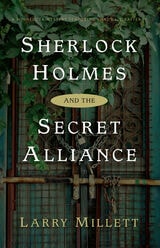
Sherlock Holmes and the Secret Alliance
Larry Millett
University of Minnesota Press, 2012
As the city of Minneapolis prepares for a visit from President William McKinley, someone else prepares for murder. On the day before the visit, a union activist is found hanged, naked, outside a ruined mansion. A placard around his neck reads “THE SECRET ALLIANCE HAS SPOKEN.” Who is the alliance? What does it want? How was the victim involved with the city’s corrupt mayor? And why did he possess a photograph of a prominent citizen in a compromising position? Shadwell Rafferty searches for answers, encountering bribery, corruption, union organizers, anarchists, and conspiracy, putting himself in danger. But as luck would have it, his old friends Sherlock Holmes and Dr. John H. Watson are on their way.
In this fourth installment of Larry Millett’s Minnesota Mystery series, Shadwell Rafferty commands center stage in a brand-new city. Packed with Millett’s signature historical and architectural detail, this book is deviously delightful.
Sherwood Anderson’s Winesburg, Ohio
With Variant Readings and AnnotationsSherwood Anderson
Ohio University Press, 2000
In 1919 a middle-aged Chicago advertising writer from Ohio, a failure as a businessman, husband, and father, published a small yellow book of short stories intended to “reform” American literature. Against all expectations, Winesburg, Ohio: A Group of Tales of Ohio Small Town Life achieved what its author intended: after 1919 and after Winesburg, Ohio, American literature would be written and read freshly and differently.
Winesburg, Ohio has never been out of print, but never has Anderson’s book been published in the form and with the editorial care that the work has needed and deserved. The present text, authorized by the Sherwood Anderson Literary Estate Trust, is an expert text. The editor has relied on years of experience in editing Sherwood Anderson and has consulted all Anderson manuscripts, typescripts, letters, and diaries and all editions of the book to present the masterpiece in its intended state.
New to this expert edition of Winesburg, Ohio are historical and cultural annotations, documentation of changes in the various editions, identification of the Ohio originals for Anderson’s characters, and maps bearing the streets and buildings of the real town of Clyde, Ohio, which is the basis of Anderson’s fictional account.
Included as well are unique photographs of Anderson and Clyde, Ohio, illustrations that deepen knowledge and feeling for the author’s actual hometown and time, revealing Winesburg, Ohio to be an intensely local narrative—very much an “Ohio” book—and yet a book that has found and held worldwide attention.
Shine on Me
A NovelA. G. Mojtabai
Northwestern University Press, 2016
The rules are simple enough: “Here’s the deal: Whoever keeps his hands longest on one of the dealer’s brand new pickup trucks owns it and gets to drive it away.” An actual contest hosted by an auto dealership in Texas is the prompt for this fictional exploration, which seeks to probe the depths and shallows of the American soul.
To the players vying for this shiny new prize, competition revs up as the hours wear on, positions harden, sightlines narrow, and sleep-deprivation intensifies. At the center is the reporter Trew Reade, struggling to make sense of the event and his own role in it. Early on, he muses that “surface and substance were rarely the same; transparency could be the most cunning of masks.” So, too, is the author’s transparent prose. Reviewers have sometimes found Mojtabai’s vision akin to that of Marilynne Robinson and Flannery O’Connor, but the characterization from Books & Culture—“not like anyone else”—is perhaps best, inviting readers to discover this provocative writer for themselves.
Shiny Objects
Dianne Benedict
University of Iowa Press, 1982
A successful professional painter and art instructor for years, Benedict was dissatisfied that she could paint petal-perfect flowers and expensive portraits of wealthy clients, but could not capture the light on the garden at dusk or the tender hands and faces of her own children. Seven years ago she walked into a poetry workshop and found "the window I needed for my imagination." She never painted another painting, and has never stopped writing. She got her BA in English and her MFA in writing at Goddard College, taught workshops, won scholarships, and recieved grants and awards for her fiction. her stories have appeared in INTRO and fiction international, and the title story in this award-winning collection was published as an Atlantic Monthly First.
Shoot!
The Notebooks of Serafino Gubbio, Cinematograph OperatorLuigi Pirandello
University of Chicago Press, 2005
Shoot!, presented here in its 1927 English translation, is a classic example of Nobel Prize-winning Sicilian playwright Luigi Pirandello's (1867-1936) literary talent and genius for blurring the line between art and reality. From the film studio Kosmograph, Pirandello's Gubbio steadily winds the crank of his camera by day and scribbles with his pen by night, revealing the world both mundane and melodramatic that unfolds in front of his camera. Through Gubbio's narrative—saturated with fantasy and folly—Pirandello grapples with the philosophical implications of modernity. Like much of Pirandello's work, Shoot! parodies human weaknesses, drawing attention to the themes of isolation and madness as emerging tendencies in the modern world.
Enhanced by new critical commentaries, Shoot! is an entertaining caricature, capturing early twentieth-century Italian filmmaking and revealing its truths as only a parody can.
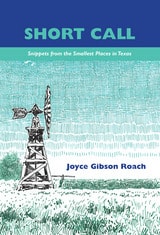
Short Call
Snippets from the Smallest Places in Texas, 1935-2000Joyce Gibson Roach
University of North Texas Press, 2014
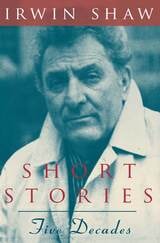
Short Stories
Five DecadesIrwin Shaw
University of Chicago Press, 2000
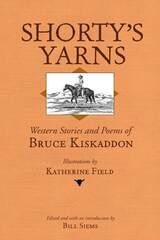
Shorty's Yarns
Western Stories and Poems of Bruce Kiskaddonedited by Bill Siems, illustrations by Katherine Field
Utah State University Press, 2004
In the world of cowboy poetry, no poet is better known or more widely appreciated than Bruce Kiskaddon. Though he died in 1950 his poems have been at the forefront of the cowboy poetry revival that began in the 1980s and have been reprinted frequently in published collections and anthologies. What is less known is that Kiskaddon during his lifetime also published stories. These humorous, realistic prose sketches of cowboy life were almost lost, but they are in their own right gems of literary Americana on a par with the poems. Originally published in the Western Livestock Journal between 1932 and 1939, the short stories drew on Kiskaddon's own experience of ranching in the Southwest and Australia to portray real life on the range. Bill Siems has recovered these stories and compiled and introduced them in this new collection, to which he has added a selection of Kiskaddon's poems and the original drawings that accompanied them, by Katherine Field, a fine, underappreciated western artist.
Set in Colorado, New Mexico, and Arizona, the stories are a loosely tied string of old timer's yarns with a continuing cast of engaging characters, whom Kiskaddon avoids reducing to cowboy stereotypes. They include, as Siems describes them, "Kiskaddon himself as the character Shorty. As a common waddy with a small man's feistiness and a young man's mischief, Shorty encounters the wicked world with a succession of companions: Bill, high-headed and a bit of an outlaw; Rildy Briggs, untamable and unstoppable young cowgirl; and Ike, an old-fashioned dandy and 'a very fortunate person.' More or less in the background is the Boss-actually a series of Bosses-generally affectionately respected as long as he remains democratic in his dealings with the waddies. Buffoonery is provided by a succession of pompous characters, from townspeople who look down their noses on wild, unwashed waddies to professors from the East who have read books on how ranches should be run."

Sick to Death
An Andy Hayes MysteryAndrew Welsh-Huggins
Ohio University Press, 2024
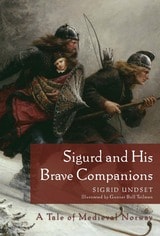
Sigurd and His Brave Companions
A Tale of Medieval NorwaySigrid Undset
University of Minnesota Press, 2013
Inspired by tales of the hero Vilmund Vidutan and his fellow knights, Sigurd Jonsson and his young friends Ivar and Helge set out to reenact these exploits on their medieval Norwegian farm. They carve swords and lances and spend hours making shields. With a little imagination, a pasture becomes a battlefield, an old boar their greatest foe, and they pass many hours jousting and dueling. But when the summer is nearly over, the three boys stumble into real trouble and must prove their courage in an adventure all their own.
Written during Sigrid Undset’s time in New York, Sigurd and His Brave Companions will make medieval Norway come alive for young and old readers alike.
Silence & Song
Melanie Rae Thon
University of Alabama Press, 2015
In “Translations,” the prose poem connecting the two longer fictions, child refugees at a multilingual literacy center in Salt Lake City discover the merciful “translation” of dance and pantomime.
The convergence of two disparate events—a random murder in Seattle and the nuclear accident at Chernobyl—catalyze the startling, eruptive form of the concluding piece,“requiem: home: and the rain, after.” Narrated in first person by the killer’s sister and plural first person by the “liquidators” who come to the Evacuation Zone to bury entire villages poisoned by radioactive fallout, “requiem” navigates the immediate trauma of murder and environmental disaster; personal and global devastation; and the remarkable recovery of the miraculously diverse more-than-human world.
Silence
A Thirteenth-Century French RomanceSarah Roche-Mahdi
Michigan State University Press, 2007
This bilingual edition, a parallel text in Old French and English, is based on a reexamination of the Old French manuscript, and makes Silence available to specialists and students in various fields of literature and women's studies.
The Roman de Silence, an Arthurian romance of the thirteenth century, tells of a girl raised as a boy, equally accomplished as a minstrel and knight, whose final task, the capture of Merlin, leads to her unmasking.
Silent Life and Silent Language
The Inner Life of a Mute in an Institution for the DeafKate M. Farlow
Gallaudet University Press, 2018
Kate M. Farlow wrote this book with the goal of giving hearing parents hope that their deaf children would be able to lead happy and productive lives. She sought to raise awareness of the benefits of deaf schools and was an early advocate for the use of American Sign Language and of bilingual education. The Christian influence on the school and on the author is strongly present in her writing and reflects an important component of deaf education at the time. Descriptions of specific signs, games, ASL story nights, and other aspects of the signing community during the 1870s will be of interest to modern students and researchers in linguistics, deaf education, Deaf studies, and Deaf history. Farlow’s work reveals a sophisticated, early understanding of the importance of access to language, education, and community for deaf individuals.
Silver Beach
Claire Cox
University of Massachusetts Press, 2021
After the family tragedy, Mara's father took her to the opposite end of the country, where she made a tidy life for herself in western Massachusetts, with a good education, stable job, and loving girlfriend. Her half-sister, Shannon, was left behind with their mother in San Diego. Surviving on disability checks and handouts from family, Shannon can't remember a time when Linda wasn't drunk.
When a heart attack lands Linda in the hospital, Shannon's first impulse is to skip town—to finally escape her mother's orbit and make her sister step up. While Mara gave up on Linda years ago and couldn't have less in common with her sister, an unemployed stoner, it's time for her to stop running from everything that makes her have feelings. This is a novel about the persistent, mystifying ties of family, the extravagant mess of addiction, and what it means to actually live inside your own life.
Simone in Pieces
Janet Burroway
University of Wisconsin Press, 2025
Simone
A NovelEduardo Lalo
University of Chicago Press, 2015
A tale of alienation, love, suspense, imagination, and literature set on the streets of San Juan, Puerto Rico, Simone tells the story of a self-educated Chinese immigrant student courting (and stalking) a disillusioned, unnamed writer who is struggling to make a name for himself in a place that is not exactly a hotbed of literary fame. By turns solipsistic and political, romantic and dark, Simone begins with the writer’s frustrated, satiric observations on his native city and the banal life of the university where he teaches—forces utterly at odds with the sensuality of his writing. But, as mysterious messages and literary clues begin to appear—scrawled on sidewalks and walls, inside volumes set out in bookstores, left on his answering machine and under his windshield wiper—Simone progresses into a cat-and-mouse game between the writer and his mystery stalker. When the eponymous Simone’s identity is at last revealed, the writer finds in the life of this Chinese immigrant a plight not unlike his own. Traumatized and lonely, the pair moves towards bittersweet collaborations in passion, grief, and art.
Sin Eaters
StoriesCaleb Tankersley
University of Alaska Press, 2022
Magical, heartfelt, and surprisingly funny, Sin Eaters paints a tumultuous picture of religion and repression while hinting at the love and connection that come with healing. The powerful stories in Caleb Tankersley’s debut collection illuminate the shadowy edges of the American Midwest, featuring aspects of religion, sex and desire, monsters and magic, and humor.
Tankersley’s characters—including swamp creatures looking for love, pothead pastors, ghosts obsessed with TV, and a Jesus made of rust—arrive at the crossroads of pleasure and hunger in a world that is equal parts playful, hopeful, and dark. In “Never Been More in Love” a man must come to terms with his wife’s degenerative illness. “Uncle Bob” explores suicide attempts as a family heirloom. And the titular story follows a woman who must accept her monstrous role to find redemption for herself and her small town.
Sin Eaters is a fight for authenticity in a world that is mysterious, muggy, and punctured by violence. This stunning collection full of complex themes will both challenge and delight.
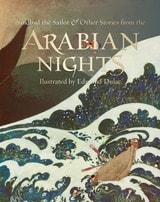
Sindbad the Sailor and Other Stories from the Arabian Nights
Laurence Housman
Bodleian Library Publishing, 2018
Four of the most well-known tales, translated by Laurence Housman, are reproduced in this collector’s edition: “Sindbad the Sailor,” “Aladdin and his Wonderful Lamp,” “The Story of the Three Calendars” and “The Sleeper Awakened.” Each is illustrated with exquisite watercolors by the renowned artist Edmund Dulac. The sumptuous illustrations reproduced here capture the beauty and timeless quality of these ever-fascinating stories, made at the zenith of early twentieth-century book illustration.
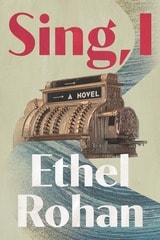
Sing, I
A NovelEthel Rohan
Northwestern University Press, 2024
Inside Half Moon Bay, a sparkling California coastal town, Ester Prynn is dulled and diminished by struggles with work, money, marriage, her senile father, a troubled teenage son, and old guilt she can’t assuage. When a masked gunman robs the convenience store where Ester works, he upends her fraught life and propels her toward passions buried, like singing; desires discovered, like a same-sex infatuation; and wrongs righted, like bringing the violent assailant to justice. But as the armed robber commits new crimes and continues to evade capture, the trauma from the holdup climbs, threatening Ester’s newfound delights and longings and forcing her to contend with her burning regrets and what-ifs. In the reckoning between Ester and these growing, molten upsets, she’s faced with enormous choices and must determine what and who can bring her to her best life.
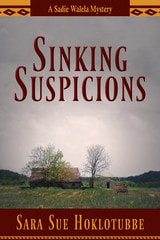
Sinking Suspicions
Sara Sue Hoklotubbe
University of Arizona Press, 2014
Iconic lawman Lance Smith joins a community-wide search, but Buck is nowhere to be found. As evidence mounts against her old friend, Sadie rushes to return home to help—only to be delayed by an island-wide earthquake and her own sinking suspicions.
A diverse cast of characters weave together a breathless story of murder, thievery, and the toll of war on the human spirit. In her effort to restore balance to her neighbor’s life, Sadie not only uncovers the truth, but unravels much more than a murder.
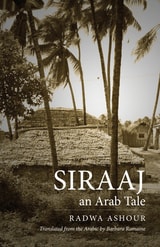
Siraaj
An Arab TaleBy Radwa Ashour
University of Texas Press, 2007
Set in the late nineteenth century on a mythical island off the coast of Yemen, Radwa Ashour's Siraaj: An Arab Tale tells the poignant story of a mother and son as they are drawn inextricably into a revolt against their island's despotic sultan.
Amina, a baker in the sultan's palace, anxiously awaits her son's return from a long voyage at sea, fearful that the sea has claimed Saïd just as it did his father and grandfather. Saïd, left behind in Alexandria by his ship as the British navy begins an attack on the city, slowly begins to make his way home, witnessing British colonial oppression along the way.
Saïd's return brings Amina only a short-lived peace. The lessons he learned from the Egyptians' struggle against the British have radicalized him. When Saïd learns the island's slave population is planning a revolt against the sultan's tyrannical rule, both he and Amina are soon drawn in.
Beautifully rendered from Arabic into English by Barbara Romaine, Radwa Ashour's novella speaks of the unity that develops among varied peoples as they struggle against a common oppressor and illuminates the rich cultures of both the Arab and African inhabitants of the island. Sub-Saharan African culture is a subject addressed by few Arabic novelists, and Radwa Ashour's novella does much to fill that void.