Results by title
4030 books match the query 'Language Arts & Disciplines' and 263 start with s

Settling
Women Who Sued the NewsAshley Walter
University of Massachusetts Press, 2026
A history of courage and collective action inside the most powerful newsrooms in America
In 1971, Susan Smith, a young researcher at Reader’s Digest, dared to imagine herself as an editor. Her ambition was swiftly dismissed by a hiring manager who told her, “Single girls just don’t do well in this job.” Crushed—and then furious—Smith sought out Harriet Rabb, the attorney who had successfully sued Newsweek for sex discrimination just a year earlier. Their meeting helped spark a class-action lawsuit that ultimately united two thousand women at the magazine and became part of a broader revolt inside American newsrooms. Smith’s experience was far from unique. For much of American history, journalism has been rigidly segregated by gender, with women confined to research, clerical work, or the “women’s pages,” while men dominated reporting, editing, and leadership. That system began to crack in the 1970s, as the 1964 Civil Rights Act and the women’s liberation movement emboldened newswomen to challenge daily discrimination. Yet this development has remained largely hidden, buried by editors reluctant to document inequities within their own institutions. Settling recovers this lost story.
Tracing class-action sex discrimination lawsuits at some of the most powerful news organizations in the United States—including The Washington Post, the Associated Press, The New York Times, and Time—Ashley Walter draws on oral histories and long-forgotten documents to reconstruct legal battles at eight major outlets. She argues that meaningful change came not from institutional goodwill but from the courage of women who organized, testified, and risked their careers to demand equality. Their victories reshaped journalism itself. As women assumed reporting and editorial roles, they broadened the scope of who counted as newsworthy, covering women as workers, political leaders, and authoritative sources. With this new illumination of women’s full participation in public life, newswomen shifted social norms and helped build women’s power across American society. By recovering these accounts, Settling reveals how newsroom struggles for gender equality transformed both journalism and the nation, offering urgent lessons for our present moment.

Sex Panic Rhetorics, Queer Interventions
Ian Barnard
University of Alabama Press, 2020
Analyzes the rhetoric of contemporary sex panics to expose how homophobia, heterosexism, and transphobia define public, political, and scholarly preoccupations with sexuality and gender
In Sex Panic Rhetorics, Queer Interventions, Ian Barnard makes the counter-intuitive argument that contemporary “sex panics” are undergirded by queerphobia, even when the panics in question don’t appear to have much to do with queerness. Barnard presents six case studies that treat a wide range of sex panic rhetorics around child molesters, sex trafficking, transgenderism, incest, queer kids, and pedagogy to demonstrate this argument. By using examples from academic scholarship, political discourse, and popular culture, including the Kevin Spacey scandal and the award-winning film Moonlight, Barnard shows how homophobia and transphobia continue to pervade contemporary Western culture.
Barnard is concerned not so much with looking at the overt homophobia and transphobia that are the more obvious objects of antihomophobic and antitransphobic critique. The author’s focus, rather, is on excavating the significant traces of these panics in a neoliberal culture that has supposedly demonstrated its civility by its embrace of diversity, renunciation of its homophobic past, and attentiveness to the transgender revolution that has swept popular media and political culture in the United States and elsewhere. During a time of increasing conservative backlashes against advancing LGBTQ rights and human rights discourses in general, this book shows why it is important to attend to the liberal covers for sex panics that are not too far removed from their rhetorically conservative cousins.

Sex Trafficking, Scandal, and the Transformation of Journalism, 1885-1917
Gretchen Soderlund
University of Chicago Press, 2013

Sex and the University
Celebrity, Controversy, and a Student Journalism RevolutionReimold, Daniel
Rutgers University Press, 2010
Daniel Reimold gives readers of all generations an inside look at this phenomenon. Student sex columnists and sex magazine editors are both celebrities on their home campuses. One columnist, echoing the sentiments of many, said he became an overnight rock star golden child of journalism. But, with celebrity comes controversy. These columns and magazines have sparked contentious and far-reaching legal, religious, and intergenerational debates about sex, the student press, and the place of both within higher education. They are also the most prominent modern student press combatants in the fight for free speech. And they have blurred journalistic boundaries between what is considered public and private, art and pornography, and gossip and news.
Sex and the University explores the celebrity status that student sex columnists and magazine editors have received, the controversies they have caused, and the sexual generation and student journalism revolution they represent. Complete with a sexicon of slang, this book also dives into the columns and magazines themselves, sharing for the first time what modern students are saying about their sex and love lives, in their own words.

Sex, Brains, and Video Games
Information and Inspiration for Youth Services LibrariansJennifer Burek Pierce
American Library Association, 2017

Sexual Harassment and Cultural Change in Writing Studies
Patricia Freitag Ericsson
University Press of Colorado, 2020
Sexuality and the Politics of Ethos in the Writing Classroom
Zan Meyer Goncalves
Southern Illinois University Press, 2005
Applying the complexities of literacy development and personal ethos to the teaching of composition, Zan Meyer Goncalves challenges writing teachers to consider ethos as a series of identity performances shaped by the often-inequitable social contexts of their classrooms and communities. Using the rhetorical experiences of students who identify as lesbian, gay, bisexual, and/or transgender, she proposes a new way of thinking about ethos that addresses the challenges of social justice, identity, and transfer issues in the classroom.
Goncalves offers an innovative approach to teaching identity performance theory bound by social contexts. She applies this new approach to theories of specificity and intersectionality, illustrating how teachers can help students redefine the relationship between their social identities and their writing. She also addresses bringing social activism and identity politics into the classroom, helping writers make transfers across rhetorical contexts and linking students' interests to public conversations.
Theoretical and practical, Sexuality and the Politics of Ethos in the Writing Classroom provides teachers of first-year and advanced composition studies with useful, detailed assignments based in specific identity performance. Goncalves offers techniques to subvert oppressive language practices, while encouraging students to recognize themselves as writers, citizens, and active participants in their own educations and communities.
Shadow Press
The Myth and Making of Independent JournalismDaniel DeFraia
University of Missouri Press, 2027
Historians of journalism and mass media have tended to focus on journalism and news – its people and content – while neglecting the field’s broader and interconnected roles in United States history. Shadow Press: The Myth and Making of Independent Journalism explores how the extreme edges of reporting challenged and reshaped American journalism for over a century, from 1890 to 1980.
What a reporter is and does, and does not do, and the integrity of that idea, has always been an unsettled question, interrogated on the borders between journalism and the state. There, from battlefields in Cuba, revolution in Mexico, presidential politics in Washington, D.C., and world wars in Europe, reporters – formally and informally, officially and unofficially, openly and secretly – served the state. This book explains how and why reporters, amidst the allure of patriotism, prestige, and power, came to work for the state, and then stopped, culminating with the historically aberrant ascent of modern independent journalism.
To reclaim that history, Shadow Press spotlights famous, infamous, or previously unknown reporters whose careers reflected the usually submerged question of press-state collaboration and revealed wider changes within journalism. Part I documents how reporters traveled multiple routes into the state, including U.S. empire (the War of 1898), the Mexican Revolution, the presidencies of Theodore Roosevelt and Woodrow Wilson, the domestic reform efforts of First Lady Eleanor Roosevelt, and World War II. Part II documents how, during the Cold War, reporters, embedded within the state, separated to redefine journalism, and lobbied to establish in 1980 the uneasy policies of today that narrowly permit the CIA and FBI to impersonate reporters.
Shadow Press provides accessible plots and character-driven narrative arcs for general readers interested in American history. Moreover, journalism critics will take an interest in how the history provided in Shadow Press informs the debate over how best to do journalism today. During the last two decades, a historical caricature of news objectivity has emerged, a rigid model of amoral methodology and unacknowledged personal subjectivity that still lingers. That caricature has concealed the political activism of the self-declared objective press. Today’s “objectivity war” in journalism is a memory war. As a result, the debate about how best to cover the Republication Party, Donald Trump, and far right movements is based on a broad misunderstanding of how journalism functioned in US democracy. Combining expansive and rigorous archival investigation with the dramatic requirements of a good story, Shadow Press provides a new line of scholarly inquiry to expand the scope of journalism within US political history.

Shadow of the Racketeer
Scandal in Organized LaborDavid Witwer
University of Illinois Press, 2008
From a behind-the-scenes perspective, David Witwer describes how Pegler and his publisher, the politically powerful Roy W. Howard, shaped the news coverage of this scandal in ways that obscured the corrupt ties between employers and the mob while emphasizing the perceived menace of union leaders empowered by New Deal legislation that had legitimized organized labor. Pegler, Howard, and the rest of the mainstream press pointedly ignored evidence of the active role that business leaders took in the corruption, which badly tarnished the newly reborn labor movement.
Because he was more concerned with pursuing political gains for the conservative movement, Pegler's investigative journalism did little to reform union governance or organized crime's influence on labor unions. The union corruption scandal only undercut the labor movement. Pegler's continuing campaign against labor corruption framed the issue in ways that set the stage for postwar political defeats, culminating with the 1947 Taft-Hartley Act, which greatly limited the power of labor unions in the United States.
Demonstrating clearly and convincingly how journalism is wielded as a political weapon, Witwer studies a broad range of forces at play in the labor union scandal and its impact, including the influence of the press, organized crime, political corruption, and businessmen following their own economic imperatives.

Shakespeare Behind Bars
One Teacher's Story of the Power of Drama in a Women's PrisonJean Trounstine
University of Michigan Press, 2004
Originally published in cloth in 2001, the paperback includes a new foreword that will inspire all teachers who work with students others have deemed unteachable. A new afterword updates readers on the prison art's program -- and the author herself -- since 2001.
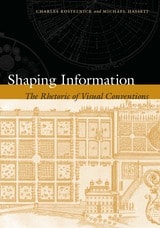
Shaping Information
The Rhetoric of Visual ConventionsCharles Kostelnick and Michael Hassett
Southern Illinois University Press, 2003
From charts, texts, and graphs to illustrations, icons, and screens, we live in an information age saturated with visual language. Yet the underlying principles that provide structure for visual language have long eluded scholars of rhetoric, design, and engineering. To function as a language that reliably conveys meaning, visual language must embody codes that normalize its practices among both the designers who employ it and the readers who interpret it.
In this wide-ranging analysis, Charles Kostelnick and Michael Hassett demonstrate how visual language in professional communication—text design, data displays, illustrations—is shaped by conventional practices that are invented, codified, and modified by users in visual discourse communities. Drawing on rhetorical theory, design studies, and a broad array of historical and contemporary examples, Shaping Information: The Rhetoric of Visual Conventions explores the processes by which conventions evolve and proliferate and shows how conventions serve as the medium that designers use to shape, stabilize, and streamline visual information.
Kostelnick and Hassett extend contemporary theories that define rhetoric as a social act, arguing that visual conventions also thrive within discourse communities and are fragile forms that vary widely in their longevity and scope. Shaping Information: The Rhetoric of Visual Conventions is a thorough guide for scholars, teachers and practitioners of rhetoric and business and technical communication and for professionals in engineering, science, design, and business.

Shaping Language Policy in the U.S.
The Role of Composition StudiesScott Wible
Southern Illinois University Press, 2013
In Shaping Language Policy in the U.S.: The Role of Composition Studies, author Scott Wible explores the significance and application of two of the Conference on College Composition and Communication’s key language policy statements: the 1974 Students’ Right to Their Own Language resolution and the 1988 National Language Policy. Wible draws from a wealth of previously unavailable archived material and professional literature to offer for the first time a comprehensive examination of these policies and their legacies that continue to shape the worlds of rhetoric, politics, and composition.
Wible demonstrates the continued relevance of the CCCC’s policies, particularly their role in influencing the recent, post-9/11 emergence of a national security language policy. He discusses in depth the role the CCCC’s language policy statements can play in shaping the U.S. government’s growing awareness of the importance of foreign language education, and he offers practical discussions of the policies’ pedagogical, professional, and political implications for rhetoric and composition scholars who engage contemporary debates about the politics of linguistic diversity and language arts education in the United States. Shaping Language Policy in the U.S. reveals the numerous ways in which the CCCC language policies have usefully informed educators’ professional practices and public service and investigates how these policies can continue to guide scholars and teachers in the future.
Shaping Phonology
Edited by Diane Brentari and Jackson L. Lee
University of Chicago Press, 2018
Divided into two parts, Shaping Phonology first explores the elaboration of abstract domains (or units of analysis) that fall under the purview of phonology. These chapters reveal the increasing multidimensionality of phonological representation through such analytical approaches as autosegmental phonology and feature geometry. The second part looks at how the advent of machine learning and computational technologies has allowed for the analysis of larger and larger phonological data sets, prompting a shift from using key examples to demonstrate that a particular generalization is universal to striving for statistical generalizations across large corpora of relevant data. Now fundamental components of the phonologist’s tool kit, these two shifts have inspired a rethinking of just what it means to do linguistics.

Shaping Science with Rhetoric
The Cases of Dobzhansky, Schrodinger, and WilsonLeah Ceccarelli
University of Chicago Press, 2001
In Shaping Science with Rhetoric, Leah Ceccarelli addresses such questions through close readings of three scientific monographs in their historical contexts—Theodosius Dobzhansky's Genetics and the Origin of Species (1937), which inspired the "modern synthesis" of evolutionary biology; Erwin Schrödinger's What Is Life? (1944), which catalyzed the field of molecular biology; and Edward O. Wilson's Consilience (1998), a so far not entirely successful attempt to unite the social and biological sciences. She examines the rhetorical strategies used in each book and evaluates which worked best, based on the reviews and scientific papers that followed in their wake.
Ceccarelli's work will be important for anyone interested in how interdisciplinary fields are formed, from historians and rhetoricians of science to scientists themselves.

Shaping the Campus Conversation on Student Learning and Experience
Activating the Results of Assessment in ActionKaren Brown
Assoc of College & Research Libraries, 2018

Shared Collections
Collaborative StewardshipDawn Hale
American Library Association, 2016

Shared Land/Conflicting Identity
Trajectories of Israeli & Palestinian Symbol UseRobert C. Rowland
Michigan State University Press, 2002
Shared Land/Conflicting Identity: Trajectories of Israeli and Palestinian Symbol Use argues that rhetoric, ideology, and myth have played key roles in influencing the development of the 100-year conflict between first the Zionist settlers and the current Israeli people and the Palestinian residents in what is now Israel. The Israeli-Palestinian conflict is usually treated as an issue of land and water. While these elements are the core of the conflict, they are heavily influenced by the symbols used by both peoples to describe, understand, and persuade each other. The authors argue that symbolic practices deeply influenced the Oslo Accords, and that the breakthrough in the peace process that led to Oslo could not have occurred without a breakthrough in communication styles.
Rowland and Frank develop four crucial ideas on social development: the roles of rhetoric, ideology, and myth; the influence of symbolic factors; specific symbolic factors that played a key role in peace negotiations; and the identification and value of criteria for evaluating symbolic practices in any society.
Sharing Spaces and Students
Employing Students in Collaborative PartnershipsHolly A. Jackson
Assoc of College & Research Libraries, 2020
Shaw's Daughters
Dramatic and Narrative Constructions of GenderJ. Ellen Gainor
University of Michigan Press, 1992

Show of Hands
A Natural History of Sign LanguageDavid F. Armstrong
Gallaudet University Press, 2011
Most scholarly speculation on the origin of human language has centered around speech. However, the growing understanding of sign languages on human development has transformed the debate on language evolution. David F. Armstrong’s new book Show of Hands: A Natural History of Sign Language casts a wide net in history and geography to explain how these visible languages have enriched human culture in general and how their study has expanded knowledge of the human condition.
Armstrong addresses the major theories of language evolution, including Noam Chomsky’s thesis of an innate human “organ” for language and Steven Pinker’s contention that there is language and not-language without any gradations between gesture and language. This engrossing survey proceeds with William C. Stokoe’s revival of the early anthropological cognitive-linguistic model of gradual development through the iconicity of sign languages. Armstrong ranges far to reveal the nature of sign languages, from the anatomy of early human ancestors to telling passages by Shakespeare, Dickens, and Pound, to the astute observations of Socrates, Lucretius, and Abbé de l’Epée on sign communication among deaf people. Show of Hands illustrates the remarkable development of sign languages in isolated Bedouin communities and among Australian indigenous peoples. It also explores the ubiquitous benefits of “Deaf Gain” and visual communication as they dovetail with the Internet and its mushrooming potential for the future.
Sign Language Archaeology
Understanding the Historical Roots of American Sign LanguageTed Supalla
Gallaudet University Press, 2014
By tracing the writings of selected individuals, this study reconstructs the historical context for early ASL grammar. It describes the language used in each century and how it changed, and focuses on the rediscovery of the literary legacy of the Deaf American voice. Sign Language Archaeology reveals the contrast between folk etymology and scientific etymology and allows readers to see ASL in terms of historical linguistics.
Sign Language Interpreting for Theatre
A Collaborative ApproachLynnette Taylor
Gallaudet University Press, 2025
Written by three veteran interpreters with deep roots in the Deaf community and the performing arts, Sign Language Interpreting for Theatre is the first of its kind: a comprehensive guide to the art of sign language interpreting for the theatre as a collaborative practice. Drawing from their years of experience of interpreting On- and Off-Broadway and blending the theoretical with the practical, Lynnette Taylor, Stephanie Feyne, and Candace Broecker Penn provide guiding principles, best practices, processes, and strategies for creating dynamic, collaborative, culturally grounded sign language translations for theatre performances. Written in an engaging, conversational style, chapters include in-depth discussion of both theory and practice, providing techniques for translation and stagecraft along with practical insights for issues such as interpreting team attributes, character depiction, working with scripts, song translations, interpreting for young audiences, and interpreting virtual and recorded performances. With its emphasis upon dialogic interpretation, shared responsibility, and alliances, this guide is an indispensable resource for interpreters, educators, and theatre professionals.
Sign Language Interpreting
Deconstructing the Myth of NeutralityMelanie Metzger
Gallaudet University Press, 1998
Sign Language Interpreting relies upon an interactional sociolinguistic approach to ask fundamental questions regarding interpreter neutrality. First, do interpreters influence discourse, and if so, how? Also, what kind of expectations do the participants bring to the event, and what do the interpreters bring to discussions? Finally, how do their remarks affect their alignment with participants in the interaction? Using careful assessments of how these interviews were framed, and also re-interviewing the participants for their perspectives, this penetrating book discloses the ways in which interpreters influence these situations. It also addresses the potential implications of these findings regarding sign language interpretation in medical, educational, and all other general interactions. Interpreter trainers and their students will join certified interpreters and Deaf studies scholars in applauding and benefiting from the fresh ground broken by this provocative study.

Sign Language Research
Theoretical IssuesCeil Lucas
Gallaudet University Press, 1990
Sign Languages in Contact
David Quinto-Pozos
Gallaudet University Press, 2007
The 13th Volume in the Sociolinguistics in Deaf Communities Series
This volume collects for the first time various accounts of contact between sign languages throughout the world, presenting an exciting opportunity to further understand the structural and social factors of this linguistic component in Deaf communities. Editor David Quinto-Pozos has divided Sign Languages in Contact into four parts, starting with Contact in a Trilingual Setting. The sole essay in this section features a study of Maori signs by Rachel McKee, David McKee, Kirsten Smiler, and Karen Pointon that reveals the construction of indigenous Deaf identity in New Zealand Sign Language.
In Part Two: Lexical Comparisons, Jeffrey Davis conducts an historic, linguistic assessment of varieties of North American Indian sign languages. Daisuke Sasaki compares the Japanese Sign Language lexicon with that of Taiwan Sign Language by focusing on signs that share the same meaning and all parameters except for their handshapes. Judith Yoel’s chapter takes up the entirety of Part Three: Language Attrition, with her analysis of the erosion of Russian Sign Language among immigrants to Israel.
The final part describes how educators and other “foreign”visitors can influence indigenous sign languages. Karin Hoyer delineates the effects of international sign and gesture on Albanian Sign Language. Jean Ann, Wayne H. Smith, and Chiangsheng Yu close this significant collection by assessing contact between Mainland China’s sign language and Taiwan Sign Language in the Ch’iying School in Taiwan.

Sign-Based Construction Grammar
Edited by Hans C. Boas and Ivan A. Sag
CSLI, 2012
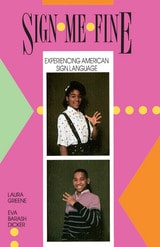
Sign-Me-Fine
Laura Greene
Gallaudet University Press, 1989

Signal Traffic
Critical Studies of Media InfrastructuresEdited by Lisa Parks and Nicole Starosielski
University of Illinois Press, 2015
Some contributors explore the physical objects and industrial relations that make up an infrastructure. Others venture into the marginalized communities orphaned from the knowledge economies, technological literacies, and epistemological questions linked to infrastructural formation and use. The wide-ranging insights delineate the oft-ignored contrasts between industrialized and developing regions, rich and poor areas, and urban and rural settings, bringing technological differences into focus.
Contributors include Charles R. Acland, Paul Dourish, Sarah Harris, Jennifer Holt and Patrick Vonderau, Shannon Mattern, Toby Miller, Lisa Parks, Christian Sandvig, Nicole Starosielski, Jonathan Sterne, and Helga Tawil-Souri.

Signed Language Corpora
Jordan Fenlon
Gallaudet University Press, 2022
The ability to search corpora to obtain information about the frequency of patterns in language is an important step forward for signed language research. Access to large datasets will expand scholarly understandings of signed language structure in ways never before possible. Through reflective discussions on the processes of creating, using, and utilizing corpora, the editors and contributors hope that other linguists will be inspired to take similar steps. The descriptions provided in this book have been written to provide a framework for those eager to develop or make use of signed language corpora for their respective signed language varieties. Creating signed language corpora is significant not only for linguistic research, but for the long-term preservation of collected texts that include the stories and histories of signed language communities.
Additional areas of focus include the use of signed language corpora in applied settings, the ethics of working with signed language communities, and the future of this methodology in research.

Signed Language Interpretation and Translation Research
Selected Papers from the First International SymposiumBrenda Nicodemus
Gallaudet University Press, 2015
The ten papers in Signed Language Interpretation and Translation Research cover a range of topics, including the need for Deaf perspectives in interpretation research, discourse strategies and techniques that are unique to video relay call settings, the benefits of using sociology as a lens for examining sign language interpreting work, translating university entrance exams from written Portuguese into Libras (Brazilian Sign Language), the linguistic choices interpreters make when interpreting ASL figurative language into English, the nature of designated interpreting, and grammatical ambiguity in trilingual VRS interpreting. The research findings and insights contained here will be invaluable to scholars, students, and practitioners.
Signed Language Interpreting Pedagogy
Insights and Innovations from the Conference of Interpreter TrainersLaurie Swabey
Gallaudet University Press, 2022
The contributors explore other important topics in interpreter education including ethics, Deaf translation, performance evaluation, consecutive and simultaneous interpreting, discourse analysis, critical thinking, curriculum sequencing, the social construction of learning, and mentoring. Through this collaborative approach featuring more than thirty scholars, Signed Language Interpreting Pedagogy presents a wealth of theoretical and practical information for interpreter educators and their students.

Signed Language Interpreting in Brazil
Ronice Müller de Quadros
Gallaudet University Press, 2012
The ninth volume in the Studies in Interpretation series offers six succinct chapters on the state of signed language interpreting by Brazil by editors Ronice Müller de Quadros, Earl Fleetwood, Melanie Metzger and ten Brazilian researchers. The first chapter advocates for the affiliation of Brazilian Sign Language (Libras) interpretation research with the field of Translation Studies to generate greater academic power empowerment of Libras. The second chapter outlines how Brazilian sign language interpreters construct a position in discourse. Chapter 3 explores the possibility that bimodal, bilingual interpreters—hearing children of deaf adults—face unique cognitive tasks compared to unimodal bilingual interpreters.
Chapter 4 describes how the systematic expansion and documentation of new academic and technical terms in Brazilian Sign Language, in which fingerspelling is uncommon, resulted in the development of an online glossary. The fifth chapter details the challenges of Libras interpreters in high schools. Chapter 6 concludes this revealing collection with findings on whether gender traits influence the act of interpretation of Brazilian Sign Language.
Signed Language Interpreting in the 21st Century
An Overview of the ProfessionLen Roberson
Gallaudet University Press, 2018
Each chapter provides students with objectives, keywords, and discussion questions. The chapters convey clear information about topics that include credentialing, disposition and aptitude for becoming an interpreter, interpreting for people who are DeafBlind, and working within specialty settings, such as legal and healthcare. A key resource for interpreter certification test preparation, this text follows the interpreter’s ethical, practical, and professional development through a career of lifelong learning and service.
Signed Language Interpreting in the Workplace
Jules Dickinson
Gallaudet University Press, 2017
Jules Dickinson’s examination of interpreted workplace interactions is based on the only detailed, empirical study of this setting to date. Using practitioner responses and transcripts of real-life interpreted workplace interactions, Dickinson’s findings demonstrate the complexity of the interpreter’s role and responsibilities. The book concentrates on the ways in which signed language interpreters affect the interaction between deaf and hearing employees in team meetings by focusing on humor, small talk, and the collaborative floor. Signed Language Interpreting in the Workplace demonstrates that deaf employees require highly skilled professionals to enable them to integrate into the workplace on a level equal with their hearing peers. It also provides actionable insights for interpreters in workplace settings that will be a valuable resource for interpreting students, practitioners, interpreter trainers, and researchers.

Signed Languages
Discoveries from International ResearchValerie Dively
Gallaudet University Press, 2001
Signed Languages: Discoveries from International Research collects the thirteen freshest, most innovative papers presented at the sixth Theoretical Issues in Sign Language Research conference in 1998, the largest of its kind ever convened. Presented together in this timely compendium, the research reflects the current trend toward focusing on international signed languages that previously have been ignored, including those of Sweden, Israel, Venezuela, and northern Nigeria.
The anthology is divided into six sections: Phonology, Morphology and Syntax, Psycholinguistics, Language Acquisition, Sociolinguistics, and Poetics. In Part One, articulatory constraints and the sign language of the Netherlands are addressed. In Part Two, researchers tackle noun classifiers, nonhanded signs, and verb classes in the signed languages of Sweden, the United States, and Israel respectively. Part Three offers the study, "Functional Consequences of Modality: Spatial Coding in Working Memory for Signs."
Language acquisition is analyzed in both adult learners and deaf children in Part Four. Part Five reports on the relationship between language and society around the world, focusing particularly on the signed languages of Venezuela and northern Nigeria. Part Six considers the techniques employed in British Sign Language poetry and ASL poetry.

Signing and Belonging in Nepal
Erika Hoffmann-Dilloway
Gallaudet University Press, 2016
In this book, Erika Hoffmann-Dilloway presents an accessible examination of deafness in Nepal. As a linguistic anthropologist, she describes the emergence of Nepali Sign Language and deaf sociality in the social and historical context of Nepal during the last decades before the Hindu Kingdom became a secular republic. She then shows how the adoption of an ethno-linguistic model interacted with the ritual pollution model, or the prior notion that deafness results from bad karma. Her focus is on the impact of these competing and co-existing understandings of deafness on three groups: signers who adopted deafness as an ethnic identity, homesigners whose ability to adopt that identity is hindered by their difficulties in acquiring Nepali Sign Language, and hearing Nepalis who interact with Deaf signers. Comparing these contexts demonstrates that both the ethno-linguistic model and the ritual pollution model, its seeming foil, draw on the same basic premise: that both persons and larger social formations are mutually constituted through interaction. Signing and Belonging in Nepal is an ethnography that studies a rich and unique Deaf culture while also contributing to larger discussions about social reproduction and social change.

Signing in Puerto Rican
A Hearing Son and His Deaf FamilyAndrés Torres
Gallaudet University Press, 2009
The only child of deaf Puerto Rican immigrants, Andrés Torres grew up in New York City in a large, extended family that included several deaf aunts and uncles. In Signing in Puerto Rican: A Hearing Son and His Deaf Family, he opens a window into the little known culture of Deaf Latinos chasing the immigrant American dream. Like many children of deaf adults (codas), Torres loved his parents deeply but also longed to be free from being their interpreter to the hearing world. Torres’s story is unique in that his family communicated in three languages. The gatherings of his family reverberated with “deaf talk,” in sign, Spanish, and English. What might have struck outsiders as a strange chaos of gestures and mixed spoken languages was just normal for his family.
Torres describes his early life as one of conflicting influences in his search for identity. His parents’ deep involvement in the Puerto Rican Society for the Catholic Deaf led him to study for the priesthood. He later left the seminary as his own ambitions took hold. Torres became very active in the Puerto Rico independence party against the backdrop of the Civil Rights movement and protest against the Vietnam War. Throughout these defining events, Torres’s journey never took him too far from his Deaf Puerto Rican family roots and the passion of arms, hands, and fingers filling the air with simultaneous translation and understanding.

Signs Across America
Edgar H. Shroyer
Gallaudet University Press, 1984
Signs and Voices
Deaf Culture, Identity, Language, and ArtsKristin A. Lindgren
Gallaudet University Press, 2008
Cochlear implants, mainstreaming, genetic engineering, and other ethical dilemmas confronting deaf people mandated a new, wide-ranging examination of these issues, fulfilled by Signs and Voices: Deaf Culture, Identity, Language, and Arts. This collection, carefully chosen from the 2004 Signs and Voices Conference, the Presidential Forum on American Sign Language at the Modern Language Association Convention, and other sources, addresses all of the factors now changing the cultural landscape for deaf people. To ensure quality and breadth of knowledge, editors Kristin A. Lingren, Doreen DeLuca, and Donna Jo Napoli selected the work of renowned scholars and performers Shannon Allen, H-Dirksen L. Bauman, Adrian Blue, Brenda Jo Brueggemann, Teresa Blankmeyer Burke, Peter Cook, David P. Corina, Michael Davidson, Kristen Harmon, Tom Humphries, Sotaro Kita, Heather Knapp, Robert G. Lee, Irene W. Leigh, Kenny Lerner, Carole Neidle, Peter Novak, AslI Özyürek, David M. Perlmutter, Anne Senghas, and Ronnie Wilbur.
Signs and Voices is divided into three sections—Culture and Identity, Language and Literacy, and American Sign Language in the Arts—each of which focuses on a particular set of theoretical and practical concerns. Also, the included DVD presents many of the performances from the Arts section. Taken together, these essays and DVD point to new directions in a broad range of fields, including cognitive science, deaf studies, disability studies, education, linguistics, literary criticism, philosophy, and psychology. This extraordinary showcase of innovative and rigorous cross-disciplinary study will prove invaluable to everyone interested in the current state of the Deaf community.

Signs and Wonders
Religious Rhetoric and the Preservation of Sign LanguageTracy Ann Morse
Gallaudet University Press, 2014
In Chapter One, Morse analyzes Thomas Hopkins Gallaudet’s use of religious references in his 1817 maiden address at the first American school for deaf students. She examines his and other speeches as examples of the intersection of education for deaf Americans and Protestant missionary efforts to convert them. In the second chapter, she presents the different religious perspectives of the two deaf education camps: Manualists argued that sign language was a gift from God, while Oralists viewed hand gestures as animal-like, indicative of lower evolutionary development.
Chapter Three explores the religious rhetoric in churches, sanctuaries where sign language flourished and deaf members formed relationships. In the fourth chapter, Morse shows how Deaf activist George Veditz signed using religious themes in his political films. She also comments on the impact of the bilingual staging of Big River: The Adventures of Huckleberry Finn, which began to change the hearing world’s opinion about the Deaf community. Morse concludes with speculation on the shifting terrain for deaf people due to technological innovations that might supplant religious rhetoric as a tool to support the Deaf community.
Signs of Deference, Signs of Demeanour
Interlocutor Reference and Self-Other Relations across Southeast Asian Speech CommunitiesEdited by Dwi Noverini Djenar and Jack Sidnell
National University of Singapore Press, 2022
A study of interlocutor reference that significantly deepens our understanding of the ways in which self-other relations are linguistically mediated in social interaction, based on the analysis of Southeast Asian languages.
Terms used by speakers to refer to themselves and their interlocutors form one of the ways that language expresses, defines, and creates a field for working out social relations. Because this field of study in sociolinguistics historically has focused on Indo-European languages, it has tended to dwell on references to the addressee—for example, the choice between tu and vous when addressing someone in French. This book uses the study of Southeast Asian languages to theorize interlocutor reference more broadly, significantly deepening our understanding of the ways in which self-other relations are linguistically mediated in social interaction. As the authors explain, Southeast Asian systems exceed in complexity and nuance the well-described cases of Europe in two basic ways. First, in many languages of Southeast Asia, a speaker must select an appropriate reference form not only for other/addressee but also for self/speaker. Second, in these languages, in addition to pronouns, speakers draw upon a range of common and proper nouns including names, kin terms, and titles, in referring to themselves and the addressee. Acts of interlocutor reference, therefore, inevitably do more than simply identify the speaker and addressee; they also convey information about the proposed relation between interlocutors. Bringing together studies from both small-scale and large, urbanized communities across Mainland and Insular Southeast Asia, this is an important contribution to the regional linguistic and anthropological literature.

Signs of the Times
Edgar H. Shroyer
Gallaudet University Press, 2011
•Completely Revised with New Signs and Lessons
•Each Sign Illustration Features Sentences in English and ASL Order
•New Class Activities and New Student Activities for Homework or Quizzes
•New Facts about American Sign Language Grammar and Deaf Culture
Now, the bestselling American Sign Language textbook Signs of the Times has been completely revised and updated. The new, second edition is an excellent beginner’s American Sign Language textbook designed for use in the classroom or at home. Organized into 44 lessons, it presents more than 1,300 signs representing 3,500 English glosses. Each lesson contains clear illustrations of all signs, English equivalent words and synonyms, sample sentences to define vocabulary context, and practice sentences to display and reinforce ASL usage.
Signs of the Times is a complete text that includes new class activities for teachers, plus new student activities that can be done in class, as homework, or as quizzes. The new edition features the Contextual Sign/Word Appendix, which displays groups of sentences using the same English word to show different meanings along with the corresponding ASL signs. It also provides an expanded index, vocabulary lists, and a reading reference list. The new edition offers facts on ASL grammar and Deaf culture and includes mind ticklers that enliven the lessons with hints, tips, and mnemonic devices.
The new Signs of the Times expands the features that made it a standard, easy-to-use ASL textbook. Signs are repeated in sentences throughout the book to provide excellent practice for the students. The clear, easy-to-understand sign illustrations facilitates the learning process, enhancing students’ success while also making ASL fun.
Silence and Listening as Rhetorical Arts
Edited by Cheryl Glenn and Krista Ratcliffe
Southern Illinois University Press, 2011
In Silence and Listening as Rhetorical Arts,editors Cheryl Glenn and Krista Ratcliffe bring together seventeen essays by new and established scholars that demonstrate the value and importance of silence and listening to the study and practice of rhetoric. Building on the editors’ groundbreaking research, which respects the power of the spoken word while challenging the marginalized status of silence and listening, this volumemakes a strong case for placing these overlooked concepts, and their intersections, at the forefront of rhetorical arts within rhetoric and composition studies.
Divided into three parts—History, Theory and Criticism, and Praxes—this book reimagines traditional histories and theories of rhetoric and incorporates contemporary interests, such as race, gender, and cross-cultural concerns, into scholarly conversations about rhetorical history, theory, criticism, and praxes. For the editors and the other contributors to this volume, silence is not simply the absence of sound and listening is not a passive act. When used strategically and with purpose—together and separately—silence and listening are powerful rhetorical devices integral to effective communication. The essays cover a wide range of subjects, including women rhetors from ancient Greece and medieval and Renaissance Europe; African philosophy and African American rhetoric; contemporary antiwar protests in the United States; activist conflict resolution in Israel and Palestine; and feminist and second-language pedagogies.
Taken together, the essays in this volume advance the argument that silence and listening are as important to rhetoric and composition studies as the more traditionally emphasized arts of reading, writing, and speaking and are particularly effective for theorizing, historicizing, analyzing, and teaching. An extremely valuable resource for instructors and students in rhetoric, composition, and communication studies, Silence and Listening as Rhetorical Arts will also have applications beyond academia, helping individuals, cultural groups, and nations more productively discern and implement appropriate actions when all parties agree to engage in rhetorical situations that include not only respectful speaking, reading, and writing but also productive silence and rhetorical listening.

Simple and Direct
A Rhetoric for WritersJacques Barzun
University of Chicago Press, 1994

Sing by the Burying Ground
EssaysMarianne Boruch
Northwestern University Press, 2024
In her fourth essay collection, award-winning author Marianne Boruch explores the possibilities of hope even in darkness. Through poetry, the silence of Trappist monks, the pandemic moment, the Wright brothers’ quirky stab at flight, treasured knickknacks, and more, this book celebrates the weird, the mundane, the overlooked, and the promise of a future. Though each essay is distinct, foraging fresh ways into Louise Glück, W. H. Auden, Elizabeth Bishop, Robert Frost, Marianne Moore, Sylvia Plath, John Berryman, Langston Hughes, and more, they are all connected through the thread of Emily Dickinson’s comment that her fate was to “sing, as a Boy does by the Burying Ground . . .” Even in times filled with horror, we find beauty. Maybe we can sing in the blackest of nights.
Thoughtful and expressive, this collection provides solace and humor for readers in a world where both are often in short supply.
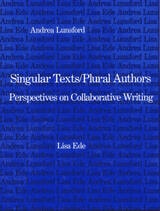
Singular Texts/Plural Authors
Perspectives on Collaborative WritingLisa Ede and Andrea Lunsford
Southern Illinois University Press, 1992
Lisa Ede and Andrea Lunsford challenge the assumption that writing is a solitary act. That challenge is grounded in their own personal experience as long-term collaborators and in their extensive research, including a three-stage study of collaborative writing supported by the Fund for the Improvement of Post-Secondary Education.
The authors urge a fundamental change in our institutions to accommodate collaboration by radically resituating power in the classroom and by instituting rewards for collaborative work that equal rewards for single-authored work. They conclude with the injunction: "Today and in the twenty-first century, our data suggest, writers must be able to work together. They must, in short, be able to collaborate."

Sioux War Dispatches
Reports from the Field, 1876-1877Marc H. Abrams
Westholme Publishing, 2012
Rare, First-Hand Accounts from Newspaper Correspondents Describing the Course of America’s Largest Indian War, Compiled and Edited for the First Time in One Volume
“No one commands better the story of the Great Sioux War of 1876–1877 as presented in the nation’s newspapers than does Marc Abrams. Here is Abrams’s story of America’s greatest Indian war woven from those timely reports, augmented with insightful introductions and annotations. Abrams has produced a significant addition to the historiography of this endlessly fascinating struggle and its colorful personalities.” —Paul L. Hedren, author of After Custer: Loss and Transformation in Sioux Country
“Marc Abrams has provided an invaluable service to both scholars and lay readers in compiling this treasure trove of primary information. Like the correspondents he has come to know through his research, Marc has done the hard work; we need only read in comfort and benefit from his efforts.” —Douglas W. Ellison, author of Sole Survivor: An Examination of the Frank Finkel Narrative
“Marc Abrams’s book is an exciting and innovative approach that brings immediacy to the campaigns of Custer, Crook, and Miles, and teems with fascinating new detail. Sioux War Dispatches not only offers a gripping contemporary window into those times, it fills an important reference need as well.” —Jerome A. Greene, author of Stricken Field: The Little Bighorn Since 1876
Sioux War Dispatches: Reports from the Field, 1876-1877, tells the story of the Great Sioux War, including the battle of the Little Big Horn, primarily through the eyes of contemporary newspaper correspondents, both civilian and military. The volume begins with the Black Hills dilemma and the issue of the unceded territory (the disputed lands that were adjacent to the Great Sioux Reservation) and continues through to the spring of 1877 with the surrender of the legendary Sioux leader Crazy Horse. Along the way readers will learn about the Reynolds battle, the skirmish at Tongue River Heights, the battle of the Rosebud, the battle of the Little Big Horn, the skirmish at Warbonnet Creek, the fight at Slim Buttes, and more. In addition to numerous annotated excerpts from those who were there, are rare original dispatches, reprinted in full, that will take readers on a wild ride through several battles.
Sites of Writing
Essays in Honor of Anne Ruggles GereJames Edward Beitler
University Press of Colorado, 2026
Sites of Writing builds upon the multiple contributions of Anne Ruggles Gere across a long and highly productive career. The chapters in this edited collection, written by leading scholars (including some of Gere’s former students) to track her major contributions to writing studies, situate those contributions within the broader landscape of field development, and draw on those findings to assess important trends and project productive pathways for the future. The contributors to the collection consider disciplinary history, language and literacy, writing across the curriculum, digital rhetoric, writing’s extracurriculum, assessment, and English education, among other areas. Connecting these multiple fields of activity, Sites of Writing affirms Gere’s view of writing as a powerful social and cultural activity and of literacy, broadly conceived, as enabling cultural transformations and, in the process, transforming writing studies and other fields.
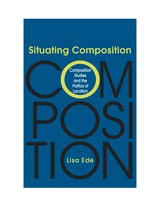
Situating Composition
Composition Studies and the Politics of LocationLisa Ede
Southern Illinois University Press, 2004
Responding to a growing pedagogical paralysis in debates over the nature and status of composition studies as an academic discipline, Lisa Ede offers a provocative inquiry into the politics of composition’s place in the academy. The result is a timely and engaging reflection on the rhetoric, ideology, and ethics of scholarship and instruction in composition studies today.
Situating Composition: Composition Studies and the Politics of Location delves into some of the most vexing issues presently facing the field: its status in relation to English studies, the nature and consequences of the writing process movement, the uneven professionalization of composition teachers, and the widening chasm between theory and practice. Ede interrogates key moments and texts in composition’s evolution, from the writing process movement to Susan Miller’s Textual Carnivals, through the interpretive lenses of historical analysis, theoretical critique, feminist and cultural theory, and Ede’s own two decades of experiences as a teacher and writing program administrator.
Questioning the narratives of progress and paradigm shifts that inform the field’s highly regarded recent theoretical studies, Ede urges scholars to carefully reconsider these claims, to honor the roles of teachers and students as more than dupes of ideology, and to more fully acknowledge—and utilize—the differences between the practice of theory and the practice of teaching. As academic hierarchies of knowledge increasingly privilege scholarship over instruction, Ede warns researchers to be cognizant of the politics and power inherent in their own location in the academy, particularly when professing to speak for teachers and students. To that end, the volume’s conclusion advocates pragmatic avenues for change and proffers topics for future discussion and debate.

Situating Portfolios
edited by Kathleen Blake Yancey & Irwin Weiser
Utah State University Press, 1997
Yancey and Weiser bring together thirty-one writing teachers from diverse levels of instruction, institutional settings, and regions to create a stimulating volume on the current practice in portfolio writing assessment. Contributors reflect on the explosion in portfolio practice over the last decade, why it happened, what comes next; discuss portfolios in hypertext, the web, and other electronic spaces; and consider emerging trends and issues that are involving portfolios in teacher assessment, faculty development, and graduate student experience.
Contributors: Peter Elbow, Pat Belanoff, Gail Hawisher, Cynthia Selfe, Brian Huot, Sandra Murphy, William Condon