Results by title
1106 books match the query 'Memoirs' and 81 start with s
Sounding for Cool
Donald Morrill
Michigan State University Press, 2002
Sounding for Cool is about self-transformation, about growing up on one’s own as a product of contemporary America, and about how to become not just a man, but a contributing adult in society. Donald Morrill presents the day-to-day lives of seven young men (white, black, Hispanic, immigrant, middle-class, thick-headed, poor, and smart), who for various reasons have become homeless. Placed in a Transitional Living Program facility (TLP) by the courts, these men must learn to navigate in the world of “normal” values and reasonable rules. Streetwise and callow, trained to seek shortcuts or to make excuses, they struggle with the structures and assumptions inherent in living a law-abiding, bill-paying life. While sorting out their souls, they learn how to connect with others.
In turn, Sounding for Cool scrutinizes the staff of the TLP, one woman and three men, who variously come to terms with their lives by settling accounts from the past. As a TLP volunteer, Donald Morrill often finds himself bridging the gap between staff and client. In the process of telling their stories, he chronicles his own journey to understand the past. Ultimately, Sounding for Cool asks the enduring questions, “Who am I in the world and what can I become?”
Sounds Like Home
Growing Up Black and Deaf in the SouthMary Herring Wright
Gallaudet University Press, 2019
Space
A MemoirJesse Lee Kercheval
University of Wisconsin Press, 2014
Speak to Me!
Marcia Forecki
Gallaudet University Press, 1985
Marcia Calhoun Forecki has written an engrossing, personal account of her life with Charlie, an adorable, active, deaf seven-year-old. Speak to Me! is the story of an ordinary hearing person confronted with an overwhelming reality—the fact that her son is deaf. Forecki’s struggle as a single parent to care for her child, to find the “right” schools, and to establish communication with her son will strike a familiar chord in all hearing parents of deaf children. All readers, parents or not, will be touched by the mixture of pathos and humor in this well-written account.
Speechwright
An Insider's Take on Political RhetoricWilliam F. Gavin
Michigan State University Press, 2011
For almost thirty years, William F. Gavin wrote speeches at the highest levels of government. Speechwright is his insider’s view of politics, a shrewd critique of presidential and congressional rhetoric, and a personal look at the political leaders for whom he wrote speeches. While serving President Richard Nixon and candidate Ronald Reagan, Gavin advocated for “working rhetoric”—well-crafted, clear, hard-hitting arguments that did not off er visions of the unattainable, but instead limited political discourse to achievable ends reached through practical means. Filled with hard-earned wisdom about politics and its discontents, Speechwright describes Gavin’s successes, his failures, and his call for political rhetoric built on strong argument rather than the mere search for eloquence.
Spinning Tea Cups
A Mythical American MemoirAlexandra Teague
Oregon State University Press, 2023
How did people who prided themselves on making everything from scratch manage to afford annual trips to Disney World? Did her mother really have psychic abilities? Why did her sensitive youngest nephew speak in a voice that wasn’t his own? How do family legacies of grief and dysfunction and creativity intersect? How can she escape her circumstances without replicating the escapist fantasies with which she was raised?
Teague attempts to understand and contextualize her family in terms of trauma and mental health, but also with deep love and humor. Carefully attuned to the vagaries of geographical cultures, she weaves her family’s history with explorations of pop culture and the specific cultures of the places she and her family pass through: a Texas city, an Victorian tourist town in Arkansas, a Southwest ghost town, Central Florida, the Bay Area, Kansas City, and a college town in the Inland Northwest.
Spinning Tea Cups will appeal to readers interested in American cultural studies, those concerned with the ongoing crisis of mental illness in this country, and anyone seeking to explore the dangerous and recuperative powers of fantasy.
Spirituality and the Writer
A Personal InquiryThomas Larson
Ohio University Press, 2019
Today, the surprisingly elastic form of the memoir embraces subjects that include dying, illness, loss, relationships, and self-awareness. Writing to reveal the inner self—the pilgrimage into one’s spiritual and/or religious nature—is a primary calling. Contemporary memoirists are exploring this field with innovative storytelling, rigorous craft, and new styles of confessional authorship. Now, Thomas Larson brings his expertise as a critic, reader, and teacher to the boldly evolving and improvisatory world of spiritual literature.
In his book-length essay Spirituality and the Writer, Larson surveys the literary insights of authors old and new who have shaped religious autobiography and spiritual memoir—from Augustine to Thomas Merton, from Peter Matthiessen to Cheryl Strayed. He holds them to an exacting standard: they must render transcendent experience in the writing itself. Only when the writer’s craft prevails can the fleeting and profound personal truths of the spirit be captured. Like its predecessor, Larson’s The Memoir and the Memoirist,Spirituality and the Writer will find a home in writing classrooms and book groups, and be a resource for students, teachers, and writers who seek guidance with exploring their spiritual lives.
Star Charting
Bess Matassa
Duke University Press, 2026
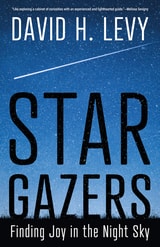
Star Gazers
Finding Joy in the Night SkyDavid H. Levy
University of Arizona Press, 2025
Bringing together writing from across two decades of stargazing, Levy explores the different aspects of the night sky, from the simple star-studded vault that appears every clear night, to insight into how some amateur astronomers use advanced equipment to image details of the night sky. He writes about the James Webb Space Telescope and the Northern Lights, offering commentary on astronomical events and the profound questions they inspire. While there are books that describe how to observe the sky, this book explains why.
Star Gazers is a celebration of the joy and mystery found in the stars, with the author’s personal experiences serving as a continuous thread throughout. Whether you are a seasoned astronomer or a curious newcomer, Star Gazers will inspire you to look up and embrace the night sky with renewed passion and curiosity.
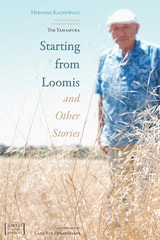
Starting from Loomis and Other Stories
Hiroshi Kashiwagi
University Press of Colorado, 2013
Central to this collection are Kashiwagi’s confinement at Tule Lake during World War II, his choice to answer “no” and “no” to questions 27 and 28 on the official government loyalty questionnaire, and the resulting lifelong stigma of being labeled a “No-No Boy” after his years of incarceration. His nonlinear, multifaceted writing not only reflects the fragmentations of memory induced by traumas of racism, forced removal, and imprisonment but also can be read as a bold personal response to the impossible conditions he and other Nisei faced throughout their lifetimes.
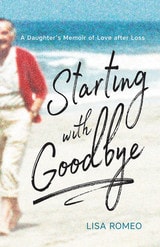
Starting with Goodbye
A Daughter's Memoir of Love after LossLisa Romeo
University of Nevada Press, 2018
Lisa reconsiders the affluent upbringing he financed (filled with horses, lavish vacations, bulging closets), and the emotional distance that grew when he retired to Las Vegas and she remained in New Jersey where she and her husband earn moderate incomes. She also confronts death rituals, navigates new family dynamics, while living both in memory and the unfolding moment.
In this brutally honest yet compelling portrayal and tribute, Lisa searches for meaning, reconciling the Italian-American father—self-made textile manufacturer who liked newspapers, smoking, Las Vegas craps tables, and solitude—with the complex man she discovers influenced everything, from career choice to spouse.
By forging a new father-daughter “relationship,” grief is transformed to hopeful life-affirming redemption. In poignant, often lyrical prose, this powerful, honest book proves that when we dare to love the parent who challenged us most, it’s never too late.
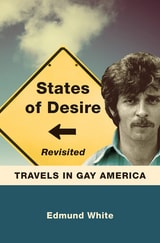
States of Desire Revisited
Travels in Gay AmericaEdmund White
University of Wisconsin Press, 2014
White frames those past travels with a brief, bracing review of gay America since the 1970s ("now we were all supposed to settle down with a partner in the suburbs and adopt a Korean daughter"), and a reflection on how Internet culture has diminished unique gay places and scenes but brought isolated individuals into a global GLBTQ community.
States of Plague
Reading Albert Camus in a PandemicAlice Kaplan and Laura Marris
University of Chicago Press, 2022
As one of the most discussed books of the COVID-19 crisis, Albert Camus’s classic novel The Plague has become a new kind of literary touchstone. Surrounded by terror and uncertainty, often separated from loved ones or unable to travel, readers sought answers within the pages of Camus’s 1947 tale about an Algerian city gripped by an epidemic. Many found in it a story about their own lives—a book to shed light on a global health crisis.
In thirteen linked chapters told in alternating voices, Alice Kaplan and Laura Marris hold the past and present of The Plague in conversation, discovering how the novel has reached people in their current moment. Kaplan’s chapters explore the book’s tangled and vivid history, while Marris’s are drawn to the ecology of landscape and language. Through these pages, they find that their sense of Camus evolves under the force of a new reality, alongside the pressures of illness, recovery, concern, and care in their own lives. Along the way, Kaplan and Marris examine how the novel’s original allegory might resonate with a new generation of readers who have experienced a global pandemic. They describe how they learned to contemplate the skies of a plague spring, to examine the body politic and the politics of immunity.
Both personal and eloquently written, States of Plague uncovers for us the mysterious way a novel can imagine the world during a crisis and draw back the veil on other possible futures.
Stealing with the Eyes
Imaginings and Incantations in IndonesiaWill Buckingham
Haus Publishing, 2018
Through his encounters with these remarkable craftsmen—which in relating her also interweaves with Tanimbarese history, myth, and philosophy dating back to ancient times— we are shown the forces at play in all of our lives: the struggle between the powerful and the powerless, the tension between the past and the future, and how to make sense of a world that is in constant flux.
Stegner
Conversations On History And LiteratureWallace Stegner
University of Nevada Press, 1996
Steinbeck’s Uneasy America
Rereading “Travels with Charley”Edited by Barbara A. Heavilin and Susan Shillinglaw
University of Alabama Press, 2025
A road trip through Steinbeck’s America—revisited, reimagined, and reinterpreted.
Steinbeck’s Uneasy America is the first collection of critical scholarship devoted to Travels with Charley in Search of America, John Steinbeck’s best-selling, late-career travel memoir. In 1960, Steinbeck was a renowned man of American letters. Many considered him America’s troubadour of ordinary people, the conscience of the country. But weakened by two small strokes and anxious that he had lost touch with America, he embarked on a cross-country road trip accompanied by his wife’s standard poodle, Charley. Two years later, he published Travels with Charley to popular acclaim and robust sales.
Throughout this narrative, Steinbeck insists that all of our perceptions are “warped” by personality, history, and society. And while this hybrid and experimental book has long been accepted as an accurate account of his journey, journalists and scholars agree that the narrative is part factual, part fiction—America as seen through Steinbeck’s particular “warp.” The work is long overdue for scholarly assessment.
Steinbeck’s Uneasy America explores three main topics. Part 1 explores genre and form to consider the degree to which the work is fiction or nonfiction. Part 2 assesses Steinbeck’s increasingly bleak assessment of America—almost a jeremiad that warns citizens of ecological excess and political apathy. Part 3 focuses on Travels with Charley as a road text, travel adventure, and literary influence.
This volume’s authors offer rich scholarly insights and a wealth of stories, facts, and anecdotes about Steinbeck and the adventures and misadventures he and Charley met on the road. Lively and groundbreaking, the collection both enlightens and enlivens discussions of Steinbeck and of the twentieth-century American book world.
Stirring It Up with Molly Ivins
A Memoir with RecipesBy Ellen Sweets
University of Texas Press, 2011
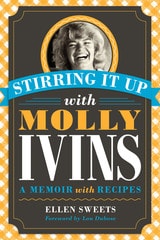
You probably knew Molly Ivins as an unabashed civil libertarian who used her rapier wit and good ole Texas horse sense to excoriate political figures she deemed unworthy of our trust and respect. But did you also know that Molly was one helluva cook? And we're not just talking chili and chicken-fried steak, either. Molly Ivins honed her culinary skills on visits to France—often returning with perfected techniques for saumon en papillote or delectable clafouti aux cerises. Friends who had the privilege of sharing Molly's table got not only a heaping helping of her insights into the political shenanigans of the day, but also a mouth-watering meal, prepared from scratch with the finest ingredients and assembled with the same meticulous attention to detail that Molly devoted to skewering a political recalcitrant.
In Stirring It Up with Molly Ivins, her longtime friend, fellow reporter, and frequent sous-chef Ellen Sweets takes us into the kitchen with Molly and introduces us to the private woman behind the public figure. She serves up her own and others' favorite stories about Ivins as she recalls the fabulous meals they shared, complete with recipes for thirty-five of Molly's signature dishes. These stories reveal a woman who was even more fascinating and complex than the "professional Texan" she enjoyed playing in public. Friends who ate with Molly knew a cultured woman who was a fluent French speaker, voracious reader, rugged outdoors aficionado, music lover, loyal and loving friend, and surrogate mom to many of her friends' children, as well as to her super-spoiled poodle. They also came to revere the courageous woman who refused to let cancer stop her from doing what she wanted, when she wanted. This is the Molly you'll be delighted to meet in Stirring It Up with Molly Ivins.
Stories We Tell Ourselves
"Dream Life" and "Seeing Things"Michelle Herman
University of Iowa Press, 2013
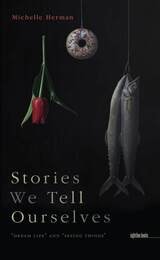
“Seeing Things” recounts a journey of mother and daughter—a Holmes-and-Watson pair intrepidly working their way through the mysteries of a disorder known as Alice in Wonderland Syndrome—even as it restlessly detours into the world beyond the looking glass of the unconscious itself. In essays that constantly offer layers of surprises and ever-deeper insights, the author turns a powerful lens on the relationships that make up a family, on expertise and unsatisfying diagnoses, on science and art and the pleasures of contemplation and inquiry—and on our fears, regrets, hopes, and (of course) dreams.
Storm Beat
A Journalist Reports from the Oregon CoastLori Tobias
Oregon State University Press, 2020
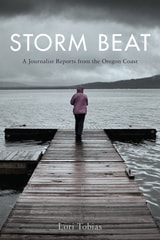
The Oregon Coast is a rugged, beautiful region. Separated from the state’s population centers by the Coast Range, it is a land of small towns reliant primarily on fishing and tourism, known for its dramatic landscapes and dramatic storms. Many of the stories Tobias covered were tragedies: car crashes, falls, drownings, capsizings. And those are just the accidents; Tobias covered plenty of violent crimes as well. But her stories also include more lighthearted moments, including her own experiences learning to live on and cover the coast. Tobias’s story is as much her own as it is the coast’s; she takes the reader through familiar beats of life (regular trips back east as her parents age), the decline of journalism in the twenty-first century, and the unexpected (and not entirely glamorous) experiences of a working reporter—such as a bout of vertigo after rappelling from a helicopter onto a ship. Ultimately, Tobias tells a compelling story of a region that many visit but few truly know.
Straw in the Sun
A MemoirCharlie May Simon
University of Arkansas Press, 2025
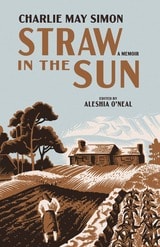
These opening lines of Charlie May Simon’s Straw in the Sun invite readers on a personal journey of remembrance as Simon recounts her homesteading experiment in Depression-era Arkansas. Years before she established herself as a regional author of national renown, she chose a spot near Cove Creek, now part of Ouachita National Forest, to forge a home from rugged land, meeting both a backbreaking series of challenges and a vivid cast of characters in the process.
Nationally popular upon its release in 1945, Simon’s lyrical memoir was praised from the outset for its warmth and charm. At once an ethnographic narrative of a hill community and an accessible portrait of Ozarks memories at their most idyllic, Straw in the Sun, offered here with a robust introduction from Simon scholar Aleshia O’Neal, is a classic ready for rediscovery by a new generation of readers.
Stream
Living in FluxCallum Angus
Northwestern University Press, 2027
A nonfiction work examining a confluence of bodily and worldwide transition
Stream is an exploration of the large- and small-scale changes taking place in a single body and on our planet as a whole. Using a stream as a biological, technological, and psychological metaphor, Angus layers lyric essay, journal entries, and the detritus of a life spent writing about the climate within and without to consider how we remain fluid in a time of constant change. Each section of Stream flows into the next, weaving through thaws, floods, cataracts, and eddies while asking how a melting of rigid categories, from seasons to gender, might help us approach a changing world anew. From winery workers dying in the fields to endangered desert tortoises unable to outrun the flames, Stream is an outpouring of climatological grief toward those who perpetuate inaction, an elegy for those we’ve lost to the heat, and a tribute to the tributaries that help us see the world from other perspectives.
Subversive Lives
A Family Memoir of the Marcos YearsSusan F. Quimpo
Ohio University Press, 2016
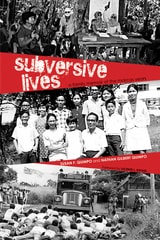
From the 1960s to the 1990s, seven members of the Quimpo family dedicated themselves to the anti-Marcos resistance in the Philippines, sometimes at profound personal cost. In this unprecedented memoir, eight siblings (plus one by marriage) tell their remarkable stories in individually authored chapters that comprise a family saga of revolution, persistence, and, ultimately, vindication, even as easy resolution eluded their struggles.
Subversive Lives tells of attempts to smuggle weapons for the New People’s Army (the armed branch of the Communist Party of the Philippines); of heady times organizing uprisings and strikes; of the cruel discovery of one brother’s death and the inexplicable disappearance of another (now believed to be dead); and of imprisonment and torture by the military. These stories show the sacrifices and daily heroism of those in the movement. But they also reveal its messy legacies: sons alienated from their father; daughters abused by the military; friends betrayed; and revolutionary affection soured by intractable ideological differences.
The rich and distinctive contributions span the martial law years of Ferdinand Marcos’s rule. Subversive Lives is a riveting and accessible primer for those unfamiliar with the era, and a resonant history for those with a personal connection to what it meant to be Filipino at that time, or for anyone who has fought political repression.
Sugar Bush Babies
Stories of My Ojibwe GrandmotherJanis A. Fairbanks
University of Minnesota Press, 2025
A memoir of lessons learned from an Ojibwe grandmother during the time of Relocation
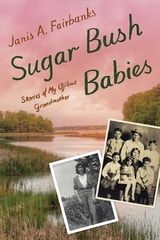
Why, her mother asked, did Janis keep running away from kindergarten? She wanted to go home. But not to the house they had just moved to in Duluth, with its gravel yard and traffic noise. She was a country girl, and home was the log cabin among the wildflowers on the Leech Lake Indian Reservation in Bena, Minnesota. Knowing they were now going to stay in the city, Janis’s parents offered her a compromise: during the summer, Janis could leave the bustle of Duluth and live with her grandmother on the Fond du Lac Reservation, listening to stories, learning Ojibwe, and finding her place in the world. In Sugar Bush Babies, Janis A. Fairbanks returns to that time of Relocation, dislocation, and discovery, taking us home with her through stories of childhood and lessons learned at her grandmother’s knee, enveloped in love and tradition.
Through the eyes of a child and the teachings of an elder, Fairbanks revisits her life during Indian Relocation from reservations to urban areas, from Ojibwe villages to white communities whose ideas about Indians came from Hollywood Westerns. Recalling her early childhood at Leech Lake, her school days in Duluth, and her summers in Fond du Lac, Janis brings the gifts of living history full circle, continuing the traditions of carrying family lore, women’s wisdom, and Indigenous culture from generation to generation.
There are tales told at nighttime or during thunderstorms; lessons in Native medicine; stories of Grandma’s recollections of boarding school, Daddy’s days as a lumberjack, and Mother’s special powers; memories of wash days and dancing, of powwows and Girl Scout camp, of snaring rabbits, selling lilacs, and attending the circus. A lyrical memoir, Sugar Bush Babies conveys the eloquence of women speaking and sharing through generations and the lasting power of tradition.
Supremely Tiny Acts
A Memoir of a DaySonya Huber
The Ohio State University Press, 2021
“I think we have to get to the real, to catch the facts we have, to hold on to what we see. . . .in this time where lies are currency,” Sonya Huber writes in her book-length essay Supremely Tiny Acts: A Memoir of a Day. On the theory that naming the truths of quotidian experience can counter the dangerous power of lies, she carefully recounts two anxiety-fueled days one fall. On the first, she is arrested as part of a climate protest in Times Square. On the other, she must make it to her court appearance while also finding time to take her son to get his learner's permit. Paying equal attention to minor details, passing thoughts, and larger political concerns around activism and parenting in the Trump-era United States, Huber asks: How can one simultaneously be a good mother, a good worker, and a good citizen? As she reflects on the meaning of protest and on whiteness and other forms of privilege within political activism, Huber offers a wry, self-aware, and stirring testament to the everyday as a seedbed for meaningful change.
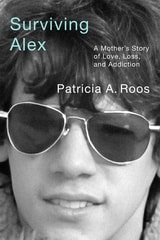
Surviving Alex
A Mother’s Story of Love, Loss, and AddictionPatricia A. Roos
Rutgers University Press, 2024
Weaving together a personal narrative and a sociological perspective, Surviving Alex movingly describes how even children from “good families” fall prey to addiction, and recounts the hellish toll it takes on families. Drawing from interviews with Alex’s friends, family members, therapists, teachers, and police officers—as well as files from his stays in hospitals, rehab facilities, and jails—Roos paints a compelling portrait of a young man whose life veered between happiness, anxiety, success, and despair. And as she explores how a punitive system failed her son, she calls for a community of action that would improve care for substance users and reduce addiction, realigning public health policy to address the overdose crisis.
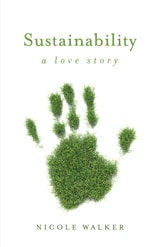
Sustainability
A Love StoryNicole Walker
The Ohio State University Press, 2018
This book is for the burnt-out environmentalist, the lazy environmentalist, the would-be environmentalist. It’s for those who believe the planet is dying. For those who believe they are dying. And for those who question what it means to live and love sustainably, and maybe even with hope.
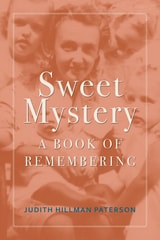
Sweet Mystery
A Book of RememberingJudith Hillman Paterson
University of Alabama Press, 2020
Judith Paterson was just nine years old in 1946 when her mother died of a virulent combination of alcoholism and mental illness at the age of 31. Sweet Mystery: A Book of Remembering is Paterson’s harrowing account of the memories of her mother, told with eloquence and understanding. Set largely in Montgomery, Alabama, the story plays out against a backdrop of relatives troubled almost as much by southern conflicts over race and class as by the fallout from a long family history of drinking, denial, and mental illness.
While rich in the details and flavor of small-town life in the South during the 1940s, Sweet Mystery transcends time and regionalism to evoke universal American themes. Ultimately, it confirms the damaging effects of early trauma on children as well as the innate and familial strengths that enable some children to survive, grow up, and heal.
Originally published in 1996 to critical acclaim in the national media, Sweet Mystery was called “a beautifully written, excruciating collision of form and emotion, joy and pain, willpower and self-examination, control and surrender” by the Washington Post. This edition contains a new afterword written by the author as well as a list of suggested readings.
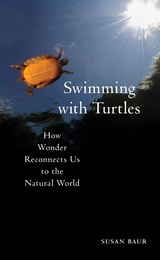
Swimming with Turtles
How Wonder Reconnects Us to the Natural WorldSusan Baur
University of Massachusetts Press, 2026
A memoir of discovery, loss, and wonder that shows us how to slow down
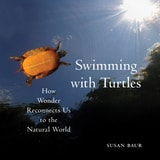
When psychologist and author Susan Baur first slipped into a Cape Cod pond with a snorkel, she wasn’t looking for transformation, just a swim. But beneath the surface, she discovered something extraordinary: minnows hiding among water lilies; fresh-water jellies like jewels and—most striking of all—painted, musk, and snapping turtles. Whether the turtles were buried in mud, teetering on a submerged branch, or drifting like ancient astronauts, they pulled her into a mysterious happiness she could not explain.
Learning to move slowly enough to see them became both her new discipline and her greatest joy. Each dive required patience, curiosity, and humility, and she learned to read the water, follow a subtle shadow, and anticipate the turtles’ rhythms without disturbing their world. As she mastered the art of swimming with turtles, Baur also fell in love with an older man whose companionship deepened her connection to the natural world. When he passed away, grief drove her deeper into the water. There, among the turtles, she found solace and purpose: a reason to keep diving, looking, and learning.
Over nearly two decades, Baur became a self-taught naturalist, children’s author (of The Turtle Sisters series), and unlikely environmental advocate, founding Old Ladies Against Underwater Garbage to protect the ponds she had grown to love. With humor, heart, and vivid observation, Baur shows that wonder isn’t reserved for the young or the lucky—it waits beneath the surface for anyone willing to slow down, look closely, and stay a while.
Swimming with Turtles
How Wonder Reconnects Us to the Natural WorldWritten by Susan Baur. Narrated by Moe Egan
University of Massachusetts Press, 2026
A memoir of discovery, loss, and wonder that shows us how to slow down
When psychologist and author Susan Baur first slipped into a Cape Cod pond with a snorkel, she wasn’t looking for transformation, just a swim. But beneath the surface, she discovered something extraordinary: minnows hiding among water lilies; fresh-water jellies like jewels and—most striking of all—painted, musk, and snapping turtles. Whether the turtles were buried in mud, teetering on a submerged branch, or drifting like ancient astronauts, they pulled her into a mysterious happiness she could not explain.
Learning to move slowly enough to see them became both her new discipline and her greatest joy. Each dive required patience, curiosity, and humility, and she learned to read the water, follow a subtle shadow, and anticipate the turtles’ rhythms without disturbing their world. As she mastered the art of swimming with turtles, Baur also fell in love with an older man whose companionship deepened her connection to the natural world. When he passed away, grief drove her deeper into the water. There, among the turtles, she found solace and purpose: a reason to keep diving, looking, and learning.
Over nearly two decades, Baur became a self-taught naturalist, children’s author (of The Turtle Sisters series), and unlikely environmental advocate, founding Old Ladies Against Underwater Garbage to protect the ponds she had grown to love. With humor, heart, and vivid observation, Baur shows that wonder isn’t reserved for the young or the lucky—it waits beneath the surface for anyone willing to slow down, look closely, and stay a while.
Swooning Beauty
A Memoir Of PleasureJoanna Frueh
University of Nevada Press, 2006
When her parents died and her marriage disintegrated within the span of a few months, art historian and performance artist Joanna Frueh entered a painful period of grief and mourning. This book is about how she healed herself and in the process explored the range of her potential as a woman.Swooning Beauty is an intimate memoir of discovery and healing. Frueh’s path to recovery lay through a profound examination of her intuitions, desires, fantasies, dreams, and emotions, her capacity for pleasure—visual, sensual, intellectual, gastronomic, and erotic—and her sense of her own heroic female identity. Hers is the passionate voice of a creative, intelligent woman scrutinizing the nature of love in all its forms and the ways of being that make us free, flexible, more fully real and more fully human. The result is an engaging view into the rich and colorful inner life of a woman at the threshold of middle age, of the blossoming of mind and spirit that comes after suffering and self-realization. Pleasure, she concludes, “is the absence of lack. Self-love is a necessary plenitude. Vigilance in love brings us freedom. Freedom is not an absolute whose attainment is humanly impossible. Yogis say that the self that is not ego is free. That self is the spacious heart, the spacious mind.” Frueh offers us wisdom and comfort for the journey into middle age, and the deep pleasure of encountering a generous, lively spirit and a remarkably spacious mind.
Syracuse
Sicily's City of StoriesJoachim Sartorius
Haus Publishing, 2026
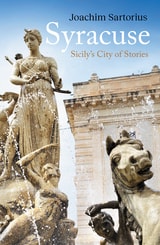
Twenty-five hundred years ago, the city of Syracuse on the eastern coast of Sicily was, for the Ancient Greeks, one of the centers of the classical world. It was in Syracuse that Aeschylus premiered his plays, and to Syracuse that Plato would visit from Athens, where the tyrant Dionysius bought Euripides's lyre at auction, and the languishing nymph Arethusa hid in the papyrus grove.
Living in the city, the poet Joachim Sartorius learned that this history and myth are still present today. At Sartorius's side, we walk with nymphs and cyclops through the old town of Ortigia and meet the people of the city: its notables, police officers, artists, and barbers.
Unraveling the depths of Sicilian history and bringing the juxtaposition, superimposition, and commingling of cultures, styles, and attitudes to life, Sartorius shows a city of ancient luminosity, bringing us, through the baroque, to the contemporary world.