Results by title
2335 books match the query 'Modern' and 142 start with s
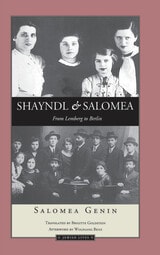
Shayndl and Salomea
From Lemberg to BerlinSalomea Genin
Northwestern University Press, 1997
Genin's richly detailed portrait shows the effects of a family's struggle—personal, religious, social, and for their very survival—against the shadow of the Nazi rise to power.
Sherlock Holmes, Esq., and John H. Watson, M.D.
An Encyclopaedia of Their AffairsOrlando Park
Northwestern University Press, 1962
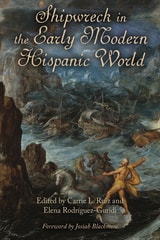
Shipwreck in the Early Modern Hispanic World
Carrie L. Ruiz
Bucknell University Press, 2022
Shuva
The Future of the Jewish PastYehuda Kurtzer
Brandeis University Press, 2012
Signature Derrida
Jacques Derrida
University of Chicago Press, 2013
Silent Medievalisms
Reimagining the Middle Ages During Film’s Foundational EraEdited by Tison Pugh and Angela Jane Weisl
The Ohio State University Press, 2026
Contributors:
Kimberly Ball, Elizabeth Coggeshall, John Haines, Kevin J. Harty, Valerie B. Johnson, Tison Pugh, Sabina Rahman, Carol L. Robinson, Robert Squillace, Alexandra Sterling-Hellenbrand, Alfred Thomas, Laura E. Wangerin, Angela Jane Weisl
Sin and Salvation in Early Modern France
Three Women’s StoriesMarguerite d'Auge, Renée Burlamacchi, and Jeanne du Laurens
Iter Press, 2017
The texts available here in English for the first time open a window into the lives of three early modern Frenchwomen as they explore the common themes of family, memory, sin, and salvation. The Regrets of Marguerite d’Auge (1600), the Memoirs of Renée Burlamacchi (1623), and the Genealogy of Jeanne du Laurens (1631), taken from different genres of historical writings, raise important questions: Why and how did female authorship find its way into the historical record? How did these voices escape the censorship and prejudice against female publication? In a time of extreme religious conflict, how did these women convey their views on controversial issues such as primacy of grace, indulgences, and salvation without disrupting the gender expectations of the era?
Singing in the Age of Anxiety
Lieder Performances in New York and London between the World WarsLaura Tunbridge
University of Chicago Press, 2018
Laura Tunbridge explores the renewed vitality of this refugee musical form between the world wars, offering a fresh perspective on a period that was pervaded by anxieties of displacement. Through richly varied case studies, Singing in the Age of Anxiety traces how lieder were circulated, presented, and consumed in metropolitan contexts, shedding new light on how music facilitated unlikely crossings of nationalist and internationalist ideologies during the interwar period.
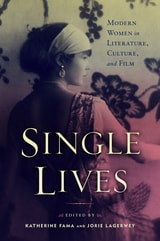
Single Lives
Modern Women in Literature, Culture, and FilmKatherine Fama
Rutgers University Press, 2022
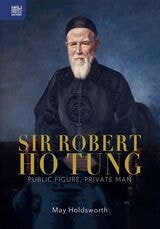
Sir Robert Ho Tung
Public Figure, Private ManMay Holdsworth
Hong Kong University Press, 2022
Sir Robert Ho Tung (1862–1954) is a compelling figure in Hong Kong history. He is regularly portrayed as the colony’s greatest philanthropist and wealthiest man of his day, the first Chinese to live on the Peak, and, at the end of his life, the “Grand Old Man of Hong Kong.” The illegitimate son of a Chinese mother and European father, he was highly sensitive about his mixed heritage, although his success was driven as much by his entrepreneurial talents as by his being Eurasian. This book shows him in all his immense variety—financial wizard, husband and lover, patriarch of a large family, loyal British subject but also, paradoxically, Chinese patriot. China’s president Yuan Shikai awarded him the Order of the Excellent Crop, and King George V knighted him. May Holdsworth’s thoughtful and deftly written account of his life is the first full-length biography in English. Given unique and unprecedented access to family and personal papers, including letters, diaries, notes, and photographs, she offers a nuanced perspective on a public but also a private man. Her book will be a rich resource for historians and readers interested in the men and women who played a key part in the shaping of nineteenth- and early twentieth-century Hong Kong.
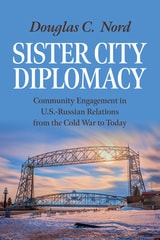
Sister City Diplomacy
Community Engagement in U.S.–Russian Relations from the Cold War to TodayDouglas C. Nord
University of Wisconsin Press, 2025
Sister City Diplomacy offers a historical account of citizen diplomacy set in a unique political and social environment. But in its theoretical grounding and informed arguments, this study speaks to much broader and contemporary concerns, both in terms of United States–Russian relations today and with regard to the challenges and opportunities of community-based diplomacy in general. Lessons learned along the shores of Lakes Superior and Onega in the last days of the Cold War hold great value given the heightened tensions of current geopolitics.
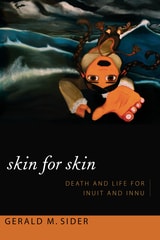
Skin for Skin
Death and Life for Inuit and InnuGerald M. Sider
Duke University Press, 2014
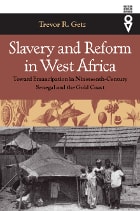
Slavery and Reform in West Africa
Toward Emancipation in Nineteenth-Century Senegal and the Gold CoastTrevor R. Getz
Ohio University Press, 2004
A series of transformations, reforms, and attempted abolitions of slavery form a core narrative of nineteenth-century coastal West Africa. As the region’s role in Atlantic commercial networks underwent a gradual transition from principally that of slave exporter to producer of “legitimate goods” and dependent markets, institutions of slavery became battlegrounds in which European abolitionism, pragmatic colonialism, and indigenous agency clashed.
In Slavery and Reform in West Africa, Trevor Getz demonstrates that it was largely on the anvil of this issue that French and British policy in West Africa was forged. With distant metropoles unable to intervene in daily affairs, local European administrators, striving to balance abolitionist pressures against the resistance of politically and economically powerful local slave owners, sought ways to satisfy the latter while placating or duping the former.
The result was an alliance between colonial officials, company agents, and slave-owning elites that effectively slowed, sidetracked, or undermined serious attempts to reform slave holding. Although slavery was outlawed in both regions, in only a few isolated instances did large-scale emancipations occur. Under the surface, however, slaves used the threat of self-liberation to reach accommodations that transformed the master-slave relationship.
By comparing the strategies of colonial administrators, slave-owners, and slaves across these two regions and throughout the nineteenth century, Slavery and Reform in West Africa reveals not only the causes of the astounding success of slave owners, but also the factors that could, and in some cases did, lead to slave liberations. These findings have serious implications for the wider study of slavery and emancipation and for the history of Africa generally.
Slavery, Emancipation and Colonial Rule in South Africa
Wayne Dooling
Ohio University Press, 2008
Sleep Fictions
Rest and Its Deprivations in Progressive-Era LiteratureHannah L. Huber
University of Illinois Press, 2023
A turn-of-the-century influx of new technologies and the enormous impact of the electric light transformed not only individual sleeping habits but the ways American culture conceived and valued sleep. Hannah L. Huber analyzes the works of Henry James, Edith Wharton, Charles Chesnutt, and Charlotte Perkins Gilman to examine the literary response to the period’s obsession with wakefulness. As these writers blurred the separation of public and private space, their characters faced exhaustion in a modern world that permeated every moment of their lives with artificial light, traffic noise, and the social pressure to remain active at all hours. The implacable cultural clock and constant stress over physical limitations had an even greater impact on marginalized figures. Huber pays particular attention to how these writers rebutted Americans’ confidence in the body’s ability to conquer sleep with vivid portraits of the devastating consequences of sleep disruption and deprivation.
The author also provides a website and text visualization tool that offers readers an interdisciplinary, deconstructed analysis of the book’s primary texts. The website can be found at: https://sleepfictions.org/sleep/scalar/index
Slips of the Mind
Poetry as ForgettingJennifer Soong
University of Chicago Press, 2025
In Slips of the Mind, poet and critic Jennifer Soong turns away from forgetting’s long-standing associations with suppression, privation, and error to argue that the absence or failure of memory has often functioned as a generative creative principle. Exploring forgetting not as the mere rejection of a literary past or a form of negative poetics, Soong puts to the test its very aesthetic meaning. What new structures, forms of desires, styles, and long and short feelings do lapses in time allow? What is oblivion’s relationship to composition? And how does the twentieth-century poet come to figure as the quintessential embodiment of such questions?
Soong uncovers forgetting’s influence on Gertrude Stein, Lyn Hejinian, Tan Lin, Harryette Mullen, Lissa Wolsak, and New York School poets John Ashbery, James Schuyler, Bernadette Mayer, and Ted Berrigan, among others. She reveals that forgetting’s shapeshifting produces differences in poetic genre, interest, and degrees of intentionality—and that such malleability is part of forgetting’s nature. Most provocatively, Soong shows how losing track of things, leaving them behind, or finding them already gone resists overdetermination and causality in the name of surprise, as poets leverage forgetting in order to replace identity with style. Slips of the Mind is the kind of literary criticism that will reward all readers of modern and contemporary poetry.
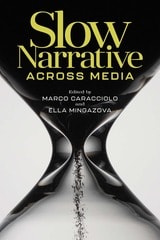
Slow Narrative across Media
Edited by Marco Caracciolo and Ella Mingazova
The Ohio State University Press, 2024
Slowness is frequently seen as a response to modernity’s cult of speed and efficiency, and its influence in contemporary culture can be felt in artistic trends such as “slow cinema” or “slow TV.” Despite the popularity of these labels, however, slowness remains undertheorized in contemporary narrative scholarship. What makes a narrative slow, and what conceptual and analytical tools are best suited to account for this slowness? Is slowness a feature of certain narratives, an experiential response to these narratives, or both? How is narrative slowness related to the pace and rhythm of plot, and how does it carry cultural significance?
Slow Narrative across Media illuminates the concept of slow narrative and demonstrates how it manifests across media forms: from short stories to novel cycles, to comics, to music, to experimental film. Led by editors Marco Caracciolo and Ella Mingazova, contributors draw on cognitive and rhetorical approaches to narrative as well as on econarratology to bring into focus both the media-specific ways in which narrative evokes slowness and the usefulness of a transmedial approach to this phenomenon.
Contributors:
Jan Baetens, Raphaël Baroni, Lars Bernaerts, Marco Caracciolo, Karin Kukkonen, Ella Mingazova, Peggy Phelan, Greice Schneider, Roy Sommer, Carolien Van Nerom, Gary Weissman
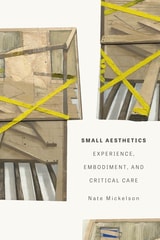
Small Aesthetics
Experience, Embodiment, and Critical CareNate Mickelson
Northwestern University Press, 2027
Synthesizing emerging theories of aesthetic action in relation to literary and art criticism
Drawing attention to what critical theorist Heather Love identifies as “the micro,” contemporary artists use small materials and cross‑media methods to elicit interpretation and foster critical engagement, immersing audiences in the entangled relations engendered with near and distant others through artistic experience. Small Aesthetics analyzes this insurgent tradition in twentieth- and twenty‑first-century poetry and art to show how it confronts the challenges of creating mutually sustaining lives. Feminist and feminist‑of‑color theorists have long argued that acts of care take on critical force when they foreground collective well-being and solidarity across power, class, and cultural differences. Guided by their insights, Nate Mickelson proposes that literary and visual artworks elicit acts of caring attention that engage audiences in their responsibilities to tend to the collective structures through which their lives unfold. Through his close readings, he extends the “post‑critical turn” in literary and art criticism and demonstrates the urgent vitality of feminist, Black, Latine, queer, and trans lives in increasingly hostile social contexts.

So Far from Allah, So Close to Mexico
Middle Eastern Immigrants in Modern MexicoBy Theresa Alfaro-Velcamp
University of Texas Press, 2007
Middle Eastern immigration to Mexico is one of the intriguing, untold stories in the history of both regions. In So Far from Allah, So Close to Mexico, Theresa Alfaro-Velcamp presents the fascinating findings of her extensive fieldwork in Mexico as well as in Lebanon and Syria, which included comprehensive data collection from more than 8,000 original immigration cards as well as studies of decades of legal publications and the collection of historiographies from descendents of Middle Eastern immigrants living in Mexico today.
Adding an important chapter to studies of the Arab diaspora, Alfaro-Velcamp's study shows that political instability in both Mexico and the Middle East kept many from fulfilling their dreams of returning to their countries of origin after realizing wealth in Mexico, in a few cases drawing on an imagined Phoenician past to create a class of economically powerful Lebanese Mexicans. She also explores the repercussions of xenophobia in Mexico, the effect of religious differences, and the impact of key events such as the Mexican Revolution.
Challenging the post-revolutionary definitions of mexicanidad and exposing new aspects of the often contradictory attitudes of Mexicans toward foreigners, So Far from Allah, So Close to Mexico should spark timely dialogues regarding race and ethnicity, and the essence of Mexican citizenship.
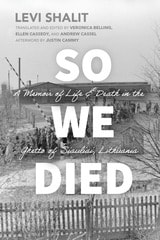
So We Died
A Memoir of Life and Death in the Ghetto of Šiauliai, LithuaniaLevi Shalit, translated and edited by Veronica Belling, Ellen Cassedy, and Andrew Cassel, introduction by Veronica Belling, afterword by Justin Cammy
University of Alabama Press, 2025
In the shadow of death, Levi Shalit wrote to remember—so we would never forget.
So We Died: A Memoir of Life and Death in the Ghetto of Šiauliai, Lithuania (Azoy zaynen mir geshtorbn) is a powerful eyewitness account of the Shavl ghetto during the Nazi occupation of Lithuania. Written in Yiddish by Levi Shalit and available now for the first time in English, the work fills a stark void in historical records.
Shalit divided his work into four sections. In the first, he describes the German invasion of Šiauliai, the murder of thousands of Jews in the city and surrounding countryside, and the forced relocation of the surviving Jews into the Shavl ghetto. In the second, he describes daily life in the ghetto in engrossing detail. In the third, titled “The Masada Book,” Shalit describes ghetto residents’ attempt to organize a resistance group of which he himself was a member. In the fourth, he narrates the transformation of the ghetto into a concentration camp and the seizure and deportation of the community’s children.
Few accounts of the Shavl ghetto survived the war. Shalit’s work offers English-language readers a rare insight into a vital chapter of history. The translators artfully reveal Shalit’s literary prowess and the ways he illuminated the Shavl ghetto’s daily struggles, false hopes, and atrocities.
More than an account of a previously overlooked episode in Holocaust history, So We Died is a testament to the enduring power of the human spirit in the face of unspeakable tragedy. It offers keen insight into a time of war, fascism, and resistance. A must-read for anyone seeking understanding and remembrance.
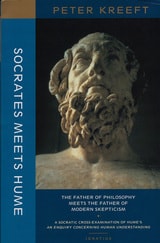
Socrates Meets Hume
The Father of Philosophy Meets the Father of Modern SkepticismPeter Kreeft
St. Augustine's Press, 2010
Kreeft invites the reader to take part in the process of refuting Hume’s skeptical arguments, with the great insights of Socrates. Based on an imagination dialogue between Socrates and Hume that takes place in the afterlife, this profound and witty book makes an entertaining and informative exploration of modern philosophy.
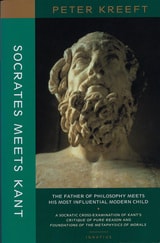
Socrates Meets Kant
The Father of Philosophy Meets His Most Influential Modern ChildPeter Kreeft
St. Augustine's Press, 2009
Kreeft’s Socrates reflects what the historical philosopher would likely have made of Kant’s ideas, while also recognizing the greatness, genius, and insightfulness of Kant. The result is a helpful, highly readable, even amusing book. Kant’s philosopher of knowing truly is a “Copernican revolution in philosophy,” as he himself dubbed it. His ethics intended to set out the rational grounds for morality. Did he achieve his goals? What would Socrates say about the matter?
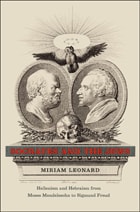
Socrates and the Jews
Hellenism and Hebraism from Moses Mendelssohn to Sigmund FreudMiriam Leonard
University of Chicago Press, 2012
"What has Athens to do with Jerusalem?” Asked by the early Christian Tertullian, the question was vigorously debated in the nineteenth century. While classics dominated the intellectual life of Europe, Christianity still prevailed and conflicts raged between the religious and the secular. Taking on the question of how the glories of the classical world could be reconciled with the Bible, Socrates and the Jews explains how Judaism played a vital role in defining modern philhellenism.
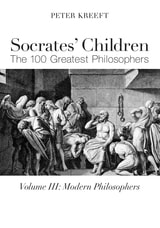
Socrates' Children
Modern: The 100 Greatest PhilosophersPeter Kreeft
St. Augustine's Press, 2016
This is the third of a four-volume history of philosophy . . . on ancient, medieval, modern, and contemporary philosophy. After the fourth volume is produced in paper, a one-volume clothbound edition, containing all four paperbound editions, will be published.
Kreeft focuses on the “big ideas” that have influenced present people and present times, and includes relevant biographical data, proportionate to its importance for each thinker. Moreover, the aim of the work is to stimulate philosophizing, controversy, and argument. It uses ordinary language and logic, not jargon and symbolic logic, and it is commonsensical (like Aristotle) and existential in the sense that it sees philosophy as something to be lived and experienced in life. Philosophy, after all, is not about philosophy but reality . . . about wisdom, life and death, good
and evil, and God.
Kreeft seeks to be simple and direct and clear. But it is not dumbed down and patronizing. It will stretch the reader, but it is meant for beginnings, not just scholars. It can be used for college classes or do-it-yourselfers. It emphasizes surprises; remember, “philosophy begins in wonder.” And it includes visual aids: charts, cartoons, line drawings, and drawings of each philosopher.

Solidarity with the Other Beings on the Planet
Alice Walker, Ecofeminism, and Animals in LiteraturePamela B. June
Northwestern University Press, 2020
Grounded in ecofeminist theory, this literary analysis examines Walker’s evolving views on animals in relation to her discussions of other oppressed groups. Pamela B. June argues that Walker’s fiction can help readers understand and perhaps challenge American culture’s mistreatment of nonhuman animals. Walker has withstood criticism for her decision to abandon vegetarianism, and this book also problematizes the slippery territory of viewing writers as moral guides. Solidarity with the Other Beings on the Planet will appeal to readers in literary studies, ecofeminist studies, African American studies, and critical animal studies.
Some Measure of Justice
The Holocaust Era Restitution Campaign of the 1990sMichael R. Marrus; Foreword by William A. Schabas
University of Wisconsin Press, 2009
Writings on the subject of Holocaust reparations have largely come from participants, lawyers, philosophers, journalists, and social scientists specializing in restitution. In Some Measure of Justice Michael Marrus takes up the issue as a historian deeply involved with legal issues. He engages with larger questions about historical understanding and historical interpretation as they enter the legal arena. Ultimately this book asks, What constitutes justice for a great historic wrong? And, Is such justice possible?
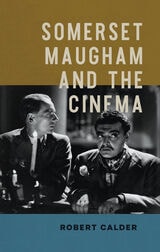
Somerset Maugham and the Cinema
Robert Calder
University of Wisconsin Press, 2024
This study of the famous author explores the relationship between literature and film, what is involved in adaptation, and how best to judge films based on celebrated books. Robert Calder, the world’s leading scholar of Maugham’s work, offers fascinating production histories, insight into both fortunate and misguided casting decisions, shrewd analyses of performances and film techniques, and summaries of public and critical responses. Maugham’s characters were often conflicted, iconoclastic, and morally out of step with their times, which may have accounted for the popularity of his fiction. Most of Maugham’s works could be adapted to satisfy the tastes of moviegoers and the demands of the Hays Office censors, if not the expectations of their author.
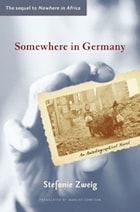
Somewhere in Germany
A NovelStefanie Zweig, Translated by Marlies Comjean
University of Wisconsin Press, 2006
In Frankfurt, Regina matures into a woman and, though her parents want her to marry an upstanding Jewish man, her love life progresses in its own idiosyncratic fashion. She develops a passion for art and journalism and begins her professional career at a Frankfurt newspaper. Walter at last finds professional success as a lawyer, but never quite adjusts to life in Frankfurt, recalling with nostalgia his childhood in Upper Silesia and his years in Africa. Only his son Max truly finds what Walter had hoped for: a new homeland in Germany.
Although the Redlichs receive kindness from strangers, they also learn anti-Semitism still prevails in post-Nazi Germany. They partake in the West German “economic miracle” with their own home, a second-hand car, and the discovery of television, but young Max’s discovery of the Holocaust revives long-buried memories. Rich in memorable moments and characters, this novel portrays the reality of postwar German society in vivid and candid detail.

Sopwith Triplane
Nico Braas
Amsterdam University Press, 2022
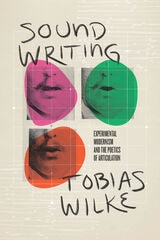
Sound Writing
Experimental Modernism and the Poetics of ArticulationTobias Wilke
University of Chicago Press, 2022
Avant-garde writers and artists of the twentieth century radically reconceived poetic language, appropriating scientific theories and techniques as they turned their attention to the physical process of spoken language. This modernist “sound writing” focused on the bodily production of speech, which it rendered in poetic, legible, graphic form.
Modernist sound writing aims to capture the acoustic phenomenon of vocal articulation by graphic means. Tobias Wilke considers sound writing from its inception in nineteenth-century disciplines like physiology and experimental phonetics, following its role in the aesthetic practices of the interwar avant-garde and through to its reemergence in the postwar period. These projects work with the possibility of crossing over from the audible to the visible, from speech to notation, from body to trace. Employing various techniques and concepts, this search for new possibilities played a central role in the transformation of poetry into a site of radical linguistic experimentation. Considering the works of writers and artists—including Raoul Hausmann, Kurt Schwitters, Viktor Shklovsky, Hugo Ball, Charles Olson, and Marshall McLuhan—Wilke offers a fresh look at the history of the twentieth-century avant-garde.
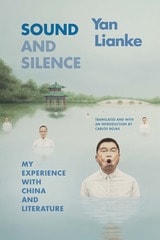
Sound and Silence
My Experience with China and LiteratureYan Lianke
Duke University Press, 2024
Soundless Roar
Stories, Poems, and DrawingsAva Kadishson Schieber
Northwestern University Press, 2002
Schieber's drawings, paintings, poetry, and prose are all intimate reflections of one another. Her experience forged the unusual sense of time that shapes Schieber's stories. In her preface, Phyllis Lassner writes: "The timetable of Ava's stories often consists of circles within circles, of patterns of an intertwined past, the past present of hiding, and the present looking back at those distinctly separate but inseparable pasts."
Southeast Asia After the Cold War
A Contemporary HistoryAng Cheng Guan
National University of Singapore Press, 2019
With Southeast Asia After the Cold War, Ang Cheng Guan offers a complete, analytically informed contemporary history that covers the whole region, tracing developments since 1990 and highlighting change, continuity, and the larger context in which decisions have been made. Crucial as a tool for making sense of the dynamics of the region, this account of Southeast Asia’s international relations will also be of immediate relevance to those in the United States and elsewhere who engage with the region, with its young, dynamic population, and its strategic position at between the Indian Ocean and the Pacific.
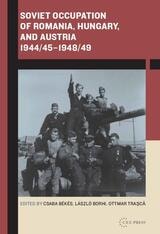
Soviet Occupation of Romania, Hungary, and Austria 1944/45–1948/49
László Borhi
Central European University Press, 2015
Space and Time under Persecution
The German-Jewish Experience in the Third ReichGuy Miron
University of Chicago Press, 2023
In Space and Time under Persecution, Guy Miron considers how social exclusion, economic decline, physical relocation, and, later, forced evictions, labor, and deportation under Nazi rule forever changed German Jews’ experience of space and time. Facing ever-mounting restrictions, German Jews reimagined their worlds—devising new relationships to traditional and personal space, new interpretations of their histories, and even new calendars to measure their days. For Miron, these tactics reveal a Jewish community’s attachment to German bourgeois life as well as their defiant resilience under Nazi persecution.
Space, Affect, Memory
Literary Geographies in Transnational and Transdisciplinary ComparisonEdited by Fernando Cabo Aseguinolaza and Tomás Espino Barrera
University College London, 2025
Space, Affect, Memory highlights the centrality of space in modern and contemporary culture, both as an object of study and as a concept that underpins research and creative practice. In so doing, the book argues for the necessity of a new approach to space that fully integrates its affective and memorial dimensions. Encompassing lesser-known works in English, Spanish, Portuguese, French, Italian, and Japanese, the essays expand the scope of previous scholarship in literary geography. They also offer a unique analysis of the performative aspect of representation, incorporating analyses of non-textual media like photography, performance, and architecture.
Space, Drama, and Empire
Mapping the Past in Lope de Vega's ComediaJavier Lorenzo
Bucknell University Press, 2023
Spain in the African American Imagination
Rebecca C. Pawel
University of Massachusetts Press, 2027
Revealing how African American intellectuals reframed race, history, and cultural belonging in the modern era
In 1954, Richard Wright rented a car in France and drove south to the Spanish border on the first of two month-long trips that gave rise to the travelogue Pagan Spain, where Wright declared that the Pyrenees, on the France-Spain border, “mark the termination of Europe and the beginning of Africa.” While Spain was not actually seen as an African country, such language suggests instead that Spain would be incomplete without African influences. In the wake of the Spanish-American war of 1898, Americans and Northern Europeans attributed Spain’s weakened economy and loss of international clout to an inability to modernize, which they described in highly racialized terms. As African American modernists explored the country, they compared modernist notions coming out of the United States pertaining to race, gender, and other categories against Spain’s history and contemporary culture.
Spain in the African American Imagination traces how African American intellectuals in the mid-20th century, including Wright, Arthur Schomburg, Langston Hughes, Dorothy Peterson, and Frank Yerby, interpreted Spanish national myths. Rebecca Pawel argues that a literary idea of Spain as eternally “medieval” or “primitive” gave African American writers a conceptual space for thinking about the ways race is constructed through historical narrative. Spain provided a location that was considered ipso facto archaic and thus used racial referents typical of an era removed from the present in a space that was not quite African and not quite European. Ultimately, Pawel argues, Spain became a powerful lens through which African American intellectuals rewrote racial narratives and reimagined modernity across the Atlantic.

Speaking Yiddish to Chickens
Holocaust Survivors on South Jersey Poultry FarmsSeth Stern
Rutgers University Press, 2023
Most of the roughly 140,000 Holocaust survivors who came to the United States in the first decade after World War II settled in big cities such as New York. But a few thousand chose an alternative way of life on American farms. More of these accidental farmers wound up raising chickens in southern New Jersey than anywhere else. Speaking Yiddish to Chickens is the first book to chronicle this little-known chapter in American Jewish history when these mostly Eastern European refugees – including the author’s grandparents - found an unlikely refuge and gateway to new lives in the US on poultry farms. They gravitated to a section of south Jersey anchored by Vineland, a small rural city where previous waves of Jewish immigrants had built a rich network of cultural and religious institutions.
This book relies on interviews with dozens of these refugee farmers and their children, as well as oral histories and archival records to tell how they learned to farm while coping with unimaginable grief. They built small synagogues within walking distance of their farms and hosted Yiddish cultural events more frequently found on the Lower East Side than perhaps anywhere else in rural America at the time. Like refugees today, they embraced their new American identities and enriched the community where they settled, working hard in unfamiliar jobs for often meager returns. Within a decade, falling egg prices and the rise of industrial-scale agriculture in the South would drive almost all of these novice poultry farmers out of business, many into bankruptcy. Some hated every minute here; others would remember their time on south Jersey farms as their best years in America. They enjoyed a quieter way of life and more space for themselves and their children than in the crowded New York City apartments where so many displaced persons settled. This is their remarkable story of loss, renewal, and perseverance in the most unexpected of settings.
Author Facebook page (https://www.facebook.com/YiddishtoChickens)

Spectacular Disappearances
Celebrity and Privacy, 1696-1801Julia H. Fawcett
University of Michigan Press, 2016
Specters of Cavafy
Maria Boletsi
University of Michigan Press, 2024
Winner of the European Society of Modern Greek Studies Best Monograph Award
The Greek Alexandrian poet C. P. Cavafy (1863–1933) has been recognized as a central figure in European modernism and world literature. His poetry explored the conditions for animating the past and making lost worlds or people haunt the present. Yet he also described himself as “a poet of the future generations.” Indeed, his writings address concerns and desires that permeate the twentieth and twenty-first centuries. How does poetry concerned with the past, memory, loss, and death, carry futurity? How does it haunt, and how is it haunted by, future presents?
Specters of Cavafy broaches these questions by proposing spectral poetics as a novel approach to Cavafy’s work. Drawing from theorizations of specters and haunting, it develops spectrality as a lens for revisiting Cavafy’s poetry and prose, fiction and nonfiction, as well as his poetry’s bearing on our present. By examining Cavafy’s spectral poetics, the book’s first part shows how conjurations work in his writings, and how the spectral permeates the entanglement of modernity and haunting, and of irony and affect. The second part traces the afterlives of specific poems in the Western imagination since the 1990s, in Egypt’s history of debt and colonization, and in Greece during the country’s recent debt crisis. Beyond its original contribution to Cavafy studies, the book proposes tools and modes of reading that are broadly applicable in literary and cultural studies.
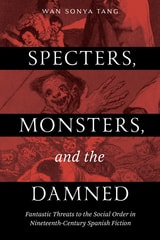
Specters, Monsters, and the Damned
Fantastic Threats to the Social Order in Nineteenth-Century Spanish FictionWan Sonya Tang
Vanderbilt University Press, 2024
Tang offers innovative readings of eleven fantastic short stories and one novella as they first appeared, some serialized and others illustrated, in Spanish periodicals from the late 1800s and early 1900s. Drawing on original archival research, she demonstrates how these stories—in which the everyday is suddenly and inexplicably disrupted by the supernatural—often employ gothic imagery (specifically that of the specter, the monster, and the curse) to depict as threatening those who deviate from cultural norms in terms of class, gender, and race. Tang argues, however, that these unsettling, open‑ended narratives likewise allow readers to question how and why certain designated groups are privileged by society. She contends that the fantastic depiction of reality as unstable in these works ultimately facilitates an interrogation of those values that are accepted as natural by the reigning social order, gesturing toward the inhumanity not of the marginalized, but of the dominant group.
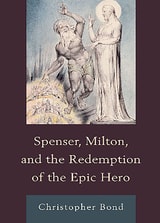
Spenser, Milton, and the Redemption of the Epic Hero
Christopher Bond
University of Delaware Press, 2011
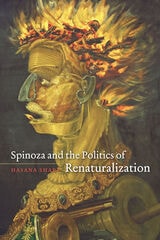
Spinoza and the Politics of Renaturalization
Hasana Sharp
University of Chicago Press, 2011
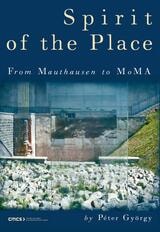
Spirit of the Place
From Mauthausen to MomaPéter György
Central European University Press, 2008
Spirit's Gift
The Metaphysical Insight of Claude BruaireAntonio López, F.S.C.B.
Catholic University of America Press, 2006

Spiritual Writings of Sister Margaret of the Mother of God (1635-1643)
Margaret Van Noort
Iter Press, 2015
In 1635, as directed by her confessor so that he might understand “the state of her soul,” Margaret Van Noort, a lay sister of the royal convent of Discalced Carmelite nuns in Brussels, composed her spiritual autobiography. This text was followed by two diaries in 1636 and 1637 recording the workings of her inner life and relation to God, and reflecting the cosmopolitan Catholic tradition of her homeland. Now gathered in this volume, these works illustrate Margaret’s development from a troubled young lay sister into a woman of spiritual experience and authority.
Spivak Moving
Gayatri Chakravorty Spivak
Seagull Books, 2022
The pieces collected in Spivak Moving touch on a variety of topics, including her crucial thinking on pan-Africanism and W. E. B. DuBois, reproductive heteronormativity, art and film, class apartheid in education, practices of institutional critique, and the training of imaginative activism through a sustained engagement with the humanities. She moves from a look at the unsystematized first languages of continental Africa into a broader consideration of human rights, international civil society practice, the question of terror, the “freedom” of the academic, and the place of the digital. About half the essays are collected here for the first time and are not found in Spivak’s several published essay collections.

Spurs
Nietzsche's Styles/Eperons: Les Styles de NietzscheJacques Derrida
University of Chicago Press, 1981
Spurs, then, is aptly titled, for Derrida's "deconstructions" of Nietzsche's meanings will surely act as spurs to further thought and controversy. This dual-language edition offers the English-speaking reader who has some knowledge of French an opportunity to examine the stylistic virtuosity of Derrida's writing—of particular significance for his analysis of "the question of style."
Spurs
Nietzsche's Styles/Eperons: Les Styles de NietzscheJacques Derrida
University of Chicago Press, 1981
Spurs, then, is aptly titled, for Derrida's "deconstructions" of Nietzsche's meanings will surely act as spurs to further thought and controversy. This dual-language edition offers the English-speaking reader who has some knowledge of French an opportunity to examine the stylistic virtuosity of Derrida's writing—of particular significance for his analysis of "the question of style."