Results by title
1148 books match the query 'Political Ideologies' and 79 start with s

Stable Condition
Elites' Limited Influence on Health Care AttitudesDaniel J. Hopkins
Russell Sage Foundation, 2023
Hopkins finds that although personal experience with the ACA’s Medicaid expansion increased favorability among low-income Americans, it did not have a broader overall impact on public opinion. Personal experience with the Health Insurance Marketplace did not increase wider support for the ACA either. Due to the complex nature of the law, users of the Marketplace often did not realize they were benefiting from the ACA. Therefore, perceptions of the Marketplace were shaped by high-profile issues with the enrollment website and opposition to the individual mandate. These experiences ultimately offset one another, resulting in little discernable change in public opinion overall. Hopkins argues that political polarization was also responsible for elite’s limited influence and that public opinion on the ACA was largely determined by partisanship and political affiliation. Americans quickly aligned with their party’s stance on the law and were resistant to changing their beliefs despite the efforts of political elites.
Stable Condition is an illuminating examination of the limits of elites’ influence and the forces that shaped public opinion about the Affordable Care Act.

Staffing the State
Bureaucratic Politics in Pakistan's Hybrid RegimeSameen A. Mohsin Ali
University of Michigan Press, 2027
Bureaucrats play a critical role in managing governance and delivering public services, whether in democratic and authoritarian contexts. Leaders are responsible for managing bureaucrats—from assigning posts to evaluating performance—to ensure that state resources and services are directed to key constituencies. Focusing on Pakistan, a hybrid regime where military interventions often disrupt electoral politics and civilian governance, Staffing the State shows how controlling bureaucratic appointments allows politicians and civil servants to manage political uncertainty. At the same time, such control entrenches arbitrary patterns of governance such that democratic transitions stall and hybrid regimes persist.
Drawing on interviews, semi-participant observation, and newspaper archives, this book’s analysis reveals the significance of bureaucratic politics to political power, public sector performance and reform, and in determining democratic or autocratic trajectories. The findings extend discussions around indicators of democratic decay into more nuanced, complex explorations of the consequences of these politics for the permanent institutions of the state. Staffing the State will interest political scientists, scholars of South Asian politics and especially Pakistan, and those working at the intersection of politics and public administration.
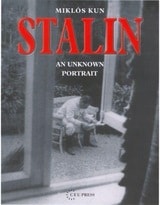
Stalin
An Unknown PortraitMiklós Kun
Central European University Press, 2003
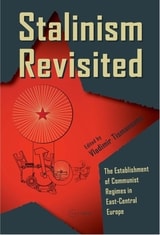
Stalinism Revisited
The Establishment of Communist Regimes in East-Central EuropeVladimir Tismaneanu
Central European University Press, 2010
Deals with the period of takeover and of ‘high Stalinism’ in Eastern Europe (1945–1955). These years are considered to be fundamentally characterized by institutional and ideological transfers based upon the premise of radical transformism and of cultural revolution. Both a balance-sheet and a politico-historical synthesis that reflects the archival and thematic novelties which came about in the field of communism studies after 1989.
Contains contributions analyzing various aspects related these topics for each country of the former Soviet bloc (with the exception of Albania). The essays are based on new archival research, some are reassessments of the author’s previous research and others are critical appraisals of the specific literature published on issues related to the main topic. A path-breaking comparative framework for interpreting the relationship between late Stalinism and the communist takeovers in former Eastern Europe. A bonus for the volume is that it also provides detailed, sectorial analyses for the Romanian case, something that the field paritcularly lacks.

State Anti-Intellectualism and the Politics of Gender and Race
Illiberal France and BeyondÉric Fassin
Central European University Press, 2024
Eric Fassin examines the trend of State anti-intellectualism in France using the nation as a case study to demonstrate that this tendency is not limited to ostensibly illiberal regimes. He argues that today’s world requires an examination of this phenomenon beyond Cold War geopolitical divisions and highlights a global shift towards authoritarian neoliberalism. His book is a plea for the political urgency of intellectual work in a global moment of political anti-intellectualism.
The book covers the period from President Sarkozy to Prime Minister Valls and includes both firsthand and public cases of attacks against academics, not only in France, but also in Brazil, Hungary, Russia, Turkey, and the United States, with examples of State racism and the argument of the State against antiracism. The book also considers issues of censorship and cancel culture, concluding with Fassin’s firsthand account of attacks on him from the far-right.

State Formation and Democracy in Latin America, 1810-1900
Fernando López-Alves
Duke University Press, 2000
Breaking with the traditional economic analysis of South American development, López-Alves argues that civil-military relations lay at the core of state building. By comparing three countries in particular—Uruguay, Colombia, and Argentina—during an intense phase of state and regime formation, he shows how war and the collective action of the rural poor contributed to the construction of central armies, the rise of new social classes, and the emergence of civilian organizations. He also examines characteristics unique to each country’s war-formed culture and discusses how coalitions were built during this period. Examples from Paraguay and Venezuela and references to state formation in Europe, the United States, Asia, and the Middle East add to the complexity and richness of the study’s comparative analysis.
Drawing on a vast bibliography of both primary and secondary sources, López-Alves goes beyond providing insights into the particular development of Latin American countries and introduces a comprehensive theory of state formation applicable to other regions. This book will interest Latin Americanists, historians, political scientists, and sociologists studying state formation.
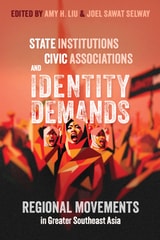
State Institutions, Civic Associations, and Identity Demands
Regional Movements in Greater Southeast AsiaAmy H. Liu and Joel Sawat Selway, Editors
University of Michigan Press, 2024
State Institutions, Civic Associations, and Identity Demands examines over a dozen regions, comparing and contrasting successful cases to abandoned, unsuccessful, or dormant cases. The cases range from successful secession (East Timor, Singapore) and ongoing secessionist movements (Southern Philippines), to internally divided regional movements (Kachin State), low-level regionalist stirrings (Lanna, Taiwan), and local but not regional mobilization of identity (Bali, Minahasan), all the way to failed movements (Bataks, South Maluku) and regions that remain politically inert (East and North Malaysia, Northeast Thailand). While each chapter is written by a country expert, the contributions rely on a range of methods, from comparative historical analysis, to ethnography, field interviews, and data from public opinion surveys. Together, they contribute important new knowledge on little-known cases that nevertheless illuminate the history of regions and ethnic groups in Southeast Asia. Although focused on Southeast Asia, the book identifies the factors that can explain why movements emerge and successfully develop and concludes with a chapter by Henry Hale that illustrates how this can be applied globally.
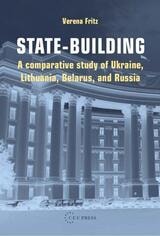
State-building
A Comparative Study of Ukraine, Lithuania, Belarus, and RussiaVerena Fritz
Central European University Press, 2007
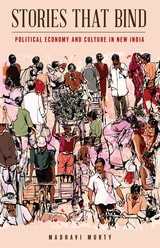
Stories That Bind
Political Economy and Culture in New IndiaMadhavi Murty
Rutgers University Press, 2022
Moving between mediascapes to create an archive of popular culture, Murty advances our understanding of political economy through material that is often seen as inconsequential, namely the popular cultural story. These stories stoke our desires (e.g. for wealth), scaffold our instincts (e.g. for a strong leadership) and shape our values.
Storming Heaven
Class Composition and Struggle in Italian Autonomist MarxismSteve Wright
Pluto Press, 2017

Strange Bedfellows
How Late-Night Comedy Turns Democracy into a JokePeterson, Russell
Rutgers University Press, 2008
It is no coincidence that presidential candidates have been making it a point to add the late-night comedy circuit to the campaign trail in recent years. In 2004, when John Kerry decided it was time to do his first national television interview, he did not choose CBS’s 60 Minutes, ABC’s Nightline, or NBC Nightly News. Kerry picked Comedy Central’s The Daily Show. When George W. Bush was lagging in the polls, his appearance on the David Letterman Show gave him a measurable boost. Candidates for the 2008 presidential election began their late-night bookings almost as soon as they launched their campaigns.
How can this be? The reason is that polls have been consistently finding that a significant number of Americans—and an even larger proportion of those under the age of thirty—get at least some of their “news” about politics and national affairs from comedy shows. While this trend toward what some have called “infotainment” seems to herald the descent of our national discourse—the triumph of entertainment over substance—the reality, according to Russell L. Peterson, is more complex. He explains that this programming is more than a mere replacement for traditional news outlets; it plays its own role in shaping public perception of government and the political process.
From Johnny Carson to Jon Stewart, from Chevy Chase’s spoofing of President Ford on Saturday Night Live to Stephen Colbert’s roasting of President Bush at the White House Correspondents Dinner, Strange Bedfellows explores what Americans have found so funny about our political institutions and the people who inhabit them, and asks what this says about the health of our democracy. Comparing the mainstream network hosts—Jay, Dave, Conan, and Johnny before them—who have always strived to be “equal opportunity offenders” to the newer, edgier crop of comedians on cable networks, Peterson shows how each brand of satire plays off a different level of Americans’ frustrations with politics.
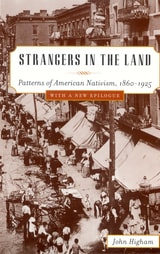
Strangers in the Land
Patterns of American Nativism, 1860-1925Higham, John
Rutgers University Press, 1988
Strategic Party Government
Why Winning Trumps IdeologyGregory Koger and Matthew J. Lebo
University of Chicago Press, 2017
In Strategic Party Government, Koger and Lebo argue that Congress is now primarily a forum for partisan competition. In order to avoid losing, legislators unite behind strong party leaders, even when they do not fully agree with the policies their party is advocating. They do so in the belief that party leaders and voters will reward them for winning—or at least trying to win—these legislative contests. And as the parties present increasingly united fronts, partisan competition intensifies and pressure continues to mount for a strong party-building strategy—despite considerable disagreement within the parties.
By bringing this powerful but underappreciated force in American politics to the forefront, Koger and Lebo provide a new interpretation of the problems facing Congress that is certain to reset the agenda for legislative studies.
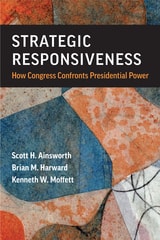
Strategic Responsiveness
How Congress Confronts Presidential PowerScott H. Ainsworth, Brian M. Harward, and Kenneth W. Moffett
University of Michigan Press, 2025
Strategic Responsiveness takes a theoretically developed and empirically oriented approach— situated within legal and historical contexts—to explore the system of separated powers. The authors find that Congress is not as weak as many perceive it to be and show how members of Congress often anticipate individualized policy loss and choose to respond. These policy struggles shape the constitutional order as surely as broad, statutory constraints might. While the aggrandizement of the presidency and the usurpation of congressional control are not countered, ordinary policy losses are. For members and senators, presidential overreach is fine as long as the policy wins continue, but policy losses may motivate members to reassert congressional prerogatives in policymaking through increased oversight. Strategic Responsiveness reveals how profoundly important policy-level disputes are in the politics of maintaining a particular constitutional order.
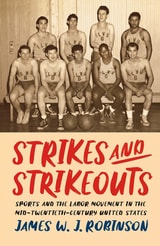
Strikes and Strikeouts
Sports and the Labor Movement in the Mid-Twentieth-Century United StatesJames W. J. Robinson
Rutgers University Press, 2027
During the first half of the twentieth century, the introduction of cheap or free recreation to the workplace provided a metaphorical place where ordinary working-class people of all races and genders gained access to physical leisure and developed bonds of camaraderie in the anti-fascist labor movement. Strikes and Strikeouts: Sports and the Labor Movement in the Mid-Twentieth-Century United States illustrates how this largely forgotten Labor Sports movement was critical in helping unions become forces for larger cultural change and essential to understanding the potency of the 1930-40s labor movement. Drawing from ten different labor and leftist social movement archives, Robinson strives to reconstruct the “people’s history." At its height, from the late 1930s to the early 1950s, the Labor Sports movement presented a real alternative to both apolitical and conservative sports and involved millions of working-class people. It was a key part of improving the lives of average Americans and helped build an anti-racist, anti-fascist, working class counterculture that helped change the United States through a strong labor movement. This movement brought higher living standards for working class people and the end of racial segregation in sports, which in turn aided the Civil Rights movement.
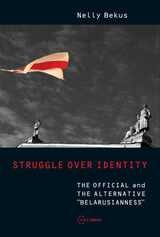
Struggle over Identity
The Official and the Alternative "Belarusianness"Nelly Bekus
Central European University Press, 2010
Rejecting the cliché about “weak identity and underdeveloped nationalism,” Bekus argues for the co-existence of two parallel concepts of Belarusianness—the official and the alternative one—which mirrors the current state of the Belarusian people more accurately and allows for a different interpretation of the interconnection between the democratization and nationalization of Belarusian society.
The book describes how the ethno-symbolic nation of the Belarusian nationalists, based on the cultural capital of the Golden Age of the Belarusian past (17th century) competes with the “nation” institutionalized and reified by the numerous civic rituals and social practices under the auspices of the actual Belarusian state.
Comparing the two concepts not only provides understanding of the logic that dominates Belarusian society’s self-description models, but also enables us to evaluate the chances of alternative Belarusianness to win this unequal struggle over identity.
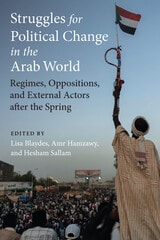
Struggles for Political Change in the Arab World
Regimes, Oppositions, and External Actors after the SpringEdited by Lisa Blaydes, Amr Hamzawy, and Hesham Sallam
University of Michigan Press, 2022
The advent of the Arab Spring in late 2010 was a hopeful moment for partisans of progressive change throughout the Arab world. Authoritarian leaders who had long stood in the way of meaningful political reform in the countries of the region were either ousted or faced the possibility of political if not physical demise. The downfall of long-standing dictators as they faced off with strong-willed protesters was a clear sign that democratic change was within reach. Throughout the last ten years, however, the Arab world has witnessed authoritarian regimes regaining resilience, pro-democracy movements losing momentum, and struggles between the first and the latter involving regional and international powers.
This volume explains how relevant political players in Arab countries among regimes, opposition movements, and external actors have adapted ten years after the onset of the Arab Spring. It includes contributions on Egypt, Morocco, Kuwait, Saudi Arabia, Syria, Algeria, Sudan, Lebanon, Iraq, Jordan, Yemen, and Tunisia. It also features studies on the respective roles of the United States, China, Iran, and Turkey vis-à-vis questions of political change and stability in the Arab region, and includes a study analyzing the role of Saudi Arabia and its allies in subverting revolutionary movements in other countries.
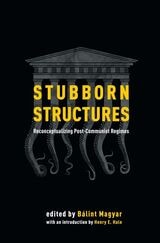
Stubborn Structures
Reconceptualizing Post-Communist RegimesHenry E. Hale
Central European University Press, 2019
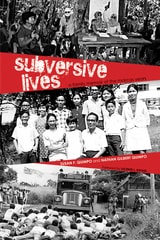
Subversive Lives
A Family Memoir of the Marcos YearsSusan F. Quimpo
Ohio University Press, 2016
From the 1960s to the 1990s, seven members of the Quimpo family dedicated themselves to the anti-Marcos resistance in the Philippines, sometimes at profound personal cost. In this unprecedented memoir, eight siblings (plus one by marriage) tell their remarkable stories in individually authored chapters that comprise a family saga of revolution, persistence, and, ultimately, vindication, even as easy resolution eluded their struggles.
Subversive Lives tells of attempts to smuggle weapons for the New People’s Army (the armed branch of the Communist Party of the Philippines); of heady times organizing uprisings and strikes; of the cruel discovery of one brother’s death and the inexplicable disappearance of another (now believed to be dead); and of imprisonment and torture by the military. These stories show the sacrifices and daily heroism of those in the movement. But they also reveal its messy legacies: sons alienated from their father; daughters abused by the military; friends betrayed; and revolutionary affection soured by intractable ideological differences.
The rich and distinctive contributions span the martial law years of Ferdinand Marcos’s rule. Subversive Lives is a riveting and accessible primer for those unfamiliar with the era, and a resonant history for those with a personal connection to what it meant to be Filipino at that time, or for anyone who has fought political repression.
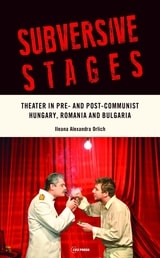
Subversive Stages
Theater in Pre- and Post-Communist Hungary, Romania and BulgariaIleana Alexandra Orlich
Central European University Press, 2017

Succession to High Office in Botswana
Three Case StudiesJack Parson
Ohio University Press, 1990
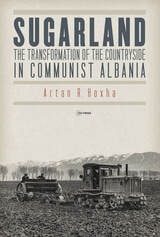
Sugarland
The Transformation of the Countryside in Communist AlbaniaArtan R. Hoxha
Central European University Press, 2023
In this historical monograph on non-urban communist Albania, Artan Hoxha discusses the ambitious development project that turned a swampland into a site of sugar production after 1945. The author seeks to free the history of Albanian communism from the stereotypes that still circulate about it with stigmas of an aberration, paranoia, extreme nationalism, and xenophobia.
This micro-history of the agricultural and industrial transformation of a zone in southeastern Albania, explores a wide range of issues including modernization, development, and social, cultural, and economic policies. In addition to analyzing the collectivization of agriculture, Hoxha shows how communism affected the lives of ordinary rural people. As elsewhere in the Communist Bloc, the Albanian regime borrowed developmental projects from the past and implemented them using social mobilization and a command economy. The abundant archival resources along with interviews in the field attest to the authorities’ efforts to increase consumption and to radically transform people’s tastes. But the book argues that despite the repressive environment, people involved in the sugar project were not simply passive receivers of models from the nation's capital. The author also describes that—in defiance of Cold War bipolarity—technological requirements and social policy considerations required a degree of engagement with the broader world.

Superfluous Southerners
Cultural Conservatism and the South, 1920-1990John J. Langdale III
University of Missouri Press, 2012

Surplus Citizens
Struggle and Nationalism in the Greek CrisisDimitra Kotouza
Pluto Press, 2018

Surrealism Against the Current
Tracts and DeclarationsEdited by Michael Richardson and Krzysztof Fijalkowski
Pluto Press, 2001
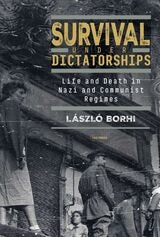
Survival under Dictatorships
Life and Death in Nazi and Communist RegimesLászló Borhi
Central European University Press, 2024
A complex array of individual responses to the abuse of power by the state is represented in this book in three horrific episodes in the history of East-Central Europe. The three events followed each other within a span of about ten years: the deportation and murder of Hungarian Jews in Nazi death and labor camps; the Arrow Cross terrorist rule in Budapest; and finally the Stalinist terror in Hungary and East-Central Europe. Through the prism of survival, László Borhi explores the relationship between the individual and power, attempting to understand the mechanism of oppression and terror produced by arbitrary, unbridled power through the experience of normal people.
Despite the obvious peculiarities of time and place, the Hungarian cases convey universal lessons about the Holocaust, Nazism, and Stalinism. In the author's conception, the National Socialist and Stalinist experiences are linked on several levels. Both regimes defended their visions of the future against social groups whom they saw as implacable enemies of those visions, and who therefore had to be destroyed for sake of social perfection. Furthermore, the social practices of National Socialism were passed on. And although Stalinism was imposed by a foreign power, some of the survival skills for coping with it were rehearsed under the previous hellish experience.
Sustainable Capitalism
Essential Work for the AnthropoceneEdited by Inara Scott
University of Utah Press, 2024
Sustainable Capitalism takes on the challenge of sustainability from a uniquely interdisciplinary and diverse perspective, offering both theory and tools for action. Topics range from an analysis of the foundations and definition of capitalism to the specific regulatory mechanisms that may be necessary to rein in its current, unsustainable trajectory. Readers will find nuanced and important analyses of options and potential outcomes that are not available in any other work. This book is essential reading for anyone concerned about the path we are on and how we might improve the lives of people around the globe.
https://www.sustainablecapitalismbook.com/
Sylvia Pankhurst
Suffragette, Socialist and Scourge of EmpireKatherine Connelly
Pluto Press, 2013
From militant suffragette at the beginning of the twentieth century to campaigner against colonialism in Africa after the Second World War, Sylvia Pankhurst dedicated her life to fighting oppression and injustice.
In this vivid biography Katherine Connelly examines Pankhurst’s role at the forefront of significant developments in the history of radical politics. She guides us through Pankhurst's construction of a suffragette militancy which put working-class women at the heart of the struggle, her championing of the Bolshevik Revolution and her clandestine attempts to sabotage the actions of the British state, as well as her early identification of the dangers of Fascism.
The book explores the dilemmas, debates and often painful personal consequences faced by Pankhurst which were played out in her art, writings and activism. It argues that far from being an advocate of disparate causes, Pankhurst’s campaigns were united by an essential continuity which hold vital lessons for achieving social change. This lively and accessible biography presents Pankhurst as a courageous and inspiring campaigner, of huge relevance to those engaged in social movements today.
Systems, Institutions, and Values in East and West
Engaging with János Kornai's ScholarshipMiklós Rosta
Central European University Press, 2020
Leading social scientists, empirical analysts, and policy practitioners demonstrate the various ways in which the insights of János Kornai, a renowned early analyst and critic of the command economies of Eastern European communist states, are stirring academic and policy discussions about current challenges. While dissecting the economic theories and practices in the Soviet Bloc, Kornai devised and applied concepts such as soft-budget constraints, rush versus harmonic growth, surplus versus shortage economy, non-Walrasian equilibrium, bureaucratic coordination, and the invisible power of the communist party. These concepts are commonly applied to a variety of issues in the contexts of fundamental transformation. The cases discussed in this volume include the transitional paths of post-communist economies, the pitfalls of East European market-building, economic repercussions of the dissolution of Yugoslavia, and the process of integration in the Eurozone.
In conclusion János Kornai’s thoughts on a variety of research topics as well as the value of democracy are included as he delivered at the conference celebrating his 90th birthday in 2018.