Results by title
1861 books match the query 'Social life and customs' and 147 start with s

Shanghai Nightscapes
A Nocturnal Biography of a Global CityJames Farrer and Andrew David Field
University of Chicago Press, 2015
The book begins by examining the history of the jazz-age dance scenes that arose in the ballrooms and nightclubs of Shanghai’s foreign settlements. During its heyday in the 1930s, Shanghai was known worldwide for its jazz cabarets that fused Chinese and Western cultures. The 1990s have seen the proliferation of a drinking, music, and sexual culture collectively constructed to create new contact zones between the local and tourist populations. Today’s Shanghai night scenes are simultaneously spaces of inequality and friction, where men and women from many different walks of life compete for status and attention, and spaces of sociability, in which intercultural communities are formed. Shanghai Nightscapes highlights the continuities in the city’s nightlife across a turbulent century, as well as the importance of the multicultural agents of nightlife in shaping cosmopolitan urban culture in China’s greatest global city.
To listen to an audio diary of a night out in Shanghai with Farrer and Field, click here: http://n.pr/1VsIKAw.
Shaping Society through Dance
Mestizo Ritual Performance in the Peruvian AndesZoila S. Mendoza
University of Chicago Press, 2000
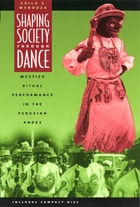
In this fluid world, she argues, racial and ethnic identities are shaped more by notions of what is decent, elegant, and modern rather than by skin color or status. As the different troupes vie for the townspeople's recognition as the most "authentic" group, these notions are challenged and reworked. A fascinating look at a rich tradition, this innovative work is also a compelling example of the critical anthropology of performance.
Shaping Tradition
Women's Roles in Ceremonial Rituals of the AgwaguneDavid Uru Iyam
University of Wisconsin Press, 2021
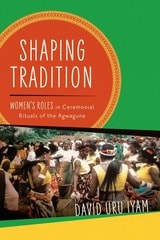
Using this community as a case study, David Uru Iyam asserts that these women are not stereotypically submissive, oppressed, or passive. Agwagune women participate in male ceremonies by pretending to be unaware of them, concealing their authority under a veneer of secrecy. Instead of focusing on obvious male political power, Iyam highlights the overlooked domestic and public contributions of women that uphold—and change—entire social systems.

Shared Traditions
SOUTHERN HISTORY AND FOLK CULTURECharles Joyner
University of Illinois Press, 1999
By examining the mutual influence of history and folk culture, Shared Traditions reveals the essence of southern culture in the complex and dynamic interactions of descendants of Europeans, Africans, and Native Americans. The book covers a broad spectrum of southern folk groups, folklore expressions, and major themes of southern history, including antebellum society, slavery, the coming of the Civil War, economic modernization in the Appalachians and the Sea Islands, immigration, the civil rights movement, and the effects of cultural tourism.
Joyner addresses the convergence of African and European elements in the Old South and explores how specific environmental and demographic features shaped the acculturation process. He discusses divergent practices in worship services, funeral and burial services, and other religious ceremonies. He examines links between speech patterns and cultural patterns, the influence of Irish folk culture in the American South, and the southern Jewish experience. He also investigates points of intersection between history and legend and relations between the new social history and folklore.
Ranging from rites of power and resistance on the slave plantation to the creolization of language to the musical brew of blues, country, jazz, and rock, Shared Traditions reveals the distinctive culture born of a sharing by black and white southerners of their deep-rooted and diverse traditions.
Sharing Fencelines
Linda Hussa
University of Utah Press, 2002
In the lightly-populated northwestern corner of Nevada, a former geologist and rural schoolteacher, a published poet and ranch owner, and an artist and environmentalist make for an intriguing—perhaps even unlikely—trio of friends. In this evocative collection of personal essays, each offers her voice as a testament to the joys and struggles of creating a home and connecting to the land and the people who live there.
Stories of ranch hands and Ladies’ Clubs, raising chickens and raising children, pulling up roots and planting dreams tumble together in a mélange of lives lived well and thoughtfully. Sharing Fencelines is as much about art as it is about activism, as much about personal growth as it is about growing community. What these women offer us is the sweet taste of what is possible, and the blended harmony of their voices echoes across the mountains and washes and deserts, resonating in our own hearts, our own homes.
Carolyn Dufurrena’s "The Flying Heart Museum" pays homage to a layered landscape of unique individuals—not the least of which are her students, searching for themselves in the Nevada wilderness: "You know how your spirit betrays you when you’re not thinking to protect yourself. Jose has been dreaming, doodling away, and his pencil has discovered this flying heart, as big as the Puritan meetinghouse....He has drawn the log cabin around the heart, and labeled it. At recess I ask him, gently, 'So, Jose, what’s in there, in your Flying Heart Museum?'"
In "Shared Fencelines," Linda Hussa reveals the mystery of horses, the gift of water, and the serendipity of love: "My first hurt came from a horse when I tried to shinny up the feathered leg of our old gelding as I’d seen my brother and sister do. Twelve hundred pounds of him stepped on my bare foot. Mom carried her shrieking two-year-old to the house...she cut off the dangling nail saying Popeye didn’t mean to, he just didn’t notice my little foot. Then she cradled my face in her cool hands and said she hoped I would forgive him and we could be friends again."
"Fire Hall" by Sophie Sheppard paints a picture of a families and communities forged against the backdrop of a rugged, rural life: "Here, when there is a funeral, the whole town comes. First to arrive are the older women, vestiges of the Lake City Ladies Club that was disbanded a few years ago because most of the younger women have jobs and no longer stay at home. At the potluck funeral dinner everyone will file in together: the women unfamiliar in dresses ordered from catalogs, the mens' hatless foreheads glowing pale in contrast to the tan of their freshly shaven jaws, the younger people that I won’t recognize."
Sheer Presence
The Veil in Manet’s ParisMarni Reva Kessler
University of Minnesota Press, 2006
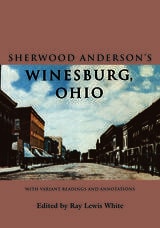
Sherwood Anderson’s Winesburg, Ohio
With Variant Readings and AnnotationsSherwood Anderson
Ohio University Press, 2000
In 1919 a middle-aged Chicago advertising writer from Ohio, a failure as a businessman, husband, and father, published a small yellow book of short stories intended to “reform” American literature. Against all expectations, Winesburg, Ohio: A Group of Tales of Ohio Small Town Life achieved what its author intended: after 1919 and after Winesburg, Ohio, American literature would be written and read freshly and differently.
Winesburg, Ohio has never been out of print, but never has Anderson’s book been published in the form and with the editorial care that the work has needed and deserved. The present text, authorized by the Sherwood Anderson Literary Estate Trust, is an expert text. The editor has relied on years of experience in editing Sherwood Anderson and has consulted all Anderson manuscripts, typescripts, letters, and diaries and all editions of the book to present the masterpiece in its intended state.
New to this expert edition of Winesburg, Ohio are historical and cultural annotations, documentation of changes in the various editions, identification of the Ohio originals for Anderson’s characters, and maps bearing the streets and buildings of the real town of Clyde, Ohio, which is the basis of Anderson’s fictional account.
Included as well are unique photographs of Anderson and Clyde, Ohio, illustrations that deepen knowledge and feeling for the author’s actual hometown and time, revealing Winesburg, Ohio to be an intensely local narrative—very much an “Ohio” book—and yet a book that has found and held worldwide attention.
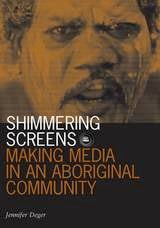
Shimmering Screens
Making Media in an Aboriginal CommunityJennifer Deger
University of Minnesota Press, 2006

Ship Captain's Daughter
Growing Up on the Great LakesAnn Michler Lewis
Wisconsin Historical Society Press, 2015
Ann Lewis's childhood was marked by an unusual rhythm. Each year the thawing and freezing of the Great Lakes signaled the beginning and end of the shipping season, months of waiting that were punctuated by brief trips to various ports to meet her father, the captain.
With lively storytelling and vivid details, Lewis captures the unusual life of shipping families whose days and weeks revolved around the shipping industry on the Great Lakes. She paints an intriguing and affectionate portrait of her father, a talented pianist whose summer job aboard an ore freighter led him to a life on the water. Working his way up from deckhand to ship captain, Willis Michler became the master of thirteen ships over a span of twenty-eight years. From the age of twelve, Ann accompanied the captain to the ports of Milwaukee, Chicago, Toledo, and Cleveland on the lower Great Lakes. She describes sailing through stormy weather and starry nights, visiting the engine room, dining at the captain's table, and wheeling the block-long ship with her father in the pilot house. Through her mother's stories and remarks, Lewis also reveals insights into the trials and rewards of being a ship captain's wife. The book is enhanced by the author's vintage snapshots, depicting this bygone lifestyle.
Short Call
Snippets from the Smallest Places in Texas, 1935-2000Joyce Gibson Roach
University of North Texas Press, 2014

Siaya
The Historical Anthropology of an African LandscapeDavid William Cohen
Ohio University Press, 1989
The authors of this highly original book set out to remove the persistent boundary between the authors and readers of ethnography on one hand and the subjects of ethnography on the other – those who observe and those who are observed.
The authors use stories to reveal Siaya, the Luo-speaking area of Western Kenya down near the Lake but still surprisingly vulnerable to drought. There are the stories of survival by a woman with her carpenter husband in Nairobi, there is the launching of a boat as bride into the Lake and there is the great Boro Christmas disco riot. The book finishes with an Afterword on the burial of the lawyer S. M. Otiono that divided its whole of Kenya.
It is both written about and for the Luo. It brings together Luo ideas and debates about their own past and present with findings, arguments and questions produced about this “other people;” by outside scholars writing in their own disciplines. Among the Luo, what constitutes culture, what is correct behavior, what is history, are questions that are heavily fought over.
This is one of those rare books that makes students and other interested individuals question their own cultural preconceptions and what are the genuine concerns of academic disciplines.
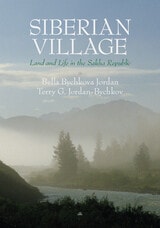
Siberian Village
Land and Life in the Sakha RepublicBella Bychkova Jordan
University of Minnesota Press, 2001
A fascinating portrait of the history and landscape of this remote settlement.
The village of Djarkhan is in the heart of Russia’s Sakha Republic, on the Central Yakut Plain. The world around Djarkhan, with its extreme subarctic climate and intractable permafrost, seems an unlikely place to look for a rich, historic, and exotic efflorescence of human life, and yet this is precisely what the authors found. Their book is a remarkable account of how the people of Djarkhan have created their own distinctive place through their unique relationship with a severe and demanding land.
This book traces the way of life of the village’s Turkic inhabitants, the Yakuts, from their arrival in the 1600s through czarist times and the Soviet era to the present day. As a native of the village, geographer Bella Bychkova Jordan enjoyed unparalleled access to its people and their stories, myths, humor, problems, and folklore. Viewed through the prism of cultural geography, this material forms the basis of a remarkable portrait of a people wresting a living from the land in one of the coldest and most isolated spots on Earth. Published in collaboration with the Center for American Places.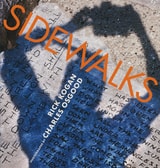
Sidewalks
Portraits of ChicagoRick Kogan & Charles Osgood
Northwestern University Press, 2008
Few people know Chicago as do Rick Kogan and Charles Osgood, and their "Sidewalks" column for the Chicago Tribune Sunday Magazine is a tour of the city like no other, taking readers to the off-beat and quintessential spots that give Chicago its character—that make its inhabitants feel at home and tell its visitors that they have arrived.
Accompanied by evocative color photographs by Charles Osgood, Kogan's pieces revisit the lost places and people of Chicago, and take readers down the quiet byways and thriving thoroughfares, pointing out the characters and cornerstones, the oddities and institutions that make the city what it is. In this collection you will find an elegy for Maxwell Street, the marketplace that pulsed with city life for more than 100 years; a remembrance of a disturbing advertisement ("Are you a slave to housework?") on the side of a building on Irving Park Road; a cross marking a deadly intersection; a magical miniature golf course; as well as ballad singer Fred Holstein, the denizens of the World Gym and memories of Bensinger's pool hall, the day-camp kids of summer, bike couriers, the creatures of the beach, and much, much more. Here is Chicago, past, present, and—let's hope—future, captured in the unique archive of Sidewalks.
Signs of the Spirit
Music and the Experience of Meaning in Ndau Ceremonial LifeTony Perman
University of Illinois Press, 2020
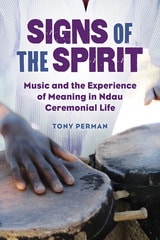
Perman's encounters with the spirits, the mediums who bring them back, and the accompanying rituals form the heart of his ethnographic account of how the Ndau experience ceremonial musicking. As Perman witnessed other ceremonies, he discovered that music and dancing shape the emotional lives of Ndau individuals by inviting them to experience life's milestones or cope with its misfortunes as a group. Signs of the Spirit explores the historical, spiritual, and social roots of ceremonial action and details how that action influences the Ndau's collective approach to their future. The result is a vivid ethnomusicological journey that delves into the immediacy of musical experience and the forces that transform ceremonial performance into emotions and community.
Singing the Land
Hebrew Music and Early Zionism in AmericaEli Sperling
University of Michigan Press, 2024
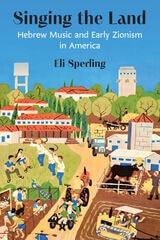
Exploring the history, events, contexts, and tensions that comprised what may be termed the ‘Zionization’ of American Jewry during the first half of the twentieth century, Eli Sperling analyzes primary sources within the historical contexts of Zionist national development and American Jewish life. Singing the Land offers insights into how and why musical frameworks were central to catalyzing American Jewry’s support of the Zionist cause by the 1940s, parallel to firm commitments to their American locale and national identities. The proliferation of this widespread American Jewish-Zionist embrace was achieved through a variety of educational, religious, economic, and political efforts, and Hebrew music was a thread consistent among them all.
Sisters of Influence
A Biography of Zina, Amy, and Rose FayAndrea Friederici Ross
Southern Illinois University Press, 2025
WINNER, Certificate of Excellence in “Scholarly Publications” from the Illinois State Historical Society’s 2026 Best of Illinois History Awards!
Three sisters who forged intertwined paths to empowerment
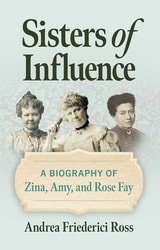
A real-life Little Women, Sisters of Influence is the untold story of three extraordinary sisters who defied Victorian-era expectations to leave their marks on history. Andrea Friederici Ross breathes new life into the fascinating stories of Zina, Amy, and Rose Fay, intertwining their narratives into a captivating family biography.
Born into modest circumstances as daughters of an Episcopal rector and a poet, the seven Fay siblings’ upbringing in small-town Vermont was shaped by financial struggles, rare educational opportunities, and the early loss of their mother. While their sisters pursued traditional paths and their brother Norman helped them all, Zina, Amy, and Rose boldly charted their own courses, becoming trailblazers in music, writing, and women’s advocacy.
Zina Fay Peirce envisioned a life of intellectual partnership with her husband, philosopher Charles Sanders Peirce, only to find her dreams frustrated by domestic expectations. Undeterred, she became a writer and a conservative feminist, championing improved education for women and pioneering cooperative housekeeping initiatives. Despite challenges, Zina’s vision for women’s empowerment laid a foundation for future reform.
Amy Fay, a gifted pianist, pursued music studies abroad, including under the tutelage of Franz Liszt. Her letters home, filled with vivid accounts of her experiences in Europe, were edited into a memoir by Zina and published to critical acclaim. As a concert pianist, music teacher, and advocate for women in music, Amy inspired generations of women to follow their artistic passions.
Rose Fay Thomas, initially a quiet supporter of her sisters, emerged as a formidable force in her own right, becoming a founder of the Anti-Cruelty Society. Her leadership in Chicago’s Amateur Musical Club and the National Federation of Music Clubs helped shape the American classical music scene. As the wife of conductor Theodore Thomas, Rose played a pivotal role in establishing the Chicago Symphony Orchestra. Her later writings on gardening and her husband’s life further solidified her legacy.
Through her exploration of the Fay sisters’ lives, Ross illuminates the shifting roles of women during a transformative era. From advocating for women’s education to advancing the arts and social reform, Zina, Amy, and Rose exemplify the resilience and determination that bridged the restrictive norms of the Victorian age and the activism of the Progressive Era. Their remarkable journeys will inspire readers to reimagine the possibilities of women’s contributions to history and culture.
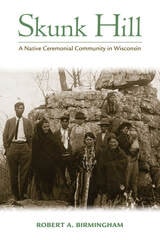
Skunk Hill
A Native Ceremonial Community in WisconsinRobert A. Birmingham
Wisconsin Historical Society Press, 2015
In Skunk Hill, archeologist Robert A. Birmingham traces the largely unknown story of this community, detailing the role it played in preserving Native culture through a harsh period of US Indian policy from the 1880s to 1930s. The story’s central focus is the Drum Dance, also known as the Dream Dance or Big Drum, a pan-tribal cultural revitalization movement that swept the Upper Midwest during the Great Suppression, emphasizing Native values and rejecting the vices of the white world. Though the community disbanded by the 1930s, the site, now on the National Register of Historic
Places with two dance circles still visible on the grounds, stands as testimony to the efforts of its members to resist cultural assimilation.
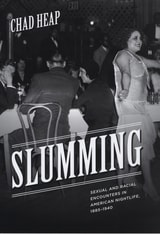
Slumming
Sexual and Racial Encounters in American Nightlife, 1885-1940Chad Heap
University of Chicago Press, 2009
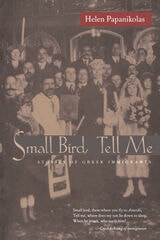
Small Bird Tell Me
Stories Of Greek ImmigrantsHelen Papanikolas
Ohio University Press, 1994

Smile
A Picture History of Olympic Park, 1887-1965Siegel, Alan A
Rutgers University Press, 1995

Smothered and Covered
Waffle House and the Southern ImaginaryTy Matejowsky
University of Alabama Press, 2023
A critical meditation of the iconic 24-7 roadside chain and its place in the southern imaginary
Waffle House has long been touted as an icon of the American South. The restaurant’s consistent foregrounding as a resonant symbol of regional character proves relevant for understanding much about the people, events, and foodways shaping the sociopolitical contours of today’s Bible Belt. Whether approached as a comedic punchline on the Internet, television, and other popular media or elevated as a genuine touchstone of messy American modernity, Waffle House, its employees, and everyday clientele do much to transcend such one-dimensional characterizations, earning distinction in ways that regularly go unsung.
Smothered and Covered: Waffle House and the Southern Imaginary is the first book to socioculturally assess the chain within the field of contemporary food studies. In this groundbreaking work, Ty Matejowsky argues that Waffle House’s often beleaguered public persona is informed by various complexities and contradictions. Critically unpacking the iconic eatery from a less reductive perspective offers readers a more realistic and nuanced portrait of Waffle House, shedding light on how it both reflects and influences a prevailing southern imaginary—an amorphous and sometimes conflicting collection of images, ideas, attitudes, practices, linguistic accents, histories, and fantasies that frames understandings about a vibrant if also paradoxical geographic region.
Matejowsky discusses Waffle House’s roots in established southern foodways and traces the chain’s development from a lunch-counter restaurant that emerged across the South. He also considers Waffle House’s place in American and southern popular culture, highlighting its myriad depictions in music, television, film, fiction, stand-up comedy, and sports. Altogether, Matejowsky deftly and persuasively demonstrates how Waffle House serves as a microcosm of today’s South with all the accolades and criticisms this distinction entails.
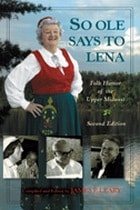
So Ole Says to Lena
Folk Humor of the Upper MidwestCompiled and edited by James P. Leary
University of Wisconsin Press, 2002
In the land of beer, cheese, and muskies—where the polka is danced and winter is unending and where Lutherans and Catholics predominate—everybody is ethnic, the politics are clean, and the humor is plentiful. This collection includes jokes, humorous anecdotes, and tall tales from ethnic groups (Woodland Indians, French, Cornish, Germans, Irish, Scandinavians, Finns, and Poles) and working folk (loggers, miners, farmers, townsfolk, hunters, and fishers). Dig into the rich cultural context supplied by the notes and photographs, or just laugh at the hundreds of jokes gathered at small-town cafes, farm tables, job sites, and church suppers. This second edition includes an afterword and indexes of motifs and tale types.

Social Life in Northwest Alaska
The Structure of Inupiaq Eskimo NationsErnest Burch Jr.
University of Alaska Press, 2006
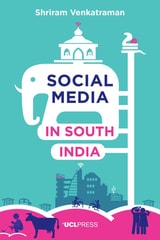
Social Media in South India
Shriram Venkatraman
University College London, 2017
Social Memory in Athenian Public Discourse
Uses and Meanings of the PastBernd Steinbock
University of Michigan Press, 2013
Integrating literary, epigraphic, and archaeological evidence with recent scholarship on memory, identity, rhetoric, and international relations, Social Memory in Athenian Public Discourse: Uses and Meanings of the Past enhances our understanding of both the function of memory in Athenian public discourse and the history of Athenian-Theban relations. It should be of interest not only to students of Greek history and oratory but to everybody interested in memory studies, Athenian democracy, and political decision making.
Socialist Modern
East German Everyday Culture and PoliticsKatherine Pence & Paul Betts, editors
University of Michigan Press, 2008
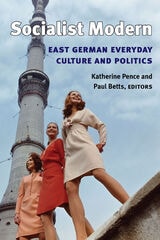
The reunification of Germany in 1989 may have put an end to the experiment in East German communism, but its historical assessment is far from over. Where most of the literature over the past two decades has been driven by the desire to uncover the relationship between power and resistance, complicity and consent, more recent scholarship tends to concentrate on the everyday history of East German citizens.
This volume builds on the latest literature by exploring the development and experience of life in East Germany, with a particular view toward addressing the question: What did modernity mean for the East German state and society? As such, the collection moves beyond the conceptual divide between state-level politics and everyday life to sharply focus on the specific contours of the GDR's unique experiment in Cold War socialism. What unites all the essays is the question of how the very tensions around "socialist modernity" shaped the views, memories, and actions of East Germans over four decades.
"An impressive volume drawing together rich, diverse essays by some of the most interesting, well-known, and experienced scholars on the GDR in the field, on both sides of the Atlantic."
---Dr. Jan Palmowski, Senior Lecturer in European Studies at King's College London, and Review Editor for German History
"Delving into many sides of the GDR modern, Pence and Betts present both new empirical evidence and offer insightful theoretical perspectives. The idea of the 'Socialist Modern' provides an excellent conceptual framework; the focus on culture fills a hole in the literature, the introduction is theoretically sophisticated and well-grounded in the historiography, and the span and heterogeneity of the articles are impressive."
---Donna Harsch, Associate Professor of History, Carnegie Mellon University
Katherine Pence is Assistant Professor of History, Baruch College, City University of New York.
Paul Betts is Reader in Modern German History, University of Sussex, Brighton, England.
Contributors
Daphne Berdahl
Paul Betts
Alon Confino
Greg Eghigian
Dagmar Herzog
Young-Sun Hong
Thomas Lindenberger
Alf Lüdtke
Ina Merkel
Katherine Pence
Judd Stitziel
Dorothee Wierling

Society, Culture, and the State in Germany, 1870-1930
Geoff Eley, Editor
University of Michigan Press, 1997
Solitude
Art And Symbolism In The National Basque MonumentCarmelo Urza
University of Nevada Press, 1993
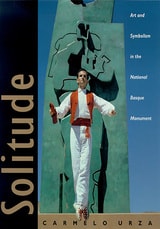
Urza discusses the genesis of the National Basque Monument to the Basque Sheepherder that is located in Reno, Nevada. He also describes the competition held to determine the monument's design and the debates arising from the modern sculpture created by renowned Basque artist Nestor Basterrextea. Urza examines the arguments of those who favored the selection of a figurative, traditional symbol and those who preferred a modern, forward-looking symbol. He utilizes this discussion to explore the evolution of Basque ethnicity and its relationship to society.
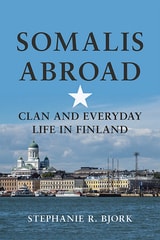
Somalis Abroad
Clan and Everyday Life in FinlandStephanie R. Bjork
University of Illinois Press, 2017

Someday All the Adults Will Die!
The Birth of Texas PunkPat Blashill
University of Texas Press, 2025
A deep dive into the early days of punk in Austin, Texas, this oral history immerses readers in a diverse and influential music scene.
Texas has always teemed with music and counterculture. When punk came to the state in 1978, it flourished in San Antonio, Dallas, Houston, and, especially, Austin. Punk and post-punk musicians, including nationally acclaimed bands like the Butthole Surfers, the Big Boys, the Dicks, and Daniel Johnston influenced local culture before slashing into the American musical psyche. (See Kurt Cobain sporting Johnston’s “Hi, How are you?” T-shirt.) Someday All the Adults Will Die! is an oral history of punk in Texas, from its rise in the late 1970s, through its strong anti-racist, feminist, and queer peak, to its dissolution in the late 1980s.
Now a seasoned music journalist, Blashill experienced the zenith of Texas punk as a teenager, and he captures its intensity in words and pictures. Someday All the Adults Will Die! is rife with electrifying images and firsthand tales of what made this scene such a storm of pleasures and terrors, uncompromising artists, and wild performances. This dynamic portrait of an untamed, all-out musical era is a must-read for fans of punk music, counterculture, and live music.
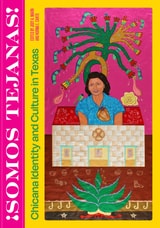
Somos Tejanas!
Chicana Identity and Culture in TexasEdited by Jody A. Marín and Norma E. Cantú
University of Texas Press, 2025
2026 Outstanding Book Award for Non-Fiction, National Association for Chicana and Chicano Studies (NACCS) Tejas Foco
2026 Silver Medal for the Dolores Huerta Best Cultural & Community Themed Book – English, Conference on Latin American History (CLAH)
An expansive volume on Tejana identity and Tejanidad told through personal narratives, poetry, and essays.
Being Tejanx is different than just being from Texas. Being Tejanx means you are a border subject. Being Tejanx means living in and from a certain history of oppression, possibility, activism, and cultural-linguistic hybridity arising within the US-Mexico borderland that is home. And being Tejanx means something in particular if you are a woman.
In ¡Somos Tejanas!, editors Norma E. Cantú and Jody A. Marín assemble contemporary Tejanx writers who provide firsthand accounts of their experience of identity, enriching the field of Tejanx studies through an encounter with gender and sexuality. The contributions, including personal and scholarly essays, poems, criticism, and artworks, explore the heterogeneity of Tejana identity and the sociopolitical movements, stories, dances, music, and athletic feats that mark Tejanidad. Authors contemplate the history and memory of segregation in Texas, the struggles of surviving the unnatural disaster and blackouts of 2021 amid the global pandemic of COVID-19, and the drug-war violence and ever-tightening immigration restrictions that strangle a transborder way of life shared by millions. An unrepentant act of expression from women under attack by state policymakers, this collection dispels the silence imposed by colonial erasure.
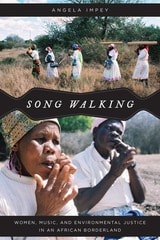
Song Walking
Women, Music, and Environmental Justice in an African BorderlandAngela Impey
University of Chicago Press, 2018
This book links ethnomusicological research to larger themes of international development, environmental conservation, gender, and local economic access to resources. By demonstrating that development processes are essentially cultural processes and revealing how music fits within this frame, Song Walking testifies to the affective, spatial, and economic dimensions of place, while contributing to a more inclusive and culturally apposite alignment between land and environmental policies and local needs and practices.
Songprints
The Musical Experience of Five Shoshone WomenJudith Vander
University of Illinois Press, 1988
Perspectives on the twentieth-century lives of Shoshone women musicians
The musical lives of Native American women have experienced a century of cultural change and constancy. Judith Vander takes readers to the Shoshone of Wyoming's Wind River Reservation to meet five generations of Shoshone women. Vander’s conversations with Emily, Angelina, Alberta, Helene, and Lenore capture their distinct personalities as they share their thoughts, feelings, and attitudes toward their music.
Vander transcribes and analyzes seventy-five songs that the women sing. Each woman possesses a unique songprint—a repertoire distinctive to her culture, age, and personality. As Vander shows, the context of Shoshone social and religious ceremonies offers insights into the rise of the Native American Church, the emergence and popularity of the contemporary powwow, and the changing, enlarging role of women. In addition, two eyewitnesses accounts of Ghost Dance songs and performances elaborate on the function and meaning of the Ghost Dance among the Wind River Shoshones.
2nd Place from the Pauline Alderman Prize for New Scholarship on Women in Music from the International Congress on Women in Music. Winner of an ASCAP Deems Taylor Award, 1989.
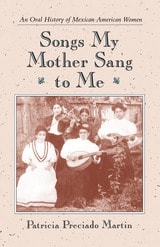
Songs My Mother Sang to Me
An Oral History of Mexican American WomenPatricia Preciado Martin
University of Arizona Press, 1992
Martin's quest took her to ranches, mining towns, and cities throughout southern Arizona, for she sought to document as varied an experience of the contributions of Mexican American women as possible. The interviews covered family history and genealogy, childhood memories, secular and religious traditions, education, work and leisure, environment and living conditions, rites of passage, and personal values. Each of the ten oral histories reflects not only the spontaneity of the interview and personality of each individual, but also the friendship that grew between Martin and her subjects.
Songs My Mother Sang to Me collects voices not often heard and brings to print accounts of social change never previously recorded. These women document more than the details of their own lives; in relating the histories of their ancestors and communities, they add to our knowledge of the culture and contributions of Mexican American people in the Southwest.

Songs that Make the Road Dance
Courtship and Fertility Music of the Tz'utujil MayaBy Linda O'Brien-Rothe
University of Texas Press, 2015
An important and previously unexplored body of esoteric ritual songs of the Tz’utujil Maya of Santiago Atitlán, Guatemala, the “Songs of the Old Ones” are a central vehicle for the transmission of cultural norms of behavior and beliefs within this group of highland Maya. Ethnomusicologist Linda O’Brien-Rothe began collecting these songs in 1966, and she has amassed the largest, and perhaps the only significant, collection that documents this nearly lost element of highland Maya ritual life.
This book presents a representative selection of the more than ninety songs in O’Brien-Rothe’s collection, including musical transcriptions and over two thousand lines presented in Tz’utujil and English translation. (Audio files of the songs can be downloaded from the UT Press website.) Using the words of the “songmen” who perform them, O’Brien-Rothe explores how the songs are intended to move the “Old Ones”—the ancestors or Nawals—to favor the people and cause the earth to labor and bring forth corn. She discusses how the songs give new insights into the complex meaning of dance in Maya cosmology, as well as how they employ poetic devices and designs that place them within the tradition of K’iche’an literature, of which they are an oral form. O’Brien-Rothe identifies continuities between the songs and the K’iche’an origin myth, the Popol Vuh, while also tracing their composition to the late sixteenth and early seventeenth centuries by their similarities with the early chaconas that were played on the Spanish guitarra española, which survives in Santiago Atitlán as a five-string guitar.
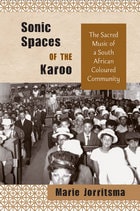
Sonic Spaces of the Karoo
The Sacred Music of a South African Coloured CommunityMarie Jorritsma
Temple University Press, 2011
Sonic Spaces of the Karoo is a pioneering study of the sacred music of three coloured (the apartheid designation for people "not white or native") people's church congregations in the rural town of Graaff-Reinet, South Africa. Jorritsma's fieldwork involves an investigation of the choruses, choir music, and hymns of the Karoo region to present a history of the people's traditional, religious, and cultural identity in song. This music is examined as part of a living archive preserved by the community in the face of a legacy of slavery and colonial as well as apartheid oppression.
Jorritsma's findings counteract a lingering stereotype that coloured music is inferior to European or African music and that coloured people should not or do not have a cultural identity. Sonic Spaces of the Karoo seeks to eradicate that bias and articulate a more legitimate place for these people in the contemporary landscape of South Africa.
Sons And Daughters Of Los
Culture And Community In L.A.David James
Temple University Press, 2003
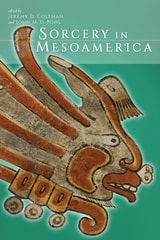
Sorcery in Mesoamerica
Jeremy D. Coltman and John M. D. Pohl
University Press of Colorado, 2020
In each chapter, preeminent scholars of ritual and belief ask very different questions about what exactly sorcery is in Mesoamerica. Contributors consider linguistic and visual aspects of sorcery and witchcraft, such as the terminology in Aztec semantics and dictionaries of the Kaqchiquel and K’iche’ Maya. Others explore the practice of sorcery and witchcraft, including the incorporation by indigenous sorcerers in the Mexican highlands of European perspectives and practices into their belief system. Contributors also examine specific deities, entities, and phenomena, such as the pantheistic Nahua spirit entities called forth to assist healers and rain makers, the categorization of Classic Maya Wahy (“co-essence”) beings, the cult of the Aztec goddess Cihuacoatl, and the recurring relationship between female genitalia and the magical conjuring of a centipede throughout Mesoamerica.
Placing the Mesoamerican people in a human context—as engaged in a rational and logical system of behavior—Sorcery inMesoamerica is the first comprehensive study of the subject and an invaluable resource for students and scholars of Mesoamerican culture and religion.
Contributors:
Lilián González Chévez, John F. Chuchiak IV, Jeremy D. Coltman, Roberto Martínez González, Oswaldo Chinchilla Mazariegos, Cecelia F. Klein, Timothy J. Knab, John Monaghan, Jesper Nielsen, John M. D. Pohl, Alan R. Sandstrom, Pamela Effrein Sandstrom, David Stuart
Soulside
Inquiries into Ghetto Culture and CommunityUlf Hannerz
University of Chicago Press, 2004
Originally published 35 years ago, Soulside became an urban anthropological classic. The book helped to dispel many false impressions about ghetto life and questioned the idea, precipitated in the influential Moynihan Report and in notions of a "culture of poverty," that the poor had chosen to lead the lives they do. Raising central moral and political questions about American society in a turbulent period, Soulside became an example of public engagement in anthropology. In a new afterword, Ulf Hannerz discusses the book's place in the debates of the time and its relevance to current arguments in anthropology.
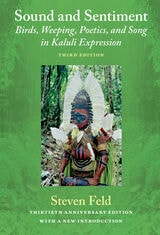
Sound and Sentiment
Birds, Weeping, Poetics, and Song in Kaluli Expression, 3rd edition with a new introduction by the authorSteven Feld
Duke University Press, 2012
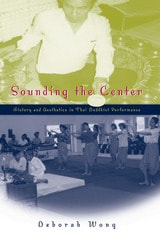
Sounding the Center
History and Aesthetics in Thai Buddhist PerformanceDeborah Wong
University of Chicago Press, 2001
Drawing on her extensive fieldwork, Wong lays out the ritual in detail: the way it is enacted, the foods and objects involved, and the people who perform it, emphasizing the way the performers themselves discuss and construct aspects of the ceremony.
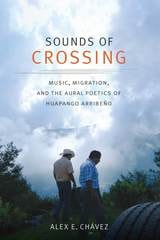
Sounds of Crossing
Music, Migration, and the Aural Poetics of Huapango ArribeñoAlex E. Chávez
Duke University Press, 2017
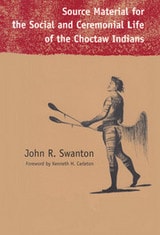
Source Material for the Social and Ceremonial Life of the Choctaw Indians
John Swanton, with a foreword by Kenneth H. Carleton
University of Alabama Press, 2001
Long considered the undisputed authority on the Indians of the southern United States, anthropologist John Swanton published this history as the Smithsonian Institution's Bureau of American Ethnology (BAE) Bulletin 103 in 1931. Swanton's descriptions are drawn from earlier records—including those of DuPratz and Romans—and from Choctaw informants. His long association with the Choctaws is evident in the thorough detailing of their customs and way of life and in his sensitivity to the presentation of their native culture.
Included are descriptions of such subjects as clans, division of labor between sexes, games, religion, war customs, and burial rites. The Choctaws were, in general, peaceful farmers living in Mississippi and southwestern Alabama until they were moved to Oklahoma in successive waves beginning in 1830, after the treaty of Dancing Rabbit Creek.
This edition includes a new foreword by Kenneth Carleton placing Swanton's work in the context of his times. The continued value of Swanton's original research makes Source Material the most comprehensive book ever published on the Choctaw people.
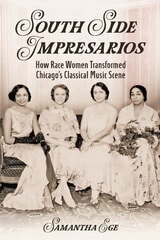
South Side Impresarios
How Race Women Transformed Chicago's Classical Music SceneSamantha Ege
University of Illinois Press, 2024
Ege focuses on composers like Florence Price, Nora Holt, and Margaret Bonds not as anomalies but as artists within an expansive cultural flowering. Overcoming racism and sexism, Black women practitioners instilled others with the skill and passion to make classical music while Race women like Maude Roberts George, Estella Bonds, Neota McCurdy Dyett, and Beulah Mitchell Hill built and fostered institutions central to the community. Ege takes readers inside the backgrounds, social lives, and female-led networks of the participants while shining a light on the scene’s audiences, supporters, and training grounds. What emerges is a history of Black women and classical music in Chicago and the still-vital influence of the world they created.
A riveting counter to a history of silence, South Side Impresarios gives voice to an overlooked facet of the Black Chicago Renaissance.
South by Southwest
24 Stories from Modern TexasEdited by Don Graham
University of Texas Press, 1986
These Texas stories are among the best produced by the state's writers in the mid-twentieth century. Selected above all for their artistic excellence and their narrative mastery, they also present a vital picture of the Southwest in microcosm, as revealed in its largest state.
Texas and Texas writing moved from a Southern orientation in the 1940s—reflected here in works by William Goyen, William Humphrey, and others—to the strong Southwestern flavor of stories by such authors as Larry McMurtry and A. C. Greene to, finally, urban or Sunbelt Texas, mirrored in the edgy, sometimes experimental prose of Doug Crowell, William Harrison, and Peter LaSalle.
Here are stories by such celebrated authors as Paul Horgan and William A. Owens, as well as startling, in some cases previously unpublished work by writers like Harryette Mullen, Naomi Shihab Nye, Pat Ellis Taylor, and Thomas Zigal. A few stories may already be favorites—Larry McMurtry's "There Will Be Peace in Korea," Amado Muro's "Cecilia Rosas." Many others have become classics, such as Vassar Miller's poignantly autobiographical "Pact," Hughes Rudd's hilarious record of grade school fieldtrips, R. E. Smith's gripping story of a Houstonian's life-changing encounter with nature, and Dave Hickey's astonishing account of an old cowboy's imprisonment . . . in a bathtub.
Bill Brett, James Crumley, Linda West Eckhardt, Robert Flynn, Mary Gray Hughes, Carolyn Osborn—all are represented here by stories guaranteed to banish stereotypes and boredom and to enlarge one's vision of the Lone Star State. Anyone who thinks that oil wells and big hair define Texas will find out differently in the dazzling short fiction presented in South by Southwest.
Southern Fried
Going Whole Hog in a State of WonderRex Nelson
Butler Center for Arkansas Studies, 2016
For decades, Rex Nelson has been traveling Arkansas. He learned to love the back roads, small towns, and people of the state while going on trips with his father, who sold athletic supplies to high schools. They sat in old Depression-era gyms built by the Works Progress Administration, ate in small-town cafes, and waded in streams on warm spring days.
Throughout his career as a sportswriter, political writer, senior staff member in the governor’s office, presidential appointee to the Delta Regional Authority, and now corporate communications director for Simmons Bank, Nelson has written millions of words about Arkansas and its people.
In this collection of columns from the Arkansas Democrat-Gazette, Nelson brings to life the personalities, communities, festivals, and tourist attractions that make Arkansas unique. As he says, “Arkansas is a hard place to explain to outsiders. We’re mostly Southern but also a bit Midwestern and a tad Southwestern. The Ozarks are different from the pine woods of the Gulf Coastal Plain, and the Delta is different from the Ouachitas. Invariably, though, those who take the time to get off the main roads and get to know the real Arkansas are entranced by the place.”
Southern Heritage on Display
Public Ritual and Ethnic Diversity within Southern RegionalismEdited by Celeste Ray
University of Alabama Press, 2002
W. J. Cash's 1941 observation that “there are many Souths and many cultural traditions among them” is certainly validated by this book. Although the Civil War and its “lost cause” tradition continues to serve as a cultural root paradigm in celebrations, both uniting and dividing loyalties, southerners also embrace a panoply of public rituals—parades, cook-offs, kinship homecomings, church assemblies, music spectacles, and material culture exhibitions—that affirm other identities. From the Appalachian uplands to the Mississippi Delta, from Kentucky bluegrass to Carolina piedmont, southerners celebrate in festivals that showcase their diverse cultural backgrounds and their mythic beliefs about themselves.
The ten essays of this cohesive, interdisciplinary collection present event-centered research from various fields of study—anthropology, geography, history, and literature—to establish a rich, complex picture of the stereotypically “Solid South.” Topics include the Mardi Gras Indian song cycle as a means of expressing African-American identity in New Orleans; powwow performances and Native American traditions in southeast North Carolina; religious healings in southern Appalachian communities; Mexican Independence Day festivals in central Florida; and, in eastern Tennessee, bonding ceremonies of melungeons who share Indian, Scots Irish, Mediterranean, and African ancestry. Seen together, these public heritage displays reveal a rich “creole” of cultures that have always been a part of southern life and that continue to affirm a flourishing regionalism.
This book will be valuable to students and scholars of cultural anthropology, American studies, and southern history; academic and public libraries; and general readers interested in the American South. It contributes a vibrant, colorful layer of understanding to the continuously emerging picture of complexity in this region historically depicted by simple stereotypes.
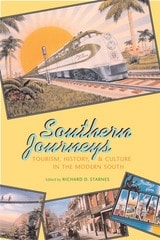
Southern Journeys
Tourism, History, and Culture in the Modern SouthEdited by Richard D. Starnes
University of Alabama Press, 2003
The first collection of its kind to examine tourism as a complicated and vital force in southern history, culture, and economics
Anyone who has seen Rock City, wandered the grounds of Graceland, hiked in Great Smoky Mountains National Park, or watched the mermaids swim at Weeki Wachee knows the southern United States offers visitors a rich variety of scenic, cultural, and leisure activities. Tourism has been, and is still, one of the most powerful economic forces in the modern South. It is a multibillion-dollar industry that creates jobs and generates revenue while drawing visitors from around the world to enjoy the region’s natural and man-made attractions.This collection of 11 essays explores tourism as a defining force in southern history by focusing on particular influences and localities. Alecia Long examines sex as a fundamental component of tourism in New Orleans in the early 20th century, while Brooks Blevins describes how tourism served as a modernizing influence on the Arkansas Ozarks, even as the region promoted itself as a land of quaint, primitive hillbillies. Anne Whisnant chronicles the battle between North Carolina officials building the Blue Ridge Parkway and the owner of Little Switzerland, who fought for access and advertising along the scenic highway. One essay probes the racial politics behind the development of Hilton Head Island, while another looks at the growth of Florida's
panhandle into a “redneck Riviera,” catering principally to southerners, rather than northern tourists.
Southern Journeys is a pioneering work in southern history. It introduces a new window through which to view the region's distinctiveness. Scholars and students of environmental history, business history, labor history, and social history will all benefit from a consideration of the place of tourism in southern life.

Southern Paiute
A PortraitLogan Hebner
Utah State University Press, 2010
Now little recognized by their neighbors, Southern Paiutes once had homelands that included much of the vast Colorado Plateau, Great Basin, and Mojave Desert. From the Four Corners’ San Juan River to California’s lower Colorado, from Death Valley to Canyonlands, from Capitol Reef to the Grand Canyon, Paiutes lived in many small, widespread communities. They still do, but the communities are fewer, smaller, and mostly deprived of the lands and resources that sustained traditional lives.
To portray a people and the individuals who comprise it, William Logan Hebner and Michael L. Plyler relay Paiute voices and reveal Paiute faces, creating a space for them to tell their stories and stake claim to who they once were and now are.
Southern Workers and the Search for Community
Spartanburg County, South CarolinaG. C. Waldrep III
University of Illinois Press, 2000
Spartanburg County, South Carolina, offered an example of the enduring legacy of the southern textile industry, company-owned mill villages, and union struggles of the 1930s. G. C. Waldrep illuminates the complex meshing of community ties and traditions with the goals and ideals of unionism. Unions aligned with a social vision of mutuality, equality, and interdependency already established in mill villages. But because companies owned the villages, labor conflicts involved not only work issues like wages and hours but virtually every other aspect of life. In documenting the high stakes of labor protest, Waldrep shows how the erosion or outright destruction of community undermined the ability of workers to respond to the assaults of employers overwhelmingly supported by government agencies and agents.
Beautifully written and persuasively argued, Southern Workers and the Search for Community opens the gates of southern company towns to illuminate the human issues behind the mechanics of labor.