Results by title
18284 books match the query 'United States' and 1181 start with s
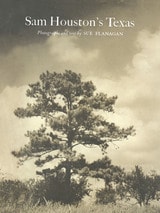
Sam Houston's Texas
Photographs and text by Sue Flanagan
University of Texas Press, 1964
When Sam Houston crossed the Red River for the first time in 1832, he termed Texas the "finest portion of the Globe that has ever blessed my vision." He soon made it his "abiding place" and became a lifelong traveller in his adopted country. By carriage and muleback his diplomatic, military, political, and personal activities took him over what is now the eastern half of the state—and he fell in love with every foot of it. With panoramic vision and broad descriptive power, he expressed his lasting affection for the country in everything he said and wrote.
Sue Flanagan, having read every available word by and about Houston and having followed the trail of every trip he made in Texas, here presents the Texas which Houston knew—through his picturesque language and through the camera's carefully focused lens. Her story provides continuity for Houston's activities and perspective for her photographs; it also provides an expression of Houston's views in his own forthright and emphatic manner.
But the essence of this book is its 113 photographs. The face of Texas east of San Antonio is pictured in all its varied features. With great patience and discernment, Sue Flanagan brought to bear all the skills of her artistic photography to capture the landscapes, buildings, and objects in the most revealing light and in the best atmospheric conditions for catching the appropriate mood. These spots in nature which Houston saw, these objects which he knew, these houses where he was entertained and where he lived—all are tangible reminders of "this colorful, cagey, and controversial man," this Texas hero whose life was a tragedy in divided loyalties.
Sam Houston, the Great Designer
By Llerena B. Friend
University of Texas Press, 1954
This biography of Sam Houston goes beyond the romantic frontier life of the "buckskin hero from Tennessee" to examine seriously his role as an American statesman.
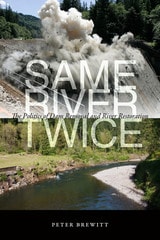
Same River Twice
The Politics of Dam Removal and River RestorationPeter Brewitt
Oregon State University Press, 2019
How did this happen? Same River Twice answers this question by telling the stories of three major Northwestern dam removals – the politics, people, hopes, and fears that shaped three rivers and their communities. Brewitt begins each story with the dam’s construction, shows how its critics gained power, details the conflicts and controversies of removal, and explores the aftermath as the river re-established itself.
Each dam removal offers a unique case study. On the Elwha and Rogue Rivers, dam removal was a multi-decade political brawl; on the Sandy River it was swift and amicable. A key controversy in every case was the loss of the recreational lake created by the dam. Local communities loved their lakes and felt that they were natural, public spaces rather than industrial creations. They fought dam removal with passion and ingenuity. To be successful, dam removal advocates had to learn to weld together mega-coalitions that embraced most interest groups and moved forward together.
While the dams profiled here are all in the Pacific Northwest, dam removal is a national and international phenomenon, and Brewitt’s findings apply everywhere. Written for both a scholarly and a general audience, Same River Twice presents invaluable case studies for scholars of environmental politics, wildlife and public land professionals, environmental activists, and anyone interested in the intersection of politics, public policy, and dam removal.

Same-Sex Dynamics among Nineteenth-Century Americans
A MORMON EXAMPLED. Michael Quinn
University of Illinois Press, 1996
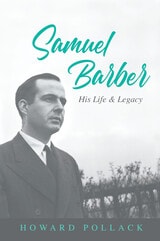
Samuel Barber
His Life and LegacyHoward Pollack
University of Illinois Press, 2023
Acclaimed biographer Howard Pollack (Aaron Copland, George Gershwin) offers a multifaceted account of Barber’s life and music while placing the artist in his social and cultural milieu. Born into a musical family, Barber pursued his artistic ambitions from childhood. Pollack follows Barber’s path from his precocious youth through a career where, from the start, the composer consistently received prizes, fellowships, and other recognition. Stylistic analyses of works like the Adagio for Strings, the Violin Concerto, Knoxville: Summer of 1915 for voice and orchestra, the Piano Concerto, and the operas Vanessa and Antony and Cleopatra, stand alongside revealing accounts of the music’s commissioning, performance, reception, and legacy. Throughout, Pollack weaves in accounts of Barber’s encounters with colleagues like Aaron Copland and Francis Poulenc, performers from Eleanor Steber and Leontyne Price to Vladimir Horowitz and Van Cliburn, patrons, admirers, and a wide circle of eminent friends and acquaintances. He also provides an eloquent portrait of the composer’s decades-long relationship with the renowned opera composer Gian Carlo Menotti.
Informed by new interviews and immense archival research, Samuel Barber is a long-awaited critical and personal biography of a monumental figure in twentieth-century American music.
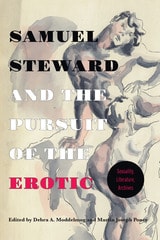
Samuel Steward and the Pursuit of the Erotic Sexuality, Literature, Archives
Sexuality, Literature, ArchivesEdited by Debra A. Moddelmog and Martin Joseph Ponce
The Ohio State University Press, 2017
With work by prominent scholars in queer, transgender, and sexuality studies, and with topics such as the queer archive, hoarding, masochism, the queer mystery, race and desire, sexology, and gay pornography, Samuel Steward and the Pursuit of the Erotic will appeal to a wide range of readers across a variety of disciplines invested in queer experience. Closing on a personal recollection from one of Steward’s last close friends, the volume will also appeal to readers interested in the personal aspects of this fascinating, idiosyncratic figure’s multifaceted life.
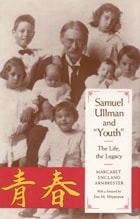
Samuel Ullman and "Youth"
The Life, the LegacyMargaret E. Armbrester
University of Alabama Press, 2009
Thousands of wonderful and sometimes strange fads have captured the public fancy in the almost five decades since the end of World War II. Most have been short-lived and soon faded away. There is, however, a poem that has not only withstood the vicissitudes of time, but has spread around the world like the waves lapping at a beach. This is the poem "Youth," by Samuel Ullman.
In December 1945, the Reader’s Digest published the poem and reported that General Douglas MacArthur, Commander of the Allied Forces, Far East, kept a copy of the poem near his desk.
Around that time, Yoshio Okada, a Japanese businessman, bought a copy of that December 1945 edition of the Reader's Digest, read the poem and was deeply affected by it. He translated it into Japanese and displayed it in his office as a guiding inspiration. Many of Okada's friends read the poem and were fascinated by its beauty. It began to receive national publicity through newspapers and magazines and became popular throughout Japan, especially among the intellectual community. Part of the reason for this widespread popularity is the excellence of the translation. Yoshio Okada, a man of noble character, gifted with a profound philosophy of life and literary talent, translated the poem into a beautiful, soulstirring Japanese version.
Samuel Ullman's “Youth” reflects the truth of life, and his outcry of spirituality touches the intrinsic nature of man.
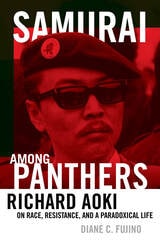
Samurai among Panthers
Richard Aoki on Race, Resistance, and a Paradoxical LifeDiane C. Fujino
University of Minnesota Press, 2012
An iconic figure of the Asian American movement, Richard Aoki (1938–2009) was also, as the most prominent non-Black member of the Black Panther Party, a key architect of Afro-Asian solidarity in the 1960s and ’70s. His life story exposes the personal side of political activism as it illuminates the history of ethnic nationalism and radical internationalism in America.
A reflection of this interconnection, Samurai among Panthers weaves together two narratives: Aoki’s dramatic first-person chronicle and an interpretive history by a leading scholar of the Asian American movement, Diane C. Fujino. Aoki’s candid account of himself takes us from his early years in Japanese American internment camps to his political education on the streets of Oakland, to his emergence in the Black Panther Party. As his story unfolds, we see how his parents’ separation inside the camps and his father’s illegal activities shaped the development of Aoki’s politics. Fujino situates his life within the context of twentieth-century history—World War II, the Cold War, and the protests of the 1960s. She demonstrates how activism is both an accidental and an intentional endeavor and how a militant activist practice can also promote participatory democracy and social service.
The result of these parallel voices and analysis in Samurai among Panthers is a complex—and sometimes contradictory—portrait of a singularly extraordinary activist and an expansion and deepening of our understanding of the history he lived.
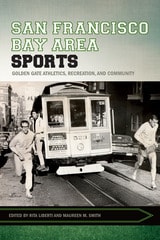
San Francisco Bay Area Sports
Golden Gate Athletics, Recreation, and CommunityRita Liberti
University of Arkansas Press, 2017
San Francisco Bay Area Sports brings together fifteen essays covering the issues, controversies, and personalities that have emerged as northern Californians recreated and competed over the last 150 years. The area’s diversity, anti-establishment leanings, and unique and beautiful natural surroundings are explored in the context of a dynamic sporting past that includes events broadcast to millions or activities engaged in by just a few.
Professional and college events are covered along with lesser-known entities such as Oakland’s public parks, tennis player and Bay Area native Rosie Casals, environmentalism and hiking in Marin County, and the origins of the Gay Games. Taken as a whole, this book clarifies how sport is connected to identities based on sexuality, gender, race, and ethnicity. Just as crucial, the stories here illuminate how sport and recreation can potentially create transgressive spaces, particularity in a place known for its nonconformity.
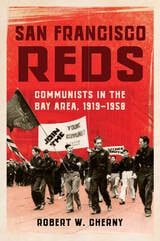
San Francisco Reds
Communists in the Bay Area, 1919-1958Robert W. Cherny
University of Illinois Press, 2024
Founded in 1919, the Communist Party (CP) in San Francisco survived an ineffectual early period to become a force in the trade union heyday of the 1930s. Robert Cherny uses the lives and careers of more than fifty members to tell the story of the city’s CP from its founding through 1958.
Cherny draws on FBI files, the records of the CP at the Russian State Archive for Social and Political History, interviews, and memoirs to follow male and female party and union leaders, rank-and-file members, and others. His history reveals why people joined the CP while charting the frequent changes in policy, constant member turnover, and disruptive factionalism that limited party aims and successes. Cherny also follows his subjects through their resignations, expulsions, or other reasons for departure and looks at the CP’s influence on their lives in subsequent years.
Vivid and exhaustively researched, San Francisco Reds is a long view account of the personal motivations and activism of an Old Left generation in a West Coast city.
San Francisco Year Zero
Political Upheaval, Punk Rock and a Third-Place Baseball TeamLincoln A. Mitchell
Rutgers University Press, 2019
In San Francisco Year Zero, San Francisco native Lincoln Mitchell traces the roots of the current situation back to 1978, when three key events occurred: the assassination of George Moscone and Harvey Milk occurring fewer than two weeks after the massacre of Peoples Temple members in Jonestown, Guyana, the explosion of the city’s punk rock scene, and a breakthrough season for the San Francisco Giants. Through these three strands, Mitchell explores the rifts between the city’s pro-business and progressive-left politicians, the emergence of Dianne Feinstein as a political powerhouse, the increasing prominence of the city’s LGBT community, punk’s reinvigoration of the Bay Area’s radical cultural politics, and the ways that the Giants helped unify one of the most ethnically and culturally diverse cities in the nation.
Written from a unique insider’s perspective, San Francisco Year Zero deftly weaves together the personal and the political, putting a human face on the social upheavals that transformed a city.

San Francisco's International Hotel
Mobilizing the Filipino American Community in the Anti-Eviction MovementEstella Habal
Temple University Press, 2008
San Francisco, 1846-1856
From Hamlet to CityRoger W. Lotchin
University of Illinois Press, 1997
Now back in print with a new introduction by the author, this is the classic study of America's most admired instant city, from its days as a sleepy Mexican village, through the Gold Rush and into its establishment as a major international port. Roger Lotchin examines the urbanizing influences in San Francisco and compares these to other urban centers, doing so against a colorful backdrop of opium dens and other sinful institutions.
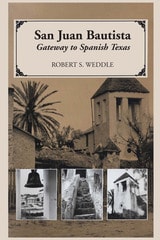
San Juan Bautista
Gateway to Spanish TexasBy Robert S. Weddle
University of Texas Press, 1968
Winner, Presidio La Bahia Award, Sons of the Republic of Texas, 1978
In their efforts to assert dominion over vast reaches of the (now U.S.) Southwest in the seventeenth century, the Spanish built a series of far-flung missions and presidios at strategic locations. One of the most important of these was San Juan Bautista del Río Grande, located at the present-day site of Guerrero in Coahuila, Mexico.
Despite its significance as the main entry point into Spanish Texas during the colonial period, San Juan Bautista was generally forgotten until the first publication of this book in 1968. Weddle's narrative is a fascinating chronicle of the many religious, military, colonial, and commerical expeditions that passed through San Juan and a valuable addition to knowledge of the Spanish borderlands. It won the Texas Institute of Letters Amon G. Carter Award for Best Southwest History in 1969.
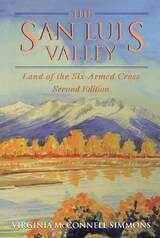
San Luis Valley, Second Edition
Land of the Six-Armed CrossVirginia McConnell Simmons
University Press of Colorado, 1999
In this sparkling new edition of The San Luis Valley: Land of the Six-Armed Cross, Virginia McConnell Simmons lays before the reader the stories and voices of this multicultural land. Ranging from prehistoric peoples and historic Indians to early Spanish settlers, trappers, American explorers, railroads, and Euro-American pioneers, this book is a comprehensive volume covering the geography and social history of Colorado's San Luis Valley.
New to the second edition is additional material on Hispanic culture (in particular a description of their fiber arts) and a lengthy appendix cataloging and describing all of the San Luis Valley's Hispanic place names. In addition, the notes and bibliography have been expanded, and the book contains a new introduction by David Fridtjof Halaas, Chief Historian of the Colorado Historical Society. Acclaimed as the standard history for the south-central region of Colorado, The San Luis Valley: Land of the Six-Armed Cross is a book for students, scholars, and others interested in the history of this fascinating and culturally rich corner of the state.
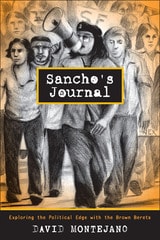
Sancho's Journal
Exploring the Political Edge with the Brown BeretsBy David Montejano
University of Texas Press, 2012
How do people acquire political consciousness, and how does that consciousness transform their behavior? This question launched the scholarly career of David Montejano, whose masterful explorations of the Mexican American experience produced the award-winning books Anglos and Mexicans in the Making of Texas, 1836–1986, a sweeping outline of the changing relations between the two peoples, and Quixote’s Soldiers: A Local History of the Chicano Movement, 1966–1981, a concentrated look at how a social movement “from below” began to sweep away the last vestiges of the segregated social-political order in San Antonio and South Texas. Now in Sancho’s Journal, Montejano revisits the experience that set him on his scholarly quest—“hanging out” as a participant-observer with the South Side Berets of San Antonio as the chapter formed in 1974.
Sancho’s Journal presents a rich ethnography of daily life among the “batos locos” (crazy guys) as they joined the Brown Berets and became associated with the greater Chicano movement. Montejano describes the motivations that brought young men into the group and shows how they learned to link their individual troubles with the larger issues of social inequality and discrimination that the movement sought to redress. He also recounts his own journey as a scholar who came to realize that, before he could tell this street-level story, he had to understand the larger history of Mexican Americans and their struggle for a place in U.S. society. Sancho’s Journal completes that epic story.
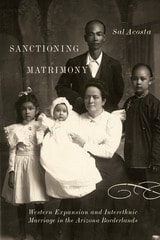
Sanctioning Matrimony
Western Expansion and Interethnic Marriage in the Arizona BorderlandsSal Acosta
University of Arizona Press, 2016
Following the Treaty of Mesilla (1853), interethnic relationships played a significant part in the Southwest. Acosta provides previously unseen archival research on the scope and tenor of interracial marriages in Arizona. Contending that scholarship on intermarriage has focused on the upper classes, Acosta takes us into the world of the working and lower classes and illuminates how church and state shaped the behavior of participants in interracial unions.
Marriage practices in Tucson reveal that Mexican women were pivotal in shaping family and social life between 1854 and 1930. Virtually all intermarriages before 1900 were, according to Acosta, between Mexican women and white men, or between Mexican women and blacks or Chinese until the 1920s, illustrating the importance of these women during the transformation of Tucson from a Mexican pueblo to an American town.
Acosta’s deep analysis of vital records, census data, and miscegenation laws in Arizona demonstrates how interethnic relationships benefited from and extended the racial fluidity of the Arizona borderlands.
Sanctuary Everywhere
The Fugitive Sacred in the Sonoran DesertBarbara Andrea Sostaita
Duke University Press, 2024
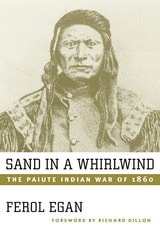
Sand In a Whirlwind, 30th Anniversary Edition
The Paiute Indian War of 1860Ferol Egan
University of Nevada Press, 1985
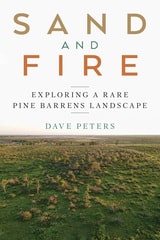
Sand and Fire
Exploring a Rare Pine Barrens LandscapeDave Peters
Wisconsin Historical Society Press, 2023
While many people are familiar with the federally protected St. Croix and Namekagon Rivers of northwestern Wisconsin, few know about the Namekagon Barrens, a rare pine barrens landscape within a few miles of their confluence. A tiny remnant of the millions of barrens acres that once covered the region, the Namekagon Barrens Wildlife Area lies in the heart of the state’s Northwest Sands, a band of pine and oak stretching from Bayfield on Lake Superior to St. Croix Falls on the Wisconsin–Minnesota border. Unfathomable amounts of glacial sand and repeated fires over thousands of years shaped a land of scrub oak and jack pine, blueberries and sweet fern, creating an ideal habitat for wolves and sharp-tailed grouse.
Just as compelling is the land’s rich human history, from Paleo-Indian hunters to Ojibwe berry pickers, loggers to early road builders, and immigrants whose farming efforts failed to the wildlife habitat specialists who manage it today. The book, told in memoir style and featuring color photographs by the author, sets the land’s unusual natural history as the backdrop for a multilayered story about the impact of people on this vulnerable landscape.
Silver winner of the 2023 Midwest Book Award for History
"Peters invites his readers on a journey across time and space, to the glacial formation of the Namekagon Barrens into the present. . . . The book is replete with beautiful photographs, useful maps, and a number of other images that seem to appear on nearly every other page. This book should appeal to a wide public readership while at the same time being a useful primer for academics and researchers."
—Hayden L. Nelson, Environmental History

Sand, Snow, and Stardust
How US Military Engineers Conquered Extreme EnvironmentsGretchen Heefner
University of Chicago Press, 2025
Deserts, the Arctic, outer space—these extreme environments are often seen as inhospitable places at the edges of our maps. But from the 1940s through the 1960s, spurred by the diverse and unfamiliar regions the US military had navigated during World War II, the United States defense establishment took a keen interest in these places, dispatching troops to the Aleutian Islands, North Africa, the South Pacific, and beyond. To preserve the country’s status as a superpower after the war, to pave runways and build bridges, engineers had to understand and then conquer dunes, permafrost, and even the surface of the moon.
Sand, Snow, and Stardust explores how the US military generated a new understanding of these environments and attempted to master them, intending to cement America’s planetary power. Operating in these regions depended as much on scientific and cultural knowledge as on military expertise and technology. From General George S. Patton learning the hard way that the desert is not always hot, to the challenges of constructing a scientific research base under the Arctic ice, to the sheer implausibility of modeling Martian environments on Earth, Gretchen Heefner takes us on a wry expedition into the extremes and introduces us to the people who have shaped our insight into these extraordinary environments. Even decades after the first manned space flight, plans for human space exploration and extraplanetary colonization are still based on what we know about stark habitats on Earth.
An entertaining survey of the relationship between environmental history and military might, Sand, Snow, and Stardust also serves as a warning about the further transformation of the planet—whether through desertification, melting ice caps, or attempts to escape it entirely.
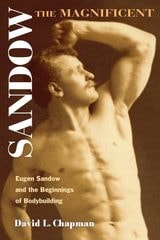
Sandow the Magnificent
Eugen Sandow and the Beginnings of BodybuildingDavid L. Chapman
University of Illinois Press, 1994
Before Arnold Schwarzenegger, Steve Reeves, or Charles Atlas, there was German-born Eugen Sandow (1867-1925), a muscular vaudeville strongman who used his good looks, intelligence, and business savvy to forge a fitness empire.
David L. Chapman tells the story of the immensely popular showman who emphasized physique display rather than lifting prowess. But he also looks at Sandow's success off-stage, where the entertainer helped found the fitness movement by establishing a worldwide chain of gyms, publishing a popular magazine, selling exercise equipment, and pioneering the use of food supplements. Chapman explains physical culture's popularity in terms of its wider social implications while delving into how Sandow, by making exercise fashionable, ushered in the fitness craze that continues today.
This new edition has been revised and enlarged with an afterword that includes unpublished information, new photographs of Sandow and his contemporaries, and an updated index.
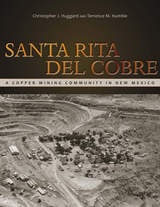
Santa Rita del Cobre
A Copper Mining Community in New MexicoChristopher J. Huggard
University Press of Colorado, 2012

Santeria Enthroned
Art, Ritual, and Innovation in an Afro-Cuban ReligionDavid H. Brown
University of Chicago Press, 2003
Focusing on the royal throne as a potent metaphor in Santería belief and practice, Brown shows how negotiation among ideologically competing interests have shaped the religion's symbols, rituals, and institutions from the nineteenth century to the present. Rich case studies of change in Cuba and the United States, including a New Jersey temple and South Carolina's Oyotunji Village, reveal patterns of innovation similar to those found among rival Yoruba kingdoms in Nigeria. Throughout, Brown argues for a theoretical perspective on culture as a field of potential strategies and "usable pasts" that actors draw upon to craft new forms and identities—a perspective that will be invaluable to all students of the African Diaspora.
American Acemy of Religion Award for Excellence in the Study of Religion (Analytical-Descriptive Category)
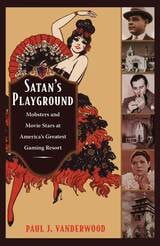
Satan's Playground
Mobsters and Movie Stars at America's Greatest Gaming ResortPaul J. Vanderwood
Duke University Press, 2010
Less than a year after Agua Caliente opened, gangsters held up its money-car in transit to a bank in San Diego, killing the courier and a guard and stealing the company money pouch. Paul J. Vanderwood weaves the story of this heist gone wrong, the search for the killers, and their sensational trial into the overall history of the often-chaotic development of Agua Caliente, Tijuana, and Southern California. Drawing on newspaper accounts, police files, court records, personal memoirs, oral histories, and “true detective” magazines, he presents a fascinating portrait of vice and society in the Jazz Age, and he makes a significant contribution to the history of the U.S.-Mexico border.

Satchel Paige's America
William Price Fox
University of Alabama Press, 2005
Captures the sometimes outrageous, often humorous, and always bigger-than-life spirit of the World's Greatest Pitcher, Leroy Satchel Paige
This book began when the author met "the Satch" for the first time at the Twilight Zone Lounge of the Rhythm Lanes Bowling Alley in Kansas City. What started as a simple interview for Holiday magazine quickly grew into an animated conversation that lasted nearly a week as Paige and Fox moved from bar to club to restaurant to auto repair shop and from one topic to the next. Fox describes, with amazement, the reception the legendary baseball player received at Gates' Place, a famous barbecue restaurant, and The Flamingo, a big dance club. Over the course of the week, Paige shared stories about his start in the Negro leagues, his time with the Kansas City Monarchs, and barnstorming around the country, sleeping on the ground because there were no hotels for blacks. He also tells of his breakthrough to the big leagues when he signed with the Cleveland Indians and later pitched two shutouts against the Chicago White Sox.
In addition to his baseball career, Paige tells Fox about his childhood in Mobile, Alabama, catching fish during the Jubilee, throwing rocks at white boys, hustling bags at the train station, and working in the Depression era medicine shows. In contrast to these humble beginnings, Satchel recounts his later connections with film and music celebrities like Orson Welles, Jelly Roll Morton, Billie Holliday, and Cab Calloway. He also expounds on his friendships with other sports greats, including Goose Tatum, Meadowlark Lemon, and Sugar Ray Robinson.
The ironic intersections between oppression and fame, and between poverty and wealth, that emerge from Paige's narrative memoir exemplify the affliction of talent and genius in an era of racial discrimination and segregation.
Satire or Evasion?
Black Perspectives on Huckleberry FinnJames S. Leonard, Thomas A. Tenney and Thadious M. Davis, eds.
Duke University Press, 1992
Ranging from the laudatory to the openly hostile, these essays include personal impressions of Huckleberry Finn, descriptions of classroom experience with the book, evaluations of its ironic and allegorical aspects, explorations of its nineteenth-century context, and appraisal of its effects on twentieth-century African American writers. Among the issues the authors contend with are Twain’s pervasive use of the word “nigger,” his portrayal of the slave Jim according to the conventions of the minstrel show “darky,” and the thematic chaos created by the “evasion” depicted in the novel’s final chapters.
Sure to provoke thought and stir debate, Satire or Evasion? provides a variety of new perspectives on one of this country’s most troubling classics.
Contributors. Richard K. Barksdale, Bernard W. Bell, Mary Kemp Davis, Peaches M. Henry, Betty Harris Jones, Rhett S. Jones, Julius Lester, Donnarae MacCann, Charles H. Nichols, Charles H. Nilon, Arnold Rampersad, David L. Smith, Carmen Dubryan, John H. Wallace, Kenny Jackson Williams, Fredrick Woodard
Saul Alinsky and the Dilemmas of Race
Community Organizing in the Postwar CityMark Santow
University of Chicago Press, 2023
Saul Alinsky is the most famous—even infamous—community organizer in American history. Almost single-handedly, he invented a new political form: community federations, which used the power of a neighborhood’s residents to define and fight for their own interests. Across a long and controversial career spanning more than three decades, Alinsky and his Industrial Areas Foundation organized Eastern European meatpackers in Chicago, Kansas City, Buffalo, and St. Paul; Mexican Americans in California and Arizona; white middle-class homeowners on the edge of Chicago’s South Side black ghetto; and African Americans in Rochester, Buffalo, Chicago, and other cities.
Mark Santow focuses on Alinsky’s attempts to grapple with the biggest moral dilemma of his age: race. As Santow shows, Alinsky was one of the few activists of the period to take on issues of race on paper and in the streets, on both sides of the color line, in the halls of power, and at the grassroots, in Chicago and in Washington, DC. Alinsky’s ideas, actions, and organizations thus provide us with a unique and comprehensive viewpoint on the politics of race, poverty, and social geography in the United States in the decades after World War II. Through Alinsky’s organizing and writing, we can see how the metropolitan color line was constructed, contested, and maintained—on the street, at the national level, and among white and black alike. In doing so, Santow offers new insight into an epochal figure and the society he worked to change.

Saul Alinsky and the Dilemmas of Race
Community Organizing in the Postwar CityMark Santow
University of Chicago Press, 2023
A groundbreaking examination of Saul Alinsky's organizing work as it relates to race.
Saul Alinsky is the most famous—even infamous—community organizer in American history. Almost single-handedly, he invented a new political form: community federations, which used the power of a neighborhood’s residents to define and fight for their own interests. Across a long and controversial career spanning more than three decades, Alinsky and his Industrial Areas Foundation organized Eastern European meatpackers in Chicago, Kansas City, Buffalo, and St. Paul; Mexican Americans in California and Arizona; white middle-class homeowners on the edge of Chicago’s South Side black ghetto; and African Americans in Rochester, Buffalo, Chicago, and other cities.
Mark Santow focuses on Alinsky’s attempts to grapple with the biggest moral dilemma of his age: race. As Santow shows, Alinsky was one of the few activists of the period to take on issues of race on paper and in the streets, on both sides of the color line, in the halls of power, and at the grassroots, in Chicago and in Washington, DC. Alinsky’s ideas, actions, and organizations thus provide us with a unique and comprehensive viewpoint on the politics of race, poverty, and social geography in the United States in the decades after World War II. Through Alinsky’s organizing and writing, we can see how the metropolitan color line was constructed, contested, and maintained—on the street, at the national level, and among white and black alike. In doing so, Santow offers new insight into an epochal figure and the society he worked to change.

Savage Portrayals
Race, Media and the Central Park Jogger StoryNatalie Byfield
Temple University Press, 2014
Savage West
The Life and Fiction of Thomas SavageO. Alan Weltzien
University of Nevada Press, 2022
O. Alan Weltzien's insightful and detailed literary biography chronicles the life and work of this neglected but deeply talented novelist. Savage, a closeted gay family man, was both an outsider and an insider, navigating an intense conflict between his sexual identity and the claustrophobic social restraints of the rural West. Unlike many other Western writers, Savage avoided the formula westerns— so popular in his time— and offered instead a realistic, often subversive version of the region. His novels tell a hard, harsh story about dysfunctional families, loneliness, and stifling provincialism in the small towns and ranches of the northern Rockies, and his minority interpretation of the West provides a unique vision and caustic counternarrative contrary to the triumphant settler-colonialism themes that have shaped most Western literature. Savage West seeks to claim Thomas Savage's well-deserved position in American literature and to reintroduce twenty-first-century readers to a major Montana writer.

Save Venice Inc.
American Philanthropy and Art Conservation in Italy, 1966-2021Christopher Carlsmith
University of Massachusetts Press, 2022
In 1966, the most destructive flood in the history of Venice temporarily submerged the city and threatened its extraordinary art and architecture. Among the organizations that mobilized to protect this fragile heritage was Save Venice Inc. Founded in Boston and now headquartered in New York City, this nonprofit has become the largest and most active committee dedicated to preserving the artistic legacy of Venice.
Christopher Carlsmith tells the fascinating story of Save Venice Inc., from its origins to its fiftieth anniversary. It continues to provide an influential model for philanthropy in the cultural sector, raising substantial funds to conserve and restore paintings, sculptures, books, mosaics, and entire buildings at risk from human and environmental impacts. Employing extensive archival research, oral interviews, and newspaper accounts, Save Venice Inc. explores a range of topics, including leadership, conservation projects, fundraising, and educational outreach. Using a range of methodologies from cultural history and art history, Carlsmith traces the achievements and challenges faced by this and other historic preservation organizations and by this unique city on the sea.

Saved for a Purpose
A Journey from Private Virtues to Public ValuesJames A. Joseph
Duke University Press, 2015
In an engaging and personal style, Joseph shows how his commitment to applying moral and ethical principles to large groups and institutions played out in his work in the civil rights movement in Alabama and as a college chaplain in California in the turbulent 1960s. His time later as vice president of the Cummins Engine Company provided an opportunity to promote corporate ethics, and his tenure as Under Secretary of the Interior in the Carter Administration underscored the difficulty and weight of making the right decisions while balancing good policy analysis with transcendent moral principles.
In 1996 President Clinton selected Joseph to become the United States Ambassador to South Africa. His recollections of working with Nelson Mandela, whom he describes as a noble and practical politician, and his observations about what he learned from Desmond Tutu and others about reconciliation contain some of the book’s most poignant passages.
Saved for a Purpose is unique, as Joseph combines his insights from working to integrate values into America’s public and private sectors with his long engagement with ethics as an academic discipline and as a practical guide for social behavior. Ultimately, it reflects Joseph’s passionate search for values that go beyond the personal to include the ethical imperatives that should be applied to the communal.

Saving Alma Mater
A Rescue Plan for America's Public UniversitiesJames C. Garland
University of Chicago Press, 2009
America’s public universities educate 80% of our nation’s college students. But in the wake of rising demands on state treasuries, changing demographics, growing income inequality, and legislative indifference, many of these institutions have fallen into decline. Tuition costs have skyrocketed, class sizes have gone up, the number of courses offered has gone down, and the overall quality of education has decreased significantly.
Here James C. Garland draws on more than thirty years of experience as a professor, administrator, and university president to argue that a new compact between state government and public universities is needed to make these schools more affordable and financially secure. Saving Alma Mater challenges a change-resistant culture in academia that places too low a premium on efficiency and productivity. Seeing a crisis of campus leadership, Garland takes state legislators to task for perpetuating the decay of their public university systems and calls for reforms in the way university presidents and governing boards are selected. He concludes that the era is long past when state appropriations can enable public universities to keep their fees low and affordable. Saving Alma Mater thus calls for the partial deregulation of public universities and a phase-out of their state appropriations. Garland’s plan would tie university revenues to their performance and exploit the competitive pressures of the academic marketplace to control costs, rein in tuition, and make schools more responsive to student needs.
A much-needed blueprint for reform based on Garland’s real-life successes as the head of Miami University of Ohio, Saving Alma Mater will be essential for anyone concerned with the costs and quality of higher education in America today.

Saving Animals
Multispecies Ecologies of Rescue and CareElan Abrell
University of Minnesota Press, 2021
A fascinating and unprecedented ethnography of animal sanctuaries in the United States
In the past three decades, animal rights advocates have established everything from elephant sanctuaries in Africa to shelters that rehabilitate animals used in medical testing, to homes for farmed animals, abandoned pets, and entertainment animals that have outlived their “usefulness.” Saving Animals is the first major ethnography to focus on the ethical issues animating the establishment of such places, where animals who have been mistreated or destined for slaughter are allowed to live out their lives simply being animals.
Based on fieldwork at animal rescue facilities across the United States, Elan Abrell asks what “saving,” “caring for,” and “sanctuary” actually mean. He considers sanctuaries as laboratories where caregivers conceive and implement new models of caring for and relating to animals. He explores the ethical decision making around sanctuary efforts to unmake property-based human–animal relations by creating spaces in which humans interact with animals as autonomous subjects. Saving Animals illustrates how caregivers and animals respond by cocreating new human–animal ecologies adapted to the material and social conditions of the Anthropocene.
Bridging anthropology with animal studies and political philosophy, Saving Animals asks us to imagine less harmful modes of existence in a troubled world where both animals and humans seek sanctuary.

Saving Babies?
The Consequences of Newborn Genetic ScreeningStefan Timmermans and Mara Buchbinder
University of Chicago Press, 2012

Saving Face
The Emotional Costs of the Asian Immigrant Family MythAngie Y. Chung
Rutgers University Press, 2016
Saving Grand Canyon
Dams, Deals, and a Noble MythByron E. Pearson
University of Nevada Press, 2019
2020 Spur Awards Finalist Contemporary Nonfiction, Western Writers of America
The Grand Canyon has been saved from dams three times in the last century. Unthinkable as it may seem today, many people promoted damming the Colorado River in the canyon during the early twentieth century as the most feasible solution to the water and power needs of the Pacific Southwest. These efforts reached their climax during the 1960s when the federal government tried to build two massive hydroelectric dams in the Grand Canyon. Although not located within the Grand Canyon National Park or Monument, they would have flooded lengthy, unprotected reaches of the canyon and along thirteen miles of the park boundary.
Saving Grand Canyon tells the remarkable true story of the attempts to build dams in one of America’s most spectacular natural wonders. Based on twenty-five years of research, this fascinating ride through history chronicles a hundred years of Colorado River water development, demonstrates how the National Environmental Policy Act came to be, and challenges the myth that the Sierra Club saved the Grand Canyon. It also shows how the Sierra Club parlayed public perception as the canyon’s savior into the leadership of the modern environmental movement after the National Environmental Policy Act became law.
The tale of the Sierra Club stopping the dams has become so entrenched—and so embellished—that many historians, popular writers, and filmmakers have ignored the documented historical record. This epic story puts the events from 1963–1968 into the broader context of Colorado River water development and debunks fifty years of Colorado River and Grand Canyon myths.
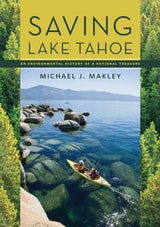
Saving Lake Tahoe
An Environmental History of a National TreasureMichael J. Makley
University of Nevada Press, 2014
Left alone, nature healed itself, and by the 1960s mature forests once again surrounded the lake and its water clarity improved, with visibility more than one hundred feet deep. However, Tahoe’s wonders brought a new kind of threat: millions of annual visitors and incessant development, including ski resorts and casinos. Saving Lake Tahoe looks at the interaction through the years between human activities and Tahoe’s natural ecosystems. It is a dramatic story of ecological disasters and near misses, political successes and failures. Utilizing primary sources and interviews with key figures, Makley provides a meticulously researched account of the battles surrounding the management of the Tahoe basin.
Makley takes the story up to the present, describing the formation and evolution of a new type of governing body, the bistate Tahoe Regional Planning Agency, and groundbreaking efforts to utilize science in establishing policy. He depicts the passionate fights between those who seek to preserve the environment and advocates of individual property rights. Although Tahoe remains unique in its splendor, readers will understand why, with continued pressure for development, reversing environmental deterioration and improving the lake water’s clarity remain elusive goals.
Saving Our Children From Poverty
What the United States Can Learn From FranceBarbara R. Bergmann
Russell Sage Foundation, 1996
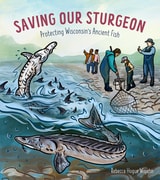
Saving Our Sturgeon
Protecting Wisconsin's Ancient FishRebecca Hogue Wojahn
Wisconsin Historical Society Press, 2025
The story of a fascinating fish and the forward-thinking people who saved them in Wisconsin
For millennia, sturgeon swam the waterways of Wisconsin. Before the 1800s, an estimated eleven million sturgeon lived in Lake Michigan alone. Menominee and Ojibwe people depended on the fish for food and harvested them sustainably. But in the early 1900s, the lake sturgeon was near extinction. Saving Our Sturgeon tells the remarkable story of lake sturgeon in Wisconsin, the conservation efforts to save the species, and what is being done to keep the population healthy and thriving today.
Readers will learn about the natural history of the lake sturgeon—its anatomy, behavior, and habitat—and the factors that threatened its survival, from overharvesting to the building of dams that prevented sturgeon from reaching spawning areas. The book, written for young readers aged eleven and up, explains how government agencies, conservationists, and citizen groups worked together to save the sturgeon population in Wisconsin.
Saving Our Sturgeon includes a chapter about the Menominee Nation’s work to revitalize cultural traditions focused on the sturgeon and restore access to the fish on their reservation. The book also highlights how young people can get involved with sturgeon conservation efforts.
A great resource for classroom use, Saving Our Sturgeon contains maps, photos, and diagrams, plus a glossary of terms, a timeline of events, a Who’s Who list of individuals and groups featured in the book, and a bibliography that highlights kid-friendly sources to learn more. Young readers will learn basic facts about sturgeon biology, what it means for a species to be threatened or endangered, and how scientists use data to support repopulation. This inspiring book shares a conservation success story about one remarkable (and plenty peculiar) species of fish and shows young readers how they, too, can help protect these incredible creatures.
Ages 11 - 14; Grade level 6 - 9; Lexile® measure 1060L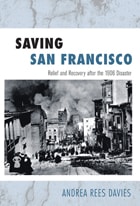
Saving San Francisco
Relief and Recovery after the 1906 DisasterAndrea Rees Davies
Temple University Press, 2011
Combining the experiences of ordinary people with urban politics and history, Saving San Francisco challenges the long-lived myth that the 1906 disaster erased social differences as it leveled the city. Highlighting new evidence from San Francisco’s relief camps, Andrea Rees Davies shows that as policy makers directed various forms of aid to groups and projects that enjoyed high social status before the disaster, the widespread need and dislocation created opportunities for some groups to challenge biased relief policy. Poor and working-class refugees organized successful protests, while Chinatown business leaders and middle-class white women mobilized resources for the less privileged. Ultimately, however, the political and financial elite shaped relief and reconstruction efforts and cemented social differences in San Francisco.

Saving Sickly Children
The Tuberculosis Preventorium in American Life, 1909-1970Connolly, Cynthia A
Rutgers University Press, 2008
In this book, Cynthia A. Connolly provides a provocative analysis of public health and family welfare through the lens of the tuberculosis preventorium. This unique facility was intended to prevent TB in indigent children from families labeled irresponsible or at risk for developing the disease. Yet, it also held deeply rooted assumptions about class, race, and ethnicity. Connolly goes further to explain how the child-saving themes embedded in the preventorium movement continue to shape children's health care delivery and family policy in the United States.
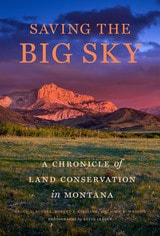
Saving the Big Sky
A Chronicle of Land Conservation in MontanaBruce A. Bugbee
Oregon State University Press, 2025
Winner of the 2026 Western Writers of America Spur Award for Best Western Contemporary Nonfiction
Winner of the 2025 Nature and the Environment National Outdoor Book Award
“The essential purpose of Saving the Big Sky is to inspire the reader to help conserve even more of Montana,” write Bruce Bugbee, Robert Kiesling, and John Wright in this compelling study of how six million acres of biodiverse land were conserved in Montana over the past fifty years. Indigenous and non-Indigenous knowledge about land stewardship has evolved and since the 1970s tribes, nonprofit organizations, land trusts, and government agencies have conserved land in many creative ways. Beautifully illustrated with more than ninety color photographs and thirty detailed maps, Saving the Big Sky showcases land conservation achievements across eight regions of the state: the Rocky Mountain Front, the Blackfoot Valley, the Greater Yellowstone, the Missoula Region, the Helena Region, Northwest Montana, the Flathead Indian Reservation, and the American Prairie.
Land protection is shown to work best when large, intact, connected landscapes can be conserved, rather than small, fragmented, isolated parcels. Conservationists have found that landowners in Montana more widely accept conservation easements and other voluntary, financially compensating tools that respect private property rights. The brilliant images and striking before-and-after maps featured here celebrate the ranches, farms, wildlife habitats, and scenic open spaces that are forever safeguarded.
In documenting conservation accomplishments and suggesting what more can be done, Saving the Big Sky invites readers to participate in conserving Montana—or whatever cherished landscape they call home.
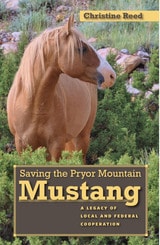
Saving the Pryor Mountain Mustang
A Legacy of Local and Federal CooperationChrstine Reed
University of Nevada Press, 2015
Saving the Pryor Mountain Mustang explores the unique and ongoing relationship between locals and the federal government, highlighting the Lovell citizens’ philosophy of cooperation instead of the typical mistrust that exists between wild horse advocates and federal agencies. The book provides a rich analysis of how a determined group of people saved an endangered wild horse herd. The book will have wide appeal to wild horse activists, scholars of local and federal governance, and western history enthusiasts.

Saving the Security State
Exceptional Citizens in Twenty-First-Century AmericaInderpal Grewal
Duke University Press, 2017

Saving the World in Five Hundred Words
Perspectives on Nationally Competitive ScholarshipsSuzanne McCray
University of Arkansas Press, 2024
The ninth collection of essays produced by the National Association of Fellowships Advisors, Saving the World in Five Hundred Words offers a unique set of resources for advisors negotiating the complex world of nationally competitive awards. The essays here focus on three main aspects of fellowships advising—serving students, ensuring access, and developing the profession—and range from practical advice on how to assist students with applications, to recommendations for recruiting a broad range of students more effectively, to innovative teaching and advising practices. This volume will prove invaluable to anyone who advises students through this sometimes daunting application process.

Say No to the Devil
The Life and Musical Genius of Rev. Gary DavisIan Zack
University of Chicago Press, 2015
The first biography of Davis, Say No to the Devil restores “the Rev’s” remarkable story. Drawing on extensive research and interviews with many of Davis’s former students, Ian Zack takes readers through Davis’s difficult beginning as the blind son of sharecroppers in the Jim Crow South to his decision to become an ordained Baptist minister and his move to New York in the early 1940s, where he scraped out a living singing and preaching on street corners and in storefront churches in Harlem. There, he gained entry into a circle of musicians that included, among many others, Lead Belly, Woody Guthrie, and Dave Van Ronk. But in spite of his tremendous musical achievements, Davis never gained broad recognition from an American public that wasn’t sure what to make of his trademark blend of gospel, ragtime, street preaching, and the blues. His personal life was also fraught, troubled by struggles with alcohol, women, and deteriorating health.
Zack chronicles this remarkable figure in American music, helping us to understand how he taught and influenced a generation of musicians.

Saying It's So
A Cultural History of the Black Sox ScandalDaniel A. Nathan
University of Illinois Press, 2002
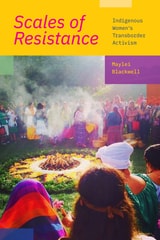
Scales of Resistance
Indigenous Women’s Transborder ActivismMaylei Blackwell
Duke University Press, 2022