Results by title
22279 books match the query 'Social Science' and 1635 start with s
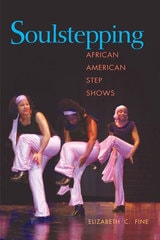
Soulstepping
African American Step ShowsElizabeth C. Fine
University of Illinois Press, 2002

Sound Experiments
The Music of the AACMPaul Steinbeck
University of Chicago Press, 2022
Founded on Chicago’s South Side in 1965 and still thriving today, the Association for the Advancement of Creative Musicians (AACM) is the most influential collective organization in jazz and experimental music. In Sound Experiments, Paul Steinbeck offers an in-depth historical and musical investigation of the collective, analyzing individual performances and formal innovations in captivating detail. He pays particular attention to compositions by Muhal Richard Abrams and Roscoe Mitchell, the Association’s leading figures, as well as Anthony Braxton, George Lewis (and his famous computer-music experiment, Voyager), Wadada Leo Smith, and Henry Threadgill, along with younger AACM members such as Mike Reed, Tomeka Reid, and Nicole Mitchell.
Sound Experiments represents a sonic history, spanning six decades, that affords insight not only into the individuals who created this music but also into an astonishing collective aesthetic. This aesthetic was uniquely grounded in nurturing communal ties across generations, as well as a commitment to experimentalism. The AACM’s compositions broke down the barriers between jazz and experimental music and made essential contributions to African American expression more broadly. Steinbeck shows how the creators of these extraordinary pieces pioneered novel approaches to instrumentation, notation, conducting, musical form, and technology, creating new soundscapes in contemporary music.

Sound Objects
James A. Steintrager and Rey Chow, editors
Duke University Press, 2019
Contributors. Georgina Born, Michael Bull, Michel Chion, Rey Chow, John Dack, Veit Erlmann, Brian Kane, Jairo Moreno, John Mowitt, Pooja Rangan, Gavin Steingo, James A. Steintrager, Jonathan Sterne, David Toop
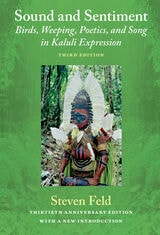
Sound and Sentiment
Birds, Weeping, Poetics, and Song in Kaluli Expression, 3rd edition with a new introduction by the authorSteven Feld
Duke University Press, 2012

Soundies Jukebox Films and the Shift to Small-Screen Culture
Kelley, Andrea J
Rutgers University Press, 2018

Sounding Latin Music, Hearing the Americas
Jairo Moreno
University of Chicago Press, 2023
Many in the United States believe Latin American musicians make “Latin music”—which carries with it a whole host of assumptions, definitions, and contradictions. In their own countries, these expatriate musicians might generate immense national pride or trigger suspicions of “national betrayals.” The making, sounding, and hearing of “Latin music” brings into being the complex array of concepts that constitute “Latin Americanism”—its fissures and paradoxes, but also its universal aspirations. Taking as its center musicians from or with declared roots in Latin America, Jairo Moreno presents us with an innovative analysis of how and why music emerges as a necessary but insufficient shorthand for defining and understanding Latin American, Latinx, and American experiences of modernity.
This close look at the growth of music-making by Latin American and Spanish-speaking musicians in the United States at the turn of the twenty-first century reveals diverging understandings of music’s social and political possibilities for participation and belonging. Through the stories of musicians—Rubén Blades, Shakira, Arturo O’Farrill and the Afro-Latin Jazz Orchestra, and Miguel Zenón—Sounding Latin Music, Hearing the Americas traces how artists use music to produce worlds and senses of the world at the ever-transforming conjunction of Latin America and the United States.
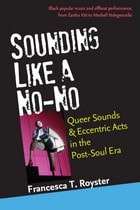
Sounding Like a No-No
Queer Sounds and Eccentric Acts in the Post-Soul EraFrancesca T. Royster
University of Michigan Press, 2012
Sounding Like a No-No traces a rebellious spirit in post–civil rights black music by focusing on a range of offbeat, eccentric, queer, or slippery performances by leading musicians influenced by the cultural changes brought about by the civil rights, black nationalist, feminist, and LGBTQ movements, who through reinvention created a repertoire of performances that have left a lasting mark on popular music. The book's innovative readings of performers including Michael Jackson, Grace Jones, Stevie Wonder, Eartha Kitt, and Meshell Ndegeocello demonstrate how embodied sound and performance became a means for creativity, transgression, and social critique, a way to reclaim imaginative and corporeal freedom from the social death of slavery and its legacy of racism, to engender new sexualities and desires, to escape the sometimes constrictive codes of respectability and uplift from within the black community, and to make space for new futures for their listeners. The book's perspective on music as a form of black corporeality and identity, creativity, and political engagement will appeal to those in African American studies, popular music studies, queer theory, and black performance studies; general readers will welcome its engaging, accessible, and sometimes playful writing style, including elements of memoir.

Sounding Like a No-No
Queer Sounds and Eccentric Acts in the Post-Soul EraFrancesca T. Royster
University of Michigan Press, 2013
Sounding Like a No-No traces a rebellious spirit in post–civil rights black music by focusing on a range of offbeat, eccentric, queer, or slippery performances by leading musicians influenced by the cultural changes brought about by the civil rights, black nationalist, feminist, and LGBTQ movements, who through reinvention created a repertoire of performances that have left a lasting mark on popular music. The book's innovative readings of performers including Michael Jackson, Grace Jones, Stevie Wonder, Eartha Kitt, and Meshell Ndegeocello demonstrate how embodied sound and performance became a means for creativity, transgression, and social critique, a way to reclaim imaginative and corporeal freedom from the social death of slavery and its legacy of racism, to engender new sexualities and desires, to escape the sometimes constrictive codes of respectability and uplift from within the black community, and to make space for new futures for their listeners. The book's perspective on music as a form of black corporeality and identity, creativity, and political engagement will appeal to those in African American studies, popular music studies, queer theory, and black performance studies; general readers will welcome its engaging, accessible, and sometimes playful writing style, including elements of memoir.
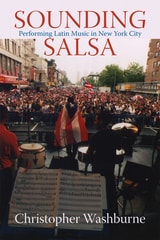
Sounding Salsa
Performing Latin Music in New York CityChristopher Washburne
Temple University Press, 2008
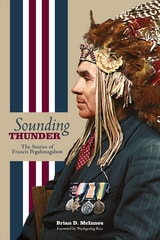
Sounding Thunder
The Stories of Francis PegahmagabowBrian D. McInnes
Michigan State University Press, 2016
Francis Pegahmagabow’s stories describe many parts of his life and are characterized by classic Ojibwe narrative. They reveal aspects of Francis’s Anishinaabe life and worldview. Interceding chapters by Brian McInnes provide valuable cultural, spiritual, linguistic, and historical insights that give a greater context and application for Francis’s words and world. Presented in their original Ojibwe as well as in English translation, the stories also reveal a rich and evocative relationship to the lands and waters of Georgian Bay.
In Sounding Thunder, Brian McInnes provides a new perspective on Pegahmagabow and his experience through a unique synthesis of Ojibwe oral history, historical record, and Pegahmagabow family stories.
Sounding the Center
History and Aesthetics in Thai Buddhist PerformanceDeborah Wong
University of Chicago Press, 2001
Drawing on her extensive fieldwork, Wong lays out the ritual in detail: the way it is enacted, the foods and objects involved, and the people who perform it, emphasizing the way the performers themselves discuss and construct aspects of the ceremony.

Sounding the Modern Woman
The Songstress in Chinese CinemaJean Ma
Duke University Press, 2015
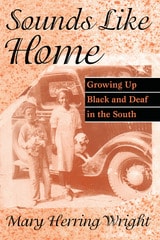
Sounds Like Home
Growing Up Black and Deaf in the SouthMary Herring Wright
Gallaudet University Press, 1999
New edition available: Sounds Like Home: Growing Up Black and Deaf in the South, 20th Anniversary Edition, ISBN 978-1-944838-58-4
Features a new introduction by scholars Joseph Hill and Carolyn McCaskill
Mary Herring Wright’s memoir adds an important dimension to the current literature in that it is a story by and about an African American deaf child. The author recounts her experiences growing up as a deaf person in Iron Mine, North Carolina, from the 1920s through the 1940s. Her story is unique and historically significant because it provides valuable descriptive information about the faculty and staff of the North Carolina school for Black deaf and blind students from the perspective of a student as well as a student teacher. In addition, this engrossing narrative contains details about the curriculum, which included a week-long Black History celebration where students learned about important Blacks such as Madame Walker, Paul Laurence Dunbar, and George Washington Carver. It also describes the physical facilities as well as the changes in those facilities over the years. In addition, Sounds Like Home occurs over a period of time that covers two major events in American history, the Depression and World War II.
Wright’s account is one of enduring faith, perseverance, and optimism. Her keen observations will serve as a source of inspiration for others who are challenged in their own ways by life’s obstacles.
Sounds from the Other Side
Afro–South Asian Collaborations in Black Popular MusicElliott H. Powell
University of Minnesota Press, 2020
A sixty-year history of Afro–South Asian musical collaborations
From Beyoncé’s South Asian music–inspired Super Bowl Halftime performance, to jazz artists like John and Alice Coltrane’s use of Indian song structures and spirituality in their work, to Jay-Z and Missy Elliott’s high-profile collaborations with diasporic South Asian artists such as the Panjabi MC and MIA, African American musicians have frequently engaged South Asian cultural productions in the development of Black music culture. Sounds from the Other Side traces such engagements through an interdisciplinary analysis of the political implications of African American musicians’ South Asian influence since the 1960s.
Elliott H. Powell asks, what happens when we consider Black musicians’ South Asian sonic explorations as distinct from those of their white counterparts? He looks to Black musical genres of jazz, funk, and hip hop and examines the work of Miles Davis, John Coltrane, Rick James, OutKast, Timbaland, Beyoncé, and others, showing how Afro–South Asian music in the United States is a dynamic, complex, and contradictory cultural site where comparative racialization, transformative gender and queer politics, and coalition politics intertwine. Powell situates this cultural history within larger global and domestic sociohistorical junctures that link African American and South Asian diasporic communities in the United States.
The long historical arc of Afro–South Asian music in Sounds from the Other Side interprets such music-making activities as highly political endeavors, offering an essential conversation about cross-cultural musical exchanges between racially marginalized musicians.

Sounds of Black Switzerland
Blackness, Music, and Unthought VoicesJessie Cox
Duke University Press, 2025
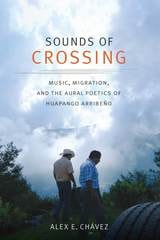
Sounds of Crossing
Music, Migration, and the Aural Poetics of Huapango ArribeñoAlex E. Chávez
Duke University Press, 2017

Sounds of Tohi
Cherokee Health and Well-Being in Southern AppalachiaLisa J. Lefler and Thomas N. Belt
University of Alabama Press, 2022
Dialogue between a medical anthropologist and a Cherokee linguist about health, well-being, and environmental issues
Sounds of Tohi: Cherokee Health and Well-Being in Southern Appalachia is the result of almost two decades of work by medical anthropologist Lisa J. Lefler and Cherokee elder and traditionalist Thomas N. Belt. The narrative consists of a dialogue between them that displays traditional Indigenous knowledge as well as the importance of place for two people from cultures and histories that intersect in the mountains of Southern Appalachia. Together, Lefler and Belt decolonize thinking about health, well-being, and environmental issues through the language and experiences of people whose identity is inextricably linked to the mountains and landscape of western North Carolina.
Lefler and Belt discuss several critical cultural concepts that explain the science of relationships with this world, with the spirit world, and with people. They explore tohi, the Cherokee concept of health, which offers a more pervasive understanding of relationships in life as balanced and moving forward in a good way. They converse about the importance of matrilineality, particularly in light of community healing, the epistemologies of Cherokee cosmography, and decolonizing counseling approaches.
The discussions here offer a different way of approaching the issues that face Americans in this difficult time of division. Lefler and Belt share their urgency to take action against the wholesale exploitation of public lands and the shared environment, to work to perpetuate tribal languages, to preserve the science that can make a difference in how people treat one another, and to create more forums that are inclusive of Native and marginalized voices and that promote respect and appreciation of one another and the protection of sacred places. Throughout, they rely on the preservation of traditional knowledge, or Native science, via Native language to provide insight as to why people should recognize a connection to the land.

Sounds of Vacation
Political Economies of Caribbean TourismJocelyne Guilbault and Timothy Rommen, editors
Duke University Press, 2019
Contributors. Jerome Camal, Steven Feld, Francio Guadeloupe, Jocelyne Guilbault, Jordi Halfman, Susan Harewood, Percy C. Hintzen, Timothy Rommen
Sounds of the Citizens
Dancehall and Community in JamaicaAnne M. Galvin
Vanderbilt University Press, 2014
Galvin highlights the unique alliance between the dancehall industry and community development efforts. As the central role of the state in supporting communities has diminished, the rise of private efforts such as dancehall becomes all the more crucial. The tension, however, between those involved in the industry and those within the neighborhoods is palpable and often dangerous. Amidst all this, individual Jamaicans interact with the dancehall industry and its culture to find their own paths of employment, social identity, and sexual mores.
As Sounds of the Citizens illustrates, the world of entertainment in Jamaica is serious business and uniquely positioned as a powerful force within the community.

Soundscapes of Liberation
African American Music in Postwar FranceCeleste Day Moore
Duke University Press, 2021

Soundtracks of Asian America
Navigating Race through Musical PerformanceGrace Wang
Duke University Press, 2015

Soundworks
Race, Sound, and Poetry in ProductionAnthony Reed
Duke University Press, 2021
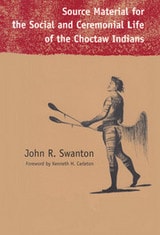
Source Material for the Social and Ceremonial Life of the Choctaw Indians
John Swanton, with a foreword by Kenneth H. Carleton
University of Alabama Press, 2001
Long considered the undisputed authority on the Indians of the southern United States, anthropologist John Swanton published this history as the Smithsonian Institution's Bureau of American Ethnology (BAE) Bulletin 103 in 1931. Swanton's descriptions are drawn from earlier records—including those of DuPratz and Romans—and from Choctaw informants. His long association with the Choctaws is evident in the thorough detailing of their customs and way of life and in his sensitivity to the presentation of their native culture.
Included are descriptions of such subjects as clans, division of labor between sexes, games, religion, war customs, and burial rites. The Choctaws were, in general, peaceful farmers living in Mississippi and southwestern Alabama until they were moved to Oklahoma in successive waves beginning in 1830, after the treaty of Dancing Rabbit Creek.
This edition includes a new foreword by Kenneth Carleton placing Swanton's work in the context of his times. The continued value of Swanton's original research makes Source Material the most comprehensive book ever published on the Choctaw people.

Sourcing Archeological Lithic Assemblages
New Perspectives and Integrated ApproachesEdited by Charles Speer, Ryan M. Parish, and Gustavo Barrientos
University of Utah Press, 2022
For most of our existence, humans have manipulated stone into tools that are essential for survival. Generally resistant to degradation, stone tools comprise a large portion of the material culture found at archaeological sites worldwide. Recovery of stone tools during archaeological excavation indicates the location where they were discarded, often tied to where they were used. “Sourcing” refers to attempts to determine the origin of the raw materials used to produce these tools. Knowing the beginning and end points of a tool’s use-life, as well as the likely paths it took between those two locations, can offer insight into trade and procurement patterns. The scholars gathered in this volume employ a variety of unique approaches to real-life contexts in multiple geographic regions. These studies illustrate the numerous, robust options available to archaeologists and researchers today, as well as the problems that must be faced and resolved.
Part 1 of the book explores technological approaches to sourcing in conjunction with innovative survey strategies. The chapters describe a particular method while often offering suggestions for improving the chemical analysis. Part 2 focuses on region-specific and methodological sourcing applications. In a concluding review, Michael D. Glascock critiques each of the chapters and presents his views, developed across 40 years of work in the field, on sourcing raw materials. Broadly, these contributions demonstrate how knowledge of lithic sources, geologic processes, the nature of variation, and regional availability can provide a more thorough understanding of past peoples.
Sourcing Prehistoric Ceramics at Chodistaas Pueblo, Arizona
The Circulation of People and Pots in the Grasshopper RegionMaría Nieves Zedeño
University of Arizona Press, 1994

South Africa’s Resistance Press
Alternative Voices in the Last Generation under ApartheidLes Switzer
Ohio University Press, 2000

South Asian Feminisms
Ania Loomba and Ritty A. Lukose, eds.
Duke University Press, 2012
Contributors. Flavia Agnes, Anjali Arondekar, Firdous Azim, Anannya Bhattacharjee, Laura Brueck, Angana P. Chatterji, Malathi de Alwis, Toorjo Ghose, Amina Jamal, Ratna Kapur, Lamia Karim, Ania Loomba, Ritty A. Lukose, Vasuki Nesiah, Sonali Perera, Atreyee Sen, Mrinalini Sinha, Ashwini Sukthankar

South Koreans in the Debt Crisis
The Creation of a Neoliberal Welfare SocietyJesook Song
Duke University Press, 2009
Drawing on her experience during the crisis as an employee in a public works program in Seoul, Song provides an ethnographic assessment of the efforts of the state and civilians to regulate social insecurity, instability, and inequality through assistance programs. She focuses specifically on efforts to help two populations deemed worthy of state subsidies: the “IMF homeless,” people temporarily homeless but considered employable, and the “new intellectuals,” young adults who had become professionally redundant during the crisis but had the high-tech skills necessary to lead a transformed post-crisis South Korea.

South of Pico
African American Artists in Los Angeles in the 1960s and 1970sKellie Jones
Duke University Press, 2017
In South of Pico Kellie Jones explores how the artists in Los Angeles's black communities during the 1960s and 1970s created a vibrant, productive, and engaged activist arts scene in the face of structural racism. Emphasizing the importance of African American migration, as well as L.A.'s housing and employment politics, Jones shows how the work of black Angeleno artists such as Betye Saar, Charles White, Noah Purifoy, and Senga Nengudi spoke to the dislocation of migration, L.A.'s urban renewal, and restrictions on black mobility. Jones characterizes their works as modern migration narratives that look to the past to consider real and imagined futures. She also attends to these artists' relationships with gallery and museum culture and the establishment of black-owned arts spaces. With South of Pico, Jones expands the understanding of the histories of black arts and creativity in Los Angeles and beyond.

South-South
The Architecture of Non-Alignment and CooperationEdited by Amit Srivastava, Vladimir Kulic, and Peter Scriver
National University of Singapore Press, 2027
Recovers the untold history of how the Global South cooperated to construct its own modernity.
During the era of decolonization, architecture began to travel along unprecedented paths. Newly independent nations in the Global South did not only build within their own borders; they built with one another, exchanging designs, experts, materials, and entire construction technologies across Africa, Asia, and Latin America. Exchanges operated through a range of formal frameworks, from the Non-Aligned Movement to the Afro-Asian Housing Organization, but also through a dense weave of professional and personal networks, connecting Bandung and Cairo to Kampala, Colombo, and Havana.
South-South considers architecture as a form of “worldmaking,” by which postcolonial nations imagined and materialized alternatives to both colonial legacies and Cold War binaries. Organized around the lenses of staging, cooperation, and mobilities, the contributions attend as much to lofty solidarities as to pragmatic necessities and persistent Northern dependencies, all of which shaped architecture on the ground. The result reframes modern architectural history, not as a story of influence flowing south, but of lateral exchange among so-called peripheries, an unfinished project whose stakes have only grown as the Global South reasserts itself today.
Southeast Asian Anthropologies
National Traditions and Transnational PracticesEdited by Eric C. Thompson and Vineeta Sinha
National University of Singapore Press, 2019
Southeast Asian Anthropologies outlines the practices and paradigms of anthropologists working from and within Southeast Asia. It addresses three overlapping issues: the historical development of unique traditions of research, scholarship, and social engagement across diverse anthropological communities of the region; the opportunities and challenges faced by Southeast Asian anthropologists as they practice their craft in different institutional and political contexts; and the emergence of locally grounded, intraregional, transnational linkages and practices undertaken by Southeast Asian-based anthropologists. It is a much-needed assessment of the state of the discipline that will be an invaluable tool for anthropologists navigating a new era of development and challenges.

Southeast Asian/American Studies, Volume 20
Mimi Thi Nguyen
Duke University Press, 0
The contributors represent a new generation of scholars, some of whom are themselves migrants and refugees, who seek to reinvent the study of displaced populations and their diasporas. One essay considers the historical production of the refugee soldier during the “secret wars” of Laos. An ethnography of Southeast Asian American youth protests post-9/11 reveals how neoliberal rationalization of “personal responsibility” created a context for both deportation and the youth movement against it. Several contributions explore concepts of exile, belonging, and the nation-state via media representations of masculinity and the erotic, including the Hmong actors who appear in Clint Eastwood’s film Gran Torino, campy pan-Asian boy bands, and Vietnam Idol, a reality show that, like its British and American counterparts, illustrates specific cultural imagination and national ambitions.
Fiona I. B. Ngô and Mimi Thi Nguyen are both assistant professors of gender and women’s studies and Asian American studies at the University of Illinois, Urbana-Champaign. Nguyen is the author of The Gift of Freedom: War, Debt, and Other Refugee Passages and a co-editor of Alien Encounters: Popular Culture in Asian America, both also published by Duke University Press.
Contributors: Diem-My T. Bui, Long Bui, Thang Dao, Ly Chong Thong Jalao, Soo Ah Kwon, Mariam B. Lam, Viet Le, Fiona I.B. Ngô, Mimi Thi Nguyen, Viet Thanh Nguyen,
Louisa Schein, Cathy J. Schlund-Vials, Va-Megn Thoj, Khatharya Um, Julie Thi Underhill, Bee Vang, Ma Vang
Southeastern Ceremonial Complex
Chronology, Content, ContestEdited by Adam King
University of Alabama Press, 2007
A timely, comprehensive reevaluation of the Southeastern Ceremonial Complex.
One of the most venerable concepts in Southeastern archaeology is that of the Southern Cult. The idea has its roots in the intensely productive decade (archaeologically) of the 1930s and is fundamentally tied to yet another venerable concept—Mississippian culture. The last comprehensive study of the melding of these two concepts into the term Southeastern Ceremonial Complex (SECC) is more than two decades old, yet our understanding of the objects, themes, and artistic styles associated with the SECC have changed a great deal. New primary data have come to light that bear directly on the complex, requiring a thorough reanalysis of both concepts and dating. Recent publications have ignited many debates about the dating and the nature of the SECC.
This work presents new data and new ideas on the temporal and social contexts, artistic styles, and symbolic themes included in the complex. It also demonstrates that engraved shell gorgets, along with other SECC materials, were
produced before A.D. 1400.
Southeastern Mesoamerica
Indigenous Interaction, Resilience, and ChangeWhitney A. Goodwin
University Press of Colorado, 2020
Drawing on archaeological evidence ranging back to the late Pleistocene as well as extensive documentation from the historic period, contributors show how Southeastern Mesoamericans created unique identities, strategically incorporating cosmopolitan influences from cultures to the north and south with their own long-lived traditions. These populations developed autochthonous forms of monumental architecture and routes and methods of exchange and had distinct social, cultural, political, and economic traits. They also established unique long-term human-environment relations that were the result of internal creativity and inspiration influenced by local social and natural trajectories.
Southeastern Mesoamerica calls upon archaeologists, anthropologists, historians, ethnohistorians, and others working in Mesoamerica, Central America, and other cultural boundaries around the world to reexamine the role Indigenous resilience and agency play in these areas and in the cultural developments and interactions that occur within them.
Contributors: Edy Barrios, Christopher Begley, Walter Burgos, Mauricio Díaz García, William R. Fowler, Rosemary A. Joyce, Gloria Lara-Pinto, Eva L. Martínez, William J. McFarlane, Cameron L. McNeil, Lorena D. Mihok, Pastor Rodolfo Gómez Zúñiga, Timothy Scheffler, Edward Schortman, Russell Sheptak, Miranda Suri, Patricia Urban, Antolín Velásquez, E. Christian Wells
Southern Discomfort
Women's Activism in Tampa, Florida, 1880s-1920sNancy A. Hewitt
University of Illinois Press, 2001
Hewitt emphasizes the process by which women forged and reformulated their activist identities from Reconstruction through the U.S. declaration of war against Spain in April 1898, the industrywide cigar strike of 1901, and the emergence of progressive reform and labor militancy. She also recasts our understanding of southern history by demonstrating how Tampa's triracial networks alternately challenged and re-inscribed the South's biracial social and political order.

Southern Epistemologies
Knowledge, Wisdom, and Understanding in the Andes and Western AmazonEdited by H. Clark Barrett, Michael L. Cepek, Pablo Quintanilla, Emanuele Fabiano, and Edouard Machery
HAU, 2026
What does it mean to know, and how is knowledge practiced? How can Indigenous perspectives challenge conventional concepts of knowledge in the Global North? Drawing on Indigenous epistemologies from the Andes and Western Amazon, Southern Epistemologies investigates how knowledge, wisdom, and understanding are shaped by local cultures, languages, bodies, and environments.
Bringing together linguists, philosophers, anthropologists, and Indigenous knowledge holders, the volume examines the dynamic interactions between culture, language, and place, showing how the unique linguistic histories and worldviews of Andean and Amazonian societies inform distinct ways of knowing. By interpreting these perspectives on their own terms, the book offers fresh insights into the plurality and diversity of human knowledge.
As the first volume specifically focused on Indigenous South American epistemologies, Southern Epistemologies foregrounds Indigenous knowledge systems and science while fostering dialogue with academic traditions. By opening new interdisciplinary and cross-cultural conversations, this groundbreaking volume challenges conventional notions of knowledge and illuminates how engagement with Indigenous perspectives can expand and enrich our understanding of what it truly means to know.
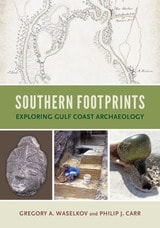
Southern Footprints
Exploring Gulf Coast ArchaeologyGregory A. Waselkov and Philip J. Carr
University of Alabama Press, 2024
Unearthing the Gulf Coast’s past—one footprint at a time.
Southern Footprints celebrates more than fifty years of archaeological research along the Gulf Coast by the University of South Alabama and the Center for Archaeological Studies. Archaeologists Gregory A. Waselkov and Philip J. Carr, the former and current directors of the center, present the “greatest hits” that have transformed knowledge of human history on the Alabama and Mississippi Gulf Coast from the Ice Age until recently. Each archaeological site, from surface collections to premiere archaeological preserves, such as Old Mobile and Holy Ground, offers clues to the past.
The chapters in this collection are arranged chronologically and survey the history and archaeology of a wide range of significant sites, including the Gulf Shores canoe canal, Bottle Creek Mounds, Old Mobile, Fort Mims, Spanish Fort, Spring Hill College, and Mobile River Bridge.
Waselkov and Carr take care to acknowledge in these stories populations who have been historically underdocumented, now recognizing the contributions of Native Americans and African Americans that have been uncovered through archaeology. The authors reveal the dire impacts of climate change, environmental disasters, development, and neglect—and convey their urgency to protect these areas of shared history—as a result of the meticulous excavation, analysis, and preservation of artifacts from these sites. Color photographs showcase the archaeology as it unfolds, often with the help of dedicated volunteers. Southern Footprints will serve as an indispensable reference on the rich Gulf Coast heritage for all to appreciate.
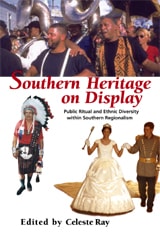
Southern Heritage on Display
Public Ritual and Ethnic Diversity within Southern RegionalismEdited by Celeste Ray
University of Alabama Press, 2002
W. J. Cash's 1941 observation that “there are many Souths and many cultural traditions among them” is certainly validated by this book. Although the Civil War and its “lost cause” tradition continues to serve as a cultural root paradigm in celebrations, both uniting and dividing loyalties, southerners also embrace a panoply of public rituals—parades, cook-offs, kinship homecomings, church assemblies, music spectacles, and material culture exhibitions—that affirm other identities. From the Appalachian uplands to the Mississippi Delta, from Kentucky bluegrass to Carolina piedmont, southerners celebrate in festivals that showcase their diverse cultural backgrounds and their mythic beliefs about themselves.
The ten essays of this cohesive, interdisciplinary collection present event-centered research from various fields of study—anthropology, geography, history, and literature—to establish a rich, complex picture of the stereotypically “Solid South.” Topics include the Mardi Gras Indian song cycle as a means of expressing African-American identity in New Orleans; powwow performances and Native American traditions in southeast North Carolina; religious healings in southern Appalachian communities; Mexican Independence Day festivals in central Florida; and, in eastern Tennessee, bonding ceremonies of melungeons who share Indian, Scots Irish, Mediterranean, and African ancestry. Seen together, these public heritage displays reveal a rich “creole” of cultures that have always been a part of southern life and that continue to affirm a flourishing regionalism.
This book will be valuable to students and scholars of cultural anthropology, American studies, and southern history; academic and public libraries; and general readers interested in the American South. It contributes a vibrant, colorful layer of understanding to the continuously emerging picture of complexity in this region historically depicted by simple stereotypes.
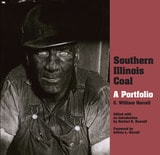
Southern Illinois Coal
A PortfolioC. William Horrell. Edited with an Introduction by Herbert K. Russell. Foreword by Jeffrey L. Horrell
Southern Illinois University Press, 1995
The coal mining photographs of C. William Horrell, taken across the southern Illinois Coal Belt over a twenty-year period from 1966 to 1986, are extraordinary examples of documentary photography—so stark and striking that captions often seem superfluous.
Horrell’s photographs capture the varied phenomena of twentieth-century coal mining technology: the awesome scale of surface mining machines and their impact on the land; massive machines forced into narrow passageways with inches to spare as they carry coal from the face to conveyer belts; and, more significant, the advent of continuous miners, machines that can handle four previously separate processes and which have been a fixture in underground or “deep” mines since the mid-1960s.
Horrell was also intrigued by the related activities of mining, including coal’s processing, cleaning, and transportation, as well as the daily, behind-the-scenes operations that keep mines and miners working. His photographs reflect the beauty of the commonplace—the clothes of the miners, their dinner pails, and their tools—and reveal the picturesque remnants of closed mines: the weathered boards of company houses, the imposing iron beauty of an ancient tipple, and an abandoned building against the lowering sky of an approaching storm. Finally, his portraits of coal minersshow the strength, dignity, and enduring spirit of the men and women who work the southern Illinois coal mines.

Southern Labor and Black Civil Rights
Organizing Memphis WorkersMichael K. Honey
University of Illinois Press, 1993
Winner of the Charles S. Sydnor Award, given by the Southern Historical Association, 1994. Winner of the James A. Rawley Prize given by the Organization of American Historians, 1994. Winner of the Herbert G. Gutman Award for an outstanding book in American social history.
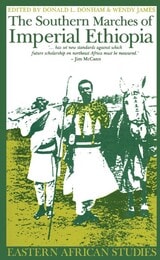
Southern Marches of Imperial Ethiopia
Essays in History and Social AnthropologyDonald L. Donham
Ohio University Press, 2002
This pioneering book, first published to wide acclaim in 1986, traces the way the Ethiopian center and the peripheral regions of the country affected each other. It looks specifically at the expansion of the highland Ethiopian state into the western and southern lowlands from the 1890s up to 1974.

Southern Migrants, Northern Exiles
Chad Berry
University of Illinois Press, 2000
Southern out-migration drew millions of southern workers to the steel mills, automobile factories, and even agricultural fields and orchards of Ohio, Indiana, Michigan, and Illinois. Through vivid oral histories, Chad Berry explores the conflict between migrants' economic success and their "spiritual exile" in the North. He documents the tension between factory owners who welcomed cheap, naive southern laborers and local "native" workers who greeted migrants with suspicion and hostility. He examines the phenomenon of "shuttle migration," in which migrants came north to work during the winter and returned home to plant spring crops on their southern farms. He also explores the impact of southern traditions--especially the southern evangelical church and "hillbilly" music--brought north by migrants.
Berry argues that in spite of being scorned by midwesterners for violence, fecundity, intoxication, laziness, and squalor, the vast majority of southern whites who moved to the Midwest found the economic prosperity they were seeking. By allowing southern migrants to assess their own experiences and tell their own stories, Southern Migrants, Northern Exiles refutes persistent stereotypes about migrants' clannishness, life-style, work ethic, and success in the North.
Southern Paiute Ethnography
UUAP 69Isabel T. Kelly
University of Utah Press, 1964

Southern Paiute
A PortraitLogan Hebner
Utah State University Press, 2010
Now little recognized by their neighbors, Southern Paiutes once had homelands that included much of the vast Colorado Plateau, Great Basin, and Mojave Desert. From the Four Corners’ San Juan River to California’s lower Colorado, from Death Valley to Canyonlands, from Capitol Reef to the Grand Canyon, Paiutes lived in many small, widespread communities. They still do, but the communities are fewer, smaller, and mostly deprived of the lands and resources that sustained traditional lives.
To portray a people and the individuals who comprise it, William Logan Hebner and Michael L. Plyler relay Paiute voices and reveal Paiute faces, creating a space for them to tell their stories and stake claim to who they once were and now are.
Southern Stalemate
Five Years without Public Education in Prince Edward County, VirginiaChristopher Bonastia
University of Chicago Press, 2011

Southern Womanhood and Slavery
A Biography of Louisa S. McCord, 1810-1879Leigh Fought
University of Missouri Press, 2018
Southern Womanhood and Slavery is the first full-length biography of Louisa S. McCord, one of the most intriguing intellectuals in antebellum America. The daughter of South Carolina planter and politician Langdon Cheves, and an essayist in her own right, McCord supported unregulated free trade and the perpetuation of slavery and opposed the advancement of women’s rights. This study examines the origins of her ideas.
Leigh Fought constructs an exciting narrative that follows McCord from her childhood as the daughter of a state representative and president of the Bank of the United States through her efforts to accept her position as wife and mother, her career as an author and plantation mistress, and the Union invasion of South Carolina during the Civil War, to the end of her life in the emerging New South. Fought analyzes McCord’s poetry, letters, and essays in an effort to comprehend her acceptance of slavery and the submission of women. Fought concludes that McCord came to a defense of slavery through her experience with free labor in the North, which also reinforced her faith in the paternalist model for preserving social order.
McCord’s life as a writer on “unfeminine” subjects, her reputation as strong-minded and masculine, her late marriage, her continued ownership of her plantation after marriage, and her position as the matron of a Civil War hospital contradicted her own philosophy that women should remain the quiet force behind their husbands. She lived during a time of social flux in which free labor, slavery, and the role of women underwent dramatic changes, as well as a time that enabled her to discover and pursue her intellectual ambitions. Fought examines the conflict that resulted when those ambitions clashed with McCord’s role as a woman in the society of the South.
McCord’s voice was an interesting, articulate, and necessary feminine addition to antebellum white ideology. Moreover, her story demonstrates the ways in which southern women negotiated through patriarchy without surrendering their sense of self or disrupting the social order. Engaging and very readable, Southern Womanhood and Slavery will be of special interest to students of southern history and women’s studies, as well as to the general reader.
Southern Women at the Millennium
A Historical PerspectiveEdited by Melissa Walker, Jeanette R. Dunn, & Joe P. Dunn, & Intro by Joe P. Dunn
University of Missouri Press, 2003
Southwest Archaeology in the Twentieth Century
Linda S Cordell
University of Utah Press, 2011
With contributions from well-known archaeologists, Southwest Archaeology in the Twentieth Century reviews the histories of major archaeological topics of the region during the twentieth century, with particular attention to the vast changes in southwestern archaeology during the later decades of the century. Included are the huge influence of field schools, the rise of cultural resource management (CRM), the uses and abuses of ethnographic analogy, the intellectual contexts of archaeology in Mexico, and current debates on agriculture, sedentism, and political complexity.
By looking back at the previous century of study, this book provides an authoritative retrospective of intellectual trends as well as a synthesis of current themes in the arena of the American Southwest.
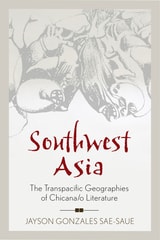
Southwest Asia
The Transpacific Geographies of Chicana/o LiteratureJayson Gonzales Sae-Saue
Rutgers University Press, 2016
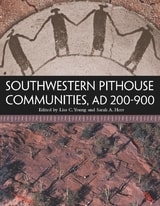
Southwestern Pithouse Communities, AD 200-900
Edited by Lisa C. Young and Sarah A. Herr
University of Arizona Press, 2012
Pithouses are the earliest identifiable domestic architecture in many areas of the world, and can provide insights into the origins of communities--a fundamental component of past and present societies. In this book, Lisa Young and Sarah Herr invite archaeologists to explore the development of communities using information from pithouse sites in the American Southwest.
Using regional and topical syntheses to investigate the formation of pithouse communities, contributors to this volume examine the complex relationship between the economic transition to agricultural dependence and the social changes associated with sedentism. They discover that during this transformation, peoples' relationship with the landscape changed in ways that affected their use of space, community organization, and cultural identity.
Employing various theoretical perspectives, these contributions analyze changes in pithouses, site layout, communal architecture, and settlement patterns to investigate the development of place-based communities. Chapters look at community formation strategies in populous regions like the northern San Juan Basin, the southern Colorado Plateau, Mimbres/southern Mogollon, and Hohokam Basin and Range and compare them with social structures in more sparsely populated regions like the northeast Hohokam peripheries, the Arizona Transition Zone, the Cibola region, southeast New Mexico, and the northern Rio Grande. The book also includes thematic discussions of panregional economic change, the complex relationship between house and household, and the demographic shifts accompanying the Neolithic Demographic Transition.
An essential book for students and archaeologists interested in the origins of communities, Southwestern Pithouse Communities is also an important comparative resource for scholars interested in social change during the transition to settled village life.