Results by title
28167 books match the query 'History' and 1838 start with s

Song of Tides
Tom Joseph
University of Alabama Press, 2008
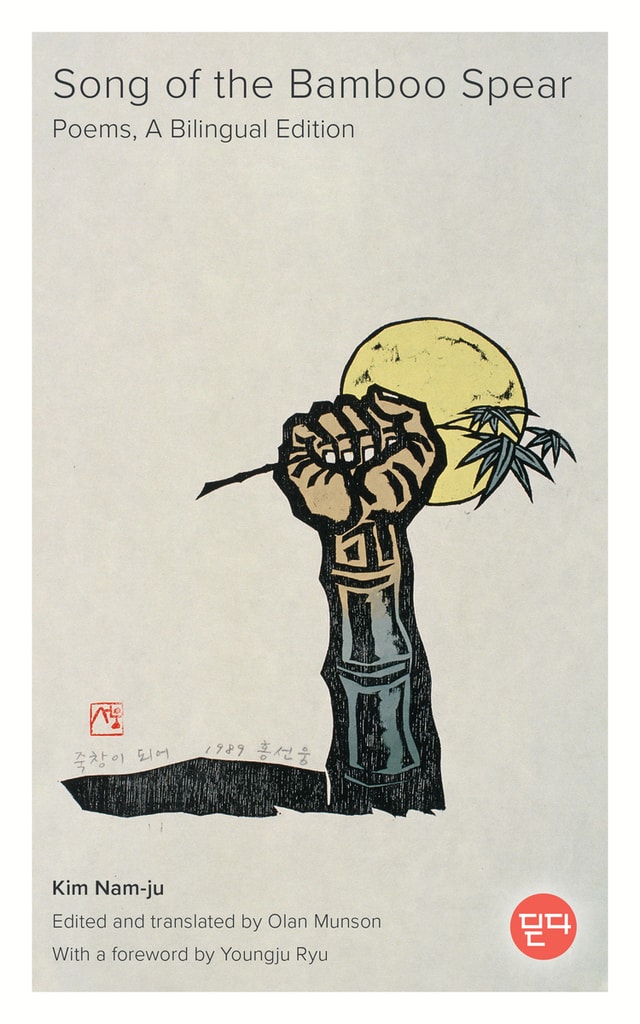
Song of the Bamboo Spear
Poems, A Bilingual EditionNam-ju Kim (1945–1994)
Rutgers University Press, 2027
This book debuts selected poetry by Kim Nam-ju (1946–1994) in English translation, along with the original Korean. Referred to as the “Che Guevara of South Korea,” and self-described a “warrior poet,” Kim Nam-ju remains, to this day, an enduring voice of the 1970s and 80s cultures of anti-authoritarian resistance in South Korea. Kim was arrested in 1979 for his involvement with the “South Josǒn” National Liberation Front, a leftist underground group organizing against the Yushin regime. Kim wrote prolifically while in prison (1979-1988), at times by etching his poems into scraps of foil, milk carton, or cigarette packages. The work he produced in prison alone totals around 360 poems. This bilingual volume selects 65 poems from Kim's oeuvre, sampling across many different chapters of the poet’s career. Readers will find autobiographical reflections on his childhood, love poems, missives from the prison cell, commemorations of the Kwangju Uprising, the poet’s calls to arms, and more.
이 책은 김남주 시인(1946~1994)의 시 65편을 한국어 원문과 함께 영문 번역으로 처음 선보인다. ‘한국의 체 게바라’로 불리며 스스로를 ‘전사 시인’이라 칭했던 김남주는 오늘날까지도 한국의 1970·80년대 반독재 저항운동을 대표하는 사라지지 않는 목소리로 남아 있다. 김남주는 유신정권에 맞서 결성된 좌파 지하조직 ‘남조선민족해방전선준비위원회’에 가담한 혐의로 1979년에 체포되었다. 1979년부터 1988년에 이르는 수감 기간에도 꾸준히 창작 활동을 이어갔으며, 때로는 은박지 조각이나 우유곽, 담뱃갑 등에 시를 새겨 집필하기도 하였다. 이 시기에 쓴 작품만 해도 360여 편에 이른다. 이 영역시집은 시인의 전체 작품 중에서 65편의 시를 엄선하여 시인의 생애와 창작 활동의 다양한 시기를 아우르는 시적 여정을 한눈에 보여준다. 독자들은 시인의 어린 시절에 대한 자전적인 회고, 사랑의 시, 옥중 서한, 5·18 광주항쟁을 추모하는 시, 민중의 투쟁을 촉구하는 시 등 다양한 작품을 만나볼 수 있을 것이다.
English-Korean Bilingual Edition
영-한 이중언어판
This book is published with the support of the Literature Translation Institute of Korea (LTI Korea)
Song of the Cicadas
Anne Mong-Lan Pham
University of Massachusetts Press, 2001
Song of the Hammer and Drill
The Colorado San Juans, 1860-1914Duane A. Smith
University Press of Colorado, 2000
Song of the Sky
Versions of Native American Song-PoemsBrian Swann
University of Massachusetts Press, 1993
“Swann's ‘concrete’ renderings of the poems are visually striking and are meant to embody the notions of silence and cycle that are so important in Native American culture. . . . [He] does a fine job of encouraging readers to return to return to these original songs and poems from a culture that most latter-day Americans know far too little about.”—Anne Bromley, Georgia Review
Based on the work of anthropologist collectors, this compendium of more than 100 Native American chants and songs revises and updates a prior edition out of print since 1989. ‘These poems are not translations,’ argues Swann. They're versions that have gone through ‘a series of mediations and filters and exist somewhere between the individual lyric voice’ and a diverse, multileveled Native American imaginative-mystical identity. Whether versions, translations, or poems, whether sung at a Crazy Dance, potlatch, corn-grinding, or curative or marriage ceremony, whether celebrating buffalo, maize, red fox, or tobacco, these works capture the ‘otherness’ of the primeval spirit of the Native American fusion of natural and supernatural, animal and deity. Originally performed aloud, these ‘verbal artifacts’—which are sometimes breathtakingly pure, sometimes obscure—reveal that there can be no conventional or single notion of ‘the Indian.’”—Library Journal
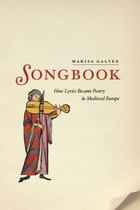
Songbook
How Lyrics Became Poetry in Medieval EuropeMarisa Galvez
University of Chicago Press, 2012
Today we usually think of a book of poems as composed by a poet, rather than assembled or adapted by a network of poets and readers. But the earliest European vernacular poetries challenge these assumptions. Medieval songbooks remind us how lyric poetry was once communally produced and received—a collaboration of artists, performers, live audiences, and readers stretching across languages and societies.
The only comparative study of its kind, Songbook treats what poetry was before the emergence of the modern category “poetry”: that is, how vernacular songbooks of the thirteenth to fifteenth centuries shaped our modern understanding of poetry by establishing expectations of what is a poem, what is a poet, and what is lyric poetry itself. Marisa Galvez analyzes the seminal songbooks representing the vernacular traditions of Occitan, Middle High German, and Castilian, and tracks the process by which the songbook emerged from the original performance contexts of oral publication, into a medium for preservation, and, finally, into an established literary object. Galvez reveals that songbooks—in ways that resonate with our modern practice of curated archives and playlists—contain lyric, music, images, and other nonlyric texts selected and ordered to reflect the local values and preferences of their readers. At a time when medievalists are reassessing the historical foundations of their field and especially the national literary canons established in the nineteenth century, a new examination of the songbook’s role in several vernacular traditions is more relevant than ever.
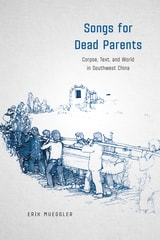
Songs for Dead Parents
Corpse, Text, and World in Southwest ChinaErik Mueggler
University of Chicago Press, 2017
Drawing on more than twenty years of fieldwork in a mountain community in Yunnan Province, Songs for Dead Parents shows how people view the dead as both material and immaterial, as effigies replace corpses, tombstones replace effigies, and texts eventually replace tombstones in a long process of disentangling the dead from the shared world of matter and memory. It is through these processes that people envision the cosmological underpinnings of the world and assess the social relations that make up their community. Thus, state interventions aimed at reforming death practices have been deeply consequential, and Mueggler traces the transformations they have wrought and their lasting effects.
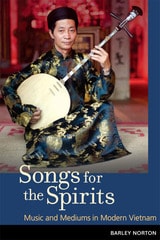
Songs for the Spirits
Music and Mediums in Modern VietnamBarley Norton
University of Illinois Press, 2008

Songs of Degrees
Essays on Contemporary Poetry and PoeticsJohn Taggart
University of Alabama Press, 1994
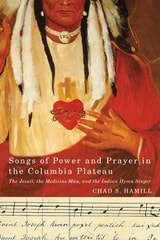
Songs of Power and Prayer in the Columbia Plateau
The Jesuit, the Medicine Man, and the Indian Hymn SingerChad S. Hamill
Oregon State University Press, 2012
In Chad Hamill’s narrative, a Jesuit and his two Indian “grandfathers”—one a medicine man, the other a hymn singer—engage in a collective search for the sacred. The priest becomes a student of the medicine man. The medicine man becomes a Catholic. The Indian hymn singer brings indigenous songs to the Catholic mass. Using song as a thread, these men weave together two worlds previously at odds, realizing a promise born two centuries earlier within the prophecies of Circling Raven and Shining Shirt.
Songs of Power and Prayer reveals how song can bridge worlds: between the individual and Spirit, the Jesuits and the Indians. Whether sung in an indigenous ceremony or adapted for Catholic Indian services, song abides as a force that strengthens Native identity and acts as a conduit for power and prayer.
A First Peoples: New Directions in Indigenous Studies book
Songs of the Michigan Lumberjacks
Earl Clifton Beck
University of Michigan Press, 1941
Songs of the Unsung
The Musical and Social Journey of Horace TapscottHorace Tapscott
Duke University Press, 2001
Sonic Persuasion
Reading Sound in the Recorded AgeGreg Goodale
University of Illinois Press, 2011
Sonic Spaces of the Karoo
The Sacred Music of a South African Coloured CommunityMarie Jorritsma
Temple University Press, 2011
Sonic Spaces of the Karoo is a pioneering study of the sacred music of three coloured (the apartheid designation for people "not white or native") people's church congregations in the rural town of Graaff-Reinet, South Africa. Jorritsma's fieldwork involves an investigation of the choruses, choir music, and hymns of the Karoo region to present a history of the people's traditional, religious, and cultural identity in song. This music is examined as part of a living archive preserved by the community in the face of a legacy of slavery and colonial as well as apartheid oppression.
Jorritsma's findings counteract a lingering stereotype that coloured music is inferior to European or African music and that coloured people should not or do not have a cultural identity. Sonic Spaces of the Karoo seeks to eradicate that bias and articulate a more legitimate place for these people in the contemporary landscape of South Africa.

Sonic Strategies
Performing Mexico's War on Drugs, Mourning, and FeminicideChristina Baker
Vanderbilt University Press, 2023
In Sonic Strategies, author Christina Baker highlights the tactics employed by contemporary performance artists in Mexico in response to the violence surrounding the nation’s War on Drugs. The introduction opens with a description of the 2007 reenactment of the Grito, or “cry,” of independence, a moment fraught with sonic sparring, setting the stage for how each subsequent chapter focuses on themes related to war and violence. Each chapter focuses on the works of one or more performance artist, and taken together, the case studies illuminate how critiques of the nation’s rising death tolls, governmental corruption, and gendered violence very literally sound, whether in Música de balas, a post-dramatic piece by Hugo Salcedo; the lamentations of the nation’s Antigones in works by Violeta Luna and Lukas Avendaño; satirical revisions of Mexican Golden Age film in the cabaret piece Nosotras las proles; or the story of transfeminicide in César Enríquez’s La Prietty Guoman by way of US pop music.
Written in an accessible style grounded in theater studies but interdisciplinary by design, Sonic Strategies will appeal to literary critics, students, musicologists, and theater and performance scholars alike. By paying close attention to planned and spontaneous sounds within live and textual experiences, Sonic Strategies contends that conscientious listening reveals dynamic practices that reside beyond the linguistic and embodied gesture.
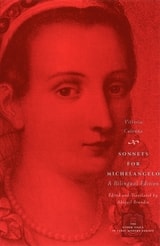
Sonnets for Michelangelo
A Bilingual EditionVittoria Colonna
University of Chicago Press, 2005
This book presents for the very first time a body of Colonna's verse that reveals much about her poetic aims and outlook, while also casting new light on one of the most famous friendships of the age. Sonnets for Michelangelo, originally presented in manuscript form to her close friend Michelangelo Buonarroti as a personal gift, illustrates the striking beauty and originality of Colonna's mature lyric voice and distinguishes her as a poetic innovator who would be widely imitated by female writers in Italy and Europe in the sixteenth century. After three centuries of relative neglect, this new edition promises to restore Colonna to her rightful place at the forefront of female cultural production in the Renaissance.
Sonoita Plain
Views from a Southwestern GrasslandCarl E. Bock and Jane H. Bock; Photographs by Stephen E. Strom; Foreword by Patricia Nelson Limerick
University of Arizona Press, 2005
The Appleton-Whittell Research Ranch is a tract of 8,000 acres on the Sonoita Plain that was established in 1968 by the Appleton family and that is now part of the sanctuary system of the National Audubon Society. To all appearances, it is an ordinary piece of land, but for the last 35 years it has been treated in an extraordinary way—by leaving it alone. No grazing to influence grass production. No dam building to hold back flash floods. No pest control. No fire-fighting. By employing such non-action, might we gain a glimpse of what this land was like hundreds, even thousands, of years ago?
Through essays and photographs focusing on the Sanctuary and surrounding area, this book reveals the complex ecology and unique aesthetics of its grasslands and savannas. Carl and Jane Bock and Stephen Strom share a passion for the remarkable beauty found here, and in their book they describe its environment, biodiversity, and human history. People have dominated the world’s grasslands and savannas for so long that today we have no clear idea what these lands might be like without us. By understanding the lessons of the Sonoita Plain, we might gain such insight—and, more important, discover approaches to protecting the very things that attract us to such lands in the first place.
Sonora
A Description of the ProvinceIgnaz Pfefferkorn; Foreword by Bernard L. Fontana; Translated and Annotated by Theodore E. Treutlein
University of Arizona Press, 1989
"To be read for enjoyment; nevertheless, the historian will find in it a wealth of information that has been shrewdly appraised, carefully sifted, and creditably related."—Catholic Historical Review
"Of interest not only to the historian but to the geographer and anthropologist."—Pacific Historical Review
Sonoran Strongman
Ignacio Pesqueira and His TimesRodolfo F. Acuña
University of Arizona Press, 1974

Sophonisba Breckinridge
Championing Women's Activism in Modern AmericaAnya Jabour
University of Illinois Press, 2019
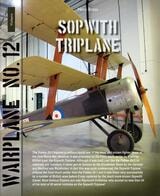
Sopwith Triplane
Nico Braas
Amsterdam University Press, 2022
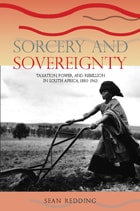
Sorcery and Sovereignty
Taxation, Power, and Rebellion in South Africa, 1880–1963Sean Redding
Ohio University Press, 2006
Rebellions broke out in many areas of South Africa shortly after the institution of white rule in the late nineteenth century and continued into the next century. However, distrust of the colonial regime reached a new peak in the mid-twentieth century, when revolts erupted across a wide area of rural South Africa. All these uprisings were rooted in grievances over taxes. Rebels frequently invoked supernatural powers for assistance and accused government officials of using witchcraft to enrich themselves and to harm ordinary people.
As Sean Redding observes in Sorcery and Sovereignty, beliefs in witchcraft and supernatural powers were part of the political rhetoric; the system of taxation—with all its prescribed interactions between ruler and ruled—was intimately connected to these supernatural beliefs.
In this fascinating study, Redding examines how black South Africans’ beliefs in supernatural powers, along with both economic and social change in the rural areas, resulted in specific rebellions and how gender relations in black South African rural families changed. Sorcery and Sovereignty explores the intersection of taxation, political attitudes, and supernatural beliefs among black South Africans, shedding light on some of the most significant issues in the history of colonized Africa.
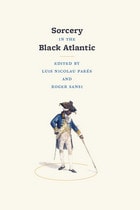
Sorcery in the Black Atlantic
Edited by Luis Nicolau Parés and Roger Sansi
University of Chicago Press, 2011
Most scholarship on sorcery and witchcraft has narrowly focused on specific times and places, particularly early modern Europe and twentieth-century Africa. And much of that research interprets sorcery as merely a remnant of premodern traditions. Boldly challenging these views, Sorcery in the Black Atlantic takes a longer historical and broader geographical perspective, contending that sorcery is best understood as an Atlantic phenomenon that has significant connections to modernity and globalization.
A distinguished group of contributors here examine sorcery in Brazil, Cuba, South Africa, Cameroon, and Angola. Their insightful essays reveal the way practices and accusations of witchcraft spread throughout the Atlantic world from the age of discovery up to the present, creating an indelible link between sorcery and the rise of global capitalism. Shedding new light on a topic of perennial interest, Sorcery in the Black Atlantic will be provocative, compelling reading for historians and anthropologists working in this growing field.
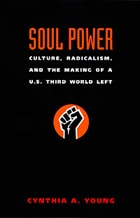
Soul Power
Culture, Radicalism, and the Making of a U.S. Third World LeftCynthia A. Young
Duke University Press, 2006
Young analyzes a range of U.S. figures and organizations, examining how each deployed Third World discourse toward various cultural and political ends. She considers a trip that LeRoi Jones, Harold Cruse, and Robert F. Williams made to Cuba in 1960; traces key intellectual influences on Angela Y. Davis’s writing; and reveals the early history of the hospital workers’ 1199 union as a model of U.S. Third World activism. She investigates Newsreel, a late 1960s activist documentary film movement, and its successor, Third World Newsreel, which produced a seminal 1972 film on the Attica prison rebellion. She also considers the L.A. Rebellion, a group of African and African American artists who made films about conditions in the Watts neighborhood of Los Angeles. By demonstrating the breadth, vitality, and legacy of the work of U.S. Third World Leftists, Soul Power firmly establishes their crucial place in the history of twentieth-century American struggles for social change.
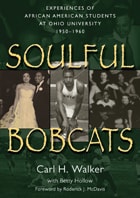
Soulful Bobcats
Experiences of African American Students at Ohio University, 1950–1960Carl H. Walker
Ohio University Press, 2013
During the 1950s, when less than 20 percent of American high school graduates attended college, a group of ambitious young African Americans enrolled at Ohio University, a predominantly white school in Athens, Ohio. Because they were a tiny, barely tolerated minority, they banded together, supported each other, and formed lasting bonds. Years later, at a series of “Soulful Reunions,” they recalled the joys and challenges of living on a white campus before the civil rights era, and eighteen of them decided to share their stories.
The authors of the eighteen autobiographical sketches in Soulful Bobcats were a diverse group. They were athletes, rhetoricians, musicians, and actresses; they aspired to professions in the military, business, education, government, architecture, and the arts. Some grew up in poor families, while others enjoyed the comforts of the middle class. But they had several things in common. They all came from families that believed education was important. They had been taught to avoid trouble, to persist despite setbacks, and to expect to encounter prejudice and even discrimination.
The authors vividly describe instances in which they were humiliated—by other students, by professors, or by townspeople—as well as the few occasions when violence seemed inevitable. In addition, they describe their “first,” including becoming the first African American students at Ohio University to be awarded scholarships for their prowess in football, basketball, track, and tennis; the first to compete for titles such as “Mr. Fraternity” or “Queen of the Military Ball”; the first to appear in theatrical performances alongside their white schoolmates. They also tell of their success in providing a social life for themselves by organizing two Greek letter fraternities and one sorority, holding their own off-campus dances, and joining the few campus organizations that were open to them. Above all, their stories speak to a resilience that allowed these “Soulful Bobcats” to learn from their experiences at Ohio University, to engage in meaningful careers, and to lead rich, fulfilling lives.
Souls Of Skyscraper
Lisa Fine
Temple University Press, 1990
Soulside
Inquiries into Ghetto Culture and CommunityUlf Hannerz
University of Chicago Press, 2004
Originally published 35 years ago, Soulside became an urban anthropological classic. The book helped to dispel many false impressions about ghetto life and questioned the idea, precipitated in the influential Moynihan Report and in notions of a "culture of poverty," that the poor had chosen to lead the lives they do. Raising central moral and political questions about American society in a turbulent period, Soulside became an example of public engagement in anthropology. In a new afterword, Ulf Hannerz discusses the book's place in the debates of the time and its relevance to current arguments in anthropology.
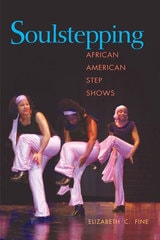
Soulstepping
African American Step ShowsElizabeth C. Fine
University of Illinois Press, 2002
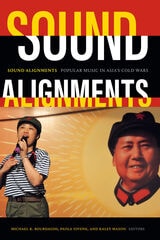
Sound Alignments
Popular Music in Asia's Cold WarsMichael K. Bourdaghs, Paola Iovene, and Kaley Mason, editors
Duke University Press, 2021
Contributors. Marié Abe, Michael K. Bourdaghs, Paola Iovene, Nisha Kommattam, Jennifer Lindsay, Kaley Mason, Anna Schultz, Hyunjoon Shin, C. J. W.-L. Wee, Hon-Lun (Helan) Yang, Christine R. Yano, Qian Zhang
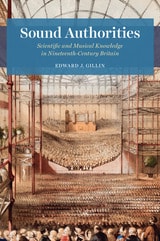
Sound Authorities
Scientific and Musical Knowledge in Nineteenth-Century BritainEdward J. Gillin
University of Chicago Press, 2021
Sound Authorities shows how experiences of music and sound played a crucial role in nineteenth-century scientific inquiry in Britain.
In Sound Authorities, Edward J. Gillin focuses on hearing and aurality in Victorian Britain, claiming that the development of the natural sciences in this era cannot be understood without attending to the study of sound and music.
During this time, scientific practitioners attempted to fashion themselves as authorities on sonorous phenomena, coming into conflict with traditional musical elites as well as religious bodies. Gillin pays attention to sound in both musical and nonmusical contexts, specifically the cacophony of British industrialization. Sound Authorities begins with the place of acoustics in early nineteenth-century London, examining scientific exhibitions, lectures, spectacles, workshops, laboratories, and showrooms. He goes on to explore how mathematicians mobilized sound in their understanding of natural laws and their vision of a harmonious ordered universe. In closing, Gillin delves into the era’s religious and metaphysical debates over the place of music (and humanity) in nature, the relationship between music and the divine, and the tensions between spiritualist understandings of sound and scientific ones.
Sound Diplomacy
Music and Emotions in Transatlantic Relations, 1850-1920Jessica C. E. Gienow-Hecht
University of Chicago Press, 2009
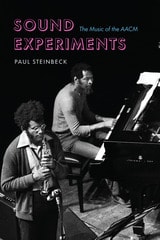
Sound Experiments
The Music of the AACMPaul Steinbeck
University of Chicago Press, 2022
Founded on Chicago’s South Side in 1965 and still thriving today, the Association for the Advancement of Creative Musicians (AACM) is the most influential collective organization in jazz and experimental music. In Sound Experiments, Paul Steinbeck offers an in-depth historical and musical investigation of the collective, analyzing individual performances and formal innovations in captivating detail. He pays particular attention to compositions by Muhal Richard Abrams and Roscoe Mitchell, the Association’s leading figures, as well as Anthony Braxton, George Lewis (and his famous computer-music experiment, Voyager), Wadada Leo Smith, and Henry Threadgill, along with younger AACM members such as Mike Reed, Tomeka Reid, and Nicole Mitchell.
Sound Experiments represents a sonic history, spanning six decades, that affords insight not only into the individuals who created this music but also into an astonishing collective aesthetic. This aesthetic was uniquely grounded in nurturing communal ties across generations, as well as a commitment to experimentalism. The AACM’s compositions broke down the barriers between jazz and experimental music and made essential contributions to African American expression more broadly. Steinbeck shows how the creators of these extraordinary pieces pioneered novel approaches to instrumentation, notation, conducting, musical form, and technology, creating new soundscapes in contemporary music.
Sound Figures of Modernity
German Music and PhilosophyEdited by Jost Hermand and Gerhard Richter
University of Wisconsin Press, 2006
The rich conceptual and experiential relays between music and philosophy—echoes of what Theodor W. Adorno once called Klangfiguren, or "sound figures"—resonate with heightened intensity during the period of modernity that extends from early German Idealism to the Critical Theory of the Frankfurt School. This volume traces the political, historical, and philosophical trajectories of a specifically German tradition in which thinkers take recourse to music, both as an aesthetic practice and as the object of their speculative work.
The contributors examine the texts of such highly influential writers and thinkers as Schelling, Schopenhauer, Nietzsche, Bloch, Mann, Adorno, and Lukács in relation to individual composers including Beethoven, Wagner, Schönberg, and Eisler. Their explorations of the complexities that arise in conceptualizing music as a mode of representation and philosophy as a mode of aesthetic practice thematize the ways in which the fields of music and philosophy are altered when either attempts to express itself in terms defined by the other.
Contributors: Albrecht Betz, Lydia Goehr, Beatrice Hanssen, Jost Hermand, David Farrell Krell, Ludger Lütkehaus, Margaret Moore, Rebekah Pryor Paré, Gerhard Richter, Hans Rudolf Vaget, Samuel Weber
Sound Knowledge
Music and Science in London, 1789-1851Edited by J. Q. Davies and Ellen Lockhart
University of Chicago Press, 2017
Sound Knowledge examines how scientific truth was accrued by means of visual and aural experience, and, in turn, how musical knowledge was located in relation to empirical scientific practice. James Q. Davies and Ellen Lockhart gather work by leading scholars to explore a crucial sixty-year period, beginning with Charles Burney’s ambitious General History of Music, a four-volume study of music around the globe, and extending to the Great Exhibition of 1851, where musical instruments were assembled alongside the technologies of science and industry in the immense glass-encased collections of the Crystal Palace. Importantly, as the contributions show, both the power of science and the power of music relied on performance, spectacle, and experiment. Ultimately, this volume sets the stage for a new picture of modern disciplinarity, shining light on an era before the division of aural and visual knowledge.
Sound Streams
A Cultural History of Radio-Internet ConvergenceAndrew J. Bottomley
University of Michigan Press, 2020
Sound Streams is the first book to historicize radio-internet convergence from the early ’90s through the present, demonstrating how so-called new media represent an evolutionary shift that is nevertheless historically consistent with earlier modes of broadcasting. Various iterations of internet radio, from streaming audio to podcasting, are all new radio practices rather than each being a separate new medium: radio is any sound media that is purposefully crafted to be heard by an audience. Rather than a particular set of technologies or textual conventions, web-based broadcasting combines unique practices and features and ideas from radio history. In addition, there exists a distinctive conversationality and reflexivity to radio talk, including a propensity for personal stories and emotional disclosure, that suits networked digital media culture. What media convergence has done is extend and intensify radio’s logics of connectivity and sharing; sonically mediated personal expression intended for public consideration abounds in online media networks.
Sound Streams marks a significant contribution to digital media and internet studies. Its mix of cultural history, industry research, and genre and formal analysis, especially of contemporary audio storytelling, will appeal to media scholars, radio and podcast practitioners, audio journalism students, and dedicated podcast fans.

Sound System
The Political Power of MusicDave Randall
Pluto Press, 2017
Sound System is the story of one musician's journey to discover what makes music so powerful. Dave Randall uses his insider's knowledge of the industry to shed light on the secrets of celebrity, commodification and culture.
This is a book of raves, riots and revolution. From the Glastonbury Festival to the Arab Spring, Pop Idol to Trinidadian Carnival, Randall finds political inspiration across the musical spectrum and poses the question: how can we make music serve the interests of the many, rather than the few?
Published in partnership with the Left Book Club.
Sound and Affect
Voice, Music, WorldEdited by Judith Lochhead, Eduardo Mendieta, and Stephen Decatur Smith
University of Chicago Press, 2021
Sound and Affect maps a new territory for inquiry at the intersection of music, philosophy, affect theory, and sound studies. The essays in this volume consider objects and experiences marked by the correlation of sound and affect, in music and beyond: the voice, as it speaks, stutters, cries, or sings; music, whether vocal, instrumental, or machine-made; and our sonic environments, whether natural or artificial, and how they provoke responses in us. Far from being stable, correlations of sound and affect are influenced and even determined by factors as diverse as race, class, gender, and social and political experience. Examining these factors is key to the project, which gathers contributions from a cross-disciplinary roster of scholars, including both established and new voices. This agenda-setting collection will prove indispensable to anyone interested in innovative approaches to the study of sound and its many intersections with affect and the emotions.
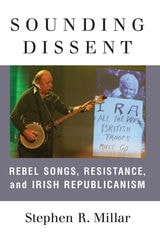
Sounding Dissent
Rebel Songs, Resistance, and Irish RepublicanismStephen R. Millar
University of Michigan Press, 2020
Sounding Dissent draws on three years of sustained fieldwork within Belfast's rebel music scene, in-depth interviews with republican musicians, contemporary audiences, and former paramilitaries, as well as diverse historical and archival material, including songbooks, prison records, and newspaper articles, to understand the history of political violence in Ireland.The book examines the potential of rebel songs to memorialize a pantheon of republican martyrs, and demonstrates how musical performance and political song not only articulate experiences and memories of oppression and violence, but also play a central role in the reproduction of conflict and exclusion in times of peace.
Sounding Human
Music and Machines, 1740/2020Deirdre Loughridge
University of Chicago Press, 2023
From the mid-eighteenth century on, there was a logic at work in musical discourse and practice: human or machine. That discourse defined a boundary of absolute difference between human and machine, with a recurrent practice of parsing “human” musicality from its “merely mechanical” simulations. In Sounding Human, Deirdre Loughridge tests and traverses these boundaries, unmaking the “human or machine” logic and seeking out others, better characterized by conjunctions such as and or with.
Sounding Human enters the debate on posthumanism and human-machine relationships in music, exploring how categories of human and machine have been continually renegotiated over the centuries. Loughridge expertly traces this debate from the 1737 invention of what became the first musical android to the creation of a “sound wave instrument” by a British electronic music composer in the 1960s, and the chopped and pitched vocals produced by sampling singers’ voices in modern pop music. From music-generating computer programs to older musical instruments and music notation, Sounding Human shows how machines have always actively shaped the act of music composition. In doing so, Loughridge reveals how musical artifacts have been—or can be—used to help explain and contest what it is to be human.
Sounding Real
Musicality and American Fiction at the Turn of the Twentieth CenturyCristina L. Ruotolo
University of Alabama Press, 2013
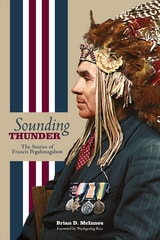
Sounding Thunder
The Stories of Francis PegahmagabowBrian D. McInnes
Michigan State University Press, 2016
Francis Pegahmagabow’s stories describe many parts of his life and are characterized by classic Ojibwe narrative. They reveal aspects of Francis’s Anishinaabe life and worldview. Interceding chapters by Brian McInnes provide valuable cultural, spiritual, linguistic, and historical insights that give a greater context and application for Francis’s words and world. Presented in their original Ojibwe as well as in English translation, the stories also reveal a rich and evocative relationship to the lands and waters of Georgian Bay.
In Sounding Thunder, Brian McInnes provides a new perspective on Pegahmagabow and his experience through a unique synthesis of Ojibwe oral history, historical record, and Pegahmagabow family stories.
Sounding Together
Collaborative Perspectives on U.S. Music in the 21st CenturyCharles Hiroshi Garrett and Carol J. Oja, Editors
University of Michigan Press, 2021
Sounding Together: Collaborative Perspectives on U.S. Music in the Twenty-21st Century is a multi-authored, collaboratively conceived book of essays that tackles key challenges facing scholars studying music of the United States in the early twenty-first century. This book encourages scholars in music circles and beyond to explore the intersections between social responsibility, community engagement, and academic practices through the simple act of working together. The book’s essays—written by a diverse and cross-generational group of scholars, performers, and practitioners—demonstrate how collaboration can harness complementary skills and nourish comparative boundary-crossing through interdisciplinary research. The chapters of the volume address issues of race, nationalism, mobility, cultural domination, and identity; as well as the crisis of the Trump era and the political power of music. Each contribution to the volume is written collaboratively by two scholars, bringing together contributors who represent a mix of career stages and positions. Through the practice of and reflection on collaboration, Sounding Together breaks out of long-established paradigms of solitude in humanities scholarship and works toward social justice in the study of music.
Sounding the Center
History and Aesthetics in Thai Buddhist PerformanceDeborah Wong
University of Chicago Press, 2001
Drawing on her extensive fieldwork, Wong lays out the ritual in detail: the way it is enacted, the foods and objects involved, and the people who perform it, emphasizing the way the performers themselves discuss and construct aspects of the ceremony.
Sounding the Modern Woman
The Songstress in Chinese CinemaJean Ma
Duke University Press, 2015

Soundings at Tell Fakhariyah
Calvin W. McEwan, Linda S. Braidwood, Henri Frankfort, Hans G. Guterbock, Richar
University of Chicago Press, 1958
Soundless Roar
Stories, Poems, and DrawingsAva Kadishson Schieber
Northwestern University Press, 2002
Schieber's drawings, paintings, poetry, and prose are all intimate reflections of one another. Her experience forged the unusual sense of time that shapes Schieber's stories. In her preface, Phyllis Lassner writes: "The timetable of Ava's stories often consists of circles within circles, of patterns of an intertwined past, the past present of hiding, and the present looking back at those distinctly separate but inseparable pasts."
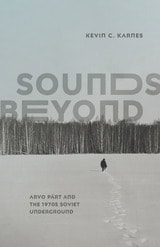
Sounds Beyond
Arvo Pärt and the 1970s Soviet UndergroundKevin C. Karnes
University of Chicago Press, 2021
In Sounds Beyond, Kevin C. Karnes studies the interconnected alternative music and art scenes in the USSR during the second half of the 1970s, revealing the audacious origins of some of Estonian composer Arvo Pärt’s most famous music. Karnes shows how Pärt’s work was created within a vital yet forgotten culture of collective experimentation, the Soviet underground.
Mining archives and oral history from across the former USSR, Sounds Beyond carefully situates modes of creative experimentation within their late socialist contexts. In documenting Pärt’s work, Karnes reveals the rich creative culture that thrived covertly in the USSR and the network of figures that made underground performances possible: students, audio engineers, sympathetic administrators, star performers, and aspiring DJs. Sounds Beyond advances a new understanding of Pärt’s music as an expression of the aesthetic and religious commitments shared, nurtured, and celebrated by many in Soviet underground circles. At the same time, this story attests to the lasting power of Pärt’s music. Dislodging the mythology of the solitary creative genius, Karnes shows that Pärt’s work would be impossible without community.

Sounds English
TRANSNATIONAL POPULAR MUSICNabeel Zuberi
University of Illinois Press, 2001
Zuberi looks at how the sounds, images, and lyrics of English popular music generate and critique ideas of national belonging, recasting the social and even the physical landscapes of cities like Manchester and London. The Smiths and Morrissey play on romanticized notions of the (white) English working class, while the Pet Shop Boys map a "queer urban Britain" in the AIDS era. The techno-culture of raves and dance clubs incorporates both an anti-institutional do-it-yourself politics and emergent leisure practices, while the potent mix of technology and creativity in British black music includes local conditions as well as a sense of global diaspora. British Asian musicians, drawing on Afrodiasporic and South Asian traditions, seek a sense of place in Britain as commercial interests try to pin down an image of them to market.
Sounds English shows how popular music complicates cherished notions of Englishness as it activates cultural outsiders and taps into a sense of not belonging. Alert and readable, Zuberi's wide-ranging discussion includes the performers Oasis, Blur, Tricky, Massive Attack, Goldie, A Guy Called Gerald, Roni Size, Bally Sagoo, Funˆdaˆmental, Echobelly, Cornershop, Talvin Singh, and others.
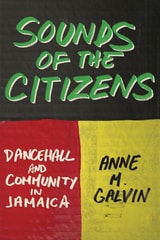
Sounds of the Citizens
Dancehall and Community in JamaicaAnne M. Galvin
Vanderbilt University Press, 2014
Galvin highlights the unique alliance between the dancehall industry and community development efforts. As the central role of the state in supporting communities has diminished, the rise of private efforts such as dancehall becomes all the more crucial. The tension, however, between those involved in the industry and those within the neighborhoods is palpable and often dangerous. Amidst all this, individual Jamaicans interact with the dancehall industry and its culture to find their own paths of employment, social identity, and sexual mores.
As Sounds of the Citizens illustrates, the world of entertainment in Jamaica is serious business and uniquely positioned as a powerful force within the community.
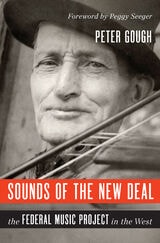
Sounds of the New Deal
The Federal Music Project in the WestPeter Gough
University of Illinois Press, 2015
From the onset, administrators and artists debated whether to represent highbrow, popular, or folk music in FMP activities. Though the administration privileged using "good" music to educate the public, in the West local preferences regularly trumped national priorities and allowed diverse vernacular musics to be heard. African American and Hispanic music found unprecedented popularity while the cultural mosaic illuminated by American folksong exemplified the spirit of the Popular Front movement. These new musical expressions combined the radical sensibilities of an invigorated Left with nationalistic impulses. At the same time, they blended traditional patriotic themes with an awareness of the country's varied ethnic musical heritage and vast--but endangered--store of grassroots music.